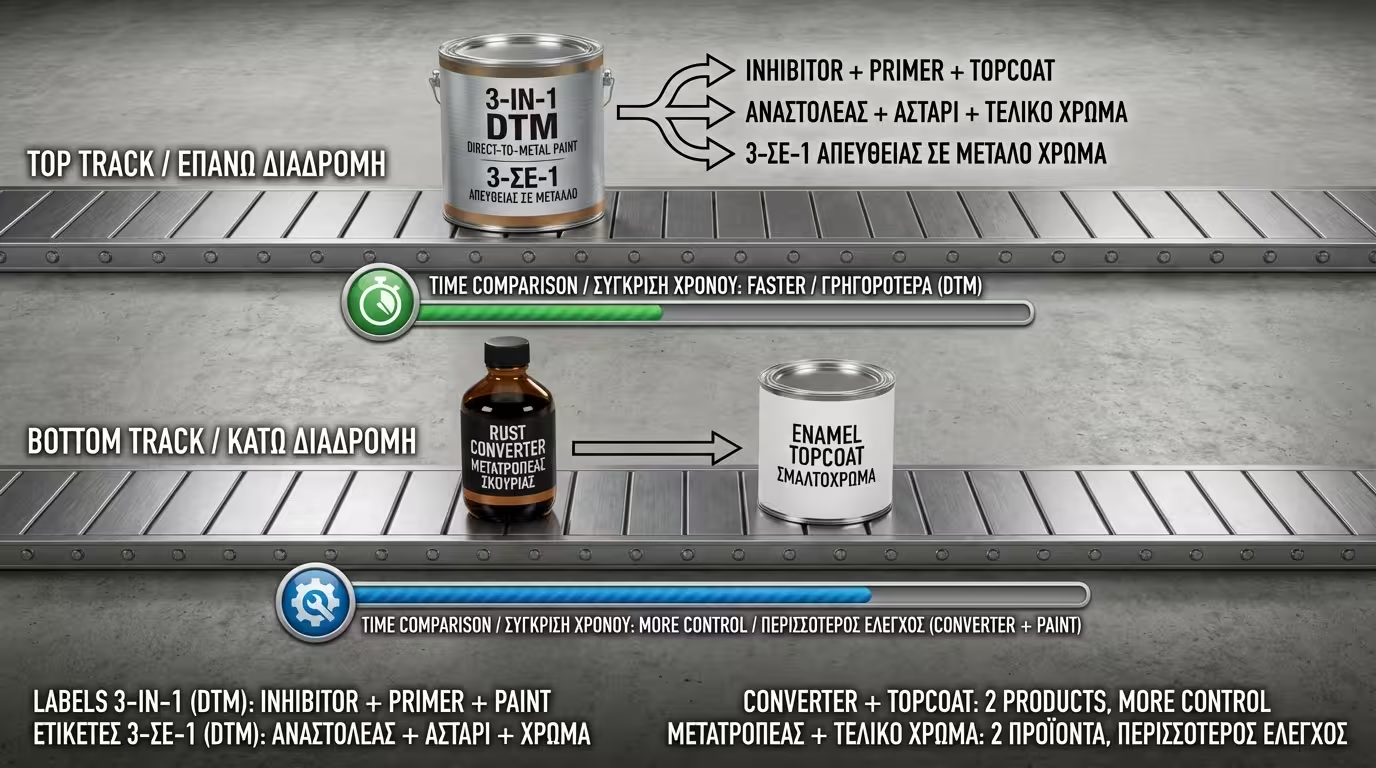
💧 Resin Penetration
Unlike standard paints, specialized anti-corrosives have low surface tension. This allows the resin to penetrate deep into the rust pores, displacing trapped air and moisture, and reaching the solid metal substrate.
Direct-to-Rust (DTM) technology has evolved from simple DIY tools to sophisticated Surface Tolerant systems. Understanding the chemistry of adhesion over iron oxide is critical to avoiding structural failure and latent corrosion.
The success of Surface Tolerant coatings depends on their wetting ability.
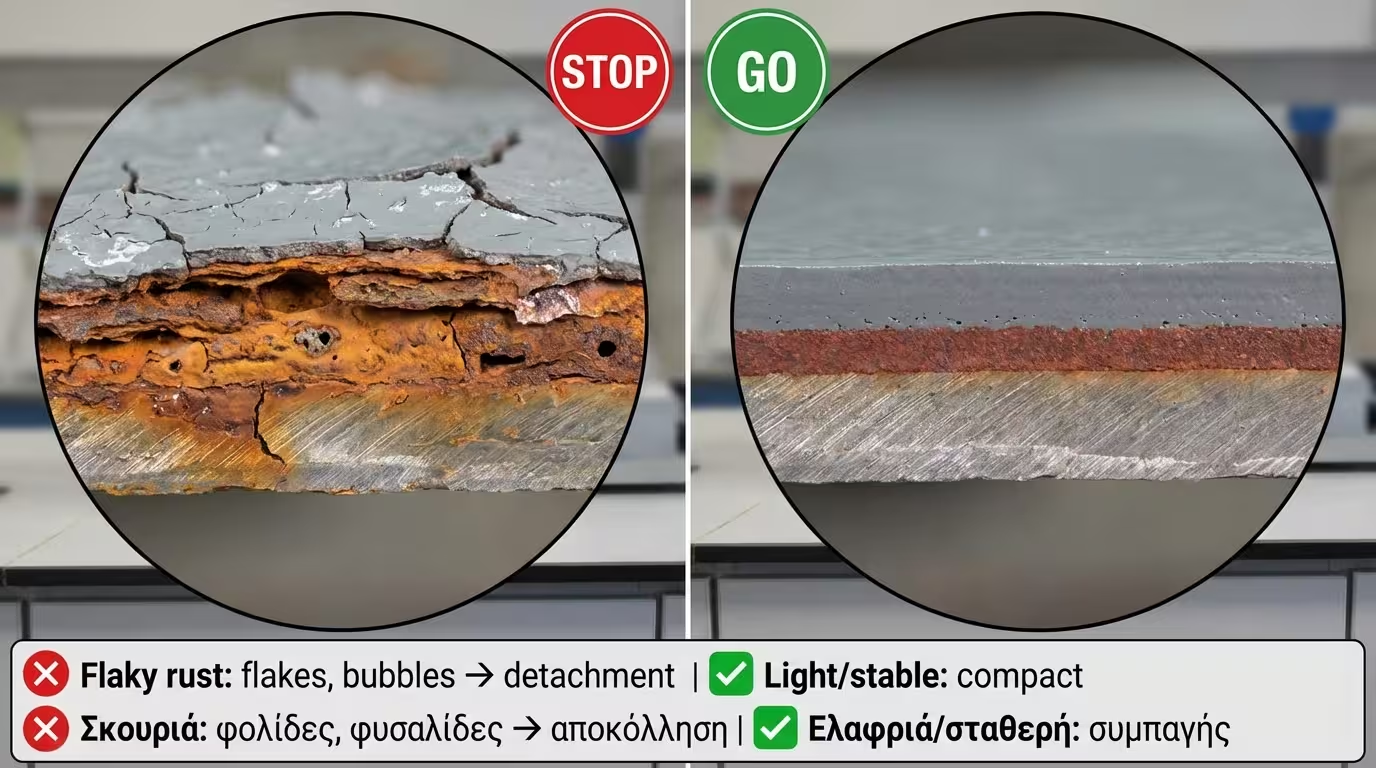
Unlike standard paints, specialized anti-corrosives have low surface tension. This allows the resin to penetrate deep into the rust pores, displacing trapped air and moisture, and reaching the solid metal substrate.
If the rust is loose or flaky, the paint merely creates an "encapsulating shell." Corrosion continues underneath (latent corrosion), eventually leading to the detachment of the entire coating system.
The choice of chemistry depends on the required durability and environment.
Typically based on urethane-modified alkyds. These are ideal for residential maintenance on fences and gates where ease of application is preferred over high-performance specs.
The professional solution. These often contain aluminum flakes or micaceous iron oxide (MIO) that align parallel to the substrate, creating a dense barrier against moisture and oxygen.
Even the best "Direct to Rust" paint will fail if the rule of a clean, stable base is ignored.
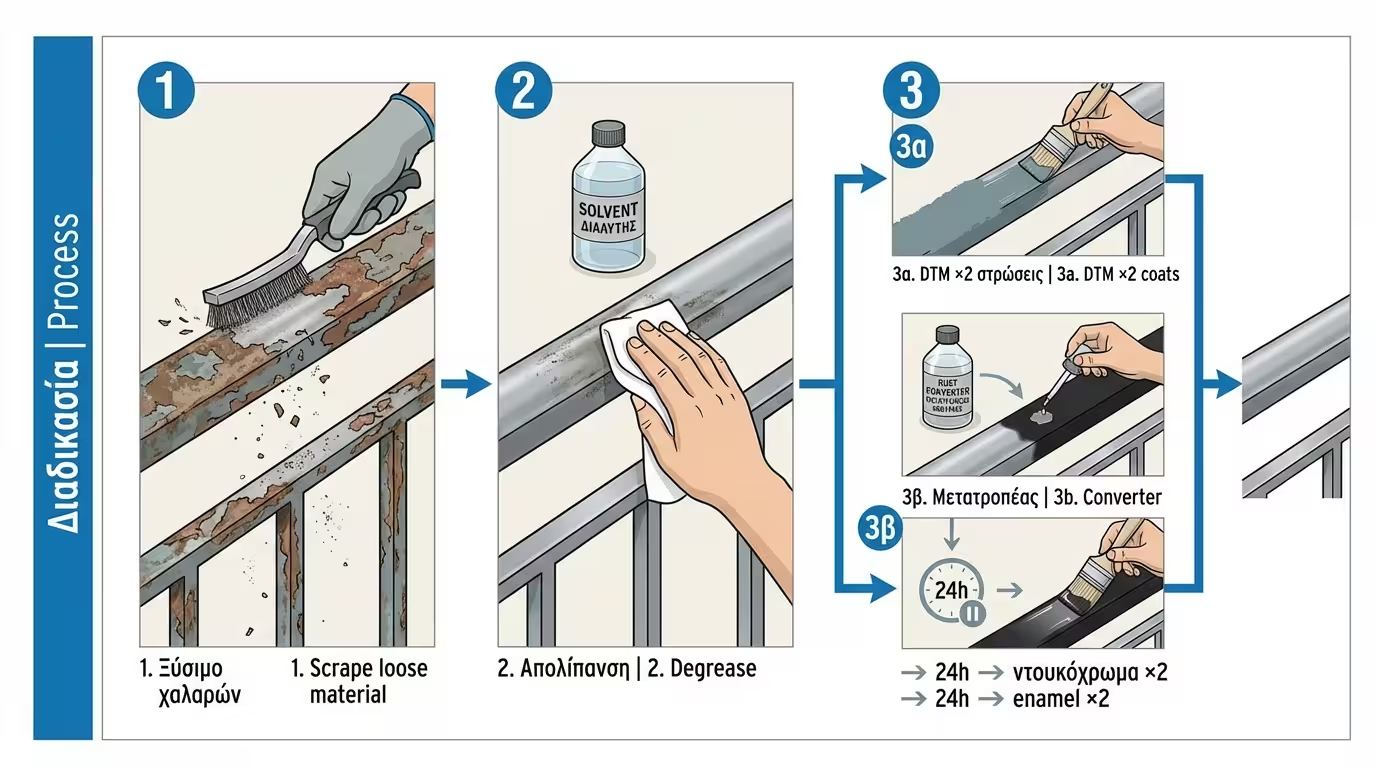
According to ISO 8501-1, manual cleaning must remove all loose scale and old paint. The remaining rust must be firmly adherent and show a slight metallic sheen.
For many 3-in-1 paints, follow the "either/or" rule: apply the second coat within 2 hours or wait 7 days. Applying in between can cause "solvency lifting" or wrinkling of the curing film.
Painting over rust is always a technical compromise.
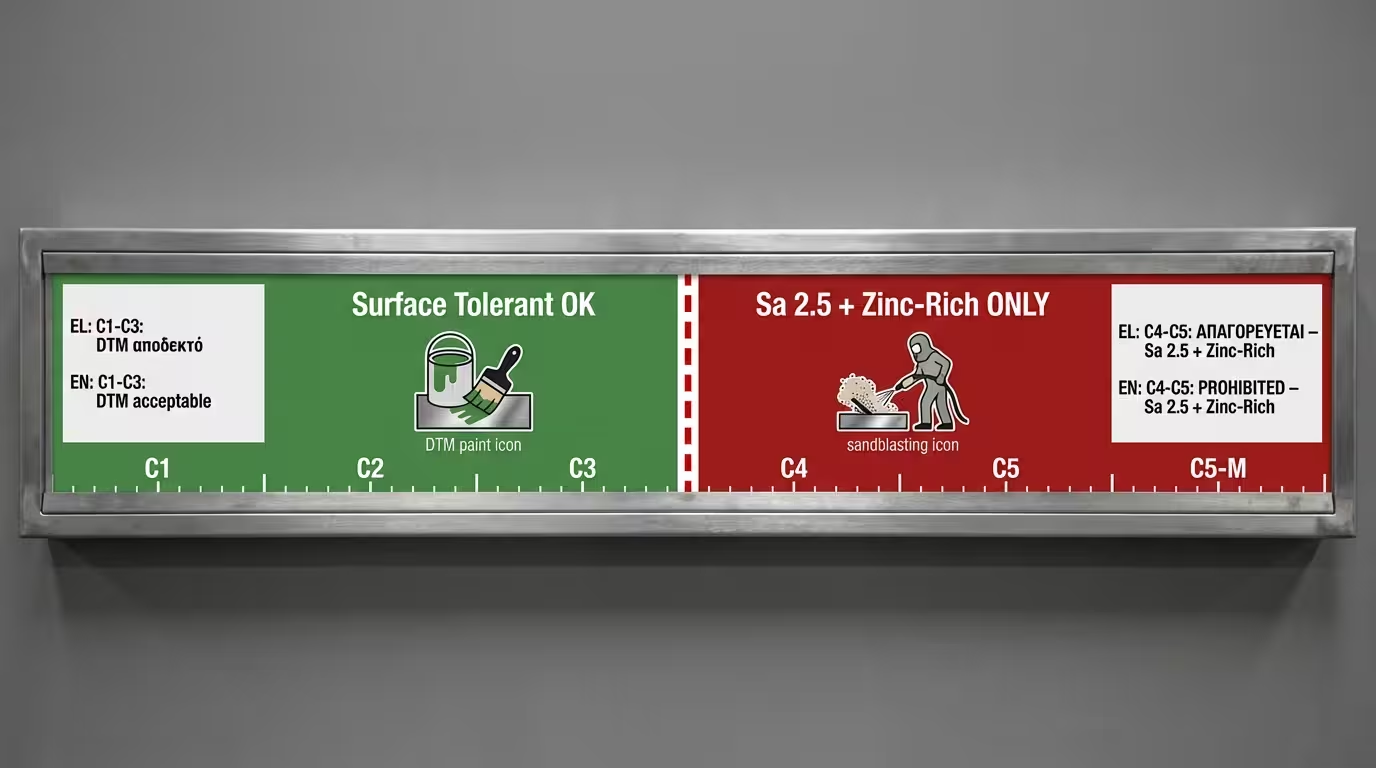
For C1 and C2 environments (indoor or dry rural), durability is excellent. For C3 (urban/industrial), a minimum Dry Film Thickness (DFT) of 160-200μm is required. In C4/C5 (coastal/heavy marine), DTM systems are not recommended due to the high risk of osmotic blistering from salt trapped in the rust.
Return to category.
Go to categoryReturn to the central guide.
Go to guide