
⬇️ Fixed Base Panel
The lowest panel is usually fixed and sits on the floor. The upper panels are the moveable ones.
If you own a hospitality venue (café, restaurant, hotel) or have a stunning pergola in your garden, you face the same eternal dilemma: you want to use your semi-outdoor space 365 days a year.
In winter you need it enclosed to protect guests from wind and cold. In summer you want it wide open. Conventional swing windows steal valuable table space. Bi-fold doors require room to park their leaves. Standard sliding systems leave half the opening blocked.
Is there a system that "vanishes" without consuming any floor space at all? The answer from modern engineering is impressive and goes by the name Vertical Sliding Windows, widely known in the trade as Guillotine Windows.
Forget left-right motion. In a guillotine system, the panels move up and down. Typically, the construction is divided into 2, 3 or 4 horizontal glass panels.
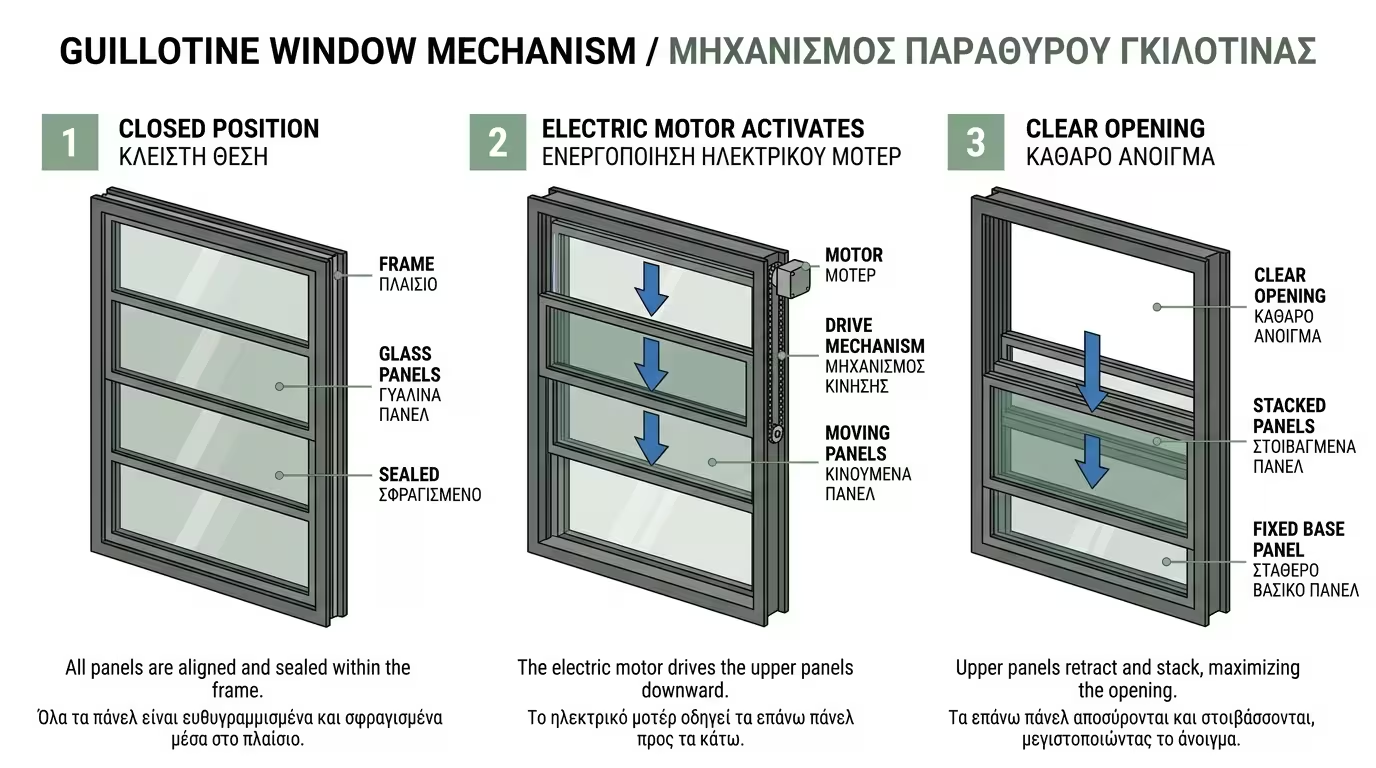
The lowest panel is usually fixed and sits on the floor. The upper panels are the moveable ones.
When you want to open up, you press a button on the remote. A concealed electric motor releases the upper panels, which slide vertically downward and "stack" (park) behind the fixed base panel.
This system didn't become the ultimate trend in modern dining venues and premium roof gardens by accident. It offers four unbeatable advantages.
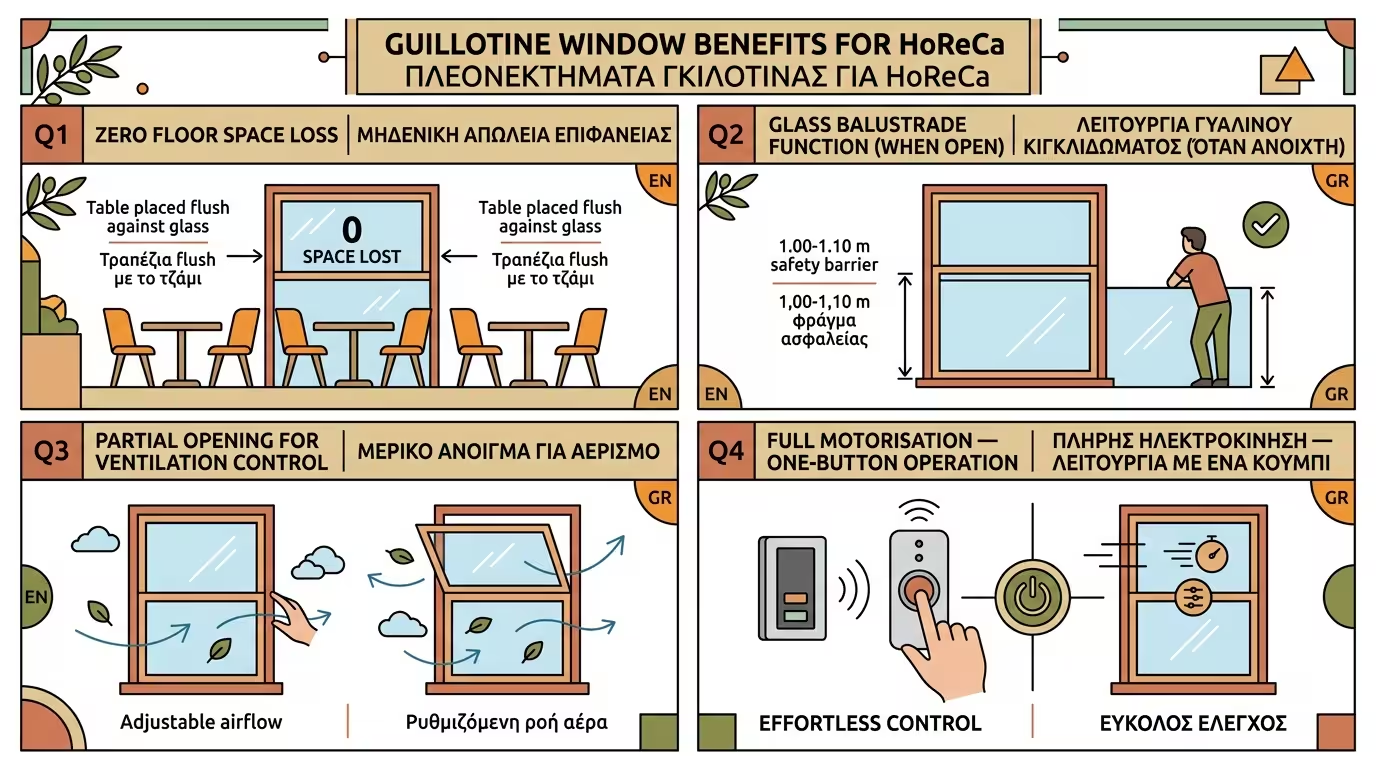
In hospitality, every square metre translates to revenue. Because the panel movement is strictly vertical, the window never intrudes into the interior. Tables and chairs can be placed flush against the glass, utilising 100% of the floor area.
Perhaps the cleverest feature. When fully open (all panels stacked down), the height of the fixed portion reaches 1.00–1.10 m, automatically creating an elegant glass safety barrier - the perfect solution for balconies, penthouses and elevated decks.
You can stop the moveable panels at any height you choose. Leave only the upper clerestory open to ventilate smoke while keeping the lower section closed as a windbreak.
No cranks, no heavy doors. Systems are 100% motorised. At the push of a button, the entire restaurant façade opens simultaneously, delivering a visual spectacle for your customers.
Because the glass panels move vertically, gravity is the main enemy. A poorly engineered system is extremely dangerous. As engineers, we draw your attention to the following critical points.
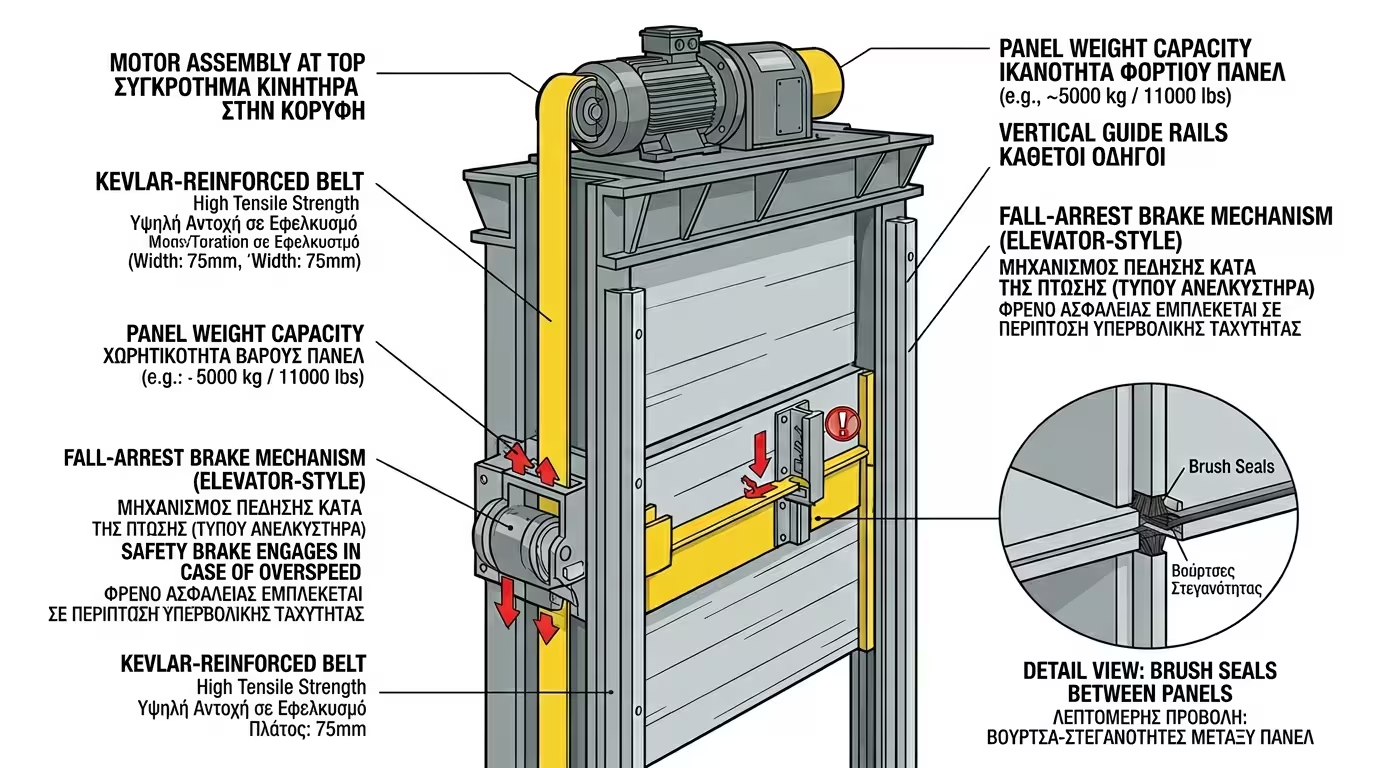
The glass weight is carried by reinforced polyurethane belts (with internal kevlar or steel strands) or heavy-duty chains. The motor (e.g. Somfy type) must be perfectly matched to the total weight.
Non-negotiable. The system must have a certified brake mechanism (similar to an elevator's), so that if a belt snaps, the glass "bites" the guide and stops instantly rather than dropping like a real guillotine.
Panes MUST be tempered or laminated, so that in the event of breakage there is no risk of injury.
Due to their sliding nature, panels seal against each other with high-density brush seals and EPDM fins. While they offer excellent wind and rain protection, they don't match the absolute thermal insulation of a swing window - hence their primary use in semi-outdoor spaces (pergolas).
Vertical sliding (guillotine) windows are an ingenious, premium solution that transforms pergolas and dining spaces. They cost more than conventional sliders due to the motorised automation, but they pay for themselves in record time, as they let you utilise 100% of your seating area regardless of weather conditions.
Return to category.
Go to categoryReturn to the central guide.
Go to guide