Circular & Arched Windows: How They're Made (Profile Bending)
In the world of construction, we're accustomed to thinking in right
angles. Square or rectangular windows, straight lines, pure geometry.
But what happens when architecture demands curves?
Whether you're restoring a neoclassical building in the heart of Athens,
constructing a traditional island home, or your architect has designed a
striking round porthole for the stairwell, right angles simply won't do.
You need
Arched, Circular or Asymmetrical windows.
But aluminium and uPVC leave the extrusion plant as rigid, straight bars 6 metres long. How can a hard, thermally broken metal profile or a multi-chamber
plastic be bent into a perfect semicircle without cracking, crushing or
losing its insulation? Let's enter the inner sanctum of specialist
fabrication and discover the art of
profile bending.
1. The Art of Profile Bending
Not every aluminium fabricator can produce such windows. It requires specialised, expensive machinery (bending machines) and extensive experience. The method differs radically depending on the
material.
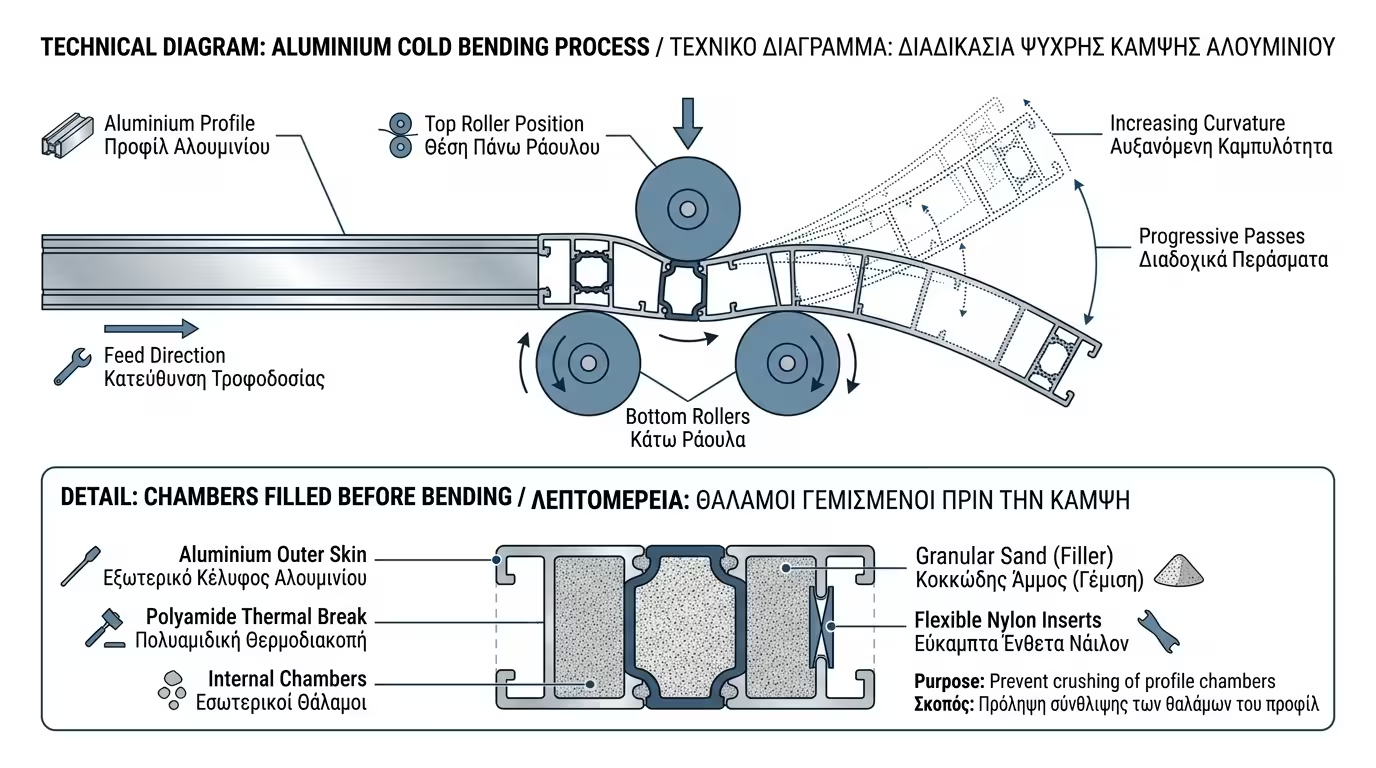
🔧 Aluminium: Cold Bending
Aluminium is bent "cold" through mechanical pressure. The straight
bar passes through a machine with
three heavy-duty rollers. The rollers press the
profile millimetre by millimetre, passing it back and forth dozens
of times, gradually increasing the curvature until the desired
radius is achieved.
⚠️ The Engineer's Nightmare
Modern aluminium isn't solid. It's hollow with a plastic (polyamide)
thermal break in the middle. If you simply press it, the chambers
collapse ("crush") and the polyamide snaps. The solution: before bending, the chambers are filled with special sand, flexible nylon inserts or resins. These keep the interior "full" during bending. Once shaped, the
filling is removed!
2. How Is uPVC Bent? (Hot Bending)
Synthetic plastic can't be bent cold - it would simply snap. Here the
process resembles... pastry-making.
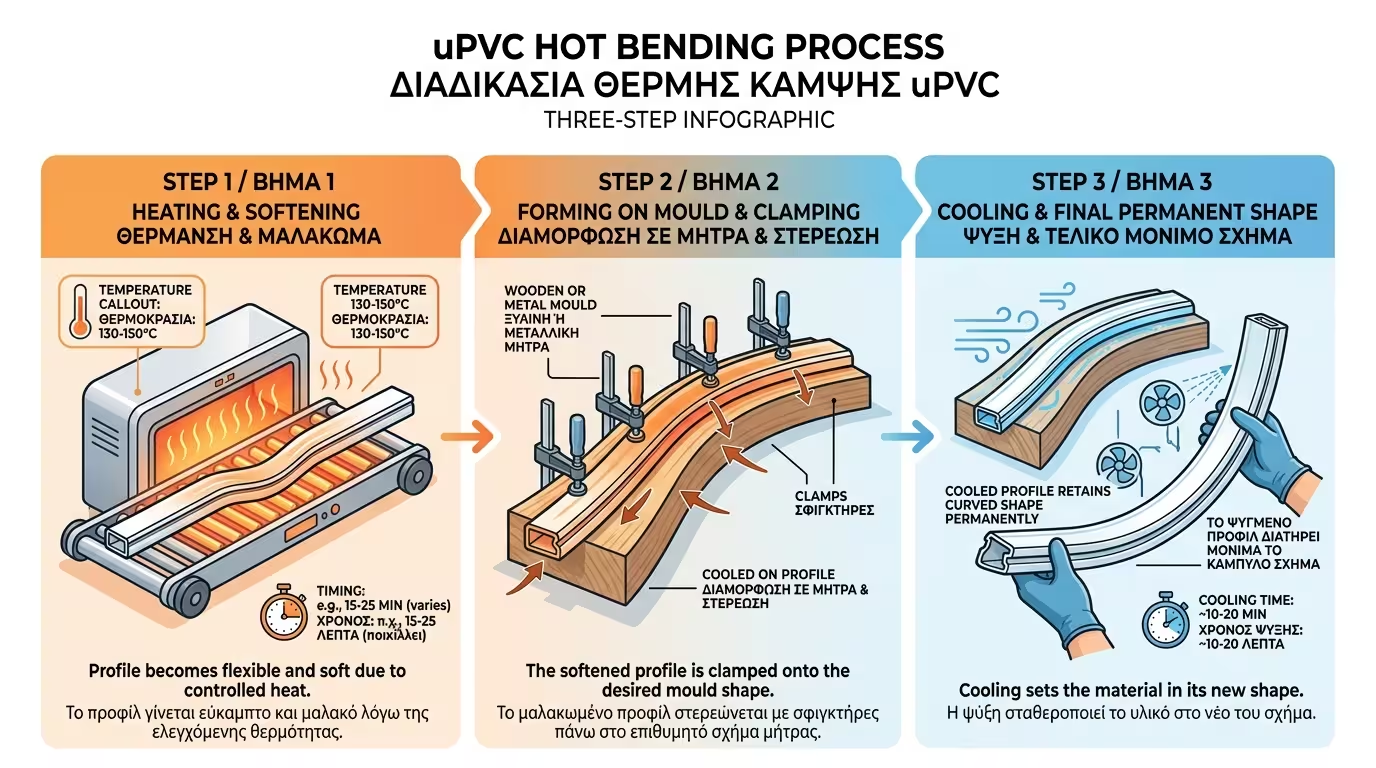
🔥 Heating Oven
The uPVC profile is placed inside a special hot-air oven (or a
glycerine bath) at 130–150°C. At this temperature,
the plastic softens and becomes pliable - like a piece of cooked
pasta.
📐 Mould & Cooling
Technicians quickly remove the hot profile and place it onto a pre-shaped wooden or metal mould
with the exact required curve. They clamp it to the mould and let it cool.
When it freezes, it retains the curved shape permanently.
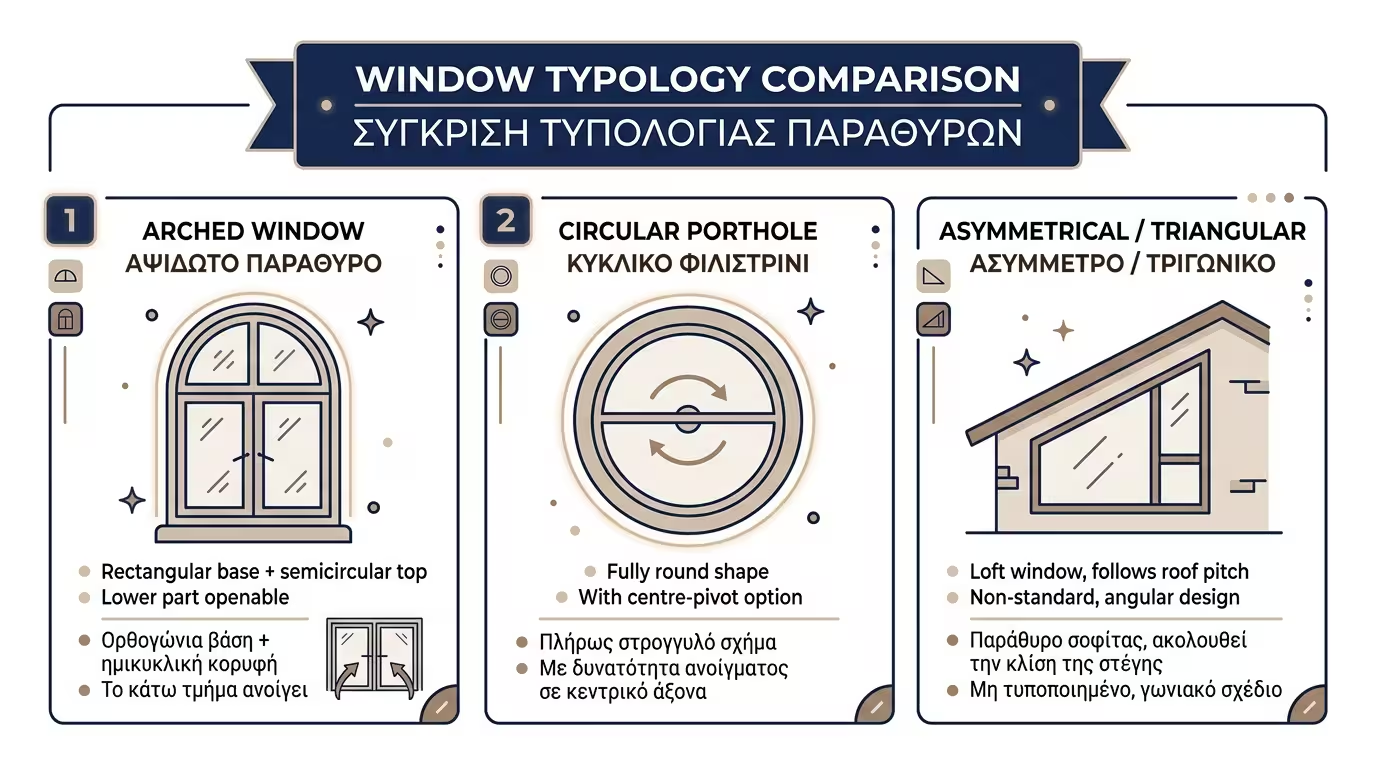
3. The 3 Main Special-Shape Typologies
Windows with special shapes can be grouped into three main categories.
🏛️ Arched Windows
The classic window with a rectangular base topped by a semicircular (or oval) arch. Often, for cost and sealing reasons, the lower part is openable while the upper (curved) portion remains fixed.
⭕ Circular (Portholes)
Fully round windows. They lend a unique nautical or contemporary
character. They can be manufactured as fixed units or with a centre-pivot mechanism for ventilation.
📐 Asymmetrical / Triangular
Here we deal not with curves but with "unusual" angles. Widely used
in loft conversions (to follow the roof pitch) or beneath
staircases. The difficulty isn't bending but rather cutting and welding at acute or obtuse angles that deviate from the standard 90° or 45°.
4. Why Do They Cost (Much) More?
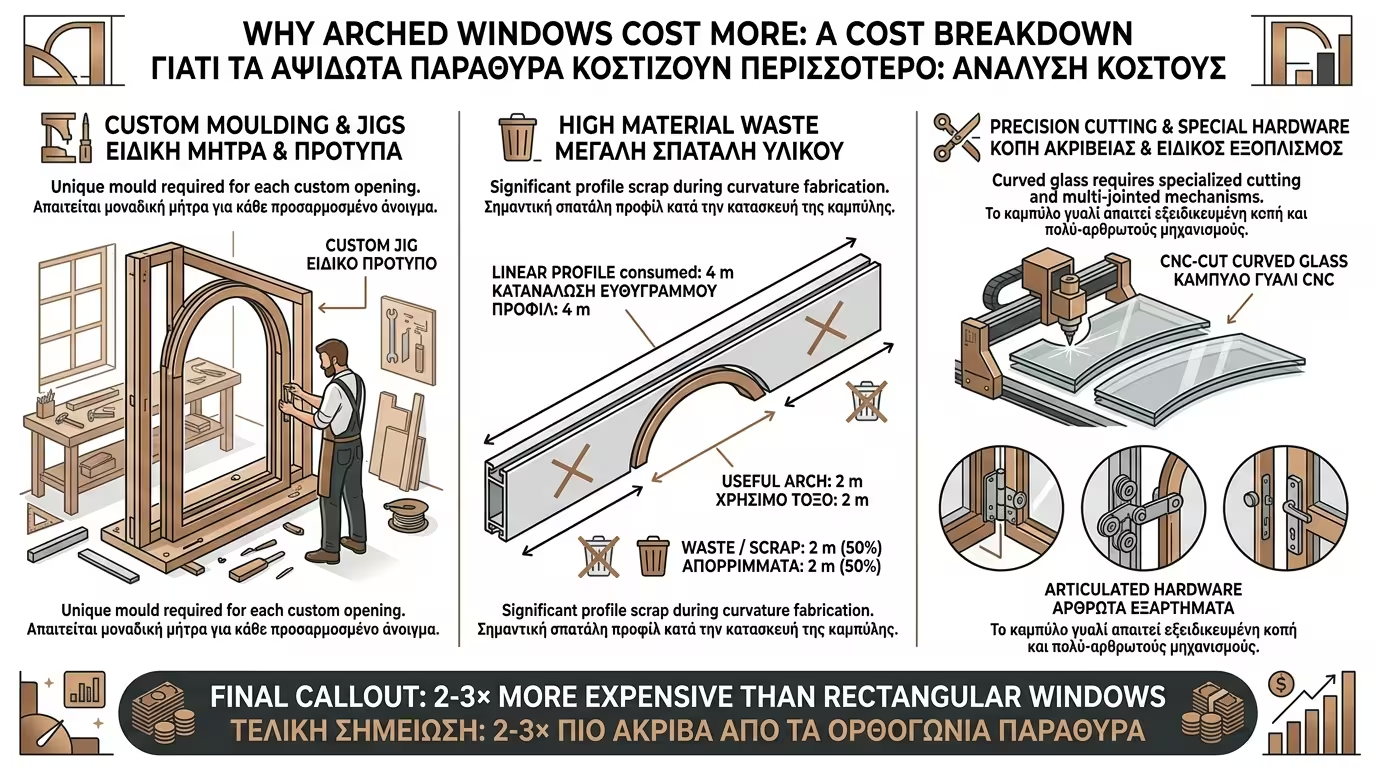
If you've received a quote for an arched window, you may have been
surprised to see it costs up to 2 to 3 times more than
a rectangular window of the same dimensions. The price is entirely justified.
🧱 Custom Mould Required
Each arched window is unique. A bespoke mould (jig)
must be fabricated to the exact measurements of your particular
opening.
♻️ Material Waste
During bending, the profile ends are destroyed and discarded.
To produce a 2-metre arch, you may need to "sacrifice" 4 metres of material.
🖥️ Specialised Glass & Hardware
Cutting the double-glazed unit to a perfect curve requires CNC robotic cutting machines. In addition, tilt-and-turn hardware must use special
"articulated" fittings to follow the curved profile.
5. Summary
🎯 Works of Technical Excellence
Arched and circular windows are not mass-produced commodities. They
are works of technical excellence, tailored to your
architecture. Whether restoring a listed heritage building or adding
a romantic, organic touch to your new home, proper profile bending guarantees that you won't sacrifice thermal insulation or weatherproofing on the
altar of design.