
Warm Edge Spacers: Why You Must Demand a Plastic Spacer Instead of Aluminium - Energy Upgrade Guide

You've spent a significant amount on top-quality windows. You chose energy glass with Low-E coating, Argon gas filling, thermally broken aluminium or PVC. The first harsh winter arrives, the house is indeed warm, but you notice something infuriating: Around the edges of the glass, the pane "sweats". Droplets form and black mould spots appear on the frame and the surrounding wall.

How can a brand-new, expensive energy window behave like this? The answer hides in a tiny, "invisible" detail that most people overlook: the Spacer - the bar that holds the two panes at a fixed distance.

1. What Is a Spacer and the Aluminium Mistake

When a double glazed unit is manufactured, the two panes must be held at a fixed distance (e.g. 16 mm). This role is filled by a thin bar: the spacer. Traditionally, it is made of aluminium - an excellent heat conductor.

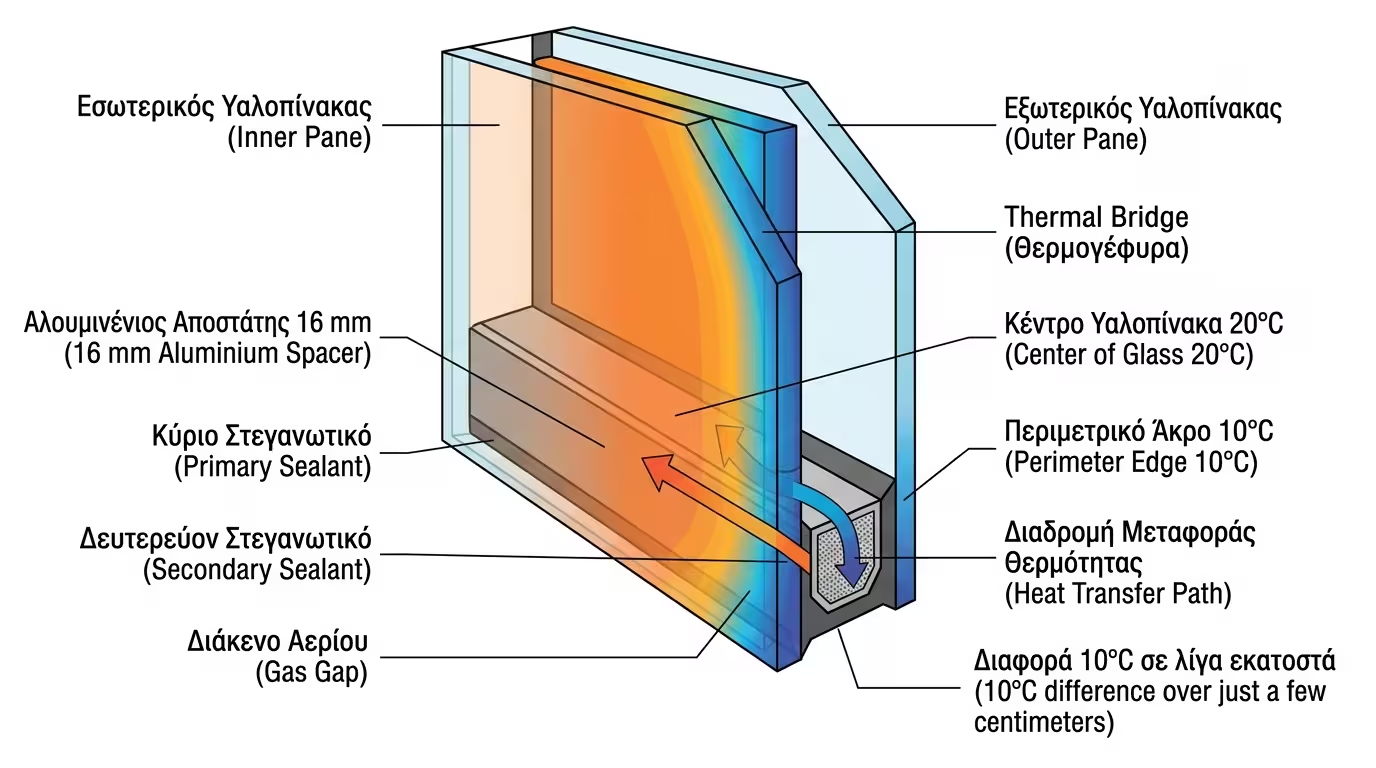
Cross-section of double glazing - aluminium spacer creating a thermal bridge at the perimeter

🏰 The "Trojan Horse" of the Cold

At the centre of the pane, the Argon and Low-E coating do a perfect job. But at the perimeter, the aluminium spacer creates a thermal bridge. The cold outer pane transfers its chill directly to the aluminium bar, which in turn freezes the edge of the inner pane. Centre: 20°C. Edge: 10°C.
💧 Condensation and Mould

The effect is particularly intense on cold winter nights, when the warm, moist indoor air (from cooking, bathing, breathing) touches this frozen edge and condenses. Result: water droplets (condensation) and the growth of dangerous black mould. Mould is not merely a cosmetic problem - it is a serious health risk, especially for children and people with allergies or asthma.

2. The Warm Edge Revolution

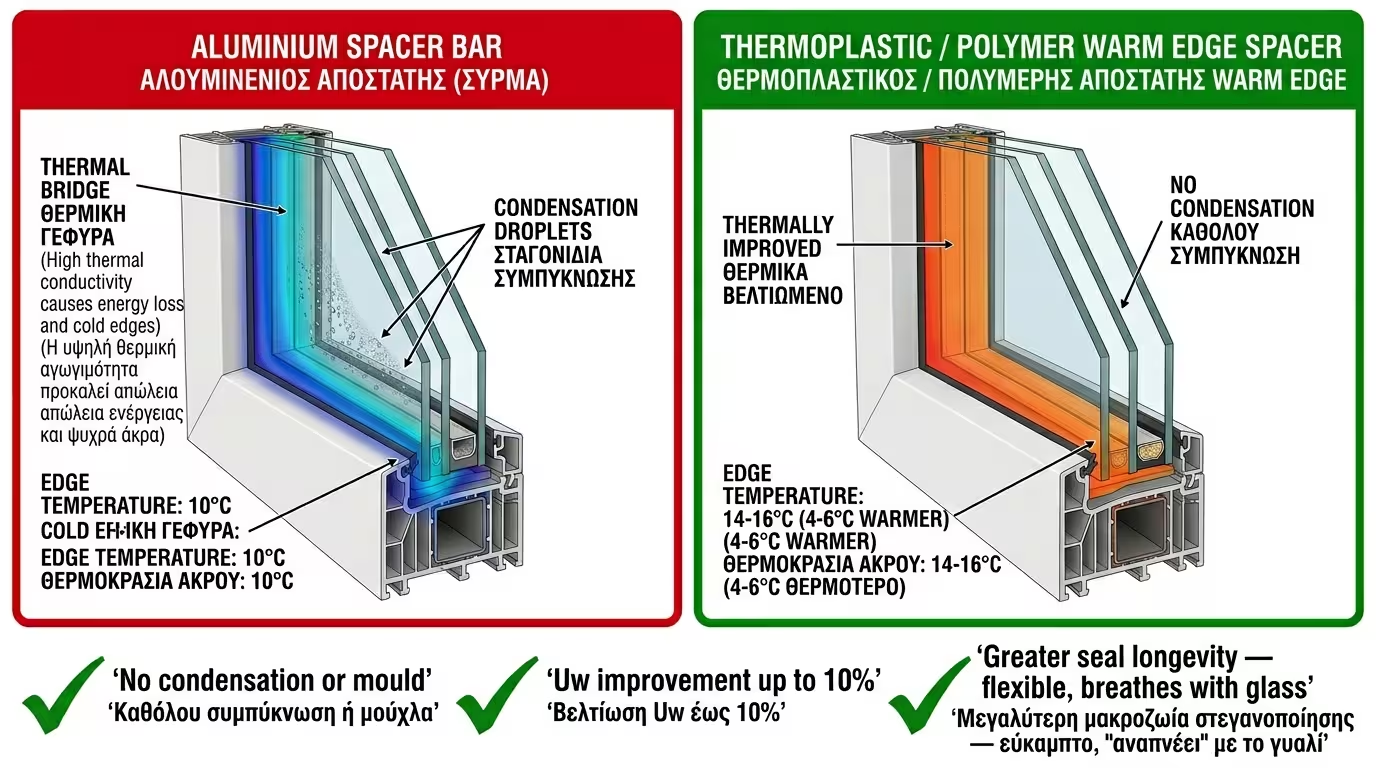
Perimeter temperature comparison with aluminium vs Warm Edge spacer - thermal image

Instead of aluminium, modern Warm Edge spacers are made from composite thermoplastic materials, special polymers or a combination of plastic and stainless steel. These materials are excellent insulators.

🚫 No More Moisture and Mould

Because plastic doesn't conduct cold, the inner edge of the glass remains "warm". The perimeter temperature rises by 4°C to 6°C compared to an aluminium spacer. Condensation disappears entirely under normal conditions.

📈 Overall Insulation Improvement (Uw)

A Warm Edge spacer can improve the thermal transmittance of the entire window (Uw) by up to 10%! It turns an already good energy window into an excellent one.

🔧 Greater Longevity

Aluminium expands and contracts violently with temperature swings, stressing the sealants. Thermoplastic spacers are more flexible - they "breathe" with the glass and reduce the risk of seal failure.

3. Is the Extra Cost Worth It?

This is probably the easiest question to answer: Yes, without a doubt.

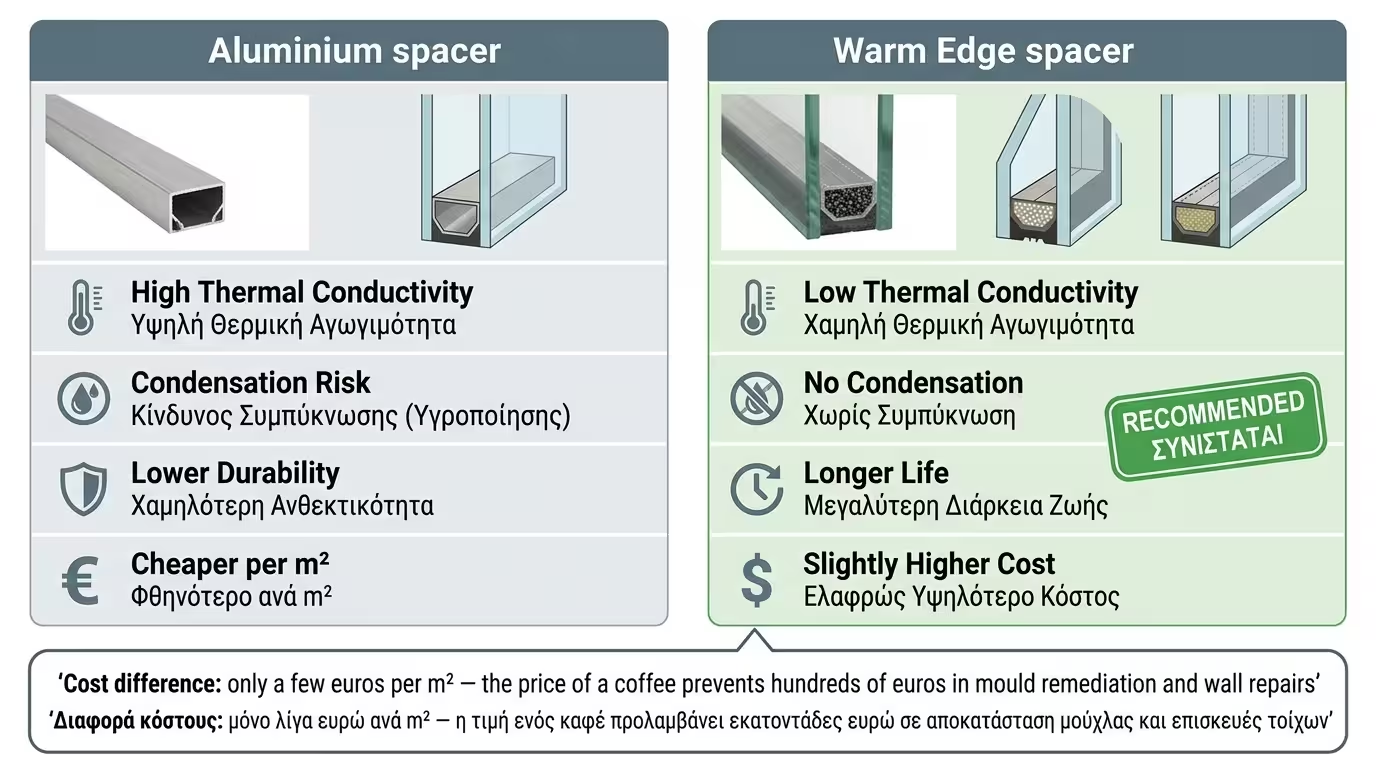
Cost comparison between aluminium and Warm Edge spacers - minimal price difference

✅ Negligible Cost, Enormous Benefit

The cost difference between an aluminium spacer and a Warm Edge spacer is literally a few euros per square metre - negligible in the total renovation budget. This "detail" will protect your health from mould and your frames from corrosion.

☕ The Comparison

Think of it as an investment in prevention: for the price of a coffee, you avoid problems that would cost you hundreds of euros in mould removal, repainting walls and repairs.

4. Summary

🔍 The Detail That Sets Professionals Apart

When comparing quotes for your new windows, don't just look at whether the glass is "energy-rated". Look at the detail that separates a true professional from the rest. The spacer choice is the "secret ingredient" of a truly high-performance window.

📝 What to Ask For

Always ask for the type of spacer to be specified in the quote. If it is not mentioned, the most likely explanation is that they are using the cheap aluminium one - and that will be your first clue about the quality of their glazing.

Related Articles

Glass Panes & Glazing Units: 80% of the Window

Return to category.

Go to category

Preview