Air Quality & Air Conditioning: Ionisers, UV-C Lamps and Filters. Do
They Actually Work?
In recent years, the search for a new air conditioner is no longer just
about cooling and heating. Manufacturers have turned "Indoor Air
Quality" (IAQ) into the number-one sales argument. We read about
built-in Plasma Ionisers, ultraviolet (UV-C) lamps, activated carbon
filters and technologies that promise to exterminate viruses, bacteria
and allergens.
If you have allergies, asthma, or simply worry about the air your family
breathes, it is very easy to get carried away and pay hundreds of euros
extra for a machine with these "magic" features.
As engineers, it is time to state a harsh but necessary truth: A wall-mounted air conditioner is not an Air Purifier. Let us put these technologies under the microscope of physics to see what
they truly deliver and when the marketing exceeds reality.
1. The Basic Dust Filter (The Great Misunderstanding)
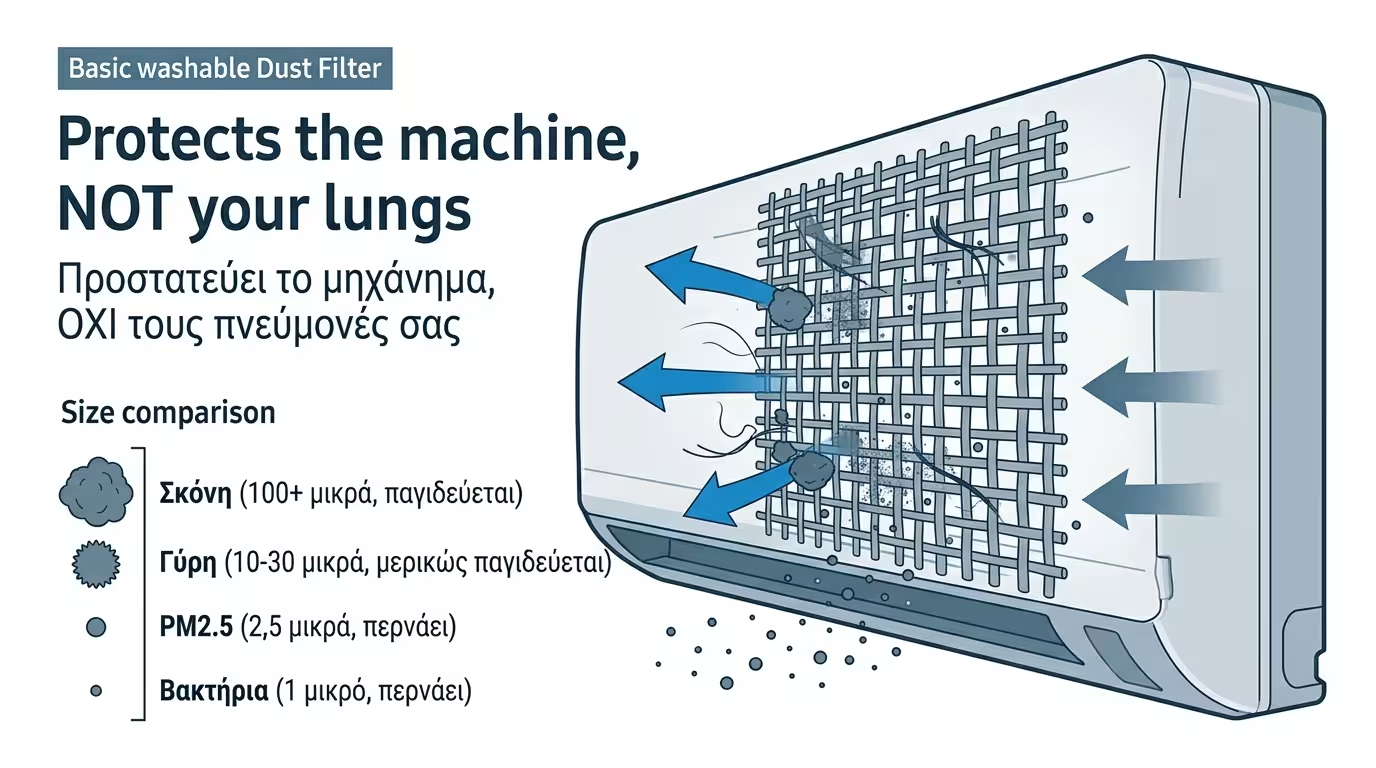
Open the cover of any air conditioner and you will see two large
plastic mesh screens. Many people believe these filter the room's air.
❌ The Truth
These basic, washable filters are extremely coarse. They were not
designed to protect your lungs from pollen or fine particulates
(PM2.5). They were designed exclusively to protect the machine itself (the fan and coil) from coarse dust, hair and lint. If all that debris
got through, the air conditioner would clog within a month. They do not clean the room's air.
2. Ioniser (Plasma / Cold Fusion): How Does It Work?
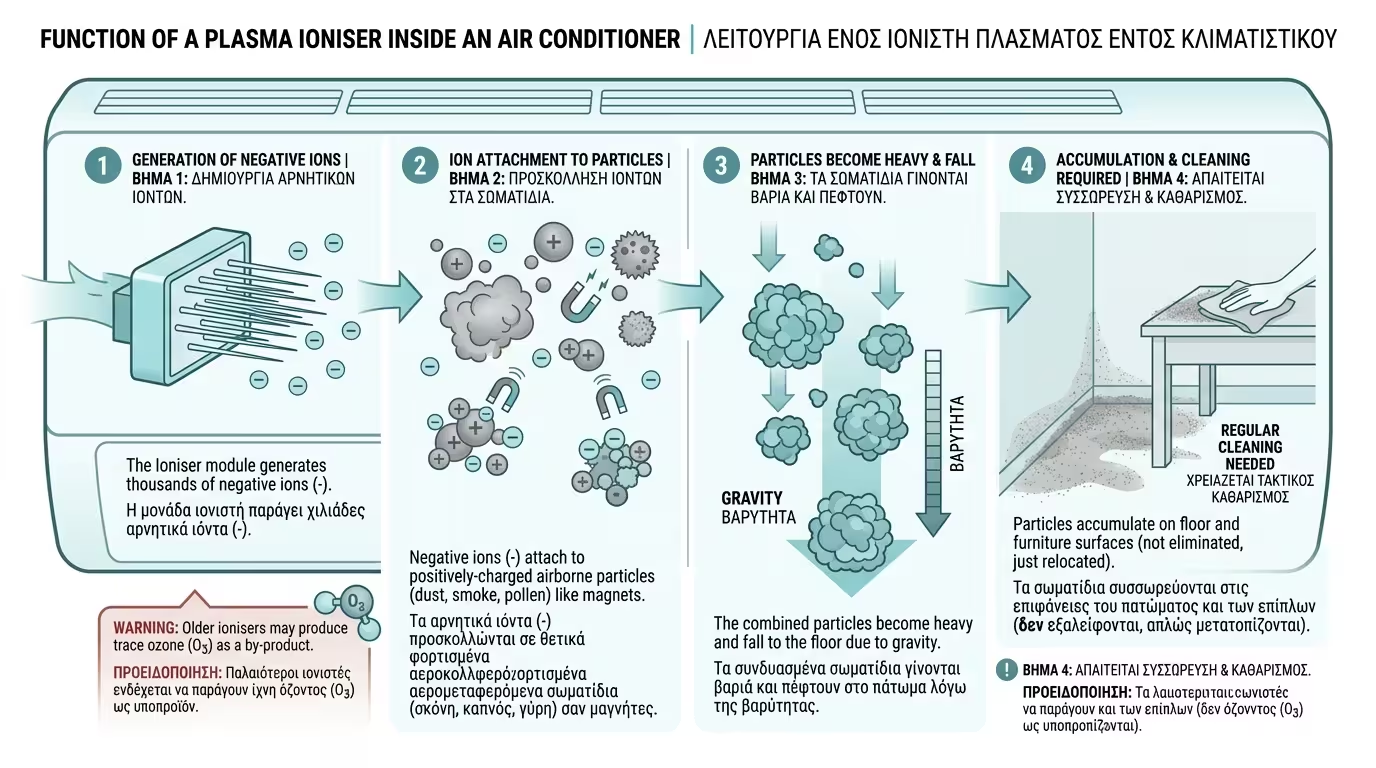
The Ioniser is the most popular "extra" in modern AC units. By
pressing the tree icon on the remote, you activate a small device
inside the machine that releases thousands of negative ions into the
room air.
📚 The Theory
Dust, smoke and pollen floating in the room usually carry a positive
electrical charge. The negative ions attach to these particles like
magnets. As they combine, they become heavy and, due to gravity,
"fall" to the floor or stick to walls and furniture.
✅ The Positive
It genuinely helps reduce odours (e.g. cigarette smoke, cooking) and
gives a sense of "freshness" (like the air after a thunderstorm).
⚠️ The "Trap"
The ioniser does not make the dust disappear from the
room. It merely forces it to settle on the floor. If you don't vacuum,
the first gust of air will lift it back up. Moreover, older or cheap ionisers
produce traces of ozone (O₃) as a by-product, which in
high concentrations can seriously irritate the respiratory system.
3. UV-C Lamps: Do They Kill Viruses?
Ultraviolet radiation (UV-C) is used in hospitals because it destroys
the DNA of viruses and bacteria, killing them. Its incorporation into
residential air conditioners became the ultimate trend after the
pandemic.
🔬 The Physics Truth
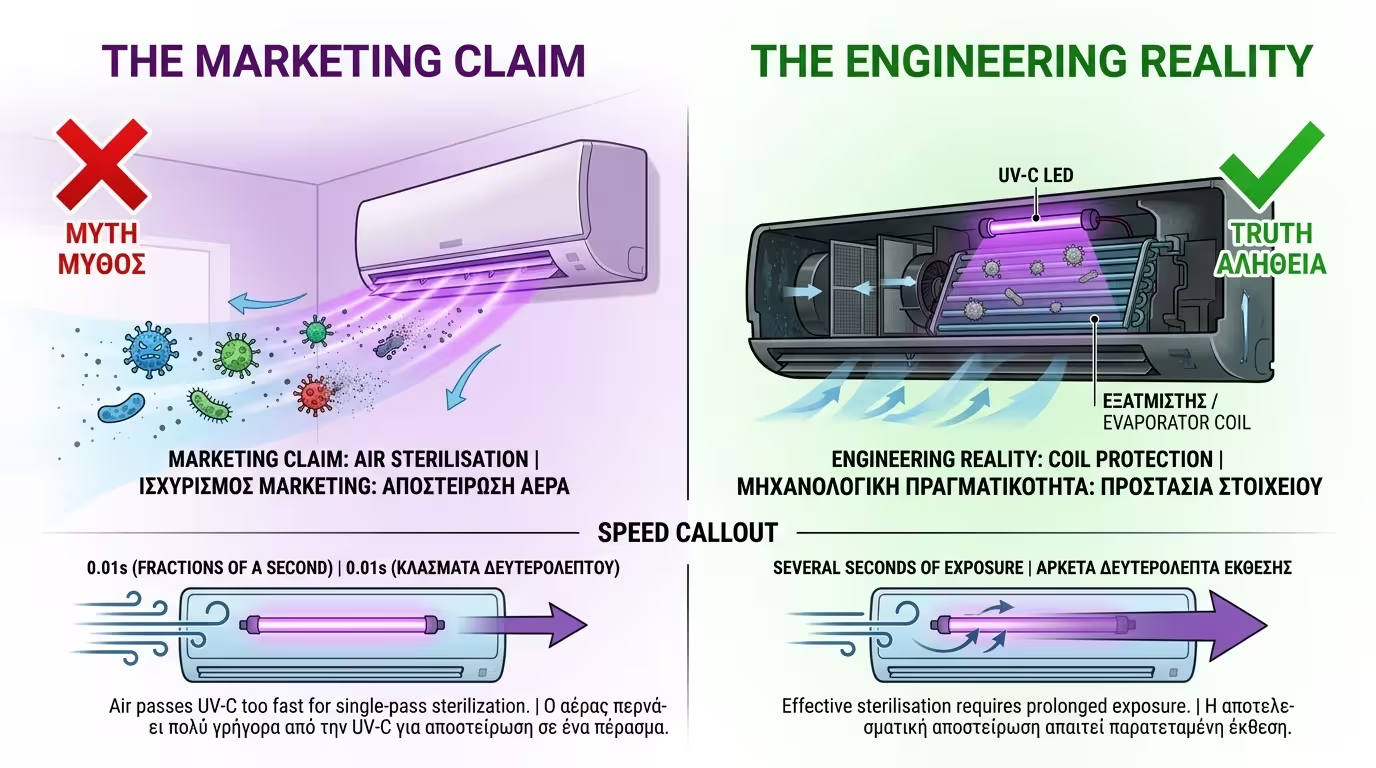
For a UV-C lamp to kill a virus, the virus must be exposed to its
light for several seconds. However, the air conditioner fan
draws and expels room air at frightening speed (hundreds of cubic
metres per hour). The air passes in front of the tiny UV LED in fractions of a second. In so little time, it is impossible to sterilise your living
room's air.
🛡️ The Real Usefulness
The UV-C lamp in air conditioners does not protect you from those
coughing in the living room. It protects the machine itself. Because the AC interior is dark with permanent moisture, it is the perfect
breeding ground for mould. The UV-C light "bathes" the internal coil,
preventing mould growth and the familiar smell (the "wet sock" odour when
you first switch on).
4. The Myth of "HEPA Filters" in Split Air Conditioners
True HEPA filters (High-Efficiency Particulate Air) are medical-grade.
They capture 99.97% of particles (including viruses). So
why aren't they fitted in all AC units?
🧱 The Static Pressure Problem
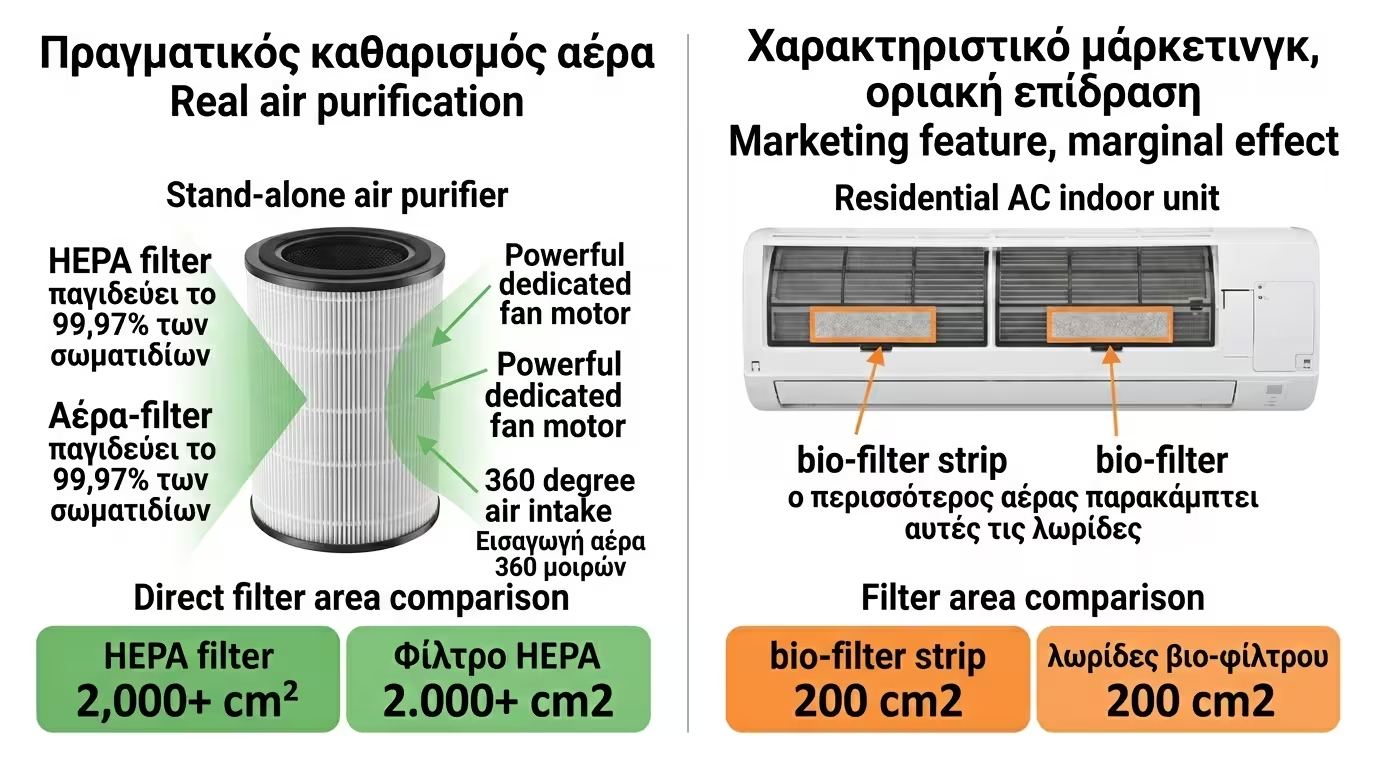
A true HEPA filter is incredibly "dense" (like thick cardboard). To
push air through it requires a massive, powerful fan motor (like
those in stand-alone Air Purifiers). A residential wall-mounted air
conditioner's fan is far too weak. If you fitted a full HEPA filter,
it would "choke" the machine. Air wouldn't pass
through, the coil would ice up and the unit would be destroyed.
🏷️ What They Actually Sell You
When you see "Activated carbon filters" or "Bio-filters" on air
conditioners, they are usually two tiny strips (about 20×5 cm) that
"clip" onto the main mesh screen. Most of the air simply... bypasses
these small strips. They offer a marginal improvement, but they do not turn the room into a "sterile chamber".
5. Final Verdict
✅ The Positives
The built-in purification systems in modern air conditioners
(Ionisers, UV-C, filters) are welcome additions. They help keep the machine itself clean internally and slightly reduce odours in the space.
⚠️ The Hard Truth
Do not choose an air conditioner based solely on air quality
claims, and certainly do not pay exorbitant sums for it. If you or your
child have a serious problem with allergies, asthma, or you live in
an area with polluted air (smog, wood-burning stoves), the only solution is to buy a separate, stand-alone Air Purifier with a large, genuine cylindrical HEPA filter. Let the air conditioner
do what it does best: regulate temperature!
Related video
Prefer watching instead?
This article also has a video version with the same topic in a more direct walkthrough format.