Finishing materials
The items you actually see in the finished space.
When a homeowner thinks about renovating, usually the first thing they look at is the materials: tiles, sanitary ware, faucets, furniture, kitchen, floors, doors, lighting.
This makes sense, because the materials are what can be seen in the final result. They are what the customer chooses, what he compares in stores and what largely determines the aesthetics of the space.
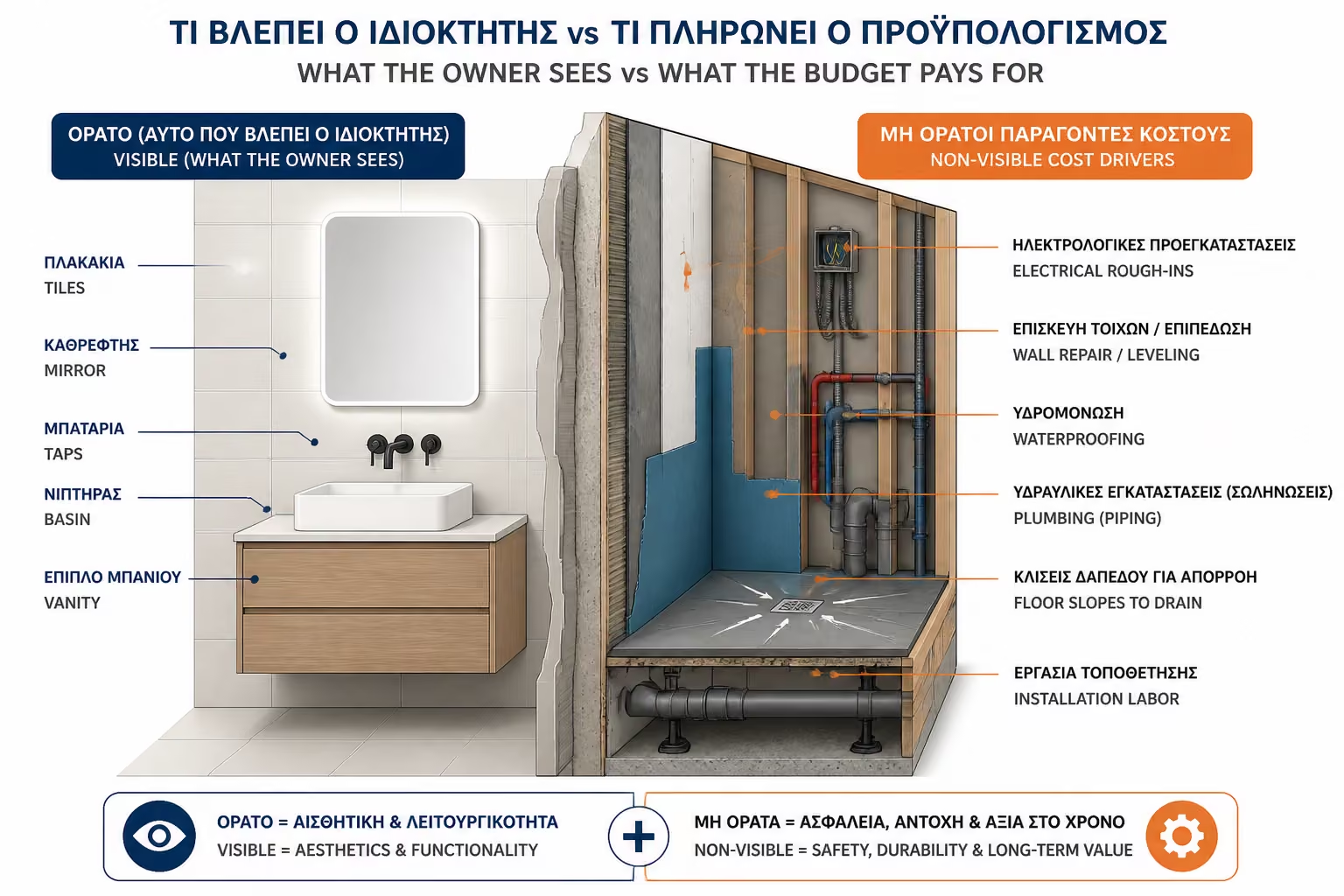
But in a proper renovation, a large part of the budget does not go only to what is visible. It also goes to work that is behind the walls, under the tiles or inside the facilities: plumbing, electrical, plastering, cement mortars, waterproofing, stripping, transport, cleaning and technical organization.
Simply put, the final cost of a renovation is not just "how much the materials do". It is the sum of materials, labor, technical preparation and correct execution.
In a typical renovation, the total cost is usually divided into three broad categories:
A realistic distribution for the Greek market is approximately as follows:
| Category | Budget rate | What does it include? |
|---|---|---|
| Labor & technical works | 35% – 50% | Removal, plumbing, electrical, tiling, plastering, painting, installation. |
| Finishing materials | 30% – 45% | Tiles, sanitary ware, furniture, taps, flooring, doors, and lighting. |
| Infrastructure materials & micromaterials | 10% – 20% | Adhesives, grouts, piping, cables, siphons, waterproofing, putties, screws, consumables. |
| Organization, transportation & contingencies | 5% – 10% | Transport, hauling, debris handling, minor fixes, coordination, and extra project needs. |
These percentages are not absolute. In a budget renovation, labor may be a larger percentage because the materials are simpler. In a premium renovation, materials can add a lot to the total cost, especially if expensive tiles, custom furniture or designer sanitary ware are selected.
The items you actually see in the finished space.
The work carried out by the different trades.
The hidden materials that are essential for doing the job properly.
Many owners are surprised to see that labor is a large part of the budget. This is because they often think only of the end product.
For example, they see a tile at €15/sq.m. and they calculate that for 25 sq.m. they need about €375. But installation is not only about "sticking" the tile to the wall.
Before that they may need:
The same applies to plumbing and electrical work. The customer ultimately sees a tap, a socket, or a light. But the real work is behind them: pipework, cabling, rough-ins, testing, connections, and safe installation.
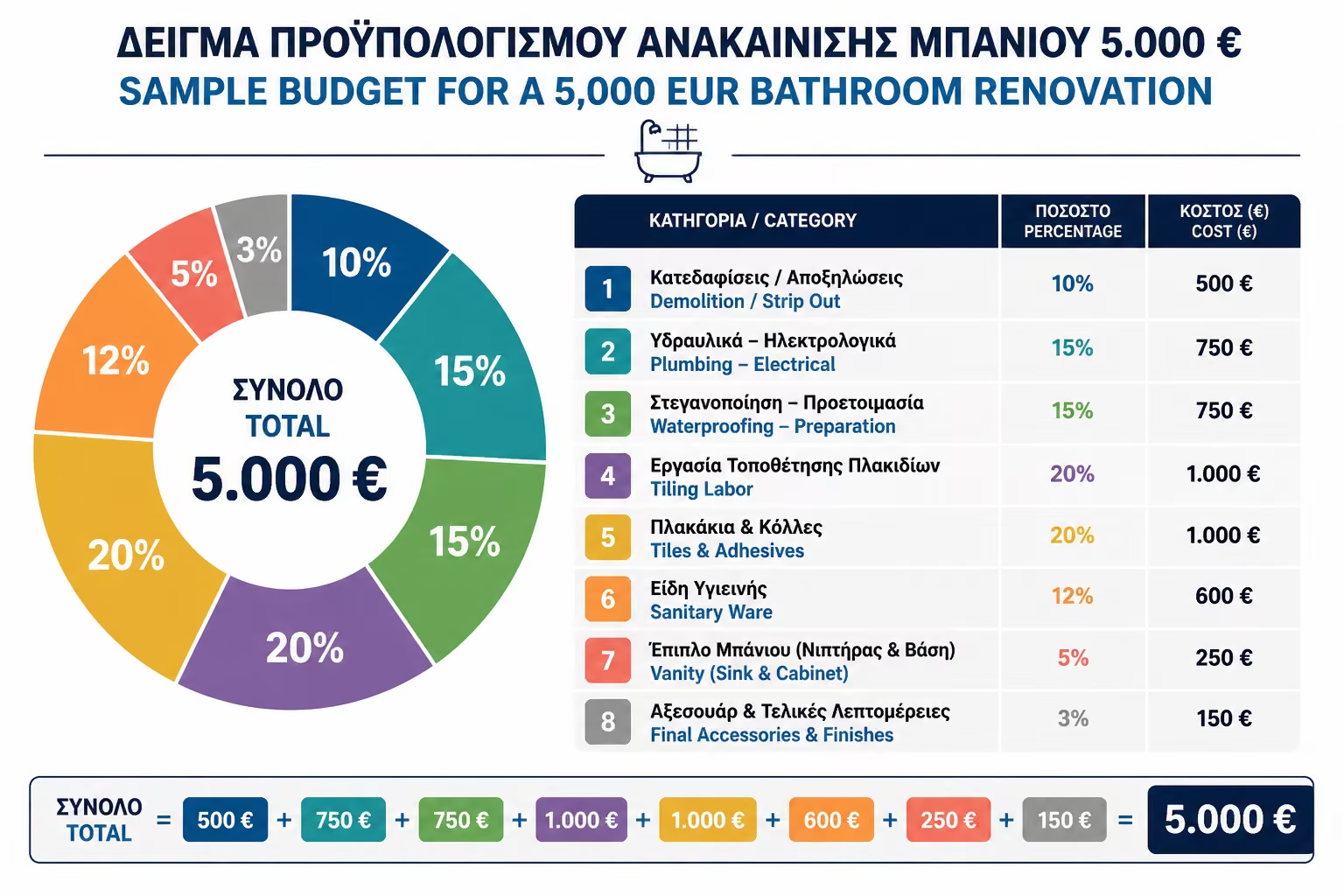
Let's take as an example a typical bathroom of 5 sq.m., with a total cost of around €4,500.
A realistic distribution might be:
| Category | Indicative Cost | Quota |
|---|---|---|
| Removals & debris | €350 | 8% |
| Plumbing & electrical | €1,150 | 26% |
| Plastering, pouring & waterproofing | €450 | 10% |
| Tile installation labor | €350 | 8% |
| Tiles, adhesives & grouts | €650 | 14% |
| Sanitary ware & equipment | €1,350 | 30% |
| Painting, micro materials & finishes | €250 | 4% |
| Total | €4,500 | 100% |
In this example, the "visible" materials — tile, sink, cabinet, faucets, cabinet — make up about 40% to 45% of the cost.
The rest goes to the works and infrastructure materials that make the bathroom work properly for many years.
In a small bathroom, the distribution changes a little. The tiles and materials may be less, but the basic mechanics remain almost the same.
For example, in a small bathroom with a total cost of around €3,500, the allocation can be:
| Category | Indicative Cost | Quota |
|---|---|---|
| Removals & debris | €300 | 9% |
| Plumbing & electrical | €950 | 27% |
| Merimetia, rains & waterproofing | €350 | 10% |
| Working plates | €250 | 7% |
| Tiles, adhesives & grouts | €450 | 13% |
| Sanitary ware & equipment | €1,000 | 29% |
| Painting, micro materials & finishes | €200 | 5% |
| Total | €3,500 | 100% |
This shows why a small bathroom doesn't necessarily cost half as much as a larger one. The square footage decreases, but the cost of plumbing, electrical, stripping and basic preparation does not disappear.
In a renovation, the client often remembers the materials he chose: the tile, the furniture, the faucet, the paint, the countertop. But a large part of the budget goes to work that is not visible in the final result.
These are usually:
Piping, drains, faucets, fixtures and connections are not visible when the bathroom or kitchen is finished. But if they are done wrong, the problem will show itself later with leaks, dampness or poor drainage.
New lines, outlets, switches, rough-ins for lighting, appliance feeds, and safe connections are essential to the proper functioning of the space.
Before a tile, paint or floor can be put in, the surface must be properly prepared. If the wall is crooked, loose or full of moisture, the final result will not last.
Waterproofing is one of the most important points in bathrooms, showers, balconies and areas with water. It is not "extra luxury". It is construction protection.
The materials must be transported, the rubble removed, the area cleaned and the project delivered functional. These tasks are not visible in the final result, but they have a real cost.
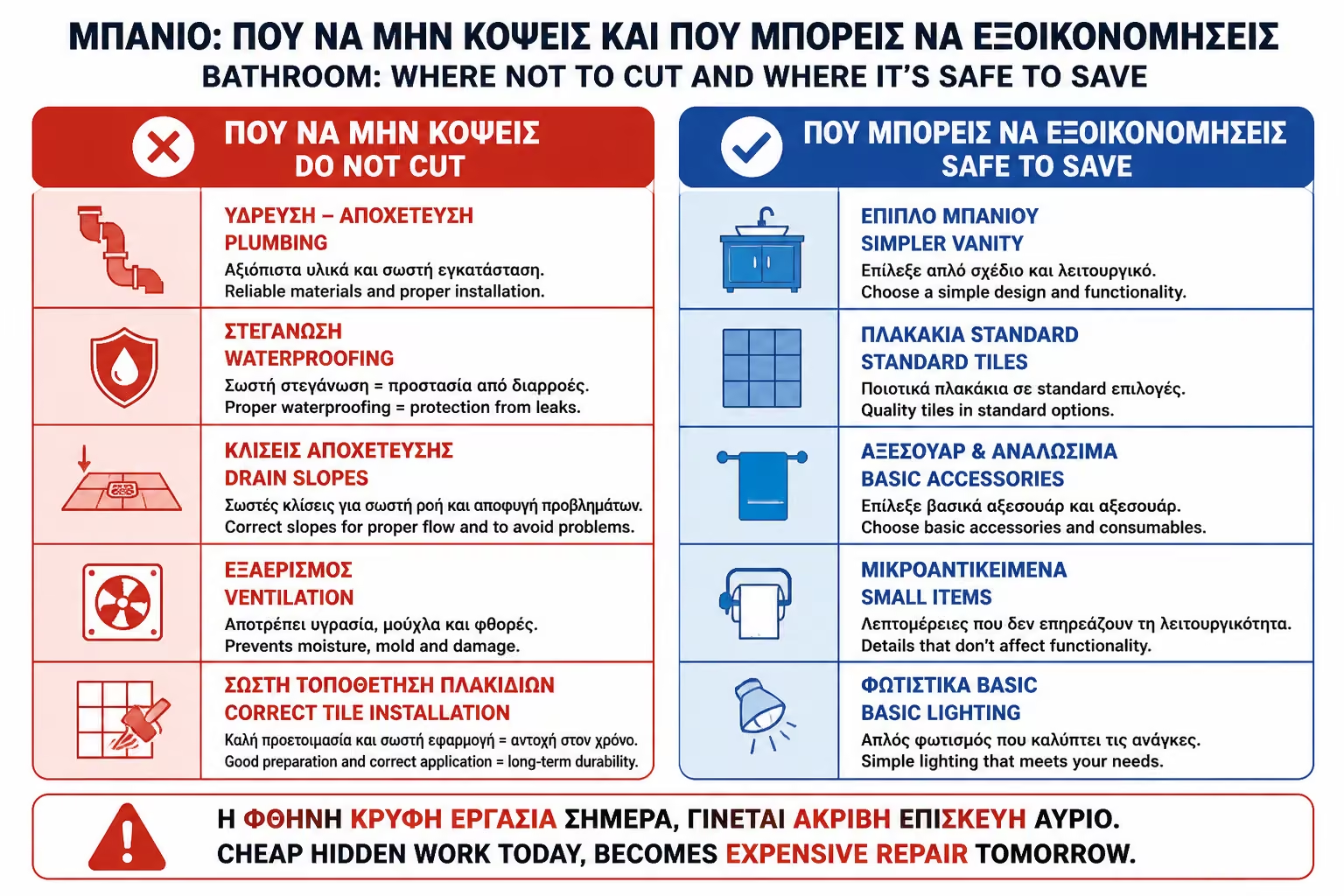
Economy in a renovation should be done with care. Not all cuts have the same consistency.
There are places where you can cut costs without compromising build quality.
Choosing simple design and reasonable dimension can reduce both purchase cost and installation cost.
You don't always have to choose the most expensive tile. There are very good options at medium prices, especially in standard sizes.
A ready-made bathroom or kitchen piece of furniture can be much more economical than a custom build. If the space is simple and has no particular requirements, it can be a very good solution.
You don't have to choose the most expensive series on the market. But you need to choose reliable products, not necessarily premium ones.
Changing the position of a basin, sink, kitchen or heating elements can significantly increase the cost. If the existing arrangement works, keeping it helps keep the budget down.
But there are points where the big economy can create problems in the future.
If the pipes are old, replacing them is one of the most important jobs. The cost of a leak after the renovation is complete can be far greater than the initial savings.
Electrical work must be done correctly and safely. Especially in kitchens, bathrooms and areas with appliances, makeshift solutions are not worth the risk.
In bathrooms, showers, balconies and roofs, waterproofing is critical. If it is omitted or done carelessly, problems can appear months or years later.
The final result depends a lot on the base. A good tile on a bad surface will not have the right result. A good paint on a wet or loose wall will not last.
Cheap installation may seem advantageous at first, but if there are crooked tiles, bad joints, gaps, bad slopes or wrong connections, the problem will show in daily use.
One of the most common mistakes is to compare two offers only by the final amount.
For example, two offers may both say €4,500, but not include the same things.
On paper they look the same. In practice they are different offers.
Therefore, each offer must be analyzed not only based on the final amount, but based on exactly what is included and what is left out.
Before you decide which garage or company to go with, ask for the basic details of the quote to be clearly stated.
Ideally, a proper quote should separate the following categories clearly:
The clearer the offer, the less likely there will be misunderstandings later.
A quote that's just a total number, with no breakdown, may seem quick and simple, but it doesn't help the owner understand what they're buying.
| Category | Quota | Amount in Budget €5,000 |
|---|---|---|
| Workshop workers | 35% | €1,750 |
| Finishing materials | 35% | €1,750 |
| Infrastructure materials & micromaterials | 15% | €750 |
| Transportation, collection & organization | 7% | €350 |
| Contingencies / minor adjustments | 8% | €400 |
| Total | 100% | €5,000 |
This table does not mean that every project will have exactly the same distribution. But it shows a realistic picture of where the money goes.
In projects with expensive materials, the percentage of materials goes up. In projects with many technical difficulties, old facilities or difficult access, the percentage of workers rises.
When comparing offers, do not look only at the final amount. Look first at what is actually included.
A quote with cheaper materials but correct workmanship can be far better than a quote with impressive materials but sloppy technical execution.
If you want to reduce costs, start with the materials that can be replaced more easily later: furniture, accessories, lighting, mirrors, or decorative choices.
Do not cut, however, from the work that cannot be seen: plumbing, electrical work, waterproofing, proper preparation, and good installation. These are what determine whether the renovation will last.
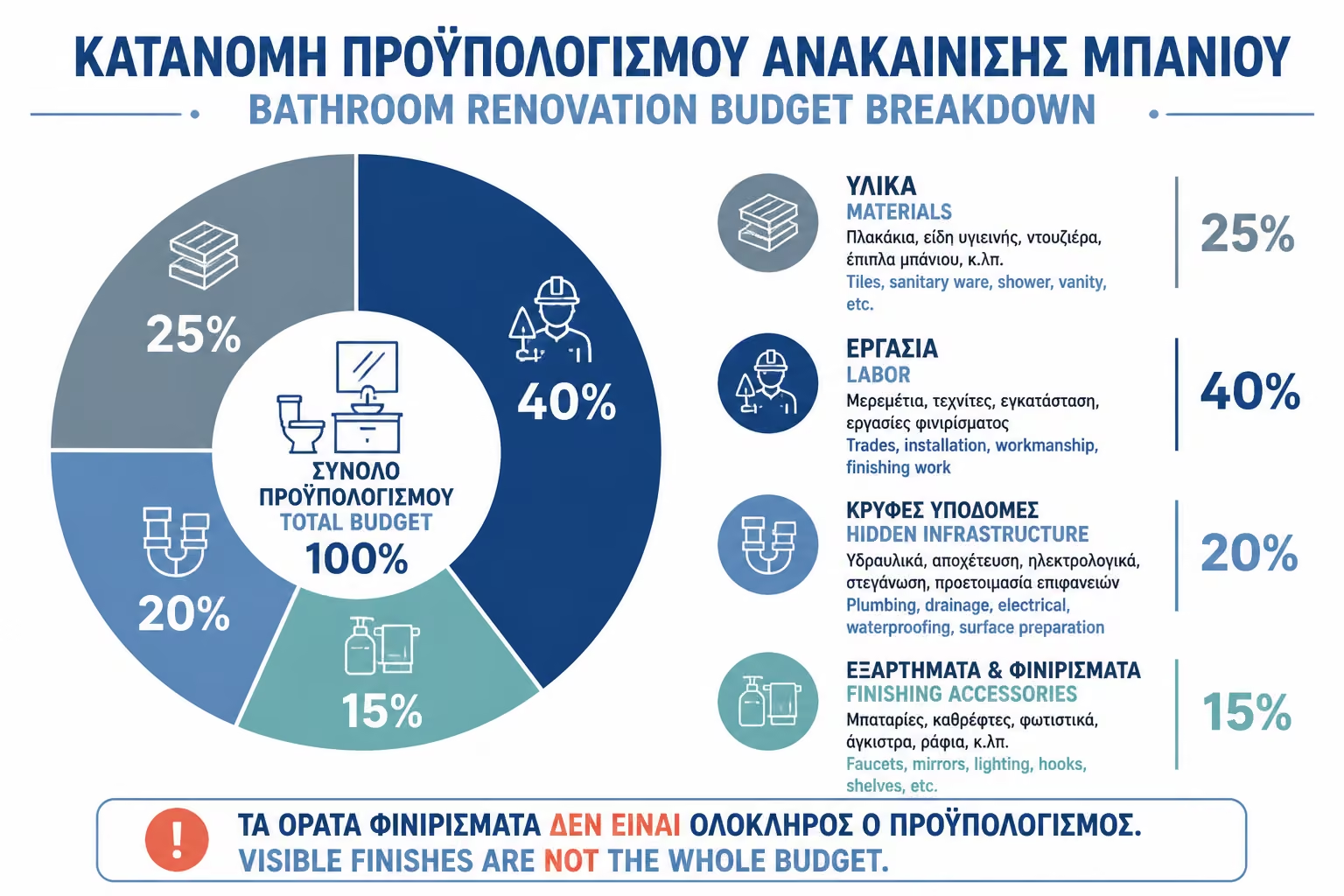
In a renovation, money doesn't just go to the materials you see. A large part of the budget goes to work that cannot be seen, but is necessary for the proper operation and durability of the space.
In general, a realistic budget split looks closer to the following percentages:
The right renovation is not necessarily the most expensive. It is the one that has a clean budget, correct technical execution and a balance between materials, labor and construction quality.
Always ask for a detailed quote before making a decision. That way you'll know not only how much the renovation costs, but also where your money is actually going.
Return to category.
Go to categoryReturn to the central guide.
Go to guide