Technical base: do not cut here
- plumbing,
- drainage,
- floor drains and siphons,
- waterproofing,
- electrical work,
- proper wall and floor preparation,
- correct falls,
- quality installation.
Bathroom remodeling doesn't always have to be expensive to get it right. But it needs proper prioritization. There are places where you can save without significant risk, and there are places where oversaving can cost you much more down the road.
The main mistake that many owners make is that they try to cut costs everywhere: a little of the plumbing, a little of the waterproofing, a little of the adhesives, a little of the tile, a little of the sanitary ware. However, the renovation can be cheaper in the beginning, but more expensive in practice.
The right approach is different: we keep the technical base strong and save on the parts that can be easily replaced or upgraded later.
Simply put: we don't cut from what's behind the tiles. We cut from everything that can be changed without stripping the bathroom again.
In a bathroom renovation, there are essentially two cost categories.
If you want to reduce cost intelligently, most of the savings should come from the visible elements that can be replaced later with much less disruption.
But if something goes wrong in the plumbing, drainage, or waterproofing, the result is usually demolition, moisture damage, repair work, and a much higher bill later.
There are several places where you can cut the budget without really compromising on build quality.
For an economical but still solid result, you can choose tiles around €12–20/sq.m. If you want something more distinctive, you can go a bit higher, but there is no need to jump to premium options for an everyday bathroom.
The big savings don't just come from the purchase price of the tile. It also comes from the ease of installation. A simple standard size tile is usually more economical to install than a very large tile, mosaic or custom design.
The same applies to hexagonal tiles, herringbone, mosaics, special decorative patterns or many changes of materials within the same space.
If the goal is to keep costs down, a simple, clean selection of reasonably sized tiles is usually smarter.
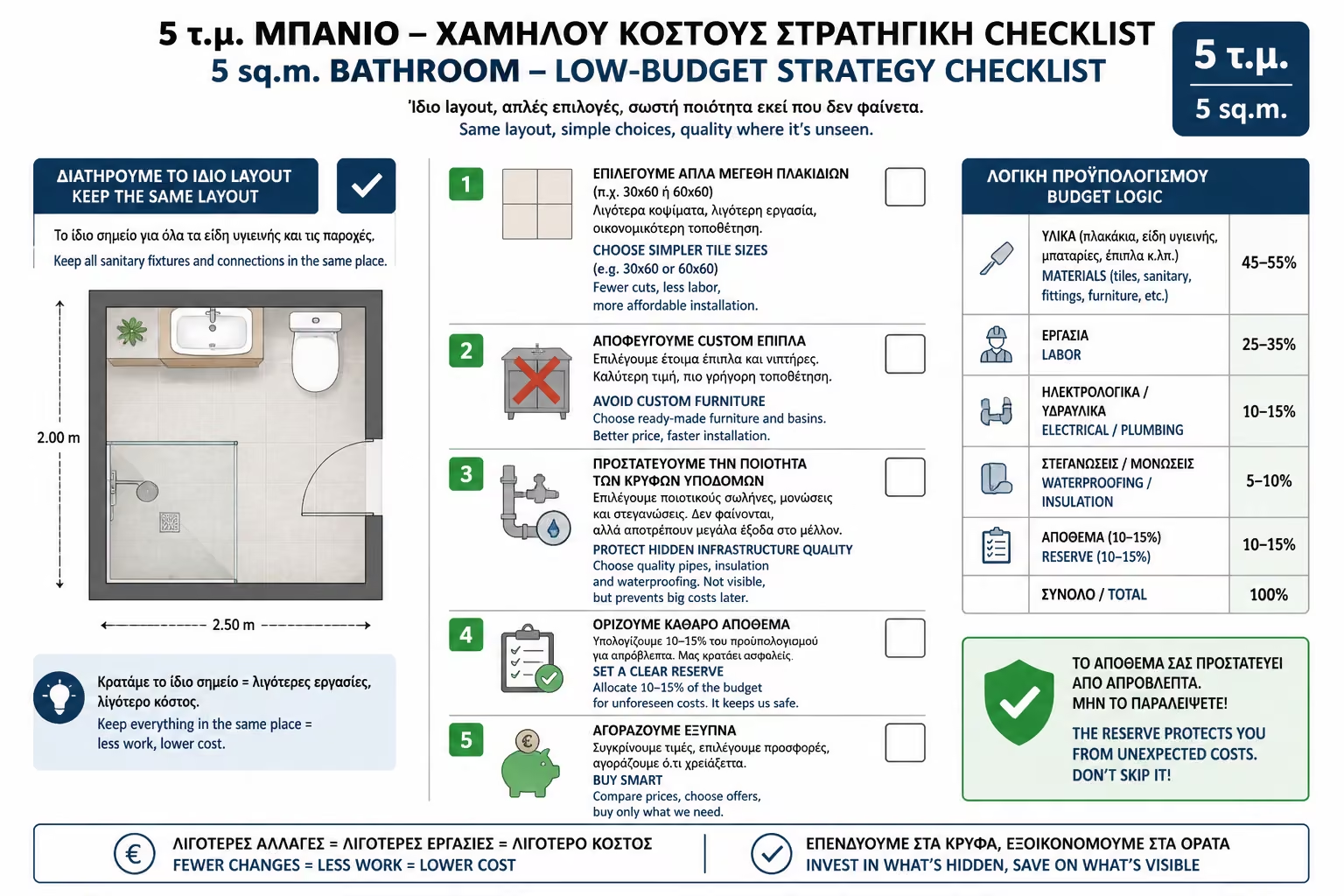
If the existing layout works, keeping it helps keep plumbing, drainage, maintenance and labor time down.
You can completely change the look of the bathroom without changing the positions of the sanitary ware. New tiles, new furniture, better lighting and more correct colors can make the space look new without major technical interventions.
Today there are several options in compact dimensions, small depth, hanging furniture and ready-made sets that cover the needs of a typical bathroom.
Custom construction is worth more when the space is difficult, very small or has special requirements.
A good midrange option can provide proper function, durability and decent looks without excessive cost.
What you should avoid are ultra-cheap, dubious-quality options, because taps are used every day and replacing them later can become a headache.
Each of these may seem small. But all together can raise the budget quite a bit.
You don't have to choose the most expensive tile to have a beautiful bathroom. There are many reliable options on the market at medium prices, especially in standard sizes.
Large tiles, such as 60x120cm or larger, can look very modern. But they usually cost more to buy, produce more wastage, and require more careful installation, which also pushes labor up.
Relocating a basin, sink, shower or washing machine is one of the most common reasons for increased costs.
Custom bathroom furniture can be beautiful and practical, but it usually costs more. If the space has simple dimensions, a ready-made piece of furniture with a sink and mirror can be a very good solution.
Washbasin and shower taps need to be reliable, but they do not always have to come from the most expensive product line on the market.
In a renovation, the budget does not always rise because of one big decision. It often climbs because of many small additions together: an illuminated mirror, a better enclosure, decorative tiles, special trims, shelves, concealed lighting, extra sockets, and last-minute changes.
Alternative materials can reduce costs or work time, but not all are suitable for all situations.
The most important thing is not to see them only as a "cheaper solution". We have to consider where they will go in, how much water they will receive, what substrate is behind them and what is the expected use of the bathroom.
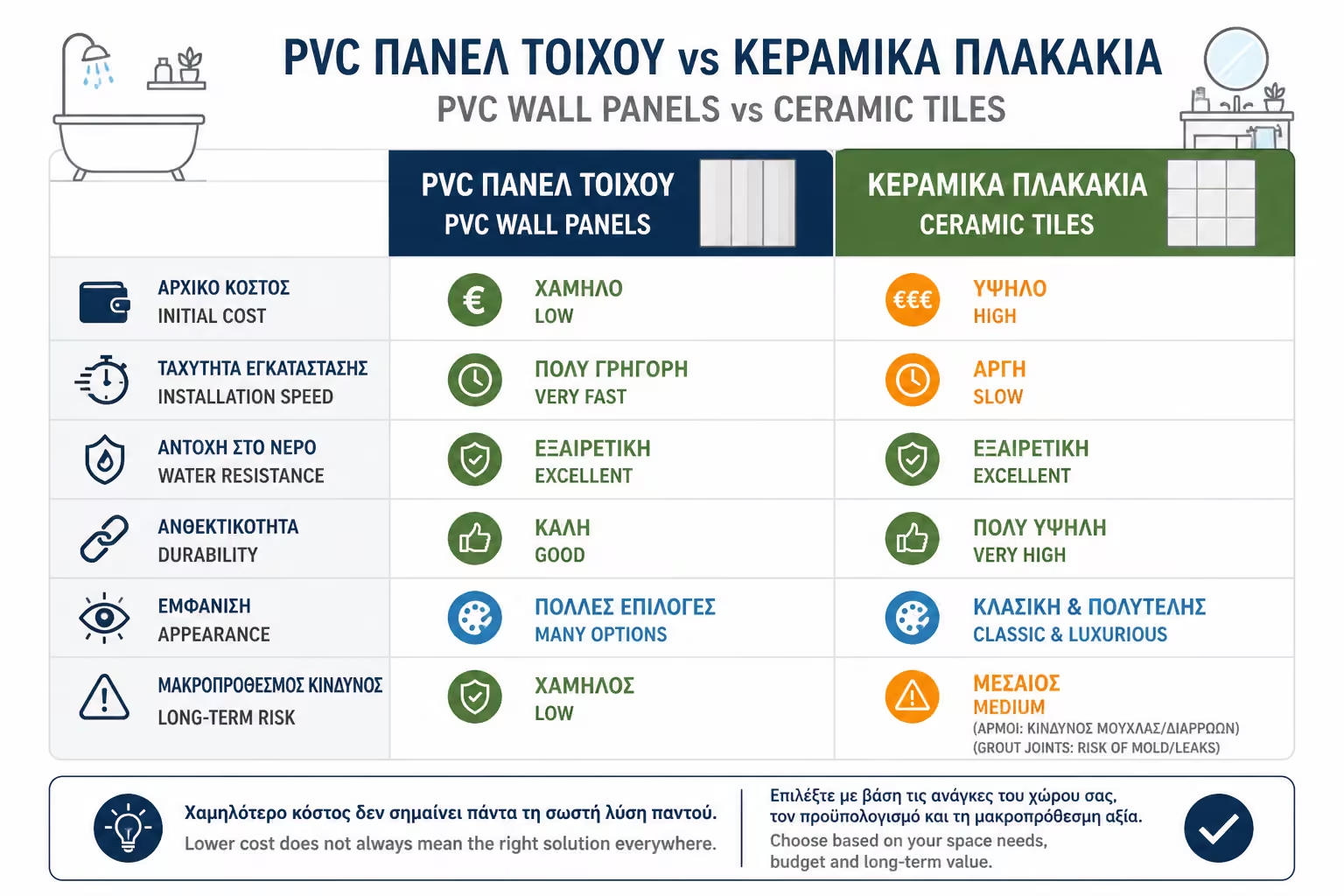
PVC panels are wall covering panels that can be installed faster than tiles and immediately give a cleaner image to the space.
In some cases they can be an interesting saving solution, especially when the goal is a quick and economical renewal.
In simple words, PVC panels can be a smart economic solution for renewal, but they should not be used to "hide" problems that need technical restoration.
In addition to PVC panels, there are other options that can reduce the budget without spoiling the final result.
Tile can be fitted up to a reasonable height on less wet walls and full cladding only in the shower area.
This reduces:
However, proper planning is needed so that the result does not look sketchy.
This can reduce costs and give a lighter aesthetic to the bathroom.
However, it should not be used as a substitute for tiling or waterproofing within the shower area.
If the budget is tight, a good ready-made shower with a proper cabin can be a more economical and safe option.
In economic renovation, you can choose:
If the rest of the bathroom is done right, the cabin can be replaced in the future without much uprooting.
You can predict the power supply correctly now and install a more economical mirror, leaving the upgrade for later.
In some bathrooms it is not necessary to tile all walls up to the ceiling.
On walls that do not directly receive water, a color suitable for wet areas can be used instead of a tile all the way up.
The built-in shower can be very beautiful, but it requires proper drains, waterproofing, siphoning and careful construction.
The shower cabin can raise the cost, especially if it is of special dimensions or a walk-in.
The illuminated mirror is practical and beautiful, but it is not always necessary from day one.
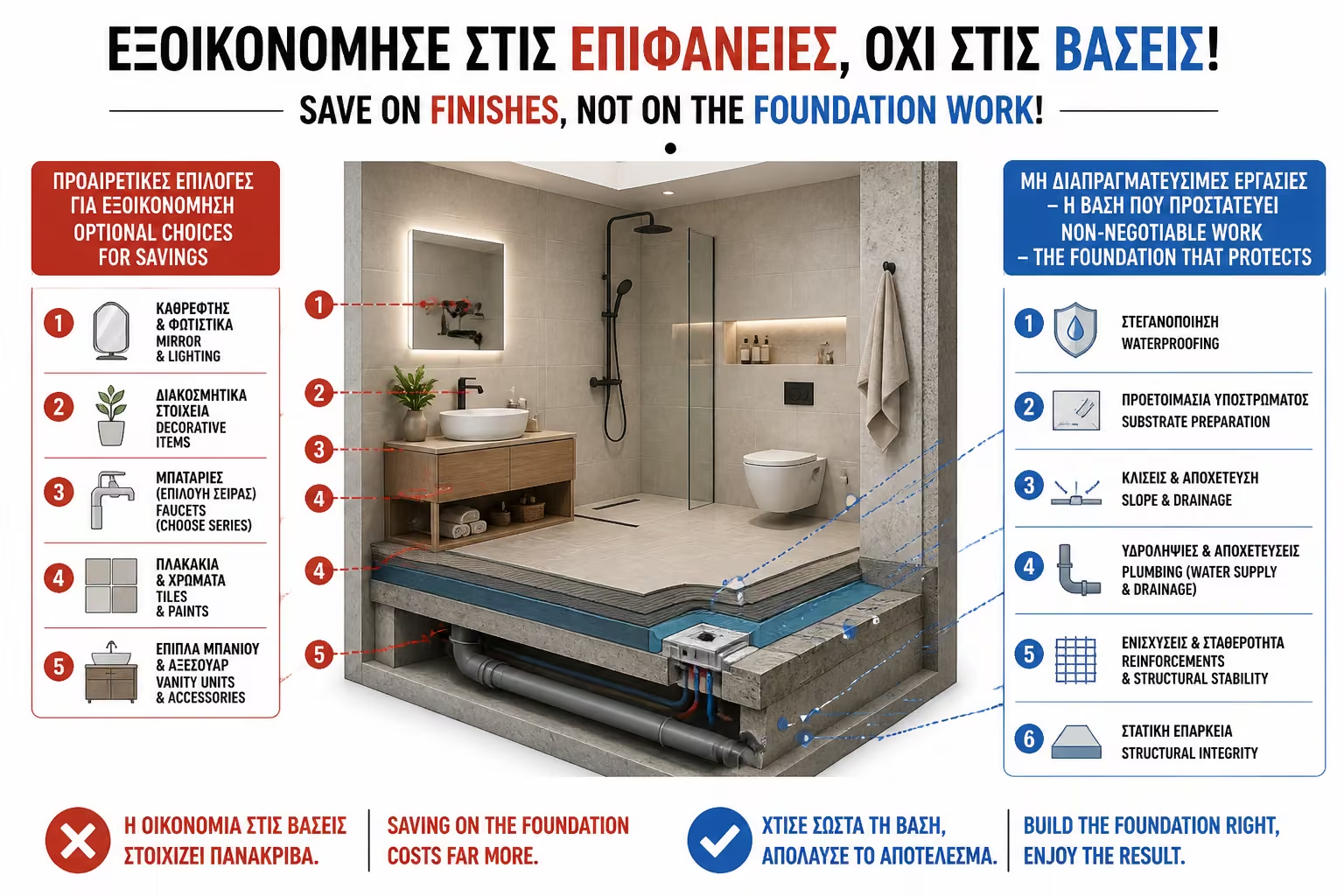
There are places where it is not worth saving a lot. Not because you have to choose the most expensive materials, but because a proper job has to be done.
The economy in plumbing is one of the most dangerous, because if a leak occurs, it usually cannot be fixed without tearing it apart.
A beautiful bathroom with poor drainage will be a daily problem. For this, the drains, the siphon and the connection of the drain must be done correctly.
Especially in the shower zone, around siphons, corners and points that receive water, proper sealing must be done.
If you cut from here, dampness can appear on adjacent walls, on the floor or ceiling of the lower level.
The choice of suitable adhesive and grout depends on the type of tile, the substrate, the humidity and the use of the space.
The economy in these materials is small in relation to the total cost, but it can greatly affect the strength of the structure.
The right craftsman will pay attention to the bevels, joints, cuts, angles, finishes and details that make a difference in everyday use.
If the bathroom is old, changing the plumbing is one of the most important jobs. It doesn't make sense to put new tiles over old pipes that may become a problem in a few years.
The siphon and the slopes of the floor determine whether the bathroom will drain properly.
Waterproofing is not visible in the final result, but it is one of the most important tasks.
It is not enough to buy good tile. Correct application materials must also be used.
Placement is what ties all of the above together. An economical tile can look very nice if installed correctly. An expensive tile can look ugly if it is put in sloppily.
Let's look at a simple example.
A bathroom of 5 sq.m. it can have an initial budget of around €5,500 with more expensive options. With smarter choices of materials, it can drop close to €4,300 – €4,700, without discounting the critical technical points.
| Selection | More expensive solution | More economical solution | Potential savings |
|---|---|---|---|
| Tiles | €900 | €500 | €400 |
| Bathroom furniture | €800 | €350 | €450 |
| Cabin / glass | €700 | €300 | €400 |
| Batteries | €450 | €220 | €230 |
| Mirror / lighting | €350 | €150 | €200 |
| Total savings | approximately €1,680 |
In this example, the savings come without weakening the technical core of the renovation.
Plumbing, drainage, floor drain, waterproofing, adhesives, proper preparation, and the core labor stayed intact.
The savings came from aesthetic selections that can be upgraded later without opening the bathroom again.
We cut out options that mainly affect aesthetics and can be upgraded later.
Economy becomes a risk when costs are reduced in a way that affects the function and durability of the bathroom.
Be careful when a low price is achieved by simply omitting crucial items that will later return as extras.
That is not smart saving. It is deferred risk.
If the fundamentals are absent from the quote, the offer is incomplete, not economical.
Cheap or unspecified adhesives and grout often create bigger failures later.
These are classic reasons why a quote looks cheaper than it really is.
If loose walls or dampness appear, the homeowner should already know the decision process.
Without a clear scope description, low labor pricing is often a warning sign.
A financial offer can be good as long as it is clean. The problem is not the low price per se. The problem is the low price without resolution.
If you want to keep costs low without compromising quality, follow a simple strategy:
Decide from the beginning where the basin, sink, shower and washing machine will be. Avoid mid-project changes.
Make sure the bid includes proper plumbing, drainage, siphoning, waterproofing and preparation.
Prefer mid-range tiles, simple dimensions and timeless colors. This way you reduce both the purchase cost and the installation cost.
Furniture, mirror, accessories, lighting and cabin can be selected in more economical versions or upgraded later.
Even if you want to renovate financially, keep a reserve of around 10% – 15% for contingencies. It is better to be left over than to be missing in the middle of the project.
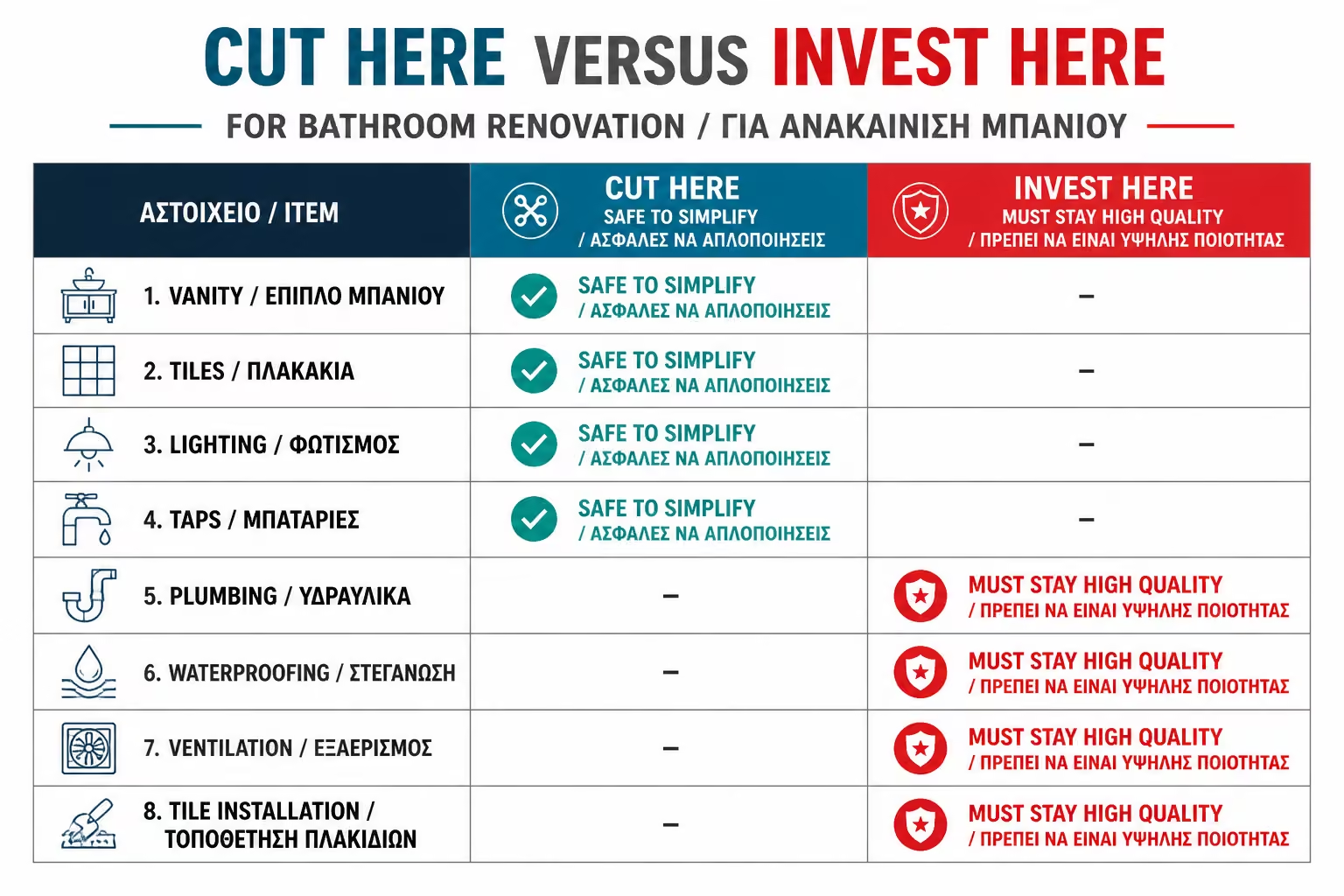
| Category | Can you save money? | Comment |
|---|---|---|
| Tiles | Yes | Choose medium class and simple dimensions. |
| Bathroom furniture | Yes | Ready-made furniture instead of custom construction. |
| Mirror / lighting | Yes | It can be upgraded later. |
| Shower cabin | Yes, with care | Choose a simple solution, but correct dimensions. |
| Batteries | Yes, up to a point | Not very cheap solutions of dubious quality. |
| Plumbing | No | Especially in old bathrooms they have to be done right. |
| Drain / siphon | No | They directly affect the function of the bathroom. |
| Waterproofing | No | Protects against future moisture. |
| Adhesives / grouts | Not particularly | The economy is small, the risk is big. |
| Good placement | No | It determines the durability and the final image. |
If you want to reduce the cost of a bathroom renovation, do not start by cutting plumbing, drainage, waterproofing, or preparation.
Start with the visible materials that can be changed more easily: mid-range tiles, ready-made furniture, a simpler shower enclosure, a cheaper mirror, and sensible tap choices.
PVC panels and other alternative materials can help in specific cases, mainly in quick refreshes or secondary bathrooms. But they should never be used to hide moisture, old pipework, or technical problems that need a real repair.
The best saving is the one that lowers cost without shortening the lifespan of the renovation.
Cutting costs in a bathroom renovation doesn't mean a sloppy job. It means right choices.
You can keep the budget lower if:
But you shouldn't make big discounts on:
A bathroom can be made economical, beautiful and durable. The secret is to know where it is worth saving money and where you should invest from the beginning.
Return to category.
Go to categoryReturn to the central guide.
Go to guide