
Bathroom DIY, Maintenance & Styling
Return to category.
Go to categoryBottles in the shower are one of the most common sources of clutter in the bathroom. Shampoo, conditioner, shower gel, scrub, hair mask, baby products, razors and cleaners end up on shelves, corners, on the edge of the bathtub or even on the floor. Even if the space is clean, the image is more reminiscent of a product warehouse than a calm, organized bathroom.
Wall-mounted soap and shampoo dispensers are a solution that comes straight from the logic of hotels and spas. Instead of having many individual bottles, one, two or three fixed containers are placed on the shower wall, usually for shampoo, conditioner and body wash. This frees up space from the shelves, floor and corners, while the shower looks cleaner and more thought out.
The big advantage is the visual order. Products do not disappear, but enter a single system. Instead of colorful packaging with labels, you see clean lines, identical containers and a specific location. The result is more hotel-style, more minimal and easier to use. You press the pump and get the amount you need, without fumbling for bottles with wet hands.
But there is also a technical side. The wall dispensers go inside a wet zone. They accept water, steam, soaps and daily use. They must be properly supported, easy to fill, easy to clean, non-drip, non-sticky and non-mould-collecting. If they're of poor quality or carelessly placed, they can become more of a nuisance than the bottles they're trying to replace.
In this guide we will see when wall-mounted dispensers are worth it, which system to choose, whether gluing or screwing is better, where they should be placed in the shower, what to look out for in tiles, joints and moisture, how to clean them, and when the solution is not suitable for your bathroom.
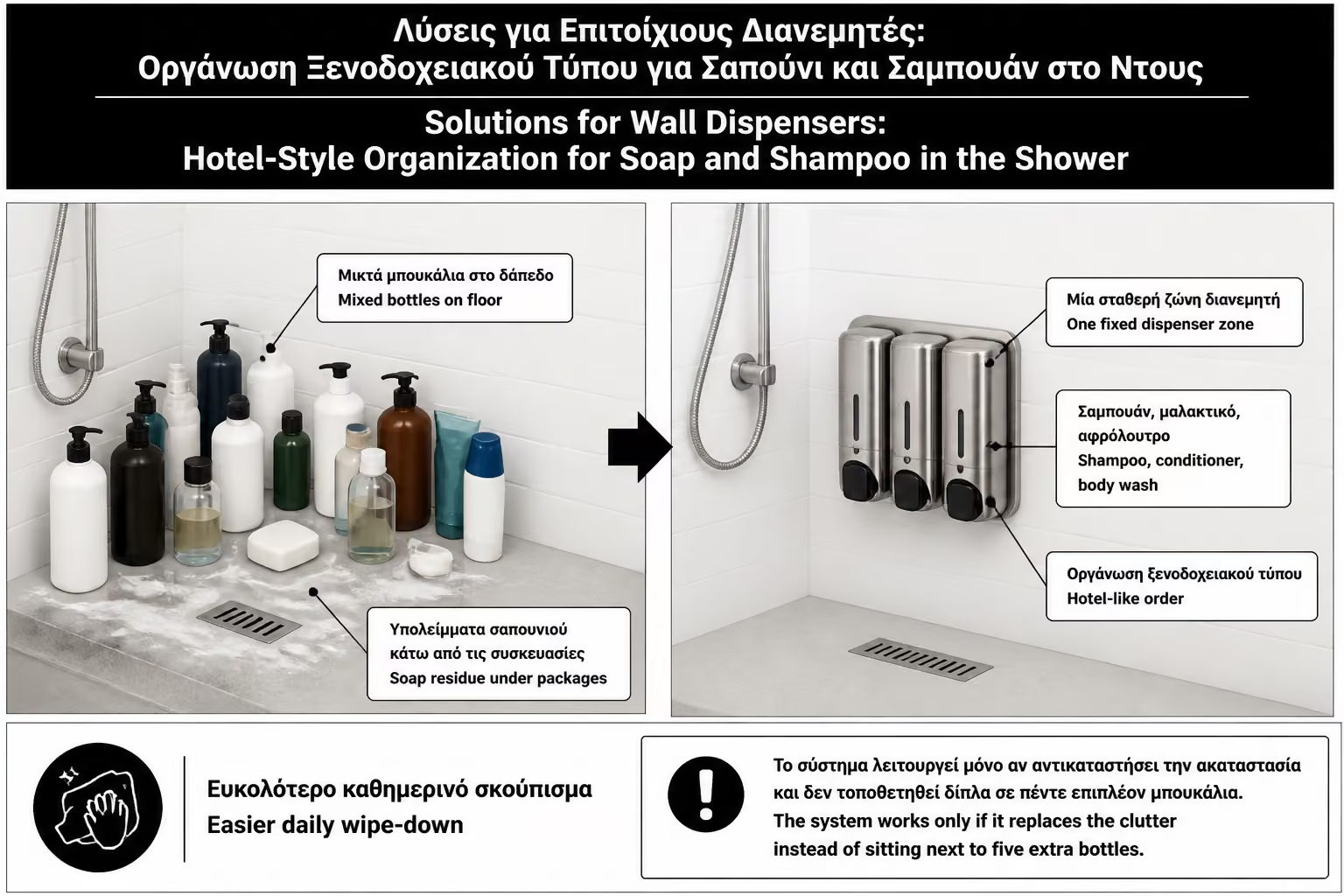
The shower is a small space with intense daily use. When there are many bottles, the eye immediately sees clutter. Even if all products are expensive or useful, different packaging, colors and sizes create visual noise. Wall dispensers reduce this information.
The image becomes clearer because everything is concentrated in one zone. The shampoo, conditioner and shower gel are at a certain height, with the same design and fixed position. There are no bottles on the floor, no products falling off the shelf, no soaps piled up under dozens of packages.
The feeling is reminiscent of a hotel because there is a system. In good hotels, the guest does not see random packaging. He sees organized solutions, usually with a common design. You can also carry this at home, as long as the system is practical and clean.
Most importantly, wall dispensers make daily cleaning easier. When each product has a fixed position, the shower is not easily refilled. But if you continue to keep another five bottles next to them, the effect is lost. The solution only works when it replaces the clutter, not when it adds to it.
Wall dispensers are worth it when the shower is used every day, when there are many products, when the shelves are small or when you want a cleaner, hotel-style image. They are also useful in small showers, where every shelf and every corner counts. If bottles are often dropped or left on the floor, a wall-mounted solution can greatly improve comfort.
They are especially valuable in bathrooms used by a family or by several people. If everyone uses the same basic products, three containers are enough: shampoo, conditioner, body wash. Thus, daily use becomes simpler and the space remains tidy. In Airbnb or rental rooms, the solution gives a more professional image, as long as it is properly maintained.
They are also worth it when you don't want to drill new shelves or when the existing shelf is full of scale, rust or bottles. A good dispenser can replace some of the need for a shelf. However, it does not replace all needs. Razor, sponge, scrub or hair mask may need another place.
They are not worth it if you constantly change products, if each member of the family uses a different shampoo, if you don't want to fill containers or if there is no mood for regular cleaning. The wall dispenser is a system. If it is not maintained, it quickly becomes a hotbed of soap scum and mess.
Not a good idea in a shower with problematic tiles, loose joints or moisture behind the surface. The dispenser needs a stable base. If the tile is hollow, if the joints are moldy, or if the wall is worn, the problem is fixed first, and then anything wall-mounted is put in.
Not a good idea if it's a rental home and no drilling or permanent gluing is allowed. Some adhesive systems are removable, but not always without residue. If stuck to an old tile or sensitive surface, they may leave marks. If they are screwed, the holes remain.
Not an ideal solution for products that are too thick. Hair masks, scrubs with granules, very thick conditioners or products with particles can clog the pump. In such cases, it is better to keep them in a container with a wide mouth or on a separate shelf.
It is also not a good choice if the bathroom has very young children who may uncontrollably step on the pumps, empty the containers or hang from the base. In such houses it is necessary to place it at a suitable height and a system that is quite robust.
The single dispenser is good for liquid soap or body wash. It can be used in a small shower or next to a sink. It doesn't completely solve the shampoo-conditioner organization, but it cuts down on a bottle and is more discreet. It's a good start if you're not sure you want a full system.
The double dispenser is practical for shampoo and body wash or shampoo and conditioner. It suits people who use few products. It is smaller than the triple and often fits better in small shower enclosures. If you don't use conditioner every day, it might be enough.
The triple dispenser is the classic hotel-style solution. It usually has shampoo, conditioner and body wash. It gives the most complete picture and frees up more space. But it takes up more width on the wall, has more pumps and needs more systematic filling and cleaning.
Don't buy a triple just because it looks more “hotel-like”. If you use two products, the third will be empty or filled with something you don't need. The right solution is the one that fits your routine, not the biggest one.
Most wall-mounted dispensers are pump or button operated. You press and a certain amount of product comes out. This is practical for shampoo, shower gel and liquid soap. The pump should be good, not sticking and not dripping after use.
There are systems with squeeze containers, where you squeeze the container itself. They are simpler, but usually less premium in image. They can work well for thick products, as long as the plastic holds up and the base holds firmly.
Button-front receptacles are very common in hotel-style systems. But they want a quality mechanism. In cheap products, the button may harden, stick or come out very little. If you have to press many times with wet hands, it becomes annoying to use.
Before you buy, read the features carefully. Some dispensers are only suitable for low density liquid products. Others accept thicker shampoos. If you use salon products or very creamy conditioners, this matters.
Plastic is the most common material for shower dispensers. It is light, safe, not easy to break and practical in wet environment. If it is of good quality, it can look very clean and modern. If it's cheap, it may yellow, scratch or look like a public toilet.
Inox or aluminum gives a more premium image and suits modern bathrooms. But it needs corrosion resistance. Cheap metal elements can rust or tarnish, especially in a shower with lots of salt. If you choose metal, prefer good quality and avoid harsh cleaners.
Glass is not the most practical choice inside the shower. It may look beautiful, but if dropped or bumped there is a risk of breakage. For wall-mounted shower systems, unbreakable or durable plastic is often best. Glass is more suitable for a sink dispenser or a dry zone.
There are also combinations: plastic containers with a metal base, black matte frame, chrome details or transparent containers. The choice must match the rest of the bathroom and be easy to clean. The most beautiful material is not always the most practical in the shower.
Transparent containers have the advantage that you can see the product level. You know when you need a refill and avoid running out of shampoo. They are practical, especially in a family bathroom or Airbnb. The downside is that it shows the color of the content. If the shampoo is bright blue, the conditioner yellow and the body wash pink, uniformity is reduced.
Opaque containers give a cleaner and minimal image. They hide the color of the product and make the system look more premium. But you don't easily see when the content ends, unless there is a small level window. It needs to be checked or refilled regularly.
Amber or frosted containers are an intermediate solution. They hide the color well enough, but leave some level indication. They go well with spa and boho aesthetics. In a shower, however, it must be made of safe material, not fragile glass.
For a practical family bathroom, translucent or frosted containers are often the best balance. For a more luxury minimal effect, the opaque black, white or inox systems look clearer.
Screwing is the most stable solution. If done correctly, the dispenser lasts better, especially when it is full and used daily. It is ideal for permanent residence and for heavier systems. The disadvantage is that it requires drilling into tiles or wall, which is not always desirable or allowed.
Gluing is easier and often more suitable for rentals or those who don't want holes. Many modern systems use strong adhesive bases or special glue. But the strength depends on the quality of the glue, the weight, the surface, the humidity and the correct preparation. If attached casually, it may fall.
For small single dispenser, good gluing may be enough. For a triple dispenser full of products, the weight is greater and the screwing is more secure, especially if the use is daily. If you choose a self-adhesive triple system, you need to be very sure about the quality and the surface.
In any case, do not put heavy glass or metal dispensers on a simple adhesive base in the shower without serious evaluation. If they fall, they can hit legs, tiles, a sink or the shower glass.
The success of welding almost always depends on preparation. The surface must be smooth, clean, dry and free of salts, soaps or grease. Tiles in the shower often have a soap film that is not visible to the naked eye. If you get stuck on it, the base will last a while and then it will fall.
Clean the area thoroughly with a suitable cleaner, remove salts and soaps, rinse and dry completely. Do not apply immediately after showering. Joints and tile can hold moisture. Allow the area to dry thoroughly and ventilate.
Follow the waiting time given by the manufacturer. Many stickers or adhesives take 12, 24 or even 48 hours to load. If you immediately fill the containers with products, they may detach. Haste is one of the basic mistakes.
Bonding works best on smooth glossy tiles or glass. On textured, porous, matte or very small tiles with many joints, adhesion may be worse. If the base passes over joints, the contact area is reduced. In such cases, screwing or another solution may be safer.
Drilling into tiles requires the right tool and care. You need a drill suitable for tile, low speed at the beginning, no impact until the tile goes through, and the right amount for the substrate. One mistake can crack a tile or create permanent damage.
Before you drill, you need to check if there is piping running behind the spot. In the shower zone there are water paths, especially near the faucet, shower column or corners. Do not accidentally drill near plumbing points. If you are not sure, ask a technician.
The location of the holes must be exact. A crooked dispenser looks a lot, especially if it has three containers. Use a spirit level and mark before drilling. Also check that the system opens, fills and cleans in the location you selected.
After screwing, the holes must be sealed according to the system instructions. We don't want water to go behind tile through a hole. In some cases, a suitable silicone or sealant is used around the fixing points. This should be done clearly and without exaggeration.
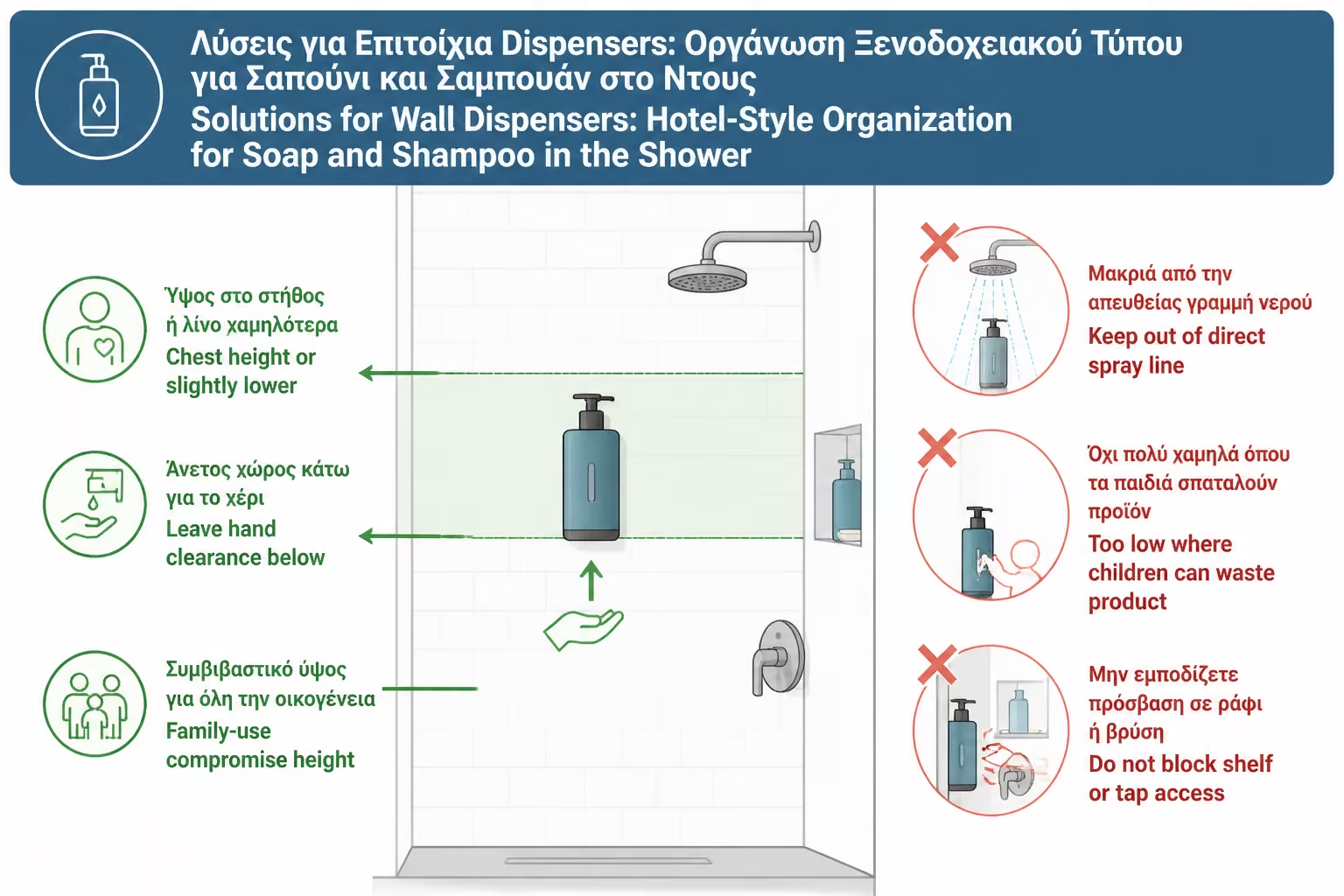
The height should be comfortable for basic users. The dispenser should be easy to press without bending down too much and without awkwardly raising your hand. It usually comes in at about chest level or a little lower, depending on the layout of the shower and the height of the users.
If there are children, balance is needed. If you set it too low, children may constantly step on it and empty the containers. If you put it too high, they won't be able to use it. In family bathrooms, a medium height or a separate solution for children's products is often chosen.
The dispenser should not be directly under the shower flow. If it gets water all the time, it will build up scale, dirty the pumps and wear out the stickers or parts. It is best placed on the side, where it is accessible but not hit by direct water.
There should also be room underneath to put your hand or sponge and pick up product. If it goes too close to a shelf, faucet or corner, it will be inconvenient to use. Ergonomics are as important as appearance.
Ideally it goes into a side wall, not the same wall directly under the shower head. So it receives less water but remains easily accessible. If the shower has a fixed glass panel, be careful not to place it in a position that prevents access or cleaning of the glass.
If there is a corner shelf, the dispenser can be placed near it or replace it. However, do not place the dispenser too low in the corner, because it will collect soaps and water. Corners are places where mold often appears if they are not ventilated.
In a bathtub with a bath screen, the dispenser must be inside the area covered by the glass, so that no water splashes out when you use it. If you put it on the open side, it can alter your movement and cause more splashing outside the tub.
If the shower is too narrow, avoid bulky systems that protrude. A thin double dispenser or corner solution can be better than a big triple that you hit with your elbow.
The most suitable products are shampoo, conditioner and body wash. These have relatively consistent daily use and fit the logic of the dispenser. Liquid soap, baby shower gel or face wash can also be put in if it is often used in the shower.
They are not ideal for scrubs with granules, hair masks, very thick conditioners, products with oils that can stick to the mechanism or special treatments that are used infrequently. These are best kept in a separate container or on a small shelf.
Do not mix products in the same container. If you change shampoo, empty and rinse the container before putting in a new one. Residues from different products can change texture, smell or clog the pump. This is especially important if the product is natural, without strong preservatives or with a thick formulation.
If you use professional hair products with specific instructions, keep the original packaging or write down the product and date somewhere. Organization shouldn't make you forget what you use.
Dispensers must be clearly marked. If all the containers are the same and don't say anything, you'll quickly get confused. Shampoo, Conditioner, Body Wash are the main labels. They can be printed, embossed, self-adhesive or engraved.
In a family bathroom, labels should be easy to read. Very small minimal lettering may look pretty, but it's not practical when someone is showering with water in their eyes. Better clean writing and simple layout.
Labels must be water resistant. Paper labels will spoil quickly. Prefer waterproof vinyl labels, laser print that is protected or containers with ready-made embossed marking. If the labels peel off and remain sticky, the system will look dirty.
If the dispenser is transparent and you can see the contents, it still needs a label. Many products have a similar color. Don't rely on shade to tell what's what.
Wall dispensers should be cleaned regularly. Outside they collect soap scum, salts and fingers. A sticky residue may form around the pump. Moisture can be trapped under the base. If they are not cleaned, the hotel-style image is lost.
Clean the outside with mild soap and a soft cloth or sponge. Avoid harsh anti-salts on black, chrome or special finishes without instructions. If scale is present, clean more often but more gently. Do not allow chemicals to sit on the pumps.
Internally, containers should be rinsed periodically, especially when changing product. Run warm water through the pump to clean the mechanism. If the pump starts to stick, product may have built up. Do not wait for it to completely clog.
If the system is removable from the base, this is a big plus. You can take it off, wash it properly and put it back on. If it is permanently stuck and difficult to clean, maintenance becomes more difficult.
The shower is full of salts and soaps. Dispensers are not excluded. If the water is hard, white prints will appear around the pumps, buttons and base. If the products are thick, there may be residue in the mouth.
To avoid build-up, give the dispenser a quick wipe when cleaning the shower. Don't leave it for months. The more often it is cleaned, the easier it is. If you let the salts build up, a stronger cleaner will be needed, which can wear down the finish.
In black or metal dispensers, the salts are more visible. That's not to say they're a bad choice, but they do need more frequent maintenance. If you don't want to wipe often, a white or frosted plastic system may be more forgiving.
If the pump drips product after use, clean the nozzle and check if the product is too thin or if the pump is worn. Constant dripping creates slime and stains under the dispenser.
The refill must be done cleanly. Open the container, fill with a funnel if necessary and wipe away any residue immediately. Do not allow shampoo to run on the outer surface, as it will stick and collect scale.
Do not fill to the top if the container needs room for the pump to work or if the product expands with temperature. Follow the manufacturer's instructions. Better to fill up a little more often than it overflows.
If changing product, rinse container. Do not put new shampoo on top of old residue of another composition. The texture may change or a lump may form. Especially in natural or sulfate-free products, the compositions are not always compatible.
It is good to keep the large refill packs in a cupboard or storage room, not in the shower. If the refill packages stay next to the dispensers, the whole point of the organization is lost.
The hotel-style effect requires quality and discretion. A cheap plastic dispenser with big buttons and an unattractive design can resemble a public toilet. If you want a premium image, choose clean lines, the right finish and a size that fits the shower.
The color must match the bathroom. With chrome faucets, a white or chrome system is safe. On a black bath screen or black faucet, a black matte dispenser can look very modern. In a spa/boho bathroom, amber or beige-frosted containers are better suited than high-gloss plastic.
Labels should be clean and neat. Do not use rough stickers that peel off. Don't let different products show from the outside if their color clashes with the design. If you want real peace of mind, prefer opaque or frosted containers.
The most important thing: keep only the products that are in the system. If next to the beautiful dispenser there are eight other bottles, the image is not hotel-style. It's just a dispenser in a mess.
In Airbnb, studios, rental rooms or business premises, wall dispensers have a practical advantage. They give a unified image, reduce small individual packages and help the visitor to easily find the essentials. They can also reduce consumable costs if refill products are used.
But maintenance is critical. An Airbnb dispenser must always be clean, full and properly labelled. If it's half-empty, sticky or has residue, the visitor will perceive it as poor hygiene. The system must enter the cleaning routine after each stay.
In professional use, it is better to choose more robust models, ideally with screws and with the possibility of locking or safe opening. If the container opens too easily, it may be misused. If the system is too cheap, it will wear out quickly.
Labels must be internationally understood if you host foreign guests. Shampoo, Conditioner, Body Wash are more practical than elaborate Greek or very small labels. Clarity is part of hospitality.
In a rental home, the safest option is a self-adhesive or non-permanent system, as long as the surface is suitable and the owner agrees. But you have to be realistic: even stickers can leave residue or affect an old surface. Before installing, do a small spot test or choose a system that removes with heat and care.
Avoid screwing into tiles without permission. The holes will remain and there may be an issue when you leave. If you want a fully reversible solution, a hanging caddy, faucet-mounted shelf or tension pole corner shelf may be better than a permanent dispenser.
An alternative is to use uniform refill bottles on an existing shelf. They do not free up as much space as the wall-mounted dispenser, but they give uniformity without permanent intervention. For renters, this is often the best balance.
If you choose a self-adhesive dispenser, do not load it immediately and do not fill it until more than the first day. Wait for the curing time of the glue and check the strength. If it starts to peel off, remove it before it falls off.
In a bathroom used by children, the dispenser must be safe and durable. Children may repeatedly press the pump, pull the container or play with the contents. Choose a system that doesn't break easily, doesn't have sharp corners and isn't too low if you don't want uncontrolled use.
For elderly people, the pump should be easy to press. If it takes a lot of power, it's not practical. The height should allow use without stretching or bending. In bathrooms with reduced mobility, ergonomics are more important than design.
If there are visually impaired people, the labels should be large and clear, or the containers should have a different location/shape that stands out. Everything being the same is beautiful, but it can be confusing. In such cases, functionality comes before absolute uniformity.
Do not place dispensers where someone can accidentally lean on them. They are not handles. If there are elderly people or people who need support, there should be normal safety bars, not decorations or dispensers.
The cost depends on the material, the number of containers, the mounting method, the quality of the pump and the design. Simple plastic systems are economical, while the best inox, black, premium or professional systems cost more.
Prices are indicative and depend on store, quality, VAT, material, brand and installation method. For domestic use, a good double or triple system with reliable pumps is usually a better buy than the cheapest model that can drip or come off.
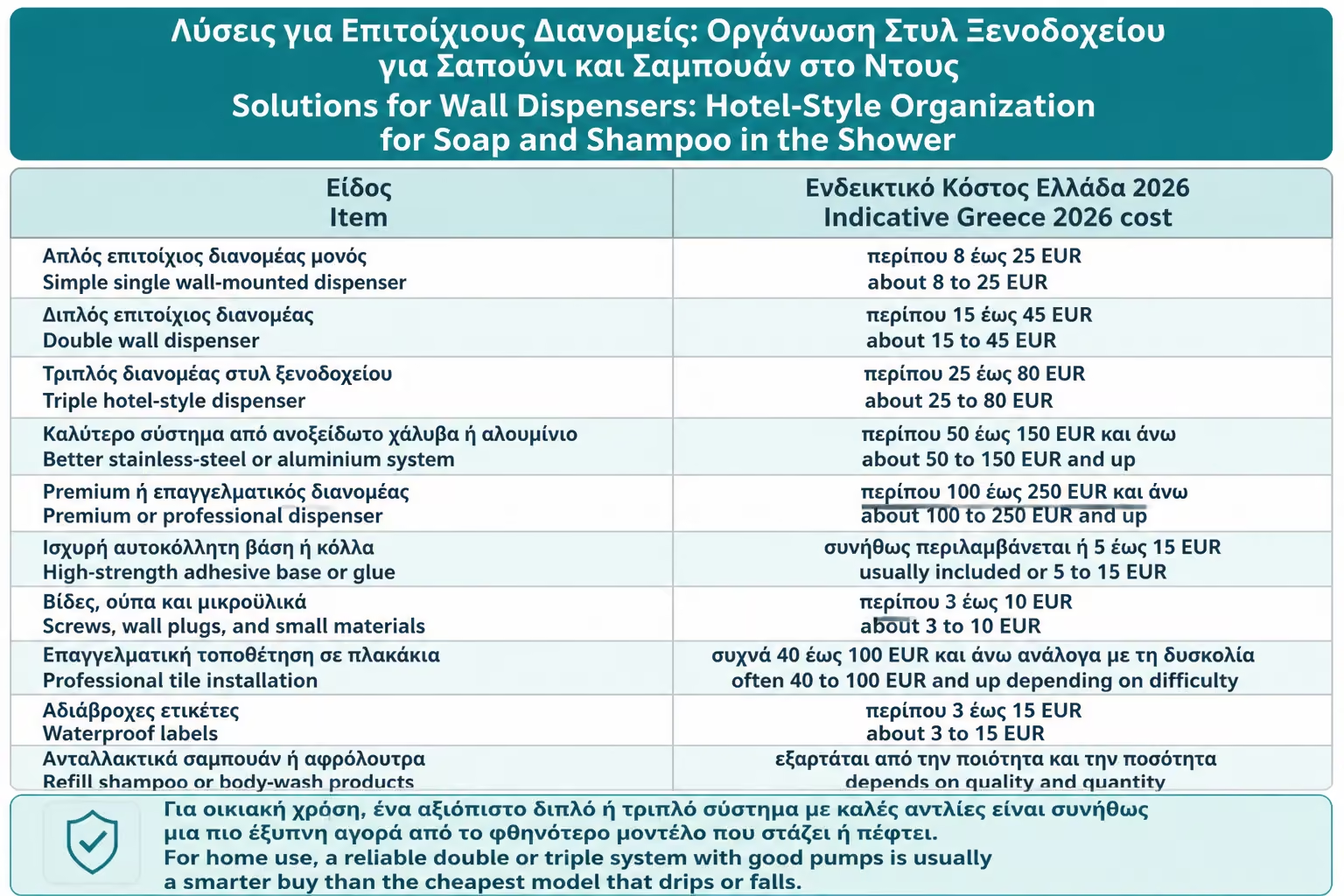
| Product / Solution | Indicative cost picture 2026 |
|---|---|
| Simple single wall dispenser | around €8–25 |
| Double wall dispenser | around €15–45 |
| Hotel-style triple dispenser | around €25–80 |
| Better system with inox or aluminum | around €50–€150+ |
| Premium / professional dispenser | around 100–250€+ |
| Self-adhesive base / high strength glue | usually included or €5–15 |
| Screws, screws, micro-materials | around €3–10 |
| Professional tile installation | often €40–100+, depending on difficulty |
| Waterproof labels | around €3–15 |
| Refill shampoo/body wash products | depending on quality and quantity |
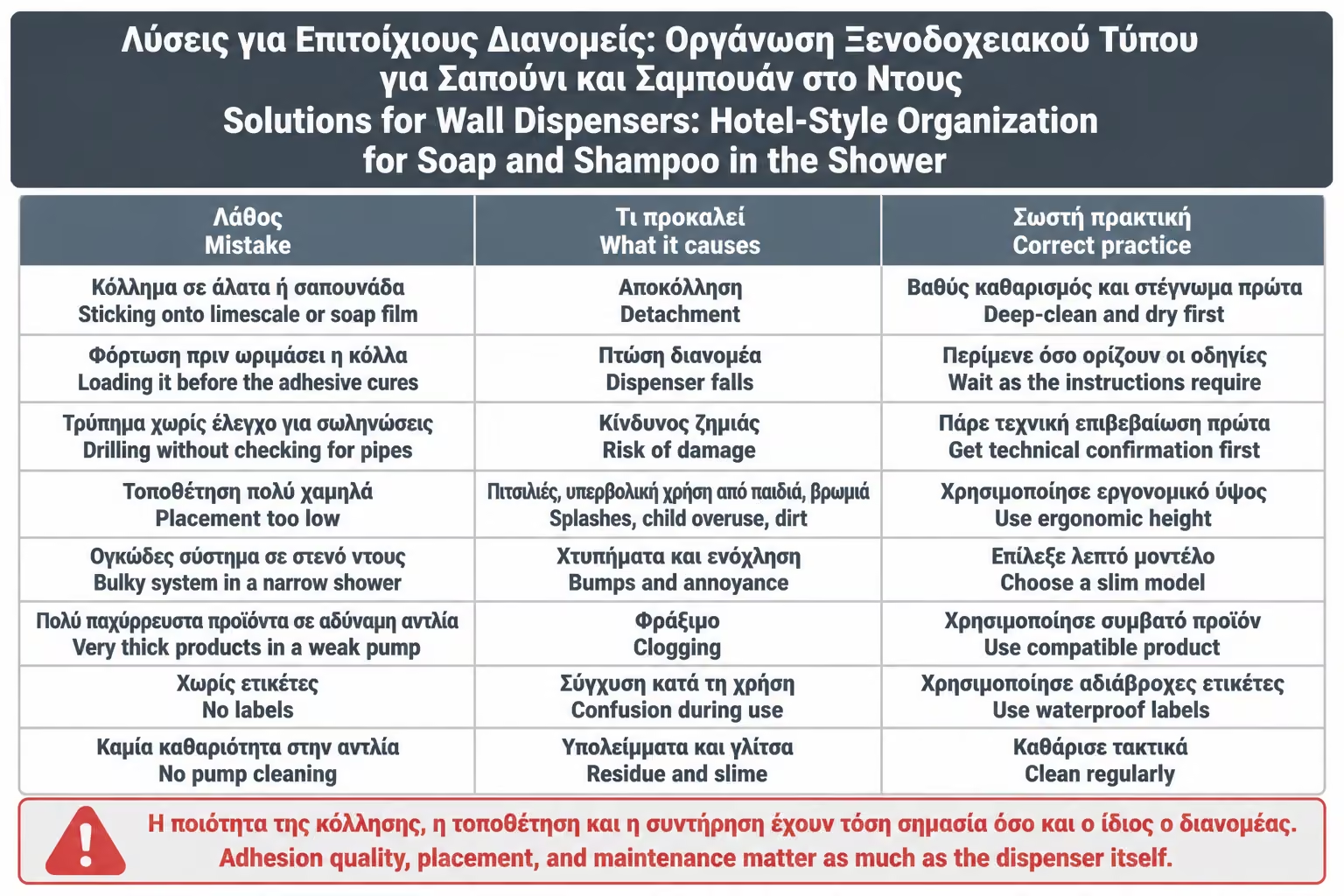
The most common mistakes are made because the solution seems simple. We stick a dispenser on the wall, fill it and consider that we are done. In practice, success depends on location, support, products and cleaning.
A typical example is the triple self-adhesive dispenser that goes into an embossed tile, fills completely the same day and falls off after a few uses. The problem is not just the product. It's the wrong surface, the wrong preparation and the rush. In such a case, better screw or other organization solution.
| Error | What does it cause? | Correct practice |
|---|---|---|
| Sticking to salts or soaps | Detachment | Deep cleaning and drying |
| Loading before the glue sets | Drop dispenser | Wait as instructed |
| Screwing without piping control | Risk of damage | Technical control |
| Very low position | Splashes, child use, dirt | Correct ergonomic height |
| Very bulky system in a narrow shower | Bumps and discomfort | Slim model |
| Thick products in a weak pump | Clogging | Compatible product |
| No label | Confusion of usage | Waterproof labels |
| Not cleaning pumps | Debris and slime | Regular cleaning |
A technician is needed when you want a screw installation on a tile, when you don't know if pipes pass through the back, when the dispenser is heavy, when the shower has expensive tiles or when you want a guaranteed clean result. A wrong hole in a tile is permanent damage and can cost more than installation.
A technician is also needed if there are moisture problems, loose joints, hollow tiles or old silicones in the area where you want to place the dispenser. We do not mount a wall-mounted system on a problematic base. First the surface is corrected.
If the installation is self-adhesive and the surface is smooth, clean and dry, you can do it yourself. But follow the instructions carefully. Don't improvise with random adhesives that aren't suitable for a wet environment.
In commercial use, Airbnb or high traffic areas, screw-on installation by a technician is usually safer and more durable than a self-adhesive solution.
| Inquiry | Yes / No |
|---|---|
| Is the surface smooth, firm and free of loose joints? | Yes / No |
| Is there no moisture, mold or hollow tile at the site? | Yes / No |
| Does the point not receive the shower flow directly? | Yes / No |
| Is the height comfortable for basic users? | Yes / No |
| Does the dispenser avoid obstructing the entrance, the bath screen or movement? | Yes / No |
| Have you decided whether you need a single, double or triple system? | Yes / No |
| Are the products that will go inside compatible with the pumps? | Yes / No |
| Are there waterproof and easy-to-read labels? | Yes / No |
| If it is to be glued, has the surface been thoroughly cleaned and dried? | Yes / No |
| If it's going to be bolted, has it been checked that there are no pipes going through? | Yes / No |
| Is there a way to remove or clean the containers? | Yes / No |
| If the house is rented, is there a permit for permanent intervention? | Yes / No |
If the answer is “No” to stability, surface or support, don't proceed yet. The dispenser should free up space and improve the image, not fall, drip or create new spots of dirt.
The wall dispenser is a very good solution when placed in the right place and with the right support. Do not stick it on soapy, salt or textured tiles and do not load it before the glue sets. If it is triple and full, the weight is not negligible. In a permanent home, screwing is often safer, but needs checking for piping behind the tile. And above all, choose a system that is easy to clean. A dispenser that is not properly disassembled and cleaned will quickly lose its hotel-style image.
Wall-mounted soap and shampoo dispensers can transform the shower, especially when the space is small or full of bottles. They free up shelves and floors, reduce visual noise and give a more organized, hotel-style image. With a proper triple system for shampoo, conditioner and body wash, daily use becomes simpler and the shower looks cleaner.
But success depends on choice and installation. The system should fit your routine, have good pumps, correct labels, suitable material and easy to clean. Gluing requires perfect preparation and waiting. Screwing requires technical attention and piping control. The position should be ergonomic, but not in the direct flow of water.
If used correctly, the wall dispenser is one of the most practical little shower upgrades. But if chosen casually, it can drip, peel off, block or resemble a public space. The right solution is the one that combines clean design, secure support and easy maintenance. Then the shower becomes more comfortable, more organized and much closer to the feeling of a neat hotel bathroom.
Return to category.
Go to categoryReturn to the central guide.
Go to guide