
Bathroom DIY, Maintenance & Styling
Return to category.
Go to categoryThe bathroom is probably the most underrated room in the house for plants. Usually we treat it only as a functional room: sink, toilet, shower, mirror, towels and cleaning products. And yet, with the right plants, it can acquire a completely different atmosphere. More natural, calmer, warmer and closer to the spa feeling.
Moisture, which can be a problem for bathroom building materials, is an advantage for many plants. Many houseplants come from tropical or subtropical environments, where the atmosphere is humid and light often filters through other plants. This means that a bathroom with water vapor, moderate light and a constant temperature can become a very good environment for certain species.
The key word is "specifically". Not all plants love bathroom conditions. Some need a lot of sun, some rot easily if left in a humid atmosphere, some cannot withstand sudden temperature changes or cleaning agents. If you put the wrong plant in a dark bathroom, it won't become an urban jungle. It will become a pot struggling to survive.
The plants that work best in the bathroom are those that can withstand low or moderate light, love or at least don't mind moisture, and don't require daily care. Sansevieria, Zamioculcas, pothos, ferns and orchids are among the most popular choices. Each, however, has different needs. Sansevieria forgives negligence. Pothos hangs beautifully from a shelf. The fern loves moisture but needs a little more care. The orchid can give elegance, but it should not drown in water.
In this guide we will see which plants really suit the bathroom, where to place them, how much light they need, how to water them, what to look out for in bathrooms without windows, how to avoid mold in the soil and how to create an urban jungle image without making the space messy or difficult to clean.
The bathroom has three characteristics that can favor plants: humidity, heat and a stable environment. After showering, the relative humidity rises. For plants that struggle in dry air, such as many ferns or some tropical plants, this is an advantage. Their leaves do not dehydrate as easily and the atmosphere looks closer to a natural moist environment.
Also, the bathroom is often more protected from drafts. Balcony doors are not constantly opened, there is not as intense dryness from radiators as in the living room, and the temperature remains relatively constant. This helps plants that do not like sudden changes.
The problem is the light. Many bathrooms in Greece have a small window, light from a lamp or no natural lighting at all. Moisture alone is not enough. Plants need light to live. If the bathroom has no natural light at all, the options are very limited and you may need artificial grow lighting or switching plants to a brighter part of the house.
So before you buy plants, look at your bathroom as a plant would: how many hours of natural light does it get? Does it get direct sun or just diffused light? Is the area too humid for hours after showering? Is it ventilated? These answers determine what will survive.
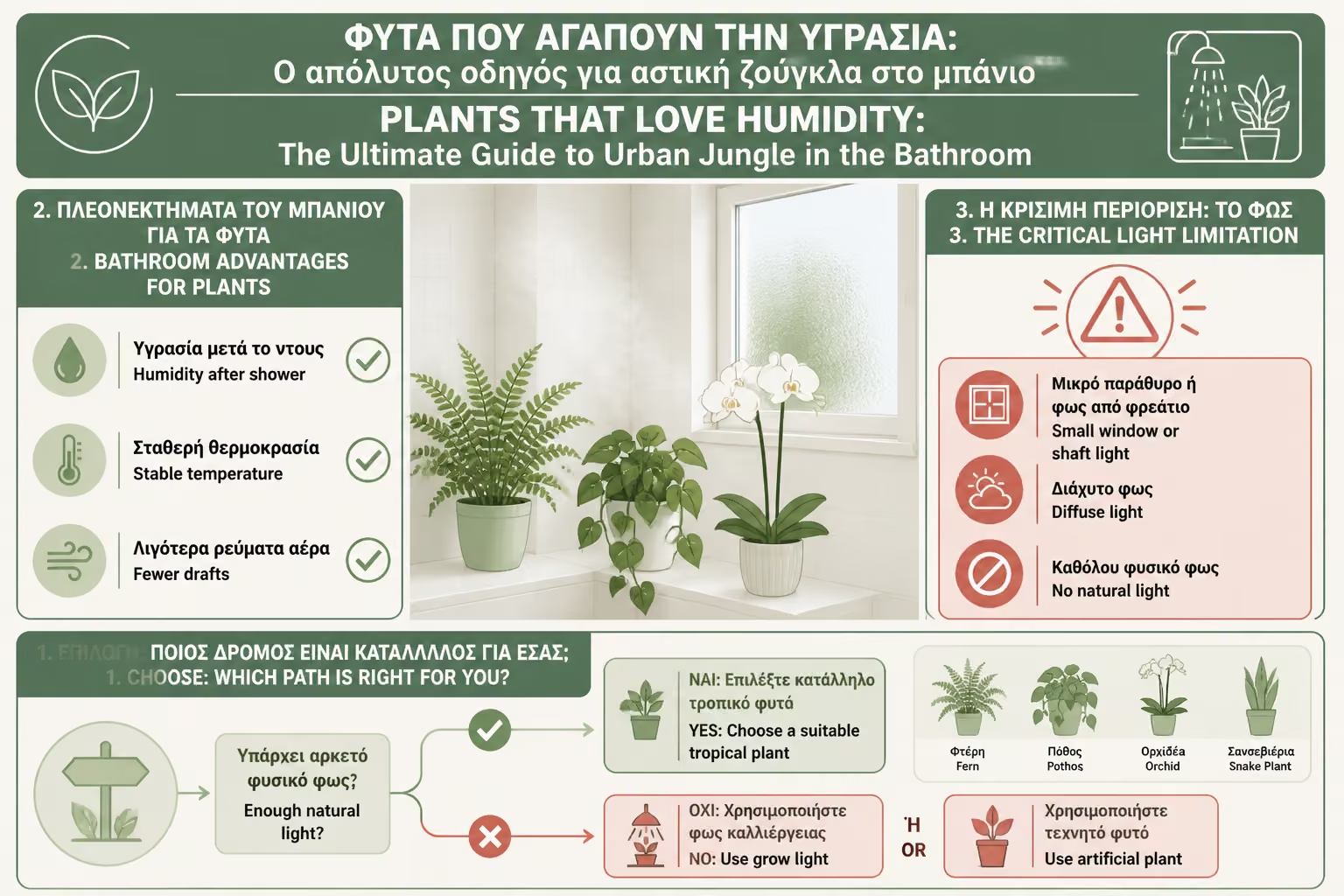
If the bathroom has a window with natural light, your options are much more. Even if there is no direct sun, diffused light can support plants such as pothos, sansevieria, zamioculcas, ferns and orchids. If the window is east or north, the light is usually soft and quite safe for indoor plants.
If the bathroom has light from a lamp, you need to be more careful. The light may seem sufficient to the human eye, but to the plant it may be marginal. In such bathrooms, it is best to start with hardy species such as zamiokulkas, sansevieria and pothos. Ferns can struggle if there is too little light.
If the bathroom has no natural light at all, things change. No plant lives permanently in total darkness with only the light that comes on occasionally when you use the bathroom. It may survive for a while, but it will weaken. In this case, you have three options: artificial grow light, rotating plants every few weeks with a brighter space, or good quality artificial plants.
It is not a failure to choose an artificial plant in a dark bathroom. It's more honest than buying live plants that will suffer. But if you want a real urban jungle, you need at least some steady light.
The sansevieria, also known as the snake plant, is one of the most resistant indoor plants. It withstands low light, does not need frequent watering and forgives mistakes. For a bathroom it is an excellent choice, especially if you want something upright, architectural and clean in appearance.
Its leaves are vertical, hard and linear. This makes it ideal for narrow places: next to the basin, in a corner, on a low piece of furniture or on a high cabinet. It doesn't stretch too much, so it doesn't hinder movement. In a small bathroom it gives green without creating clutter.
Sansevieria does not need a lot of water. This is the most important thing. Because the bathroom is humid, many people think they need to water often. That is a mistake. Sansevieria rots if its soil is constantly wet. Water only when the soil is thoroughly dry. In a dark or cool bathroom, this may mean very sparse watering.
It is ideal for those who want a plant with minimal maintenance. It's not the most "tropical" looking, but it gives a very clean, modern effect. It combines beautifully with black accessories, white tiles, wooden shelves and minimal bathrooms.
Zamioculcas, also known as ZZ plant, is another extremely hardy choice. It has glossy, dark green leaves and always looks tidy. It tolerates low light better than many other plants and does not need frequent watering. For bathrooms with little light, it is one of the safest options.
Its great advantage is that it looks "clean". It doesn't have thin leaves that fall everywhere, it doesn't need constant spraying, it doesn't wilt easily if you forget to water it. In a bathroom that you want to remain easy to clean, this matters.
Like Sansevieria, Zamioculcas doesn't need a lot of water. It has rhizomes that retain moisture. If you water it often because it is in a bathroom, it can rot. The soil should dry out between waterings. The humidity of the air does not mean that the soil must be constantly wet.
It fits in corners, low shelves, counters or next to a vanity unit. Its glossy finish looks beautiful next to a mirror or LED lighting. If you want a plant that "holds" even in a bathroom that is not ideal, the Zamioculcas is a very good start.
Pothos is probably the easiest plant to create an urban jungle feel in the bathroom. It has trailing vines, green or variegated leaves and adapts to several lighting conditions. It can be placed in a hanging planter, on a floating shelf, above the sink area or next to the mirror, letting the vines fall.
Its great strength is its visual effect. Even a single pothos can instantly soften harsh bathroom lines. If placed on a wooden shelf with baskets and towels, it creates a very natural effect. If combined with white or black accessories, it creates a nice contrast.
Pothos tolerates moderate to low light, but variegated varieties need more light to maintain their patterns. If the bathroom is too dark, the leaves may turn greener and growth may slow down. In a bathroom with a small window or decent artificial light, it usually does quite well.
Watering needs moderation. It does not want the soil to be permanently wet, but it should not be extremely dry for a long time. Check the soil with your finger. If the top inches are dry, water. If it's still wet, wait. High bathroom humidity helps the leaves, but is no substitute for proper soil control.
Ferns are among the plants most associated with wet environments. The thin, rich leaves immediately give them a sense of coolness and natural luxury. In a bathroom with good diffused light and high humidity, a fern can show excellent.
The fern loves air humidity, but does not want to stay in swampy soil. This is delicate balance. It needs more frequent watering than Sansevieria or Zamioculcas, but the pot should drain well. If the soil remains muddy, the roots can rot. If it gets too dry, the leaves dry out at the edges.
In a bathroom without enough light, the fern can struggle. It needs bright but not direct hot sun. A bathroom with a small window and steam after a shower is often a good environment. A dark bathroom without a window is not suitable without artificial lighting.
The fern is more demanding than pothos or zamiokulkas, but the image is worth it. It is very suitable for hanging cabinets, shelves, high places or next to a bathtub, as long as it does not receive water and cleaning agents directly.
The orchid, especially the phalaenopsis, can look great in the bathroom. It immediately gives a feeling of elegance, cleanliness and spa. Its flowers act as a natural decoration on the sink, next to the mirror or on a shelf. In a bathroom with good diffused light, it can thrive.
The orchid loves air humidity, but does not want to sit in water. This is very important. Its roots need aeration. It is usually planted in a special substrate, such as bark, not in common soil. If the pot holds water at the bottom, the roots rot. After watering, it must drain completely.
A bathroom can help because water vapor increases atmospheric humidity. But it needs light. If the bathroom is dark, the orchid may survive for a while but will hardly bloom again. In a bright bathroom without direct hot sun, it is a very good choice.
The orchid is not for places where soaps, sprays or cleaners fall. It wants a clean spot, away from direct splashes. If it goes next to the sink, make sure it doesn't get wet all the time with water and toothpaste.
In addition to the basics, there are other plants that can fit into a bathroom. Spathiphyllum loves moisture and has beautiful white flowers, but needs moderate light and constant soil moisture. If the bathroom is too dark, it will not perform well.
Monstera can give an impressive urban jungle effect, but it needs space. In a small bathroom it can become excessive. If you have a large, bright bathroom, it can work very nicely, especially in a corner next to a window.
Aglaonima is durable and accepts lower light, depending on the variety. More colorful varieties need more light to keep their colors. In a bathroom with diffused light it can be a good choice.
Chlorophytum, also known as spider plant, is easy and adaptable. It can go in a hanging spot and create a lighter look. It is not as "tropical" as a fern or pothos, but it is hardy and suitable for beginners.
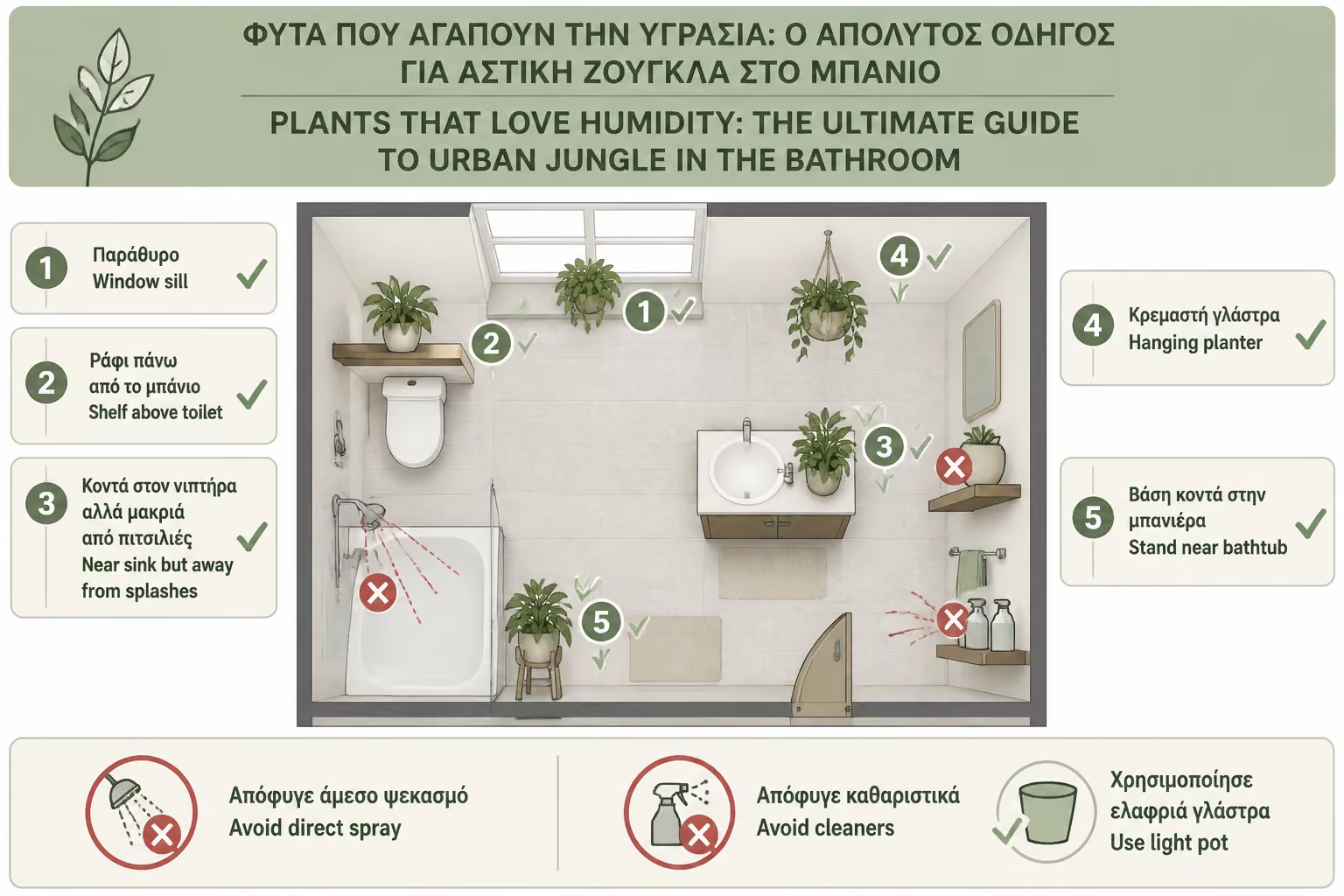
Position is just as important as plant type. The plants must receive light, not obstruct movement and not receive direct water or cleaners. Good places are a windowsill, a shelf above the sink, a corner near the vanity, a hanging planter from the ceiling or a small stool or stand next to the bathtub.
Above the sink, one planter and a few small pots work well as long as the shelf is stable. Do not place heavy ceramic pots overhead. Prefer lightweight planters and secure support. If the shelf is self-adhesive, do not load it with pots.
Next to the sink, the orchid or small hyacinth may look beautiful, but watch the water. If the sink splashes, the pot will get dirty and the plant can accept soaps. Better a bit further back or on a cleanable tray.
In the shower or in the bathtub, plants only go if there is enough space and they do not receive direct water pressure. Soaps and cleaners are not good for leaves and soil. The "shower plant" looks nice in photos, but in practice it needs the right conditions and very careful use.
The biggest mistake with plants in the bathroom is the pot without proper drainage. A beautiful planter without a hole can hold water in the bottom. If the pot sits in it and the roots stay wet, the plant rots. This happens even more easily in a bathroom, where the humidity is already high.
The right solution is a pot with drainage holes inside a decorative planter. After watering, check that no water remains in the planter. If it remains, empty it. For orchids, this is especially important. For sansevieria and zamiokulkas, it is absolutely critical.
Planter materials also matter. Ceramic is beautiful but heavy. Plastic is light and practical, ideal for shelves. Metals can rust in a wet bathroom if they are not suitable. Woven or bamboo planters give a natural look, but if they stay in contact with wet surfaces they may darken.
For the bathroom, prefer pots that are easy to clean. Soil, salts and water vapor leave marks. A planter that you can't clear will spoil the image of the urban jungle very quickly.
The humidity of the bathroom helps many plants in the leaves, but it does not mean that they need to be watered more. Conversely, because evaporation from the soil can be slower, some plants need less watering than in the living room. This is especially true for sansevieria and zamiokulkas.
The safe way is to control the soil. Insert the finger a few centimeters inside. If it's wet, don't water. If it is dry, water according to the plant. Don't mechanically follow a "every Sunday" schedule, because humidity, season and light change.
Plants in low light use less water. So in a dark bathroom, excessive watering is more dangerous. Many plants die not from neglect, but from too much water. Yellow leaves, a soft base and an earthy smell may indicate rot.
Ferns and spathes want more consistent moisture, but still no mud. Lust is intermediate. The orchid needs special handling, depending on the substrate. The basic principle is: each plant has a different need, we don't water them all together because they are in the bathroom.
In a bathroom with high humidity, white mold or a fungal film may appear on the surface of the soil. This often happens when the soil is constantly wet, not aerated enough and the light is low. It's not always fatal, but it does indicate that conditions are too wet.
To avoid this, do not overwater. Use light, well-draining substrate. Do not leave water on the saucers. Ventilate the bathroom after showering. If the soil stays wet for several days, something is wrong: either you are watering too much, or the pot is not draining, or the light is too little.
If a little mold appears on the surface, remove the top layer of soil, allow the plant to dry more and improve ventilation. If the smell is strong or the plant looks soft and yellow, there may be a problem with the roots. Then maybe a soil change and root control is needed.
Do not randomly spray fungicides in the bathroom for no reason and without instructions. The bathroom is a closed space, often without good ventilation. The best prevention is proper watering, drainage and air.
Plants should not receive cleaning agents. Salt sprays, bleach, air fresheners, disinfectants and window cleaners can damage leaves and soil. When cleaning the bathroom, remove the pots or cover them temporarily. Do not spray cleaners near the leaves.
Special attention is needed in small bathrooms, where the spray spreads everywhere. A plant next to the sink can receive drops of cleaner every week. Over time, the leaves will dull, burn at the edges, or show marks.
Do not pour water with soaps or shampoo on the soil. If the plant is in or near the shower, protect it from soapy water. Body product waste is not compost. They can change the composition of the soil and damage the roots.
If you want to clean the leaves, just use a fresh cloth or warm clean water, depending on the plant. Sheet polishes are not necessary and in a bathroom they can hold dust and moisture.
Plants on floating shelves give an excellent effect, especially passionflower, small ferns and small sansevieria. But the shelves must be stable. A pot is heavier than an ornamental, especially after watering. If the shelf is self-adhesive or weakly supported, do not load it with plants.
Above the sink, avoid heavy ceramic pots. Prefer light plastic indoor pots inside lightweight planters. If a pot falls from a height, it may break porcelain or cause injury. The urban jungle must be safe.
Hanging shoots must not be in the way. If the trailing pothos hangs so low that it touches the toilet, sink or your face when you bend over, it needs pruning or repositioning. The image should remain practical.
On shelves next to the mirror, make sure they don't shade the face too much or get in front of the lighting. Plants are decoration and a living organism, but the bathroom remains a space for use.
Urban jungle does not mean that we fill every corner with pots. In a small bathroom, three proper plants can look better than ten small pots. The point is to create a feeling of greenery, not to make cleaning and movement difficult.
A good composition has levels. For example, a tall sansevieria on the floor, a pothos on a shelf and an orchid near the sink. This way the greenery is distributed through the space without becoming excessive. If all the plants are small and scattered, the result can look random.
Use planter evenly. They don't all have to be the same, but they should have a common language: white ceramics, natural straw textures, black minimal planter or earthy tones. If each pot has a different color and style, the bathroom will look messy.
Keep surfaces clean. Plants, dispensers, toothbrushes, cosmetics, towels and perfumes all together on the sink create a mess. Plants look best when the space around them breathes.
Humidity is good up to a point. If the bathroom is not ventilated and the water vapor stays for hours, problems arise for both the building and the plants. Mold can appear in joints, walls, soil and planter. Plants love moisture, not stagnant, heavy air.
After showering, open a window or use a fan. This will not "dry out" the space so much as to damage the plants. Instead, it will reduce the risk of mold. Most plants prefer a moist but airy environment.
If the bathroom has very poor ventilation, choose plants that can withstand and do not exaggerate the number. Lots of pots means more moist soil and more surfaces that hold moisture. In such circumstances, overdoing it can add to the problem.
The ventilation also protects the wooden shelves, planters, silicones and joints. The urban jungle should coexist with a healthy bathroom, not cover moisture problems.
In a windowless bathroom, live plants are severely limited. Simple artificial lighting that turns on for a few minutes a day is not enough. If you want real plants, you need plant-friendly artificial light that will run for several hours. This can be done with a discreet grow light bulb or fixture, as long as it is bathroom safe and placed correctly.
Another solution is plant rotation. You keep a hardy plant in the bathroom for a few weeks, then move it to a brighter spot to recover, putting another in its place. This may work for sansevieria or zamioculcas, but is not ideal for all plants.
The third solution is good quality artificial plants. If they are chosen correctly and cleaned of dust, they can give the urban jungle image without suffering living organisms. In a dark guest WC, a good artificial hanging plant on a shelf can be more practical than a real one that will turn yellow.
Do not think that there are plants that "live without light". There are plants that tolerate low light, no light at all. This distinction is critical.
If there are pets or small children, you must pay attention to the choice of plants and their location. Some houseplants can be toxic if chewed. Pothos, zamioculcas, sansevieria and spathiphyllum, for example, should not be consumed by pets or children. Orchid is generally considered a friendlier choice, but it's still not a toy.
Place the plants in places where children or animals cannot easily reach them. Hanging cabinets, high shelves and stable bases help. Do not leave loose soil that can be spread or small decorative pebbles that can be swallowed.
Pay attention to the safety of the pot. A child can pull on a hanging pothos vine and the pot will fall. A pet can dig up the soil. If the bathroom is often used by children, keep the plants in safe, high and stable places.
The urban jungle should be beautiful but also practical for the home you have, not for a magazine photo.
Costs for bathroom plants can be very low or quite high, depending on size, planters and the overall composition. Small plants start out cheap, but nice planters, shelves and stands can stretch the budget.
The prices are indicative and depend on the size of the plant, shop, season, planter quality and region. For a small urban jungle effect, you can start with 2–3 plants and simple planter. You don't have to fill the bathroom from day one.
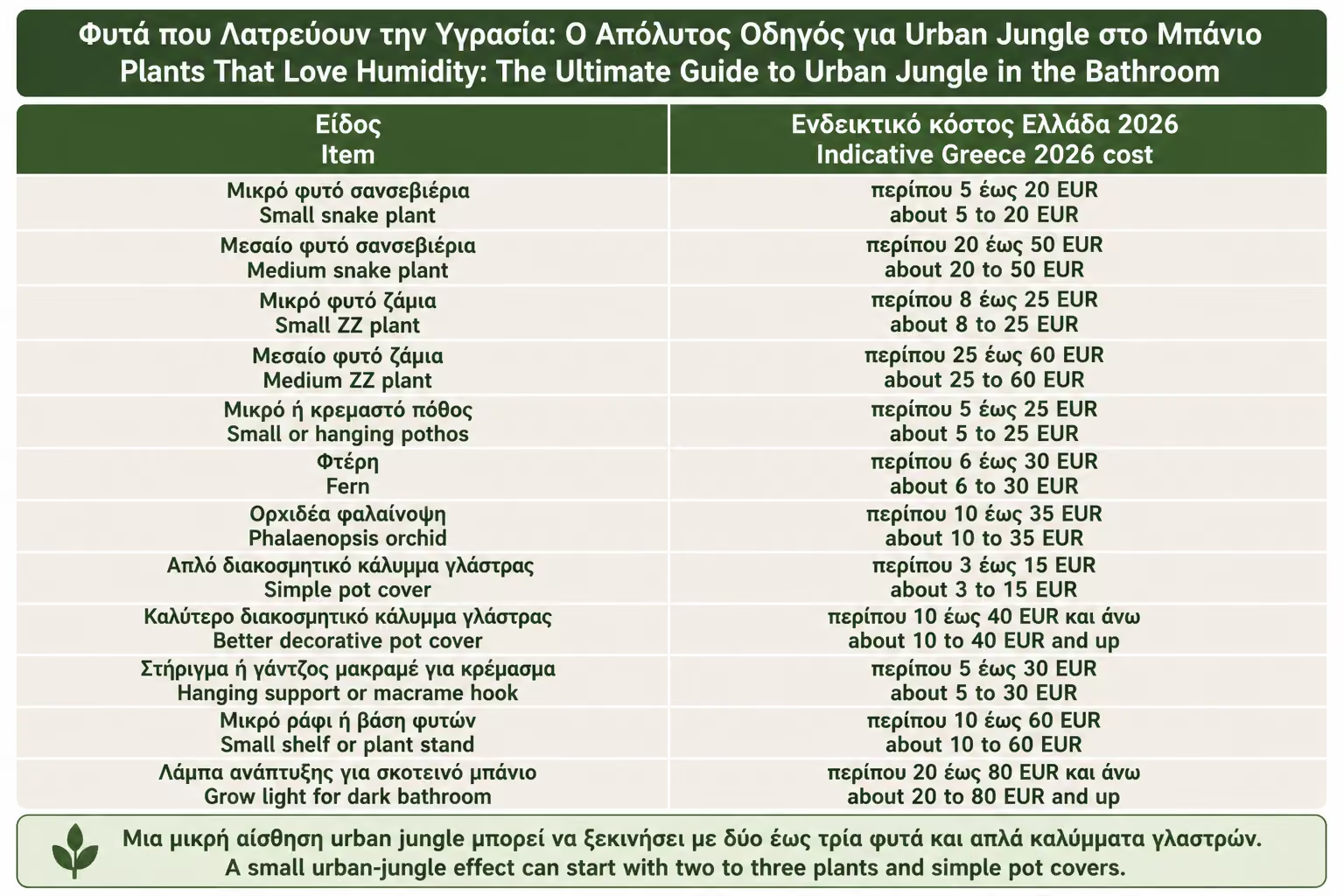
| Type / Object | Indicative cost picture 2026 |
|---|---|
| Small sansevieria | around €5–20 |
| Medium sansevieria | around €20–50 |
| Little Zamioculcas | around €8–25 |
| Medium Zamiokulkas | around €25–60 |
| Lust small / hanging | around €5–25 |
| Fern | around €6–30 |
| Whale orchid | around €10–35 |
| Kaspo simple | around €3–15 |
| Best decorative planter | around 10–40€+ |
| Hanging base / macrame / hook | around €5–30 |
| Small shelf or plant stand | around €10–60 |
| Grow light for a dark bathroom | about 20–80€+ |
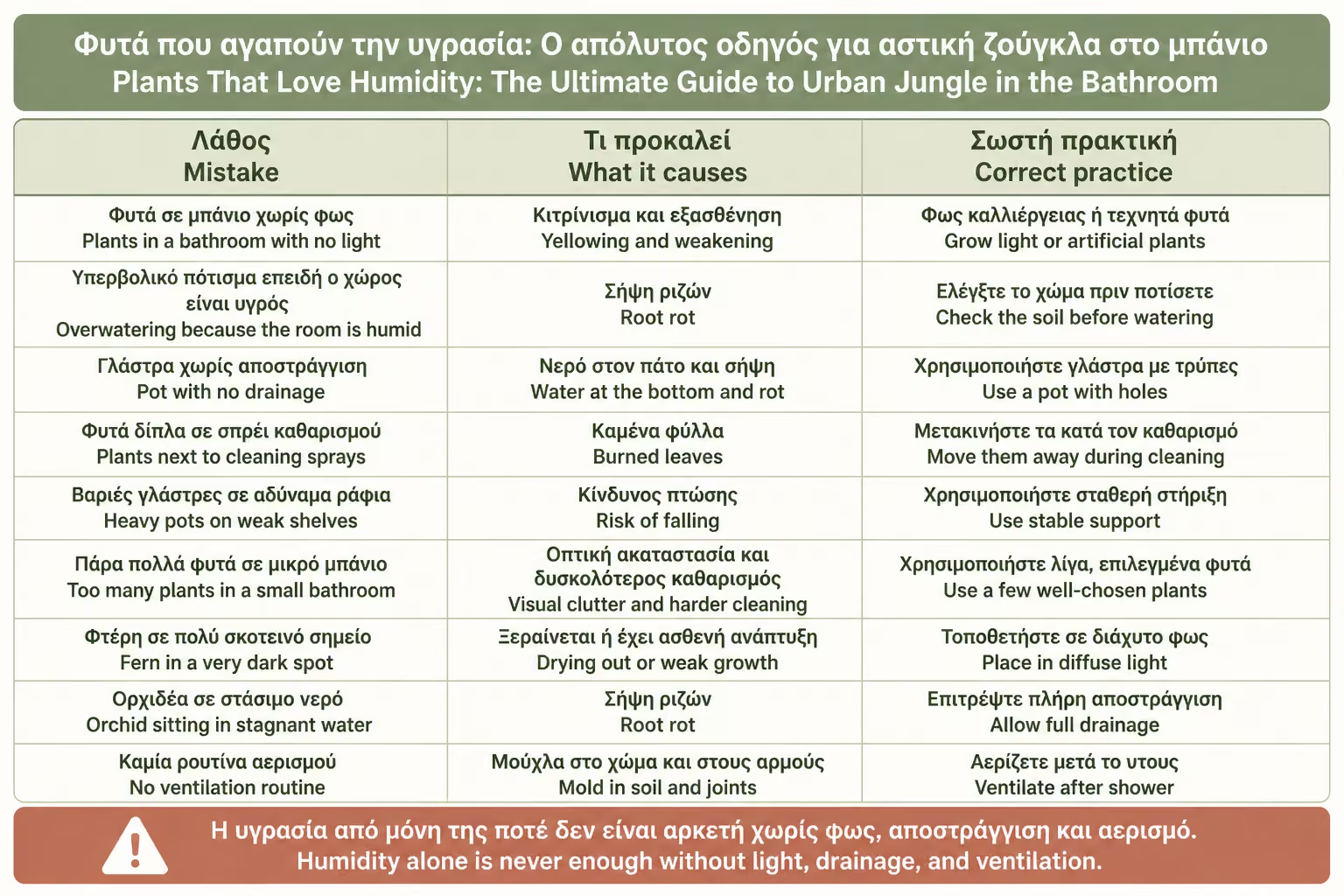
Most mistakes result from exaggeration or misjudging light. Because the bathroom is humid, many people assume that all plants will thrive. That is not the case. Light, drainage and ventilation are equally important.
A classic example is placing a fern in a dark bathroom without a window, with frequent watering "because it loves moisture". The fern looks beautiful at first, but then it starts to dry out or mold the soil. The problem is not the fern. It was simply placed in the wrong conditions.
| Error | What does it cause? | Correct practice |
|---|---|---|
| Plants in a bathroom without any light | Yellowing and weakening | Grow light or artificial plants |
| Excessive watering due to humidity | Root rot | Soil test before watering |
| Pot without drainage | Water at the bottom and rot | Pot with holes |
| Plants next to spray cleaners | Burnt leaves | Removal during cleaning |
| Heavy pots on flimsy shelves | Risk of falling | Stable support |
| Lots of plants in a small bathroom | Clutter and difficult to clean | Few, properly selected plants |
| Fern in a very dark spot | Drying or weak growth | Diffused light |
| Orchid in ponding water | Root rot | Complete drainage |
| No venting routine | Mold in soil and joints | Ventilation after showering |
| Inquiry | Yes / No |
|---|---|
| Does the bathroom have natural light or will grow light be used? | Yes / No |
| Has a plant been chosen that can withstand the lighting level of the space? | Yes / No |
| Does the pot have drainage holes? | Yes / No |
| Does the planter not hold water at the bottom? | Yes / No |
| Does the plant not receive direct splashes from a shower or sink? | Yes / No |
| Spray cleaners not reaching the leaves? | Yes / No |
| Is there adequate ventilation after showering? | Yes / No |
| Can the shelf or base support the weight of the pot? | Yes / No |
| Does the plant obstruct the use of the sink, toilet or shower? | Yes / No |
| If there are children or pets, is the plant in a safe place? | Yes / No |
| Is there a watering schedule depending on the plant, not generally “every week”? | Yes / No |
If the answer is “No” to light, drainage, or safety, don't buy plants yet. The right urban jungle starts from the conditions of the space, not from the image of the photo.
Plants can dramatically change the feel of the bathroom, but they should not be used to hide moisture problems. If you have mold in joints, blown paint or poor ventilation, get that sorted out first. Then plants come in. For bathrooms with little light, start with sansevieria, zamiokulkas or pothos. For brighter and more humid bathrooms, try fern or orchid. And remember: air humidity helps, but the pot must always drain properly.
Plants can turn a simple bathroom into a small urban jungle, as long as they are chosen correctly. Sansevieria and Zamioculcas are the hardiest solutions for low light and minimal care. Pothos is ideal for shelves and hanging spots, giving an instant tropical feel. The fern loves moisture and fills the space with coolness, but it needs more light and attention. The orchid gives elegance and a spa atmosphere, as long as it has diffused light and proper drainage.
The secret is not to fill the bathroom with lots of plants. It's about putting the right plants in the right places. A bit of greenery on a shelf, an upright sansevieria in a corner, a trailing pothos falling discreetly from above or an orchid next to the mirror can change the whole feel of the space. With coordinated planters, clean surfaces and proper organization, the result looks natural and neat, not messy.
But there must be realism. Without light, plants do not live permanently. Without drainage, they rot. Without ventilation, the bathroom is at risk of mold. Moisture is an ally only when there is balance. If these are observed, plants are one of the most beautiful and economical moves to make the bathroom more lively, calmer and more pleasant in daily use.
Return to category.
Go to categoryReturn to the central guide.
Go to guide