
Bathroom DIY, Maintenance & Styling
Return to category.
Go to categoryThe bathroom can look clean on the outside and at the same time be chaotic on the inside. The vanity counter is empty, the mirror polished, the accessories beautiful, but as soon as you open the drawer, everything is jumbled: cosmetics, razors, samples, rubber bands, cotton buds, medicines, spare toothbrushes, blow dryers, hair products and half-empty bottles. This is the hidden mess that makes the bathroom unusable, even if it looks tidy.
Real organization isn't about hiding everything behind a closet. It's knowing where everything is, seeing it at a glance, and being able to put it back in its place without thinking. This is where clear acrylic boxes, dividers, drawer inserts, small baskets and vertical storage solutions help. They are not just "pretty boxes". They are tools that turn a deep, cluttered cabinet into a functional system.
The big advantage of transparent organizers is visibility. When you see what's inside, you don't buy a third cleansing foam because you forgot you already had two. You're not looking for swabs behind bottles. You don't throw away products because they ended up in the back of the cupboard. Transparency reduces waste and makes daily use faster.
At the same time, the organization of drawers and cupboards is a basic condition for a truly clutter-free bathroom. If there is no internal order, sooner or later the bench will fill up again. Products that don't have a place will end up around the sink, on the sink, on the shower shelf or in random baskets. The secret is not to buy more boxes, but to give each category of items a clean and logical place.
In this guide we'll look at how to organize drawers, cabinets under the sink, shelves, cosmetics, medicine, hair products, cleaners, towels and supplies. We will see when acrylic transparent boxes are worth it, when baskets are better, how to measure before buying organizers and how to keep the bathroom tidy without doing a daily "general".
The bathroom collects small objects. This is his main problem. In a kitchen drawer you may have spoons and knives in specific positions. In the bathroom, however, the objects have different shapes, heights and uses: bottles, tubes, sprays, jars, brushes, cables, spare parts, cotton, medicines and packaging. If they are not divided into categories, they become a pile.
In addition, many products are bought “to try”. A new serum, a hair mask, an after shave, an offer shower gel, a sample from a pharmacy. These stay in the bathroom even if not in use. Over time, the bathroom becomes a warehouse of half-used products.
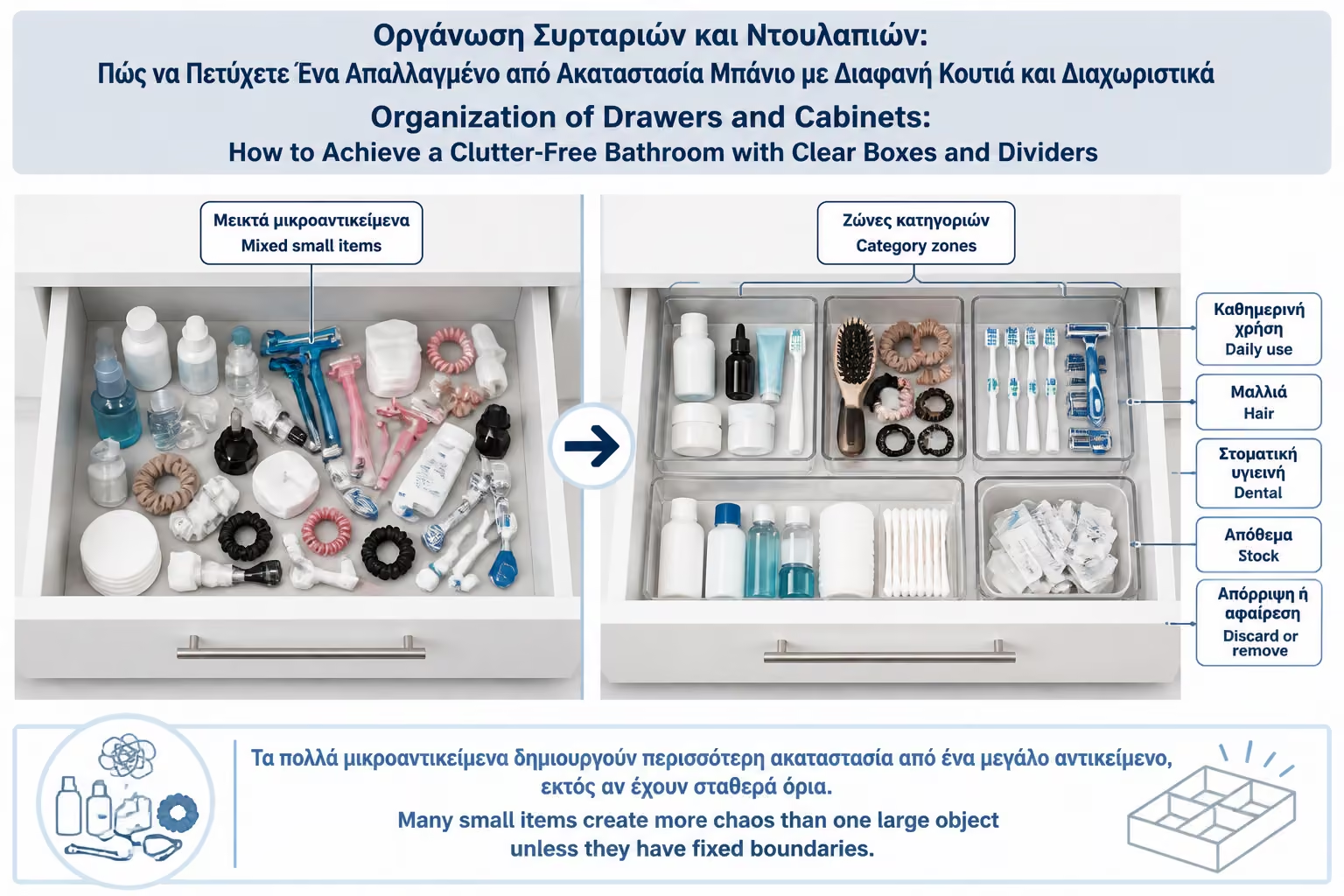
There is also the illusion that since something is small, it does not take up space. But ten small objects out of place create more chaos than one large one. Small objects are lost, dropped, tangled and moved all the time. That's why dividers are so useful: they give small objects a definite boundary.
The clutter-free bathroom starts from the admission that not everything can be left out and not everything can be thrown in a cupboard. It needs a system: what I use every day, what I rarely use, what needs to go, what needs to be visible and what needs to be stored elsewhere.
The first step is not to buy organizational. It's the clearing. If you buy boxes without throwing anything away, you'll just be organizing clutter. You will put unused products, expired cosmetics, empty bottles and random samples in an acrylic box. The result will look better for a while, but the problem will remain.
Empty one drawer or cabinet at a time. Don't empty the whole bathroom at once, because you'll get tired and put them back in haphazardly. Start with the zone that bothers you the most: the sink drawer, the cabinet under the sink or the cosmetics shelf.
Divide items into categories: daily use, weekly use, supplies, medicine, cleaners, hair products, tools, consumables, unused products. Anything that has expired, smells weird, has changed texture, or hasn't been used in a long time should go. The bathroom is not a museum of old products.
After decluttering, you'll know what you really need to organize. Only then does it make sense to buy boxes, dividers or baskets. Organization should come from the items that stay, not from the image of a nice organizer in the store.
The organization works when each category has a specific "home". Hair products in a box. Daily skincare in another. Razors in a small case. Cotton balls in a container. The cleaners under the sink. The stocks on a higher shelf. When categories are mixed, the system breaks down.
The logic is that you don't have to think about where to put something. If you use face cream every day, it should have an easy place. If you use a hair mask once a week, it can go in a little further back. If you keep spare soaps, they should not be in the same place as everyday items.
Boxes help because they define categories. An acrylic box may say “Skincare”, another “Hair”, a third “Dental”. Even if it doesn't have a label, the location itself acts as a memory. When everything goes back to its category, the bathroom stays tidy without much effort.
Categorization should suit your usage. If you do daily makeup in the bathroom, you need a makeup category. If not, maybe the few cosmetics should go in a small vanity case. If you have children, you need a children's product category. If you have a lot of hair products, they need a separate zone.
Clear acrylic boxes are popular because they combine organization and visibility. You immediately see what's inside, without opening lids or rummaging through opaque baskets. This is especially useful in the bathroom, where many products are similar in size and easily hidden behind others.
Acrylic has a clean, modern image. It does not visually weigh down the interior of a cabinet and makes the drawers look more organized. Unlike fabric boxes, it does not absorb moisture. Unlike wood, it does not swell easily. Unlike wicker baskets, it is easier to clean from dust and product residues.
It is ideal for cosmetics, small bottles, cotton swabs, cotton buds, razors, skincare products, samples, hair brushes and accessories. It can fit in drawers, on shelves or in the sink cabinet. If it is stackable, it uses the height as well.
The downside is that everything is visible. This is fine when the items are neat, but it can look messy if there are dozens of small, colorful products inside the box. In such a case, perhaps smaller subcategories or an opaque box for what is not pretty is needed.
Bathroom drawers quickly become chaotic because items move every time you open and close them. Dividers solve this problem. They create small sections for each category so that nothing slips and gets lost in the background.
In a shallow drawer, you can put dividers for toothpastes, razors, tweezers, scissors, brushes, small products and daily cosmetics. In a deeper drawer, you can use boxes of different heights for bottles, hair dryers, brushes and supplies.
Adjustable dividers are useful when the drawer has an odd dimension. Small acrylic trays are better for thin items. The long narrow boxes are ideal for toothbrushes, combs and makeup pencils. Square boxes are good for cotton swabs, rubber bands, small tools and samples.
Be careful not to make too small positions. If every item has its own tiny case, everyday use becomes tiresome. The system should be organized enough to help, but simple enough to stick to.
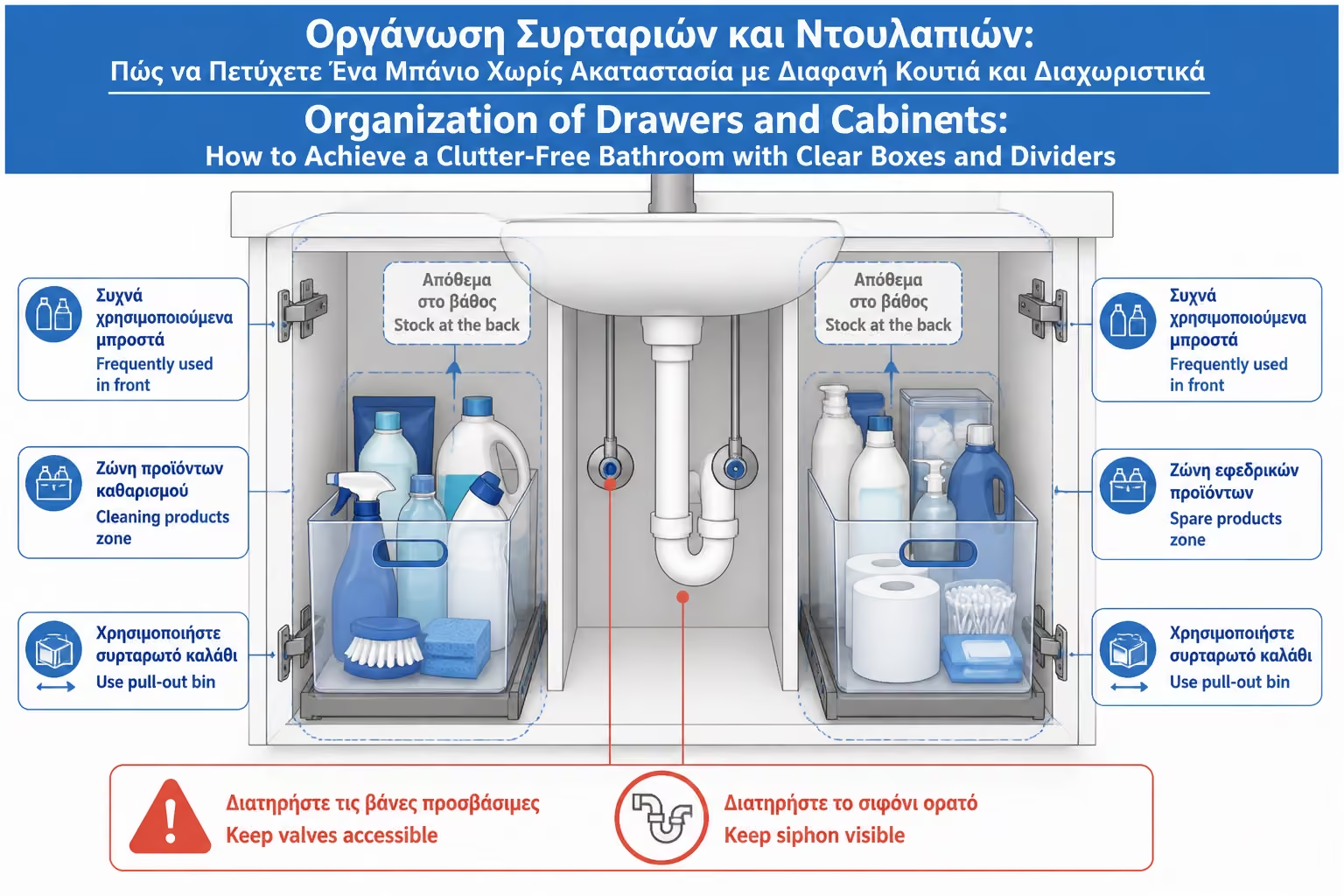
The cabinet under the sink is difficult because it has pipes, a siphon, corner switches and often irregular space. It is not a simple rectangular cabinet. If you throw in cleaners, papers, bags and a hair dryer, it will very quickly become a mess.
The best solution is to divide the space into zones. One side can accommodate cleaners. The other stock products. Those that are frequently used are placed in front. Stocks that you don't need every day go in the back. Small boxes or special systems can be placed around the siphon that leave a space for the piping.
Sliding baskets or pull-out organizers are very useful. If the cabinet is deep, they allow you to pull the contents out instead of digging deep. If you don't want a more expensive solution, use simple boxes with a handle so you can pull them out completely.
Do not block access to valves and siphon. Corner switches must be visible and accessible. If there is a leak, you need to be able to intervene quickly. The organization under the sink must respect the plumbing needs of the space.
Cleansers should have their own zone and should not be mixed with cosmetics, towels or personal care products. They are practical to have in the bathroom, but must be stored safely. If there are children, pets or the elderly with difficulty identifying products, the cleaners should be locked or out of reach.
Use an opaque or translucent basket for cleaners, not necessarily an acrylic organizer. Cleaners have bold labels and don't have to look like a decorative line. A basket with a handle is ideal: you pull it out, clean it and put it back in place.
Never carry cleaners in pretty bottles without clear labeling. This can be dangerous. Cleaners must retain their identity, instructions and warnings. The uniformity we apply to soap and shampoo should not be applied to cleaning chemicals.
Also, do not store different cleaners so that they drip or mix. Chlorine, acid cleaners, ammonia and other products should not be mixed. Never mix bleach with vinegar, acids, ammonia or other cleaners, as dangerous fumes can be created.
Many people store medicines in the bathroom cabinet because we traditionally call it a "pharmacy". But the bathroom has humidity and temperature changes, which are not ideal for many medicines. If the medication instructions call for a dry, cool place, the bathroom may not be the right choice.
For organizational purposes, medicines should be kept separate from cosmetics and cleaning products. Ideally put in a first aid kit or a closed container, clearly labeled, out of the reach of children. They should also be regularly checked for expiration dates. The bathroom often hides old medicines that no one remembers.
If you only keep a few essential first aid items in the bathroom, such as pads or a thermometer, organize them in a separate box. Do not leave them loose with cosmetics. If you have a lot of medicines, it is better to store them in another more suitable place in the house, according to their instructions.
Organization is not only aesthetic. It is also safety. A clutter-free bathroom should reduce the risk of error, not hide dangerous products in pretty boxes.
Skincare products are among the most common items that occupy counters and drawers. The best way to organize is by frequency of use. Everyday products should be easily accessible. Products used once a week can be in a second zone. Samples and "I'll try them sometime" products should not occupy the front line.
An acrylic box for morning routine and one for evening routine can be very practical. Alternatively, a box for facial cleansing, one for moisturizing and one for special products. If the products are few, a single organizer is enough. If there are many, a more rigorous clearing is needed.
Small samples are an insidious source of clutter. They go in "travel" drawers and stay for years. Keep only what you will actually use and put them in a small transparent box. If it fills up, you don't hold any more. The box defines the boundary.
Be careful with products that are sensitive to heat, moisture or light. Some active ingredients may require more stable storage. If a product lists specific instructions, follow them. The organization must also respect the proper maintenance of the products.
Makeup often ends up in the bathroom because there is a mirror there. But humidity is not always ideal for makeup products, especially powders, brushes and sponges. If the bathroom has poor ventilation, it may be better to organize the makeup in a bedroom or a drier place.
If you do makeup in the bathroom and there is good ventilation, use acrylic dividers for categories: brushes, pencils, lip products, foundation, shadows, tools. Upright acrylic organizers are useful for pencils and brushes. Shallow trays are best for pallets and small packages.
Don't keep all your makeup products in the same drawer without dividers. You will be confused and late every morning. Also, products that are used daily should be in front. Products for special occasions can be in a separate box.
Brushes should be dried well after washing and should not be left in a closed damp cabinet. If you store them in the bathroom, make sure the area is ventilated. Moisture and product residue is not a good combination.
Hair products and tools create a big mess because they have different shapes and wires. Hair dryers, press, scissors, brushes, sprays, foams and lacquers can occupy an entire cupboard. The solution is a separate “Hair” zone.
For devices with cables, use a deep box or special case. The cable should be wrapped loosely and not tangled with others. Do not store hot press or scissors in a plastic box immediately after use. Wait for it to cool completely or use a heatproof container.
Styling products can be placed upright in a tall acrylic or plastic box. If the sprays are too tall for the drawer, they should go in a cabinet. Do not lay them down if there is a risk of leakage. Frequently used ones go in the front, the rest in the back.
Brushes and combs are best organized in a long and narrow divider. If you throw them in a deep drawer, they get tangled with hair and products. Clean them regularly and don't keep old brushes you don't use.
Toothbrushes, replacement heads, floss, interdental brushes, toothpastes and mouthwashes need separate organization. If everything stays on the sink, it creates a mess and a hygiene issue. If they are all hidden together in a drawer, they get confused.
Everyday toothbrushes can be in a cup holder or stand, but replacements must go in a closed or clean box. The interstices and floss can fit into a small acrylic divider. Extra toothpastes belong in the reserves, not the daily zone.
If you use an electric toothbrush, provide a place for a charger and cable. Do not leave cables hanging on the counter or near water. If there is an outlet, use must be safe and in accordance with bathing zones. Do not improvise with power strips or extension cords in a wet area.
Small items are ideal for small transparent boxes with lids. So they don't get scattered and stay clean. The clear lid helps you see what's inside without opening each box.
Towels should be stored in a place that is ventilated and does not receive moisture. If you're cramming them under the sink with cleaners, it's not ideal. Clean towels should be kept away from chemicals and potential spills.
If you have a cupboard, fold the towels to a uniform size and put them by category: face, hands, body. You can use baskets or dividers to keep them from sliding. If the space is small, keep only a few towels in the bathroom and store the supply elsewhere.
Towel rolls can look great on an open shelf, but they're not always the most practical solution for large families. If the bathroom is very humid, towels on an open shelf may attract water vapor. In such a case, better fewer towels in a closed or well-ventilated area.
Do not keep old, hard or faded towels for first use. If they are good for cleaning, move them to a separate cleaning basket, not with the body towels. Organization is also a matter of object quality.
Inventory is one of the biggest causes of clutter. Toilet paper, soaps, shampoos, toothpastes, razors, wipes, cotton balls and cleaners are often bought on sale and then take up the entire bathroom. The solution is to set a certain space for stocks and not exceed it.
One "refill" or "stock" box is enough for many bathrooms. When it's full, you don't buy any more. If you buy large quantities, they may need to be stored in a storage room or cupboard outside the bathroom. The bathroom should hold the essentials, not the entire supply of the house.
Inventory must be visible. If it's in a clear box, you know what you're getting. If in an opaque basket, label. So you don't buy twice and forget products in the background.
Pay attention to expiration dates, especially on cosmetics, sunscreens, medicines and products with active ingredients. Stocks are not always economical if they eventually expire before being used.
Labels help when there are a lot of boxes or when the bathroom is used by more than one person. “Hair”, “Skincare”, “Dental”, “First Aid”, “Cleaning”, “Refills” are simple categories that make the system understandable. Not every small box needs to be labelled, but the essential zones are worth labeling.
In clear acrylic boxes, labels are not always necessary because you can see the contents. But in opaque baskets or high shelves, they are very useful. They reduce rummaging and help everyone put things back where they belong.
Labels must be moisture resistant. Paper labels may peel off or become dirty. Prefer laminated, vinyl or plain labels in a place where it won't get wet. No need for excessive styling. Clear writing is more important than perfect font.
Overdoing the labels can make the bathroom look like a warehouse. Use them where they really help. The clutter-free bathroom should be functional and calm, not full of inscriptions.
Before you buy acrylic boxes or dividers, measure. Measure the width, depth and height of drawers. Measure the inside height of the cabinets. Measure how much space the siphon takes up under the sink. Measure the height of the products you want to store upright.
Many organizers look practical in the store but do not fit in the drawer. A box can be a few centimeters higher and prevent closing. An organizer can be the right width but the wrong depth. In small bathrooms, centimeters matter.
It's a good idea to buy organizational after you've decluttered and created categories. If you buy boxes first, you may be trying to fit the items in the box later, rather than the box to your needs.
If you're not sure, start with a few basic pieces. A set of acrylic trays for the main drawer, a skincare box, a cleaning basket and a storage box. Then you see what's missing. Organization is best done gradually.
Acrylic is clean, modern and ideal for visibility. It is good for drawers, cosmetics, small products and cabinets where you want to see the contents. It is easy to clean, but it can be scratched if you rub it with hard sponges.
Plain plastic is practical and economical. It is suitable for cleaners, stocks, products that can drip and areas under the sink. It doesn't always look as premium as acrylic, but it's often more durable in everyday use.
Baskets give a warmer image, especially if they are made of bamboo, mat or fabric. But in the bathroom they need attention. Natural materials can retain moisture and darken. They are best for towels, papers and dry items, not wet products or cleaners.
Cloth boxes are not the best choice for a damp bathroom unless they are in a dry cupboard and are easy to clean. They can hold dust, moisture and odors. In the bathroom, easy-to-wipe materials have an advantage.
Many bathroom cabinets have height that goes unused. We put objects at the bottom and above there is empty air. That's where stackable boxes, small shelves, sliding two-level systems and vertical organizers help.
Under the sink, a small two-tier shelf can separate cleaners from supplies. In a cabinet with a high shelf, stackable acrylic boxes allow small products to be placed without creating a pile. In a drawer, upright dividers help bottles and packaging stay in place.
Be careful not to make access difficult. If you stack a lot of boxes and to get one item you have to take out three, the system won't last. Everyday items should be within easy reach. The upper or back levels are for stocks.
Vertical organization is particularly useful in small bathrooms. If there is no horizontal space, use height in the cupboard, above the sink or behind the door. But always safely and without visually crowding the space.
To keep the bathroom organized, an entry rule is needed. The simplest technique is "one in, one out". If you are buying a new serum, an old one that is not being used should go. If you buy a new shampoo when there are already two, you don't open a third until one runs out. If you get a new towel, an old one is retired.
This rule prevents the bathroom from filling up again. Storage boxes have a limit. If the skincare box is full, you do not buy a new product until there is room. If the backup basket is full, you do not buy another item just because it is on offer. The box limit becomes a consumption limit.
This technique is especially useful for impulse buys: cosmetics, masks, shower gels, samples, hair accessories. When you know there is no space, you buy more consciously.
The clutter-free bathroom is not only maintained with boxes. It is maintained by habits. The system must stop the entry of unnecessary objects before chaos is created again.
Organizing doesn't have to be a long process. If the system is correct, a little weekly maintenance is sufficient. You open the main drawer, put back what has been misplaced, throw away empty packaging, wipe away any leftovers and check if anything needs to be refilled.
Under the sink, quickly check for leaks, especially if there are cleaners and boxes hiding the siphon. Take a look at the links. Organization should not impede control. If you see moisture, salts or drips, deal with it immediately.
Wipe the acrylic boxes with a fresh cloth if they have dust or debris. Bathroom products often drip a little. If you leave it, the boxes stick and look dirty. A short wipe keeps the image clear.
Check expirations and inventory faster every month. You don't have to gut the entire bathroom. Just look at what has been collected. If you do it often, you won't need a big "clean-up" again.
In a family bathroom, the organization should be simpler and more durable. If the system is too detailed, not everyone will follow it. Better larger categories and clean tags: “Kids”, “Hair”, “Teeth”, “Cleaners”, “Stocks”.
Each member can have their own little box or basket. This is especially useful for teenagers or for a bathroom shared by several people. If each person has their own zone, there is less confusion and fighting over where is what.
Children's products should be at a safe height and cleaning products far away. Don't organize based only on the convenience of adults. Think about who can reach what. Hazardous products should not be in a low, accessible cabinet.
For family, prefer plastic or acrylic organizers that are easy to wash. Straw and fabric boxes may look nice, but with heavy daily use they get dirty more easily and are not always practical.
In a rented house, the organization of drawers and cupboards is ideal because it does not require permanent changes. You don't drill tiles, you don't change furniture and you don't interfere with the facilities. Boxes, baskets and dividers are easy to carry when you leave.
If the vanity unit is old, use boxes that protect its interior from product leaks. A plastic basket under cleaners can prevent stains on old wood or melamine. If there is a possibility of moisture, do not place papers and towels directly on the bottom.
In rentals, avoid expensive custom organizers that only fit a specific drawer. Prefer modular solutions, i.e. small boxes that can be combined in different dimensions. So they will be useful in your next home.
Organizing is also a way to make an old bathroom feel more your own without changing anything permanent. When the cabinets work, the space becomes more pleasant even if the tiles are not your choice.
The organization of drawers and cupboards can be done gradually and at a relatively low cost. You don't have to buy all the organizers together. Start at the most problematic point and continue as needed.
Prices are indicative and depend on store, material, quality, dimensions, brand and VAT. The most economical strategy is to buy a few good organizers for the main categories rather than a lot of random boxes that end up not fitting properly.
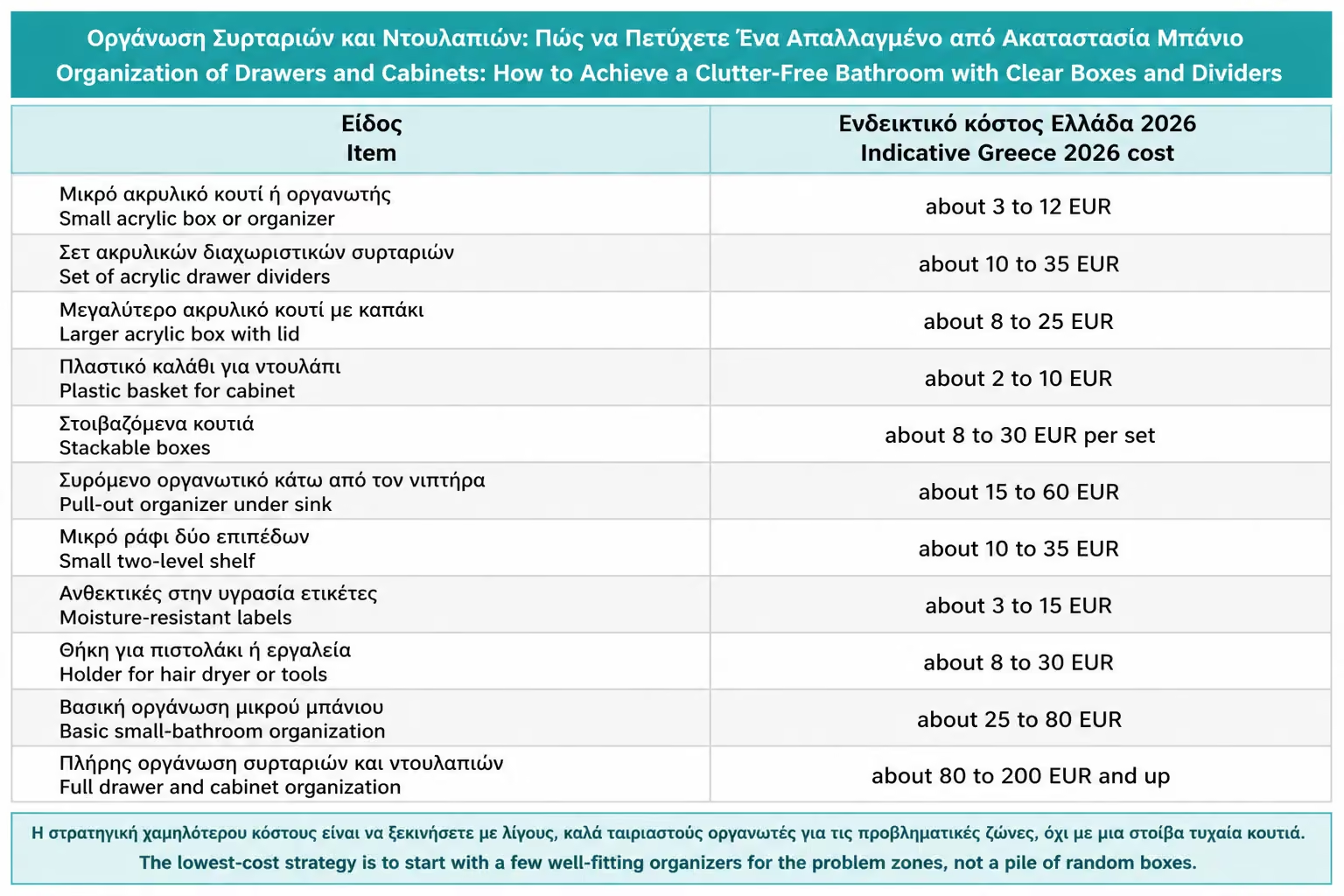
| Product / Solution | Indicative cost picture 2026 |
|---|---|
| Small acrylic box / organizer | around €3–12 |
| Set of acrylic drawer dividers | around €10–35 |
| Larger acrylic box with lid | around €8–25 |
| Plastic cupboard basket | around €2–10 |
| Stackable boxes | around €8–30 per set |
| Sliding organizer under the sink | around €15–60 |
| Small two-level shelf | around €10–35 |
| Moisture resistant labels | around €3–15 |
| Case for hair dryer / hair tools | around €8–30 |
| Basic organization of a small bathroom | around €25–80 |
| Complete organization of drawers and cupboards | around €80–€200+, depending on options |
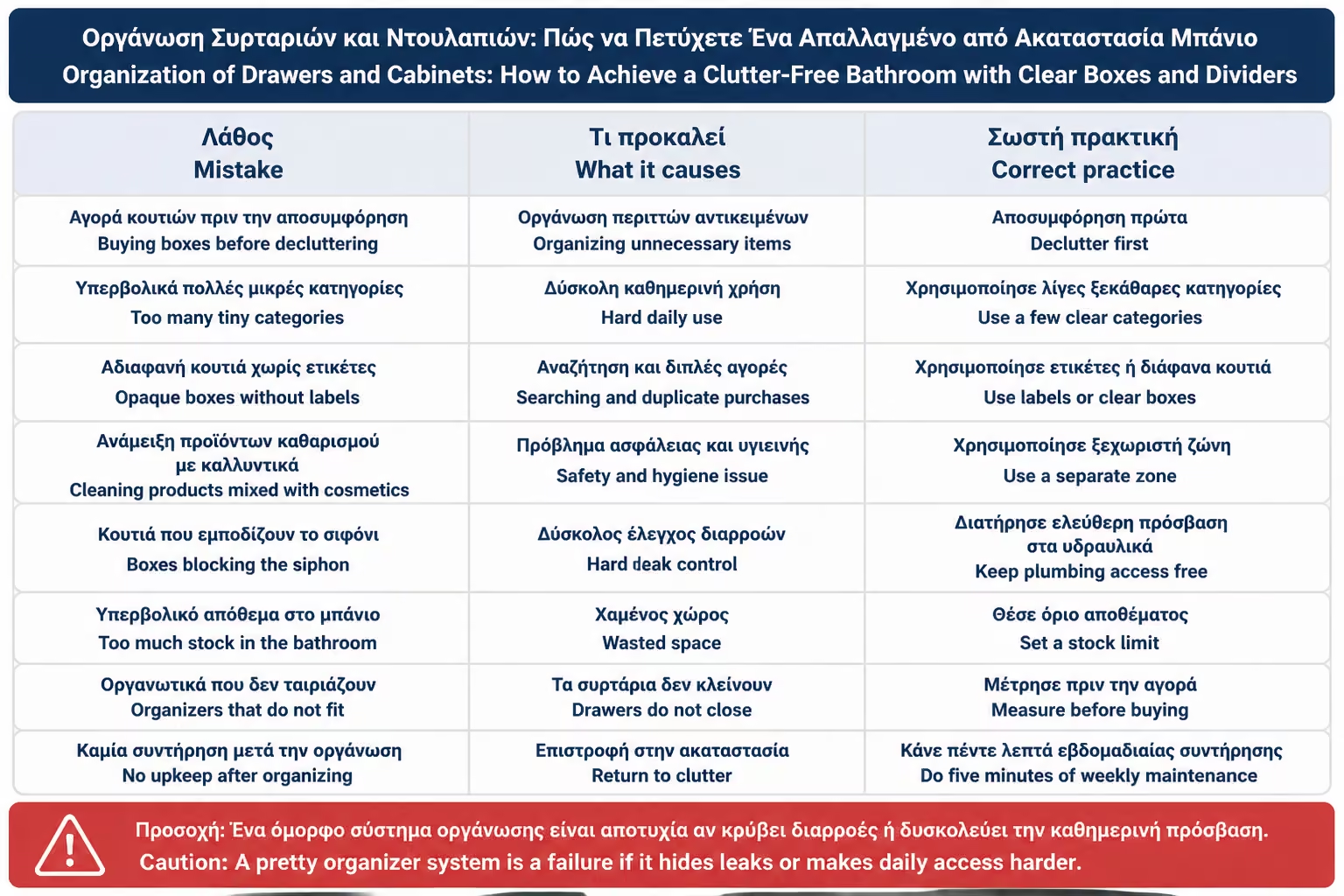
Most mistakes are made in haste. People see beautiful photos of acrylic organizers and buy too many, without first clarifying what we have. So the bathroom looks organized for a few days and then returns to chaos.
A typical example is the cabinet under the sink that is filled with acrylic boxes, but no one has left access to the faucet and corner switches. The picture is nice, but at a small leak everything should come out in a panic. The right organization should be both beautiful and technically practical.
| Error | What does it cause? | Correct practice |
|---|---|---|
| Buy boxes before clearance | Organization of unnecessary items | First decluttering |
| Very small categories | Difficult daily use | Few, clean categories |
| Opaque boxes without labels | Search and duplicate purchases | Labels or transparent boxes |
| Detergents together with cosmetics | Safety and hygiene issue | Separate zone |
| Boxes blocking the siphon | Difficult leakage control | Access to plumbing |
| Lots of supplies in the bathroom | Wasted space | Stock limit |
| Organizers that don't fit properly | Drawers that don't close | Measurement before purchase |
| No maintenance after setup | Back to chaos | 5 minutes weekly |
In most cases, the organization is done DIY. A professional solution is needed when the piece of furniture is too deep, too small, has strange dimensions or when you want custom drawers, pull-out mechanisms or a special operation around a siphon. A carpenter can turn an awkward closet into a much more functional space.
If the piece of furniture has blown melamine, dampness or a musty smell, don't just organize it with boxes. First it should be checked for leakage or old moisture. Organizers may temporarily hide the problem, but they don't solve it. If the bottom of the cabinet is soft or swollen, it needs repair or replacement.
A professional may also be needed for electric hair tools if you want a built-in outlet or a charging solution inside a cupboard. Any electrical intervention in the bathroom must be done by an electrician. We do not put extensions and multi-sockets in wet room cabinets.
If the problem is just clutter, start with DIY. If the problem is poor furniture construction, dampness or a lack of functional drawers, a more permanent solution may be in order.
| Inquiry | Yes / No |
|---|---|
| Is every drawer emptied and cleared out before organizational purchases are made? | Yes / No |
| Have expired, empty or unused products been thrown away? | Yes / No |
| Does each category have a specific position? | Yes / No |
| Are everyday products easily accessible? | Yes / No |
| Stocks have a limit and don't take up the whole bathroom? | Yes / No |
| Are cleaning supplies separate from cosmetics and towels? | Yes / No |
| Are medicines stored safely and according to their instructions? | Yes / No |
| Have drawers and cupboards been measured before buying boxes? | Yes / No |
| Is there access to siphon, valves and plumbing points? | Yes / No |
| Are the organizers easily cleaned of moisture and debris? | Yes / No |
| Is there weekly maintenance of a few minutes? | Yes / No |
| Is the bench clear of objects that have a place inside? | Yes / No |
If the answer is “No” to the points about clearance, categories and plumbing access, don't buy any more boxes. Organization starts with what you keep and where it should be, not how many organizers fit in the closet.
Organization in the bathroom is not only a matter of aesthetics. It is also a matter of operation, hygiene and damage prevention. Acrylic boxes are great because they immediately show what's inside, but don't use them to hide problems. The faucet and corner switches must always be visible or easily accessible under the sink. Cleansers should be kept separate from cosmetics and towels. And before you buy any organizer, measure. The best box is the one that fits your drawer and your routine, not the one that looks good in the photo.
The organization of drawers and cupboards is the basis for a truly clutter-free bathroom. It is not enough to empty the counter if there is chaos inside the drawers. With clear acrylic boxes, dividers, baskets, labels and proper categorization, every item has a place. Thus, the bathroom becomes easier to use, cleaner and calmer in everyday life.
The first step is always clearing up. We throw away expired, empty and unused products. Then we divide into categories: daily, skincare, hair, dental, cleaners, supplies, towels. Only then do we buy organizers that fit the actual needs and dimensions of the drawers. The transparency helps to see what we have, while the labels help to put everything back in the right place.
The successful organization is not one that looks perfect on day one. It is the one that is easily maintained after a month of use. If the everyday items are in front, the supplies are limited, the cleaners are safe and the plumbing points remain accessible, then the bathroom really works better. And when the inside of the cabinets is organized, the counter naturally stays clean, without a daily struggle.
Return to category.
Go to categoryReturn to the central guide.
Go to guide