Pipe condition
Worn or badly repaired pipework can change the scope immediately.
Bathroom renovation is one of those jobs that seems simple from the outside: remove the old tiles, replace the fixtures, install the new finishes, and deliver a new bathroom.
In practice, however, the bathroom is one of the most "hidden" areas of the house. Behind the tiles are pipes, drains, dampness, old repairs, plasters, slopes, siphons and construction details that are not visible before the space is opened.
Therefore, even a correctly calculated offer can change if, after the removals, problems appear that could not be checked visually beforehand.
That's not to say that every bathroom remodel will get out of hand. But it does mean that the owner needs to know what the common contingencies are so that they can budget more realistically from the start.
Most hidden costs appear because a bathroom packs many technical systems into a very small footprint.
In a living room or bedroom, most of the work is visible: floors, walls, paint, joinery, lighting. In a bathroom, a large part of the job sits behind the finished surface.
Until the old tiles come off, you often do not know what is really hiding underneath.
That is why a proper quote must clearly separate standard scope from extra work that only becomes necessary if a real hidden problem is uncovered.
Worn or badly repaired pipework can change the scope immediately.
A hidden past leak may force repairs before the renovation can move forward.
If the substrate is failing, extra repairs are needed before new finishes go in.
Levelling work adds both labor time and preparation cost.
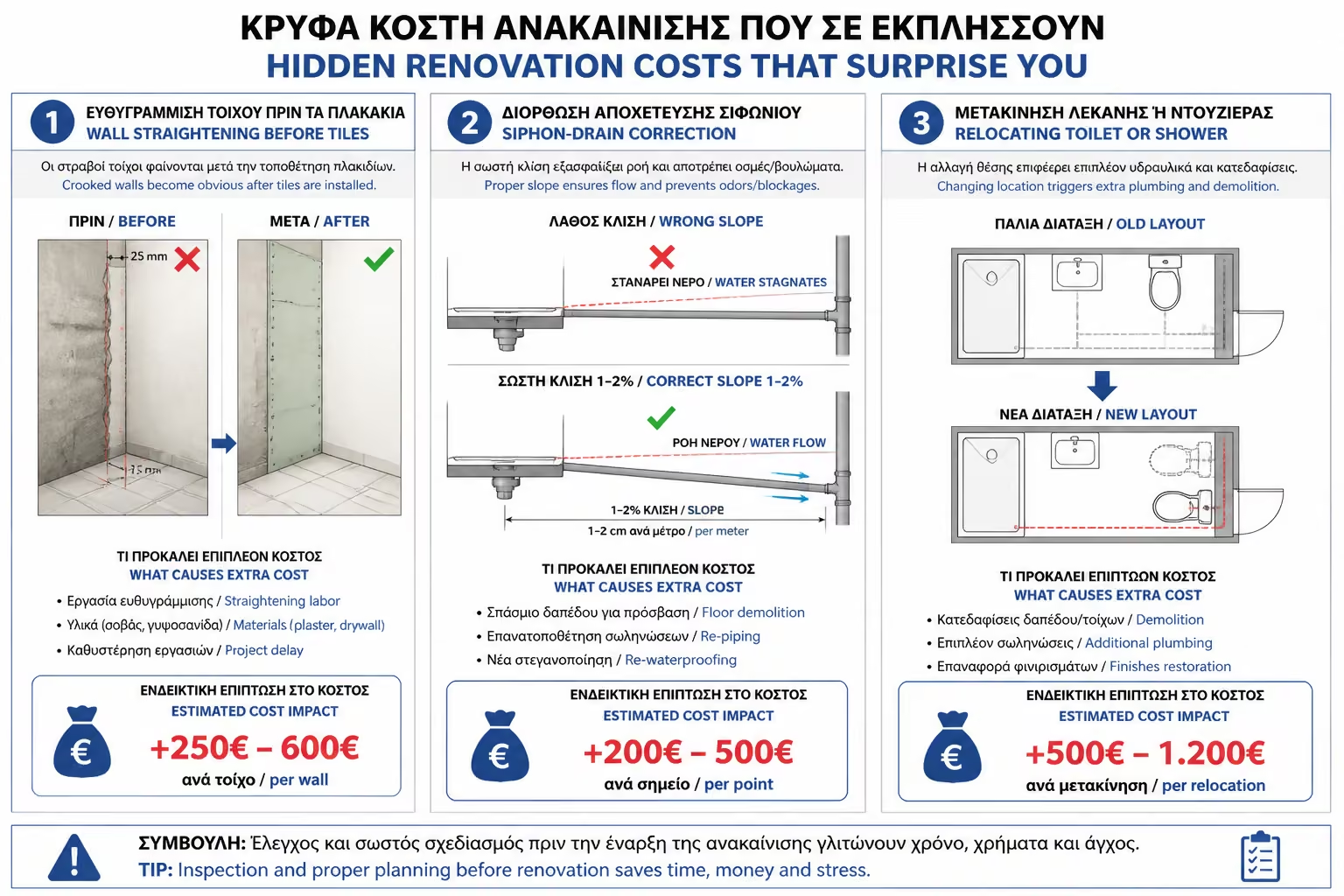
If the falls are wrong, the floor must be corrected before it is closed again.
Dampness behind tiles usually only becomes visible after demolition.
Whether the existing drain can stay or must be replaced is a key budget issue.
Below are the most common contingencies that can drive up the cost of a bathroom renovation.
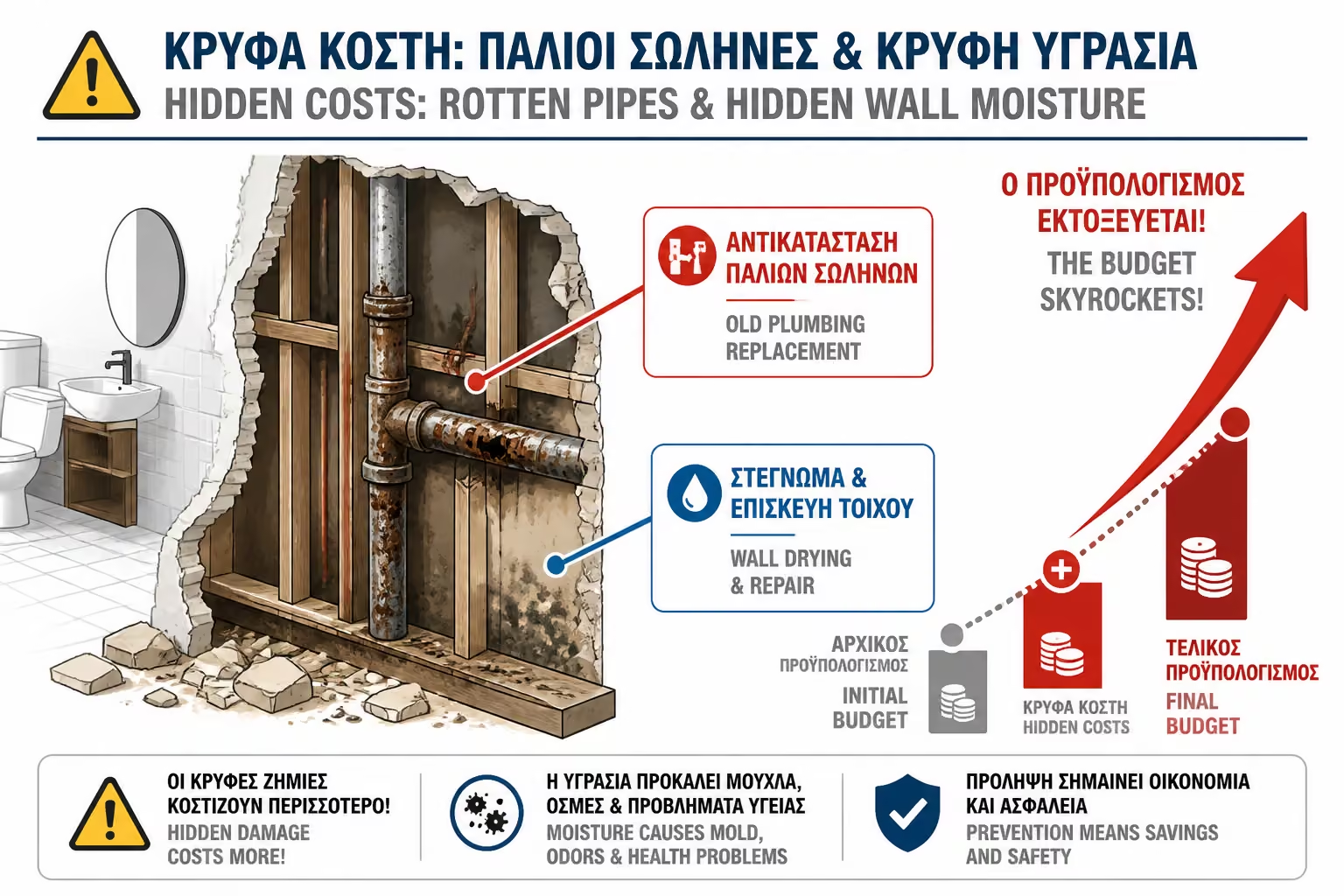
In old apartments, especially if the bathroom has not been renovated for many years, the pipes may be worn, rusted or crudely repaired from previous interventions.
Sometimes, everything seems normal on the outside. But once the wall is opened, it can be seen that the pipes are in a very bad condition or that old joints have been made that should not be left inside the wall.
As an example, an additional plumbing job can add around €200 – €700, depending on the extent of the problem.
If the initial quote only includes minor plumbing adjustments, but eventually a complete change of supplies or drains is needed, the cost can rise significantly.
If the bathroom is old, it is better to calculate from the beginning a complete change of plumbing, instead of doing a seemingly economical renovation that leaves old pipes behind new tiles.
Moisture behind the tiles is not always visible before stripping. It can be from an old leak, from poor sealing in the shower, from a problematic siphon or from moisture that passes from a neighboring area.
When the tiles are stripped, it may reveal blackened plaster, loose surfaces, mold or walls that need drying and restoration before work can continue.
In more serious cases, if the moisture is coming from a shared drain, a neighboring bathroom or an external problem, additional testing may be needed.
If loose plaster removal, drying, new plastering, special materials or local restoration is required, additional costs can be around €150 – €600.
Before renovating, check for swelling, musty smell, yellowing, blackening of joints, dampness on adjacent walls or marks on the downstairs ceiling.
Many old bathrooms have walls that are not straight or plaster that has lost its cohesion. This is not always visible when there are old tiles on top.
After stripping, it may appear that the wall needs more plastering, filling or leveling before the new tiles can be installed.
Additional costs can range from approximately €150 – €500, depending on the condition of the walls.
If the tiler lays tiles on a bad surface, the result can come out crooked, with bad joints or adhesion problems. To get the job done right, additional chores may be needed.
In old bathrooms, it is good to have provision for maintenance and leveling of surfaces. It's not always a big cost, but if it's not calculated at all, it can be seen as an "extra" in the middle of the job.
The floor drain and drains are among the most critical parts of the bathroom. If they are old, blocked, incorrectly placed or with bad slopes, they can create problems with the water runoff.
Many times, the owner simply asks for new tiles and new sanitary ware, but once the floor is opened it becomes clear that the old drain should not remain in place.
If more work is needed or if there is a problem with a shared sewer line, the cost may be higher and a special inspection may be needed.
Changing a siphon, correcting slopes or local intervention in drains can add around €150 – €500.
If the bathroom is old, do not treat the faucet as a detail. It is best to check and, where necessary, replace during the renovation, because then it will be under the new tiles.
Relocating a basin, sink, shower or washing machine may seem simple in design, but in practice it affects plumbing, drains, slopes, electrical and tiling.
In small bathrooms especially, even a small change can create quite a bit of extra work.
Carrying a basin is usually more demanding than carrying a wash basin because it involves the drain and the necessary slopes.
If the offer has been calculated based on the existing arrangement, but along the way it is decided to change seats, the cost can increase by around €300 – €1,200, depending on the extent of the changes.
The final layout must be decided before work begins. If in doubt, it is best to do measurements and design beforehand so that no changes are made in the middle of the project.
Not all tiles cost the same to install. A simple standard dimension tile is different from a large 60x120cm tile, a patterned tile, a hexagon, a mosaic or a multi-cut installation.
Also, in small bathrooms there are many obstacles: corners, pipes, siphons, thresholds, showers, recesses and points that need detail.
Indicatively, the difference can be around €100 – €500 for a small or medium bathroom, depending on the difficulty and square footage.
If the offer has been calculated for simple installation and finally more demanding tiles are chosen, the cost of the tile may increase.
The dimension and type of tile must be known before the bid is closed. If the customer changes their choice from a simple tile to a large format or a special design, it makes sense to recalculate the work.
One cost that is often underestimated is access to the property. The same task does not have the same difficulty on a ground floor with easy access and in a fourth floor apartment without an elevator.
Materials have to go up, rubble has to come down, craftsmen have to carry tools, and space has to be protected.
In some cases, if special collection or more routes are needed, the cost may increase.
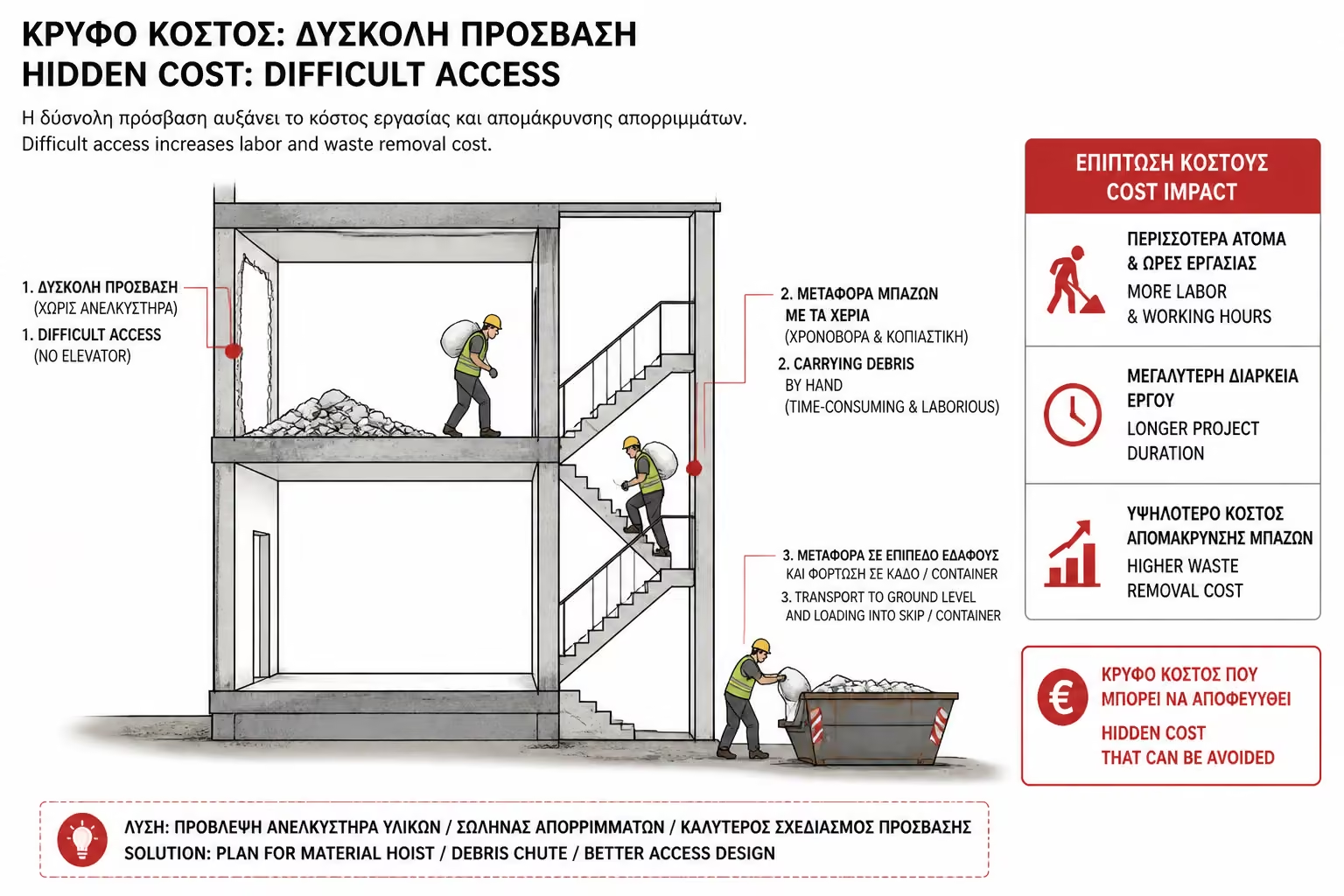
If there is difficult access, many floors, a small elevator, the inability of a bin or a long distance to transport bases, an additional cost of approximately €100 – €400 may arise.
Before giving a final offer, the floor, access, if there is an elevator, if a bin can be placed and how the waste will be removed must be known.
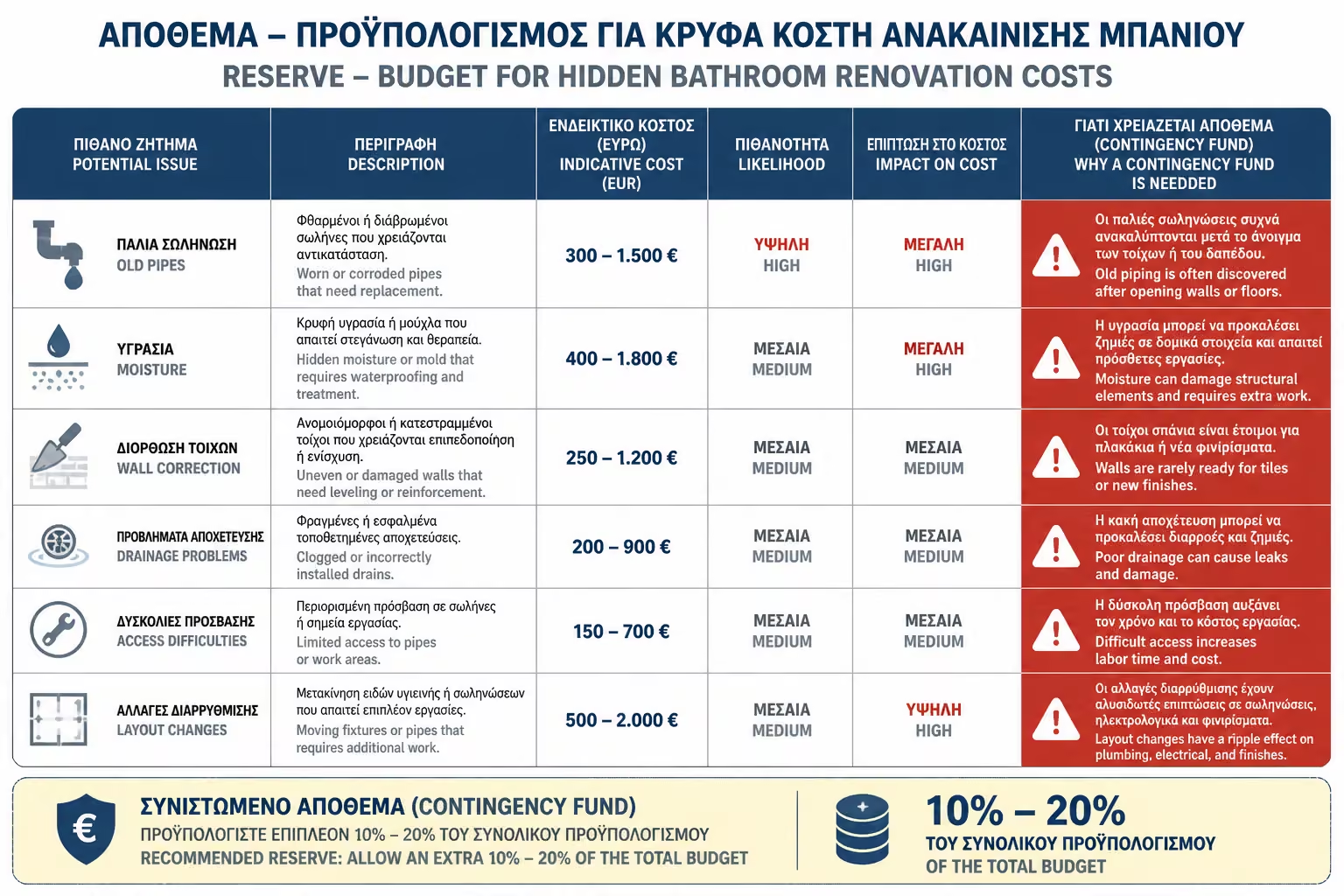
| Hidden Cost | Possible Charge | When does it appear? |
|---|---|---|
| Rotten or old pipes | €200 – €700 | When old piping can't stay. |
| Hidden moisture in the masonry | €150 – €600 | When loose or wet walls are visible after removal. |
| Crooked or loose walls | €150 – €500 | When additional plastering or leveling is required. |
| Problem in siphon or drain | €150 – €500 | When siphon change or slope correction is needed. |
| Layout changes | €300 – €1,200 | When a basin, sink, shower or washing machine is moved. |
| Difficult tiling | €100 – €500 | When large tiles, special designs or multiple cuts are selected. |
| Transportation, floor & collection | €100 – €400 | When access is difficult or the rubble needs special handling. |
The amounts are indicative and do not mean that they will all appear on every project. But they show why it is good to have a small margin of safety in the budget.
For a bathroom renovation, it is good to have a reserve of about 10% – 15% above the original budget.
For example:
| Initial Budget | Recommended Reserve 10% | Recommended Reserve 15% |
|---|---|---|
| €3,000 | €300 | €450 |
| €4,000 | €400 | €600 |
| €5,000 | €500 | €750 |
| €6,000 | €600 | €900 |
This does not mean that the reserve will definitely be used. It means that the owner will not be in a difficult position if a real problem arises behind the tiles.
In very old bathrooms, especially if there are signs of dampness or old plumbing, the reserve may be closer to 15% – 20%.
A proper bathroom renovation quote should clearly state what is included and what is not.
Before the project starts, these points should be written clearly into the quote.
Is it a full replacement or only local adjustments?
Does it include drain changes and slope corrections where needed?
The quote should say clearly whether a new siphon/drain is included.
This should never be left vague in a complete renovation.
Especially important in older bathrooms where demolition reveals damage.
If it is not mentioned, it often reappears later as an extra charge.
The price should refer to a specific bathroom layout, not a vague assumption.
Standard installation and large-format or decorative tilework do not cost the same.
Adhesives, grout, and supporting materials should be stated explicitly.
You cannot compare quotes properly if VAT treatment is unclear.
The more detailed the quote is, the fewer arguments and surprises there will be later.
Not every additional charge is a "hidden cost". Sometimes it's real extra work that couldn't be foreseen before the venue opened.
The correct practice is simple: when something truly unforeseen comes up, the owner must be informed before the work continues, together with a clear explanation and price.
All contingencies cannot be eliminated, but they can be significantly reduced with proper control and clear understanding.
Before renovation starts, treat the project like a small technical brief.
The older it is, the higher the hidden-risk profile usually becomes.
Stains, mold, swelling, and odors are useful early warnings.
If it has never been replaced, the budget should reflect that risk.
Mid-project changes are one of the fastest ways to inflate cost.
Tile size and type directly affect installation pricing.
A vague quote leaves too much room for later disputes.
A 10%–15% buffer is usually the sensible minimum.
Last-minute decisions usually cost more than they seem.
Good preparation does not guarantee a surprise-free job, but it does greatly reduce the chance of a budget overrun.
In bathroom renovation, the most dangerous cost is the one that was never budgeted at all.
A very low quote may look tempting, but if it excludes plumbing, drainage, waterproofing, repairs, debris removal, and VAT, it can easily end up costing more than a fuller and better-documented offer.
For older bathrooms, always keep a reserve of around 10%–15%. If the bathroom is very old or already shows signs of moisture, that reserve may need to be closer to 20%.
The goal is not to pretend extra costs can never happen. The goal is to know in advance which ones are realistic, when they are justified, and how they must be approved.
Hidden costs in bathroom remodeling are not always the result of bad intentions or miscalculation. They often arise because the bathroom hides problems behind tiles, pipes and old construction.
The most common contingencies usually fall into the following categories:
Rotten or outdated plumbing can completely change the technical scope.
Hidden dampness often appears only after demolition begins.
Loose or crooked walls require extra repair work before finishing starts.
Bad falls or a failing siphon cannot simply be ignored and covered up.
Moving fixtures affects plumbing, drainage, labor time, and complexity.
Large-format or more demanding tile choices increase labor and waste.
Floor level, transport difficulty, and debris removal all affect the real budget.
To protect your budget, ask for a detailed quote, decide on key options before the project begins and keep a reasonable reserve.
That way, even if the unexpected comes up, the renovation can proceed smoothly, stress-free, and without derailing financially.
Return to category.
Go to categoryReturn to the central guide.
Go to guide