Wrong bathroom size
A 4 sq.m. bathroom and a 5.5 sq.m. bathroom do not use the same quantities or labor time.
When a homeowner wants to remodel their bathroom, they usually start with a simple question: “How much will it cost?”
The question is reasonable, but to give a correct answer, specific information is needed. A bathroom can cost very differently depending on the square footage, the age of the facilities, the condition of the pipes, the height of the tiles, the layout, the materials and the level of equipment.
Therefore, a quote given without photos, measurements, and a job description is necessarily only approximate. It may serve as a first estimate, but it is not a reliable budget.
If you want to get a realistic quote, you need to help the contractor or engineering company understand exactly what is there today and what you want done.
A rough quote may seem convenient at first. The homeowner gets a quick number and feels they can start comparing prices immediately.
The problem is that if the number was calculated without the right information, it may change substantially once the work starts or after a site visit.
In many cases, the original number is based on assumptions that turn out to be wrong.
In all these cases, the final price will move. Not necessarily because someone wants to overcharge, but because the starting quote was built on incomplete data.
A 4 sq.m. bathroom and a 5.5 sq.m. bathroom do not use the same quantities or labor time.
Tiling to 1.80 m is not the same scope as taking the finish all the way to the ceiling.
Simple tile installation is priced very differently from large-format or harder tilework.
Moving the toilet or shower can sharply increase plumbing and drainage cost.
A wall-hung toilet with a concealed cistern is not priced like basic sanitaryware.
An upper-floor apartment without a lift affects transport, debris handling, and crew time.
Before asking for a quote, it's a good idea to write down in simple words what you want done.
You don't need to use technical jargon. As long as the main point is clear.
The goal is to help the contractor understand what project they are actually pricing before numbers start flying around.
Is this a full renovation or just a lighter refresh?
Will all tiles come off, or only part of the bathroom?
Do you want inspection and replacement, or only basic adjustments?
Will fixture positions stay the same or change?
This changes both the technical scope and the final budget.
The choice affects materials, finish level, and total cost.
A wall-hung toilet is not equivalent to a standard floor-mounted one.
To the ceiling or only to a defined height?
Clarify whether you will supply materials or want them included in the quote.
The more clearly you define the request, the closer the quote will be to reality.
For a solid first estimate, measurements are essential.
It does not have to be an architectural drawing. Even a simple hand sketch with dimensions can be extremely useful.
Even if the measurements are not perfect, they are far more useful than saying “it’s a small bathroom”.
A simple sketch can solve many questions.
It doesn't have to be pretty. It needs to be understood.
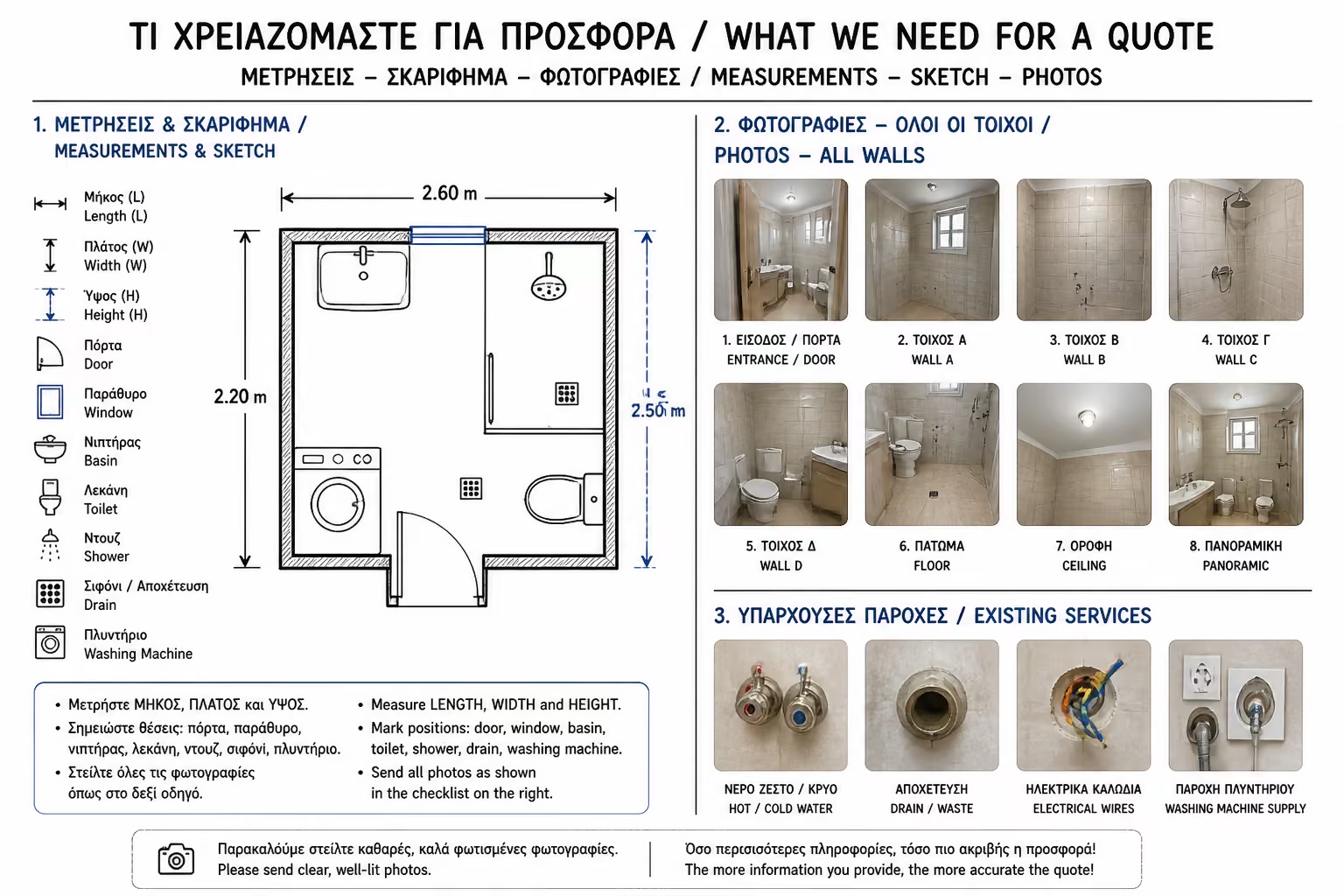
Draw a rectangle showing the bathroom from above and mark the basic elements clearly.
Show where it sits and which way it opens.
If there is one, mark both its position and rough size.
Mark the toilet, basin, and bath or shower in their current positions.
These help the contractor understand the technical layout much faster.
Length, width, and a few critical distances are enough for a first pass.
The bathroom is approximately 1.70 m x 2.40 m. The door is on the short side. The toilet is on the right as you enter. The basin is opposite the door. The bathtub is on the left side and I want it converted into a shower.
That type of description is far more useful than simply asking, “How much does a bathroom cost?”
Photos are one of the most useful elements for a first offer.
Ideally, send clear photos with good lighting from all sides of the bathroom.
One photo from the door that shows the whole room clearly.
Separate wall shots help the contractor read the layout correctly.
Useful for reading supplies, spacing, and practical constraints.
This is usually the most technically important part of the room.
Important details for moisture, drainage, and technical assumptions.
Mold, stains, swelling, or cracks should be visible in clear close-up photos.
Helpful if access, transport, or protection of nearby spaces matters.
If there are obvious problems such as moisture, broken tiles, bad joints, leaks or bulges, photograph them close up and clear.
A photo can show things that are not easily described in words.
The goal is not a pretty photo. The goal is a technically useful one.
The age of the bathroom greatly affects the offer.
A bathroom renovated 8–10 years ago is a different case than a bathroom 30 or 40 years old.
Before requesting a quote, try to answer:
This information helps the contractor assess whether we are talking about a simple job or a renovation with possible hidden difficulties.
It is not necessary to have purchased the materials before requesting a quote. But it is very useful to know roughly what category you want.
For example, it makes a big difference if you want:
If you haven't decided exactly, you can request the offer in levels:
So you can see how the cost changes depending on your choices.
One point that is often forgotten is access to the property.
The same renovation can have different costs if the bathroom is on the ground floor with easy access or in a fourth floor apartment without an elevator.
Before requesting a quote, please state:
These are not details. They affect the time, transport, collection and organization of the project.
Before you compare offers, it should be clear whether the prices include VAT and who is buying the materials.
A quote may appear lower simply because it does not include VAT or because it excludes sanitary ware, tiles, adhesives, grout, or debris removal.
Ask clearly:
If these are not answered, you cannot properly compare two offers.
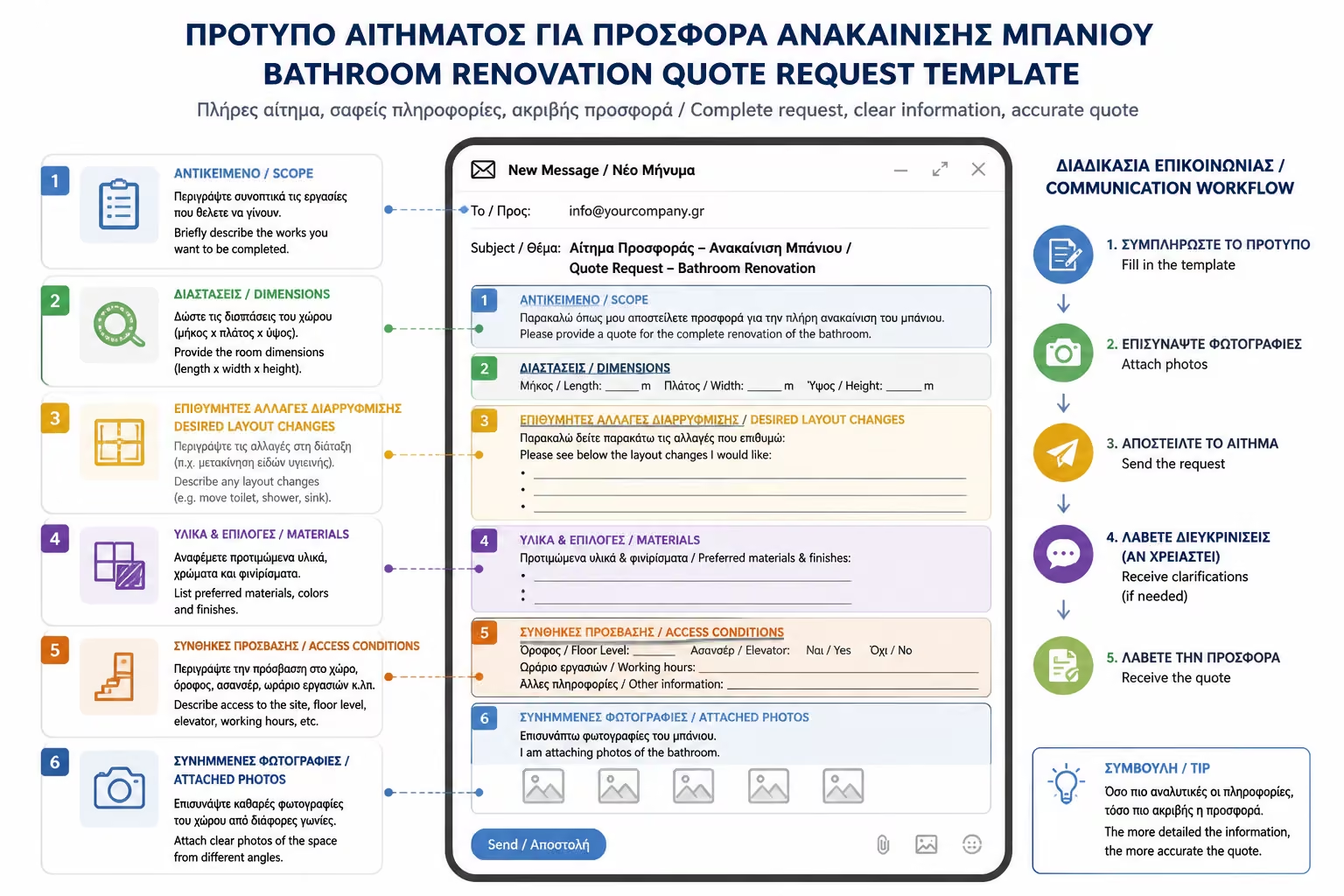
If you want to request a quote from a contractor or company, you can send a message like the one below.
The bathroom is approximately 1.80m x 2.40m and the height is approximately 2.70m. Located in a 2nd floor apartment with a lift.
I want the old tiles and fixtures stripped, the plumbing checked/changed, the shower zone properly primed and waterproofed, and new tiles and fixtures installed.
The layout will remain roughly the same, except for the bathtub that I want to become a shower. I want tiles up to the ceiling or, alternatively, can you tell me the cost difference if they go up to a lower height.
I haven't bought materials yet, but I'm thinking of mid-range tiles and simple bathroom furniture. Please tell me whether the quote includes labor only or materials as well, whether it includes VAT, debris removal, adhesives/grouts, and basic sanitary fixtures.
I am sending you photos and a rough sketch with dimensions.
Thanks.
A message like this gives a much better basis for a quote than the vague question, "How much does a bathroom cost?"
Good evening, I am interested in a complete bathroom renovation.
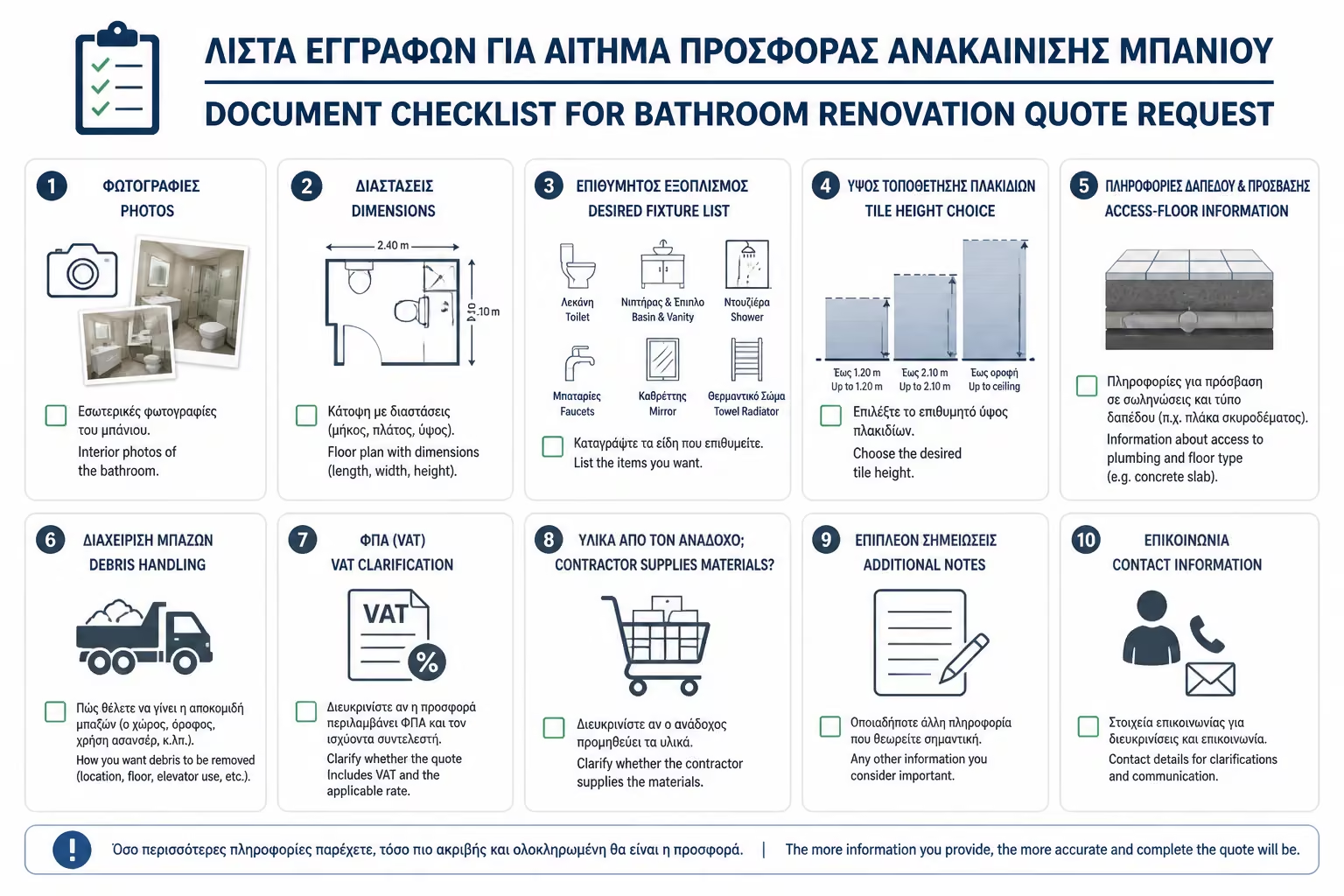
Before requesting a quote, prepare the following:
| Information | Why is it necessary? |
|---|---|
| Bathroom dimensions | To estimate quantities, tile area, and labor scope. |
| Space height | For wall surface and tile height. |
| Photos from all sides | To show the condition and layout. |
| Rough sketch | For the contractor to understand the positions of the sanitary items. |
| Bathroom age | To assess whether pipe replacement or hidden problems are likely. |
| What do you want to change? | To distinguish a complete renovation from a simple renewal. |
| If the layout changes | Because it affects plumbing, drainage and costs. |
| Material class | In order not to calculate the wrong cost level. |
| Floor and access | For transport, debris handling, and crew organization. |
| If you want a price with or without materials | To properly compare offers. |
| If you want a price with VAT | To know the real final cost. |
A proper offer should not just be a final amount. It must explain exactly what is involved.
Ideally, it should state:
The more detailed the quote, the easier it is to compare and the fewer misunderstandings there will be along the way.
When you have two or three offers, don't just look at the final amount.
Look first if you are comparing the same things.
For example:
A cheaper offer may be correct if it is clean and for a smaller item. But it may seem cheaper because key tasks are missing.
Photos, measurements, and a sketch are very helpful for a first estimate. But in many cases, the final quote still requires a site inspection.
A site inspection is especially useful when:
A site inspection does not mean the original estimate was wrong. It simply means the project needs a more reliable calculation before work begins.
If you want the right quote, do not just ask, “How much does a bathroom cost?” Send dimensions, photos, the age of the bathroom, a basic job description, and make it clear whether you want pricing with materials, without materials, with VAT, or without VAT.
A good quote starts with good information. The more accurate your input is, the less likely the budget is to shift later.
If a quote is very low but does not explain what is included, it is not automatically a bargain. It may simply be incomplete.
The right quote is not always the cheapest one. It is the one that tells you what you are paying for, what is included, and what may still arise as an extra.
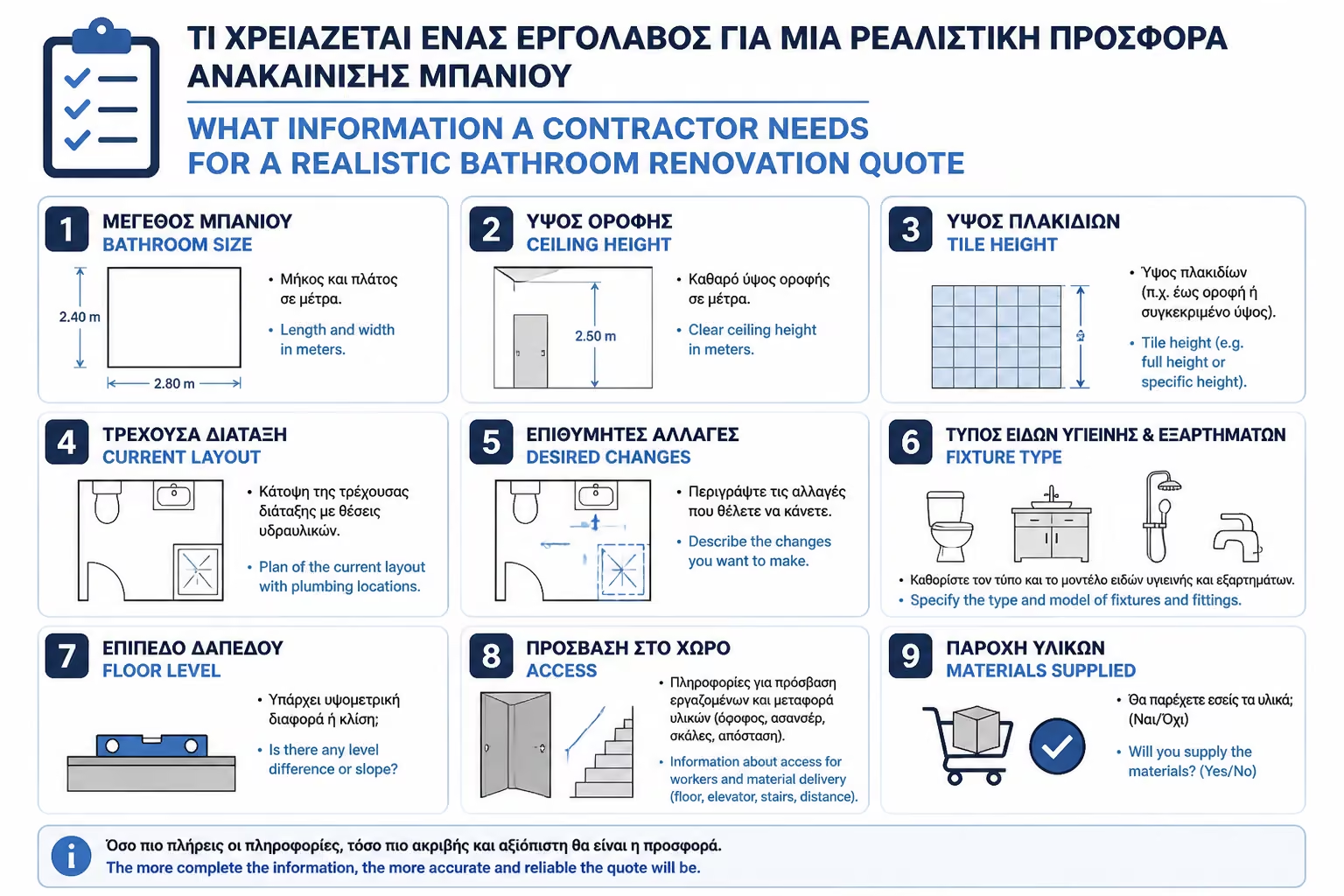
To get a realistic bathroom remodeling quote, you need to give the contractor or tech company as clear a picture of the project as possible.
The most important elements are:
A correct offer is not just a number. It is a clear description of tasks, materials, obligations and exceptions.
The better you prepare before asking for a quote, the closer to reality the final cost will be and the smoother the renovation will go.
Return to category.
Go to categoryReturn to the central guide.
Go to guide