
Homesteading vs Turnkey Renovation: What's Really Best for You?
When you decide to go ahead with your bathroom renovation, the first big question you have to answer is not about materials, but about project management: "Should I find the crews myself to save on the contractor's supply (Outsourcing) or should I outsource it all to an engineering/technical company (Turnkey)?"
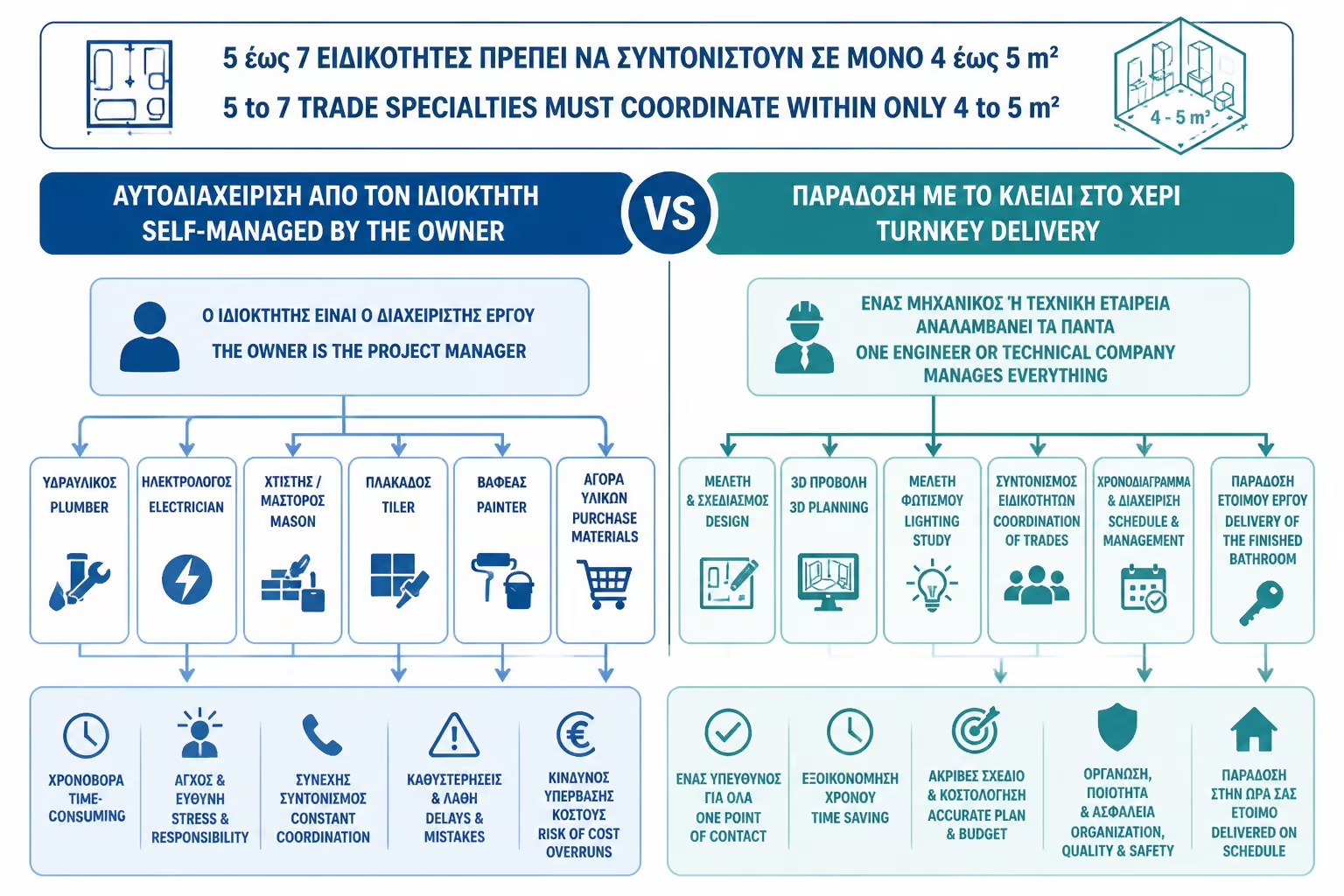
The idea of becoming your “own contractor” sounds enticing. In most people's minds, self-reliance equals instant savings. However, the bathroom is the most populated space in the renovation phase. Within just 4-5 square meters, 5 to 7 different craftsman specialties have to pass and work together flawlessly.
Let's analyze the two options with technical and financial criteria, so you can discover which path suits your own abilities and your wallet.
1. Self-Employment: Be Your Own Contractor
In self-management, you take on the role of Project Manager. You find the plumber, the tiler, the electrician, you buy the materials and you are in charge of the schedule.
Financial Benefit (Theoretically)
You save the profit percentage (overhead and contractor benefit) which is usually 15%–25% of the total project value.
Absolute Control
You pick the craftsmen one by one and negotiate their daily wages directly.
The Dangers & Pitfalls:
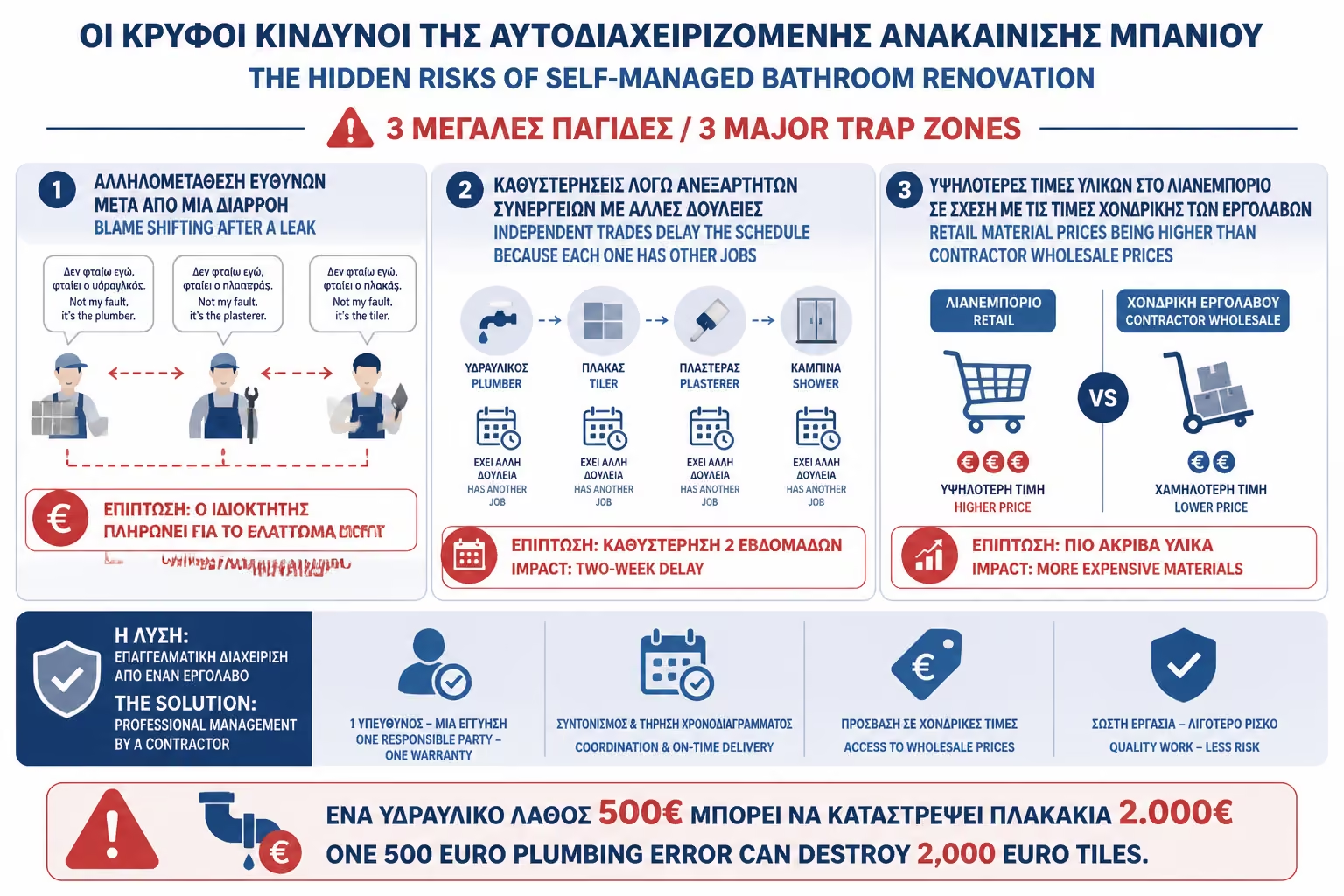
The "Ball of Responsibilities"
This is the biggest nightmare in self-monitoring. If there is a leak after the job is done, the plasterer will blame the plumber ("he dug wrong"), the plumber on the plasterer ("he didn't level the wall") and the plasterer on the plasterer. You, not being a technician, cannot judge who is at fault and end up paying for the damage out of your own pocket.
Delays in the Schedule
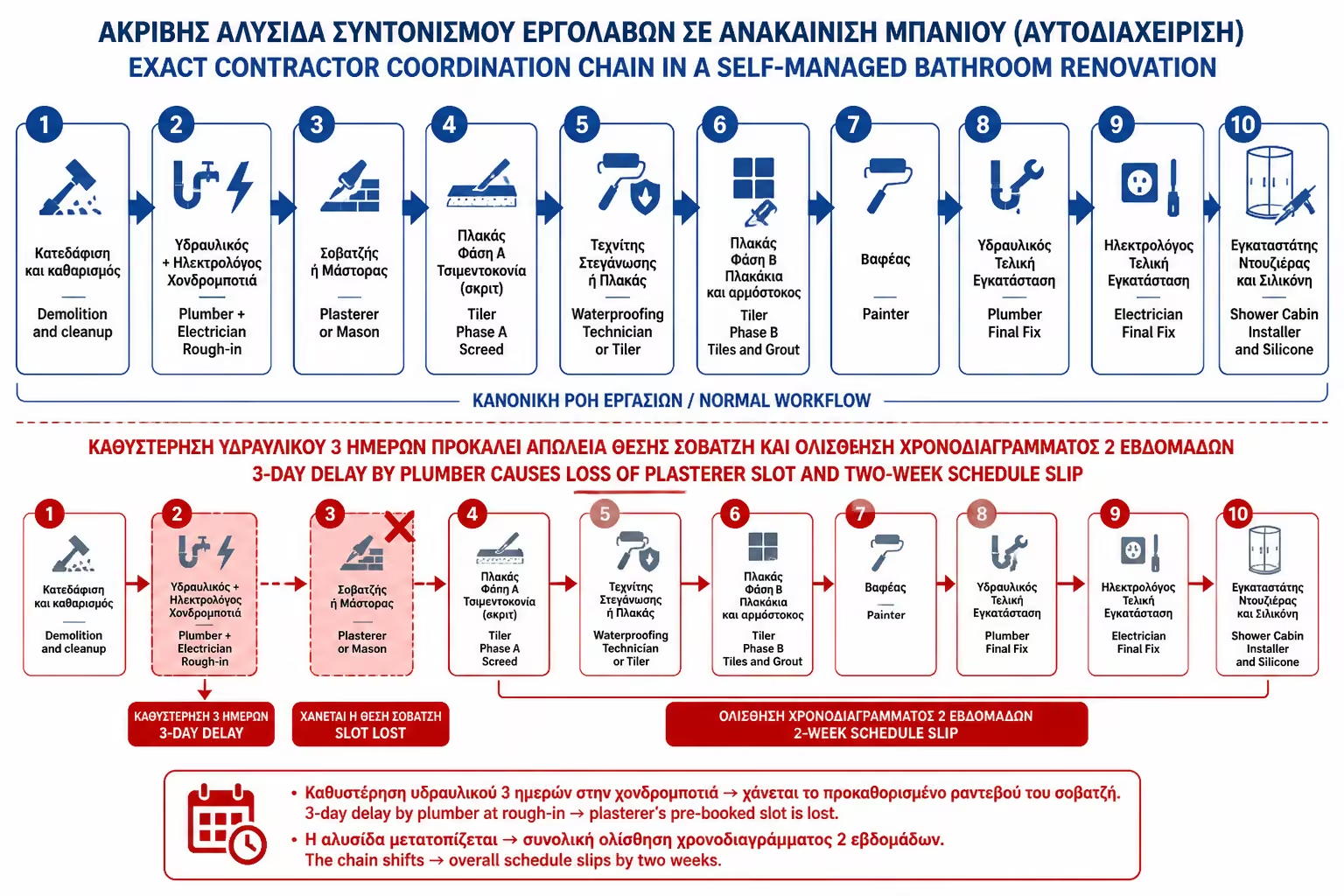
Freelancers tend to "close" many jobs at once. If the plumber is 3 days late in coming, you will miss the "window" of the plasterer, who will go to another building and take you back two weeks.
More expensive materials
An individual purchasing tiles for a bathroom will shop at retail prices. A contractor or engineer buys at wholesale prices (due to volume) and often achieves discounts that a private individual will never see.
2. Turnkey Renovation: The Tranquility Solution
You outsource the project to an Engineer or a Technical Company. They undertake the study, the lighting study, the 3D design, the coordination of their own, experienced crews and deliver the bathroom to you ready for use.
The Advantages:
One and Only Responsible
For everything that goes wrong, from a scratch on the furniture to a leak, you talk to a human. He bears full legal and technical responsibility.
Written Warranty & Contract
Serious companies sign a private agreement with a locked budget (no "unexpected" expenses) and a specific delivery date (with delay clauses).
Technical Supervision
The engineer controls phases that you do not know how to control, such as the pressing of the pipes, the pouring of the cement mortar and the quality of the waterproofing.
The Cons:
Higher Initial Cost
The figure you'll see in the quote is total and includes the supervision fee, which can be confusing to anyone looking at just the initial price.
Workshop Coordination Guide (If You Choose Outsourcing)
If, despite the risks, you decide to do it yourself, the correct order to call the workshops in order not to lose control is strictly as follows:
- Demolition (Demolition) & Cleaning Workshop
- Plumber & Electrician (They come in at the same time to lay out routes)
- Plasterer / Builder (Closure of walls and alignment of walls)
- Plakas - Phase A (Floor screed for screeds)
- Insulation Technician or Plakas himself (Application of spreadable waterproofing)
- Plakas - Phase B (Tiling and grouting)
- Painter (Stuccoing and painting ceiling/plasterboard)
- Plumber - Phase B (Installation of basin, wash basin, batteries)
- Electrician - Phase B (Installation of lights, sockets, ventilation)
- Cabin Installer / Silicones
Comparison Chart: Where Does Each Option Exceed?
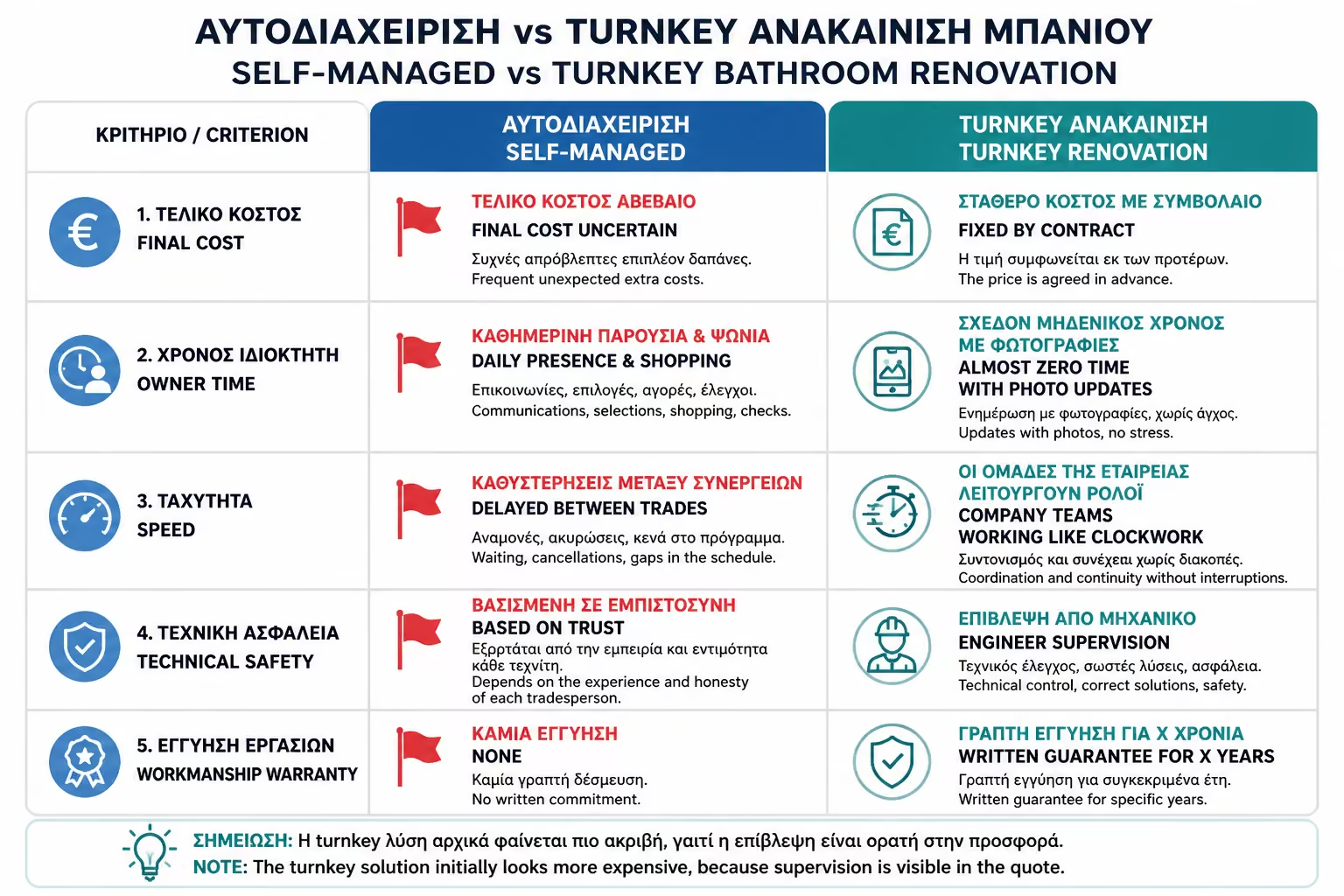
| Criterion | DIY (DIY) 🛠️ | With the Key in Hand 🔑 |
|---|---|---|
| Final Cost | Uncertain (Starts low, may rise due to errors) | Fixed & Pre-agreed on contract basis |
| Time Owner | It requires daily presence & running to the markets | Zero (Update with photos/Viber) |
| Project Speed | Often long delays between workshops | Fast (The company's workshops work around the meter) |
| Technical Security | It is based on the good faith of each craftsman | Guaranteed under Engineer supervision |
| Malpractice Warranty | None (One blames the other) | Written guarantee for X years from the company |
💡 The Engineer's Advice
> “Self-reliance is only worthwhile if two conditions are met: First, you have plenty of free time (be willing to be at the yapi every morning at 7:30) and second, you know the craftsmen personally and have seen their work before. > If you intend to find random masters from internet classifieds, the risk is huge. In the bathroom, a €500 plumbing mistake can ruin €2,000 worth of tiles. If you put down your time, phones, stress and gas, Turnkey almost always turns out to be the most economical and rational solution.”
In the next article, we now dive deep into the practical stages of construction, starting from scratch: Phase 1 - Stripping & Tearing Down. We will see what is the correct technique to remove the old tiles and the cast-iron bathtub, how to protect the central columns of the apartment building and how to avoid dangerous damage to the static of the walls.
Related Articles
The Ultimate Bathroom Renovation Guide: The Correct Order of Work from A to Z Preparing Your Home & Protecting Adjacent Rooms During a Bathroom Renovation Partial vs Full Bathroom Renovation: When Old Pipes Are a Time Bomb Bathroom Renovation Timeline: How Many Days Does It Really Take?
Bathroom Renovation & Design Guide
Return to category.
Go to categoryCentral Guide
Return to the central guide.
Go to guide