What the owner may assume
The price includes debris removal, adhesives, grout, waterproofing, sanitary ware, VAT, small repairs and a workmanship guarantee.
When an owner commissions the renovation of a bathroom, the agreement is often made verbally: "so much money, so many days, all in". This may seem simple and quick, but in practice it leaves many points open.
What exactly is included in the price? Who buys the materials? What if the project is delayed? Who is responsible if a leak occurs after delivery? What if the owner changes his mind in the middle of the job? When is the deposit paid? When is the work considered delivered?
These questions should not be answered "on the fly". They must be agreed in writing.
The private agreement with the contractor or engineering firm is the document that clarifies the scope, cost, schedule, obligations and responsibilities of each party.
Not every small task needs to become a complex legal contract. But for a complete bathroom renovation, especially when the cost is several thousand euros, a clear agreement protects both the owner and the professional.
The verbal agreement has one basic problem: when everything goes well, nobody remembers it. But when a disagreement arises, each may remember different things.
The price includes debris removal, adhesives, grout, waterproofing, sanitary ware, VAT, small repairs and a workmanship guarantee.
The deal covers only basic labor, specific tasks and days, without contingencies, extra materials or layout changes.
If these are not written down, disagreement is almost inevitable.
An agreement is not a sign of distrust. It is a pure collaboration tool.
A private agreement is a written deal between two or more parties. In a bathroom renovation, its role is to lock down who undertakes what, at what price and under which rules.
It does not replace permits, insurance obligations, documents or technical studies where required. Completes and organizes them.
The owner, the contractor, the technical company or the professional undertaking the work.
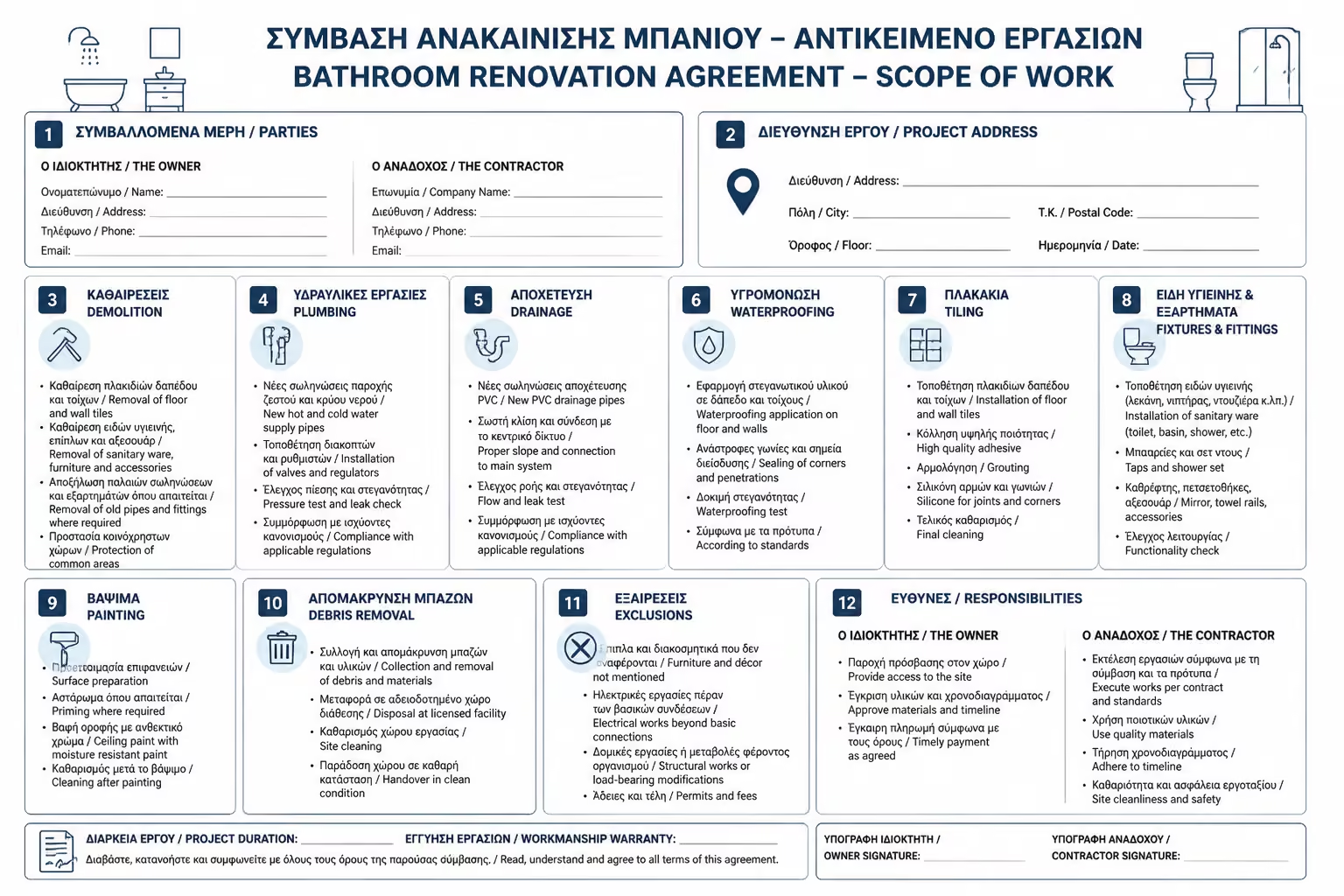
The agreement defines the project, the location and the exact technical scope.
It states the price, what is included, what is excluded and how payment will happen.
It sets the start, delivery, stages, delays, guarantees and dispute rules.
A private agreement is always good to have when the project goes beyond a minor repair.
It becomes especially important when the project carries enough technical, financial or organizational weight that a misunderstanding can become expensive.
For a simple tap change or minor repair, a full contract may be overkill. However, for a project of €3,000, €5,000 or €8,000, the written agreement is basic protection.
Many stages and multiple technical trades are involved.
The bigger the budget, the bigger the need for clear terms.
Plumbing, electrical, tiling and contractor-supplied materials need role clarity.
Deposits, staged payments and promised delivery dates must be written down.
Shared spaces, noise and day-to-day disruption need explicit rules.
Administrative obligations and hidden-risk items make a written agreement essential.
The agreement must clearly state who is signing.
Full name, VAT number, tax office, home address, contact details and status as owner or legal representative.
Name or company name, VAT number, tax office, registered seat, contact details, legal representative and professional status.
If the property has more than one owner, it must be clear who is signing and with what authority.
The most important part of the contract is the project description.
It is not enough to write:
Bathroom renovation.
It must describe specifically what will be done.
Old tiles, sanitary ware and debris removal should be written explicitly.
Plumbing, drainage, drain trap, electrical changes and substrate preparation must be named.
Cement base, slopes, waterproofing, tiling and grouting belong in the scope.
Fixtures, vanity, taps, shower enclosure and final cleaning should all appear clearly.
The more detailed the description, the less room for misunderstanding there is.
A proper agreement should clearly distinguish the inclusions and exclusions.
Exceptions are not a negative thing. Instead, they make the deal cleaner.
Labor, infrastructure materials, adhesives, grout, piping, drain trap, electrical items, waterproofing, debris removal, VAT, material transport and any capped sanitary-ware allowance.
Client-choice tiles, shower enclosure, lighting, accessories, special constructions, hidden-damage contingencies, permits, insurance charges if not agreed and extra work outside scope.
The agreement must state the financial object clearly.
It must clarify:
The agreement should state clearly what the final contract price actually is.
A price without a clear VAT reference is one of the easiest ways to create confusion later.
It should be obvious whether the deal covers labor only or full supply and installation.
Where relevant, insurance-related charges should never be left vague.
Waste removal and cleanup should be named explicitly, not assumed.
This tells the client what quality and budget level has actually been priced.
That makes it easier to price additions cleanly when the scope changes.
For example, it is better to write:
The price includes sanitary items up to €900 including VAT.
despite:
The price includes toiletries.
The second sentence is vague and may lead to disagreement.
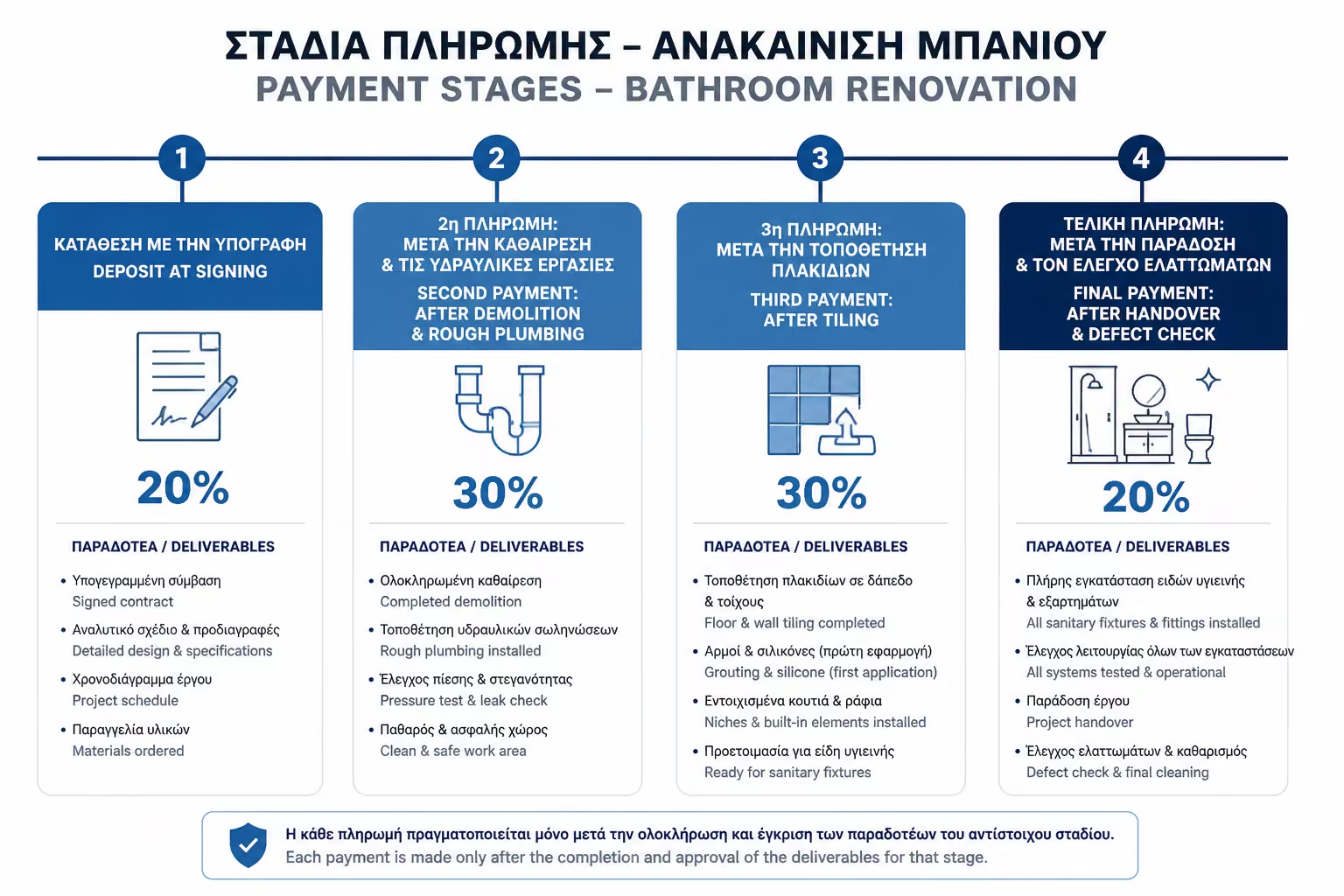
The agreement must state when each amount is paid.
A simple payment structure might look like this:
A reasonable deposit can cover mobilization and the first material purchases.
The next installment can be tied to demolition and core plumbing or electrical progress.
An intermediate payment makes sense once a major part of the visible work is complete.
The last amount should ideally be linked to inspection, observations, and formal delivery.
Advance payment is normal, especially if the contractor is purchasing materials. But it must be logical and connected to the object.
It is not right that the owner has almost paid for the entire project before it is completed. Nor is it right for the contractor to finance the entire project without payments at intermediate stages.
Balance protects both sides.
The agreement should state at least the following:
It should be clear when the project truly begins, not just when the parties “agreed in principle”.
The overall time frame helps both sides organize expectations and obligations.
A specific delivery target limits vague promises and open-ended timing.
Milestones make it easier to understand what should be complete at each phase.
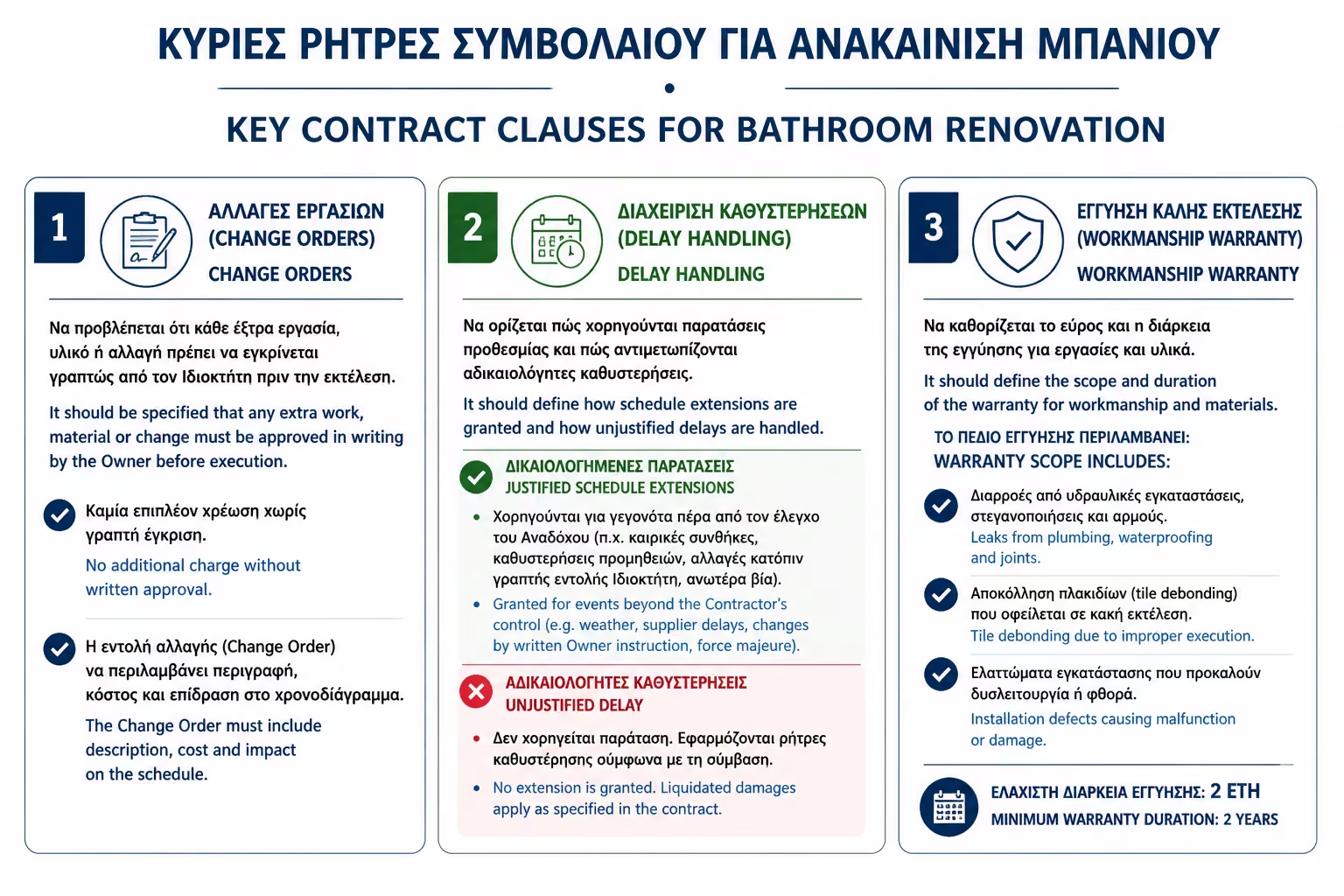
The agreement should define in advance how delays are handled.
This separates true contractor fault from outside causes.
For example, there may be a delay because:
Material supply delays can alter the pace of the project without contractor fault.
New choices often create waiting time, redesign, or fresh ordering.
A technical issue uncovered after demolition can easily shift the schedule.
If the existing network is worse than expected, timing changes immediately.
Keys, access hours, or building restrictions can block progress.
Shared-area rules, elevator restrictions, or neighbor complaints can slow the works down.
The schedule must be realistic. He should not promise impossible dates just to close the deal.
A delay clause is an amount or consequence agreed upon if the project is unreasonably delayed.
It is not always necessary on small projects, but it can make sense when there are concrete reasons for timing pressure:
The works must be delivered within a defined time window.
A major delay directly affects the day-to-day life of the people living there.
For example, before moving in, hosting guests, or another fixed commitment.
A delayed project may mean immediate financial loss for the owner.
The more serious the consequences of delay, the more reasonable a clause becomes.
The clause must be reasonable and mutually fair.
For example, it is not appropriate to impose a clause for a delay due to the client, such as a delay in selecting materials or changes in the middle of the project.
A sound clause should distinguish clearly between different causes of delay:
This is where a consequence may make sense if the contractor is unjustifiably failing to keep schedule.
Technical issues that could not reasonably be predicted should be treated differently.
Changes, late approvals, or material decisions by the client should not be charged to the contractor.
Extraordinary events outside both parties’ control need separate treatment.
Changes may occur in any renovation. The important thing is to have a process.
The agreement must state that no additional work is performed without prior notification and approval of the owner.
For example:
A hidden defect may create a real technical need that was never priced in the original scope.
The actual condition of the space often reveals extra work that was not visible at the start.
A material change can affect both cost and timing.
That kind of move may require new plumbing work or different preparation.
Any added electrical scope should be approved separately.
New equipment changes both procurement and installation scope.
In these cases there must be a written agreement to:
The added work should be described clearly, not vaguely.
The extra cost should be agreed before the work is performed.
Any scope change may shift delivery and that needs to be recorded.
There should be a clear approval point so no one disputes it afterward.
This avoids the classic problem: "I thought it was included in the price".
The agreement must state whether a work guarantee is provided and what it covers.
For example, it may cover the following:
If the leak comes from a connection installed during the renovation, that should be covered.
The warranty should include obvious failures of application.
Defects in workmanship should not be left outside responsibility.
If the failure comes from the installation itself, the agreement should say that clearly.
Any problem directly caused by bad execution should be stated explicitly.
But it must also be clarified what is not covered.
Usually, however, the following are not covered:
Misuse by the owner or third parties cannot reasonably fall on the contractor.
Normal aging is not the same thing as poor workmanship.
In that case, responsibility usually shifts to the manufacturer or supplier.
If something remained in place, it should not automatically be treated as part of the contractor’s warranty.
Later interventions by other crews can break the original chain of responsibility.
Problems coming from a neighboring apartment or outside source are usually outside the renovation scope.
The warranty must be specific, not a general phrase "has a warranty".
The agreement must state when the work is deemed to have been delivered.
Ideally, at the end there is a check with the owner and any comments are recorded.
For example:
The water should flow correctly and the bathroom should not hold standing water.
Connections and fittings should be checked before the project is accepted.
Taps, mixer controls and basic functions should work as expected.
Sanitary fixtures should feel stable, aligned and fully usable.
The project should not be considered finished if obvious finishing work is missing.
Final delivery should include debris removal and a usable, orderly bathroom.
If there are minor backlogs, they can be listed and a recovery time agreed upon.
This protects both the owner and the contractor.
The agreement should clarify who is responsible for matters that are not purely technical but affect the legality of the project.
For example:
The administrative side should be settled before work begins, not after.
Insurance-related obligations should be identified from the start.
The agreement should clearly assign this cost and responsibility.
The commercial and tax side of the project should not stay vague.
The tax treatment must be written explicitly, not assumed.
The presence of outside crews changes how responsibility is shared.
These should be agreed before the project begins, not when an audit or dispute arises.
In apartment buildings, a bathroom renovation does not affect only the apartment itself. There are also common areas, the elevator, the entrance, the corridors and the neighbors.
The agreement should state:
Entrances, corridors and shared routes should be protected from dirt and damage.
The allowed schedule should be clear so the project does not create avoidable conflict.
The removal route and method should be agreed before demolition starts.
If the lift will be used, the conditions and protective measures should be stated.
Daily cleanliness should be part of the agreement, not an afterthought.
If something is damaged outside the apartment, responsibility should already be defined.
The renovation should adapt to the building’s regulations and quiet hours.
A project can be done technically correctly but create tension with the apartment building if it is not properly organized.
The agreement should provide for how disputes are handled.
It doesn't have to be aggressive or complicated. There just needs to be a basic process.
For example:
The issue should be raised formally, not only through verbal complaints.
Both parties should have a defined step for discussion before the conflict escalates.
The pending items should be written down so the discussion stays concrete.
The agreement should allow a reasonable period for repairs or completion.
If the issue is not resolved, the next formal step should already be acknowledged.
When there is an agreement, the dispute is not based on memories and verbal promises. It is based on what has been signed.
| Section | What it should state |
|---|---|
| Parties | Owner, contractor, VAT number, contact information. |
| Project description | In detail what work will be done. |
| Included items | Labour, materials, debris removal, VAT, equipment. |
| Exclusions | What is not included in the price. |
| Cost | Total amount, VAT, material limits, additional work prices. |
| Payments | Down payment, interim payments, final payment. |
| Schedule | Start, duration, delivery, stages. |
| Delay clauses | What applies in case of unjustified delay. |
| Changes | How additional work is approved. |
| Guarantees | What is covered and for how long. |
| Permits / EFKA | Who undertakes procedures and contributions where required. |
| Project receipt | When the project is considered complete. |
| Dispute handling | The process for resolving problems. |
Below are examples of wording to help make the agreement clearer. They are not a legal model and must be adapted to each case.
> Any additional work not included in this agreement will be performed only after prior notification and written approval of the owner as to cost and time of execution.
> If the owner chooses materials of a different class or higher cost than those calculated, the difference is charged to the owner and approved before purchase.
> The agreed delivery date can be changed in case of material delay, additional work, unforeseen technical problems or changes requested by the owner.
> The contractor is responsible for defects due to his own work that occur within the agreed warranty period, subject to normal wear and tear, misuse or problems from old installations that have not been replaced.
> Upon completion of the work, an inspection is carried out by both parties. Any observations are recorded and a reasonable recovery time is agreed.
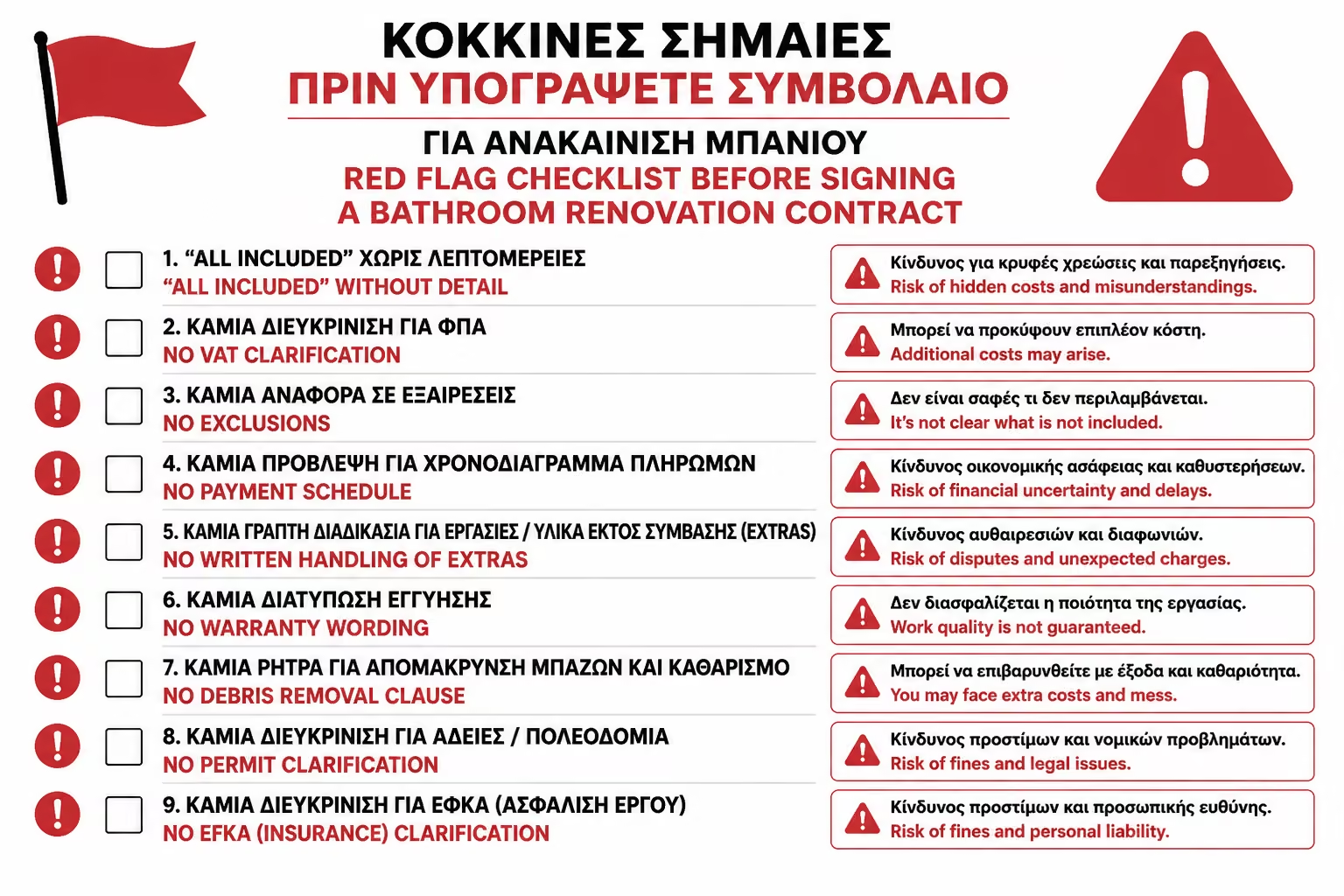
Beware of contracts or offers that have general phrases without analysis.
For example:
If it is not broken down, you still do not know what is actually included in the price.
The phrase sounds reassuring, but without a scope list it remains vague.
Without a category, brand or budget level, the wording protects no one.
A real agreement needs a date or a defined time frame, not a loose promise.
It should spell out what is covered, for how long and under which exclusions.
This wording creates room for scope disputes and surprise charges.
In construction, that only makes sense if the agreement defines the limits clearly.
If there is no pricing method, the most sensitive point remains open.
These phrases are not necessarily bad, but they need to be explained.
If something is unclear, ask for it to be spelled out clearly before signing.
Today there are digital procedures for the certification of private agreements via gov.gr, while for professional and technical projects there may be obligations to submit or register with the AADE, depending on the case, the amount and the status of the parties.
For the owner, the practical conclusion is:
A project of this scale should never rely only on spoken promises.
The document should bind both sides clearly and formally.
The technical agreement should also be backed by proper tax documentation.
Depending on the amount and the contractor type, a filing obligation may exist.
If you want stronger proof of the date and signatures, it can provide extra security.
The process is not the same for every case. Especially when the contractor is a professional or a company, it is good to have an audit.
Do not start a full bathroom renovation with only a verbal agreement. Even when there is trust, a written contract protects both sides. It should clearly state what is included, what is excluded, how much it costs, when it is paid, when it is delivered and what happens if extra work appears. Pay particular attention to warranties, contingencies, VAT, documentation, debris removal and insurance obligations. The best agreement is not the one with the most legal language. It is the one that leaves no critical point unclear.
The private agreement with the contractor is one of the most important protection tools in a bathroom renovation.
It does not need to be overly complicated, but it does need to be clear.
Who is signing and what exact work will be carried out.
What is inside the price and what remains explicitly outside.
The amount, VAT status and who purchases the materials.
When each stage is paid and what the expected duration is.
How extra work is approved and what applies if the project slips or defects appear.
Who handles the administrative side and how the project is formally received.
In a renovation, most arguments don't start because someone has bad intentions. They start because something was not clearly agreed upon.
A proper private agreement sets the rules from the start, protects the budget and helps the project to be completed without misunderstandings.
Return to category.
Go to categoryReturn to the central guide.
Go to guide