
Bathroom DIY, Maintenance & Styling
Return to category.
Go to categoryThe bathroom is one of the last spaces we think of when we talk about art. We usually decorate the living room, dining room, bedroom or hallway, while the bathroom remains purely functional. A mirror, a lamp, some accessories and that's it. And yet, a properly chosen frame can completely change the feeling of the space. It can make a simple WC look more personal, a small bathroom warmer and a master bathroom more complete.
Art in the bathroom acts as a statement that the space is not just auxiliary. It's part of the house. A small framed print above the basin, a black and white photo next to the mirror, an abstract piece in earth tones or a series of small frames can add character to what used to be an empty wall. The bathroom stops looking like a space that "just has to be there" and starts looking like a room that has been thought out.
The problem, of course, is the humidity. The bathroom has steam, splashes, temperature changes and often limited ventilation. These conditions are not ideal for paper, wood frames, canvases, prints, mounts and original artwork. A frame that would be safe in a bedroom may warp, dull, mold or turn black at the edges in the bathroom.
So the answer to "can we put paintings in the bathroom?" it is yes, but with rules. We do not put any work, in any place, with any frame. We do not put valuable original works in wet zone. We don't hang paper next to the shower without protection. We don't lean a wooden frame against a wall that is sweating. Art in the bathroom needs the right choice of material, a location away from water, good ventilation and a durable frame.
In this guide we will look at what kind of works are suitable for the bathroom, how to protect them from moisture, when to choose a print over an original, what frames and glasses are safer, where to place a frame, what subject matter suits and what mistakes can ruin both the work and the image of the space.
A frame can transform the bathroom because it adds personality. Most bathrooms have neutral materials: sanitary ware, tiles, metal, mirror, glass. Without some decorative element, they can look cold or impersonal. Art breaks this neutrality and gives identity.
In a small guest WC, a bold frame can become the main decorative element. Because the space is small and used for a short time, you can be more daring. An interesting print, a humorous but elegant image, an abstract work or a photograph can make the space unforgettable.
In a larger bathroom, artwork can bring the aesthetic together. If you have wooden shelves, plants, beige towels and natural baskets, a botanical print or abstract work in earth tones ties the whole thing together. If you have black profiles and white tiles, a black and white photo can complete the minimal style.
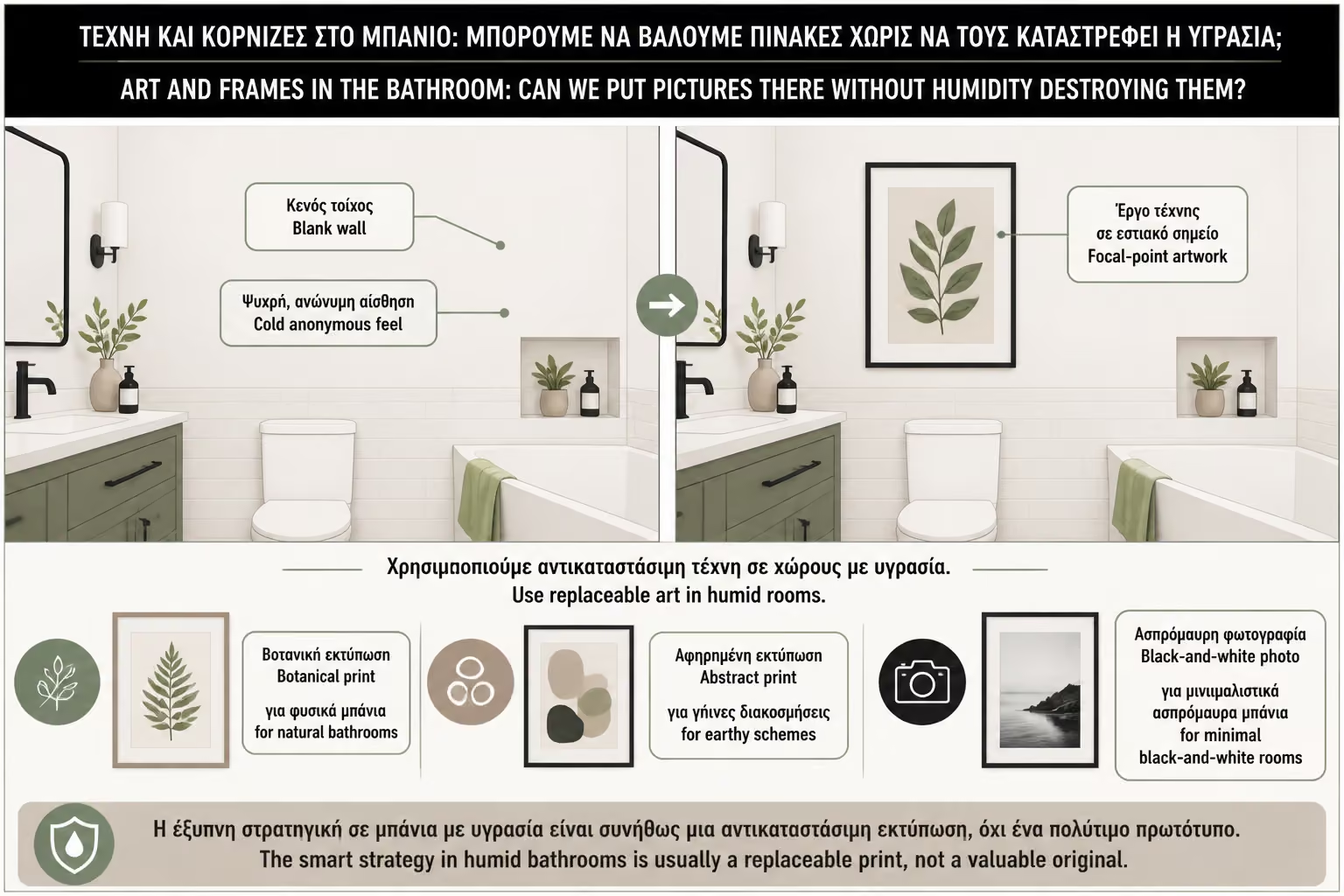
Art also acts as a focal point. An empty wall above the basin, next to the bathtub or opposite the mirror can look awkward. A proper frame gives a raison d'être at this point. The bathroom looks less "bare" and more designed.
The first thing to make clear is that the bathroom is not suitable for valuable, irreplaceable or sensitive works. Do not place high-value original paintings, watercolors on paper, old prints, unique family photos, or works that cannot be replaced. Moisture can do damage slowly and insidiously.
Works on paper are particularly delicate. The paper may curl, absorb moisture, turn yellow, or develop mold. The passepartout may puff up. The print may fade or stick to the glass if moisture is trapped. If you want a work on paper, it must be an economical or replaceable print and fit into a properly protected frame.
Unprotected canvases also need attention. Canvas is fabric and can be affected by moisture. If it is printed canvas of low value and is in a dry place, it may be acceptable. If it's an original painting, especially with delicate materials, it's not a good idea.
Do not place projects with wooden elements that do not have protection in places with water vapor. The wood can warp, bulge or open at the corners. If the frame is wooden, it must be well protected and not located near a shower or bathtub.
The safest options are replaceable prints, posters in a good frame, photos printed on durable paper, prints behind glass or acrylic, metal prints, PVC prints, acrylic panels or works specially designed for wet areas. They don't have to be expensive. They need to be able to withstand or be replaced without much loss.
Prints are ideal because you can easily change the style. Want more boho? Botanical prints. Want more minimal? Black and white photo. Want a spa? Abstract in earth tones. Do you want coastal? Calm seascape. If at some point it breaks or you get bored with the image, replacing it is simple.
Metal or acrylic prints withstand moisture better than paper, but they also need to be mounted correctly. It doesn't mean they can go in the shower. It means they are more resistant to steam and cleaning. It is a good choice for more modern bathrooms.
Frames with simple, economical prints are often the best balance of aesthetics and risk. You're not exhibiting valuable work, but you're gaining exposure. If the bathroom has difficult conditions, it is better to invest in the right frame and position than in an expensive project.
The frame is almost as important as the work. In the bathroom, the frame material must withstand moisture. Wooden frames are beautiful and warm, but they need protection. If the wood is raw, it may swell or warp. If it is painted or varnished, it holds up better, but still should not be exposed to direct water vapor.
Metal frames look more modern and can last well as long as they don't rust. Aluminum or stainless finish is safer than cheap metal that can rust in the corners. Black metal frames go well with industrial, minimal or black and white style. Gold thin frames give a more boutique effect.
Plastic or synthetic frames can be practical in a wet area, as long as they don't look cheap. There are frames in a wood look or black/white finish that hold up better to moisture than real wood. For a bathroom with high humidity, it can be a very reasonable choice.
The frame must close well. If there are gaps through which moisture passes, the paper or passepartout can be affected. The more humid the bathroom, the more important the quality of the frame.
The glass protects the print from splashes, dust and direct moisture. It gives a clear image and is easy to clean. But it is heavy and can break. In a bathroom, especially near a sink, basin or bathtub, it must be placed with a secure support.
Acrylic, also known as plexiglass, is lighter and doesn't break like glass. It is a good choice for the bathroom, especially in homes with children or in places where there is a risk of knocking. The downside is that it scratches more easily and can dull if cleaned with the wrong product.
For a bathroom, acrylic is often more practical than glass, especially in larger frames. If you choose glass, make sure the frame is well supported and there is no risk of it falling. In guest toilets, where water vapor is less, glass may be perfectly acceptable.
Whatever material you choose, avoid getting moisture trapped inside the frame. If you see fogging inside, paper rippling, or a musty smell, the frame is not protected enough or the location is too wet.
The passe-partout gives a more elegant and "gallery" image to a frame. Creates space around the image and highlights it. In a bathroom, however, it is an additional cardboard material that can absorb moisture. If it is not of the right quality or if the frame does not close well, it may curl or turn yellow.
If you want a passe-partout in the bathroom, prefer economical printing and a good frame closure. Do not place such a frame in a place with direct water vapor. In a guest WC or in a dry area, it can work beautifully. In a bathroom with a daily hot shower and poor ventilation, it is more risky.
Alternatively, you can choose to print with a "fake" white border printed on the same paper or material, without a separate passe-partout. So you get the clear image without additional absorbent material.
For a safer solution, choose a simple frame without passe-partout and with a print that fills the frame nicely. The bathroom does not necessarily need a gallery presentation. It needs a clear, durable image.
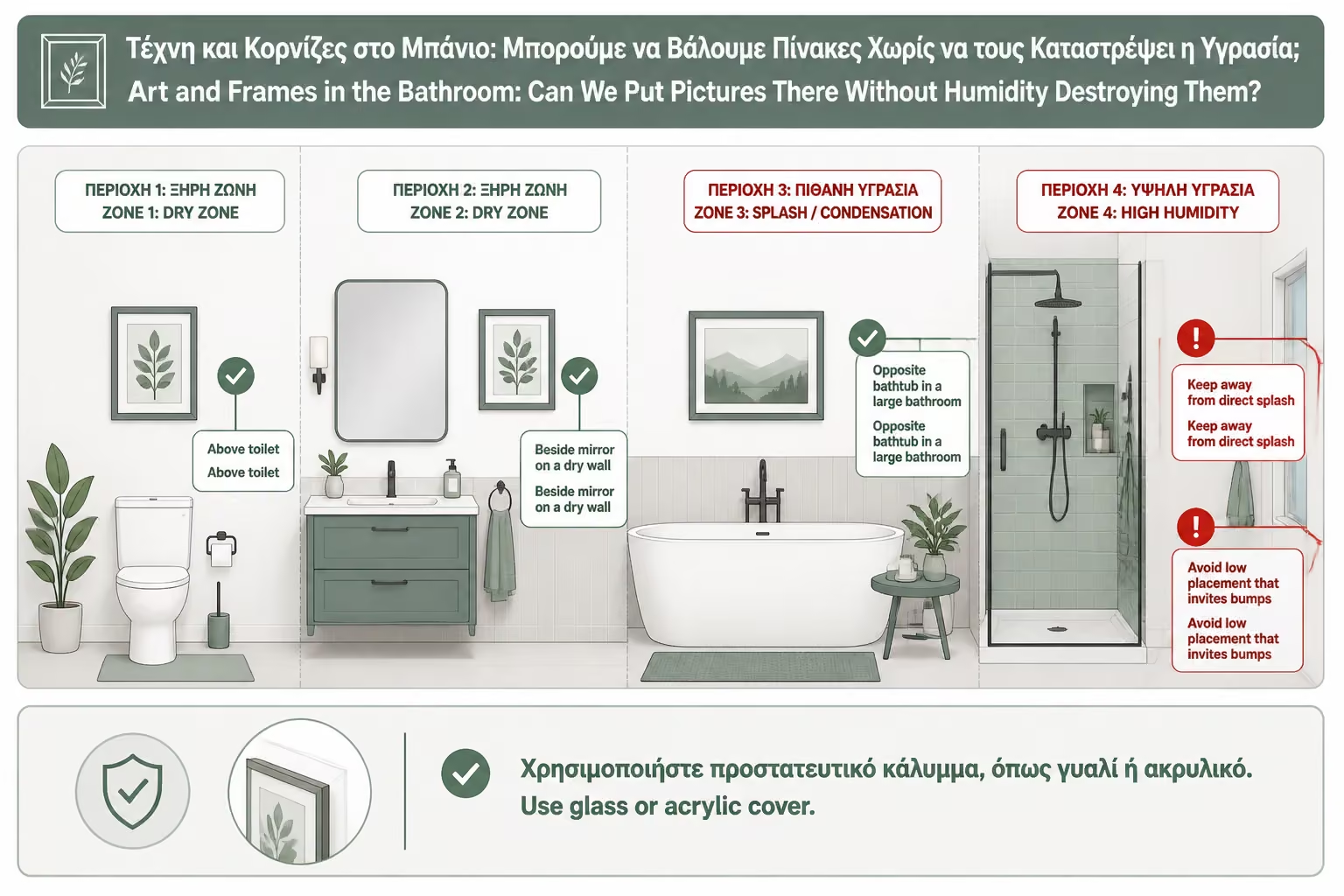
Position is the most important protective factor. The frames must be placed away from direct splashes, away from the shower zone, away from the point where water vapor condenses and not against a wall that "sweats". A wall that looks dry all day is a much better choice.
Classic position is above the toilet. It usually does not get wet immediately, has visibility and is often empty. A vertical frame, two small frames or a small gallery composition can be inserted there. Pay attention to the height: it should not be so low that it disturbs or risks being hit.
Another good place is next to the mirror, if there is a dry wall. A little work there can make the sink zone more personal. But if the sink splashes a lot or if the frame is too close to the faucet, it is better to avoid it.
In a large bathroom, a frame opposite the bathtub can create a very beautiful feeling of relaxation, as long as it is not located in a place where it receives water vapor from nearby. In a guest WC, you can be more free because there is no shower and the humidity is much less.
They should not be placed in the shower or over the bathtub where steam and splashes are constantly rising. Even if the image looks good in photos, in practice the risk of damage is high. Water and moisture will find a way to affect the material.
They should not be placed too close to radiators, electric towel rails or places with strong temperature changes. Heat and humidity together can warp frames or affect printing. If the frame is above a bathroom radiator, assess whether heat is rising directly over it.
They should not go into walls with signs of damp, mold or blown paint. A frame should not be used to hide a problem. If the wall is damp, the wear will continue behind the frame and may be worse because ventilation is reduced.
Also avoid places where the frame can be hit by a door, cabinet, shower, opening bath screen or body movement. The bathroom is a small space and safety is important.
Protection starts with choosing the right spot and continues with the right frame. Choose a dry belt, good ventilation and a frame that closes well. If the work is on paper, prefer to have it behind glass or acrylic. If passe-partout is used, it should be as protected as possible.
You can add small adhesive protectors or spacers to the back of the frame so it doesn't rest completely against the wall. This circulates some air behind the frame and reduces the risk of condensation. This is especially useful in bathrooms where the wall retains moisture.
Make sure the back of the frame is closed and not exposed moisture absorbing cardboard. If the back is too rough, it can be affected quickly. In more demanding conditions, prefer a frame with a better construction or a durable backing.
After showering, ventilate the bathroom. This protects not only the frames but also towels, wooden elements, baskets, plants and joints. If the bathroom stays full of steam for a while, any frame will suffer.
The theme must match the function of the space. The bathroom is a place of cleanliness, water, relaxation and personal care. That is why natural themes, abstract works, botanical prints, black and white photography, seascapes, linear designs, calm textures, minimal typography or small works with humor are particularly suitable when it comes to guest toilets.
Botanical prints go well with plants, baskets, wood and boho/spa aesthetics. Seascapes and coastal themes go well with white, blue, sand, wood and natural materials. Abstract works are ideal for modern bathrooms, because they are not literal and add color or movement without being overwhelming.
The black and white photo is an excellent choice for a minimal, industrial or classic bathroom. A cityscape, an architectural detail, a calm nature photo or an artistic composition can look very elegant.
Avoid very heavy, dark or dramatic themes in a small bathroom. The space is limited and the image affects the feeling. If you want intensity, keep it in a small frame or in a guest WC where use is short.
The guest WC is where more playful art can go. A clever typography print, a subtle humorous design or a vintage image can make the space friendlier. Because it's not the main relaxation bathroom, it carries a little more character.
But the humor must be elegant. Very crude jokes, cheap quotes or excessive "toilet humor" shots can lower the quality of the space. If the goal is a neat bathroom, the humor should be smart and subtle, not reminiscent of a novelty store.
In homes with a more minimal or elegant aesthetic, it is better to keep the humor very subtle. A short phrase, a small sketch or a vintage postcard is enough. In more boho or eclectic homes, you can be more free.
When in doubt, choose art with a natural or abstract theme. It is more timeless and suits more bathrooms.
In a small bathroom, a medium frame often works better than several small ones. Many small frames can create visual clutter, especially if the space already has tiles with strong joints or many accessories. A clean work above the basin or next to the mirror gives a calmer image.
In a larger bathroom, a large project can become an impressive focal point. But it must be in a safe position and have the right strength. A large frame means more surface area that can be affected by moisture. If the space is well ventilated, it can look great.
A row of two or three small frames can work well on a narrow vertical wall or above the sink. The series must have a common frame, a common palette or a common theme. If the frames are random, the result will look disjointed.
In a guest WC, a small gallery wall can be very interesting, as long as the space is dry and does not have a shower. In a humid master bathroom, the more frames, the more points of possible wear.
The frame must talk to the tiles. If the bathroom has white tiles, you have a lot of freedom. You can put black and white, botanical, abstract or bright color. If the tiles are already bold, such as retro patterns or colorful borders, the frame should be quieter.
In beige or earthy bathrooms, works in sand, brown, terracotta, sage, black and off-white are suitable. In gray bathrooms, black and white works, cool blue-grey, charcoal or natural green are suitable. In bathrooms with black elements, a black frame immediately connects the work to the space.
If there is marble or natural stone, choose a project that does not compete with the waters of the stone. A very bold pattern next to bold marble can load. Preferably calm abstract, photo or line drawing.
The frame is the link. If you have gold accessories, thin gold frame can tie. If you have wooden shelves and baskets, a wooden frame can be warm. If you have a black faucet and black knobs, a black bezel gives consistency.
In a bathroom without a window, humidity can be a bigger problem, especially if ventilation is not good. This does not mean that frames are prohibited, but you need to be more careful. Opt for durable prints, smaller frames, synthetic frames or metal prints instead of delicate passe-partout paper.
Lighting also plays a role. If the bathroom has no natural light, the work should look good with artificial lighting. Very dark or low-contrast works may be lost. Black and white, pure botanical or abstract in slightly brighter tones work best.
Ventilation is essential. If after the shower the walls stay wet and the mirror is cloudy for a while, the frame will suffer. In such a bathroom, you first improve ventilation and then add decoration. If it cannot be improved, choose a very durable art form.
A good solution for windowless bathrooms are small framed prints that can be easily replaced. So you get the aesthetics without risking anything valuable.
The guest WC is the ideal space for art, because it usually has no shower or bath and therefore much less humidity. There you can more comfortably use frames, passe-partout, prints, photos or a small gallery composition. It is also a space where the art is very visible because the visitor is close to the walls.
In a small WC, a good frame above the basin or next to the mirror can make the whole space look neater. If the WC is too simple, the art can become the main character element. You can choose something bolder, because the space is small and the use is short.
The subject matter can be more playful, but always with taste. Small photos, vintage prints, botanical, abstract, typography or black and white sketches work very well. If you want a more hotel image, prefer a large clean print with a thin frame.
Even in the WC, though, don't place work too close to the sink if it splashes. Moisture is less, but splashes of water and soap can leave marks.
The image of a frame above a bathtub is very attractive. It gives a feeling of spa, relaxation and luxury. But it is also one of the riskiest positions. The bathtub produces steam, splashes and temperature changes. If the work is sensitive, it can be damaged.
If you want art near a bathtub, go for durable material: acrylic print, metal print, framed print with good protection or economical print that you don't mind replacing. Avoid original works, unprotected paper and wooden frames without a durable finish.
The position should be high enough and away from direct splashes. If the bathtub is often used by children or for showering, the risk increases. If it is mainly a freestanding bathtub for relaxation in a large, well-ventilated bathroom, the conditions are better.
Before placing a frame over a bathtub, observe the wall after a warm bath. If it has water vapor or drops, it is not a good position. If it stays dry, you can examine it carefully.
Hanging on tiles needs attention. Drilling can crack tile if done incorrectly. You need a proper drill, low speed at first, tape on the spot to keep the drill from slipping, and a proper hoe. If you do not have experience, it is better to call a technician, especially if the tile is expensive or there are no spare parts.
Before drilling, check if pipes or cables can pass behind the point. In the bathroom this is critical. Do not drill near faucets, outlets or plumbing points without knowing what is behind. One wrong puncture can create a lot of damage.
In a rented house, holes in tiles should be avoided without permission. Self-adhesive hooks and puncture-free systems are available, but they must be suitable for weight and moisture. For light frames they can work, but should not be used for heavy glass frames over a basin or sink without confidence.
If you want a reversible solution, prefer a frame on a shelf, a ledge shelf, a small table frame on a vanity tray or a light print with self-adhesive support on a dry zone. A puncture is not always necessary.
A very practical solution is not to hang the frame, but to rest it on a shelf. A small framed print on a floating shelf, above the basin or next to plants and baskets, gives a relaxed and very modern effect. It is also easier to move and does not require holes for the frame itself if the shelf is already there.
Shelf styling frames should be small or medium and rest firmly. If there is a risk of them falling, use a small non-slip or discreet support. Do not put a heavy glass frame on a narrow shelf above a basin. Safety is important.
Aesthetically, the shelf frame pairs beautifully with a small plant, candle, towels or basket. However, it should not be hidden by many objects. If the shelf is full, the work loses its value.
This solution is ideal for those who want to change the decoration often. You can change prints by season, move the frame or replace it without tools.
If you don't want regular frames, there are alternatives. Waterproof adhesive prints, decorative panels, small metal signs or even decorative tiles can give the feeling of a project without the sensitivity of a classic frame. These solutions are more suitable for damp bathrooms.
The adhesive prints must be of good quality and suitable for a wet environment. Otherwise they will peel off, blister or look cheap. It is a good solution for rentals, as long as they are removable and do not damage the surface.
Decorative tiles or small ceramic panels are a more permanent solution and can withstand very well. If you are doing a renovation or small operation, a decorative tile can act as a work of art. But it is not as easy to change as a frame.
Unframed posters are not a good solution for a wet bathroom. They may ripple, peel, or deteriorate quickly. If you want a poster look, put it in a suitable frame or choose durable material.
The frames in the bathroom need checking. Once a month, check for fogging inside, paper rippling, black spots, damp smell, rust on metal parts or swelling in the frame. If you spot a problem early, you can reposition or save the print.
Wipe the exterior with a soft cloth. Do not spray cleaner directly onto the frame, as it may seep to the edges. Spray the cloth and clean gently. If the front is acrylic, avoid abrasives and hard, scratchy cloths.
If the frame is near a sink, clean up splashes of water and soap immediately. If they stay, they can leave scars. If the frame is wooden, do not leave it wet.
If you change the decoration seasonally, give the frame time to air out of the bathroom. Do not store a wet or fogged frame in a closed cabinet. The moisture must be gone.
The cost depends on the size, frame, material and whether it is a simple print or an original work. For a bathroom, the most sensible strategy is to keep the project economical and invest more in the right frame and location.
Prices are indicative and depend on size, quality, store, material, print, VAT and framer. For a wet bathroom, you don't need to buy an expensive project. It needs a smart choice that will last and can be replaced if needed.
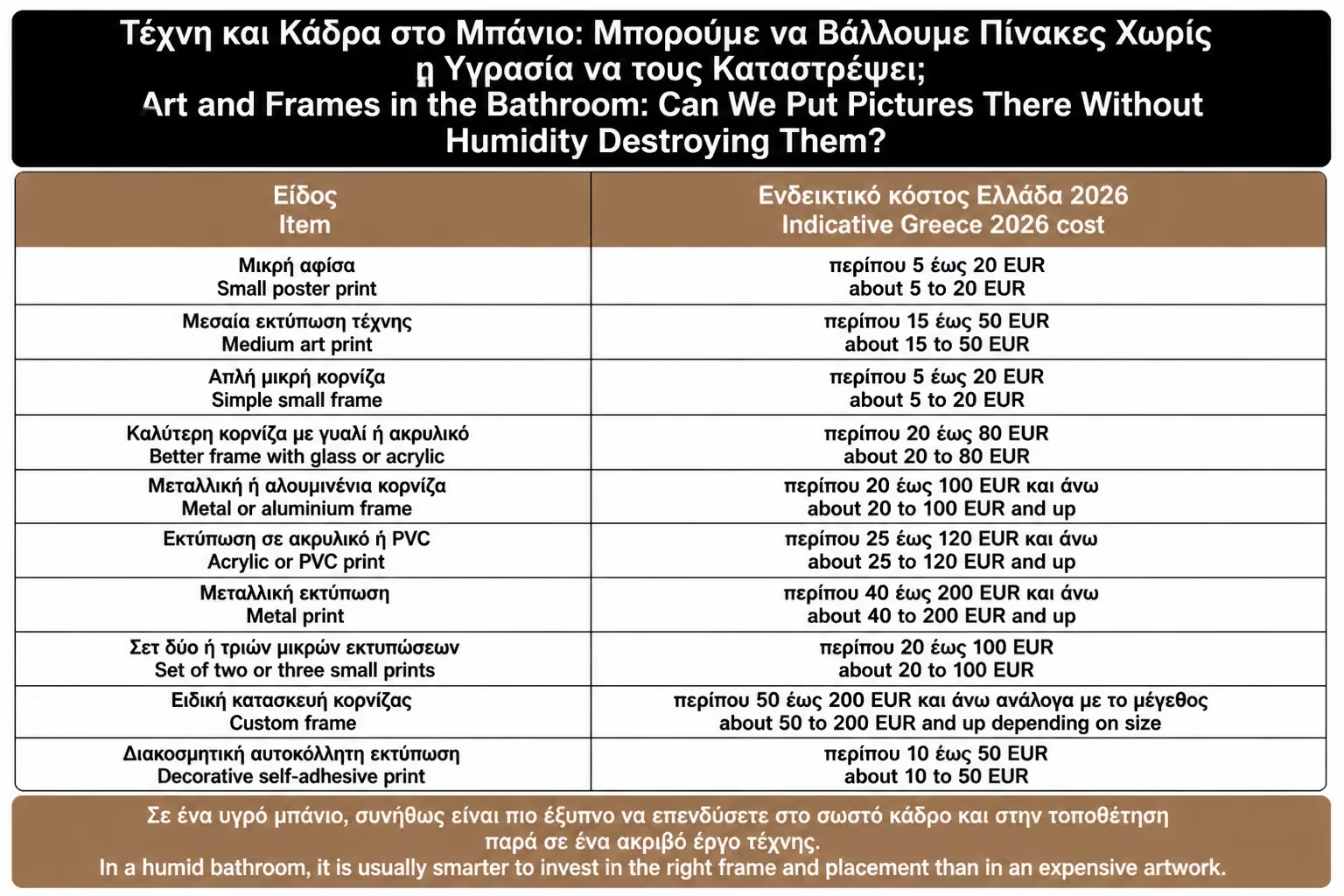
| Choice / Material | Indicative cost picture 2026 |
|---|---|
| Small poster print | around €5–20 |
| Medium print / art print | around €15–50 |
| Simple small frame | around €5–20 |
| Better frame with glass or acrylic | around €20–80 |
| Metal or aluminum frame | about 20–100€+ |
| Acrylic / PVC print | about 25–120€+ |
| Metal print | around 40–200€+ |
| Set of 2–3 small prints | around €20–100 |
| Custom frame | around €50–€200+, depending on size |
| Self-adhesive decorative print | around €10–50 |
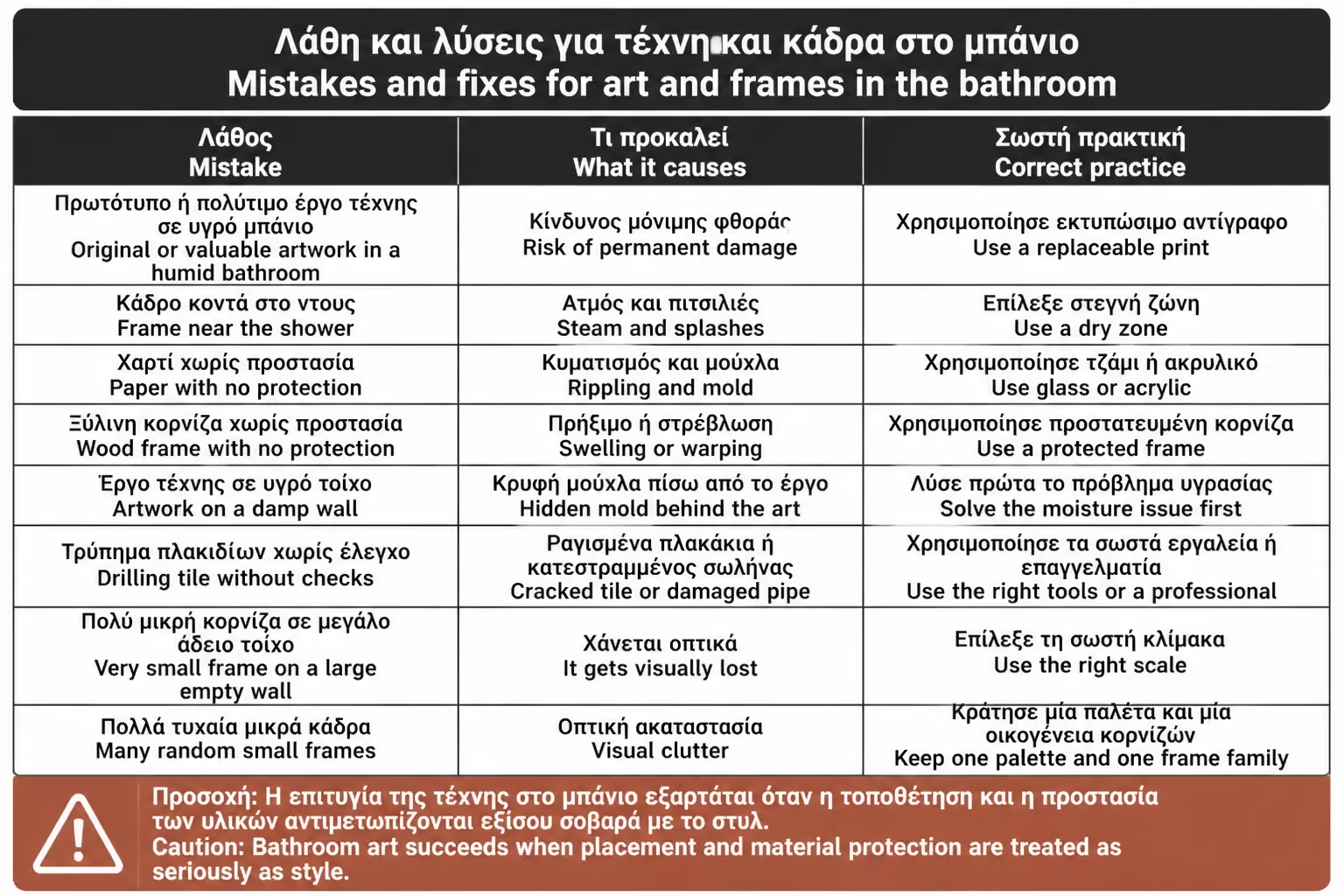
Most mistakes arise from treating the bathroom like any other room. Is not. Humidity, water vapor and splashes change the rules.
A prime example is a beautiful watercolor on a wooden frame above the bathtub. In the first month she looks great. Then the paper ripples, the passe-partout turns yellow and the frame opens at the corners. The right solution would be an economical print on a durable frame and installation on a drier wall.
| Error | What does it cause? | Correct practice |
|---|---|---|
| Original or valuable artwork in a wet bathroom | Risk of permanent damage | Replaceable print |
| Frame near the shower | Water vapors and splashes | Dry zone |
| Paper without protection | Ripple and mold | Glass or acrylic |
| Wooden frame without protection | Swelling or warping | Protected frame |
| Frame on a damp wall | Hidden mold behind the work | First moisture solution |
| Drilling tiles without control | Cracked tile or pipe damage | Correct tools or technician |
| Very small frame on a large empty wall | It disappears visually | Correct scale |
| Lots of random frames | Visual clutter | Common palette and frames |
A technician is needed when tiles need to be drilled, when the frame is heavy, when you don't know if pipes or cables are going through the back, or when the spot is difficult. The cost of a proper installation is less than the damage of a cracked tile or a falling frame.
You need a frame when you want better protection, proper closure, special acrylic, better backing or custom dimension. If the bathroom has relatively good humidity and you want a favorite print to last longer, a proper frame is worth it.
A technician or mechanic/plumber is needed if the wall where you want to frame has moisture, mold, blown paint or stains. We don't hide such problems with art. First the cause is identified. It could be condensation, leakage, poor sealing or poor ventilation.
If you are in a rental home, talk to the landlord before drilling into tiles. For lightweight frames, opt for reversible solutions such as a shelf, moisture-friendly adhesive mount, or a small tabletop frame on a dry surface.
| Inquiry | Yes / No |
|---|---|
| Is the work replaceable and not a valuable original? | Yes / No |
| Is the location away from direct splashes and vapors? | Yes / No |
| Is the wall dry and without signs of moisture? | Yes / No |
| Is the bathroom well ventilated after showering? | Yes / No |
| Does the frame withstand a wet environment? | Yes / No |
| Is the work protected by glass or acrylic if on paper? | Yes / No |
| Is the back of the frame properly closed? | Yes / No |
| Is there a short distance from the wall for ventilation? | Yes / No |
| Does the theme match the style of the bathroom? | Yes / No |
| Does the frame match the faucets, mirror and accessories? | Yes / No |
| If a hole is needed, has it been checked that no pipes or cables are going through? | Yes / No |
| If the house is rented, is there a permit for drilling? | Yes / No |
If the answer is "No" to moisture, ventilation, or project value, don't proceed yet. Bathroom art is beautiful when properly protected.
Yes, you can frame the bathroom, but not as if it were a living room. Do not put valuable original works in a room with water vapor. Prefer replaceable prints, a good frame, glass or acrylic and a dry place away from a shower or bathtub. If the wall is damp, we don't cover it with a frame; first we solve the cause. And if you need to drill into a tile, better with the right tool or technician. A beautiful frame is only worth it if it is not damaged by the first period of humidity.
Artwork and frames can dramatically upgrade a bathroom. They add character, personality and a sense of a complete space. A simple WC can become more elegant, an empty spot above the toilet can gain interest and a master bathroom can feel more like a spa or boutique hotel. Art shows that the bathroom was designed, not just fitted out.
But the choice must be made realistically. The bathroom has moisture, splashes and steam. That's why we prefer replaceable prints, durable frames, protection with glass or acrylic and places away from direct water. We avoid valuable originals, delicate papers, rough wooden frames and damp walls. Good ventilation is the best protection.
The subject matter can range from natural motifs, botanical prints, black and white photos, abstract works, coastal images or subtle humor in guest toilets. The important thing is that it matches the palette and style of the bathroom. When chosen correctly, a frame is not a risk; it is a small, smart move that gives depth, identity and warmth to a space that is often left unnecessarily empty.
Return to category.
Go to categoryReturn to the central guide.
Go to guide