
Bathroom DIY, Maintenance & Styling
Return to category.
Go to categoryThe bathroom is not just a picture. It's not just tiles, mirror, faucets, towels and lighting. It is also a feeling. The temperature of the water, the texture of the towel, the lighting at night, the sound of the flow and — very importantly — the smell. A bathroom can be clean but not smell pleasant. It can be beautiful but have no atmosphere. Aromatherapy comes exactly to this point: it turns a simple sanitary area into a small relaxation ritual.
The olfactory experience is one of the most direct ways to create a spa feeling. A subtle eucalyptus in the warm shower, a soft lavender at night, a clean scented soy candle, a diffuser with natural notes or a bouquet of dried eucalyptus next to the shower head can completely change the mood of the room. No renovation needed. No expensive equipment needed. It needs the right choice of scents, the right intensity and proper safety.
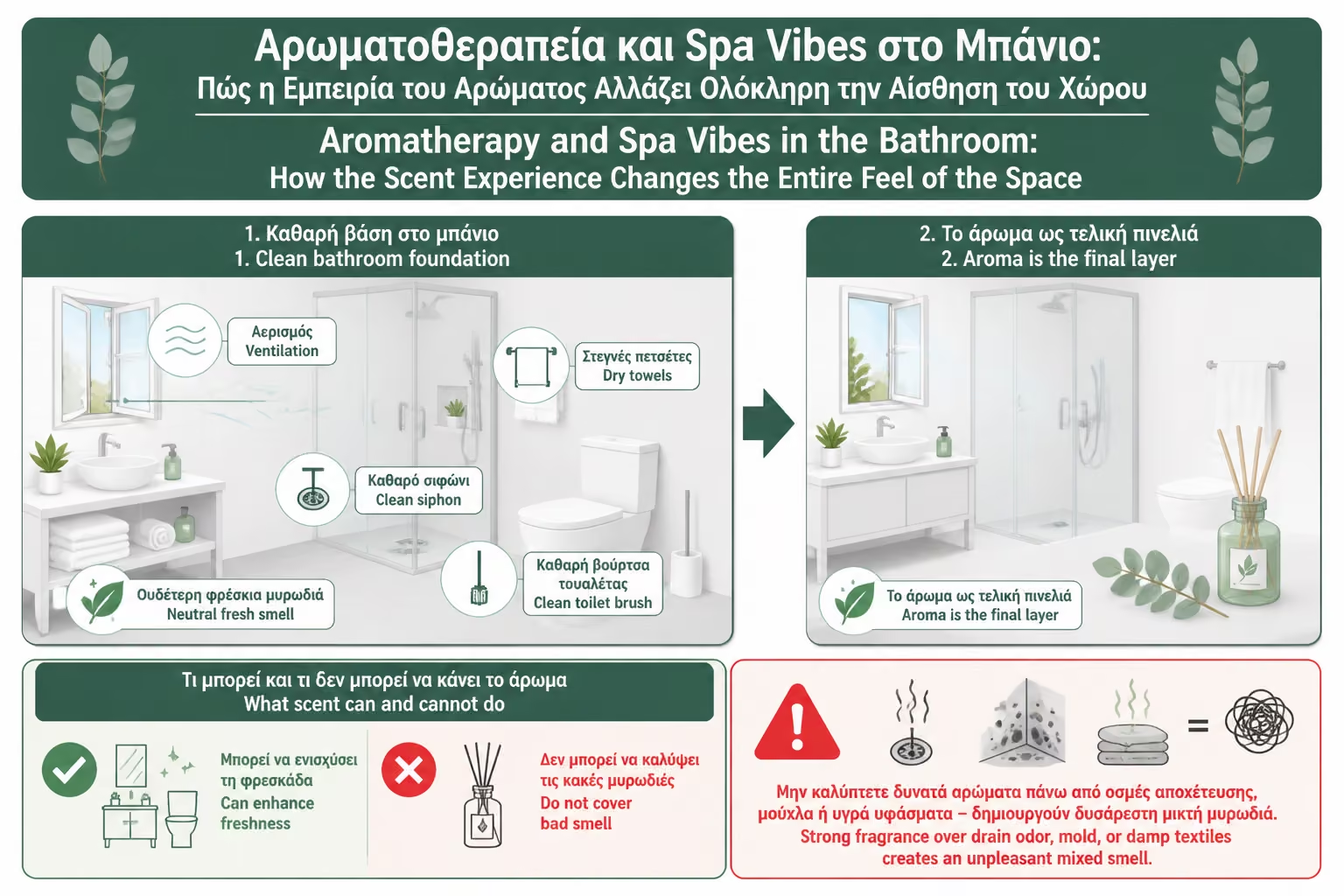
The big mistake is to treat perfume as a way to "cover up" bad odors. The spa bathroom does not smell strongly. It smells clean, fresh and balanced. If there is a bad smell from siphon, moisture, mold, toilet brush or drain, the cause is solved first. The fragrance comes next, as a final layer of atmosphere, not as a cover-up for a problem. Otherwise, the result becomes heavy and unpleasant: perfume on dampness, perfume on mould, perfume on smelly siphon.
Proper aromatherapy in the bathroom is subtle. You don't enter the place and the smell hits you. You feel it gently when the hot water is turned on, when a candle is lit, when a diffuser works for a few minutes or when you touch a clean towel. Luxury lies in subtlety, not excess.
In this guide we will see how to use essential oil diffusers, when eucalyptus is suitable, how to use lavender, what to watch out for with scented soy candles, how to hang dried eucalyptus in the shower, which scents suit each bathroom style and which mistakes to avoid for reasons of hygiene, ventilation and safety.
The smell is one of the first things we notice when we enter a bathroom. We may not immediately notice the finish of the faucet or the GSM of the towel, but we will immediately understand if the space smells of closeness, dampness, drainage or cleanliness. That is why the olfactory experience is crucial to the sense of hygiene.
A bathroom that smells neutral and fresh looks cleaner, even if it's simple. Conversely, a beautiful bathroom that smells of mold or heavy perfumes loses its value. The smell acts as a final confirmation that the space is taken care of. It is no coincidence that hotels and spas invest heavily in specific scent identities.
The right smell should not be confused with intensity. "Very fragrant" does not mean "clean". It often means just the opposite: trying to cover something up. Clean smell comes first from good ventilation, clean siphons, dry towels, clean toilet brush, clean joints and proper drainage. Then come essential oils, candles and diffusers.
Think of perfume as the final styling step. Just like an organizer tray doesn't fix a dirty counter, a diffuser doesn't fix a damp bathroom. First cleanliness, then atmosphere.
Aromatherapy uses natural essential oils or aromatic elements with the aim of creating a specific sensation: relaxation, freshness, purity, well-being. A simple room freshener can be synthetic, very strong or designed just to scent the room. It's not necessarily a bad thing, but it doesn't always give the same clean, natural feel.
In the bathroom, very strong room fragrances can become tiresome. The space is small, often closed and with water vapor. A heavy vanilla, musk or very sweet floral scent can become suffocating. In contrast, cleaner notes such as eucalyptus, lavender, peppermint, tea tree, rosemary, lemon, bergamot or cedarwood work best when used in moderation.
Aromatherapy should not be presented as a treatment for medical problems. It does not replace a doctor, medicine or fresh air. But it can support relaxation and improve the experience of the space. A warm eucalyptus shower can feel more refreshing. A lavender candle can make an evening bathroom routine more relaxing.
The point is the experience, not the over-promise. We're talking about atmosphere, not a miracle solution.
Diffusers are one of the most controlled ways of perfuming. They can be electric ultrasonic, with sticks, ceramic, stone or simple evaporation containers. In the bathroom, the most practical are the reed diffusers with sticks and the small electric diffusers that work for a limited time. Each solution has advantages and disadvantages.
Reed diffusers do not require electricity, have no flame and give a continuous, mild aroma. They are good for guest toilets or for bathrooms that you want to smell subtle throughout the day. The downside is that the volume is not always easily controlled and liquids can spill if the container is dropped. They want a stable location, away from children and pets.
Electric ultrasonic diffusers release fragrance when you turn them on. They are good for specific moments: before a shower, during a relaxing routine or when you want a spa feeling. But they are electrical devices and the bathroom is a wet area. They should not be placed near water, the bathtub, the shower or places where drops may fall. Their use must be safe and according to the manufacturer's instructions.
Ceramic or stone passive diffusers are simpler. You add a few drops of essential oil and the material gradually releases them. They are discreet, beautiful and safer than devices or flames, as long as they are placed in a stable place and do not stain sensitive surfaces.
Eucalyptus is one of the most popular bathroom scents because it gives a feeling of cleanliness, freshness and rejuvenation. It is very connected with spa, steam room and hot shower. Its aroma "opens up" the feeling of the space, especially when there is steam, without becoming sweet or heavy.
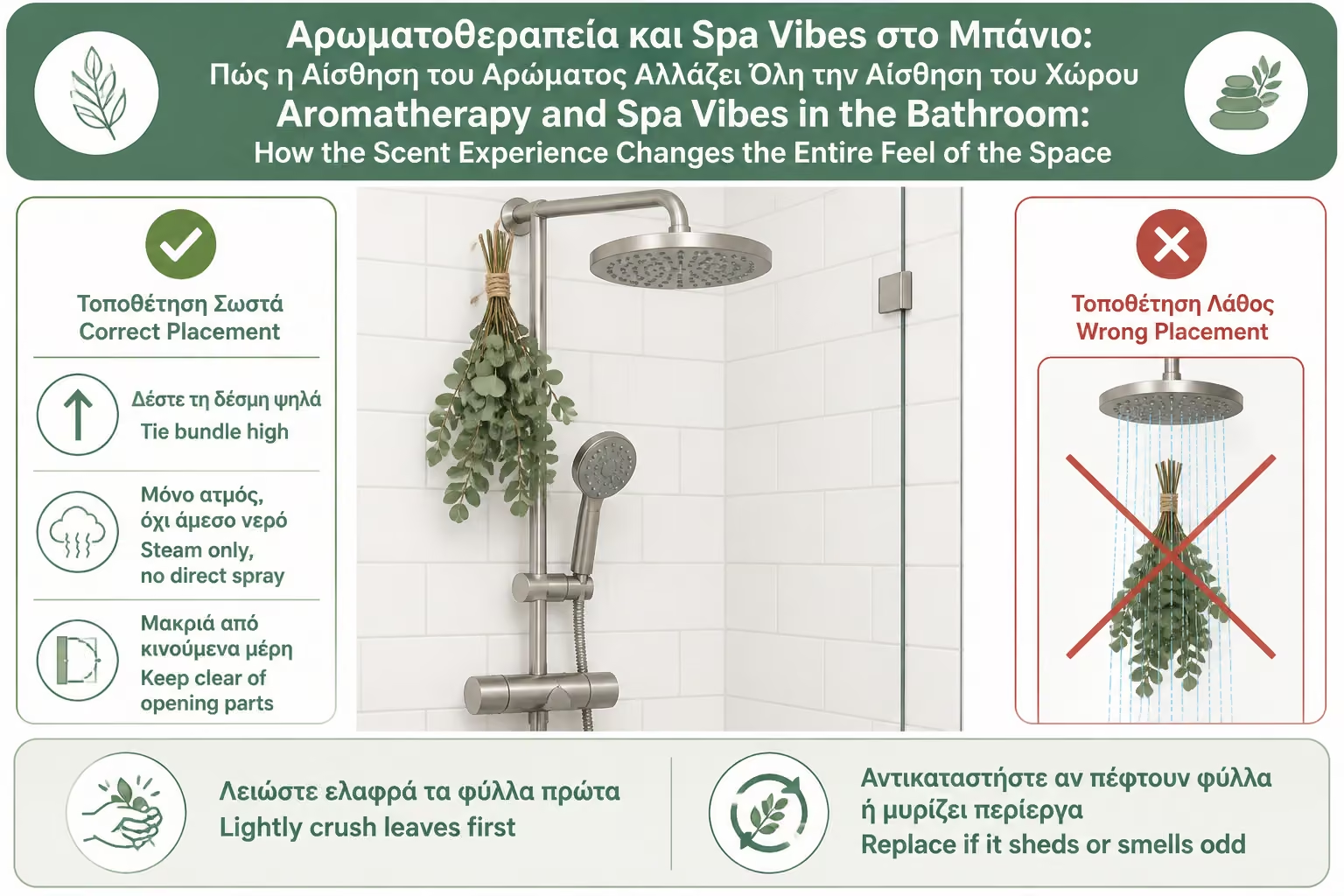
Can be used in a diffuser, essential oil, scented candle or as a dried/fresh bouquet near the shower. The most typical image is the bouquet of eucalyptus tied near the shower hose or shower head so that the water vapor gradually releases the fragrance.
Be careful though: eucalyptus has a strong essential oil. No need to exaggerate. A very strong smell in a small bathroom can disturb, especially people with sensitivities, asthma, allergies, pregnancy, small children or pets. Use must be discreet and the space must be ventilated.
Eucalyptus is particularly suitable for morning showers, minimal bathrooms, bathrooms with plants, white and gray palettes and spaces with natural materials. It gives a feeling of freshness without looking like an "aromatic deodorant".
The eucalyptus bouquet in the shower is one of the simplest and most beautiful spa moves. You take some eucalyptus branches, tie them with natural twine and hang them near the shower, but not directly under the water flow. We want the steam to touch them, not the water constantly hitting them.
If the bouquet is constantly wet, it will spoil faster, it can soften, drip or stain the area. The correct position is high up, on the side of the shower head or rod, so that it receives water vapor. In a bathroom with a bath screen or shower enclosure, be careful that it does not obstruct the opening, cleaning or use of the shower head.
Before hanging, you can lightly press or “break” the leaves with your hands or with a rolling pin in a towel to release a little more fragrance. No need to exaggerate. The bouquet should be fragrant when heated by the steam.
If it starts to dry out too much, shed or smell strange, replace it. Do not leave organic material for weeks in a damp bathroom unattended. The spa element must remain clean, not become a source of dust or moisture.
Lavender is one of the most classic relaxation scents. In the bathroom it is especially suitable at night, in a hot shower or bath before bed. It gives a more calm, soft and clean feeling than heavy sweet perfumes. It goes very well with white towels, ceramic accessories, candles and soft lighting.
It can be used in a diffuser, candle, bath salts or small bags of dried lavender on a dry spot. In the bathroom, lavender should be discreet. If it's too strong or too synthetic, it can resemble air freshener rather than a spa.
Lavender pairs beautifully with eucalyptus, cedarwood, bergamot, chamomile or a little lemon. For a cleaner effect, avoid excessively sweet combinations. Luxury in the bathroom usually comes from clean, natural notes, not heavy patisserie scents.
If you are using lavender essential oil, a few drops will do. Essential oils are concentrated. We do not put them directly on surfaces, towels or skin without knowledge and dilution. In the bathroom we use them mainly for atmosphere, not for direct application to the body.
Scented soy candles are a favorite choice for spa vibes because they combine scent and light. The flame creates relaxation, softens the image of the space and makes the bathroom look more ritualistic. A good soy candle with eucalyptus, lavender, sandalwood, cedarwood or pure cotton scent can give a very nice atmosphere.
Soy is often preferred because it burns more cleanly and more slowly than many common paraffin candles, depending on the quality. But the most important thing is not only the candle, but its use. In the bathroom we have fabrics, towels, papers, alcoholic products, sprays and a small space. Flame needs attention.
The candle should be placed on a stable, fireproof surface, away from towels, curtains, toilet paper, plants, wooden shelves and drafts. Never leave it on unattended. We do not place it on the edge of the bathtub if there is a risk of hitting it. Do not leave it near children or pets.
For small bathrooms, a small candle is enough. It doesn't take much. If you want the feeling of light without a flame, there are also LED candles, which give safety and atmosphere without burning. You can combine LED candle with diffuser for fragrance.
Reed diffusers are containers with aromatic liquid and sticks that absorb and release the aroma into the space. They are practical because they do not need electricity or flame. In a guest WC, small bathroom or a space that you want to have a consistently subtle smell, it is a very good solution.
The volume is adjusted by the number of sticks and how often you spin them. More sticks means more intense flavor and faster consumption. If the space is small, start small. If the smell is too strong, remove some. You don't have to rotate the sticks every day.
The container must be stable. If the perfume liquid is spilled on marble, wood, painted furniture or a plastic surface, it may stain or damage the finish. That is why it is good to put it on a small tray or in a place where it is not in danger of tipping over.
In homes with children or pets, care is needed. Perfumed liquids must not be accessible. Also, some essential oils and fragrances can irritate pets. If you have cats, dogs or small children, choose very discreet use and consult a specialist where necessary.
Essential oils are very concentrated. This means that it doesn't take much to scent the room. In a diffuser, a few drops are enough. Overdoing it can become annoying, cause headaches or discomfort for sensitive people, and make the bathroom feel heavy.
We do not apply essential oils directly to towels, papers, wooden shelves, tiles, natural stone or leather without knowledge. They can leave stains, alter surfaces or irritate. If you want to perfume the space, use a suitable diffuser or passive aromatic ceramic.
Be careful with pregnancy, small children, people with respiratory problems, allergies and pets. Not all essential oils are right for everyone. Eucalyptus, peppermint and tea tree are strong and should be used sparingly. When in doubt, prefer very mild solutions or avoid use.
Store essential oils away from heat, light and children. Do not leave them next to the bathtub or where they may fall. A small bottle does not mean a harmless product.
The whole bathroom doesn't have to smell the same all the time. You can think of perfumes according to the moment. In the morning, fresher, refreshing notes suit: eucalyptus, mint, lemon, bergamot, rosemary. They give a sense of cleanliness and energy.
In the evening, calmer notes match: lavender, cedarwood, chamomile, sandalwood, vanilla in a very subtle amount. These create a more relaxing atmosphere. A candle or diffuser for 20–30 minutes before the evening shower is enough.
For guest toilets, prefer clean and neutral scents. You don't want something too personal, too heavy or too special. Cotton, green tea, citrus, mild lavender, fig or light woody notes are safe choices. The volume must be low, because the visitor cannot adjust it.
In a family bathroom, keep things simple. One or two base scents are enough. If each member uses different sprays, candles and oils, the bathroom will smell messy. Consistency is part of the sense of luxury.
Heavy scent results from overdoing it, poor ventilation, or mixing too many scents. If you have a diffuser, candle, scented soap, scented cleaner, scented spray and towel softener, all together can create a very intense effect. The bathroom doesn't need ten scents.
Choose a basic scent direction. For example, "fresh eucalyptus", "lavender and wood", "citrus clean" or "spa herbal". Keep the rest of the products more neutral. If the soap smells strongly, do not add a strong diffuser. If the candle is scented, do not use a spray at the same time.
Ventilation is essential. Even the nicest fragrance becomes heavy if it stays in a closed, humid place. After showering, open a window or fan. This does not "lose" the spa effect. Instead, it keeps the space fresh.
If you walk into the bathroom and the scent hits you before you even turn on the water, it's probably too much. The right intensity is to be subtle, not overwhelming.
Sprays can be handy for a quick refresh, but they need moderation. A good clean scented room spray can be used before guests arrive or after cleaning. But it should not be sprayed uncontrollably in a small bathroom, especially on towels, plants, natural stone or wood.
Sprays can leave residue on surfaces. On marble, natural stone or painted furniture, some perfumed oils or alcohols may stain or dull. Better to spray in the air, sparingly, and not directly on materials.
We do not use sprays to cover sewer or toilet brush odors. If there is a smell, first the cause is cleaned. The spray is a final touch, not a hygiene solution.
If you want a more consistent and mild effect, a reed diffuser is better. If you want an instant sensation, the spray can help. If you want ritual, the candle or diffuser is more suitable.
Aromatic bath salts, shower steamers and bath bombs can greatly enhance the spa experience. Bath salts are used in the bathtub, bath bombs are dissolved in water, while shower steamers are placed on the floor of the shower or where they are activated by steam and release fragrance.
Shower steamers are an interesting solution for those who do not have a bathtub. They give an aromatic experience in the shower without a candle or diffuser. But they must be placed where they get wet enough to activate, but not so much that they dissolve immediately. Also, they must not create slime or slipperiness on the floor.
Bath bombs and salts can leave residue in the tub, faucet or surfaces. If they have paints, oils or glitter, they can stain or make the floor slippery. Use good quality products and rinse the tub afterwards. On natural stone or delicate surfaces, even more care is needed.
The spa experience shouldn't create a cleansing problem afterwards. If a product makes the bathroom take half an hour to clean, it might not be the most practical choice for everyday use.
Aromatherapy needs ventilation. This may sound contradictory, but it is not. The goal is not to keep the scent trapped. The goal is to have clean air with a subtle aromatic note. In a bathroom without ventilation, even the best perfume can become heavy and mixed with moisture.
After showering, ventilation removes water vapour, reduces the risk of mold and helps keep towels, floor mats and wooden elements from smelling. If you use eucalyptus, a candle or a diffuser, ventilate afterwards. The spa feeling is not lost. Instead, the space stays fresh.
In a windowless bathroom, the ventilator is even more important. Do not try to create a lasting fragrance with many products in a space that does not renew. It's going to be heavy. Prefer short use of diffuser or candle with supervision and then good ventilation.
If the bathroom smells musty, first solve the ventilation. Aromatherapy in a stale, closed space does not create a spa feeling. It only creates a confused mix of smells.
If there are children, pets or people with sensitivities, aromatherapy needs more attention. Essential oils are concentrated substances and not all are suitable for everyone. Some may irritate the respiratory tract, cause headaches or be unsuitable for some pets.
In a home with cats or dogs, avoid heavy diffusion of essential oils in small enclosed spaces without expert advice. Do not leave oil bottles, reed diffusers or candles within reach. If a pet licks off scented liquid or comes into contact with oil, there may be danger.
In a home with small children, avoid glass containers in low places, unsupervised lit candles and strong oils. Keep aromatherapy gentle, short and in safe places. LED candles and passive diffusers can be a better solution.
If someone in the house has asthma, allergies, frequent headaches, or sensitivity to smells, start with a very low intensity or avoid strong scents altogether. The spa should be enjoyable for those who use the space, not just beautiful as a concept.
Position matters a lot. A reed diffuser should be placed in a stable place, away from edges, children and pets, ideally on a small tray. A candle should be placed on a fireproof surface, away from towels and papers. An electric diffuser should be in a safe, dry place, away from showers and splashes.
The eucalyptus bouquet goes near the shower, but not in the stream. Aromatic salts and shower steamers are only used on surfaces that can withstand and are easily cleaned. Essential oils are stored in a cupboard, not on the counter where they can be dropped or reached by children.
If you have a vanity tray, you can put a small candle or reed diffuser on top, but pay attention to the material of the tray. Aromatic oils and liquids can stain marble or wood. Better to have a small stand or saucer under the container.
Do not fill all surfaces with fragrances. One element in the sink and one in the shower is enough. If every corner has a different scent, the experience is lost.
For a minimal or white bathroom, clean notes are suitable: eucalyptus, mint, cotton, green tea, bergamot. These keep the image cool and light. They combine well with chrome or black details and white towels.
For a spa-like or natural bathroom with wood, plants and earthy tones, eucalyptus, cedarwood, lavender, sandalwood, fig, bamboo and vetiver are suitable. These notes give a warmer and more natural feel. An amber bottle diffuser or candle in a ceramic holder works well.
For a vintage or boutique bathroom, you can go for more elegant notes: rose in low intensity, neroli, powdery lavender, amber, bergamot, white musk in a very subtle amount. Be careful not to become heavy or old-fashioned. The tension should be gentle.
For an industrial bathroom with black elements, cement tiles and metal, eucalyptus, cedar, black tea, smoke-free woody notes, rosemary or citrus-herbal combinations are suitable. Avoid very sweet perfumes that do not match the style.
If the bathroom smells bad, the solution is not to add strong perfume. The cause must be found. It could be a dry siphon, a foul smell from a drain, a dirty toilet brush, dampness in joints, a moldy curtain, a wet floor mat, a bin without a lid or poor ventilation.
A dry trap, especially in a second bathroom that is not used often, can let sewer odors rise. In that case, the trap needs water again and the area should be checked. The toilet brush must also be cleaned and dried. The towels must not remain wet. The bin should be emptied frequently. The ventilation must work.
If there is a musty smell, check joints, silicones, ceiling, behind furniture and low spots. Don't cover the smell with wax. Mold is an indication of dampness and must be addressed. The scent can confuse the picture and delay the repair.
When the space is really clean and ventilated, then aromatherapy works great. On top of bad smell, it just adds a second problem.
Bathroom aromatherapy can be very affordable or quite premium, depending on the products. You don't need to buy a lot. A good candle, a small diffuser or a bouquet of eucalyptus is enough to change the feeling of the space.
Prices are indicative and depend on store, quality, brand, size, VAT and seasonality. For a start, it is better to get a good product and see if it suits you, rather than filling the bathroom with many different fragrances.
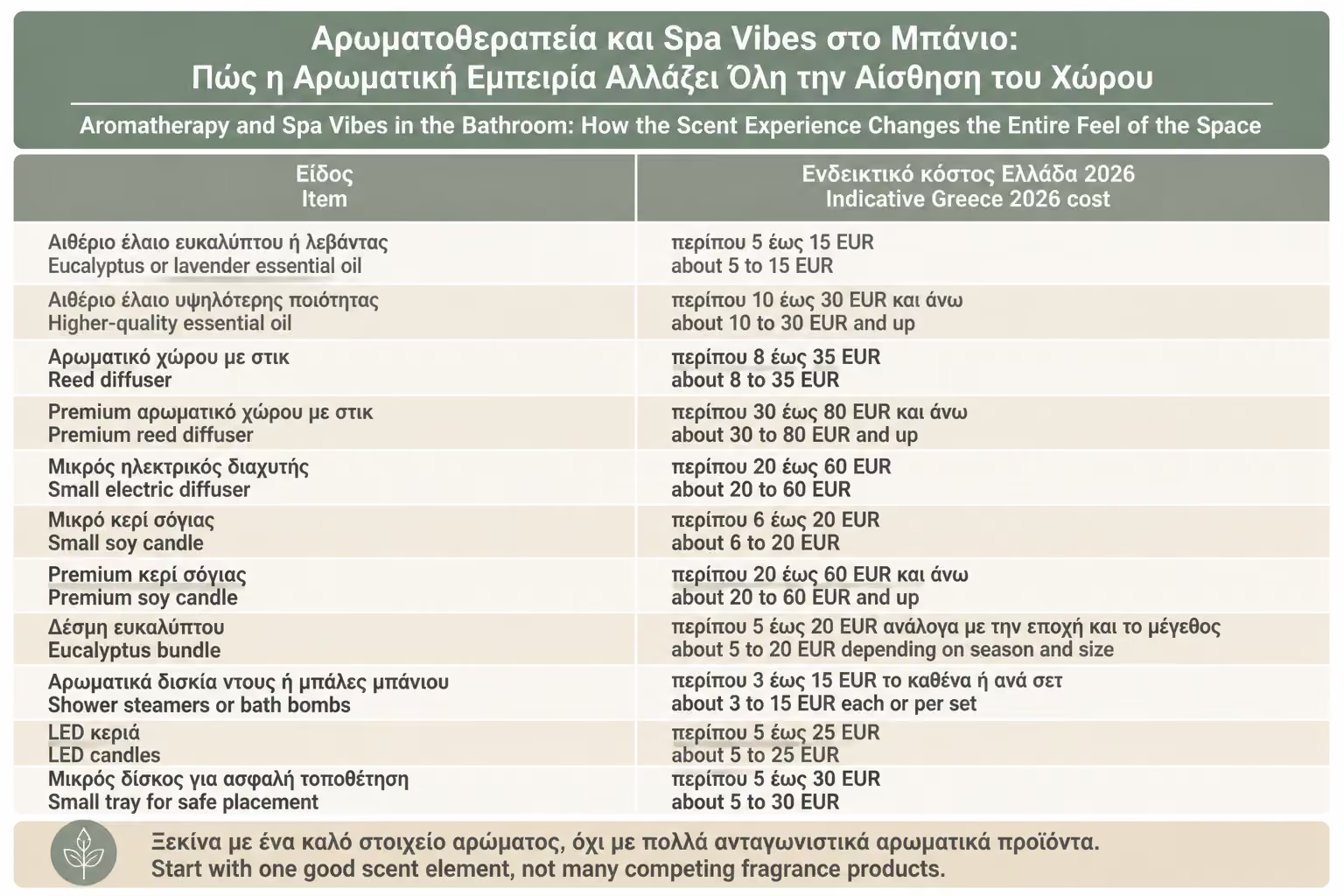
| Product / Solution | Indicative cost picture 2026 |
|---|---|
| Eucalyptus or lavender essential oil | around €5–15 |
| Best quality essential oil | around 10–30€+ |
| Reed diffuser | around €8–35 |
| Premium reed diffuser | around 30–80€+ |
| Small electric diffuser | around €20–60 |
| Soy wax small | around €6–20 |
| Premium soy wax | around 20–60€+ |
| Eucalyptus bouquet | around €5–20, depending on season and quantity |
| Shower steamers / bath bombs | about €3–15 per piece or set |
| LED candles | around €5–25 |
| Small tray for secure mounting | around €5–30 |
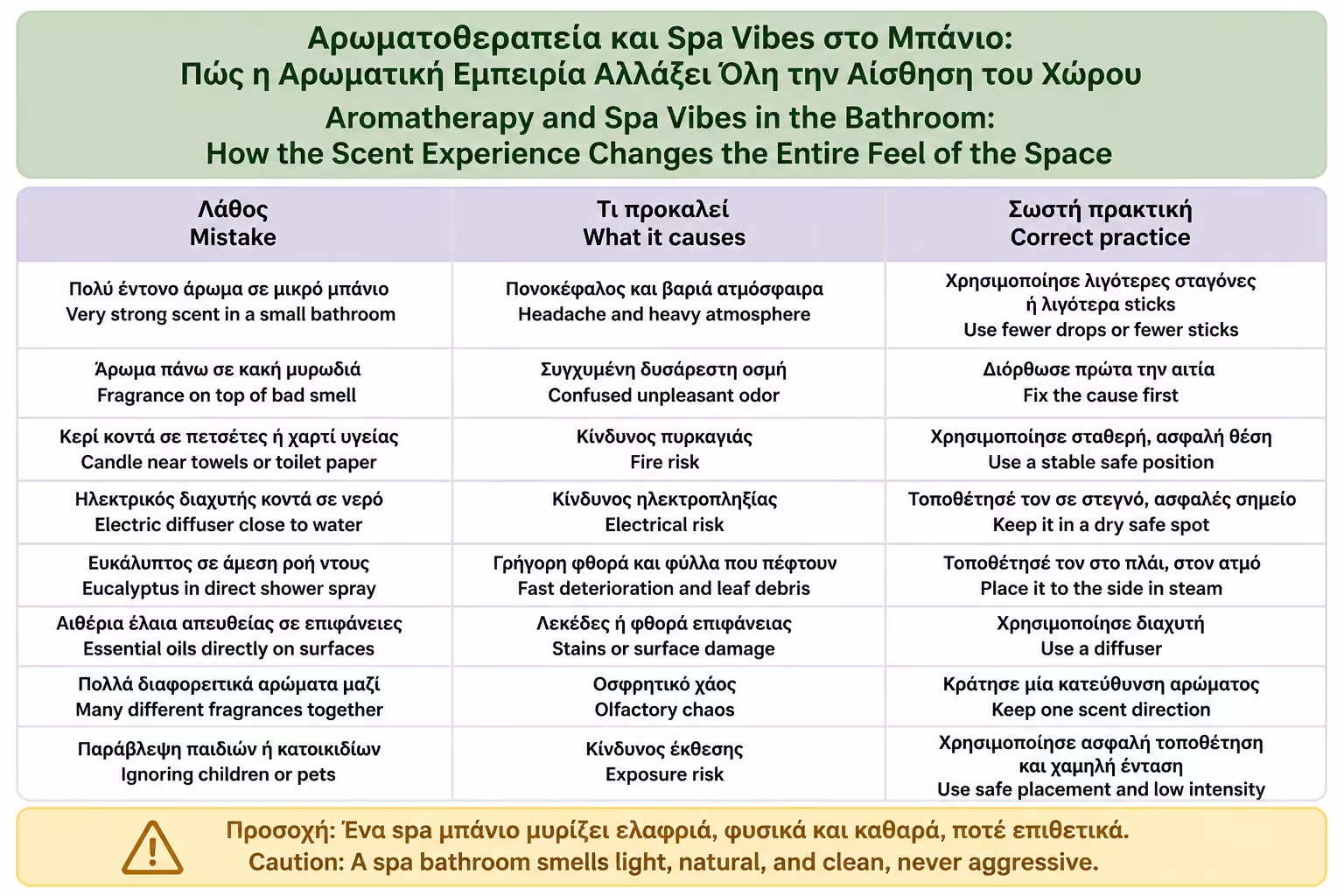
Most mistakes result from exaggeration or from using fragrance to cover up a problem. A spa-like bathroom should not smell strongly. It should smell clean, subtle and natural.
A typical example is the bathroom that has a reed diffuser, scented candle, eucalyptus, intense towel softener and scented spray. Each element alone can be beautiful. Everything together becomes an exaggeration. The right solution is to choose a basic scent and keep it subtle.
| Error | What does it cause? | Correct practice |
|---|---|---|
| Very strong scent in a small bathroom | Headache, heavy feeling | A few drops or fewer sticks |
| Perfume on stench | Confused, unpleasant smell | First cause solution |
| Candle near towels or papers | Fire hazard | Stable, safe position |
| Electric diffuser near water | Risk of electrical problem | Dry, safe place |
| Eucalyptus in the shower stream | Fast wear, leaves and debris | On the side, with steam |
| Essential oils directly on surfaces | Stains or damage | Use in a diffuser |
| Lots of different scents together | An olfactory mess | An aromatic direction |
| Ignore children/pets | Risk of exposure | Safe place and gentle use |
| Inquiry | Yes / No |
|---|---|
| Is the bathroom clean and free of odors from faucets or drains? | Yes / No |
| Is there adequate ventilation after showering? | Yes / No |
| Have you chosen a basic scent direction? | Yes / No |
| Is the scent intensity subtle and not heavy? | Yes / No |
| Are essential oils used in a suitable diffuser and not directly on surfaces? | Yes / No |
| Are the candles only inserted into a safe, stable position? | Yes / No |
| Is a candle never left burning unattended? | Yes / No |
| Is the electric diffuser located away from water and splashes? | Yes / No |
| Does the eucalyptus in the shower not get wet directly from the stream? | Yes / No |
| Is there provision for children, pets or people with sensitivities? | Yes / No |
| Are aromatic liquids and oils stored safely? | Yes / No |
| Are fragrance elements cleaned or replaced before they become a source of dust/moisture? | Yes / No |
If the answer is "No" to cleanliness, ventilation or safety, don't start with fragrance. The spa effect is based on a clean and healthy bathroom.
Fragrance is the last level of renewal, not the first. If the bathroom smells of siphon, dampness or mold, no candle and no diffuser will make it a real spa. First we check ventilation, siphons, toilet brushes, towels and floor mats. Then we add a subtle aroma. For a safe and clean solution, opt for a single staple: eucalyptus in the shower, or reed diffuser, or soy wax. Not all together. Luxury in the bathroom smells light, natural and clean.
Aromatherapy can dramatically change the bathing experience. A subtle eucalyptus in the shower, some lavender in a diffuser, a soy candle or a well-placed reed diffuser can turn the daily routine into a little spa moment. No need for many objects or strong perfumes. It needs clear direction and measure.
The key is to start from a clean, ventilated bathroom. The olfactory experience should not mask problems. It should complete an already clean space. If the traps are working properly, the towels are dry, the toilet brush is cleaned and the air is refreshed, then the fragrance acts as a finishing touch of luxury. If there is a bad smell, the fragrance just confuses the situation.
The best approach is simple: eucalyptus for morning freshness, lavender for evening relaxation, soy wax for atmosphere, reed diffuser for a subtle everyday note. With safety, proper placement and mild intensity, aromatherapy becomes one of the most economical and sensory upgrades to the bathroom.
Return to category.
Go to categoryReturn to the central guide.
Go to guide