Window systems
Changes that reduce heat loss and improve airtightness.
Many owners planning a bathroom renovation wonder whether they can combine the work with a subsidy scheme such as Exoikonomo.
The answer requires attention.
Exoikonomo is not a decorative or functional bathroom renovation program. It does not generally subsidize tiles, toilets, bathroom furniture, cabinets, taps, or cosmetic changes. It is a home energy-upgrade program.
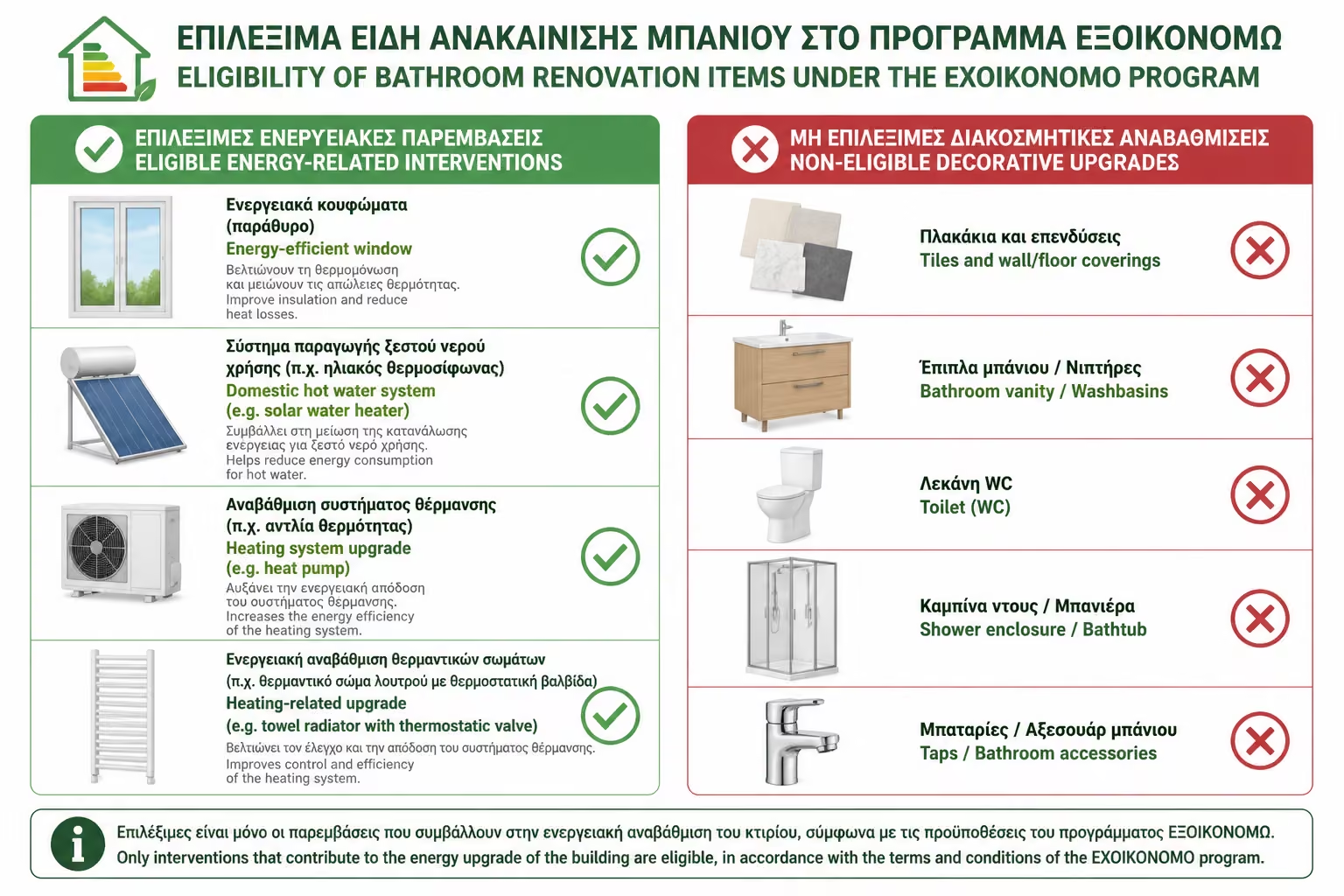
This means that certain works that can be done in parallel with a bathroom renovation can be related to the program, as long as they contribute to the energy upgrade of the residence and are foreseen by the respective guide.
Simply put: the bathroom as a space is not subsidized just because it is being renovated. However, specific energy-related interventions connected to the bathroom or to the home's overall operation may be eligible.
The Exoikonomo program is primarily designed to reduce a home's energy consumption. It does not look at whether the bathroom becomes more beautiful or more modern. It examines whether the property becomes more energy efficient.
Usually, in order for a residence to be included, there must be an energy audit, a proposal for interventions and a final improvement of the energy category.
So when the bathroom enters the discussion, the right question is not whether the whole renovation is subsidized. The real question is which individual works have an actual energy-upgrade role.
Changes that reduce heat loss and improve airtightness.
Envelope upgrades, not purely decorative bathroom work.
Assessed as part of the dwelling's overall energy system.
This is where the bathroom most directly overlaps with energy upgrading.
Solar water heating, heat pumps, and similar technical systems may be eligible.
Only when they genuinely support energy savings and are correctly declared.
There are certain tasks that can be done on the occasion of a bathroom renovation, but in reality they belong to energy interventions.
These are the most common cases.
If the bathroom has an external window, replacing it with a new energy-rated frame can fall under Exoikonomo, as long as it meets the program's specifications.
This may involve:
Changing a window in the bathroom can help reduce heat loss, especially in old flats with single glazing, old metal frames or poor airtightness.
Also, if the bathroom window is too small, its energy contribution may be limited. This does not mean that it is not worth changing, but the final inclusion and its importance in the energy upgrade is judged by the engineer or energy inspector.
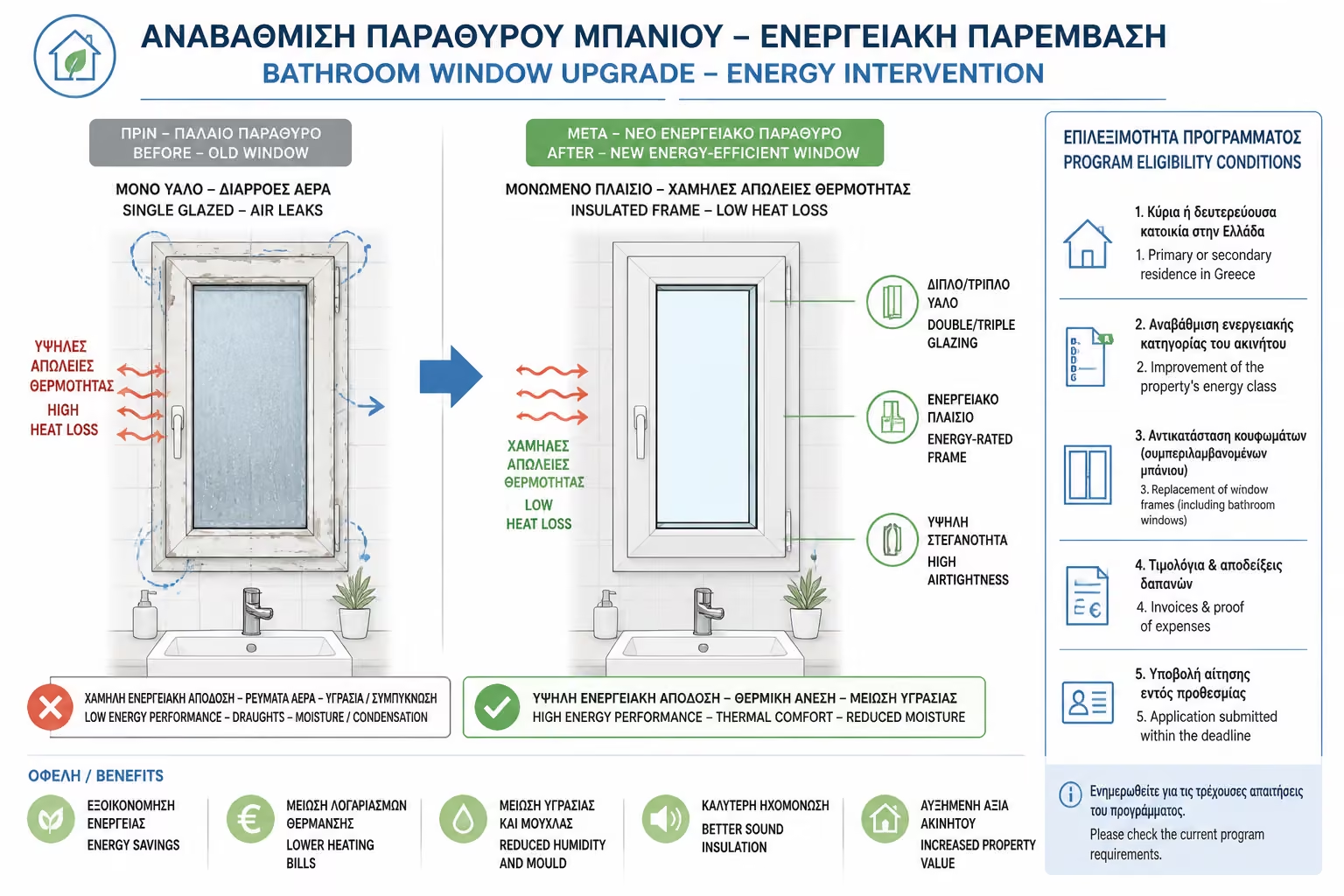
It is not enough simply to change the window. The new frame must meet the program requirements and be correctly declared in the intervention proposal.
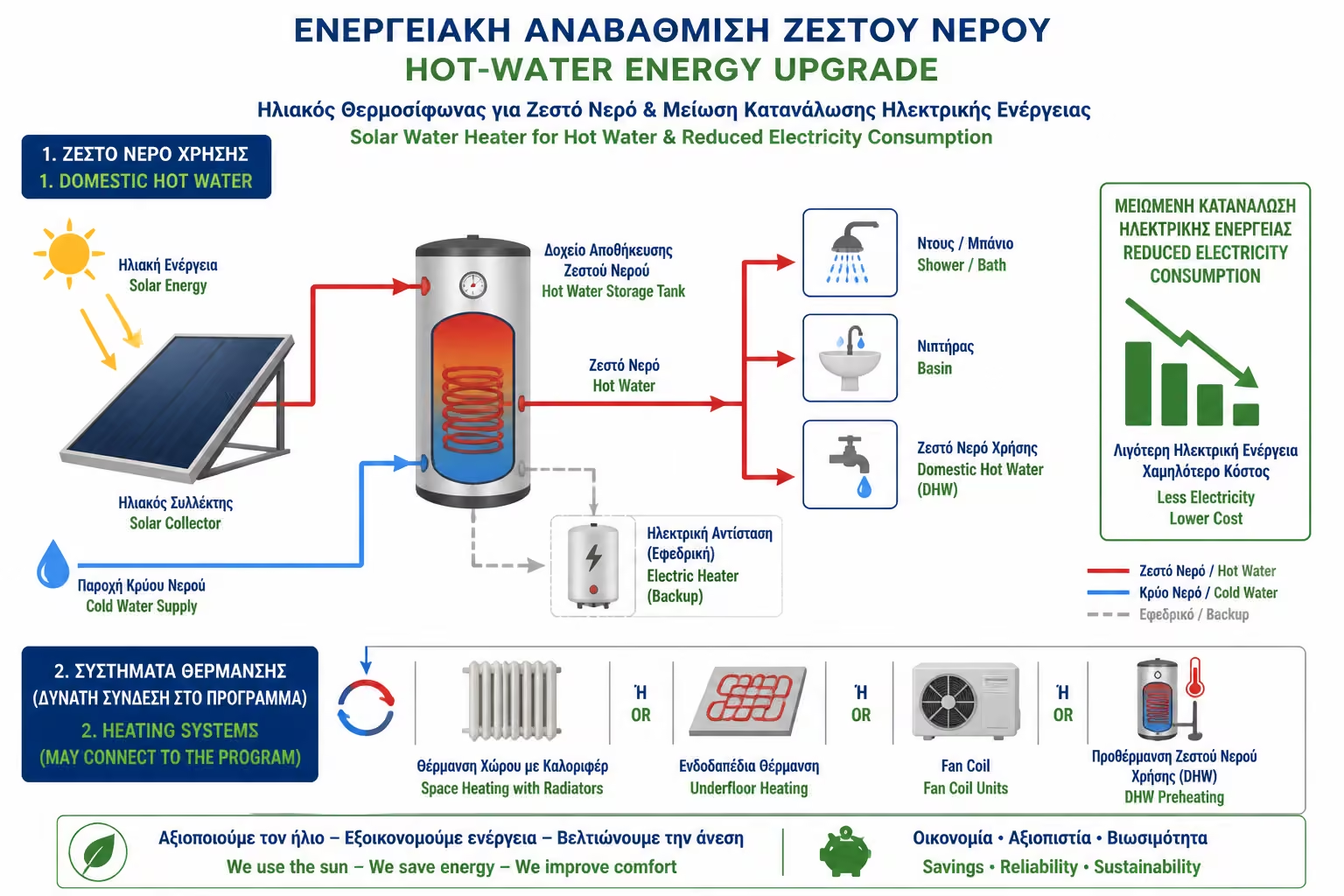
One of the interventions most directly connected to the bathroom is the solar water heater or, more generally, the domestic hot water production system.
The bathroom consumes a large part of a house's hot water. Shower, sink and daily use add to the electricity consumption when there is a simple electric water heater.
Installing a solar water heater can significantly reduce the cost of hot water production, especially in Greece where sunshine is high.
Within Exoikonomo, a domestic hot water system may be eligible, such as:
The most recognizable domestic hot water upgrade.
A direct energy-related intervention rather than a decorative bathroom change.
Evaluated as a technical hot-water production solution.
Where covered, it supports overall energy efficiency.
The following still need to be checked:
Not every property can accept the system without technical constraints.
Available space is a basic practical requirement.
Apartment-building regulations may limit or control installation.
Poor routing can complicate both execution and cost.
The system must satisfy the specifications of the active program guide.
If it is not documented properly in the proposal, eligibility can be lost.
In some cases, when there is not already a hot water system from a renewable source, the installation of a solar system can be particularly important for the energy upgrade of the residence.
The solar water heater is not just a "bathroom accessory". It is an energy system. That is why it is considered as an energy saving intervention.
Bathroom heating alone is not usually considered a separate "bathroom renovation". But the program may concern the overall upgrade of the heating or cooling system of the residence.
This may include, depending on the guide and intervention proposal:
If, during the bathroom renovation, a change in the way of heating the house is also planned, then it is important to examine the project as a whole.
The program is interested in the energy upgrade of the system, not in the aesthetics or individual replacement of a body. In many cases, simple terminal bodies or single additions are not an eligible intervention by themselves.
This is why an engineer should always check before calculating any subsidy.
A simple bathroom radiator or an electric towel rail does not automatically mean that it is subsidized.
The bathroom is a humid place, so ventilation is very important. A simple bathroom fan helps to remove water vapor, but does not necessarily mean that it is subsidized.
In the context of energy programs, more specialized mechanical ventilation systems may be considered, especially when combined with heat recovery and overall energy upgrading.
The simple fan is useful for humidity, but is usually treated as a functional element of the bathroom rather than a key energy intervention.
A simple bathroom ventilator is one thing, and a complete mechanical ventilation system with an energy function is another.
Some energy upgrading programs can include smart management systems, as long as they contribute to energy savings and are combined with other interventions.
In relation to the bathroom, this can include:
Security systems, cameras or room monitoring devices should not be confused with energy smart home systems.
Not every "smart" device is subsidized because it is smart. It must be related to energy saving and properly integrated into the intervention proposal.
The most important point is to clarify what should not be considered eligible just because it takes place in the bathroom.
The following are usually not treated as energy interventions just because they happen inside the bathroom.
New tiles, adhesives, and grout for aesthetic renovation are not enough on their own.
Toilets, cisterns, basins, and taps are functional equipment, not energy upgrades.
These affect aesthetics and usability, not the energy profile of the home.
They do not become energy interventions just because they are installed in the bathroom.
Purely visual improvements usually remain outside the program.
If it is not tied to an approved intervention, it typically stays outside funding.
These works may be absolutely essential to the renovation, but are not an energy upgrade in themselves.
The best case is when the bathroom renovation coincides with a total energy upgrade of the residence.
The bathroom window can make sense when it is part of a broader window upgrade.
The bathroom benefits directly when domestic hot water is upgraded.
The intervention concerns the whole dwelling, but the bathroom is still affected in practice.
Energy and technical pathologies can sometimes be organized together more intelligently.
Changes to the hot-water system may align with pipework work inside the bathroom.
In these cases, the bathroom can benefit from the program, not because its renovation is subsidized as a whole, but because some energy interventions directly affect it.
Let's look at a simple example.
An owner is renovating an old bathroom and at the same time wants to take advantage of an energy upgrade program.
| Work | Could it be eligible for subsidy support? | Comment |
|---|---|---|
| Change of bathroom window with energy frame | Yes, under conditions | If it meets the specifications and is declared correctly. |
| Installation of a solar water heater | Yes, under conditions | It concerns domestic hot water and energy savings. |
| Home heating system upgrade | Yes, under conditions | It is considered as a whole for the residence, not just for the bathroom. |
| Smart water heater or heating control | Possibly, under conditions | If it is part of an energy saving system. |
| New bathroom tiles | No | It is a work of finishing and aesthetic renovation. |
| New basin and sink | No | They are not an energy intervention. |
| Bathroom furniture and mirror | No | They are about functionality and aesthetics. |
| Shower cabin | No | It is not considered an energy upgrade. |
| Bathroom faucets | Usually not | Unless the respective driver provides something special, which must be checked. |
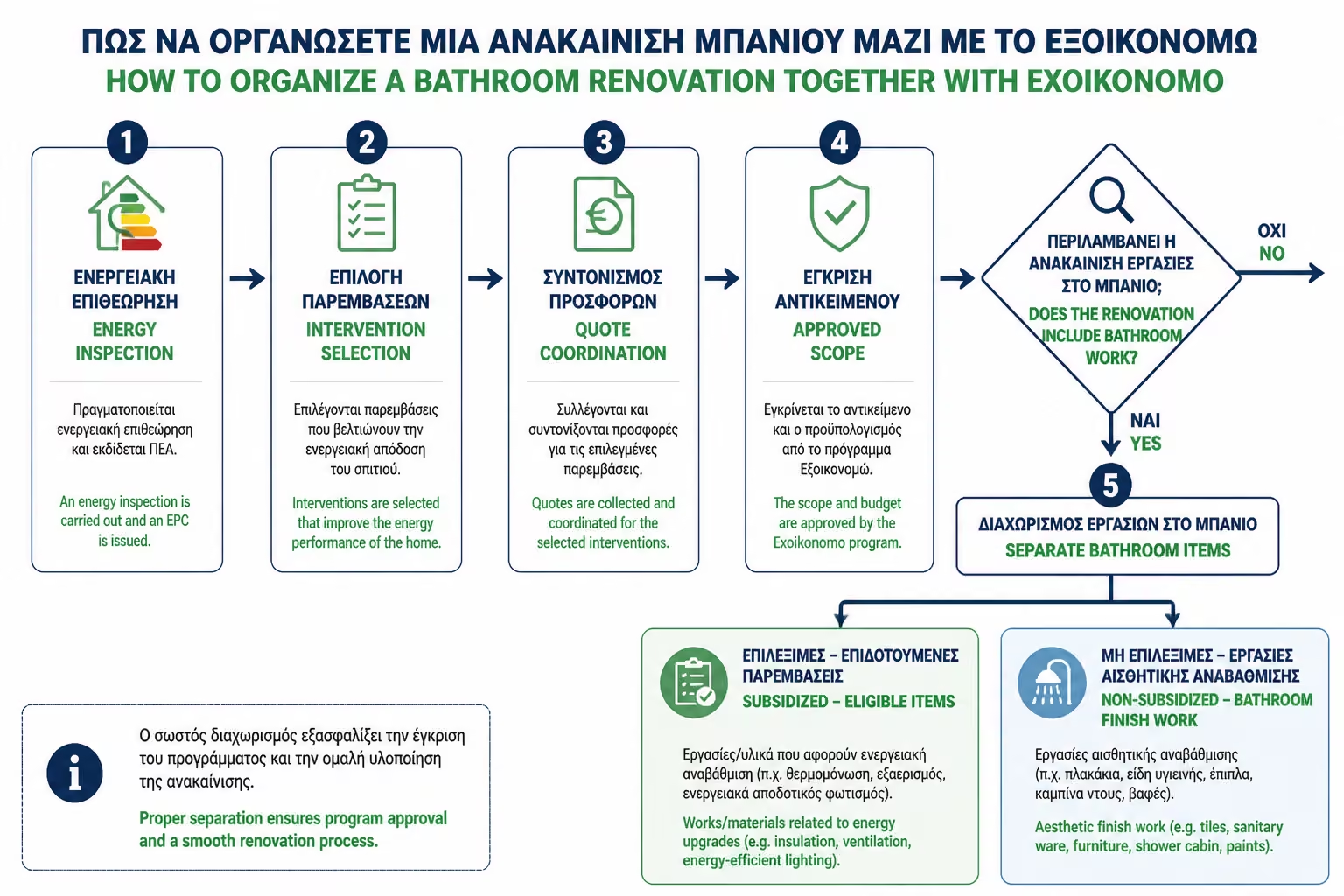
If you are considering a bathroom renovation and also want to use Exoikonomo, the right order is not to start the work first and then look for the subsidy.
The planning sequence should make it clear from the start what is subsidized, what is not, and what remains a private cost.
This helps to avoid confusion and prevent the owner from thinking that the entire bathroom will be subsidized.
First, check whether the residence can enter the program and whether it meets the basic requirements.
The energy inspector evaluates the existing situation and suggests interventions that can improve the energy class of the property.
It is decided which interventions will be made: frames, solar, heating, thermal insulation, smart home or other eligible works.
If there are works related to the interventions in the bathroom, such as window replacement, domestic hot water or piping to the solar system, these are organized together with the rest of the renovation.
| Category | Relationship with the bathroom | Possibility of inclusion |
|---|---|---|
| Energy-rated bathroom window | Reduces thermal losses | Yes, under conditions |
| Solar water heater | Provides hot water for use | Yes, under conditions |
| Heat pump for DHW | Hot water energy production | Yes, under conditions |
| Home heating upgrade | It also affects the bathroom | Yes, under conditions |
| Mechanical ventilation with recovery | Improves energy function | Possibly, under conditions |
| Smart home for energy | Consumption control | Possibly, under conditions |
| Bathroom tiles | Aesthetics/finish | No |
| Toilet, washbasin, furniture | Functional equipment | No |
| Shower cabin | Functionality/aesthetics | No |
| Bathroom taps | Plumbing fixture | Usually not |
| Painting, decorations, accessories | Aesthetic renovation | No |
Not necessarily. Bathroom renovation in itself is not an energy intervention.
No. The solar or hot water system may be an eligible intervention, but this does not mean that all other bathroom materials are subsidized.
Only if it meets the specifications, is declared correctly and is part of the energy upgrade proposal.
It should not be taken for granted. The program is mainly about energy saving, not water saving in general, unless the respective guide provides a specific category.
This is very dangerous. In subsidy programs there are specific procedures, approvals, documents and time steps. Before starting any work that you want to be connected with a subsidy, it must have been checked by the responsible engineer.
If you want to combine a bathroom renovation with Exoikonomo, do not start with tiles and sanitary fixtures. Start with the home's energy profile.
The program may support works such as an energy-rated window, a solar water heater, a domestic hot water system, heating upgrades, or energy-saving automations. It does not cover a standard bathroom renovation as a purely aesthetic or functional project.
For that reason, the budget should be split into two clear parts: energy interventions and normal bathroom renovation work.
That structure prevents misunderstandings and makes it clear from the beginning which amount may be subsidized and which amount must be paid normally.
A bathroom renovation can be combined with Exoikonomo, but only in certain energy-related areas.
They may be related to a subsidy:
Not usually subsidized:
Exoikonomo is not a bathroom renovation program. It is a home energy-upgrade program. If that is clear from the beginning, it can be used properly, without false expectations and without budget confusion.
Return to category.
Go to categoryReturn to the central guide.
Go to guide