Horizontal Lines for Width
If you have a narrow or long bathroom, place rectangular tiles (eg 30x90cm or 60x120cm) horizontally on the walls. This forces the eye to move from left to right, making the wall appear wider.
When the actual dimensions of a bathroom are limited and the demolition of a wall is statically or financially impossible, the engineer and the decorator enlist their most powerful weapon: Human perception.
The human eye is extremely easy to "fool". Our brains don't calculate square meters with a tape measure, but rely on lines, shadows, reflections and contrasts to perceive the volume of a room. If you understand how this visual geometry works, you can transform a 3 sq.m. bathroom. so that it gives the feeling of a space of 6 sq.m.
Let's look at the top science and design optical illusions that you can apply to your renovation.
The joint lines between the tiles act as "guidelines" for the eye. Their direction defines how we perceive the proportions of the space.
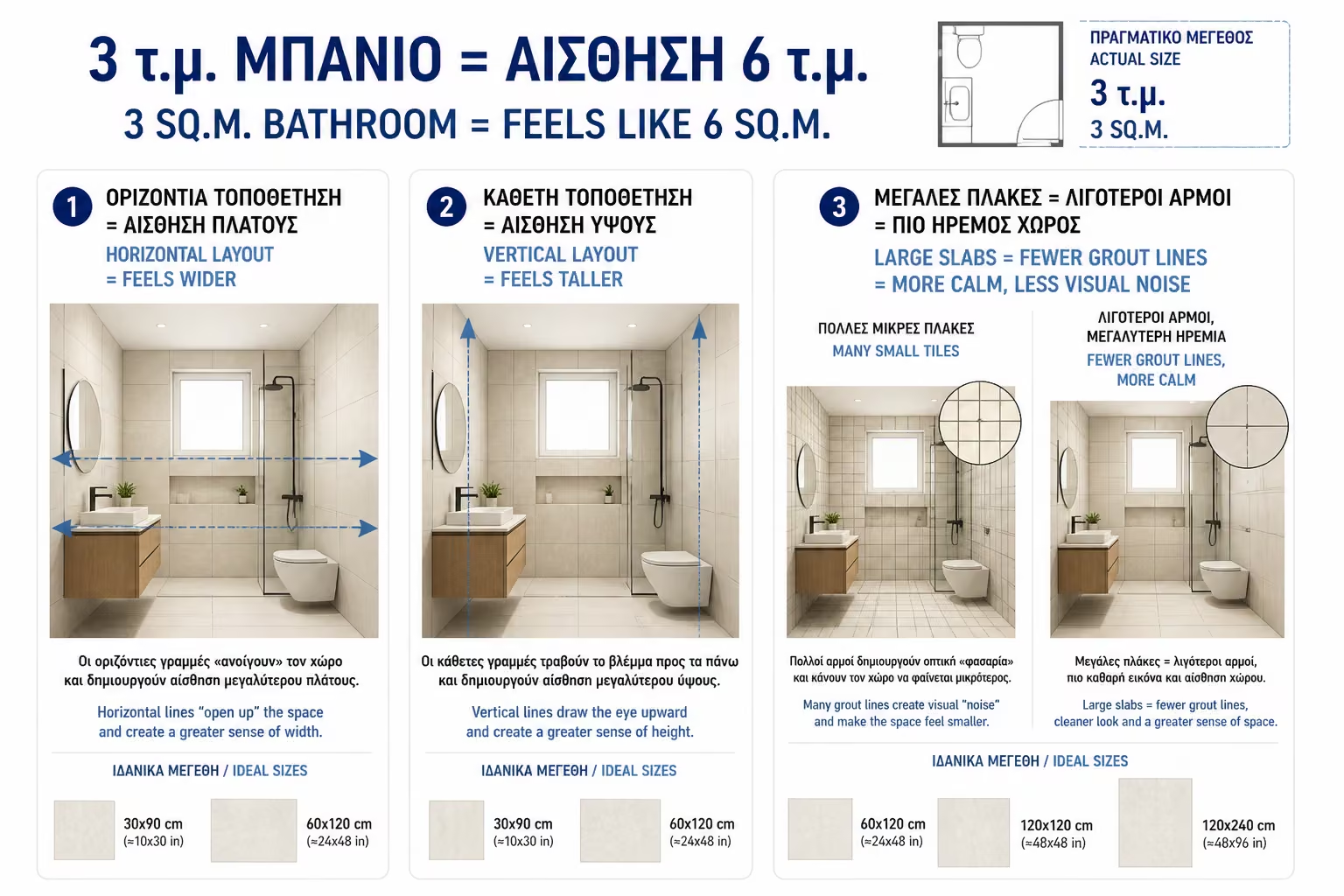
If you have a narrow or long bathroom, place rectangular tiles (eg 30x90cm or 60x120cm) horizontally on the walls. This forces the eye to move from left to right, making the wall appear wider.
If your bathroom has a low ceiling (very common in old bathrooms with a loft), install the rectangular tiles vertically. The gaze is directed upwards, giving the illusion of greater height.
The smaller the tiles, the more joints there are. The many joints create a "grid" that tires the eye and emphasizes the limits of the small space. By using large-sized tiles, joints are minimized, surfaces are unified and the space appears endless.
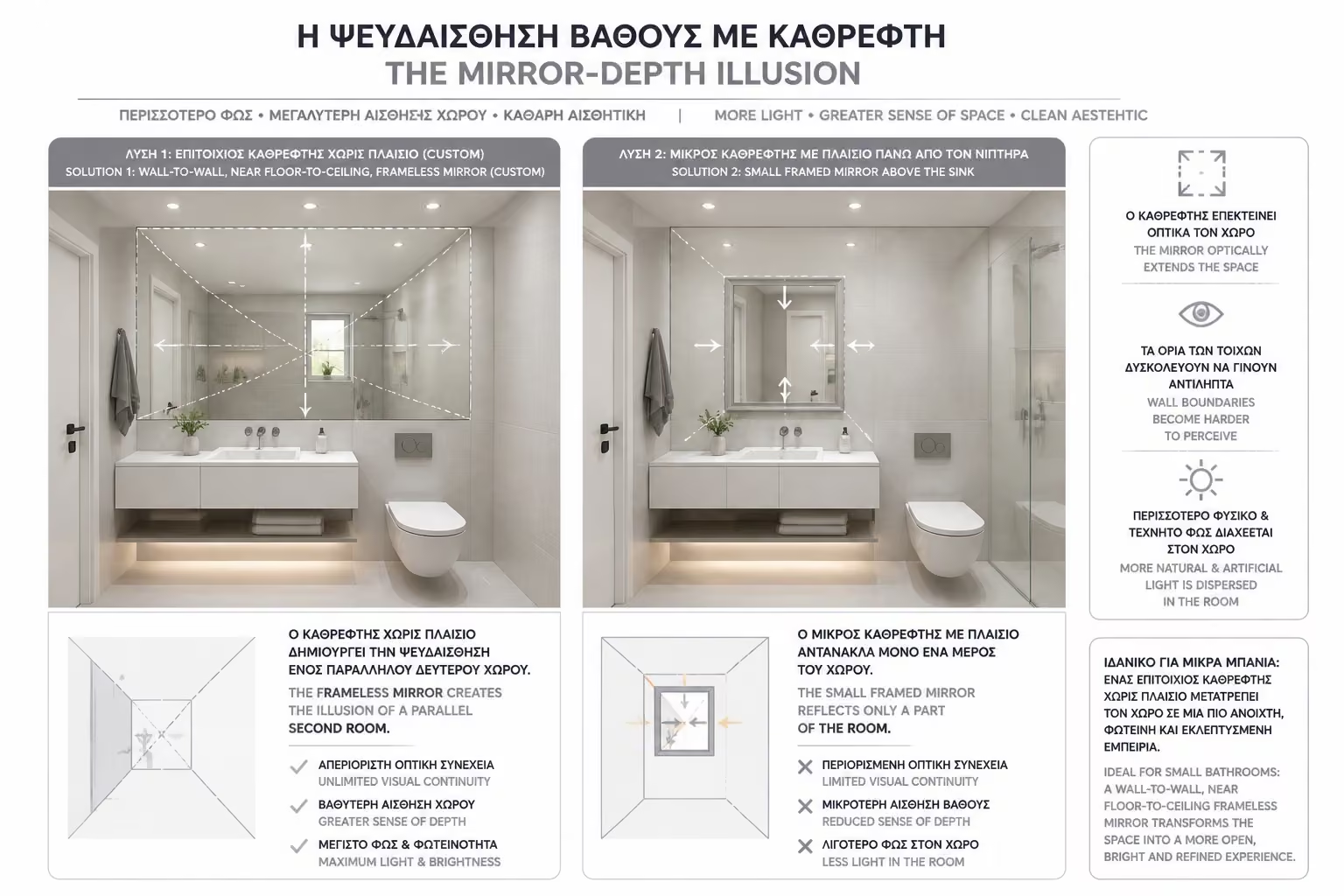
The mirror is the oldest and most effective illusion in design. It does not just reflect the light, but creates the effect of a "parallel room".
Don't limit yourself to a small mirror above the sink. Install a custom mirror that covers the entire length of the wall or reaches up to the ceiling.
Avoid heavy, wooden or metal frames. A frameless mirror (radius) that "fades" into the wall or tiles confuses the eye, which has difficulty distinguishing where the real wall ends and the reflection begins.
Our brains tend to judge the size of a room by the total visible floor area. If the floor is full of bulky objects, the space is automatically recorded as "small".
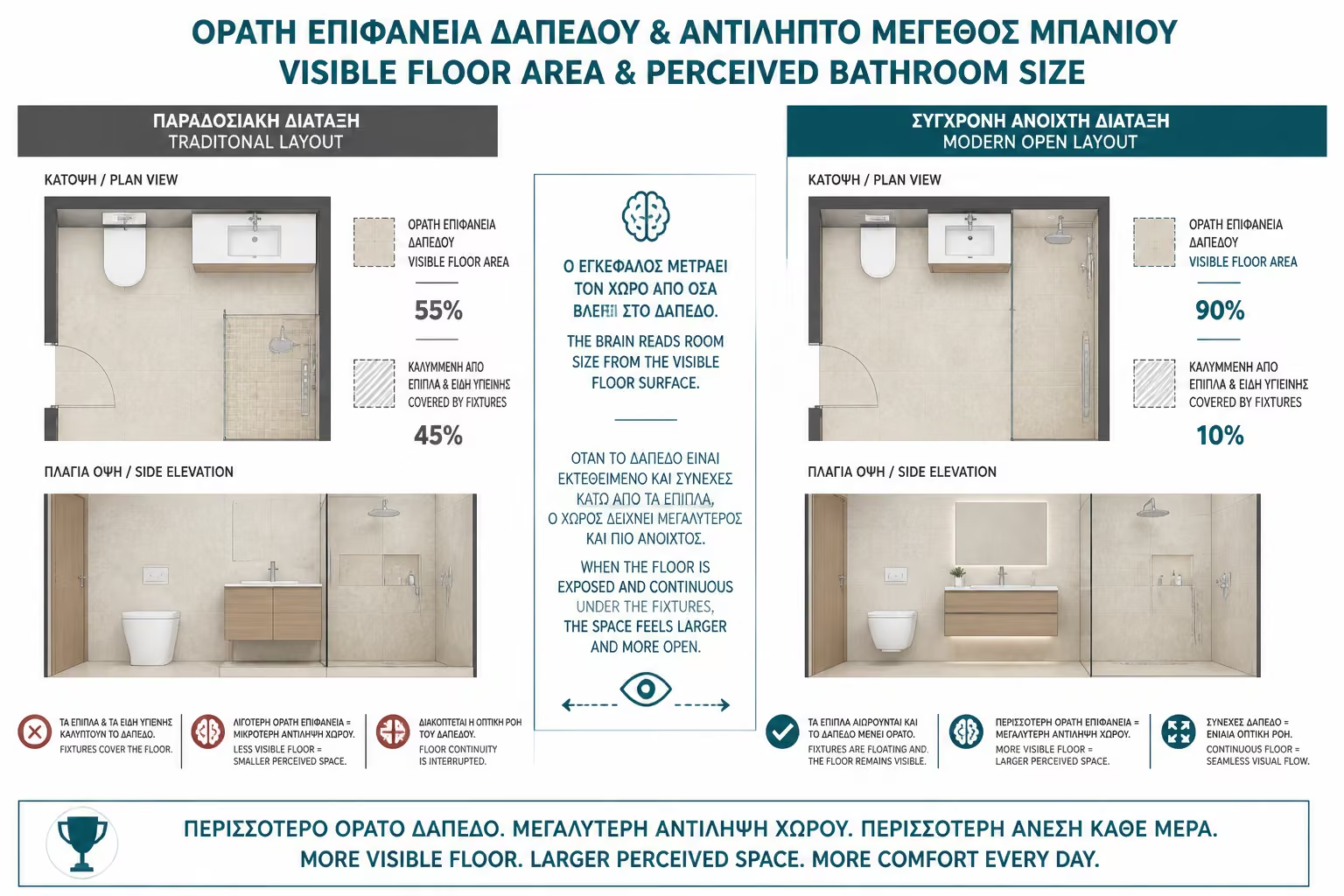
By choosing a hanging basin and a hanging vanity unit, you leave the floor completely free from edge to edge. The eye travels under the furniture to the wall, and the space "breathes".
Use the exact same tile on the bathroom floor and inside the walk-in shower, eliminating steps or white shower trays. The visual continuity of the floor enlarges the space spectacularly.
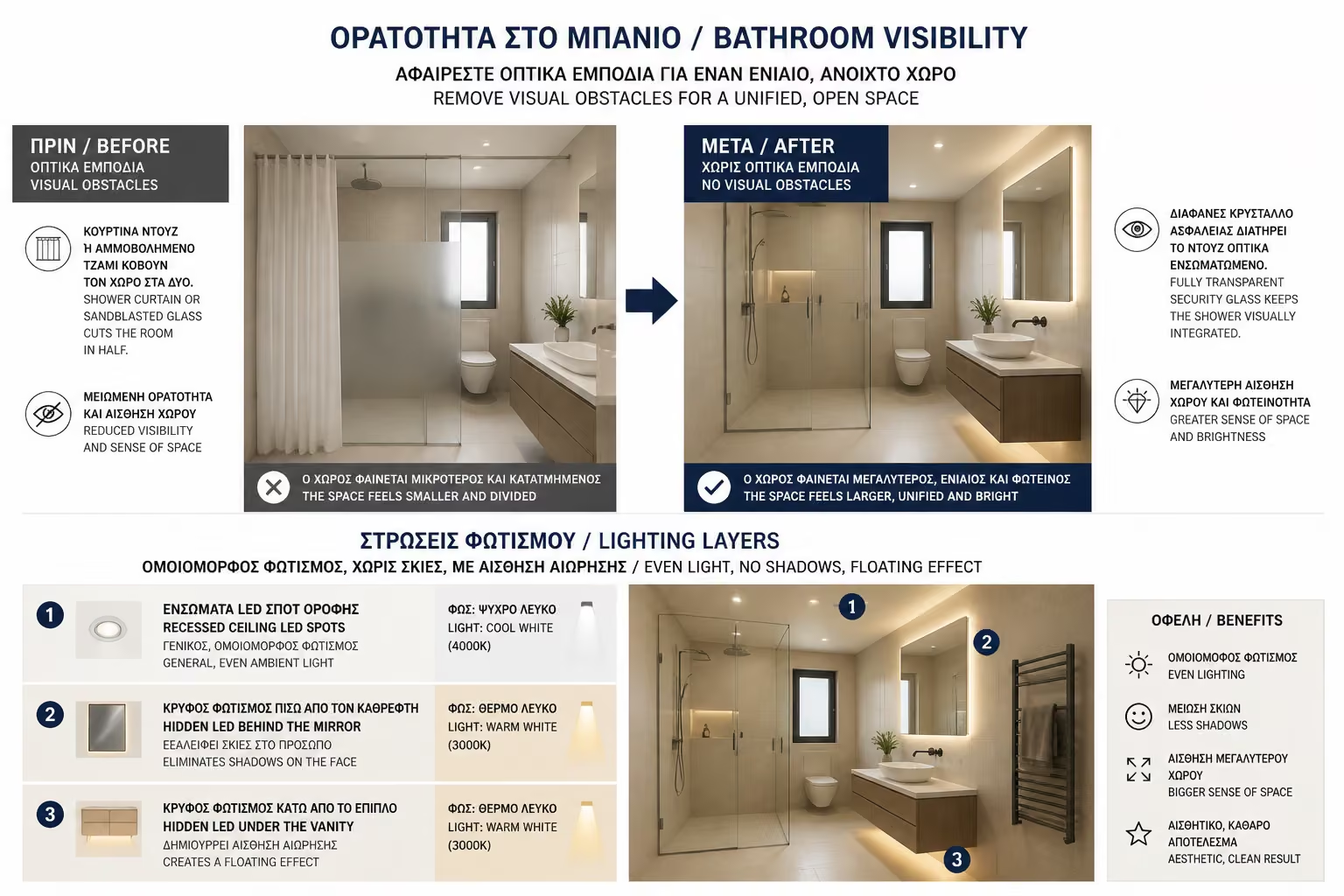
Every time your gaze "stumbles" on an opaque material, the room gets smaller.
A shower curtain or sandblasted glass acts as a regular wall, "cutting" the bathroom in half. Replace them with a completely transparent safety glass (Securit). The shower is integrated into the rest of the bathroom and you visually gain the full depth of the space.
Dark corners and shadows act as "shrinkers" of space. A poorly lit bathroom always looks claustrophobic.
Instead of a single light fixture in the center of the ceiling that creates harsh shadows, opt for multiple ceiling LED spots (recessed) for an even distribution of light.
Place LED strips behind the mirror or under the hanging furniture. This creates the feeling that objects are "floating" on a layer of light, removing their visual weight.
| Design Choice | Creates claustrophobia ❌ | Creates spaciousness |
|---|---|---|
| Tile Size | Small tiles (eg 20x20cm) with dark joints. | Large tiles (60x120cm) with joints in the same shade. |
| Separate shower | Curtain or patterned/sandblasted glass. | Completely transparent, frameless crystal. |
| Sanitary ware | Basin and floor washbasin cabinet. | Wall-hung sanitary ware. |
| Mirror | Small, with a thick wooden or decorative frame. | Large, frameless, wall to wall. |
| Lighting | A central light fixture (creates shadows in the corners). | Ceiling spot + hidden LED lighting (floating effect). |
> ⚠️ The Engineer's Tip: One of the biggest secrets of optical illusions is monochrome furniture and walls. If you paint the wall or lay tiles in a certain shade (e.g. light gray) and choose the vanity unit in exactly the same color, the unit "camouflages" inside the wall, loses its volume and the eye does not perceive it as an obstacle!
In our next article, we move into a highly creative area: The Psychology of Color & The Color Palette. We'll break down the famous 60-30-10 architectural rule and how the right shade combinations can turn your bathroom into a temple of relaxation and cleanliness.
Return to category.
Go to categoryReturn to the central guide.
Go to guide