Legitimately low price
The bathroom is small and the scope is limited.
When asking for a quote on a bathroom renovation, it's natural to want the best price possible. No one wants to pay more than they have to. A cheap quote is not a problem in itself. There are crews that work properly, with reasonable prices and without exaggerations.
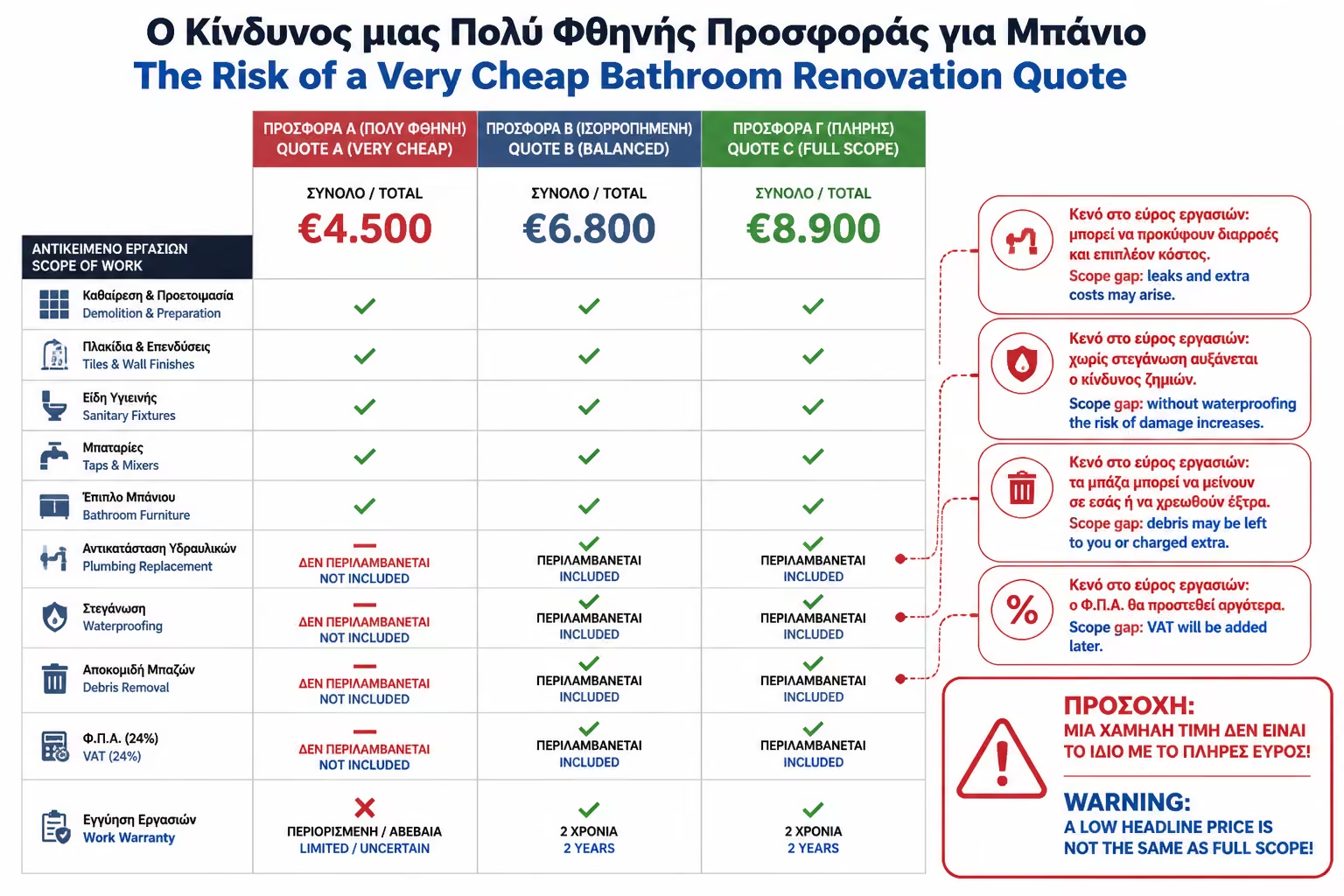
The problem starts when an offer is much lower than all the others and does not clearly explain what is included.
In a bathroom renovation, the biggest risk isn't always in what you see. The tiles, the toilet, the vanity and the shower enclosure are immediately visible. If you don't like something, you notice it.
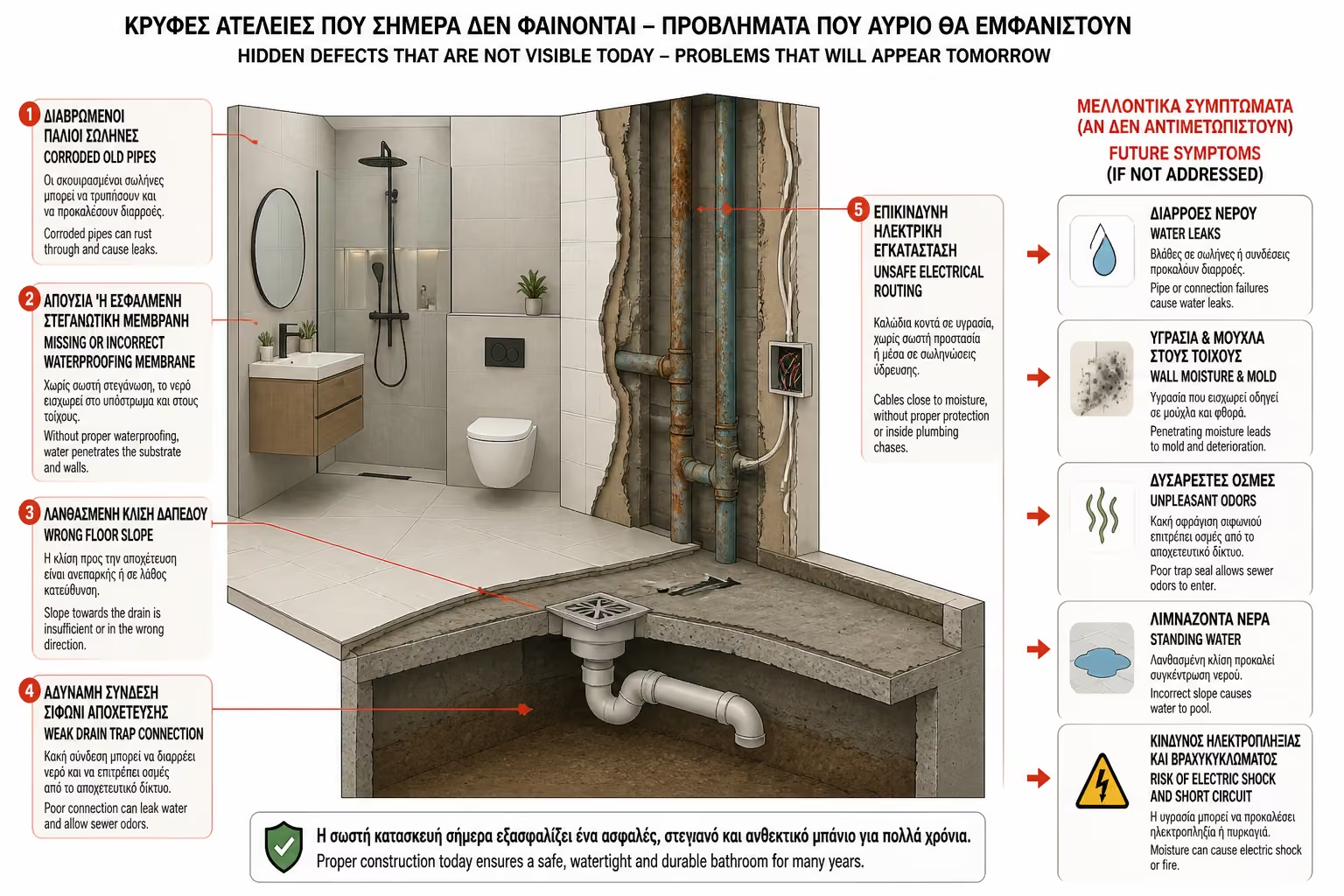
But the most serious defects are usually found behind the tiles: in the piping, drains, slopes, drain trap, waterproofing, adhesives, wall preparation and electrical.
These are the places where a very cheap quote can cut costs without you realizing it on the day of delivery. The problem appears later, when the bathroom is already finished.
A low quote does not automatically mean poor work. It can be perfectly reasonable when the scope is simple, the layout stays the same and the material choices are more restrained.
It becomes dangerous when the low price is built on omissions, vague wording or missing technical scope.
The bathroom is small and the scope is limited.
No relocation of the toilet, basin or shower.
The finishes are simpler but still technically suitable.
There are no major demolitions or hidden complications.
The contractor has immediate availability in the schedule.
The owner undertakes part of the purchasing.
The quote avoids a full replacement of the plumbing network.
It is unclear whether the trap and drain point will be replaced.
The shower zone is left without a clear waterproofing scope.
No suitable adhesives or grouts are specified.
Surface repair and preparation are missing from the scope.
Debris removal, VAT or contingencies are left outside the written analysis.
A dangerously cheap quote is not merely “economical”. It is a quote that fails to tell you clearly what you are actually buying.
In a bathroom, many mistakes are not visible on the first day.
A tile may appear straight. The toilet can work. The tap can run normally. The shower enclosure may look beautiful.
These problems may appear after months or a few years. But then the bathroom is already finished and the repair requires dismantling.
A future leak stays hidden until the wall has to be reopened.
Bad drain work leads to odors, blockages and recurring trouble.
Water stagnates instead of flowing correctly toward the trap.
The bathroom seems to function, but the defect is built into daily use.
The damage appears later on corners, adjacent walls or the ceiling below.
Tiles and joints start failing much sooner than expected.
The finished look holds only temporarily because the base is wrong.
In a wet room, this is not a cosmetic defect but a safety issue.
When a quote is suspiciously low, the savings usually do not come from the mirror or the vanity. They come from the parts the owner cannot easily inspect.
That may look economical at first, but if the pipes are old, the slopes are wrong or the drainage is not checked, the probability of later damage rises sharply.
If a problem appears after the renovation, it rarely means a tiny repair. It can mean removing tiles, opening walls and paying again for work that should have been done correctly the first time.
The most common economy is not to do a complete pipe change. Instead of replacing the old network, only local adjustments can be made.
The faucet and drains are often treated as a detail, but they are one of the most important parts of the bathroom.
Waterproofing is one of the first tasks that is omitted in very cheap offers, because it is not visible in the final result.
Before the tile is inserted, the surface must be firm, clean and as correctly aligned as possible.
The cost difference between a proper glue and a very cheap solution may seem small in the overall budget.
There is humidity in the bathroom, so electrical appliances need special attention.
Some cheap deals don't include rubbish removal, transport or cleaning.
Odors, blockages, standing water and dampness below the floor usually start in the invisible part of the work.
Crooked tiles, weak joints, hollow sounds, cracks and bad finishing usually trace back to poor substrate work.
Adhesives and grout directly affect how long the installation survives in a wet room.
Sockets, lighting, ventilation and safe routing are not optional details in a bathroom.
Bags, transport, debris bins and cleanup make a low headline price look better than the real final cost.
The big problem with a sketchy renovation isn't just that it might not last. It's just that fixing it costs a lot more than doing it right from the start.
For example:
| Problem | What might be needed next? |
|---|---|
| Leak from old pipe | Tile removal, wall opening, new plumbing, restoration. |
| Poor shower waterproofing | Shower zone demolition, drying, new waterproofing, new tiles. |
| Incorrect floor slopes | Floor demolition, new cement mortar, new tiling. |
| Siphon problem | Floor opening, drain trap change, new restoration. |
| Bad glue or bad adhesion | Tile removal and re-installation. |
| Electrical drafts | New routes, corrections, possible damage to finished surfaces. |
Thus, a difference of €500 or €800 in the initial quote can later lead to costs of €1,500, €2,000 or even more if a finished bathroom needs to be stripped.
Not every low quote is suspicious. A genuinely economical offer can be perfectly reasonable, provided that the scope is clearly written down.
The total amount of work is limited from the start.
There is no need for new routes or major relocations.
The pipes do not automatically require a full replacement.
There are no obvious red flags pointing to extra hidden work.
The owner reduces the commercial part of the offer.
The offer states explicitly what is included and what is excluded.
In this case, the low price is not necessarily a problem. It is the result of a smaller scope of work.
The problem is when the offer is low but vague.
There are certain signs that should make you stop and ask for clarification.
If there is no detailed description, the phrase "all included" does not protect you. Ask to write down exactly what is included.
When renovating a bathroom, especially with a shower, waterproofing must be clearly mentioned.
If the bathroom is old and the quote doesn't say what to do with the plumbing, there is a gap.
Always ask if the price is final and includes VAT.
Application materials must be included in the calculation or stated to be purchased by the customer.
In an old bathroom, dampness, rotten pipes or loose walls can appear. The offer must explain how they will be dealt with.
Fast work is not bad in itself. But if the schedule does not leave time for drying, waterproofing and proper application, attention is needed.
It is important to distinguish two concepts.
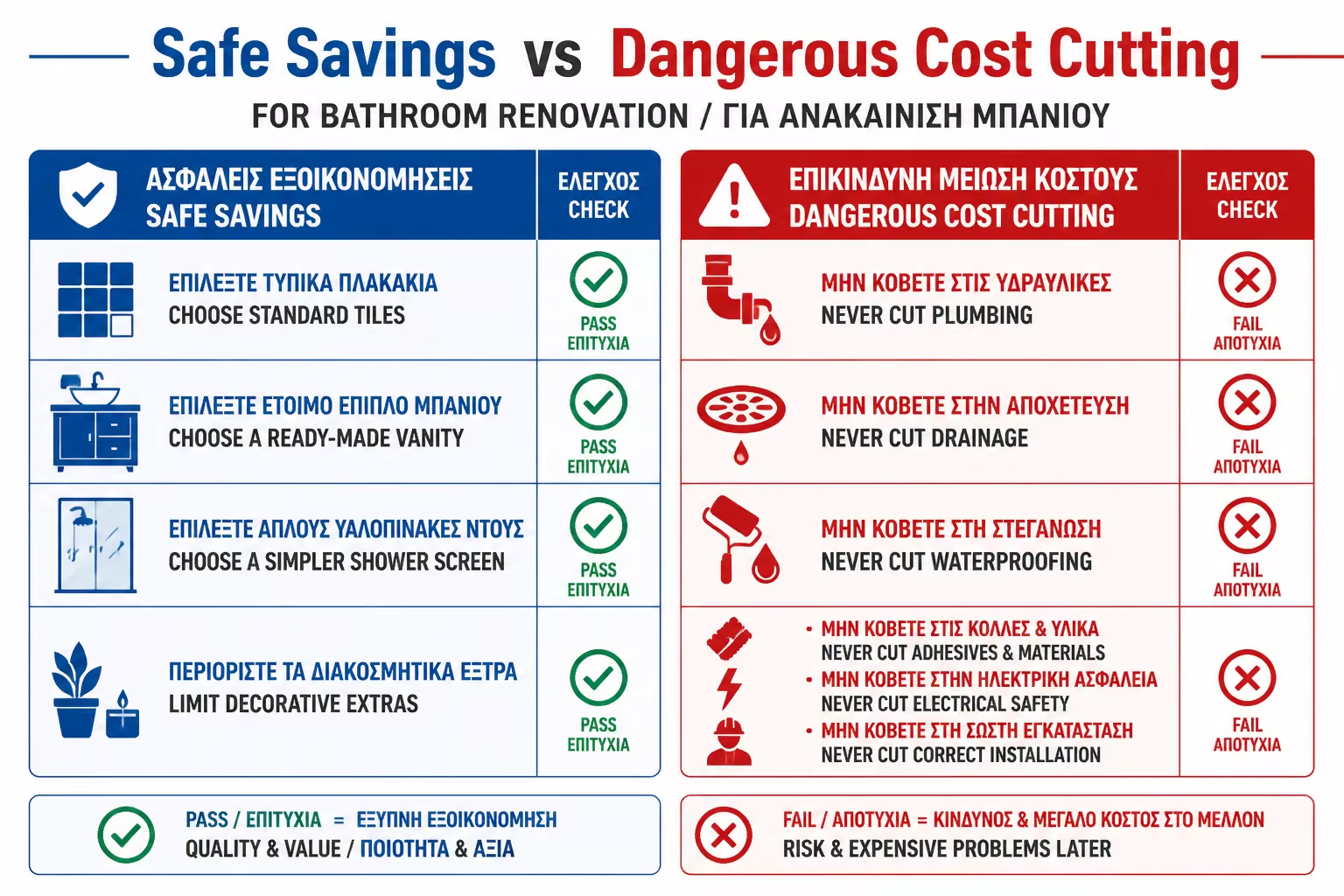
Economical renovation means that we choose reasonable materials, simple layout, no luxuries and no unnecessary changes.
Rough renovation means that we cut from basic work that affects the durability and function of the bathroom.
Economic renovation can be a very good option.
Rough renovation is a risk.
| Economic choice | Rough choice |
|---|---|
| Mid-range tiles | Unsuitable adhesives |
| Ready-made bathroom furniture | Bad placement |
| Simple shower enclosure | Without waterproofing |
| Keeping the same layout | Old pipes inside the wall |
| Reasonable taps | Rough plumbing connections |
| Simple tile design | Without proper wall preparation |
The correct economy is made in the obvious and easily replaceable parts. Not in infrastructure.
If a quote is low and still interests you, do not reject it immediately. Ask targeted written questions first.
Is a full replacement included, or only local adjustments?
Are the drain line and the drain trap part of the scope?
Is the shower zone explicitly waterproofed?
Which adhesives and grouts will actually be used?
Are wall repairs and proper substrate preparation included?
Does the price include debris removal and final cleanup?
Are the necessary electrical works and protections included?
Is this a full supply quote or labor only?
Is the price final, and what exactly is excluded?
How will hidden problems be priced if they appear?
If the answers are clear, you can compare properly. If the answers are vague, the low price needs attention.
Let's look at a simple example.
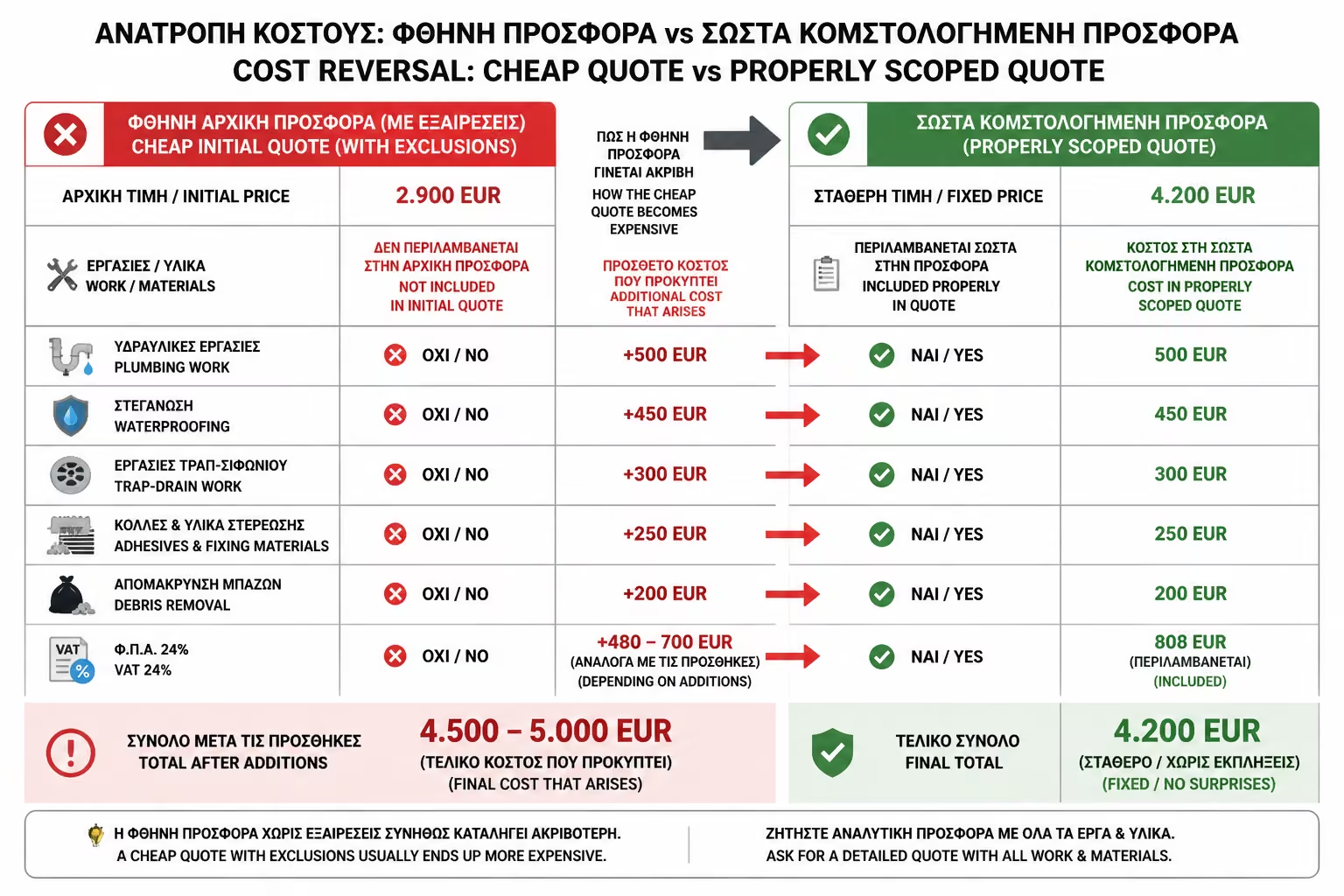
A homeowner gets two quotes for a bathroom renovation.
| Description | Offer A | Offer B |
|---|---|---|
| Initial price | €2,900 | €4,200 |
| Plumbing | Adjustments only | Complete change |
| Waterproofing | Not mentioned | It is included |
| Siphon / drain | Not mentioned | It is included |
| Adhesives / grouts | Not mentioned | They are included |
| Garbage collection | No | Yes |
| VAT | Not mentioned | It is included |
| Exceptions | They are not mentioned | They are clearly stated |
Offer A seems cheaper by €1,300. But if plumbing, waterproofing, collection, application materials and VAT are added along the way, the final difference can be much smaller or even disappear.
Even worse, if these works are not done at all, the bathroom can be delivered cheaply but develop problems later.
To protect yourself from a very cheap but incomplete offer, follow a few simple rules.
Not just the final amount. You want a written description of tasks and materials.
Do not compare bid with materials to bid without materials. Don't compare a complete plumbing change with simple adjustments.
Plumbing, drainage, waterproofing, drain trap, preparation and electrical must be clear.
If you want to reduce costs, reduce by furniture, mirror, accessories, vanity or tile selection. Not from piping and waterproofing.
If the bathroom is old, keep a reserve for contingencies. It is better to be left over than to be missing in the middle of the project.
| Work / Material | Because it's critical |
|---|---|
| Plumbing | If a leak occurs, repair may require demolition. |
| Drainage and drain trap | They affect runoff, odors and proper operation. |
| Waterproofing | Protects against moisture on walls, floor and lower floor. |
| Adhesives and grouts | They affect the durability of installation in a wet area. |
| Surface preparation | It determines whether the tiles will press properly and hold. |
| Electrically | In a humid area, safety is essential. |
| Good placement | Even good materials fail if entered sloppily. |
Don't reject a financial offer just because it's low. Discard it if it is unclear. The right question is not "why is the other more expensive?". It is “what exactly does each include?”. If you want to cut costs, do it smartly: choose cheaper tiles, ready-made furniture, a simpler shower enclosure or fewer extras. But don't skimp on infrastructure. Plumbing, drainage, waterproofing and proper preparation are the things that cannot be seen, but determine whether the bathroom will stand the test of time. A cheap deal is good when it's clean. It is dangerous when it relies on gaps, ambiguities and "we'll see them down the road" tasks.
A very cheap bathroom renovation quote is not always bad. It can be advantageous if the project is simple, tasks are limited and everything is clearly described.
But when the price is too low and the offer does not explain what is included, then there is a risk.
The most expensive failure is often the one hidden inside the wall.
They control daily function and are hard to fix once finishes are complete.
Small upfront cost, major long-term risk if skipped or done carelessly.
The durability of the installation depends on materials the client rarely sees.
If the base is wrong, the visible finish eventually pays the price.
Safety in a wet room is never the place to save blindly.
These tasks may not show in the final result, but they are what keep the bathroom functional and safe for years.
The best option is not always the most expensive. But it is rarely the most obscure.
Before you say yes to a very cheap offer, ask for a detailed description. If everything is clear, you can safely decide. If not, the cheap solution may turn out to be the most expensive.
Return to category.
Go to categoryReturn to the central guide.
Go to guide