
Bathroom DIY, Maintenance & Styling
Return to category.
Go to categoryChanging knobs and handles is one of the simplest, most economical and immediately visible interventions in a bathroom. No need to change furniture, sink, tiles or faucets. Sometimes, replacing the old, worn or uninteresting handles of the vanity unit is enough to change the whole feel of the space. It's a small detail, but it's where it's seen and used every day.
The bathroom furniture is often the "center" of the image of the space. Even if it's plain, white or old, knobs can give it character. Black matte handles can make it more industrial or minimal. Bronze or brushed gold can give it a vintage or boutique style. Ceramic knobs can bring a more retro or country aesthetic. Wooden knobs can soften a cold bath and give it a more natural, spa feel.
The important thing is that this change is done quickly, at little cost and without heavy work. In many cases, all you need is a screwdriver and a little attention to measurement. If the new handles have the same screw spacing as the old ones, the replacement can be done in minutes. But if the distances differ, then grouting, re-drilling and possibly painting or local repair is needed.
Therein lies the trap. Changing knobs looks simple, but can get messy if not measured correctly. Wrong screw spacing, handles that are too big on a small door, cheap finish that rusts in a few months, screws that don't match the thickness of the door or new holes that don't line up can spoil the result. In the bathroom, especially, humidity and daily use make quality more important than it seems.
In this guide we'll look at how to choose knobs and handles for bathroom furniture, how each style changes the character of the space, how to measure properly before you buy, when you can do a simple replacement, when you need stucco and what materials hold up best in a damp environment.
The knobs and handles are small, but they work like a "jewel" on the piece of furniture. Just like a simple outfit is transformed with a good belt or the right pair of shoes, so a simple piece of bathroom furniture is transformed with the right accessories. The eye immediately catches the details that have contrast, material and repetition.
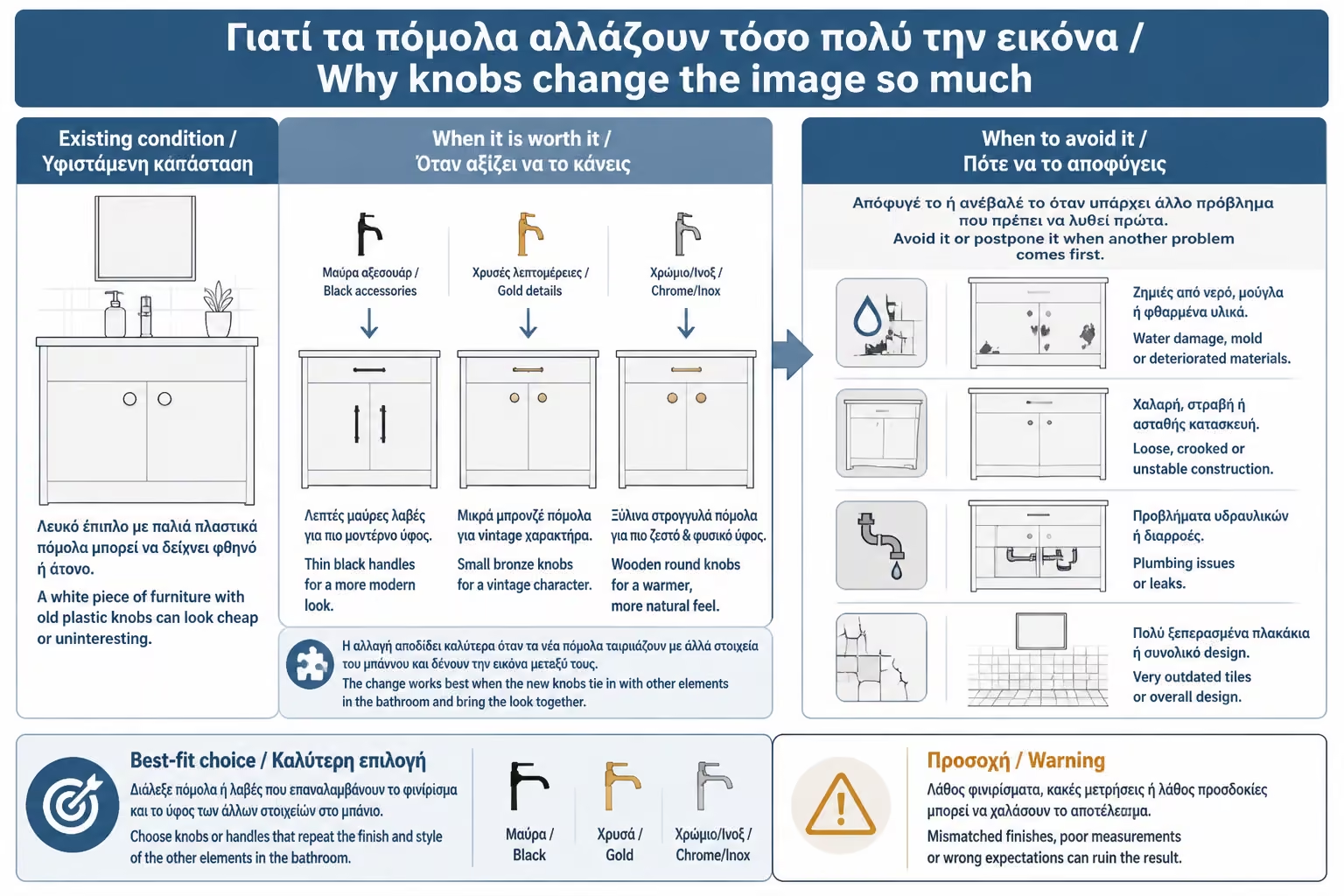
A white piece of furniture with old plastic knobs can look cheap or uninteresting. The same piece of furniture with thin black handles can be made more modern. With small bronze knobs it can acquire a vintage character. With wooden round knobs it can show more warm and natural. The construction does not change, but the reading of the furniture changes.
The change works best when the new knobs tie in with other elements in the bathroom. If there are black accessories, a black faucet or a black mirror frame, the black handles show part of a design. If there are gold details, gold knobs tie the image together. If all the metals are chrome, inox or chrome handles give a cleaner and more neutral effect.
The key is intention. A single different knob can seem random. A set of 2–4 repeating details looks designed. That is why changing knobs should not be done alone, but should be connected to the style you want to give to the bathroom.
The knobs are small, usually with one screw, and suit small doors, drawers or furniture with a more classic style. They are economical, easy to change and can give a strong style. If the furniture already has single holes, the replacement is very simple.
Handles usually have two screws and are more practical on drawers or doors that are opened frequently. They give a cleaner line and can make the furniture look more modern. A thin black or inox handle in a horizontal arrangement can instantly change the image of a boring piece of furniture.
There are also recessed or profiled handles, which give a minimal effect. However, these usually require more specialized placement and are not always suitable for simple replacement. If the old piece of furniture has no provision, carpentry work may be needed.
The choice also depends on the size of the furniture. On a small 50–60 cm vanity unit, very large handles may look disproportionate. In a wide drawer of 80–100 cm, a small knob may look poor or impractical. Proportion is just as important as style.
If you want the furniture to acquire a vintage character, knobs are one of the most powerful tools. Bronze, aged brass, antique gold, patterned ceramic knobs or small classic handles can transform a simple piece of furniture into something warmer and more nostalgic.
The vintage style is particularly suitable for bathrooms with beige tiles, marble details, white sanitary ware, wooden textures or a retro mirror. No need to overdo it. A few subtle bronze knobs, a matching dispenser and a towel in a warm tone are enough to change the feeling.
But pay attention to the quality of the finish. Very cheap "antique" knobs can peel or rust in a wet environment. The bathroom is not a bedroom chest of drawers. Hands are often wet, there are water vapors and cleaners. So endurance matters.
Ceramic knobs are beautiful, but need attention in small bathrooms where they can be knocked. If something falls or if they are overtightened, they may crack. They are fitted sparingly and without over-tightening the screw.
For a minimal effect, prefer simple lines, thin handles and a limited color palette. Matt black, inox, white, charcoal or brushed steel are safe choices. Minimal does not mean boring. It means clean, calm and without unnecessary details.
On a white or gray piece of furniture, the slim black handles provide a direct contrast. In a wooden piece of furniture, inox or black handles give a more modern image. In a very small bathroom, overly bold handles can draw too much attention, so it's better to choose something more subtle.
Minimal style requires precision. The handles must be aligned, the distances the same and the screws properly tightened. In a more decorative or vintage style, minor imperfections may go unnoticed. In minimal furniture, a crooked handle is immediately visible.
If the furniture already has clean lines and hidden opening mechanisms, you may not need to add visible handles. In some cases, the best upgrade is to remove old knobs, putty the holes and put in push-to-open mechanisms. But this is more advanced work and does not fit all furniture.
The industrial style works very well in bathrooms with gray tiles, concrete textures, white walls, wooden elements or black details. Matte black handles are the most immediate choice. They give a strong line and make even a simple white piece of furniture look more modern.
You can also choose gunmetal, dark bronze or handles with a more “factory” look. But beware of exaggeration. If the bathroom is small, heavy industrial handles can look bulky. A few thin black handles are enough to add style without overloading the space.
The industrial effect becomes more convincing when repeated. If the handles are black, you can pair them with a black dispenser, a black hook, a black mirror frame or a black towel rail. It doesn't have to be all black. But there needs to be rhythm.
Black matte needs maintenance. Rings, salts and drops are more visible. Choose handles with a durable finish and clean them with a soft cloth, not hard sponges or strong de-salts.
Brushed gold and bronze can give a boring piece of furniture a more expensive and warm image. They go particularly well with deep green, navy, greige, white, beige, wood and marble surfaces. On an old white piece of furniture, new gold knobs can give a boutique hotel feel.
The secret is to avoid too yellow, shiny and cheap gold. The brushed or satin finish looks more elegant and holds up better visually on the fingers. If the gold is too bright, it can look fake, especially next to chrome faucets.
If your faucets are chrome and you don't plan to change them, gold should go in with caution. It can work as an accent, but it is good to repeat it in a few places: knobs, small tray, mirror frame or dispenser. If it's only on the knobs, it might look random.
In a bathroom with marble or natural stone, warm metallic finishes look very nice, but you need to be careful with cleaners. Anti-calc acids that damage marble can also dull cheap gold finishes.
Wooden knobs or handles with a natural texture can soften a cold bath. They match white, beige, gray, green and natural materials. It is a good choice when you want a more calm, spa, Scandinavian or organic aesthetic.
In the bathroom, however, wood needs attention. If the knobs are made of raw or poor quality wood, they may swell, blacken or stain from moisture. Prefer knobs with a protective finish or material suitable for wet areas. Do not clean them with a lot of water. Wipe them with a fresh cloth and dry.
Wooden knobs on white furniture give a very clean and calm image. In gray furniture they make the result less cold. They give an interesting contrast to a black piece of furniture, but it needs a correct choice of shade so that it doesn't look random.
If the bathroom already has a lot of wooden elements, such as a counter, shelf or mirror, wooden knobs can tie in very nicely. But if there is a lot of moisture and poor ventilation, it may be more practical to go for a metal finish that lasts better.
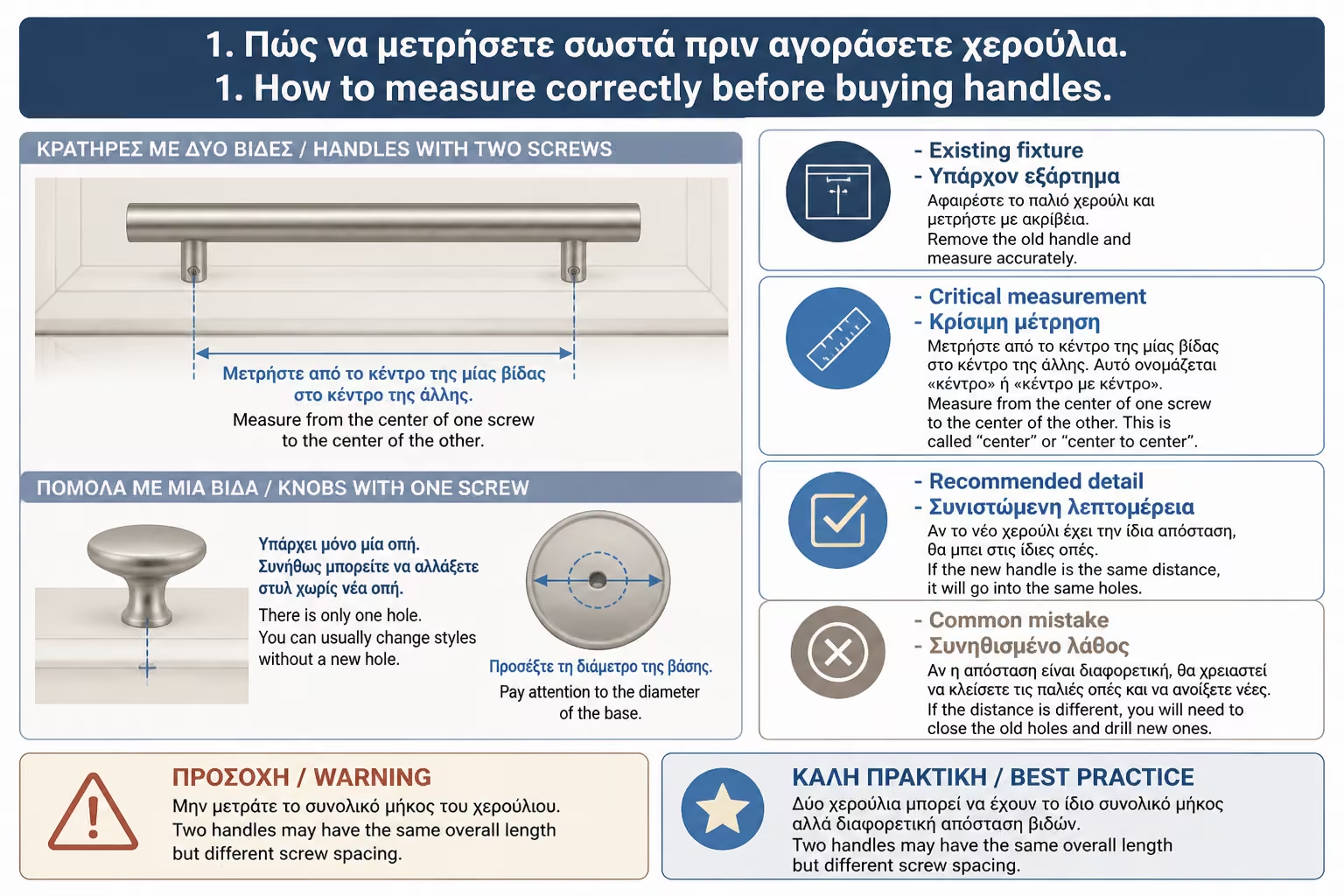
The most important technical point is the screw spacing. On handles with two screws, measure the distance from the center of one screw to the center of the other. This is usually called "center" or "center to center". We do not measure the overall length of the handle. Two handles may have the same overall length but different screw spacing.
Common distances are, for example, 96 mm, 128 mm, 160 mm and others. Before buying, remove an old handle and measure accurately. If the new handle is the same distance, it will go into the same holes. If it has a different one, you will need to close the old holes and drill new ones.
With single knobs, the matter is simpler, because there is only one hole. There you can usually change styles without a new hole. But pay attention to the diameter of the base of the new knob. If the old knob has left a mark around the hole, the new one must cover it or a local repair should be made.
Also measure the thickness of the door or drawer. The screws that come with the knobs don't always fit. If they are too short, they don't catch. If they are too long, they don't tighten properly or they may block internally. Many times it is necessary to purchase the correct length of screws.
If the new handles have different screw spacing, the job becomes more demanding. First you have to decide if it's worth it. If the furniture is painted or you plan to paint it, you can putty the old holes and drill new ones. If the furniture has a finished melamine or wood veneer, the old holes may be visible after the stucco.
On a white or painted surface, the stucco is easier to hide. In wooden melamine, it is difficult to achieve the same water and color. There it is better to choose a handle that covers the old holes or has the same distance. There are also long flat handles that can cover up marks, but they need to fit aesthetically.
If you drill new holes, use a guide or pattern. Do not count "by eye". Even a few millimeters of difference can be seen, especially in two doors side by side. Mark with a pencil, check with a spirit level or tape measure and drill carefully.
On shiny surfaces, tape the spot before drilling to reduce drill slippage and possible flaking. Use a proper drill bit for wood or MDF, not too big.
The direction of the grip greatly affects the image. In drawers, the handles are usually inserted horizontally. In cabinet doors, they can be inserted vertically close to the edge or horizontally, depending on the design. Vertical placement gives more classic functionality to doors. Horizontal gives a more modern and clean line, especially on wide facades.
If the furniture has two doors, the handles must be placed symmetrically. If they are too close together, they may look cramped. If they are too far from the edge, they can be uncomfortable. Ergonomics matter. The handle should be easy to grip with a wet hand.
On small doors, single knobs are often a safer choice. On large drawers, a long handle looks more correct. If you put a small knob on a heavy drawer, it may be uncomfortable and put more strain on it.
Before drilling, test the location with masking tape. Temporarily glue the handle or mark its outline and view it from a distance. Many times a position that looks right up close looks different when you look at the entire piece of furniture.
Most knobs are removed with a screwdriver from the inside of the door or drawer. Hold the knob from the outside by hand and unscrew from the inside. If the screw is rusted or spins without coming out, do not over-tighten as you may damage the hole or break the melamine.
If the old knob is caked with paint, cleaners or scale, work carefully around the base. Do not use a screwdriver as a pry bar on the faceplate, as this may leave a mark. If there is old silicone or glue, gently remove it.
After removal, clean the area. Often under old knobs there is a ring of dirt, scale or a different color because the surrounding surface has faded. If the new knob covers the mark, no problem. If it does not cover it, it must be cleaned or corrected before the new one is installed.
Keep the old screws until you are sure the new ones fit. Sometimes the screws on the new knobs are not the right length and the old ones can save you if they have the same thread.
If the new handles fit the old holes, the process is simple. Insert the screw from the inside, put the handle or knob on the outside and tighten by hand at first. Do not use too much force at once. You must first make sure that the screw is properly inserted into the thread.
Tighten with a screwdriver until secure. Do not over tighten. On melamine or MDF, too much pressure can dent the surface around the knob or damage the hole. If the handle wobbles while the screw is terminated, the screw is probably too long and needs a washer or a shorter screw.
For handles with two screws, loosen both screws first, then tighten gradually. If you tighten one fully before the other goes in, the handle may warp or be pressed incorrectly. Check alignment from the front before final tightening.
After installation, open and close the door or drawer a few times. See if the handle is comfortable, if it is in an adjacent door, if it rests against the wall or if it prevents use. Better to find out right away than after you have finished the whole piece of furniture.
In the bathroom, moisture resistance is critical. Knobs come into contact with wet hands, water vapors and cleaners. Cheap finish may look good in the shop but peel or rust quickly. That is why it is worth choosing materials of decent quality.
Stainless steel is a practical choice, especially for modern bathrooms. Well processed aluminum is also light and durable. Brass can be great, but it depends on the finish and the cost. Painted knobs, such as matte black, need a good quality coating to keep them from peeling.
Plastic knobs are available in budget solutions, but they often look cheap and can yellow or scratch. Ceramic knobs are beautiful but more fragile. Wooden knobs need protection from moisture.
Avoid very cheap metal knobs of unknown quality in a poorly ventilated bathroom. If they start to rust, they can stain the front of the furniture. The small extra cost in a better finish is often worth it.
Ideally, knobs should talk to faucets and accessories. If the faucet is chrome, inox or chrome handles are the safest choice. If you want matte black, make sure there is another black element in the space. If you want gold, repeat it in small details so it doesn't look like a random choice.
They don't have to be exactly the same. A bathroom can have a chrome faucet and black handles if there are other black elements. It may have gold knobs and a chrome faucet if the gold appears as a decorative detail. But there must be a balance.
If the bathroom is small, limit the finishes. One primary and one secondary is enough. For example: chrome faucet and black accessories. Or chrome faucet and wooden details. Or gold knobs and warm beige towels. When lots of different metals go in, the space looks disjointed.
Towels, mats and wash basin accessories help to "stick" the change. A new knob is a detail in itself. A new knob together with a matching dispenser and towel becomes an aesthetic direction.
In old furniture, new knobs can highlight the wear and tear. If the surface around the old knobs is yellowed, blistered or scratched, it may need to be cleaned, patched or painted first. Otherwise, the new handles will make the old facade look even older.
If the furniture has been recently painted, wait for the paint and varnish to harden well before screwing in new knobs. If you put them in too early, they can mark the fresh finish. Also, when tightening, be careful that the base of the knob does not "bite" the paint.
If you are going to paint the furniture, decide on the knobs first. If the holes are changed, they must be puttyed before painting. If you paint first and then decide you want another grip distance, you will create additional repairs.
On painted furniture, handles with a larger base can protect the surface from nails and everyday wear and tear. But if they are too big or heavy, they can look disproportionate.
A knob can be beautiful but uncomfortable. In the bathroom, hands are often wet or soapy. The handle should be easy to grip without slipping. Knobs that are too small, too sharp or too thin can be annoying in everyday use.
On drawers that have weight, prefer a handle rather than a small knob. The grip distributes the force better and is more comfortable. On small doors, the knob is sufficient. If there are children or the elderly, avoid handles with sharp corners that protrude too far.
Also check the door opening. If the handle protrudes too much, it may find itself in a wall, a cabin, a radiator body or another piece of furniture. In small bathrooms, a few centimeters make a difference. A nice big handle can become annoying if it rattles every time the door is opened.
Ergonomics is part of quality. A bathroom is not a shop window. It is a space for daily use. The knobs must look good but also work comfortably.
Changing knobs and handles is one of the most economical interventions in bathroom furniture. The total cost depends on the number of pieces, the material, the finish and whether new holes or repairs are needed.
The prices are indicative and depend on the region, the store, the quality, the brand, whether VAT is included and whether we are talking about a simple replacement or work with new holes. If the new handles fit the old holes, the cost is very low. If plastering and painting is needed, the job becomes part of a larger restoration.

| Product / Work | Indicative cost picture 2026 |
|---|---|
| Simple furniture knob | about 1–5€ / piece |
| Better metal knob | about 4–12€ / piece |
| Ceramic or decorative knob | about 3–15€ / piece |
| Simple furniture handle | about 2–8€ / piece |
| Matt black or inox quality handle | about 5–20€ / piece |
| Brushed Gold / Bronze | about 6–25€+ / piece |
| Screws of different lengths | around €1–3 |
| Putty for old holes | around €3–8 |
| Drill guide / pattern | around €5–20 |
| Installation by a technician as a minor task | case by case, often €30–€70+ |
The mistakes are small but they show a lot. A crooked handle on a vanity unit can be annoying every day. A cheap knob that rusts can ruin an otherwise nice renovation.
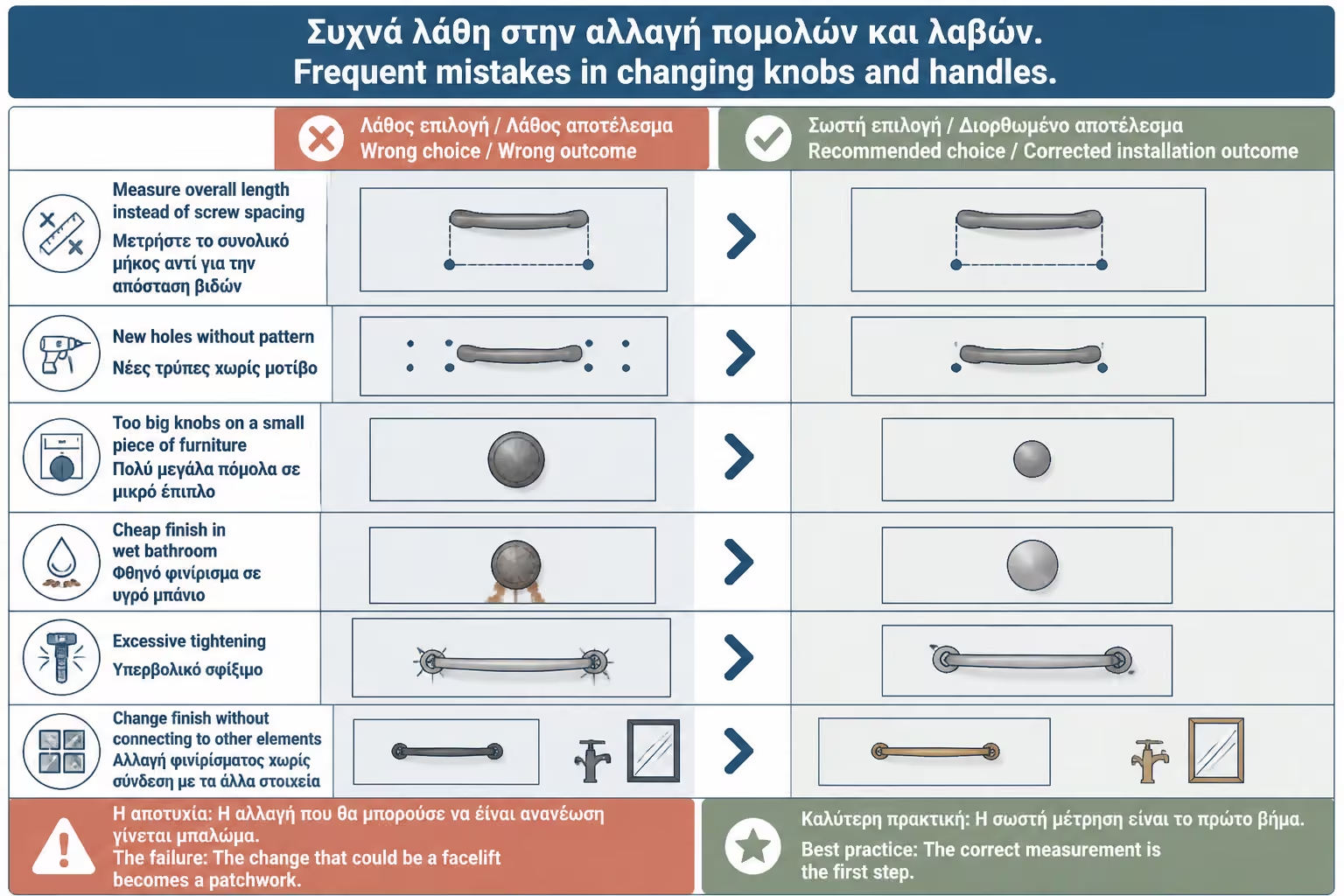
A classic example is buying really nice handles that are 128mm apart, while the old holes are 96mm. The owner drills new holes, but the old ones remain visible. The change that could be a facelift becomes a patchwork. That is why the correct measurement is the first step.
| Error | What does it cause? | Correct practice |
|---|---|---|
| Measure overall length instead of screw spacing | Buy the wrong handle | Center-to-center measurement |
| New holes without pattern | Crooked handles | Drill guide or careful marking |
| Too big knobs on a small piece of furniture | Disproportionate image | Door/drawer ratio |
| Cheap finish in wet bathroom | Rust or peeling | Quality material |
| Excessive tightening | Melamine pitting or ceramic cracking | A firm but not violent squeeze |
| Change finish without connecting to other elements | Random result | Repeat in 2–3 points |
| Applying fresh paint before it hardens | Paint marks | Wait until fully ripened |
| Ignoring ergonomics | Awkward opening | Test position before piercing |
If the change is simple, i.e. same holes and simple screwing, no technician is needed. But if new holes are needed in glossy melamine, old holes putty, facade painted, hinges replaced or doors aligned, it may be worth asking a handyman or carpenter for help.
A technician is also needed if the furniture is swollen, if the screws do not hold, if the drawer does not open properly or if the doors are crooked. New knobs will not fix a malfunction. If the door hangs, first adjust the hinges. If the MDF is rotted around the hole, the new screw may not tighten.
If the furniture is expensive or new, take extra care before drilling new holes. A wrong hole in a furniture front is not always easy to hide. In such cases, a drill guide or the help of a technician is a small cost in the face of damage.
In a rental home, avoid permanent changes without permission. Replacing the same type of knobs is usually reversible. The new holes are not.
| Inquiry | Yes / No |
|---|---|
| Have you decided on the style: vintage, minimal, industrial or natural? | Yes / No |
| Does the new finish match with faucets and bathroom accessories? | Yes / No |
| Was the center-to-center screw distance measured on the old grips? | Yes / No |
| Does the new knob or handle cover any old marks? | Yes / No |
| Are the screws the correct length for the thickness of the door? | Yes / No |
| Does the material withstand moisture and wet hands? | Yes / No |
| Has the position been tested before new holes are drilled? | Yes / No |
| Are the handles ergonomic and do not find a wall or other furniture? | Yes / No |
| If the furniture is painted, has the paint fully cured? | Yes / No |
| If new holes are needed, is there a pattern or guide? | Yes / No |
| If there is damage around the old holes, will they be repaired first? | Yes / No |
If the answer is “No” to measurement, material or location, don't buy yet. Knobs are a small purchase, but the wrong choice can leave permanent marks on the furniture.
Changing knobs is one of the fastest renovations in the bathroom, but it needs measurement before aesthetics. First measure the distance of the old screws, check the thickness of the door and see if the new knob covers old marks. Then choose a style. If you want a real facelift, don't just put on "nice" knobs. Connect them with the rest of the bathroom: faucet, mirror, dispenser, towel rail. When the same finish is repeated correctly, even a simple piece of furniture looks thoughtful.
Changing knobs and handles is a small intervention with a disproportionately large aesthetic effect. It can make a plain or boring bathroom furniture look vintage, minimal, industrial or more natural, without heavy work and without much cost. It is an ideal solution when the piece of furniture is functional but needs character.
But the result depends on the right choice. Distances must be measured correctly, moisture resistant material must be selected, there must be a proportion to the size of the door or drawer and the finish must match the rest of the bathroom elements. The detail shows. A well-placed handle upgrades. A crooked or mismatched grip spoils the image.
If the new handles go into the same holes, changing is quick and easy. If it needs new holes, plastering or painting, then it becomes part of a minor restoration and needs more attention. In any case, it is one of the smartest moves to give a new style to the bathroom without changing the entire piece of furniture.
Return to category.
Go to categoryReturn to the central guide.
Go to guide