
Bathroom DIY, Maintenance & Styling
Return to category.
Go to categoryThere are changes in the bathroom that seem small, but affect the entire feel of the space. Replacing an old, bulky mirror-cabinet with a modern round mirror and hidden LED lighting is one of them. You don't change tiles, you don't move plumbing, you don't take out the vanity unit. And yet, the bathroom can immediately appear lighter, deeper, more modern and more "hotel-like".
The old mirror-cabinet, the classic pharmacy above the sink, has been a practical solution for many years. It provided storage space, hid medicine, razors and small items and often had a built-in light. But in many bathrooms it ends up visually weighing down the space. It protrudes from the wall, creates a shadow, narrows the area above the sink and makes the bathroom look smaller or older than it is.
Instead, a thin round mirror acts as an architectural element. It softens the many straight lines of the bathroom, breaks the geometry of the tiles, gives a softer feel and creates a visual center. When combined with hidden LED lighting, i.e. lighting behind or around the mirror, the wall gains depth. The mirror doesn't just look stuck to the wall; it seems to "float", creating atmosphere and a more accurate image.
This change is particularly effective in small bathrooms. There every centimeter and every volume counts. When a deep cabinet is removed from the wall, the space around the sink breathes. The round mirror reflects light better, while the LED lighting reduces harsh shadows. The result is not only aesthetic. The way we perceive the size, height and cleanliness of the bathroom is changing.
In this guide we'll see when it's worth removing an old mirror-cabinet, how to choose the right round mirror diameter, what to look out for in hidden LED lighting, how to install it safely, what role cables and humidity zones play, when an electrician is needed and how not to lose the storage space that the old pharmacy offered.
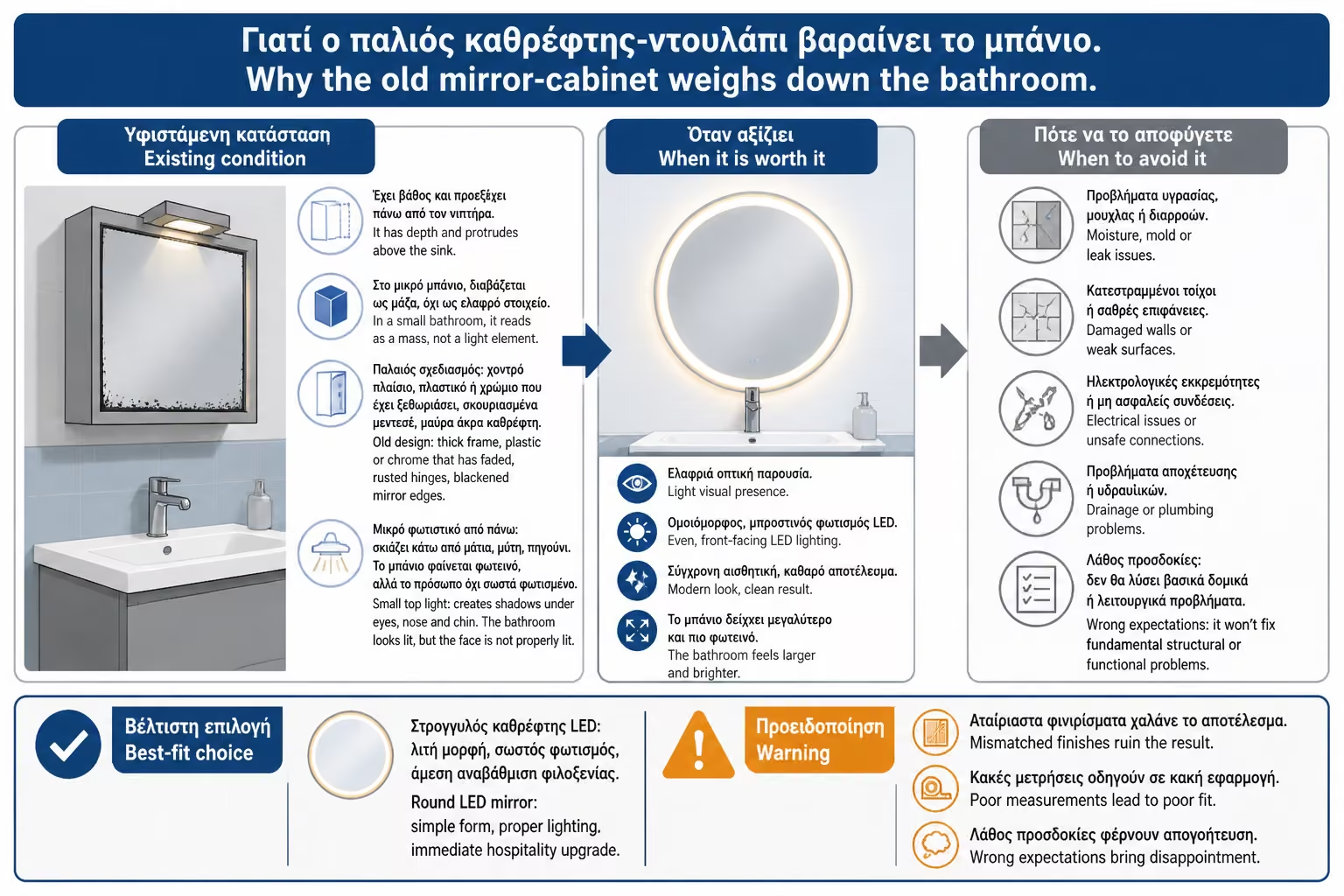
The classic mirror-cabinet has depth. This means it's not just a reflective surface on the wall. It is a box that protrudes above the sink. In large bathrooms this may not be so visible. In small bathrooms, however, its volume is immediately felt. The eye reads him as a mass, not as a light element.
Many such cabinets also have an old design: a thick frame, plastic or chrome finishes that have faded, a small built-in light, a yellowed diffuser, rusted hinges or a mirror with blackened edges. Even if the rest of the bathroom is clean, this item can make it look dated.
Their lighting often doesn't help. A small lamp above the mirror casts light from above, creating shadows under the eyes, nose and chin. For shaving, makeup or daily grooming, this is not ideal. The bathroom looks lit, but the face is not properly lit.
There is also the issue of clutter. Because the cabinet has storage, it is often filled with old medicines, cosmetics, razors and small items. The more crowded it is, the more uncomfortable it becomes. The door opens above the sink, objects fall out, and the furniture becomes an old "box" that no one wants to open.
The round mirror changes the geometry first. Most bathrooms have a lot of straight lines: square tiles, rectangular sink, cabinet with doors, linear towel rails, cabinet, door. A circle breaks this strictness and makes the space friendlier to the eye.
It also changes the sense of depth. A slim mirror sits closer to the wall than a cabinet. So the area above the sink is freed up. The gaze does not stop at a bulky object, but is reflected back into space. This makes the bathroom look more open.
The round mirror works very well above vanity furniture with clean lines. If the furniture is rectangular, the circle creates balance. If the faucet is black, chrome or gold, the frame or the absence of a frame on the mirror can be connected to the style of the room. A black slim round mirror gives a more industrial/minimal look. A frameless LED mirror gives a cleaner, spa effect.
In a small bathroom, the round mirror can make the wall look less "loaded". In a guest WC, especially, changing from a pharmacy to a round mirror is one of the most powerful cosmetic interventions at a relatively low cost.
The hidden LED lighting behind the mirror creates a bright halo on the wall. This halo makes the mirror stand out from the surface and appear lighter. The eye perceives the light behind the object as depth. Thus, the wall does not look flat and dark, but more "alive".
This lighting should not always be confused with the main face lighting. Many LED mirrors give ambient or supplemental light, not necessarily enough for shaving or makeup. If the mirror has a perimeter front light, then it can illuminate the face better. If it only has back lighting, it creates a beautiful atmosphere, but maybe it needs another light.
Color temperature is important. Very cold light makes the bathroom look harsh and "medical". Very warm light can distort the image of the face and the colors. For bathing, a neutral or slightly warm option is usually more pleasant. If the mirror has an adjustable temperature, even better, because you can choose according to the use.
Recessed lighting works best when the wall behind the mirror is clean and relatively even. If the wall has very strong patterns, deep embossed textures or old tiles with strong differences, the light can highlight the imperfections. That's why before choosing an LED mirror, look at what will light up behind it.
It's worth removing it when its bulk weighs down the space, when it's worn out, when the mirror is blackened at the edges, when its light is old, or when you don't really use its storage space. If the cabinet is difficult to open, if the hinges are rusted, or if the interior smells damp, replacement is even more reasonable.
It is also worth it when you want to change the aesthetics of the bathroom without a major renovation. The sink area is the most photographed part of the bathroom. If the mirror and lighting change, the first impression changes. This is especially true in rentals, Airbnbs, guest WCs and small bathrooms where you don't want to spend a lot.
It's not worth removing without a storage plan if the medicine cabinet is the only place where everyday items fit. If you take it out and then the counter is filled with medicines, cosmetics and razors, the bathroom will look messier than before. The aesthetic change must be accompanied by a new organization.
It's also not worth removing it yourself if you don't know how it's attached or if it has a built-in electric light. Behind the old cabinet there may be cables, holes, worn tiles or old connections. Removal must be done safely.
The old apothecary may be ugly, but it offers storage. When replaced by a flat mirror, this space is lost. If you don't anticipate it, things will end up on the sink. So you'll have a more modern mirror, but a messier counter.
The solution is to organize the small items elsewhere. A shallow cabinet can be placed elsewhere, a small shelf above the basin, an organizer inside the vanity unit, baskets in a drawer or a small wall shelf next to the mirror. The important thing is not to create new visual chaos around the mirror.
If the bathroom is very small and there is no storage at all, it may be worth choosing a mirror-cabinet with a more modern design instead of a simple round mirror. There are slim cabinets with a mirror and built-in LED that are more elegant than the old medicine cabinets. They do not give the same lightness as a round mirror, but they retain practicality.
A good rule of thumb: if the old medicine cabinet is full of things you use every day, first sort out the storage. If it's full of old medicines, empty boxes and forgotten cosmetics, then removing it is an opportunity to clean up.
The diameter of the mirror should match the width of the vanity unit and the wall. If it is too small, it will look like a decoration rather than a functional mirror. If it is too big, it can visually squeeze the space or find on lamps, shelves and tiles.
For small vanity units of 50–60 cm, a mirror of about 50–60 cm can work well. For a 70–80 cm piece of furniture, a 70–80 cm mirror gives a more balanced image. For wider counters, a larger mirror or two mirrors may be needed, depending on the composition.
The mirror does not have to be exactly the same width as the piece of furniture. It often looks better when it is a little narrower, leaving "breathing" left and right. But if he is too small, he loses his presence. The ratio should be tested visually. You can cut out a piece of cardboard or mark a circle on the wall with masking tape before buying.
Be careful with the height. If the mirror is too low, it will splash and may interfere with using the faucet. If it's too tall, it won't accommodate shorter people. The center of the mirror should serve the primary users of the bathroom, not just look good in the photo.
The round mirror is the most striking change when you want to break the straight lines. It gives a softer, modern and decorative image. It suits small bathrooms, guest WCs and areas where the washbasin is in a prominent place.
The oval mirror is more elegant and can give height. It is a good choice when the wall is narrow or when you want the space to appear taller. A vertical oval mirror above a small sink can make the bathroom look slimmer and neater.
The rectangular LED mirror is more practical when you want a larger reflective surface or when the bathroom already has a very modern line. It's also best over a wide piece of furniture with two sinks or a large counter. It doesn't give the same "smooth" change as the circle, but it's more functional in some layouts.
If the goal is to replace an old bulky pharmacy and change the sense of depth, a round or oval mirror usually gives a more pronounced facelift. If the goal is maximum functionality and clear light, a good rectangular mirror may be more practical.
The LED mirror is not just a mirror. It is an electrical device in a humid area. It must be suitable for bathing, have the right degree of protection for the position where it will be inserted and be installed safely. We do not buy any decorative LED mirror without checking if it is intended for a wet area.
See if the lighting is perimeter front, rear, or both. Back lighting gives atmosphere and depth. Front lighting helps the face more. If the mirror will be the main washbasin lighting, prefer a model that illuminates sufficiently forward, not only towards the wall.
Check the color temperature. Some models have a constant cold light, which you may not like in everyday life. Some have a warm/neutral/cool setting. Some have dimmers. If the bathroom is small and the mirror is used at night, the lower intensity option is useful.
Also see if it has an anti-glare function. It is practical, but consumes extra current and needs a proper connection. If it has a touch switch, check if its position is convenient for you. In a bathroom with high humidity, the electronic functions must be reliable and suitable for use.
Replacing a light fixture or connecting an LED mirror in the bathroom should not be done casually. The bathroom is a place with humidity and specific safety requirements. If the old mirror-cabinet had a light, there are probably wires behind it. These must be checked, properly isolated and connected in a safe manner.
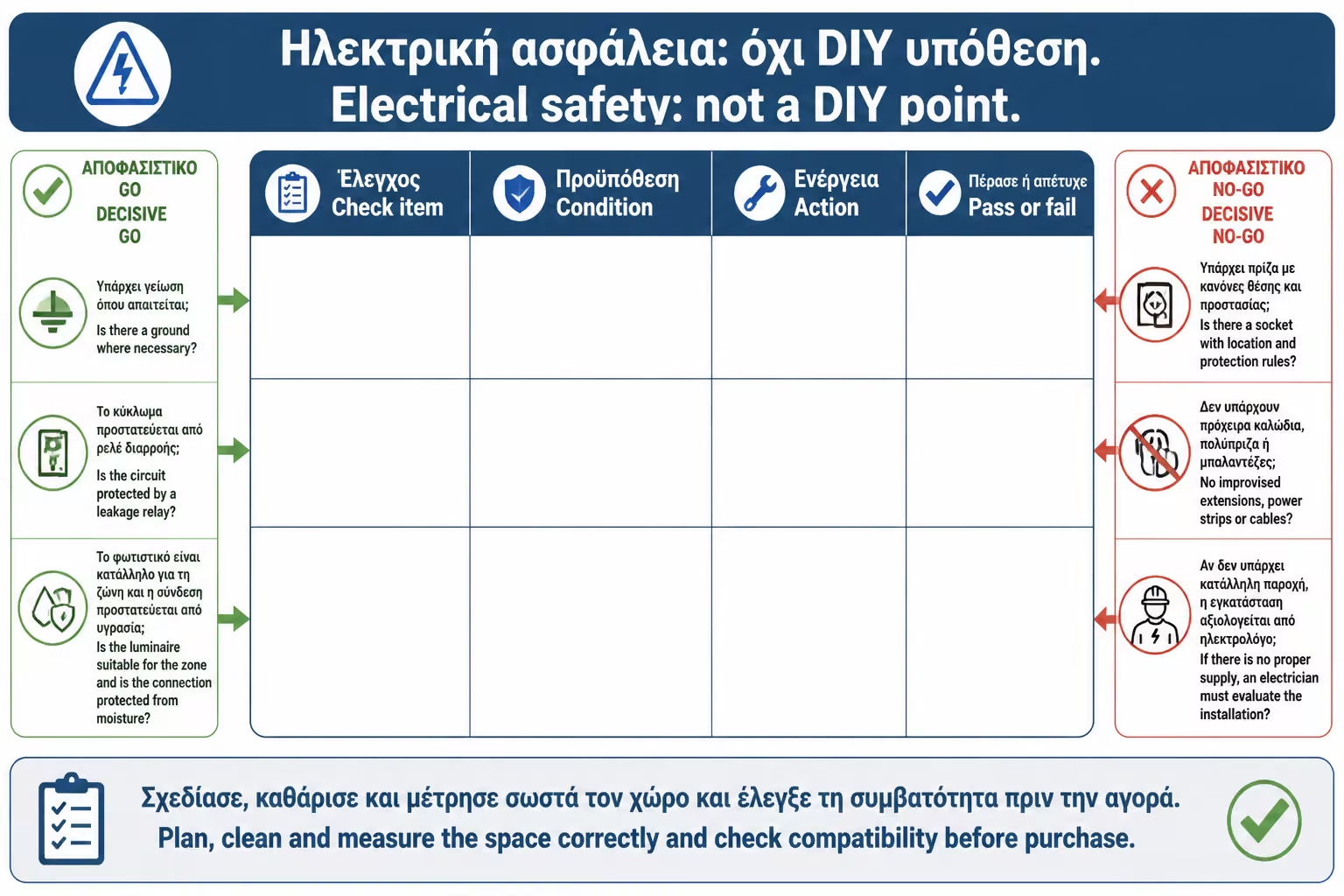
Electrical connection work must be done by an electrician. It is not enough to "connect two wires" because the old lamp also turned on. It should be checked that there is a ground where necessary, that the circuit is protected by a leakage relay, that the luminaire is suitable for the zone in which it is located and that the connection is protected from moisture.
If the new mirror has a plug and socket, you still need to be careful. Sockets in the bathroom have location and protection rules. Do not create improvised extensions, power strips or cables behind mirrors in a wet area. If there is no proper supply, an electrician must evaluate the installation.
The aesthetic change should not be made at the expense of safety. A beautiful LED mirror with the wrong connection is a bad intervention. In any bathroom electrical installation, safe installation is more important than speed.
Before removing the old pharmacy, empty it completely. Remove shelves, medicine, glassware, and anything else that might fall. If it has a light, turn off the power at the panel and don't just rely on the switch. Disconnection must be done by an electrician if cables are present.
Check how it is attached. Some cabinets are screwed into a tile or wall. Others have hidden bases. Others may also have glue or silicone around the perimeter. Do not pull suddenly. A heavy cabinet can fall and break a sink, tiles or mirror. Ideally, removal is done with two people.
After removal, the actual condition of the wall will be seen. There may be holes, old screws, rust, unpainted spots, different tile color or silicone residue. This is to be expected. Before installing the new mirror, they must be cleaned and repaired as necessary.
If there is moisture, mold or a swollen wall behind the cabinet, do not rush to cover the spot with a new mirror. First the cause must be found. There may be condensation, a leak from above, poor ventilation, or old silicone that held moisture.
Removing the old mirror usually leaves holes. If the new mirror covers the old holes, the repair is simpler but should not be completely ignored. It's a good idea to remove old, protruding shingles, clean spots, and plug holes that may be showing or holding moisture.
If the holes are in a tile, their complete disappearance is difficult. They can be covered with the new mirror or careful filling in a close color, but they won't always be invisible. This must be taken into account in the diameter and position of the new mirror. Sometimes we choose a slightly larger mirror to cover old marks.
If the wall is painted, the holes are puttyed, sanded and painted locally or all over. Pay attention to the color difference. An old color may have faded, so local staining may show. In a small area behind a mirror, this may not bother us if it is covered.
If you plan to put self-adhesive tiles or other decorative trim around the mirror, the holes must again be firm and level. We do not stick lining on loose bumps, dust and lumps.
The mirror should be placed based on the sink, the height of the users and the existing power supply if it is LED. We usually want the center of the mirror to be at a height that comfortably accommodates the face of the primary users. There is no absolute height for all houses, because the height of furniture and people varies.
Before drilling, test the location with masking tape. Mark the circle or outline on the wall and look from the bathroom entrance. See if the mirror is centered over the sink or if it needs to be aligned with the cabinet. In some bathrooms, the sink is not exactly in the center of the wall. You have to decide whether to center with the sink or the wall. We usually center with the sink.
If there are tiles with joints, their lines can help or confuse. Don't just rely on the eye. Use a spirit level and yardstick. A round mirror that is slightly off-center is easier to see than you think.
Support must be appropriate for the weight. LED mirrors can be heavier than a regular mirror. They need the right footing, the right screws and a stable substrate. If the wall is plasterboard, special plugs or reinforcement are needed.
The lighting behind the mirror is impressive, but it doesn't always illuminate the face properly. For everyday use, the ideal is that the light comes from the front or from the side as well, so that shadows are reduced. If the LED mirror only has a backlight, an additional ceiling light or side sconces may be needed.
If you shave or apply makeup in the bathroom, pay attention to color rendering and intensity. A light that looks pretty in a photo may not be practical enough. If it is too low volume, it will create atmosphere but not functionality. If it is too strong and cold, it will tire.
The position of the lighting in relation to the mirror matters. A lamp only from above creates shadows. Side or perimeter lighting is more flattering and practical. Many modern mirrors with front LED strip are designed for exactly this.
If the old mirror-cabinet had a built-in light and you removed it, make sure the new lighting meets your needs. Don't just make up your mind based on what the mirror looks like. The bathroom needs both atmosphere and functional light.
Every light fixture or electric mirror in the bathroom must be suitable for its location. The degree of protection IP indicates the resistance of the device against dust and water. In a bathroom, the requirement depends on how close it is to a shower, bathtub, sink and whether it receives direct splashes or only moisture.
Not all positions are the same. A mirror above a sink in a well-ventilated WC has a different strain than a mirror too close to a walk-in shower without a cabin. If the mirror receives frequent drops, it needs more protection. If it's in a drier spot, the requirements are different, but it still has to be a bath product.
Selection and connection must be checked by an electrician. It is not enough that the product says "LED mirror". It must fit the installation location. Also, the power supply must be properly protected and no rough connections are left behind the mirror.
If you are unsure of the humidity zone or suitability, don't risk it. Ask an electrician before purchasing. It is better to choose the right product from the beginning than to buy a beautiful mirror that should not fit where you want it.
The modern LED mirror looks best when the wires are out of sight. If there is already power behind the old mirror, the electrician can cleanly connect the new mirror as long as the location fits. If the supply is too high, too low or to the side, a move or coverage solution may be needed.
Exposed wires spoil the effect. An expensive mirror with a cord that runs down to an outlet looks sloppy and can be dangerous in a bathroom. If there isn't a proper supply, don't improvise with extensions. The clean electricity solution is part of the renewal.
In some bathrooms, the old medicine cabinet connection may be inside the cabinet and not match the location of the new mirror. This should be checked before buying. Measure where the wire exits and see if the new mirror covers it. If not, it will show or need a transfer.
Planning before buying saves a lot. We don't first choose a mirror and then find out that the cable comes out 20 cm further. First we check existing condition, then we choose dimension and model.
When the old medicine cabinet comes out, the wall behind it may be in worse shape than the rest of the bathroom. It may have a different color, old marks, holes, dirt or tiles that were never cleaned. This should not be overlooked, because the new mirror is usually smaller in coverage area than the old cabinet. So some points that were hidden before can now be seen.
If the wall is painted, you may need to paint the entire area around the mirror. If it has tiles, clean them well of salts and old silicones. If there are holes in places that will be visible, cover them as discreetly as possible or choose a larger mirror/frame that covers them.
A nice solution is to create a new zone behind the mirror: peel & stick self-adhesive tiles on a rental, special resistance paint on a painted wall, a small shelf or decorative frame. But the solution must be compatible with humidity and with the condition of the wall.
If there is mold or moisture behind the old cabinet, we don't just move on to a new mirror. First the cause is identified. It could be poor ventilation, a leak, condensation, or the old cabinet itself was trapping moisture. If you cover the spot, the problem may persist.
Some old mirrors are not screwed but glued with special glue or silicone. Removing them is more dangerous, because the mirror can break. We don't try to pry it off by force or with a screwdriver behind the glass. There is a risk of injury and damage to the tiles.
If the mirror is large or old, it is best to have it removed by a technician. It needs protection, tape on the glass, suitable adhesive cutting tools and two people. Glass is dangerous when broken, especially in a small bathroom with porcelain and hard surfaces around.
If it cannot be easily removed, there is also the solution of working on or around it, but it is not always aesthetically ideal. Sometimes a new frame is inserted around the existing mirror or another intervention, such as lighting and accessories, is chosen instead of a complete replacement.
If the mirror is blackened at the edges from moisture, the frame can temporarily hide it. But if you want a clean modern effect, replacement is usually better, as long as it's done safely.
The new mirror must match the rest of the elements. If you choose a black frame, it is good to have another black element: furniture handles, dispenser, hook, towel rail or faucet. If you choose a frameless mirror with LED, the effect is more neutral and can be combined with many finishes.
If the bathroom has brushed gold on knobs or accessories, a mirror with a thin gold frame can tie in nicely. But pay attention to the shade. Too yellow shiny gold can look cheap next to more satin finishes. The brushed or champagne finish is usually more elegant.
If the tiles are bold or old, the mirror should calm the space, not add extra intensity. A clear round mirror with subtle light can balance retro tiles. If you choose too strong a frame, the result can load.
The mirror is a central element. When changing, it is worth changing 2–3 small details around it: dispenser, cup holder, hand towel, furniture knobs or ceiling lighting. So the result looks complete and not like a single replacement.
The LED mirror needs a gentle cleaning. Use a microfiber cloth and a cleaner suitable for mirrors, applying it to the cloth and not directly to the edges or electronic parts. Do not allow liquid to run behind the mirror. The edges of the mirror and the electronics must be protected from water.
Avoid harsh cleaners, ammonia in excess, abrasive cloths or products that leave a film. If the mirror has an anti-glare surface or touch switch, follow the manufacturer's instructions. Do not spray cleaner on the switch.
Bathroom ventilation also helps the mirror. If the space fills with water vapor and stays wet for a long time, the edges of the mirror and the electronics are stressed more. Venting after a shower not only protects joints and mold, but also electrical and metal components.
If there is flickering, moisture inside the mirror, noise from the power supply or a problem with the touch switch, do not open it yourself. Call an electrician or contact the supplier, especially if it is under warranty.
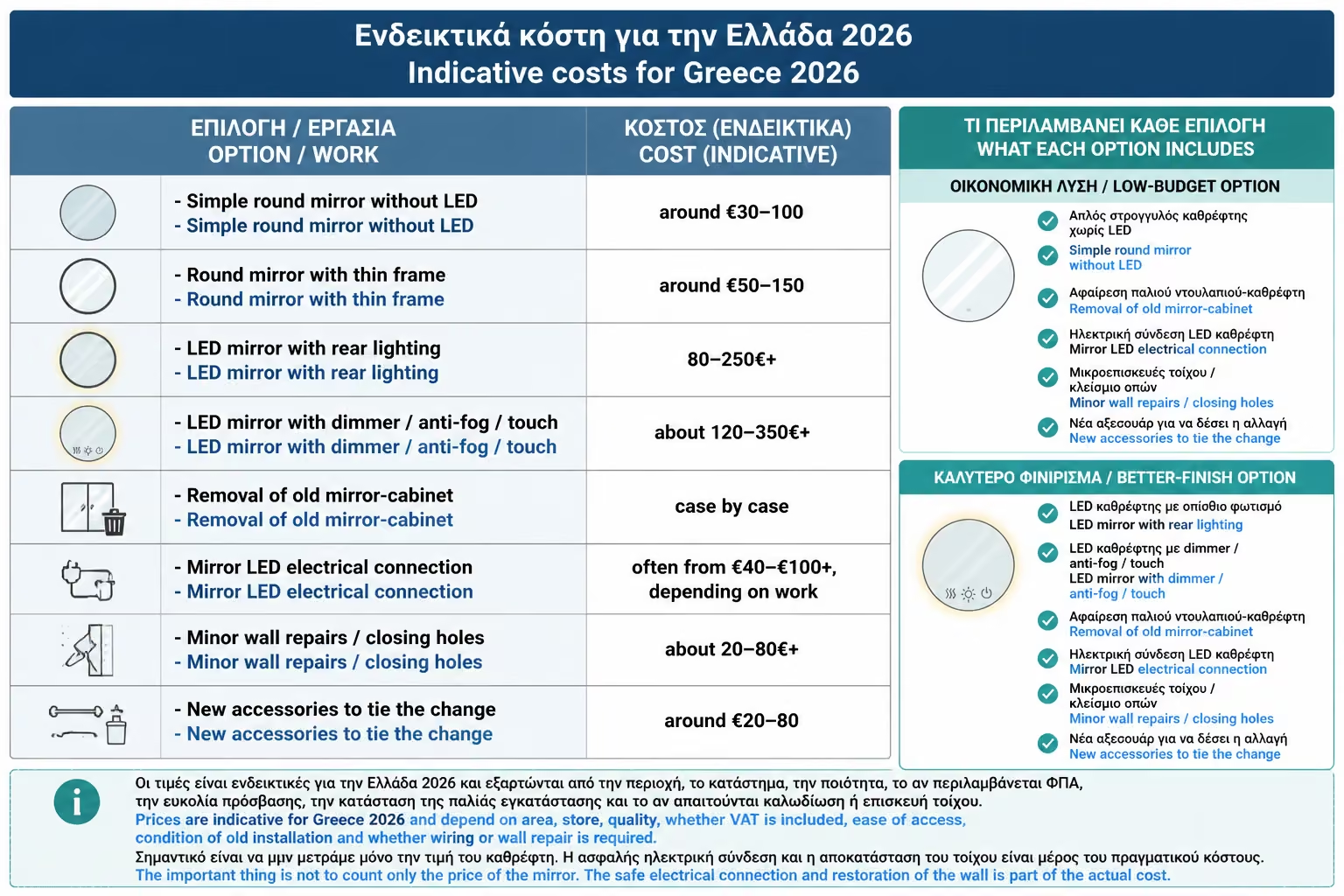
The cost depends on the diameter, quality, whether there is LED, anti-glare function, dimmer, touch switch, frame and mounting. A simple round mirror is economical. A good LED mirror with functions costs more, but it changes the image a lot.
Prices are indicative and depend on area, store, quality, whether VAT is included, ease of access, condition of old installation and whether wiring or wall repair is required. The important thing is not to count only the price of the mirror. The safe electrical connection and restoration of the wall is part of the actual cost.
| Product / Work | Indicative cost picture 2026 |
|---|---|
| Simple round mirror without LED | around €30–100 |
| Round mirror with thin frame | around €50–150 |
| LED mirror with rear lighting | around 80–250€+ |
| LED mirror with dimmer / anti-fog / touch | about 120–350€+ |
| Removal of old mirror-cabinet | case by case |
| Mirror LED electrical connection | often from €40–€100+, depending on work |
| Minor wall repairs / closing holes | about 20–80€+ |
| New accessories to tie the change | around €20–80 |
| Complete small basin facelift | around €150–€500+, depending on options |
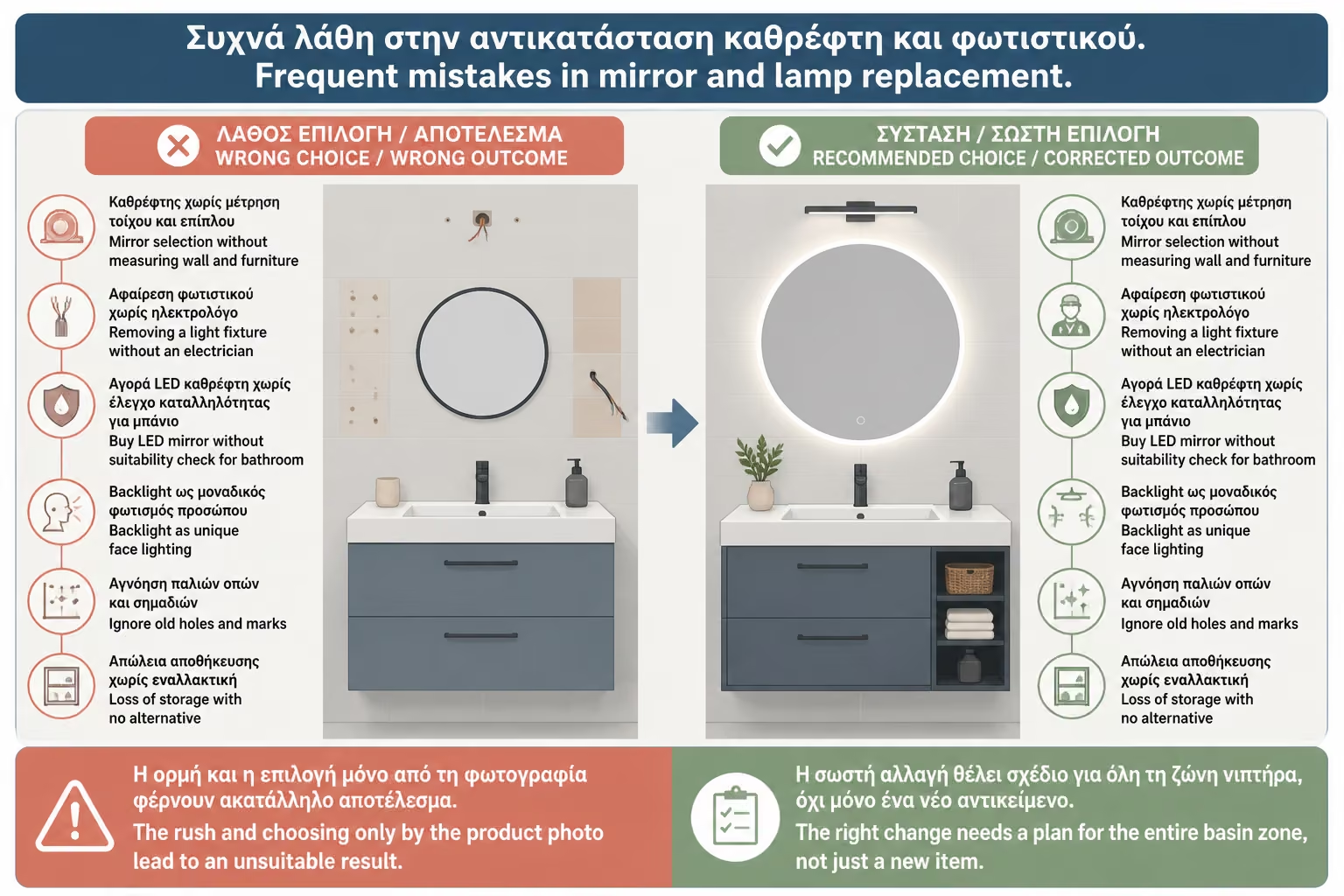
The most common mistakes come from haste and from choosing only based on the product photo. The mirror can be beautiful, but not suitable in dimension, lighting, cables or humidity.
A classic example is removing a large apothecary and installing a small round mirror without restoring the wall. Suddenly you see old holes, a different color of tiles and a cable on the side. The mirror is beautiful, but the result looks unfinished. The right change needs a plan for the entire basin zone, not just a new item.
| Error | What does it cause? | Correct practice |
|---|---|---|
| Mirror selection without measuring wall and furniture | Disproportionate effect | Tape and Dimension Test |
| Removing a light fixture without an electrician | Risk of electric shock or incorrect connection | Power outage and professional connection |
| Buy LED mirror without suitability check for bathroom | Danger in wet area | IP and location control |
| Backlight as unique face lighting | Atmosphere but little functionality | Additional front/side lighting |
| Ignore old holes and marks | Rough image around the new mirror | Wall repair before installation |
| Loss of storage with no alternative | Clutter on the counter | New organizer or shelf |
| Very cool LED light | Hard, unflattering feel | Neutral or adjustable light |
| Visible cables | A sketchy and possibly dangerous result | Hidden secure connection |
An electrician is needed every time there is an LED mirror connection, disconnection of an old light fixture, supply transfer, socket check or switch change. The bathroom is a wet area and safety is not a DIY affair. Even if the task seems simple, the wrong connection can be dangerous.
A technician or experienced installer is needed if the mirror is large, heavy, glued or if tiles need to be drilled. Drilling tile requires the right tool and care. A cracked tile behind the mirror may not be immediately visible, but it is damage that is difficult to repair.
A technician is also needed if the wall behind the old cabinet has moisture, mold or wear. Before the new mirror goes in, you need to know why the problem exists. If it is simple surface dirt, it is cleaned. If it is a leak or condensation, it needs to be dealt with.
If the change is made in a rented house, it is good to have an agreement with the owner, especially if a permanent cabinet will be removed, a light fixture will be changed or new holes will be made. A mirror may be a "decorative" object, but the electrical and wall mounting are permanent interventions.
| Inquiry | Yes / No |
|---|---|
| Has the width of the vanity unit and the available wall been measured? | Yes / No |
| Has the new mirror been taped to the wall for diameter? | Yes / No |
| Is there alternative storage for what the old pharmacy had? | Yes / No |
| Have you checked how the old cabinet is attached? | Yes / No |
| Has an electrician been provided to disconnect and connect lighting? | Yes / No |
| Is the new LED mirror suitable for use in a bathroom? | Yes / No |
| Does the position of the mirror not receive direct splashes from the shower or bathtub? | Yes / No |
| Is the mirror lighting sufficient for everyday use and not just for ambiance? | Yes / No |
| Have old holes, marks and possible wall repairs been accounted for? | Yes / No |
| Can the cables be hidden in a safe and clean way? | Yes / No |
| Does the new finish match batteries, knobs and accessories? | Yes / No |
| If the house is rented, is there permission for the intervention? | Yes / No |
If the answer is “No” to the electrician, mirror LED suitability or old holes, don't proceed yet. The change seems simple, but it touches safety, support and final image.
Replacing a mirror can change the bathroom more than many decorations combined, but it needs planning. Before you buy a round LED mirror, measure the wall, check where the wires come out and see what it will look like when the old pharmacy is gone. Hidden LED lighting adds depth and atmosphere, but is not always a substitute for proper face lighting. And since we are talking about electricity in a bathroom, the connection must be made by an electrician. A beautiful image is only worth it when it is also safe.
Replacing an old cabinet mirror with a modern round mirror and hidden LED lighting can transform the sink area. It removes visual weight, opens up the space, creates depth on the wall and gives a more modern, clean and neat image. In small bathrooms, this change can almost seem like a minor renovation.
But the result depends on the correct choice and placement. The mirror must have the right diameter, fit at the right height, provide practical lighting and be suitable for a bathroom. The old wall behind the pharmacy needs to be checked, cleaned and repaired. The cables must be properly hidden and the electrical connection made securely.
If storage is lost, it must be replaced with smarter organization. If the LED lighting is only ambient, supplemental light may be needed. If there are any old holes or moisture, they need to be fixed before the new mirror goes in. With proper planning, changing mirrors and lighting is one of the most effective interventions to make a bathroom look bigger, brighter and much more modern.
Return to category.
Go to categoryReturn to the central guide.
Go to guide