
Bathroom DIY, Maintenance & Styling
Return to category.
Go to categoryIn most bathrooms, the biggest problem isn't just square footage. It is that the available space is not being used properly. The sink has little surface area, the furniture fills up quickly, the products end up on the cistern, the towels hang wherever there is a place and the counter always looks loaded. And yet, very often there is an entire wall that remains unused: above the basin, next to the door, above the radiator, next to the mirror or in a narrow vertical zone that does not fit a cabinet.
That's where hanging shelves come in, also known as floating shelves. It is one of the simplest and most efficient solutions to gain storage space without closing the bathroom with heavy furniture. One or two wooden shelves can accommodate towels, toilet paper, small baskets, perfumes, plants, everyday bottles or decorative items. The bathroom becomes more organized and at the same time "warmer", because the wood softens the cold image of the tiles and sanitary ware.
The great advantage of floating shelves is that they do not step on the floor. So they don't steal valuable movement space, they don't make mopping difficult and they don't make the bathroom look heavy. In small bathrooms, this is of huge importance. A closed cabinet above the basin can appear bulky. A thin wooden shelf, on the other hand, adds function without "suffocating" the space.
But bathroom shelves are not just decoration. They must be properly supported, resistant to moisture, fit at the correct height and not obstruct the use of the basin, door or mirror. A beautiful shelf that is too low above the cistern can be annoying when you sit down. A deep shelf next to the door can be found on the leaf. An unprotected wooden shelf in a steam bath can swell or turn black.
In this guide we'll look at where it's worth placing hanging shelves in the bathroom, what dimensions to choose, what materials hold up best, how to safely support them on a tile or wall, what to avoid in rental homes and how to organize them to provide storage without becoming a new source of clutter.
The bathroom is usually a small space with many fixed functions. The basin, the sink, the bath or shower, the door and the radiator occupy the basic zones. Thus, the owner first thinks horizontally: where a piece of furniture will fit, where a basket will fit, where a cupboard will fit. But people often forget to look up at the wall.
Above the toilet, for example, there is usually a large empty surface. If there is a built-in cistern, the wall above remains completely empty. If there is a low-pressure cistern or a classic outdoor cistern, there is often space above it. This belt is perfect for light storage: paper rolls, small baskets, decorations, hand towels.
Next to the door there is often a narrow vertical strip of wall that does not fit a normal cabinet. There, a shallow shelf can provide space for a perfume, a small case, a decoration or folded towels. The same applies to a narrow zone next to the mirror or above the washing machine, if there is one in the bathroom.
Vertical space is valuable because it doesn't affect traffic flow as much. However, if used incorrectly, it can become annoying. The secret is to choose shallow, properly placed shelves and not deep ones that protrude dangerously.
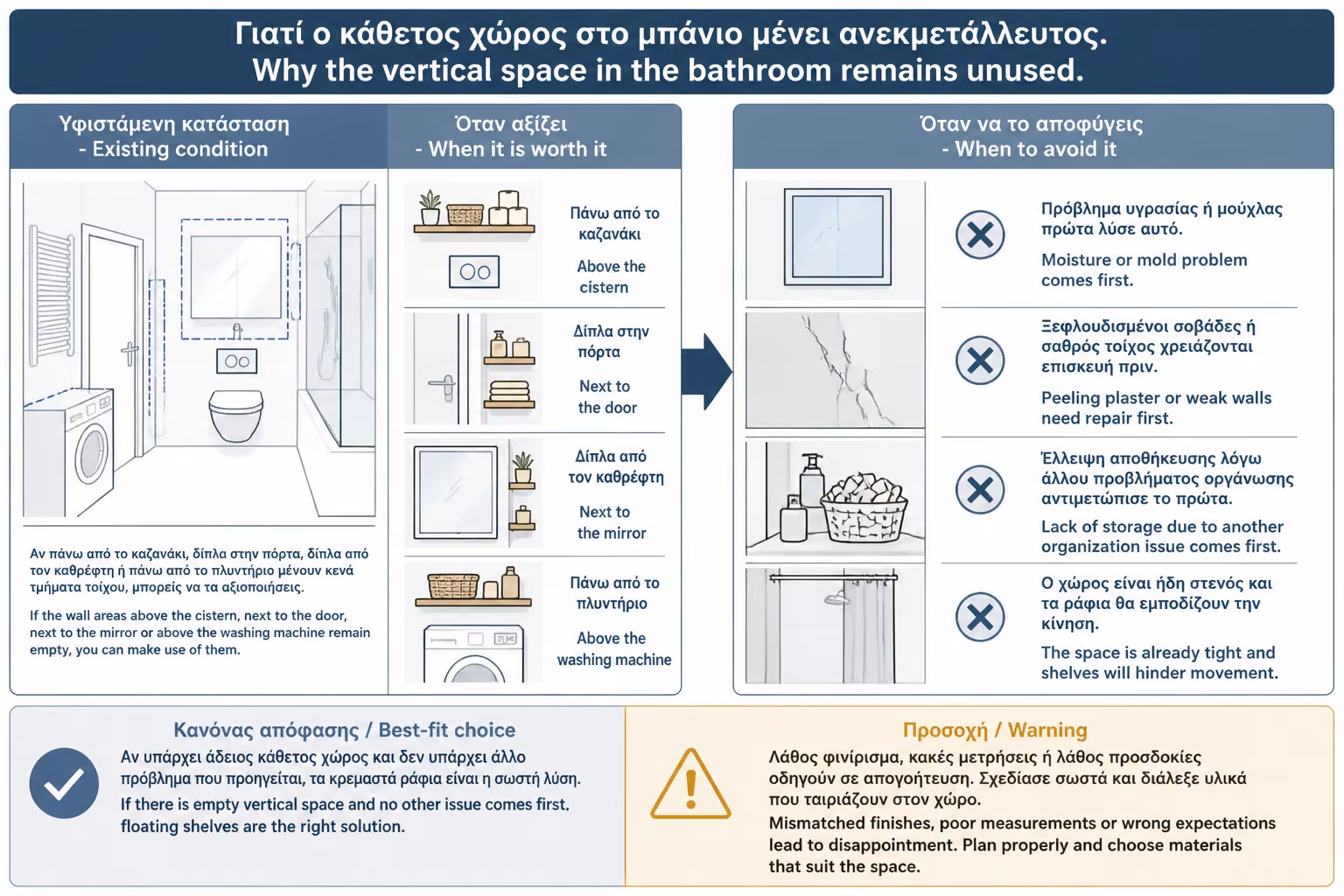
The most classic position is over the toilet. It is "dead" space, it is visible when you enter the bathroom and can be organized nicely. Two wooden shelves above the basin can instantly change the image of the wall, especially if combined with baskets, folded towels and small plants.
Second best place is next to the mirror or the sink if there is a side wall. There the shelves can hold everyday items, but care must be taken not to fill them with products and spoil the image. If they are placed next to the mirror, they must be shallow and in line with the style of the room.
Third place is next to or above the door. A tall shelf can be placed above the door for things that are not used every day, such as extra papers, towels or supplies. It is not so directly accessible, but it takes advantage of space that otherwise remains empty. Narrow shelves or small stands can be placed next to the door.
Fourth place is above washer or dryer, if they are in the bathroom. There the shelves can organize detergents, baskets and small items. In this case, however, they must be more functional and durable, not just decorative.
If the bathroom has a tub or shower, avoid shelves in a zone that gets wet immediately, unless they are specifically designed for a wet zone. Wooden floating shelves above the bathtub may look beautiful, but if they are constantly exposed to water vapor and splashes, they will suffer.
The area above the toilet is ideal, but it needs the right height. The first shelf should not be so low that you feel it "falls" on your head when you sit down. There must be enough clear space above the cistern and basin. In general, the first shelf is placed high enough not to feel pressure, but low enough to be accessible.
If there is an external cistern, make sure that its lid opens and that the mechanism is accessible. Do not place a shelf so close that it makes it difficult to repair or adjust the cistern. If there is a built-in cistern with a board, do not obstruct access to the board or maintenance cover.
The depth of the shelf above the basin should be limited. A shelf 12–18 cm deep is often enough for decorations, papers and small baskets. If you go to 25–30 cm, it can start to stick out too much and bother. The bathroom is not a library. We want usable surface area, not overhead weight.
If you put two or three shelves, leave enough distance between them so that they don't look crowded. Better two well-placed shelves with the right decoration than three full of objects. The purpose is to organize and beautify, not to create storage above the basin.
Wood gives warmth to the bathroom. In spaces with tiles, porcelain, glass and metal, a wooden shelf makes the image more natural and welcoming. Matches white, grey, beige, black, green, marble and concrete bathrooms. It is one of the materials that can make even an old bathroom look neater.
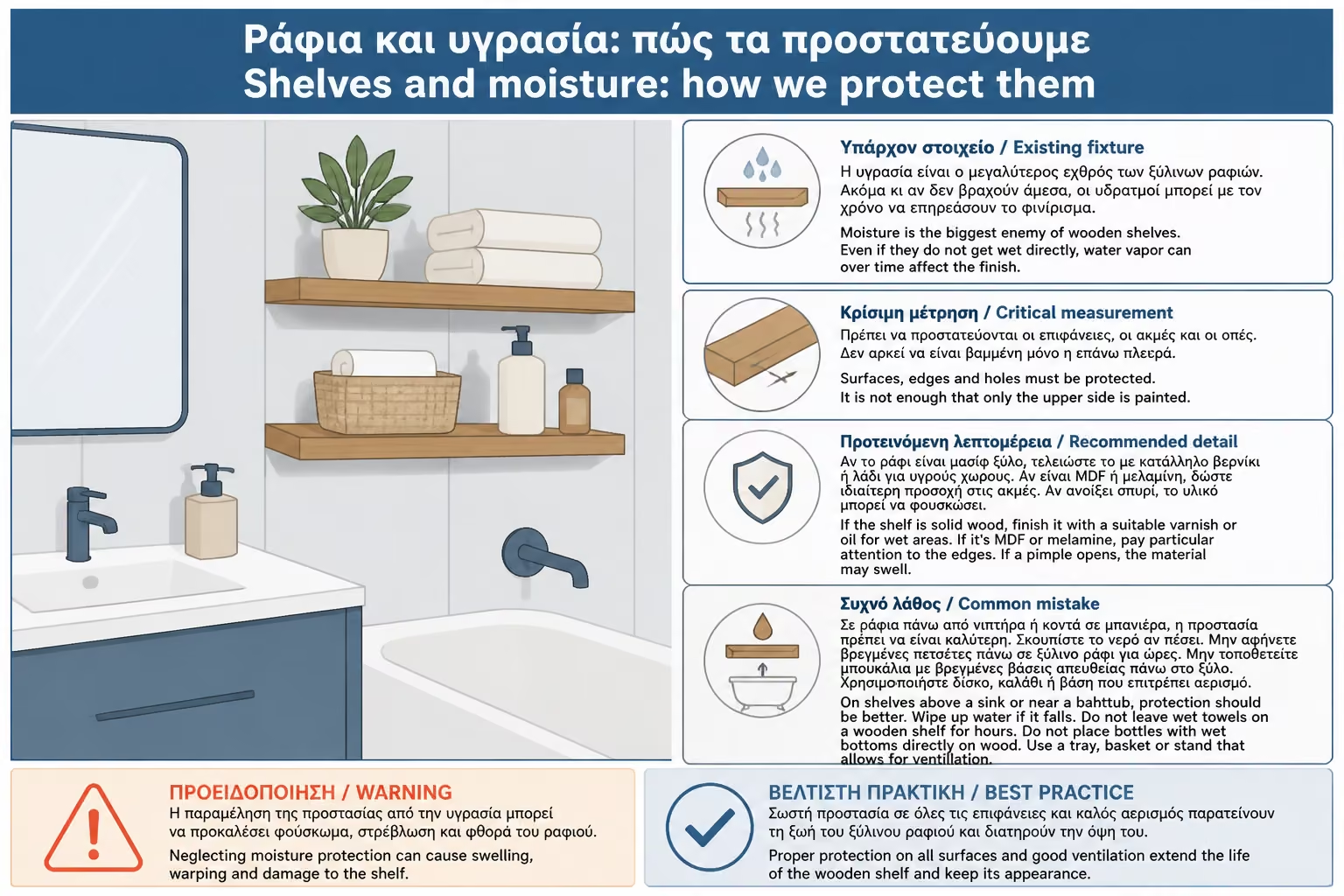
But the bathroom is damp. Wood must be protected. Raw wood in a bathroom can swell, blacken, crack or warp. Even if it doesn't get wet directly, water vapor and temperature changes affect it. That is why it needs varnish, oil, impregnation or another finish suitable for wet areas.
Solid wood shelves have a natural beauty, but they need to be well dried and protected. Shelves made of MDF or veneered chipboard can be economical, but if their edge is cut or opened, they absorb moisture and swell. In a bathroom, the edges are always a critical point.
If you want a wood look with less risk, you can choose shelves with good melamine or wood-look laminate, as long as the edges are properly closed. For a more premium effect, a well-varnished solid wood or marine plywood with a proper finish can be a much better choice.
The floating shelves have hidden support, so they look as if they "come out" from the wall. This gives a clean, minimal effect. They are very beautiful above a basin or next to a mirror, because they do not fill the space with metal supports. The downside is that they need proper placement and a suitable wall. If the support is not good, the shelf can tilt.
Shelves with exposed supports are more honest in construction and often easier to install. They can bear more weight, depending on the supports, and suit industrial or rustic aesthetics. Black metal supports with a wooden shelf give a very nice effect in modern bathrooms.
The choice depends on the style and use. If you want mostly decoration, floating is cleaner. If you want to store heavy items, such as many bottles or large baskets, visible sturdy supports may be safer. In any case, the weight must be calculated realistically.
Beware of very cheap floating shelves. Some have weak hidden supports and if inserted into a tile or wall with imperfections they may not stand well. The minimal effect requires good hidden support, not just a light shelf with two small screws.
Depth is the most important measure. In a bathroom, a shelf should be useful but not obtrusive. Above the toilet, a depth of 12–18 cm is often sufficient. For decorations, small baskets and toilet paper, this dimension is enough. For towels, you may need 20–25 cm, but only if there is space without it getting in the way.
The length depends on the wall and the object under the shelf. Above a basin, a shelf that is about the length of the cistern or slightly wider looks balanced. If it's too short, it looks random. If it is too long, it can weigh down the wall or come close to corners and doors.
On a narrow wall next to the door, prefer shorter and shallower shelves. On large empty wall, you can put two longer shelves. The eye wants proportion. A small shelf on a huge empty wall is lost. A huge shelf in a small WC looks heavy.
If the shelves will accommodate baskets, purchase or measure the baskets first. It is a common mistake to insert a shallow shelf and then have the baskets stick out. The result looks sketchy and can become uncomfortable.
The weight a shelf can carry is not only dependent on the shelf itself. It depends on the wall, studs, screws, brackets and quality of installation. A properly braced concrete or brick shelf can last much longer than an unreinforced drywall shelf. A floating shelf with a weak hidden base should not be loaded like a cabinet.
In the bathroom, items may look light but become heavy when packed together. Lots of bottles, detergents, glass jars, ceramic decorations and folded towels can add weight. Do not load the shelves without knowing their strength.
For decorative use, the weight is light. For storing toilet paper, towels and small baskets, a well-supported shelf is sufficient. For heavy products, it is better to use a closed cabinet or shelf with visible sturdy supports.
If the shelf goes over a basin, do not load it with heavy glass objects that may fall. Consider not only weight, but also safety. An object falling from a shelf over a basin can break porcelain or cause injury.
Tiling requires attention. Do not drill in a hurry, because the tile may crack. It takes a proper tile drill, slow speed at first, a steady mark and no impact until the tile goes through. Then, depending on the substrate, the drill and the drill are changed.
Before drilling, check to see if piping or electrical can run behind the spot. Above the sink, the piping risk is usually lower than around the faucet area, but it is not zero. Next to a sink or near a heater, more care is needed.
If the tile has a high polish, tape the area to prevent the drill from slipping. Measure and mark with spirit level. A crooked shelf is immediately visible, especially if it is above a basin or mirror. Do not rely on the joints of old tiles, as they may not be perfectly straight.
If you don't have tile drilling experience, call a technician. The damage of a cracked tile can cost more than installing the shelf. Especially in a rented house, the holes in the tiles should only be done with permission.
On a painted brick or concrete wall, the support is usually simpler than tiles, as long as they are used correctly. In plasterboard, however, special attention is needed. Drywall does not hold weight like a solid wall. Special plasterboard plugs are needed or, ideally, fixing to a metal/timber frame behind the slab.
If the shelf will only hold light decorations, a proper drywall solution may suffice. If it will be holding towels, baskets or heavy objects, you need to be more careful. The rack may appear firm at first but loosen over time, especially in a humid environment.
On a painted bathroom wall, check that the paint is in good condition. If the wall has moisture, swelling or peeling, we do not install a shelf to hide them. The cause is treated first. A shelf on a swollen wall is not a safe solution.
If the bathroom is very humid, prefer materials and supports that are not easily affected. Screws and metal parts must be durable, because moisture can cause rust and stains around the support.
In a rental house, holes in tiles are a sensitive issue. If you don't have a permit, don't drill. There are self-adhesive shelves and no-drill systems, but they need to be approached realistically. They can hold light items but are not for heavy storage. Bathroom humidity reduces the durability of many adhesive solutions.
Self-adhesive shelves must be placed on a clean, smooth, dry surface. They do not grip well on textured tiles, joints, loosely painted walls or surfaces with salts. They must remain unloaded for as long as the manufacturer recommends. If you put bottles and towels right away, they may come off.
For rentals, safer solutions are free columns, shelves that rest over the basin without drilling, door hangers, bathroom trolleys or small baskets on the cistern. They don't always give the same clear image as floating shelves, but they are reversible.
If you absolutely want a floating aesthetic without holes, limit yourself to a very light shelf and very light decoration. Do not place glass jars or heavy products on top of a self-supporting basin. Safety comes before aesthetics.
Bathroom shelves should organize, not display all the everyday clutter. The best items for open shelves are those that are visually clean: folded towels, paper rolls in a basket, small plants, aromatics, beautiful containers, candles, small boxes and a few products in uniform packaging.
The many bottles of different colors make the shelf look sketchy. If you must store products, put them in baskets or boxes. This way the visual clutter is hidden and the bathroom looks calmer. Baskets must be suitable for moisture. If they are straw or bamboo, they should not get wet often.
Above the basin, you can put extra toilet paper, but better in a basket or in a clean stack. A stack of rolls can look beautiful if they are few and neat. If it becomes a warehouse of 20 rolls, it loses its aesthetics.
Avoid medicines on open bathroom shelves. Humidity and temperature changes are not ideal for many medicines. Also, they should not be easily accessible by children. Medicines need proper, safe storage.
Floating shelves often start as a practical solution and end up as a decorative showcase. A little decoration is good. Many decorations in a small bathroom create dust, moisture and clutter. Balance is important.
A good rule of thumb is to combine functional and decorative items. For example, at one end a basket of papers, in the middle folded towels, at the other end a small plant or candle. The shelf looks beautiful but remains useful.
Plants in the bathroom can give life, but they must be suitable for moisture and light. If the bathroom has no natural light, real plants may not live. In such a case, a very discreet artificial plant can give the impression of greenery without maintenance, as long as it doesn't look cheap.
Do not put a lot of heavy or fragile decorations on top of the basin. Better lightweight items that won't take damage if dropped. Bathroom decoration should be safe and easy to clean.
Moisture is the biggest enemy of wooden shelves. Even if they do not get wet directly, water vapor can over time affect the finish. That's why you need the right varnish or protector. Surfaces, edges and holes must be protected. It is not enough that only the upper side is painted.
If the shelf is solid wood, finish it with a suitable varnish or oil for wet areas. If it's MDF or melamine, pay particular attention to the edges. If a pimple opens, the material may swell. On shelves above a sink or near a bathtub, protection should be better.
Wipe up water if it falls. Do not leave wet towels on a wooden shelf for hours. Do not place bottles with wet bottoms directly on wood. Use a tray, basket or stand that allows for ventilation.
Good bathroom ventilation also helps the shelves. If the mirror remains cloudy for a long time after showering, the humidity in the room is high. In such a bathroom, the wooden shelves need more protection or perhaps it is better to choose a material with greater resistance.
Shelves are not a good idea when the wall is damp, when the tiles are hollow or broken, when there is no secure support, or when the space is so tight that the shelf will hit the body or the door. Storage should not be hazardous.
It's also not a good idea over places where objects can fall into a dangerous position. Above the basin, the shelves should be stable and the objects light. Above the bathtub, you must be very careful, because an object falling on a wet surface can break or cause an accident.
If you tend to fill every surface with products, open shelves can make the image worse. In this case, a closed cabinet or baskets with lids may be best. Floating shelves work well when there is discipline in the organization.
If the bathroom is rented and holes are not allowed, don't insist on a solution that will create a problem later. There are no-punch storage alternatives.
The shelves should blend in with the rest of the bathroom. If you have matte black faucets or a black mirror frame, you can choose wood with black supports. If you have chrome batteries, chrome or inox supports give a more neutral image. If you have brushed gold, gold small supports or details can give a more boutique effect, but in moderation.
The wood must match any sink furniture. If the furniture is in a cool gray-toned wood, a very warm rustic shelf may feel out of place. If the furniture is white, almost any natural wood can work, depending on the style. If there is already a wooden mirror or baskets, the shelves can repeat this warmth.
In a small bathroom, the shelves should not have a very heavy color if the space is dark. A light wood or white shelf may show lighter than a very dark walnut or black. If you want strong contrast, keep the shelf thin.
Aesthetic success comes when the shelves look like part of the design, not something that was thrown in because there was no room. Pair them with towels, accessories, baskets and finishes.
The cost for floating shelves in the bathroom can be low or moderate, depending on the material, length, method of support and whether a technician is needed. A simple ready-made shelf is economical. A custom wood shelf with proper protection and hidden support costs more but looks better and lasts longer.
Prices are indicative and depend on area, store, quality, length, material, VAT, wall condition and difficulty of drilling. If tiles need to be drilled or piping is in doubt, the technician cost is often less than the risk of damage.
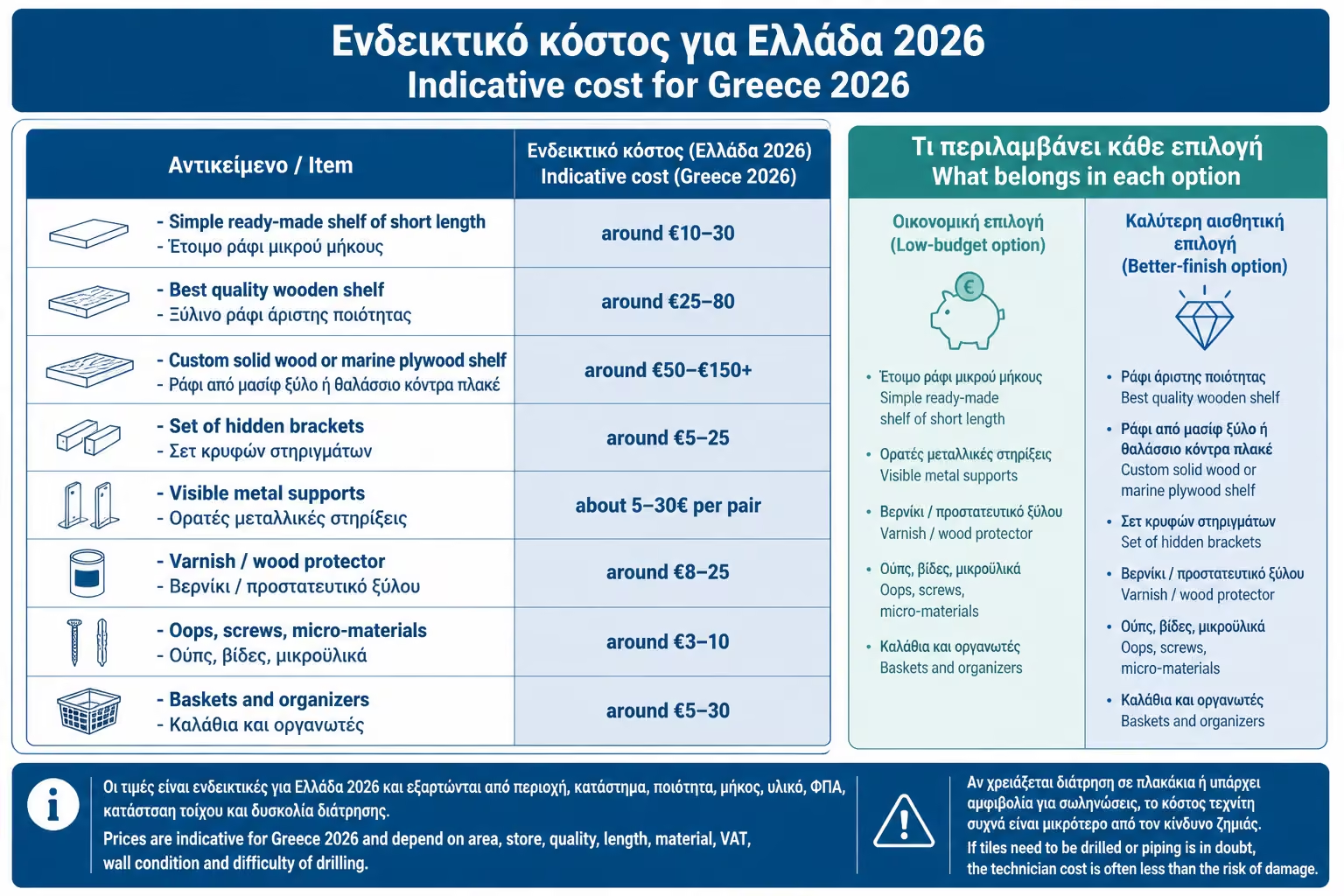
| Product / Work | Indicative cost picture 2026 |
|---|---|
| Simple ready-made shelf of short length | around €10–30 |
| Best quality wooden shelf | around €25–80 |
| Custom solid wood or marine plywood shelf | around €50–€150+ |
| Set of hidden brackets | around €5–25 |
| Visible metal supports | about 5–30€ per pair |
| Varnish / wood protector | around €8–25 |
| Oops, screws, micro-materials | around €3–10 |
| Baskets and organizers | around €5–30 |
| Professional placement | often €40–100+, depending on piercing and difficulty |
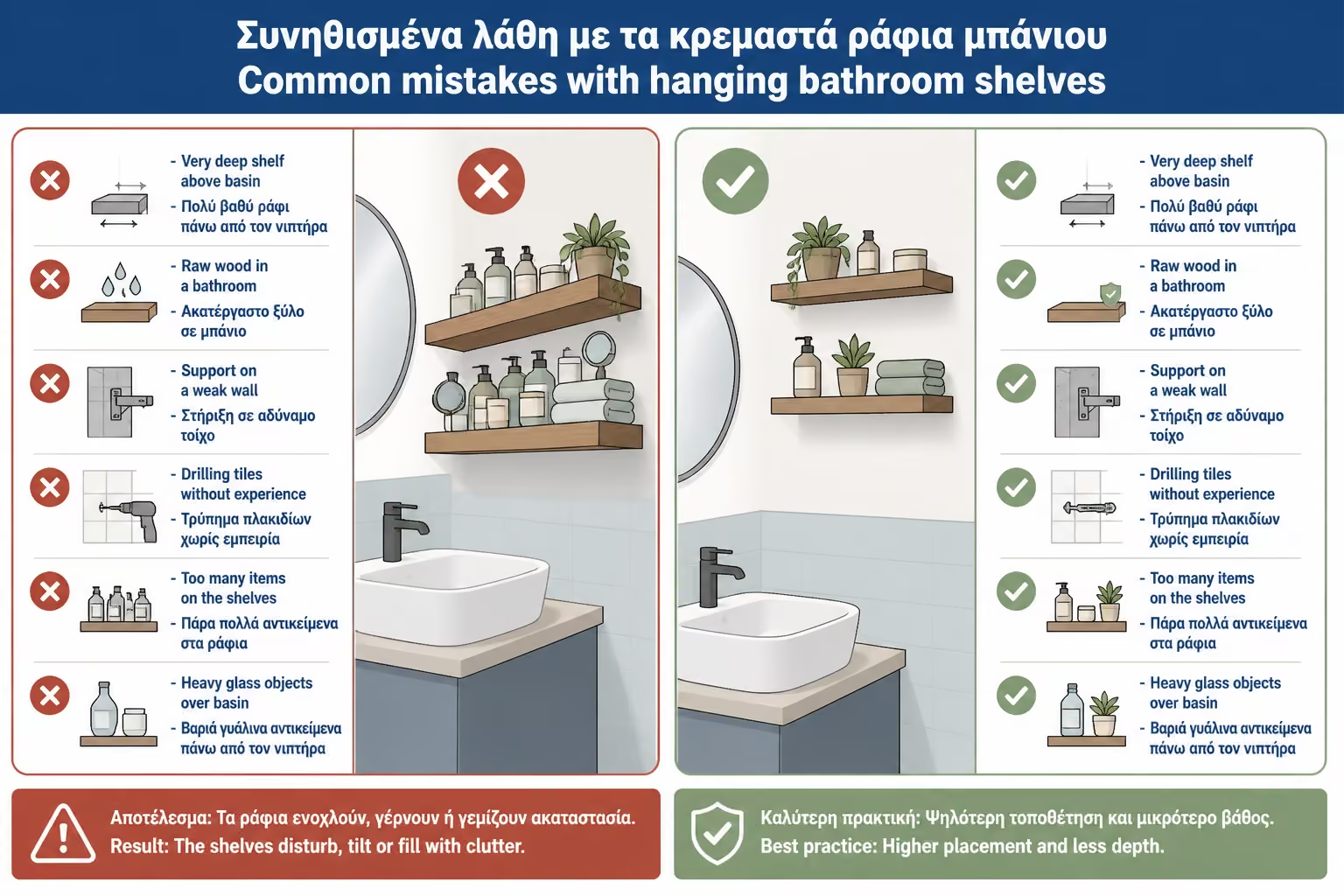
The most common mistakes are made from over-enthusiasm. The owner sees beautiful photos with shelves, but does not calculate depth, height, humidity and weight. The result can be a shelf that disturbs, tilts or fills with clutter.
A prime example is two beautiful wooden shelves above the basin that are placed very low and very deep. They look nice in the photo, but in everyday use the user feels they are over his head. The correct solution would be higher placement and less depth.
| Error | What does it cause? | Correct practice |
|---|---|---|
| Very deep shelf above basin | Sensation of pressure and risk of impact | Shallow depth 12–18 cm |
| Raw wood in a bathroom | Bloating, blackheads, distortion | Protective varnish |
| Support on a weak wall | Leaning or falling | Correct oops and base control |
| Drilling tiles without experience | Cracked tile | Technician or proper tools |
| Too many items on the shelves | Visual clutter | Baskets and limited decoration |
| Heavy glass objects over basin | Risk of damage or injury | Light objects |
| Shelf blocking a cistern or door | Difficulty of use/maintenance | Opening and access control |
| Self-adhesive shelf with heavy weight | Detachment | Light use only |
A technician is needed when the shelf will go into tiles, when you don't know if pipes will run through it, when the wall is plasterboard, when the shelf will bear weight, or when the installation must be perfectly aligned in an obvious place. Installation may seem simple, but a wrong hole in the bathroom is costly.
A technician is also needed if there are signs of moisture on the wall. We don't install shelves to hide blown paint, blackened joints or loose plaster. First the cause is identified. If the rack sits on a problematic substrate, it can loosen and worsen the wear.
If you want custom wood shelves with a specific dimension, a carpenter can cut, veneer or varnish them just right. This is especially useful when you want them to match an existing vanity unit or when the space is tight and an exact dimension is needed.
In a rented house, the discussion with the owner comes first. If holes are not allowed, look for a reversible solution. If they are allowed, ask for it to be done properly so as not to damage the tiles.
| Inquiry | Yes / No |
|---|---|
| Have you decided exactly what will be stored on the shelves? | Yes / No |
| Does the depth of the shelf not interfere with the use of the basin, door or sink? | Yes / No |
| Is the wall stable, without moisture or loose spots? | Yes / No |
| Has it been checked whether pipes or cables pass behind the point? | Yes / No |
| If tiles are to be drilled, are there proper tools or a technician? | Yes / No |
| Can the shelf material withstand the humidity of the bathroom? | Yes / No |
| Are the edges of the wood protected? | Yes / No |
| Are the supports suitable for the weight that will go in? | Yes / No |
| Isn't the first shelf above the basin too low? | Yes / No |
| Is there access to the cistern, switches or maintenance caps? | Yes / No |
| Are the items to go on top safe and not too heavy? | Yes / No |
| If the house is rented, is there a permit for drilling? | Yes / No |
If the answer is “No” to the points regarding support, moisture, perforation or weight, do not proceed yet. A shelf in the bathroom should be beautiful, but first it should be safe and durable.
Floating shelves are an excellent solution for the "dead" space of the bathroom, but don't treat them as simple decoration. Above the basin, keep shallow and correct height. In tiles, only drill correctly and after making sure there are no pipes. If you choose wood, protect all sides and especially the edges. And don't overload the shelves with too many products. Their value is that they organize and lighten the space, not that they turn the wall into a warehouse.
Hanging shelves are one of the smartest solutions for small and medium-sized bathrooms, because they make use of vertical space that is usually left unused. Above the sink, next to the door, next to the mirror or above the washing machine, they can add storage and decoration without closing the space with heavy furniture. A properly chosen wooden shelf can warm up the image of the bathroom and give it a more organized, neat feel.
Their success depends on proportions and support. The depth should be practical, the height should not disturb, the supports should be suitable and the material should withstand moisture. In tiles, drilling needs attention. In wood, edge protection is critical. In rental homes, reversibility and clearance for holes should be considered prior to purchase.
Shelves should not become a new source of clutter. With a few baskets, folded towels, toilet paper and subtle decorations, they can make the bathroom more functional and more beautiful. But when loaded with dozens of bottles and heavy objects, they lose their advantage. Their proper use is balance: storage, decoration and clear image together.
Return to category.
Go to categoryReturn to the central guide.
Go to guide