
Bathroom DIY, Maintenance & Styling
Return to category.
Go to categoryThere are interventions in the bathroom that require dust, crews, removals and a big budget. But there are also changes that, if chosen correctly, can transform the image of the space with a single movement. Changing the sink faucet is one of them. Especially when the sink is simple, white and neutral, an impressive faucet can become the main decorative element of the bathroom.
A plain white sink is not necessarily a disadvantage. Instead, it can act as a clean canvas. On it, a waterfall faucet, a tall slim faucet, a matte black faucet, a brushed gold finish or a special geometric design are immediately visible. The eye goes to the detail that stands out. So, without changing the sink, furniture or tiles, the sink area can look more modern, neater and more expensive.
The basin faucet is a small object, but it has a lot of visual power. It is at the center of the daily bathroom ritual: washing hands, brushing teeth, shaving, cleansing the face. You see it and use it many times a day. If it is old, dull, full of salts or indifferent in design, it lowers the whole image of the space. If it's clean, well-chosen and matching, it instantly elevates the aesthetic.
Waterfall type faucets, i.e. those that let water come out like a small waterfall from an open mouth, are particularly impressive. They give a spa feeling and a different user experience. Design faucets with thin lines, special finishes or an architectural shape give a more premium character. But, as with any upgrade in the bathroom, it is not enough that the faucet is beautiful in the photo. It has to match the sink, water pressure, height, furniture, existing fittings and how you use the space.
In this guide we will see how a faucet change can visually upgrade a simple sink, what types of faucets give a more pronounced effect, when a waterfall faucet is worth it, what to look out for before buying, which finishes suit each style, what mistakes lead to splashes or bad ergonomics and when the change should be done by a plumber.
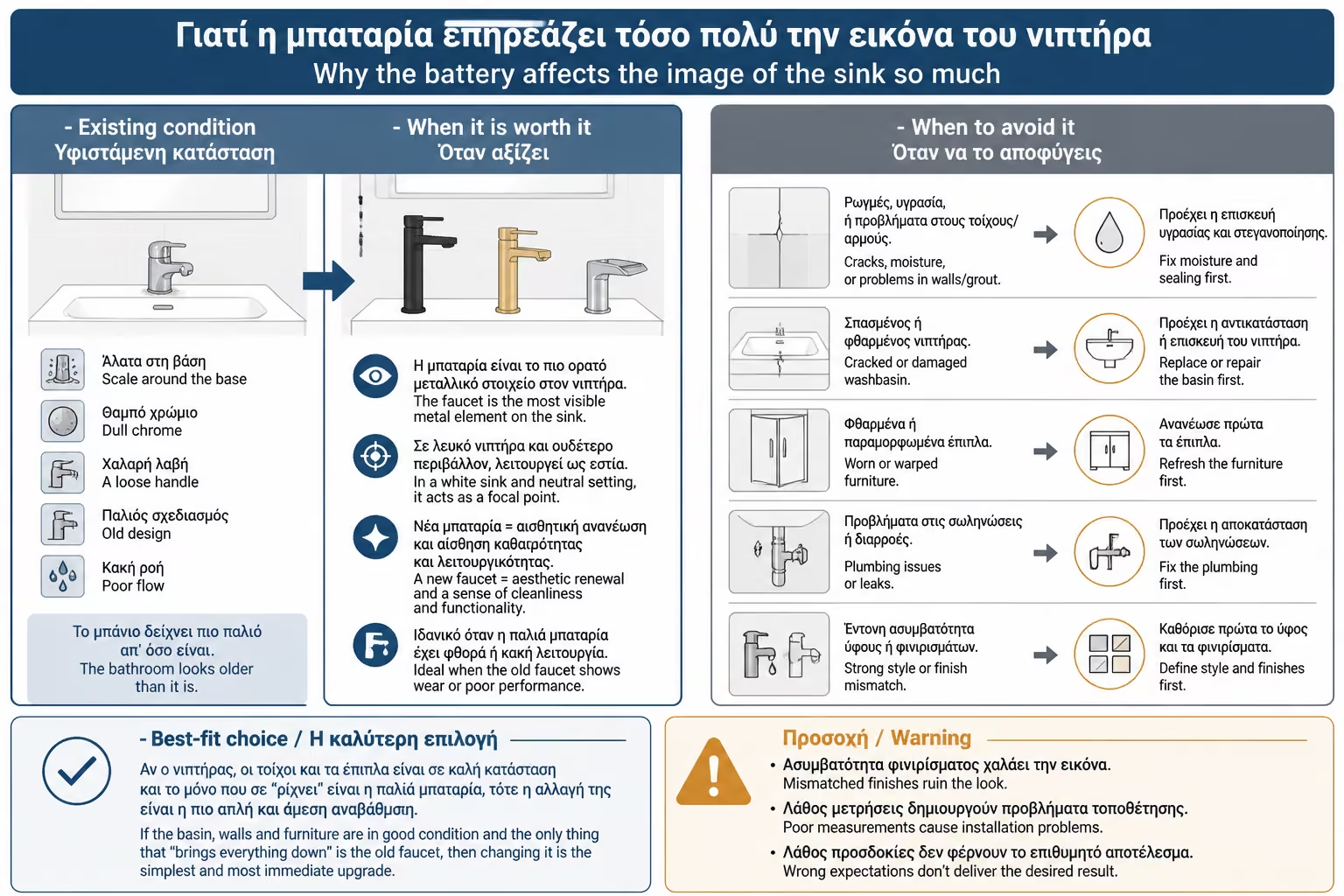
The faucet is the most visible metal element on the sink. In a white sink, especially if the furniture and tiles are neutral, the faucet acts as a focal point. If it is classic chrome, low and of an old design, the washbasin looks plain. If it is tall, thin, black, golden or with a special mouth, the whole composition changes.
The same goes for jewelry in a simple outfit. A white shirt with indifferent buttons looks plain. With a good watch or a right detail, it looks more neat. The white sink is the neutral element. The faucet is the detail that gives style.
The change is especially possible when the old faucet has wear. Scale around the base, dull chrome, a loose handle, old design or poor flow make the bathroom look older than it is. A new faucet gives not only an aesthetic renewal but also a sense of cleanliness and functionality.
In small bathrooms, where there are not many decorative elements, the faucet plays an even bigger role. A careful choice can be the "statement" of the space without loading it. This is the big advantage: you change one object, but the effect is visible on the entire basin area.
The waterfall faucet has an open or semi-open mouth, from where the water comes out as a wide, calm stream, reminiscent of a small waterfall. Unlike a classic faucet that has an aerator and gives a solid or aerated flow, the waterfall gives a more visual and sensory effect. Water looks more, sounds different and makes the use more special.
Aesthetically, it suits bathrooms that want a spa, modern or boutique character. It can be chrome, black, white, gold or inox. It can have a flat mouth, a glass surface or a metal trough. In a simple washbasin, a waterfall faucet immediately catches the eye, because its shape differs from the usual ones.
But the waterfall is not for every sink. If the pressure is too high, it may splash. If the sink is shallow, the water may hit the bowl badly. If the orifice is too close or too far from the valve, the flow may fall in the wrong place. So the choice needs measurement and not just aesthetics.
Also, because the orifice is often more open, salts are easier to see. In areas with hard water, the waterfall faucet needs regular wiping and cleaning. If you let the water dry on the spout, it will create white marks that will spoil the image.
A design faucet is enough when the rest of the bathroom is neutral or clean. If you have a white sink, simple furniture, a mirror without a bold frame and relatively quiet tiles, then the faucet can become the central element. It can give character without much other intervention.
It is also sufficient when combined with 2–3 small changes. For example, a black matte faucet together with a black dispenser, black knobs on the furniture and a black mirror frame create a complete effect. Gold faucet along with gold knobs and heated towels gives a more boutique style. A single impressive faucet can seem a bit random if there's nothing else to back it up.
It is not enough when the sink is very worn, the furniture is swollen, the joints are black or the area has a general appearance of abandonment. In such a case, the new faucet may show "foreign" on the old environment. Before changing, clean salt, joints, mirror, countertop and accessories. The upgrade works best when the base is clean.
The faucet is an ideal aesthetic upgrade for a bathroom that does not need a complete renovation but wants a more modern image. It is the movement that says "the space has been studied", without requiring a large project.
The classic table-top basin mixer is the easiest to replace when there is already a hole in the basin or counter. If the dimensions match, the old one comes out and the new one goes in with the corresponding supply hoses and its base. It is the simplest solution for visual upgrade.
The tall faucet is mainly used with freestanding basins, that is, bowls that sit on the counter. If you have a simple inset or inset sink, a too tall faucet can be disproportionate and splashy. The tall faucet looks impressive, but needs a correct height relationship with the bowl.
The built-in basin faucet is very stylish and keeps the counter clean, but it's not a simple replacement. It needs plumbing work inside the wall, correct heights and is usually a renovation option, not a quick facelift. If you are not opening a wall, it is not a practical solution.
The waterfall faucet can be table or built-in. For an easy upgrade, we are mainly interested in desktop waterfalls that replace the old one. There the important thing is to match the hole, height, flow length and water pressure.
The right choice is not the most impressive in the photo. It is the one that suits your own sink and your own use.
Before buying a faucet, you need to see where the existing hole is. Is it on the sink or on the counter? Is it one hole for a mixer or three holes for an old style faucet? How close is the hole to the sink? Is there enough space in the back for the new faucet holder?
Most modern basin mixers are single hole mixers. If the old sink has a hole, the replacement is usually simpler. If it has three holes, it may need a special faucet or cover the old holes. If the hole is too small or too big, it should be checked before purchase.
Spout length is critical. The water should fall to about the center of the basin or to a point where it does not splash. If the faucet is too short, you'll be washing your hands on the back wall. If it is too far, the water can fall forward and come out. In waterfall faucets, this is even more important because the flow is wide.
Height also plays a role. A very low faucet can be inconvenient. A too tall in a shallow sink can splash. Aesthetics must go hand in hand with ergonomics. The washbasin must remain practical, not just photogenic.
Impressive faucets, especially waterfall ones, are greatly affected by water pressure. If the pressure is high, the flow may come out strong and hit the sink with splashes. If the pressure is low, the waterfall may not give the nice wide effect you expect. It will look weak or uneven.
In some installations, it may be necessary to adjust the corner switches under the sink to reduce the flow a little. This is not always an ideal solution, but it can help with splashes. If the mains pressure is generally excessive, a pressure reducer in the mains may be needed, not just "turning off" the tap.
Splashes also depend on the shape of the sink. Shallow, flat sinks splash more. Deeper bowls absorb flow better. If the sink has a very flat bottom and the faucet is high or waterfall, the risk of splashing increases.
A practical criterion is to look at where the water falls today with the old faucet. If it's already sputtering, a more impressive faucet can make matters worse. If the flow is calm and the sink has a good depth, you have more freedom of choice.
The finish defines the style. Chrome is timeless, bright and matches most bathrooms. It is the safest choice if you already have chrome accessories, a chrome shower mixer and a classic white bathroom. It's not the most daring, but it hardly looks wrong.
The black matte gives an immediate modern or industrial character. In a white wash basin the contrast is very strong. Matches a black mirror frame, black knobs and gray or white tiles. But it needs frequent wiping, because the salts are visible.
Brushed gold or bronze gives a warmer, premium look. Matches beige, green, navy, marble, natural stone and wood. It calls for attention to quality, because very cheap gold can look fake or tarnish quickly.
Gunmetal or charcoal is a more special choice. It gives a modern image without the strong contrast of black. It suits bathrooms with gray, stone, cement tiles or darker design. It is less common but can look very elegant if put together properly.
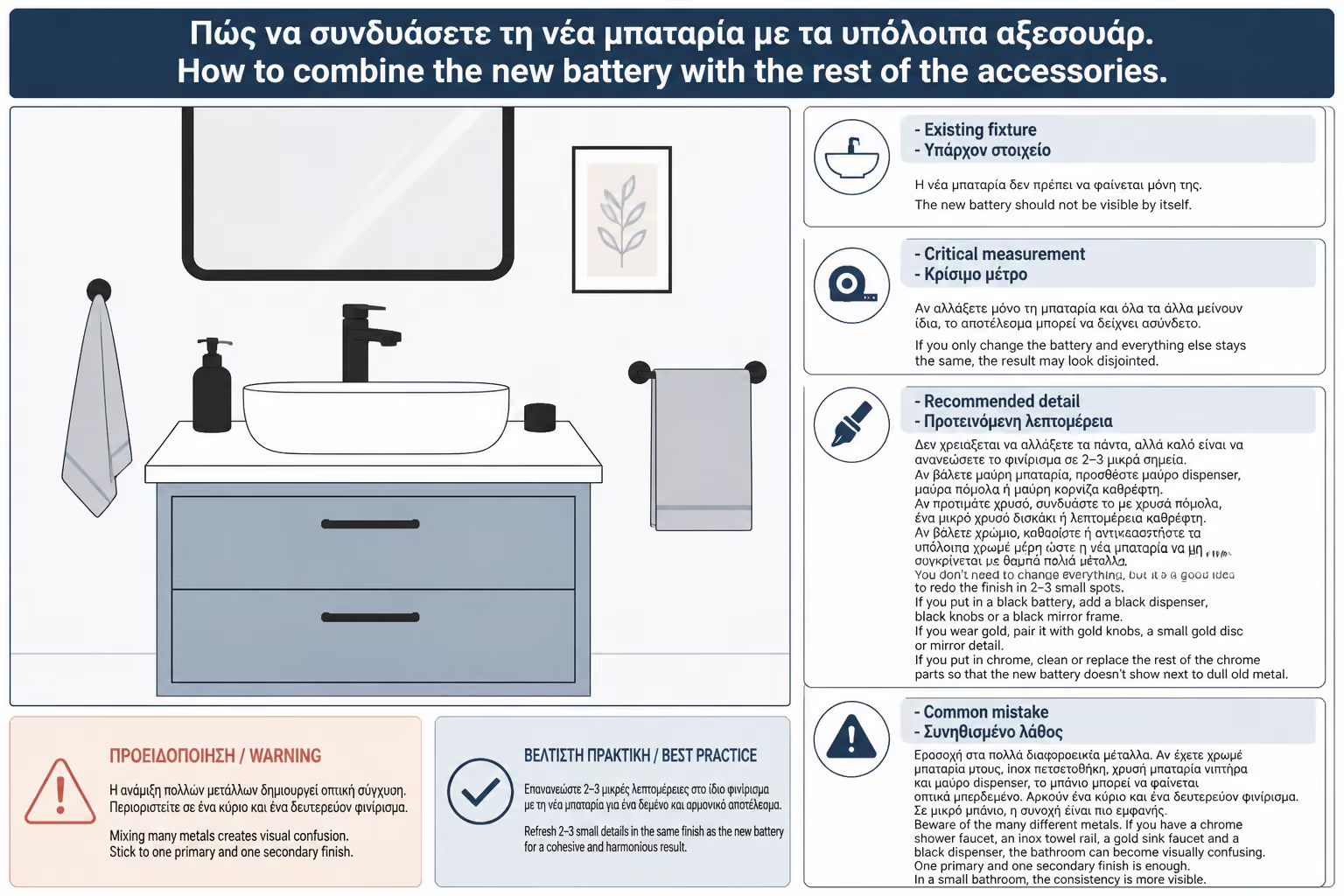
The new faucet should not be visible by itself. If you only change the faucet and everything else stays the same, the result may look disjointed. You don't need to change everything, but it's a good idea to redo the finish in 2–3 small spots.
If you put in a black faucet, add a black dispenser, black knobs or a black mirror frame. If you wear gold, pair it with gold knobs, a small gold disc or mirror detail. If you put in chrome, clean or replace the rest of the chrome parts so that the new faucet doesn't show next to dull old metal.
Beware of the many different metals. If you have a chrome shower faucet, an inox towel rail, a gold sink faucet and a black dispenser, the bathroom can become visually confusing. One primary and one secondary finish is enough. In a small bathroom, the consistency is more visible.
A simple recipe for renewal is: new design faucet, matching knobs on the furniture, new dispenser and clean mirror. These four elements can change the whole zone of the sink without touching tiles.
| Battery type | Advantage | What to watch out for |
|---|---|---|
| Classic table design | Easy replacement | To match hole and height |
| Waterfall tabletop | Impressive flow and spa feeling | Splashes, salts, pressure |
| High faucet | Ideal for a countertop sink | Not in a very shallow bowl |
| Built-in | Minimal and premium image | It wants a wall opening |
| Low minimal | Clean and discreet | Less "statement" effect |
The main advantage of the waterfall faucet is experience. The water looks more natural, more "open" and more special. The faucet becomes a decorative element. In a simple bathroom, it can immediately give a spa feeling. Combined with a round LED mirror and a clean countertop, the result can be very impressive.
But it has disadvantages. The open mouth collects salts more easily. If the water is hard, it needs frequent wiping. The flow may splash if it does not match the sink. Also, some waterfall faucets have a slower or noisier flow than a classic vented faucet.
In everyday life, it should be cleaned more carefully. You don't want white scale on the flat nozzle, because it immediately spoils the image. If the spout is glass, the drops and salts are even more visible. If it's matte black, the white prints make a strong contrast.
So the waterfall faucet is a good choice for someone who wants a visual effect and accepts a little more maintenance. If you want something completely trouble-free and very easy to clean, a quality design faucet with a classic aerator might be more practical.
Many see tall faucets in photos and want to put them in the existing sink. But tall faucets are designed primarily for countertop sinks, that is, bowls that sit on the counter. If a tall faucet goes into a classic recessed sink, it can look disproportionate and splash.
Proportion matters. The height of the faucet must match the depth and position of the sink. If the faucet is too high, the water falls from a greater distance and the intensity at the point of impact increases. If the sink is shallow, water may come out.
If you want a more impressive effect without changing the sink, maybe a medium-height design faucet is better, not necessarily too tall. There are faucets with a thin line, a special handle or a beautiful finish that give an upgrade without ergonomic problems.
Before you buy, look at the dimensions: overall height, spout height, spout projection and flow angle. Photos are often deceiving. A faucet that looks elegant on a large countertop may be too much on a small 45 cm sink.
A design faucet can have a special shape, thin cylindrical line, square geometries, open mouth, side handle, joystick operation or different finish. All this affects the image, but also the use. It should not be chosen based on style alone.
The handle should be easy to use with wet hands. If it is too small, too thin, or in an awkward position, it will bother you every day. The hot-cold adjustment should be smooth. In economical design faucets, many times the appearance is good but the mechanism is average. This shows in use.
The mouth must be cleaned. If it has a very complicated shape or many hidden spots, the salts will sit there. A bathroom faucet must be beautiful but also maintainable. The overly complex shape can become a problem in hard water areas.
Also, consider timelessness. A very special faucet you may like today but get tired. If you want a safe upgrade, choose a clean line and a good finish. If you want a statement, make sure the rest of the bathroom is calm enough to support it.
First check the existing installation under the sink. Are there corner switches? Is it in good condition? Do they close properly? Are IUDs old? Is there room for the plumber to work? If the switches are old and won't close, changing the faucet can become a bigger job.
Second, check the diameter and position of the hole. The new faucet should press properly and cover the old base. If the old faucet has left a scale ring or mark on the sink, the new base must cover it or be cleaned before installation.
Third, check if the faucet comes with a supply hoses, mounting kit and instructions. In quality faucets, the components are usually better. In very cheap ones, hoses and screws can be of low quality. Don't judge by appearances alone.
Fourth, look at warranty and parts availability, especially for cartridges. An impressive faucet with no spares available can become a problem if it starts leaking. Aesthetics have value, but the mechanism is what will work every day.
The mechanism inside the faucet, usually a ceramic disc or cartridge, determines the feel and lifespan. A cheap faucet may look nice, but if the mechanism is bad, the grip will be hard, the temperature setting uncomfortable, or the faucet may leak soon.
The quality is also evident in the weight, the finish, the stability of the handle and the detail of the base. A good faucet clicks firmly, does not wobble, has a smooth movement and clear flow. A very cheap design faucet can have an impressive form but a mediocre application.
In waterfall faucets, the quality of the orifice is of additional importance. If the construction is not good, the flow can come out unevenly, drip after closing, or collect scale in places that are not easily cleaned. The beauty of the waterfall can only be seen when the flow is clear.
You don't always have to buy the most expensive faucet. But you need to avoid choosing based on image alone. In the bathroom, the faucet is a daily tool. If the quality is low, the aesthetic upgrade will quickly lose its value.
Replacing a sink faucet may seem simple, but there are points that need attention. The water needs to be shut off, the old supply hoses disconnected, the old faucet removed, the surface cleaned, the new base installed, hot and cold properly connected, and leak tested.
The problem is often not the new faucet, but the old one. There may be scale nuts stuck, no space under the sink, corner switches worn out, or an old connection that drips when it moves. In such cases, the task can become more demanding.
If you have experience with micro-hydraulic work, you can make the change, but you need to check very well for leaks. Turn on the water gradually, look under the sink, run dry paper over the connections and check again after a while. Small drop can swell MDF furniture in a few weeks.
If the switches won't close, if the coils are too old, if the sink is difficult to access, or if the faucet is expensive, you better call a plumber. The correct placement also protects the aesthetic lining.
After removing the old faucet, you will often find a ring of scale, old silicone, rust or dirt on the base. Don't rush to put the new faucet on top of them. Clean the surface as best you can without scratching the sink or counter.
If the sink is porcelain, you can use a suitable cleaner for salt, taking care of the surrounding materials. If the countertop is marble or natural stone, do not use vinegar or acid de-salting agent. It needs a neutral product and care. If the old mark is not completely removed, choose a new faucet with a base that covers it.
After installation, clean the new faucet only gently. Do not use strong anti-salt immediately on black, gold or special finish. Wipe with a fresh cloth, dry and check the flow. If there is any residue from the installation, clean it up immediately.
The first image after placement is important. A new sink with a clean faucet, mirror and accessories seems like a minor renovation. Don't let old salts and tools spoil the result.
If you choose a matte black, gold, copper or gunmetal faucet, maintenance changes. Do not use hard sponges, abrasives, bleach or strong anti-salts without instructions. Special finishes can dull or peel if cleaned incorrectly.
The safe routine is lukewarm water, mild soap, a soft microfiber cloth, and immediate drying. If scale appears, start with a soft, fresh cloth. If they persist, use only product compatible with the finish. Do not leave vinegar or anti-salt solution on the faucet for a long time.
In waterfall faucets, clean the spout regularly. Because the water passes through an open surface, the salts are visible. After use, a quick wipe can keep the faucet looking much better. If you wait for a crust to form, cleaning becomes more difficult and more dangerous to the finish.
On chrome faucets, maintenance is easier, but still should not be done with wire or harsh abrasives. Good drying after use reduces scale and keeps the gloss.
The cost of replacing a sink faucet varies widely, depending on finish, quality, type and labor. A simple chrome faucet can be economical. A waterfall or design faucet in a special finish costs more. If you need a plumber or change corner switches, the total cost goes up.
Prices are indicative and depend on region, shop, brand, quality, whether VAT is included, condition of old installation and whether the change is done alone or together with other work. For a pure visual upgrade, it's often better to get a good mid-range faucet than a very cheap flashy one that can wear out quickly.

| Product / Work | Indicative cost picture 2026 |
|---|---|
| Simple chrome sink faucet | around €30–80 |
| Better design chrome faucet | around €70–180 |
| Waterfall basin faucet | around €60–€200+ |
| Black matte or gunmetal faucet | about 70–250€+ |
| Brushed Gold / Bronze | around €90–€300+ |
| Premium branded faucet | around 200–500€+ |
| New supply hoses / small fittings, if needed | around €5–25 |
| Replacement of corner switches | case by case |
| Plumbing work for simple change | often €40–€100+, depending on area and access |
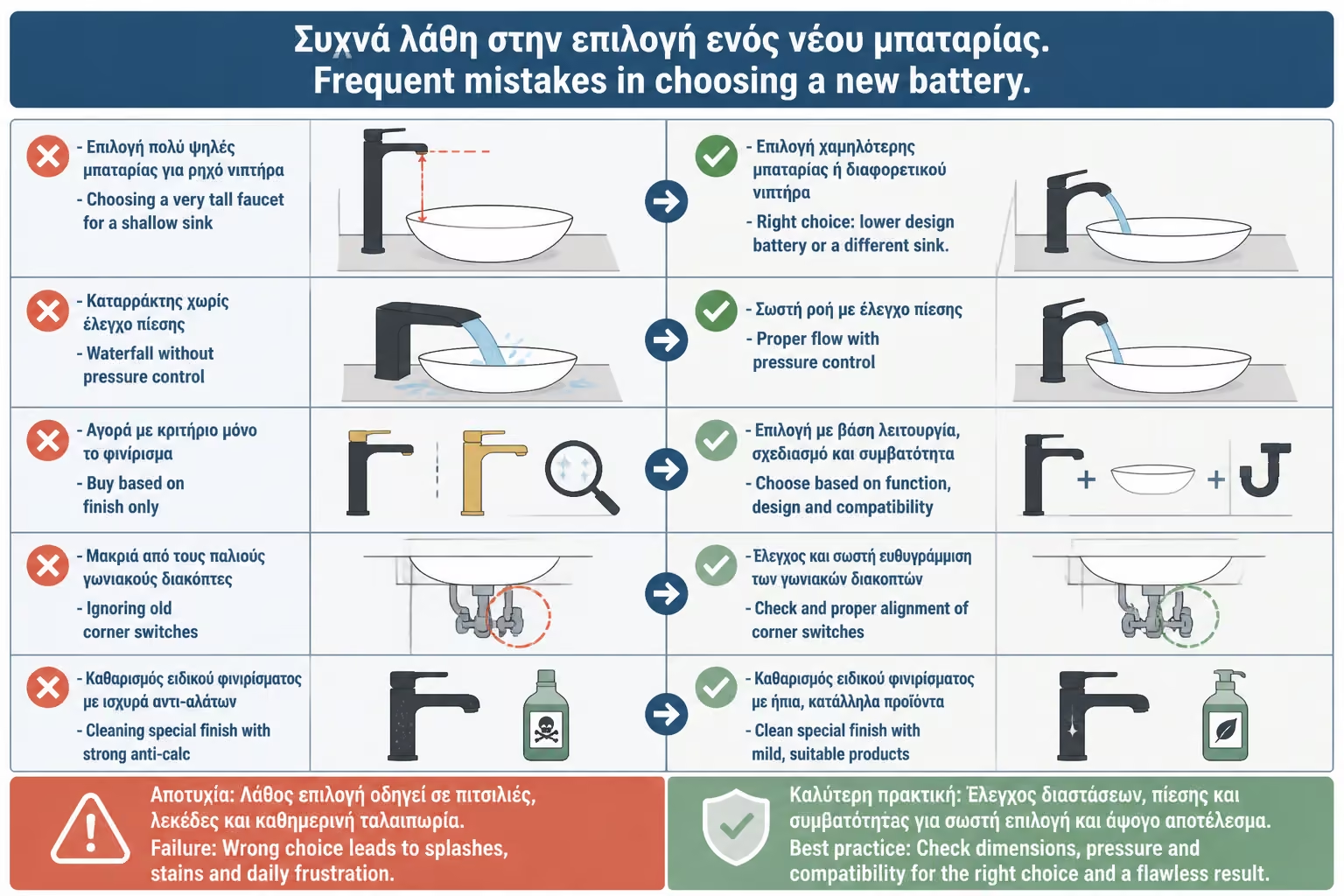
Mistakes usually arise because the selection is made only from a photo. A faucet may look great on a large showroom sink, but not work well on your own small sink. Dimensions, height, projection, pressure and finish should always be checked.
A classic example is buying a tall black waterfall faucet for a small, shallow white sink. She looks stunning in the photo. In practice, the water falls from above, splashes on the counter, and the salts are immediately visible in the black spout. The right choice would be a lower design faucet or a different sink.
| Error | What does it cause? | Correct practice |
|---|---|---|
| Choosing a very tall faucet for a shallow sink | Splashes | Height and depth control |
| Waterfall without pressure control | Strong or weak flow | Setting up and choosing a suitable model |
| Buy based on finish only | Poor ergonomics or low quality | Check mechanism and dimensions |
| Black/gold finish with no combination design | Random result | Repeat in accessories |
| Ignoring old corner switches | Leaks or difficulty fitting | Check before work |
| Cleaning special finish with strong anti-calc | Bloating or peeling | Gentle maintenance |
| Faucet with a base that does not cover old marks | Visible scale ring | Base measurement and cleaning |
| Very cheap design faucet without spare parts | No problem if it drips | Warranty and cartridge check |
A plumber is needed when the corner switches are old, when the water does not shut off properly, when the old faucet is stuck with scale, when access under the sink is difficult, when there are leaks or when the new faucet has special requirements. It is also needed when you are not sure about the hot and cold connection or the tightness.
Even in a simple change, a plumber can check things that are often overlooked: hose condition, shutoff valves, old seals, sink valve, siphon, moisture inside the cabinet. If there is a small drop under the sink, it can damage MDF furniture and create mold.
If the new faucet is expensive or has a special finish, proper placement is even more important. A scratch on the mount from the wrong tool or a crooked clamp can spoil the image. The technician must work carefully, with protection in the finish.
If you want to change from a desktop to a built-in faucet, then we are not talking about a simple replacement. We are talking about hydraulic intervention in the wall, possibly tiles and waterproofing. This is renovation work and needs planning.
| Inquiry | Yes / No |
|---|---|
| Have you measured the existing hole and faucet position? | Yes / No |
| Does the new faucet match the depth and shape of the sink? | Yes / No |
| Will the water fall in the right place without splashing? | Yes / No |
| Have you checked the mouth height and projection? | Yes / No |
| Do the corner switches under the sink close properly? | Yes / No |
| Does the finish match the mirror, knobs and accessories? | Yes / No |
| Do you know how this particular finish should be cleaned? | Yes / No |
| Does the faucet have a reliable mechanism and spare parts available? | Yes / No |
| Does the new faucet mount cover any old marks? | Yes / No |
| Have plumbing and hardware costs been calculated? | Yes / No |
| If it is a waterfall, have you accepted that it needs more frequent cleaning from salts? | Yes / No |
If the answer is “No” to the dimensions, splashes or corner switches, don't buy yet. The sink faucet is an aesthetic upgrade only when it remains practical.
A striking tap can instantly upgrade a plain white wash basin, but it has to match technically. Don't just buy from a photo. Measure height, spout projection, hole location and sink depth. In waterfall faucets, pay particular attention to pressure and splashes. And before changing the faucet, check the corner switches and the cabinet under the sink. The visual upgrade is worth it when after installation you don't have leaks, salt everywhere and water on the counter.
Changing the sink faucet is one of the most powerful small aesthetic upgrade interventions in the bathroom. A simple white washbasin can look completely different with a waterfall faucet, a black matte design faucet, a brushed gold finish or a clean minimal line. The faucet becomes the focal point and gives the space a more modern, premium or spa character.
But the result must also be functional. The faucet must fit in the place of the old one, be the right height, not splash, easy to clean and blend in with the rest of the finishes. Waterfall faucets are impressive, but require attention to pressure, salts and maintenance. Special shades such as black and gold look great when properly maintained, but do not tolerate harsh cleaners.
Before buying, measure. Before installation, check the switches and connections. After installation, check thoroughly for leaks. If everything is done right, changing the faucet can look like a minor renovation, without changing the sink itself. It is one of the smartest upgrades when you want a big visual effect with relatively limited intervention.
Return to category.
Go to categoryReturn to the central guide.
Go to guide