
Bathroom DIY, Maintenance & Styling
Return to category.
Go to categoryThe plastic shower curtain is the most economical solution to prevent water from coming out of the bathtub. It's easy, but it has known drawbacks: it sticks to the body when you shower, collects mold at the bottom, holds moisture, looks rough and often makes the bathroom look older than it is. Even if it's clean, it rarely feels like permanent, quality construction.
Replacing it with a glass bathtub divider, the well-known bath screen, is one of the most effective small upgrades to a bathroom that has a bathtub but is used daily as a shower. You're not changing the tub, you're not moving plumbing, you're not doing a complete renovation. You simply remove the soft, temporary element and put in a fixed or retractable crystal that makes the space look cleaner, brighter and more modern.
The great advantage of the bath screen is its visual lightness. Glass does not cut the eye like a curtain. It lets the light through, shows the tiles, makes the bathtub look more integrated in the space and gives a more "hotel" image. In small bathrooms, this difference is huge. Where the curtain creates a wet, dark mass, the glass partition allows the space to breathe.
But there is also a practical side. A properly placed bath screen limits water, is easier to clean than a curtain, does not stick to the body, does not smell and does not need to be replaced as often. If combined with the right silicone, a good slope to the bath rim and proper use of the shower phone, it can make everyday use much more comfortable.
This does not mean that every bath screen fits every bathtub. Dimensions must be measured, checked if the wall is straight, if the bathtub has the right rim, if there are any obstacles, if the glass opens without finding a sink or basin and if the fixing can be done safely. In this guide we will see when it is worth leaving the curtain, what kind of crystal to choose, what to pay attention to in the placement and when the solution may not work as you expect.
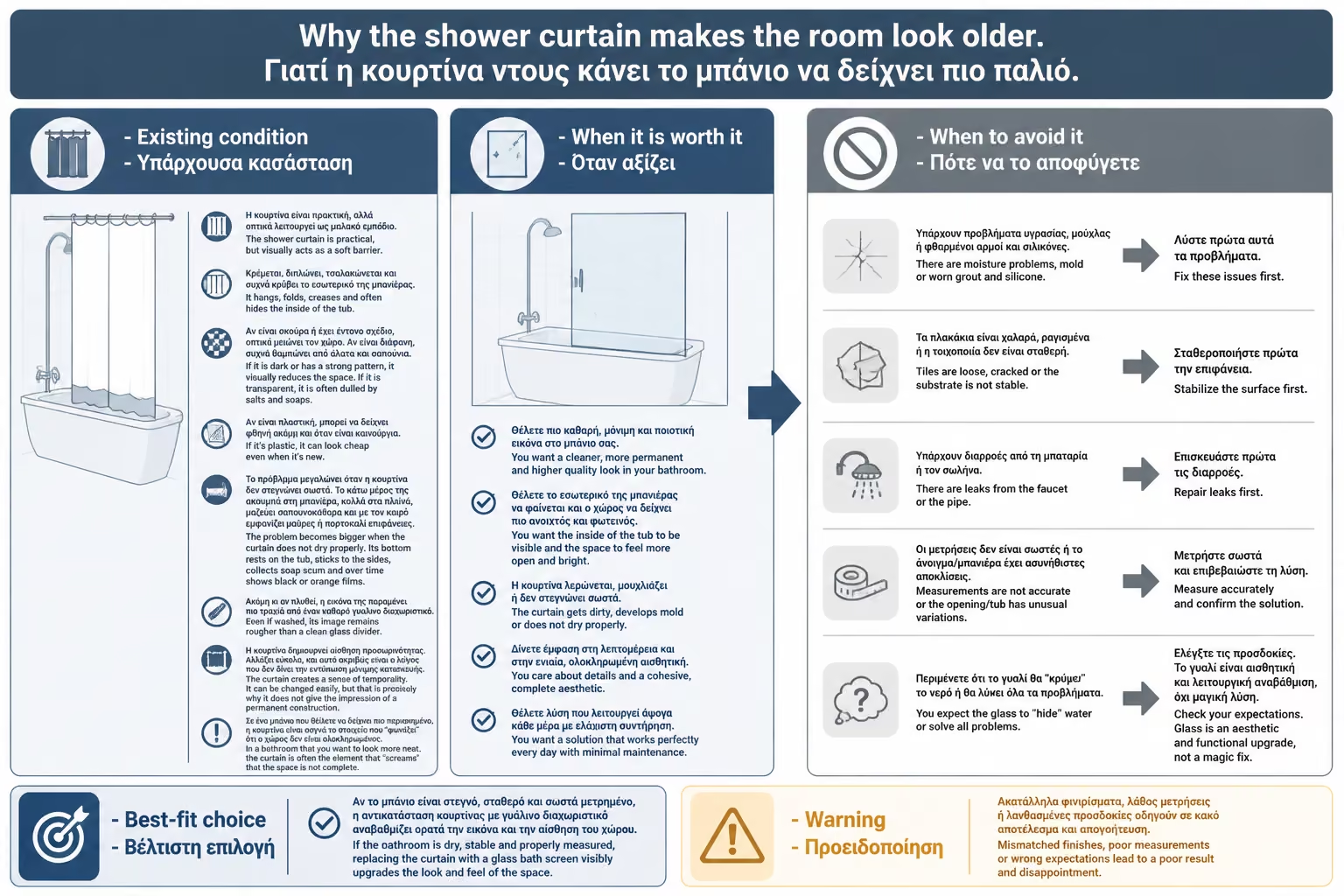
The shower curtain is practical, but visually acts as a soft barrier. It hangs, folds, creases and often hides the inside of the tub. If it is dark or has a strong pattern, it visually reduces the space. If it is transparent, it is often dulled by salts and soaps. If it's plastic, it can look cheap even when it's new.
The problem becomes bigger when the curtain does not dry properly. Its bottom rests on the tub, sticks to the sides, collects soap scum and over time shows black or orange films. Even if washed, its image remains rougher than a clean glass divider.
Also, the curtain creates a sense of temporality. It can be changed easily, but that is precisely why it does not give the impression of a permanent construction. In a bathroom that you want to look more neat, the curtain is often the element that "screams" that the space is not complete.
The bath screen solves this visual problem. The glass has clean lines, stands firmly and lets the tub show through. If it is transparent, the space visually expands. If it has a thin black or chrome profile, it can be connected with the rest of the finishes in the bathroom.
The bath screen is a glass partition that is placed on the edge of the bathtub, usually on the side where the faucet and shower are located. Its purpose is to prevent water from escaping when you use the bathtub as a shower. It doesn't always close the entire length of the tub like a cubicle. It usually covers the part where the most water falls.
It can be fixed, opening, folding, double, triple or with a small fixed and movable leaf. It can have a frame, a minimal profile or a more frameless look. The crystal can be clear, tinted, matte, striped or with an anti-salt coating. The choice depends on the size of the bathtub, the layout of the space and the style you want.
In contrast to the full bath cabin, the bath screen is a lighter solution. It does not necessarily close the entire space. This means it allows easier access to the tub, is simpler in appearance and often more economical. On the other hand, because it does not close completely, it does not hold all the water in every condition. If you shower with a very strong flow or if the shower head faces outwards, water may come through.
The important thing is to see it as a curtain upgrade, not a complete conversion of a bathtub into an enclosed shower. With proper selection and use, it offers a much better image and practicality. However, it does not eliminate the need for proper placement, silicone and cleaning.
The fixed bath screen is the most minimal. A sheet of glass is firmly placed on the faucet side and covers the point where most of the water falls. It looks clean, modern and has fewer moving parts. This means fewer hinges, fewer rubbers and easier cleaning.
Its disadvantage is that it does not open. If the bathtub is small, if you want to bathe a child, if you need to clean the interior often or if access is limited, the fixed sheet can be annoying. There should be enough space to get in and out comfortably.
The folding bath screen has leaves that fold. It is more practical in small bathrooms and when you want the bathtub to open. It can fold towards the wall or inwards, depending on the model. It gives more flexibility, but has more points that need maintenance: hinges, joints, rubbers and joints between sheets.
The opening single leaf is an intermediate solution. It can open outwards or inwards if there is space. But it needs to be checked before buying: it should not be found in a sink, basin, radiator, shelf or door. In a small Greek bathroom, this is a very common issue.
The right choice is not only aesthetic. It is mainly a matter of space and daily use.
Transparent crystal is the most popular choice because it visually enlarges the bathroom. It lets the light through and doesn't hide the tiles. If the goal is to remove the heavy image of the curtain and make the space brighter, transparent glass is the best choice.
Frosted or sandblasted glass offers more privacy, but cuts a bit of the sense of depth. In a small bathroom it can look heavier than transparent. Also, matte surfaces may hold more visible marks from salt or fingerprints, depending on their texture.
Tinted crystal, such as gray or bronze, gives a more special aesthetic. It suits modern or more design bathrooms, especially with black or gold accessories. But in a small or dark bathroom it can reduce the brightness. If the bathroom does not have natural light, it needs attention.
For most bathrooms with a bathtub, clear glass is the safest choice. If you want character, you can give it with the profile: matt black, chrome, inox or brushed gold. This way you keep transparency and add style without darkening the space.
The glass in the bathroom must be safety glass. We usually talk about tempered, i.e. thermally treated safety glass. If broken, it shatters into small pieces instead of large sharp leaves. This is critical in an area where there are slippery surfaces, bathtub and daily use.
The thickness of the crystal affects the stability and feel of quality. Often bath screens range from about 5–8 mm, depending on the type and construction. Thicker glass looks sturdier, but is heavier and requires proper support. It is not always necessary to be the thickest, but it should be suitable for the system.
Ask for information on profiles and hinges. In a humid environment, low-quality metal components may rust or tarnish. Tires should fit properly and spares should be available if needed. A bath screen is not just glass. It is a glass, profile, fixing and waterproofing system.
If there is an anti-salt coating, it is an advantage. It does not mean that the glass will never get dirty, but it is easier to clean and the salts adhere more difficult. The coating needs proper maintenance, without harsh cleaners and abrasives.
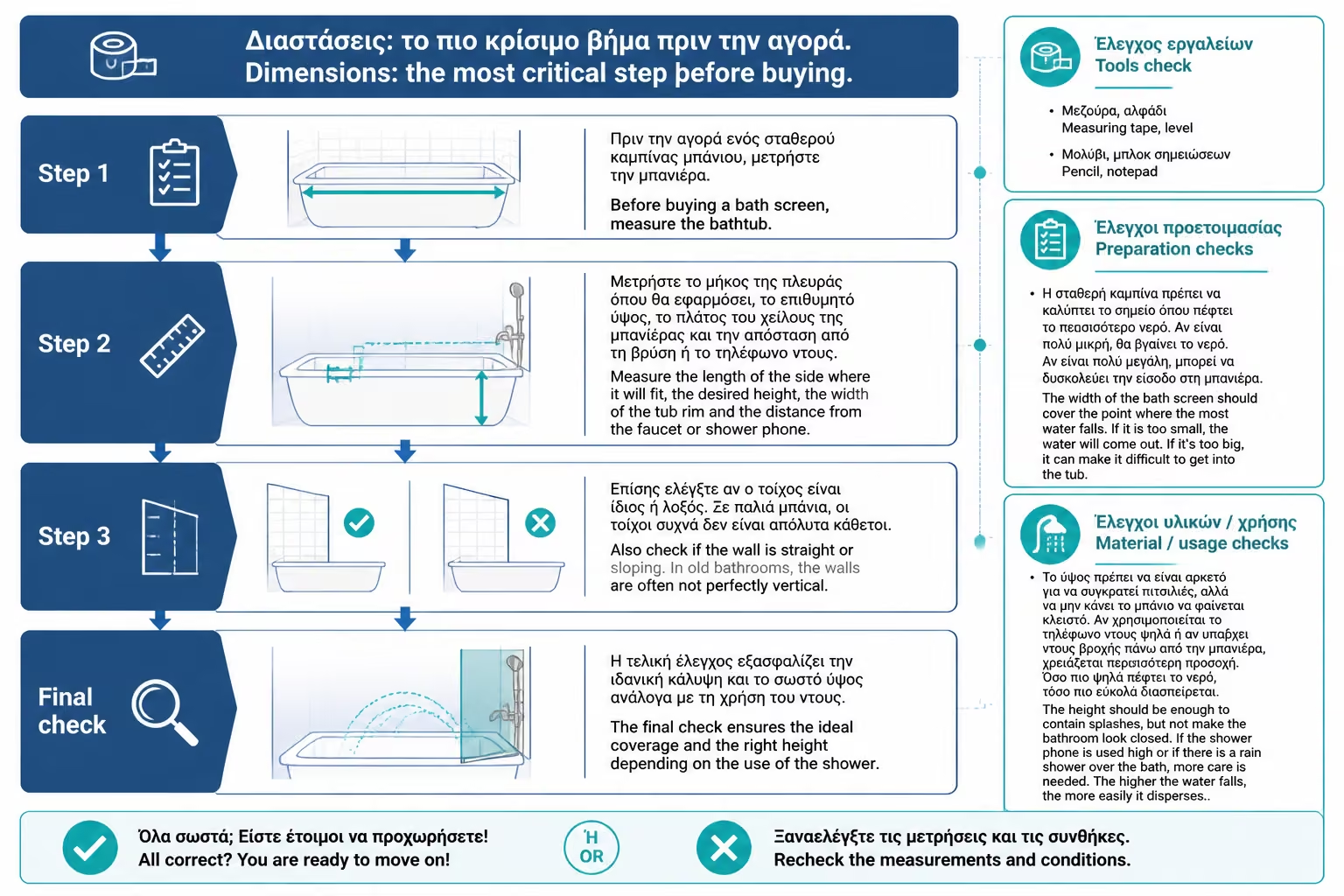
Before buying a bath screen, measure the bathtub. Measure the length of the side where it will fit, the desired height, the width of the tub rim and the distance from the faucet or shower phone. Also check if the wall is straight or sloping. In old bathrooms, the walls are often not perfectly vertical.
The width of the bath screen should cover the point where the most water falls. If it is too small, the water will come out. If it's too big, it can make it difficult to get into the tub. In stable cards, this balance is very important.
The height should be enough to contain splashes, but not make the bathroom look closed. If the shower phone is used high or if there is a rain shower over the bath, more care is needed. The higher the water falls, the more easily it disperses.
Also check the obstacles. Is there a window? Shelf; Battery sticking out? A cistern nearby? Sink next to the bathtub? Heater? Door that opens to the tub? The bath screen must work in the actual layout, not just the design.
| Bath screen type | Advantages | What to watch out for |
|---|---|---|
| Fixed leaf | Minimal, easy cleaning, less damage | Limited access |
| Opening sheet | Good access, clear image | It needs opening space |
| Folding 2–3 leaves | Ideal for small bathrooms | More rubbers and hinges |
| Fixed + movable leaf | Good combination of tightness and access | More expensive/complicated |
| Full bath cabin | Better water containment | Heavier optics and more expensive solution |
The bathtub must have a suitable lip to press the bath screen. If the rim is very narrow, curved, strongly rounded or slanted outwards, the seal becomes more difficult. The bottom rubber of the crystal must be pressed properly to guide the water to the inside of the tub.
Many old bathtubs have rounded edges. There some bath screens do not fit well. A special tire or profile may be needed. If the bathtub is acrylic and has little elasticity, the fixing must be done even more carefully. We don't want the crystal to mispress or create voltages.
The tightness also depends on the silicone in the bathtub-wall connection. If the old silicone is blackened, peeling or broken, it must be replaced before or during installation. The new crystal will not solve a broken seal behind it. If water gets through the tub-wall joint, it will continue to get through.
Caution: the bath screen restricts the water, but it does not work wonders if the shower phone faces directly towards the joint or out. Usage remains important. The crystal must cooperate with the correct flow direction.
The bath screen rests on the wall with a profile or with hinges, depending on the type. This means that tiles or wall have to be drilled. Drilling into tile requires the right tool, care and precise marking. A cracked tile in an obvious place is damage that is difficult to repair.
Before drilling, it must be checked whether there is piping behind the point. In a tub, the faucets and pipes may be near the faucet side. We don't drill blindly without knowing the installation route. If in doubt, a technician is needed.
The support must be done on a stable basis. If the tiles are hollow, if the wall is damp, or if the plaster behind is loose, the crystal may not hold properly. A bath screen has weight and accepts movement, especially if it is opened or folded. It is not a decorative sticker.
In plasterboard or light masonry, special support provision is needed. If the wall has no reinforcement, a heavy sheet of glass can be a problem. Fixed fixing is a matter of safety, not just tightness.
Folding bath screens are very convenient when the bathtub is also used as a bathtub, not only as a shower. You can fold them to get in more comfortably, wash a child, clean the bathtub or open up the space more. In small bathrooms, this flexibility is important.
The downside is complexity. More cards mean more compounds. More compounds means more rubbers, more cleaning points and more chance of small leaks if they don't fit properly. Hinges must be of good quality and withstand use.
If you choose folding, check how it folds. Does it fold inward, outward, or both? Is it in a faucet, a sink, or a shelf? When folded, does it leave enough room for entry? Can it be easily cleaned between sheets? This is what you should know before buying.
In very economical folding systems, rubbers and hinges can wear out quickly. If the bath screen will be used daily, it deserves better quality. The low cost in the market can seem expensive if it starts to leak or hang.
The fixed glass sheet is the most elegant solution when you want a clean, bright effect. It has fewer lines, fewer moving parts and is more reminiscent of a walk-in aesthetic, but on a bathtub. If space allows, it can give a much more premium look than a curtain or fully framed system.
It is easier to clean because it has fewer compounds. After showering, squeegee the glass and wipe the bottom rubber or contact point. If it has an anti-salt coating, maintenance becomes even easier. The absence of many pleats is a great advantage in relation to a curtain.
The downside is that it doesn't open. If the bathtub is narrow or if you need comfortable access to the entire length, it can be annoying. Also, because it does not cover the entire length of the tub, you must use the shower in the correct direction. If the water goes to the open side, it will come out.
The fixed bath screen is best suited when the faucet and shower are at the edge of the tub and most of the water falls close to the wall. If the shower is used very freely or by children, perhaps an opening/folding system offers better control.
Profiles determine aesthetics. Chrome is the safest and most timeless choice, especially if the batteries and accessories are chrome. It ties in easily with existing bathrooms and doesn't draw too much attention.
Black matte gives a more modern, industrial or minimal character. In bathrooms with white or gray tiles, the black profile creates a very clean line. If you already have a black faucet, black mirror or black accessories, the effect blends in nicely. However, care must be taken with salts and cleaners, because black finishes can dull if cleaned incorrectly.
Frameless or almost frameless looks lighter and more luxurious. It has less metal and lets the glass dominate. But it needs very good positioning, correct tolerances and stability. It is not always the best choice on crooked walls or old bathtubs, because the imperfections are more visible.
In an old bathroom, the very minimal frameless can look nice but also highlight crooked joints or old tiles. A thin profile can hide small imperfections and give a cleaner finish. The choice must take into account the actual situation of the space.
Glass looks beautiful when it is clean. If it is filled with prints, salts and soaps, it quickly loses its premium image. That's why maintenance is part of the decision. If you don't want to go through the glass after showering, you have to accept that marks will show.
The simplest tool is the squeegee, i.e. the hand windshield wiper. After each shower, run the glass from top to bottom. The move takes less than a minute and drastically reduces prints. If you have hard water, it's almost a necessary habit.
For weekly cleaning, use a suitable glass cleaner or mild anti-calc, paying attention to profiles, rubbers and silicone. If the bath screen has an anti-salt coating, follow the manufacturer's instructions. Do not use hard sponges or abrasives that can scratch the glass or wear away the coating.
Black or colored profiles should not be sprayed uncontrolled with strong anti-salts. Better to apply the product to the cloth and clean targeted. Glass needs cleaning, but the finishes around it need protection.
The tightness of a bath screen does not depend only on the glass. It depends on the rubbers, the silicone and the correct fit to the wall and the tub. If the bottom seal does not sit properly, water will pass through. If the silicone is bad, leaks will occur at the joints. If the wall is crooked and the profile does not fit, water can find a passage.
Tires must be clean and elastic. Over time they can turn yellow, harden or become filled with salts. Many models have spare tires. It is good to choose a system for which spare parts can be found, because after years of use they may be needed.
Silicone must be suitable for bathing and applied to a clean, dry surface. If it gets on top of old mold or moisture, it won't hold properly. After application, curing time is required before using the shower, according to the instructions of the material.
Do not consider it normal for water to pass on the floor. If it happens regularly, something is not fitting correctly or using the shower is sending water outside the protected zone. The leak must be fixed before it causes damage to furniture, joints or flooring.
If the bathtub is used for children, the bath screen should allow easy access. A fixed sheet can make it difficult for a parent who wants to bend down and wash a child. A folding or opening system may be more practical, as long as it has secure hinges and does not create trap points.
For the elderly or people with reduced mobility, the bath screen should be carefully evaluated. The bathtub itself is more difficult than a flat shower. A sheet of glass can restrict access or make it difficult to use assistive handles. In such cases, safety comes before aesthetics.
If there is a need for a handrail, bath seat or special access, the position of the bath screen must be considered together with them. The glass must not block support handles or reduce movement space. We also do not use the bath screen as a support. It's not a handle.
In families, practicality often leads to a folding or partially opening model. In an adult bathroom with mainly a shower, the fixed sheet can be a cleaner and more elegant option.
The full tub enclosure encloses most or the entire length of the tub. Limits water better, especially if the shower is heavily used. But it is visually heavier, has more profiles, more tires and is more difficult to clean. In a small bathroom, it can make the bathtub look trapped.
The bath screen is lighter and more discreet. It doesn't close completely, so the tub remains more open. It is best for an aesthetic upgrade and for those who want to leave the curtain without creating a full cabin. However, it does not retain water to the same extent as a closed solution.
If the bathroom is mainly used by adults who take a careful shower, a bath screen is usually sufficient. If it is used by children, if the shower is very strong or if there is often water on the floor, more coverage or a full cabin may be needed.
The choice should be based on usage, not just photography. The most minimal result is often the most beautiful, but not always the most watertight.
When the bath screen is installed, the curtain and usually the rail or rod is removed. This leaves scars. If the rail was telescopic, there may be no holes, but there may be pressure marks on the wall. If it was screwed, there will be holes in the tiles or wall. They must be closed or covered in a clean manner.
If there were rings, rust or marks from the old curtain, clean the area before installation. Many times the curtain hides blackened silicones, salts on the rim of the bathtub or dirty corners. The glass will reveal these points, because now the space is seen more clearly.
Also remove any old adhesive mounts, hooks or brackets that will not be needed. The new result should be clean. If the old rail is left over the new crystal, the upgrade loses much of its value.
The old curtain should be thrown away if it has mold or a smell. If it is in good condition, it can be washed and kept temporarily, but usually after the bath screen it is not necessary. The change is both practical and symbolic: the sketchy element is gone.
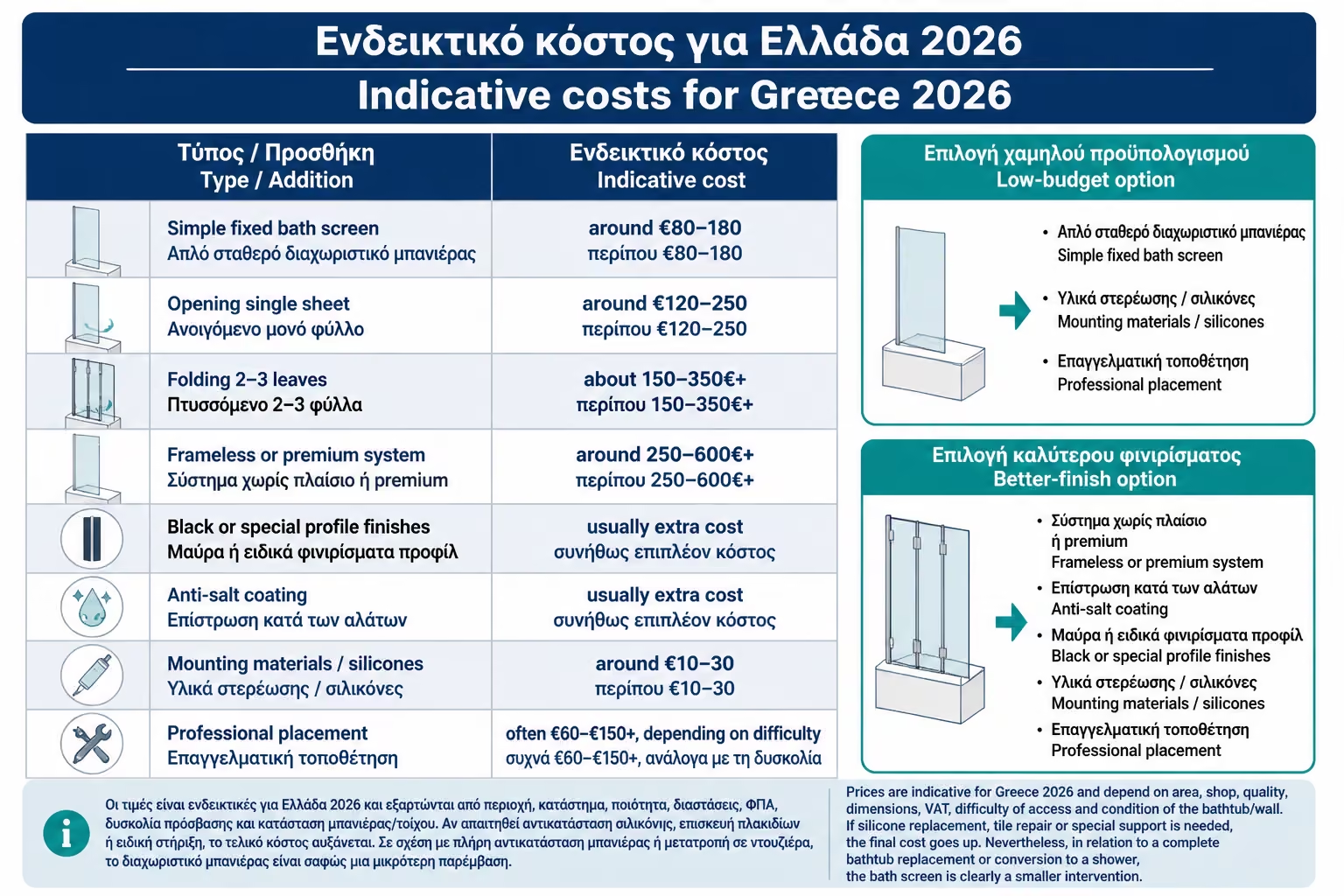
The cost depends on the type of bath screen, the thickness of the glass, the finish of the profiles, the quality of the hinges, the existence of an anti-salt coating and the installation work. A simple fixed model is more economical than a folding multi-leaf or frameless system.
The prices are indicative and depend on the area, shop, quality, dimensions, VAT, difficulty of access and condition of the bathtub/wall. If silicone replacement, tile repair or special support is needed, the final cost goes up. Nevertheless, in relation to a complete bathtub replacement or conversion to a shower, the bath screen is clearly a smaller intervention.
| Product / Work | Indicative cost picture 2026 |
|---|---|
| Simple fixed bath screen | around €80–180 |
| Opening single sheet | around €120–250 |
| Folding 2–3 leaves | about 150–350€+ |
| Frameless or premium system | around 250–600€+ |
| Black or special profile finishes | usually extra cost |
| Anti-salt coating | usually extra cost |
| Mounting materials / silicones | around €10–30 |
| Professional placement | often €60–€150+, depending on difficulty |
| Removal of old rail and minor repairs | case by case |
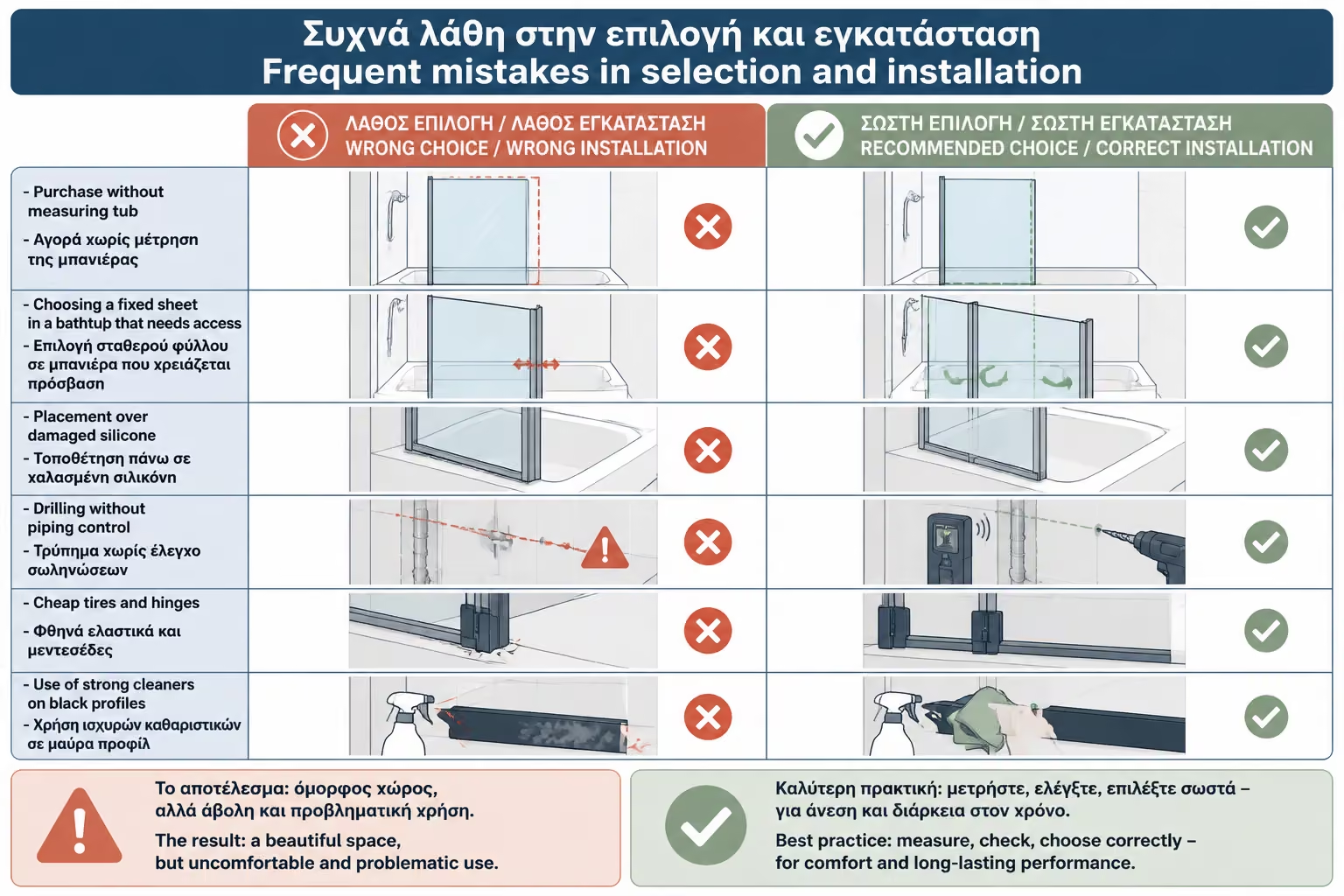
The most common mistake is buying based on looks alone. A bath screen may look great in the photo, but not fit properly, not fold over the sink, or not fit over the lip of the tub. The dimensions and layout of the space are more important than the design.
A typical example is the fixed glass that fits into a small bathtub, but leaves a very narrow entrance. The space looks beautiful, but everyday use becomes uncomfortable. In such a case, a folding model would be less minimal but much more practical.
| Error | What does it cause? | Correct practice |
|---|---|---|
| Purchase without measuring tub | Poor fit or insufficient coverage | Accurate measurement before purchase |
| Choosing a fixed sheet in a bathtub that needs access | Difficulty of use | Folding or opening model |
| Placement over damaged silicone | Leaks behind the glass | New silicone before/after fitting |
| Drilling without piping control | Risk of damage | Technical control |
| Cheap tires and hinges | Leaks and rapid wear | Quality system |
| Use of strong cleaners on black profiles | Fading and wear | Gentle cleaning |
| Consider that the bath screen seals like a complete cabin | Water on the floor | Realistic use and correct shower direction |
| Skip the squeegee after showering | Salts and blurs | Daily glass pass |
A professional is needed when tiles need to be drilled, when the bath screen is heavy, when the wall is not straight, when there is doubt about piping, when the bathtub has a special shape or when you want a guaranteed tightness. Installing glass is not a simple decorative task. It has weight, alignment and security.
A technician is also needed if the old silicone needs to be removed and redone properly. Applying silicone around the tub is critical. If done sloppily, it can blacken, peel, or allow water to seep behind the tub.
If there are broken tiles, hollow spots, moisture or bulges in the wall, do not install glass until they are checked. Support must be done on a sound basis. If the substrate is problematic, the bath screen can become dangerous or create new damage.
In a rented house, consultation with the owner is necessary, because the installation usually requires holes. Unlike a curtain, the bath screen is not a fully reversible intervention. It can be removed, but the holes in the tiles will remain.
| Inquiry | Yes / No |
|---|---|
| Has the length and height of the bathtub been measured correctly? | Yes / No |
| Is the lip of the bathtub suitable for pressing on the bath screen? | Yes / No |
| Is the wall where it will rest stable and free of moisture? | Yes / No |
| Has the puncture site been checked for piping? | Yes / No |
| Is the old silicone around the tub in good shape or will it be replaced? | Yes / No |
| Does the model chosen allow comfortable entry into the tub? | Yes / No |
| If it opens/folds, is there room for it to open without obstruction? | Yes / No |
| Is the glass safe and the right thickness? | Yes / No |
| Are the profiles and hinges resistant to moisture? | Yes / No |
| Is there a plan to clean glass with a squeegee after showering? | Yes / No |
| If the house is a rental, is there a permit for holes in the tiles? | Yes / No |
| Have professional placement costs been calculated? | Yes / No |
If the answer is "No" to the points regarding support, silicone, drilling or opening space, don't buy yet. The bath screen should fit the actual space, not just the image you want.
The bath screen is a great upgrade when the tub is in good condition and the use is mainly showering. Before choosing it, check three things: whether the tub lip allows for a proper fit, whether the wall can safely support the glass, and whether the old silicone around the tub is healthy. Don't just see it as decoration. It is a glass element that must be properly secured and properly sealed. If done correctly, it changes the whole image of the bathroom. If done sloppily, it will leak and trouble you every day.
The transition from a plastic curtain to a glass bath screen is one of the most powerful aesthetic and practical upgrades for a bathroom with a bathtub. The curtain goes away, the space is illuminated, the bathtub looks cleaner and the bathroom acquires a more modern, stable and neat image. Glass does not stick to the body, does not mold like the curtain and is easier to clean when there is a proper routine.
But the choice must be made with moderation and technical logic. Fixed, opening or folding? Transparent or tinted? Chrome or black profile? It all depends on the size of the bathtub, the layout of the bathroom, the way of use and the condition of the wall. A beautiful bath screen that doesn't open properly or leaves water on the floor is not a successful upgrade.
Before installing, the tub, silicone, walls, piping and access should be checked. Installing glass requires precision and safety. With the right choice and professional application, the bath screen can make an old bathroom look much brighter, cleaner and modern, without having to remove the bathtub.
Return to category.
Go to categoryReturn to the central guide.
Go to guide