
Bathroom DIY, Maintenance & Styling
Return to category.
Go to categoryThere are changes in the bathroom that look impressive from the first moment: a new mirror, a black faucet, a glass bath screen, a modern light fixture. But there are also small changes that do not shout, but deeply affect the feeling of cleanliness. Replacing the old toilet bowl seat is one of them. It is probably one of the most underrated bathroom upgrades.
A yellowed, cracked or loose plastic seat can make even an otherwise clean bathroom look old and unkempt. The eye does not always analyze it consciously, but it perceives it immediately. The toilet bowl is the central object of the bathroom and its lid is one of the most obvious points. If it is worn, the overall image falls.
Instead, a brand new bakelite lid, properly fitted, with clean lines, stable hinges, soft-close closure and quick-release mechanism gives an instant sense of freshness. The toilet bowl does not change, the faucet does not change, the tiles do not change. And yet, the space looks healthier, neater and more "new".
The toilet bowl lid is also an everyday item. It opens, closes, cleans, accepts weight, moisture, cleaning agents and contact with the body. When it's loose, it wiggles. When it's cheap plastic, it bends. When cracked, it holds dirt in the crevices. When it's yellowed, it never really looks clean, no matter how much you scrub it.
In this guide we will see why it is worth changing the old toilet bowl lid, what is the difference between plain plastic, MDF and Bakelite, what soft-close and quick-release mechanisms offer, how to correctly measure the toilet bowl before buying, when a universal lid is suitable and when a special model is needed, how to install it and what mistakes to avoid.
The toilet bowl is one of the most visible and "sensitive" elements of the bathroom. Unlike a shelf or a decoration, it is directly related to hygiene. When the lid is old, yellowed or cracked, the visitor may not comment on anything, but the impression of cleanliness is immediately reduced.
The problem is that old plastic is not always visually clean. It may be sanitized but still look dirty. Over time, plastic yellows, dulls, scratches and holds micro-stains. Hinges collect scale and debris. The screws loosen and the seat wobbles. All this creates a worn, tired impression.
A new seat works like a "reset". The toilet bowl acquires clean lines, white color, stability and a better feeling of use. Even if the toilet bowl itself is old, a new seat can make it look much fresher. It is one of the changes that cost relatively little but is seen every day.
In a guest WC, the change is even more significant. The visitor does not see the internal plumbing nor the quality of the grout. He sees the sink, the mirror, the toilet bowl and the lid. A new soft-close seat can give the feeling of a well-kept space without any other major intervention.
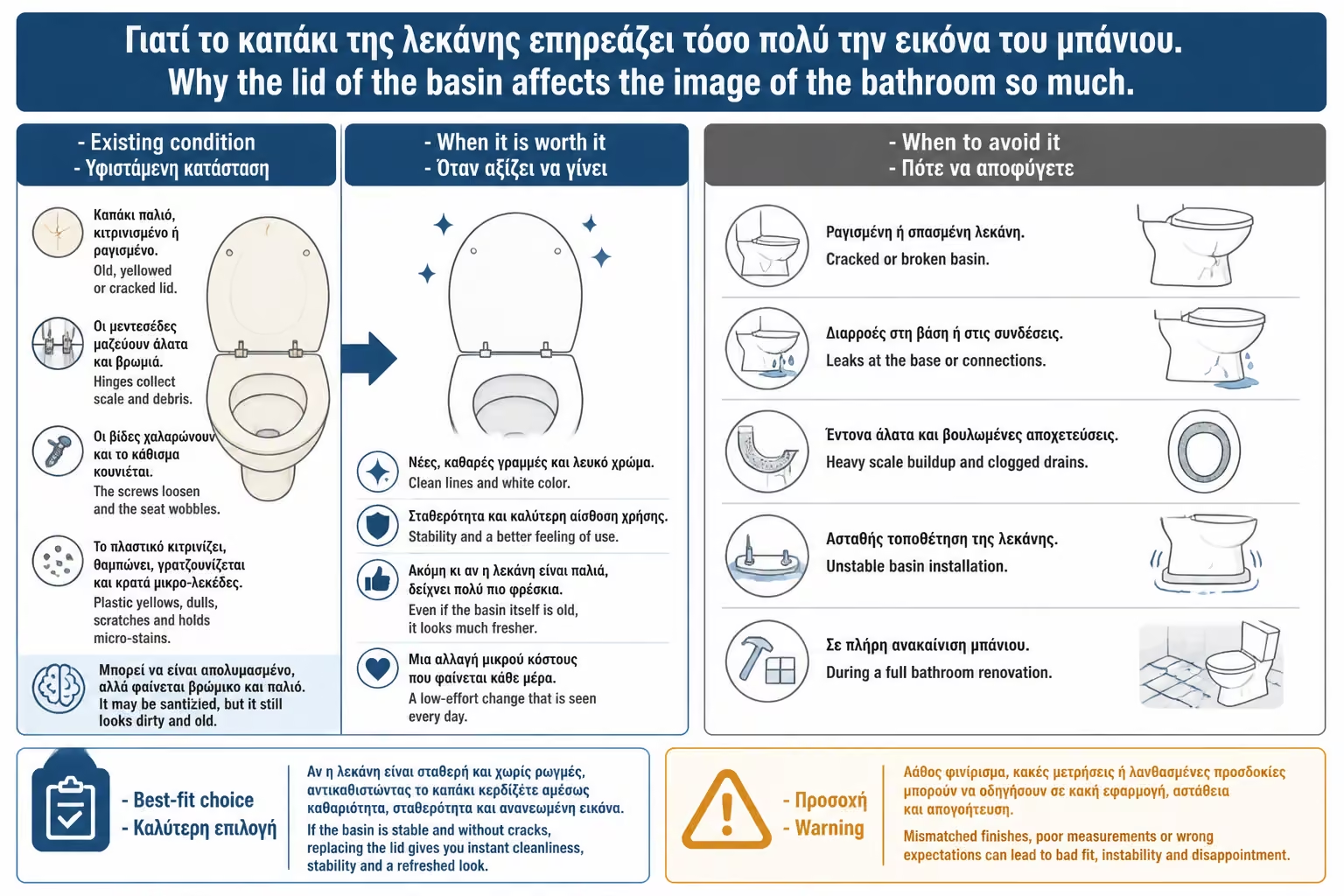
The lid should be replaced when it is yellowed, cracked, deeply scratched, constantly wobbles, hinges are rusted, or does not sit properly on the toilet bowl. You don't have to wait for it to break completely. If it looks old and no longer visually clean, it has already lost its role.
A cracked lid is not just an aesthetic problem. Cracks hold dirt and moisture. They may sting the skin, grow larger with use, or break suddenly. If the seat bends when you sit, it is an indication of poor quality or wear.
If the lid wobbles, you can first try tightening or adjusting. But if the hinges are worn, if the lids don't hold, if the screws are rusted, or if the lid itself doesn't fit the toilet bowl, replacement is a better solution.
It's also worth changing when doing a general facelift in the bathroom. New knobs, new dispenser, new faucet and an old seat do not fit. It's like you cleaned the whole room but left the most delicate item worn out.
The most economical lids are usually made of plain plastic. They're light, cheap and easy to fit, but often don't feel the best. They may bend, turn yellow faster and scratch easily. For a temporary solution or a rental with a very low budget, they may be acceptable. For an upgrade feel, it's usually not the best choice.
MDF lids have a heavier feel, are often painted or lacquered and come in many designs. They can look nice, but in the bathroom they need attention. If the surface is scratched or opened at the edge, moisture can enter and the material will swell. They are not ideal for bathrooms with a lot of moisture or for areas where they are frequently cleaned with strong products.
Bakelite is a better choice for a toilet bowl lid. It is hard, robust, has a better feel than simple plastic, is easier to clean and retains its image better. Bakelite lids usually look more premium and are often available with soft-close and quick-release mechanisms.
For a real upgrade, bakelite is usually the most balanced choice. It's not as cheap as plain plastic, but the difference in feel, stability and cleanliness is noticeable every day.
Soft-close is a slow closing mechanism. Instead of the lid suddenly dropping onto the toilet bowl with a noise, it comes down slowly and quietly. It's a small detail, but it makes a big difference in everyday use. There is no knocking sound, the seat is not in danger of breaking easily and the use becomes more "calm".
In families with children, the soft-close is particularly practical. Reduces shocks and the risk of fingers getting caught. In small apartments, it also helps with noise, especially at night. It's one of those features that once you get used to it, it's hard to go back to a simple seat.
The soft-close also gives a sense of quality. The seat doesn't work like a cheap plastic object, but like a neater mechanism. This little user experience is part of the luxury. It's not just about looks, it's also about feel.
But caution is needed: we do not press the soft-close to close faster. Pushing it with force may damage the mechanism. You let it go down on its own. If it starts to drop suddenly, the mechanism is probably broken or the mounting is loose.
The quick-release is a quick removal mechanism. With a button or a simple pull, the lid comes off the hinges so you can easily clean the area around the bases. This is a huge advantage in hygiene, because the hinges are among the places that collect the most dirt.
On older seats, the area around the screws is difficult to clean. Salts, dust, moisture and cleaning residues are collected. With quick-release, you remove the seat, clean all the porcelain around the holes and snap it back on. The result is much cleaner.
This function is particularly useful in small bathrooms, in guest WCs, in homes with children and in areas that are cleaned frequently. If you want a real feeling of hygiene, the quick-release is worth as much as the soft-close.
Before you buy, check how easily it is removed in practice. Some systems are very simple. Others are more difficult to use. A good quick-release should allow you to remove and replace the seat without tools and without loosening the adjustment each time.
Many toilet bowl seats are sold as universal, ie adjustable to fit many basins. This works quite often, especially in classic basins with an ordinary shape. But it is not a guarantee that it will fit perfectly. Basins vary in length, width, shape, hole spacing and curves.
If the toilet bowl is a classic oval, a good universal lid will probably fit. If it is a square, compact, hanging, special design rimless or old unusual series, it may need a special manufacturer's seat or a model with specific dimensions.
The special seat fits better aesthetically and functionally, but usually costs more. But it is often the only right solution when you want a perfect fit. A universal lid that protrudes, leaves gaps or does not follow the shape of the toilet bowl may look worse than the old one.
If you know the make and model of the toilet bowl, look for a compatible lid first. If you don't know them, measure carefully. Measurements are more important than the package photo.
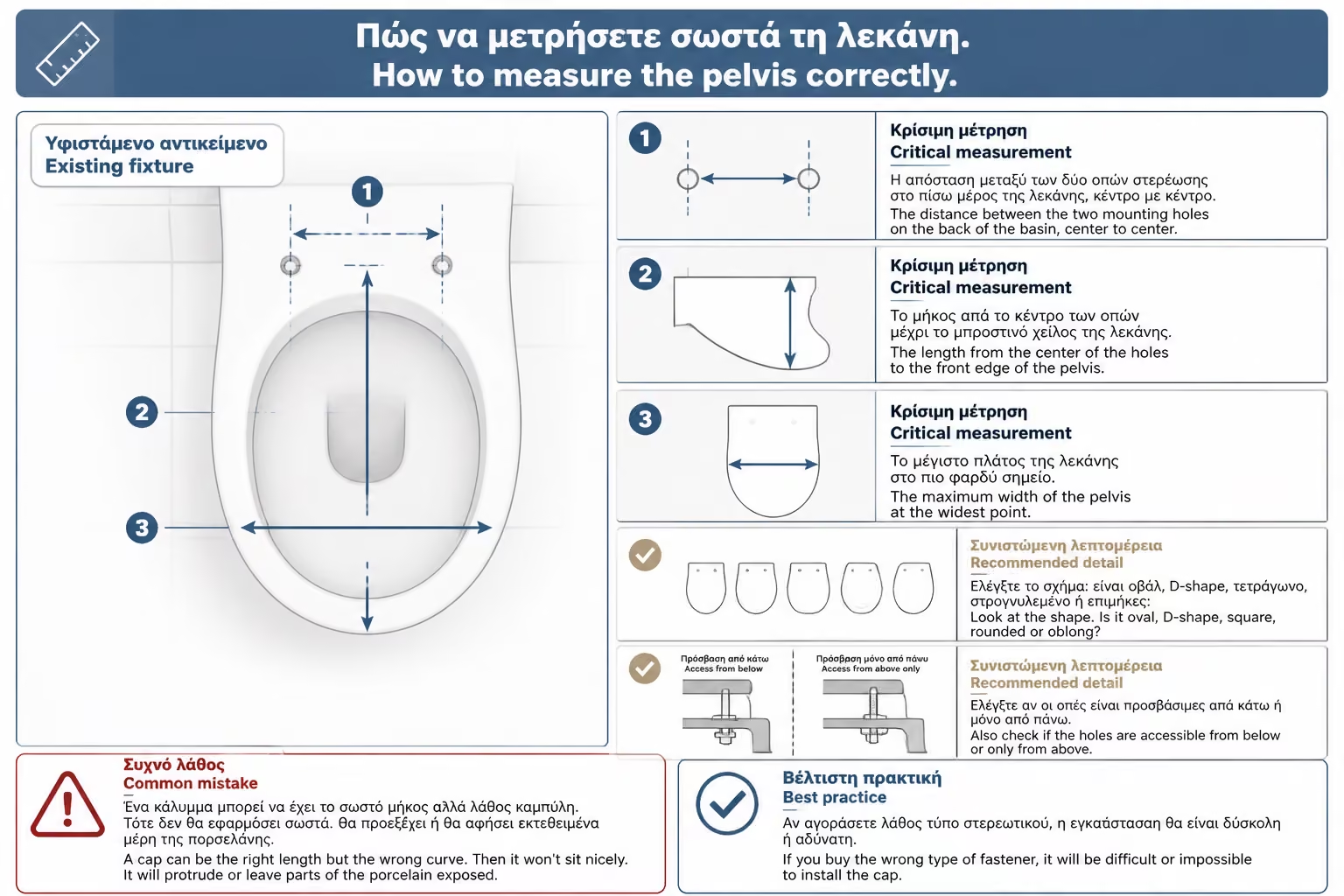
Before you buy, three basic measurements are needed. First, the distance between the two mounting holes on the back of the toilet bowl, center to center. Second, the length from the center of the holes to the front edge of the toilet bowl. Third, the maximum width of the toilet bowl at the widest point.
In addition to the measurements, look at the shape. Is it oval, D-shape, square, rounded or oblong? A seat can be the right length but the wrong curve. Then it won't sit nicely. It will protrude or leave parts of the porcelain exposed.
Also check if the holes are accessible from below or only from above. In classic basins, the screws are often tightened from below. In hanging or modern basins, a top-fix system may be needed, where the installation is done from above. If you buy the wrong type of fastener, it will be difficult or impossible to install the seat.
A practical move is to photograph the toilet bowl from above and from the side, along with the measurements. If you go to a store, that helps a lot. If you're buying online, compare the product's dimensions to yours, not just the “universal” description.
The bottom-fix hinges are tightened from the underside of the toilet bowl. They are common on older or classic basins where the nuts are accessible. Fitting can be a little awkward, because you have to bend back and under the toilet bowl, but it's simple when there's room.
Top-fix hinges are installed from above. They are essential in many hanging or closed basins where there is no access from below. The system uses special plugs or plugs that go into the holes in the toilet bowl and tighten from above. It is very practical, but it must be of good quality so that it does not loosen.
If your toilet bowl is sagging, you probably need a top-fix. If it is a classic floor with open back access, it can accept bottom-fix. Before you buy, bend over and see if you can reach the nuts. If not, don't buy bottom-fix.
Proper fastening is critical. A good seat that doesn't fit properly will wobble and irritate you every day. Many times it's not the lid that's to blame, but the wrong type of hinges for that particular toilet bowl.
White is the safest choice. It matches almost all white basins and gives a clean feeling. But beware: not all whites are the same. Some basins are cool white, others warmer or slightly ivory. A very cool white seat on old warmer porcelain may look different, but usually the difference is acceptable.
Black seats can give a bold, modern or industrial look, but they do not suit all bathrooms. In a white toilet bowl, the black seat becomes very visible. It can work if there are other black components, such as faucet, mirror frame, bath screen or accessories. If it is the only black element, it may seem random.
Wooden or MDF lids in a wood look give a more rustic or vintage feeling, but in the bathroom they need attention to humidity. They can suit rustic or more country aesthetics, but for a pure sense of hygiene white bakelite usually wins.
For a real sense of luxury, you don't need an eye-catching color. A clean white, thin, stable bakelite lid with soft-close and quick-release often looks more expensive than an over-the-top design.
Older seats were often bulkier or had a thick plastic form. Today there are thinner, minimal lines that look more modern. A slim lid can make the toilet bowl look cleaner and less heavy. It is particularly suitable for modern bathrooms and hanging basins.
Thicker seats may feel solid, but if they are of poor quality they can look old-fashioned. The feeling of quality is not only dependent on the thickness, but also on the material, hinges and fit. A thin bakelite seat can be much better quality than a thick cheap plastic one.
Pay attention to comfort. Very thin, low-quality seats may not be comfortable or look flimsy. The ideal is balance: clean line, good material and a solid base. If you have an old large toilet bowl, an overly slim lid may not fit aesthetically.
The choice must match the toilet bowl. On a plain old toilet bowl, a good classic Bakelite can look more correct than a very designer seat that doesn't follow the curves.
Before starting, clean the area as much as possible. Wear gloves, especially if the old seat is very worn. Locate the screws or nuts on the back of the toilet bowl. On old basins, there may be plastic or metal nuts underneath. In top-fix systems, there may be seats over the hinges.
Unscrew carefully. If the nuts are plastic, they may be stuck with salt but usually come loose. If they are metal and rusty, you may struggle. Do not apply excessive pressure in a way that may crack the porcelain. If the screw is rusted and won't come loose, a technician or careful cutting may be required.
After the old seat is removed, thoroughly clean the porcelain around the holes. Salts, old cleaners, dirt and yellow stains collect there. It is the ideal time to do a deep cleaning, because after installation it will be more difficult.
Do not place the new seat on a dirty base. Changing the lid is an opportunity for a healthy restart. If old dirt remains around the hinges, the new lid will lose some of its value.
Open the package and check all the parts: hinges, screws, washers, nuts, seats and instructions. Don't throw away the instructions before you're done. Each system has slight differences, especially in the soft-close and quick-release models.
Insert the hinges into the holes in the toilet bowl and put the lid in place without fully tightening. Adjust it so it sits straight, doesn't stick out too much at the front or side, and follows the shape of the toilet bowl. Adjustment is done before final tightening.
Tighten gradually and alternately. Do not over tighten. Porcelain is hard but can crack if pressed incorrectly. Hinges should be firm, not forcefully tightened. If the system has plastic washers, these help protect the porcelain and stabilize the seat.
After installation, open and close the lid several times. Check the soft-close. Remove and reattach the quick-release, if present. Sit carefully and see if it moves. If there is movement, readjust before it starts to loosen more with use.
If a new lid wobbles, it's usually due to poor adjustment, the wrong type of fastening, or an incompatibility with the toilet bowl. It may be that the hinges are not tightened properly, the washers are not seated properly, the toilet bowl holes are larger, or the lid does not fit the shape.
With universal seats, there is often room for adjustment. This is good, but it means they need to be set up properly. If you just put them "about", they may move. Take a few minutes to center the seat before final tightening.
If the toilet bowl is only accessible from above and the top-fix system is of poor quality, it may loosen. In this case, a better seat or special mounting system may be needed. Not all universals are the same.
If the seat is the wrong size, no matter how much you tighten it won't fit. It will stick out, press in the wrong places or move with the weight. There the solution is not more tightening, but the right model.
Bakelite is easy to clean, but that doesn't mean it can withstand everything. Use a mild detergent, soft cloth or sponge and a good rinse where necessary. Avoid hard sponges, wires, abrasive powders and very aggressive chemicals. They can dull the surface and create micro-scratches.
Do not allow strong disinfectants to dry on the seat for a long time, unless permitted by the manufacturer. Many cleaning products are suitable for porcelain, but not necessarily for hinges, soft-close mechanisms or Bakelite. Too much chemistry can wear down plastics and rubber.
The quick-release helps a lot in maintenance. Periodically remove the lid and clean around the bases. That is the point that judges whether the WC looks really clean. A new seat with dirty hinges won't stay premium for long.
If the lid has a soft-close, do not force it to close. Let the mechanism do its job. If something heavy falls on it or if you use it as a step, it may break. The toilet seat is not a bearing surface for weight beyond normal use.
The hinge area is one of the most difficult parts of the WC. Dust, moisture, cleaning residues and micro-dirt accumulate there. In old lids, this point is difficult to clean, because access is limited. The result is that the toilet bowl may be clean, but the base of the lid always looks dirty.
The quick-release solves this problem. You remove the lid, clean the porcelain flat and free of obstructions, clean the hinges and snap it back on. The difference in the feeling of hygiene is great. There are no "blind" spots.
This function is especially useful in WCs that are used by many people. In a family home, business space, rental or Airbnb, the ability to quickly clean is a practicality, not a luxury. It reduces time and improves the result.
If hygiene is the main reason for replacement, prefer a quick-release bakelite lid instead of a simple economic one. The difference in daily maintenance is worth more than the price difference.
In a rented house, changing the toilet bowl lid is one of the best small interventions. It is relatively economical, immediately noticeable and usually reversible. You can keep the old seat, store it and replace it when you leave if needed.
For reasons of hygiene, many tenants prefer to install their own new lid from scratch. It's a sensible move, especially if the existing one is worn or of unknown age. The cost is small compared to the daily sense of cleanliness it offers.
An owner's permit is not usually needed for a simple replacement as long as the toilet bowl is not modified and you keep the old part. Nevertheless, if the toilet bowl is of a special type or if the old lid belongs to an expensive set, it is advisable to store it carefully.
For rentals, choose a model that fits well but isn't too expensive. A good universal bakelite with soft-close and quick-release is often an ideal balance.
In old basins, choosing a lid can be more difficult. Shapes may not match modern universal models. The hole spacing may be odd or the porcelain may have curves that are not easily followed. There you need patience and measurement.
If the seat doesn't fit perfectly, don't ignore it. A seat that fits incorrectly can break more quickly, wobble, or be uncomfortable. Aesthetics will also suffer. In this case, look for an adjustable model with a wide range of adjustment or a special seat for older toilet bowls.
If the toilet bowl is very old, cracked or with wear on the porcelain, the new lid will improve the image but will not solve all the problems. If there are cracks in the porcelain, leakage at the base or instability of the toilet bowl, a technical inspection is needed. The seat does not fix a problematic toilet bowl.
If the toilet bowl belongs to a specific branded product line, the original lid may be more expensive but fit perfectly. In designer toilet bowls, the correct lid is part of the picture. A wrong universal can break the line.
Cost depends on hardware, mechanism, shape, brand and compatibility. The simple change can be very economical, but for a real upgrade it is worth moving above the cheaper plastic.
Prices are indicative and depend on store, brand, quality, VAT and toilet bowl type. For the majority of simple WCs, a bakelite lid with soft-close and quick-release in the middle range gives the best cost-performance ratio.
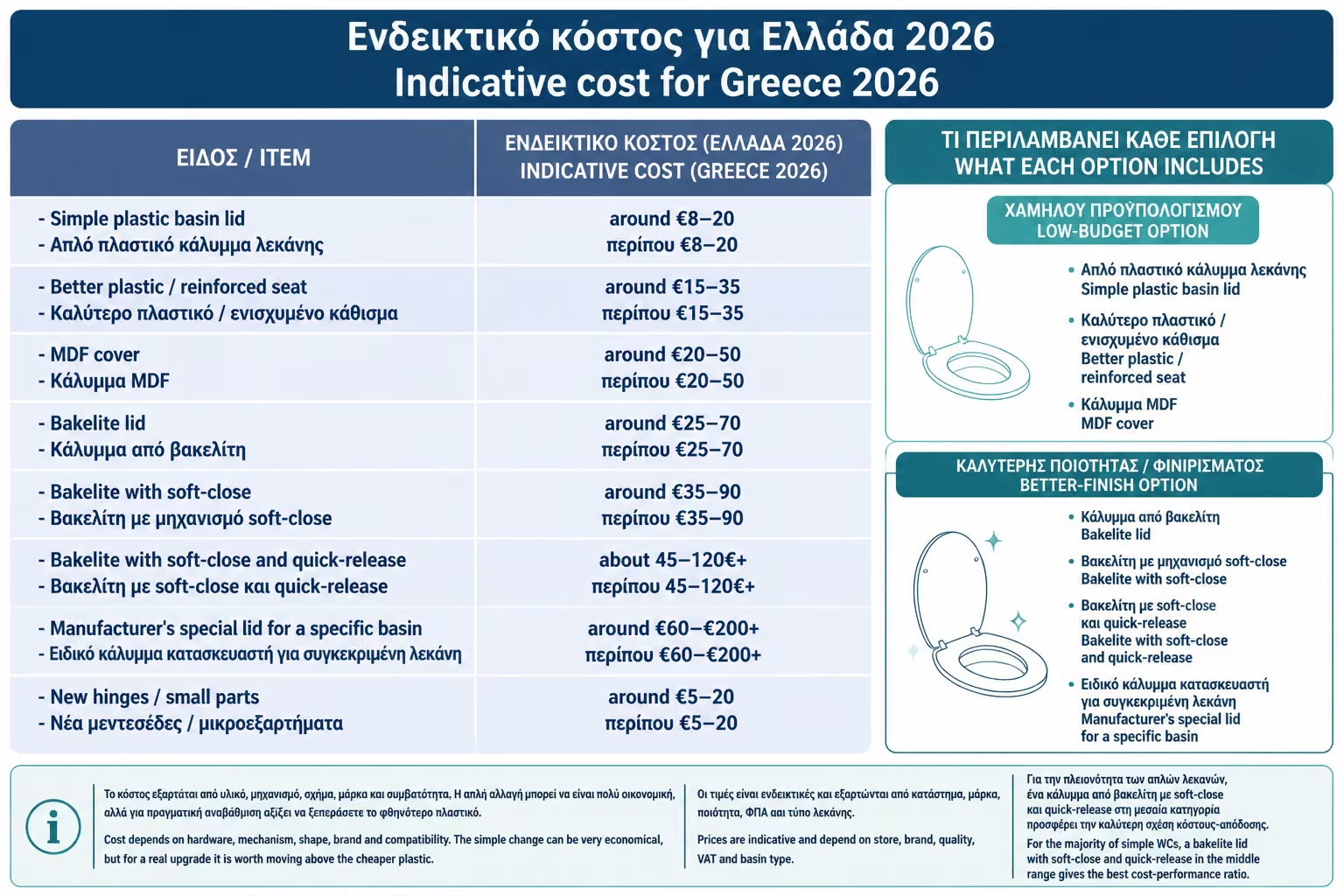
| Product / Work | Indicative cost picture 2026 |
|---|---|
| Simple plastic toilet bowl lid | around €8–20 |
| Better plastic / reinforced seat | around €15–35 |
| MDF seat | around €20–50 |
| Bakelite lid | around €25–70 |
| Bakelite with soft-close | around €35–90 |
| Bakelite with soft-close and quick-release | about 45–120€+ |
| Manufacturer's special lid for a specific toilet bowl | around €60–€200+ |
| New hinges / small parts | around €5–20 |
| Technician work for difficult removal or installation | case by case, often €30–€70+ |
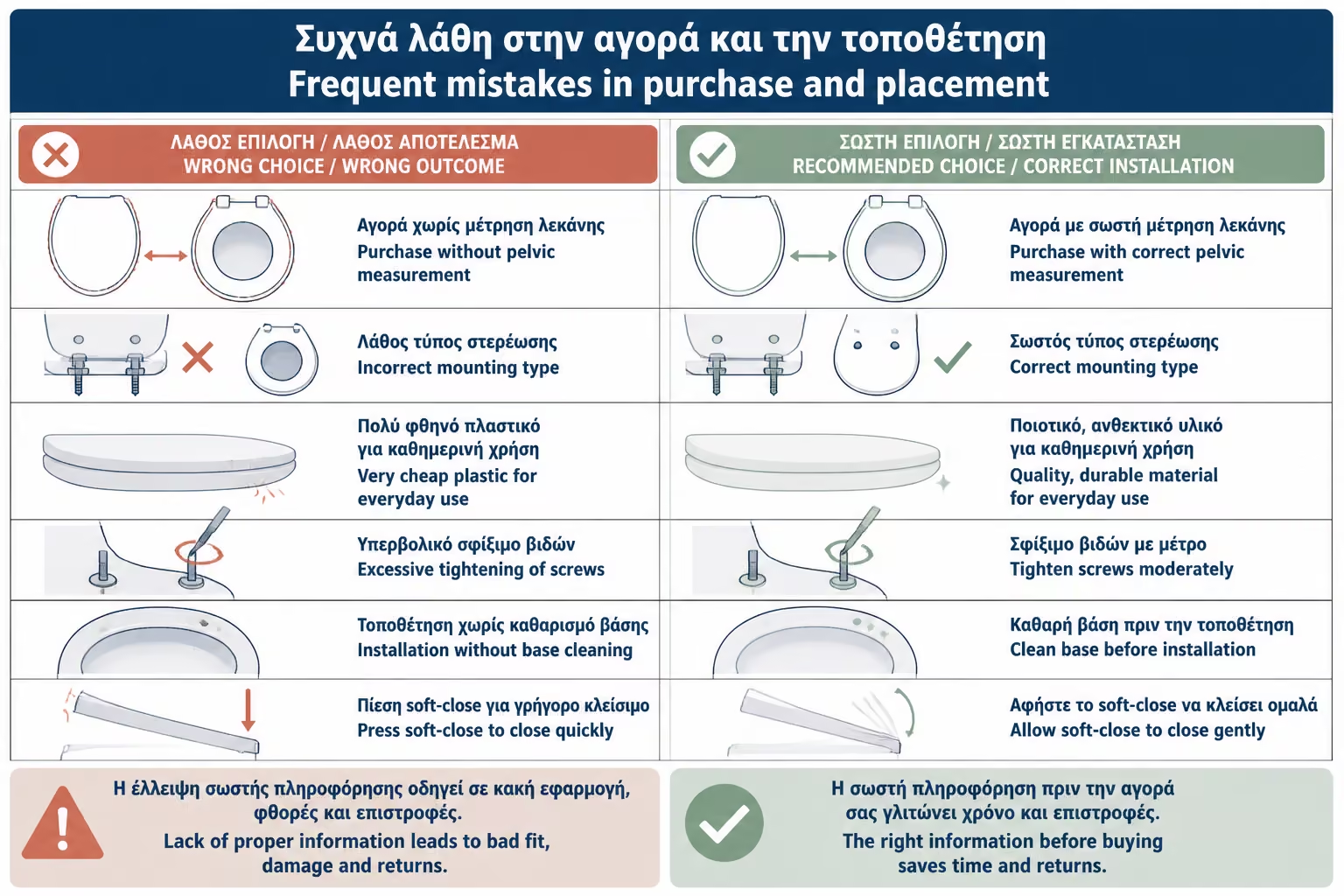
The most frequent mistake is buying "by eye". The lid looks oval, the bowl looks oval, so it's assumed it will fit. In practice, a few centimeters difference in length, width or hole spacing is enough to make a bad fit.
A typical example is the purchase of a "universal" soft-close lid for a hanging toilet bowl that needs a top-fix, while the product has bottom-fix screws. The seat is good but can't be fitted properly. The right information before buying saves time and returns.
| Error | What does it cause? | Correct practice |
|---|---|---|
| Purchase without pelvic measurement | Poor application | Measure length, width and holes |
| Incorrect mounting type | Difficulty or inability to position | Top-fix or bottom-fix control |
| Very cheap plastic for everyday use | Bending, yellowing, rapid wear | Bakelite for a better feel |
| Excessive tightening of screws | Risk of wear or breakage | A firm but not violent squeeze |
| Installation without base cleaning | Dirt around hinges | Deep cleaning before installation |
| Press soft-close to close quickly | Mechanism wear | Let it close by itself |
| Black/wooden seat unrelated to style | Random result | Combination with other elements |
| Ignoring special pelvic shape | Protrusions and gaps | Search for a compatible model |
In most cases, changing a toilet seat is a DIY job. A technician is needed when the old screws are rusted and won't loosen, when there is a risk of damaging the porcelain, when the toilet bowl is hanging with difficult access, or when the new fixation system does not fit properly.
A technician is also needed if during the change you notice that the toilet bowl wobbles, has a crack, drips at the base or has a problem with the cistern. The lid is an independent part, but the work gives you the opportunity to check the general condition of the WC.
If the toilet bowl is of a special design and the lid is expensive, it may be worth having a technician install it to avoid mistakes. An incorrect tightening of a special mechanism can damage the product or create a loose fit.
If you're just replacing a simple seat with a new universal, you can usually do it yourself with care, gloves, cleaning, and proper measurement.
| Inquiry | Yes / No |
|---|---|
| Has the distance of the mounting holes been measured? | Yes / No |
| Has the length been measured from the holes to the front edge of the toilet bowl? | Yes / No |
| Has the maximum width of the toilet bowl been measured? | Yes / No |
| Is the shape recognized: oval, D-shape, square or special? | Yes / No |
| Do you know if it needs top-fix or bottom-fix fastening? | Yes / No |
| Is the new seat made of material that can withstand everyday use? | Yes / No |
| Is there a soft-close mechanism for quiet closing? | Yes / No |
| Is there a quick-release for easy cleaning? | Yes / No |
| Do the color and line match the toilet bowl and the bath? | Yes / No |
| Will the old base be cleaned before the new seat goes in? | Yes / No |
| If it's a rental house, will the old seat be kept? | Yes / No |
If the answer is “No” to the measurements or the type of fastening, don't buy yet. The right seat is not only a matter of quality, but above all of correct fit.
If you want an immediate sense of cleanliness in the WC, first change the lid of the toilet bowl. It is a small change, but it is seen and used daily. But don't buy based on the photo alone. Measure the toilet bowl, check if it needs top-fix or bottom-fix and prefer bakelite with soft-close and quick-release. The real upgrade isn't just that the seat is new. It closes quietly, doesn't wobble, and is easily removed for proper cleaning around the hinges.
Replacing the toilet bowl seat is one of the simplest, most economical and effective renovation moves in a bathroom. An old, yellowed or cracked plastic lid throws off the image of hygiene, even if the area is cleaned frequently. A new bakelite seat, properly applied, with soft-close and quick-release, immediately gives a cleaner, more stable and quality feeling.
The important thing is the right choice. It is not enough to be "universal" or "nice". It must match the shape of the toilet bowl, the distance of the holes and the type of fastening. It should be firmly pressed, not wobbly and easy to clean. The quick-release makes a big difference in daily hygiene, while the soft-close adds a feeling of quietness and luxury.
Compared to other interventions, the new toilet seat has excellent performance for its cost. It does not require major work and does not require renovation and can be installed quickly. If combined with a good cleaning of the toilet bowl, new accessories and perhaps a change of hinge fittings, the WC immediately looks fresher and neater. It's a small detail, but in the bathroom it's the details that create the feeling of real cleanliness.
Return to category.
Go to categoryReturn to the central guide.
Go to guide