
Bathroom Fixtures & Water Equipment
Return to category.
Go to categoryThe freestanding bathtub is perhaps the most theatrical element that can go into a bathroom. It is not just a type of hygiene. It's a statement. It enters the space like a piece of furniture, like a sculpture, like a central object around which the whole composition is organized. That is why we often see it in large master bathrooms, boutique hotels, luxury suites and architectural bathrooms where the goal is not only function, but also experience.
In contrast to the classic bathtub that leans against walls and is "lost" in the lining, the freestanding bathtub can be seen from all sides. This is its great advantage, but also its great demand. To look really beautiful, she needs space around her. If it gets squeezed between a basin, a piece of furniture and a wall, it loses its reason for being. If there is no proper distance for cleaning, it becomes a daily hassle. If battery waits are not correctly predicted, this can result in an expensive and difficult fix.
The free-standing bathtub is an option that must be planned early. It is not something that is decided after the tiles are finished. Its location affects drainage, water supplies, the location of the floor battery, the weight on the floor, where the user will move, how the space will be cleaned and how it will be lit. They are among the options that can take off the bathroom, but only if they are properly integrated into the design.
So the first question is not "which freestanding bathtub do I like?". It's "do I really have the space and infrastructure to support it?". If the answer is yes, then it can become the most striking element of the bathroom. If the answer is borderline, great care is needed, because the luxury seen in the photo can become uncomfortable in practice.
Freestanding is the bathtub that does not need to be "built" into a frame and does not necessarily rest against a wall. She stands freely on the floor, with all sides visible. It can be oval, organic, rectangular, retro or more sculptural. It can be placed in the center of a large bathroom, next to a window, on an accent wall or even near a walk-in shower if space allows.
The concept of the freestanding bathtub is based on comfort and image. It is not the most "compact" solution. It is not the most economical. It is not always the most practical for small bathrooms. But it is the solution that gives the feeling of a spa, a hotel and a personal relaxation area.
In practice, the freestanding bathtub works best when the bathroom has enough free floor space. It needs space around it to be seen, to be cleaned and not to create a cramped feeling. If the bathtub is simply inserted into the place of an old built-in bathtub without changing the layout, it often does not achieve the result we expect.
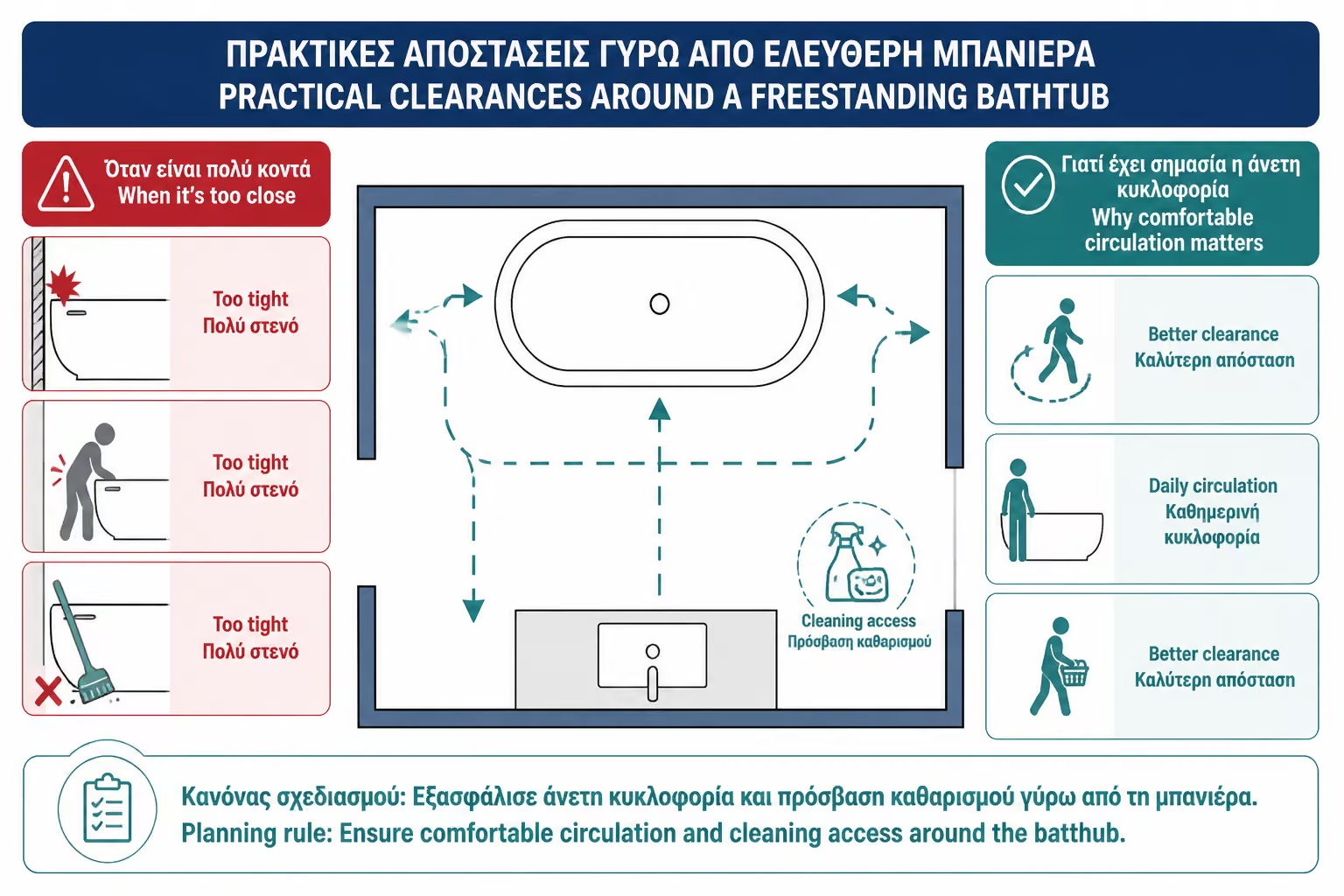
The freestanding bathtub needs "air". This is the basic rule. It is not enough that its dimension fits in the plan. There must also be space around her. Space to pass, clean, bend down, open a cupboard or stand comfortably next to the battery.
Ideally, the bathtub should not be suffocating against walls or furniture. If it is placed close to a wall, it needs enough distance to be able to clean the back side. Otherwise, the dust, salts and water will collect in a place that no one can easily reach. This is one of the practical problems that can't be seen in the pictures.
To put it right, the freestanding bathtub is best suited to medium to large sized bathrooms. In a very small bathroom, it is usually not a good choice. Not because it doesn't fit mathematically, but because it doesn't breathe. If the bathtub rests everywhere, it ceases to be freestanding in practice. It just becomes a more expensive bathtub that is harder to clean.
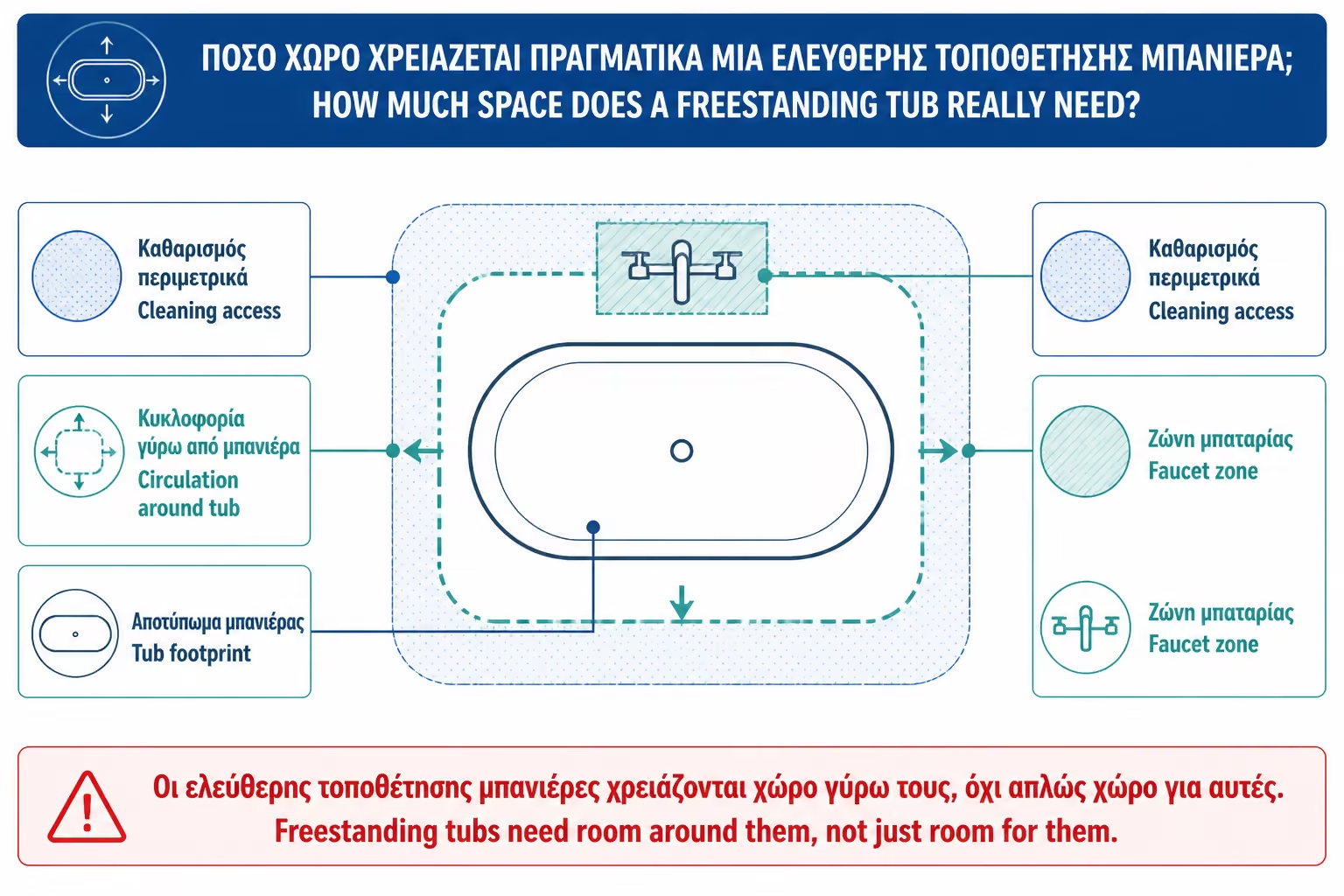
There is no one-size-fits-all distance, because every bathtub is a different shape and size. However, in practice there are some reasonable minimum distances that help with planning.
| Point | Practical direction |
|---|---|
| Behind the bathtub | There should be space for cleaning, not simple contact with the wall |
| Next to the bathtub | To be able to pass or stand comfortably |
| In front of the bathtub | To have a free zone of use and access |
| Around a floor battery | There should be room for handling and service |
| Near a basin or a piece of furniture | Avoid the feeling of being squeezed |
If we need to "clamp" the tub to fit, it is usually not the right choice. In this case, a good built-in bathtub or a large walk-in shower can give a better result.
Acrylic freestanding bathtubs are among the most popular, mainly because they are lighter, more economical and easier to transport and install. Acrylic feels relatively warm to the touch and is not as cold as porcelain or cast iron. This makes the bathroom more comfortable in daily use.
The great advantage of the acrylic bathtub is practicality. It comes in many designs, many dimensions and fairly affordable prices. If the goal is to install a freestanding bathtub without exceeding the budget, acrylic is often the first choice.
The downside is that it needs attention to quality. An inexpensive acrylic tub may look impressive at first, but be more delicately constructed, scratch more easily, or feel less sturdy. Also, acrylic should not be cleaned with abrasives and hard sponges. It needs mild detergents and proper maintenance.
For most domestic bathrooms, a good acrylic freestanding is the most realistic solution between cost, weight and aesthetics.
The cast iron bathtub is the most classic and heavy version of luxury. It has a historical character, a retro feel and excellent sturdiness. It is often combined with legs, vintage batteries and a more classic aesthetic, although there are also more modern models.
Its great advantage is the feeling of a permanent, solid object. Cast iron retains heat very well compared to thinner materials, which makes bathing more enjoyable. It is not a light bathtub that just "sits" in the space. It's heavy, powerful stuff.
Its big disadvantage is also the weight. A cast iron freestanding bathtub can be very heavy, especially when filled with water and in use. In old apartments or on floors, there must be a serious check whether the floor can accept the load. It is not a choice made only for aesthetics.
Also, its transport is more difficult. It needs access, labor, attention to stairs and elevators. If the bathroom is in an apartment without easy access, the cost and difficulty increase.
Solid surface bathtubs are the modern premium version. They have a matte, velvety, almost sculptural surface and often look much more architectural than acrylics. The material allows for clean curves, fine lines and a very modern aesthetic.
Their big advantage is the image and feel. A solid surface bathtub can become a real centerpiece of the bathroom. It doesn't look plastic, it doesn't have the coldness of metal and it can be perfectly combined with natural stones, concrete look, minimal lighting and wooden elements.
The downside is cost and weight. They are usually more expensive than acrylic and heavier. They also need proper cleaning, because matte surfaces can show stains or scale if not properly maintained. They are not cleaned with any harsh product.
If the budget allows it and the bathroom has the space, the solid surface freestanding bathtub is one of the most impressive options. But it is a high-class choice and should be supported by a corresponding design.
The right choice depends on the bathroom. Acrylic is the most affordable and practical. Cast iron is more classic and heavy. The solid surface is the most modern and premium.
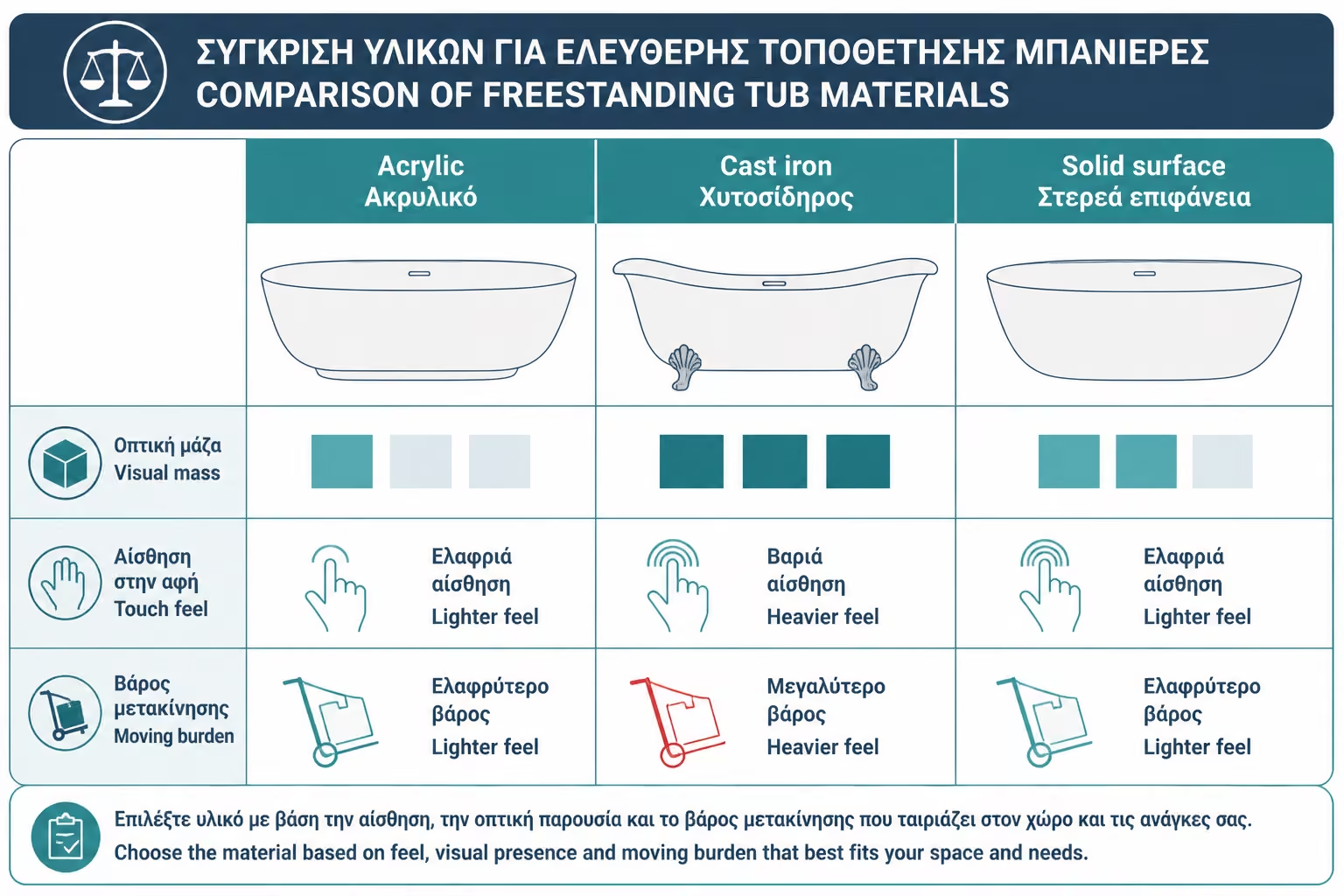
| Material | Sense | Weight | Cost | Practicality |
|---|---|---|---|---|
| Acrylic | Warm, light, practical | Lower | Low to medium | Very good for residences |
| Cast iron | Heavy, classic, robust | Very high | Medium to high | It wants load control |
| Solid surface | Premium, matte, architecture | Medium to high | High | Excellent aesthetics, needs care |
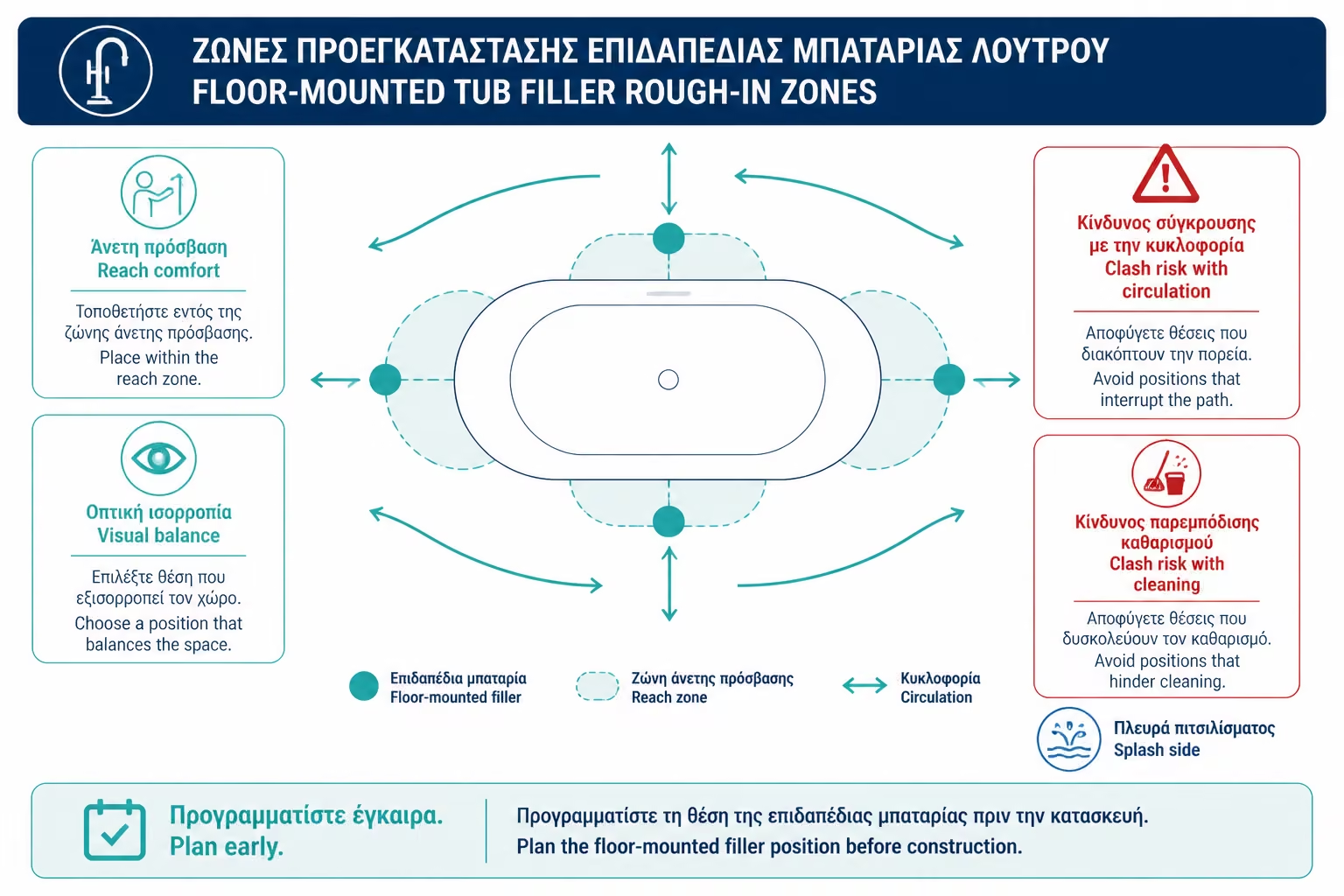
The floor mixer is one of the most beautiful elements of a freestanding bathtub, but also one of the most critical technically. It cannot be decided in the end. Waits must be anticipated before the floor is closed and before tiles or treads are completed.
The location of the battery depends on the model of the bathtub. We need to know where the overflow is, where the drain is, which side will be used for entry, where the user will sit and where the water falls. The battery must fill the tub without splashing out, but also be accessible for handling.
In practice, the floor mixer is usually placed next to the bathtub, where it does not obstruct the entrance and is not too far from the rim. If it gets too close, it can make cleaning difficult or clash with the tub. If it goes in too far, the water may fall awkwardly or splash.
The most important thing: waits should be given based on the technical instructions of the specific battery and the specific tub. There is no one-size-fits-all position.
A floor battery is not just a battery that screws into the floor. It needs a stable base, proper hot and cold supplies, proper waterproofing on the floor and the possibility of access or service, depending on the system. If the waits get it wrong, the fix can be earth-shattering.
Unlike a wall battery, which can be changed more easily within a range, the floor battery has a very specific position. Even small mistake can be seen. If it is not parallel to the tub or if it is the wrong distance, the result looks sketchy.
Care should also be taken in sealing around the crossing point. The bathroom floor can absorb water, especially around freestanding bathtubs. Holes and connections must not be done haphazardly.
The freestanding bathtub needs proper drainage. This can be more complicated than a classic wall-mounted or built-in bathtub. The drain can be located in the center, on the side or at a specific point depending on the model. Before the floor is done, we need to know exactly which tub will go in.
The overflow must also be properly connected. In many freestanding bathtubs the drainage systems are more specific and require precise placement. We should not think that "the plumber will find it that day". The model of the bathtub must be known in advance or at least the technical drawings must be available.
If the tub goes into a slab where there is not enough height for drainage, elevation or a special solution may be needed. This should be checked from the beginning.
A full bathtub has weight. It's not just the weight of the tub that matters. It also measures the water, and of course the person who enters. An acrylic bathtub is relatively light, but filled with water can put a lot of weight on the floor. A cast iron or solid surface already starts from a much heavier weight.
In modern constructions there is usually no problem for reasonable choices, but in old buildings, wooden floors, lofts or special cases, control is needed. Especially for a cast iron bathtub, it should not be taken for granted that it can be placed anywhere.
If in doubt, a mechanic is needed. Aesthetics should not come before safety and construction logic.
A practical matter that is often forgotten is the cleaning around the freestanding bathtub. If there is enough space, it is easy to clean. However, if the bathtub is placed too close to a wall, the back side can become a spot that collects dust, salts and water.
This is especially important in bathtubs with curved sides and tiled floors. Drops that fall around the tub should be wiped up. If there is a floor battery, it must also be cleaned around its base. If the distance from the wall is short, daily maintenance becomes more difficult.
Before you buy, imagine not only how the bathtub will look, but also how it will be cleaned.
The cost has a wide range. The simple acrylic freestanding bathtub can be relatively affordable, while a solid surface or cast iron can reach much higher levels. The total cost, however, is not only the purchase of the bathtub. Waits, floor battery, drainage, placement and possible reinforcements or adjustments must be calculated.
| Type / Task | Indicative cost |
|---|---|
| Acrylic freestanding bathtub | €600–€1,800+ |
| Cast iron freestanding bathtub | 1,200–3,500€+ |
| Solid surface freestanding bathtub | 1,800–5,000€+ |
| Floor battery | 300–1,500€+ |
| Hydraulic waits / adjustments | 300–1,000€+ |
| Installing a bathtub | 200–600€+ |
| Special transport / difficult access | additional cost |
Prices are indicative for Greece 2026 and depend on brand, dimensions, weight, access, floor, battery quality, installation status and whether VAT is included. A freestanding bathtub may seem like buying a single item, but in reality it is an entire small installation.
The most frequent mistake is to choose the bathtub without considering the location of the battery and the drain. The owner first buys the model he likes and then discovers that the waits don't match, that the battery falls in the wrong place, or that the drain has to be moved with difficulty.
The second mistake is choosing a freestanding bathtub in a space that does not support it. If there is not enough air around it, the result does not look luxurious. He looks cramped. Third mistake is underestimating the weight, especially in cast iron and solid surface options.
Another mistake is choosing a floor battery just for looks. The battery must have the correct height, correct projection, correct position of controls and serviceability. If it's uncomfortable to use, you'll know it every time you fill the tub.
| Inquiry | Yes / No |
|---|---|
| Is there enough space around the tub? | Yes / No |
| Has the total weight of a full tub been checked? | Yes / No |
| Is there a technical drawing of the bathtub? | Yes / No |
| Has the exact drain location been decided? | Yes / No |
| Has the location of the floor battery been decided? | Yes / No |
| Will the waits be done before the floor closes? | Yes / No |
| Is there access to transport the bathtub? | Yes / No |
| Can she clean up around herself? | Yes / No |
| Does the material fit the usage and budget? | Yes / No |
| Has the potential cost of plumbing adjustments been anticipated? | Yes / No |
In a large master bathroom, a solid surface bathtub placed in front of a natural stone or microcement wall can become the central element of the space. If there is enough distance around it, the right lighting and a floor battery in the right place, the result is reminiscent of a hotel suite. But if the same bathtub goes into a small bathroom without air around it, it loses its value.
In a renovated apartment, a good acrylic freestanding can give a very beautiful result without the weight and cost of a solid surface. If the budget is reasonable and the use is daily, this may be the most practical solution.
In an old building where the owner wants a cast iron bathtub, access and load control must be done first. The question is not only whether it fits in the bathroom. It's if she goes up to the apartment, if the floor can accept her and if the waits can be done right.
A freestanding bathtub has to be planned before the floors go down and before the plumbing rough-ins are closed up. It is not an object you simply “drop in at the end.”
If you want a floor-mounted tub filler, ask for the technical drawings of both the tub and the tap from the beginning. The rough-in position has to be exact.
Do not choose a freestanding tub if there is no room around it. The luxury of that type only reads properly when the bathtub has space to breathe.
For acrylic, focus on build quality. For cast iron, focus on weight and access. For solid surface, focus on cost, maintenance, and the overall aesthetic composition.
The freestanding bathtub is one of the most impressive options that can go into a bathroom. It can transform a simple sanitary area into a place of relaxation and luxury. But to work properly, it needs space, proper planning and precise infrastructure.
Acrylic freestanding is the most practical and affordable solution for most homes. Cast iron gives classic luxury and sturdiness, but requires attention to weight and portability. The solid surface is the most modern and premium option, with excellent aesthetics, but with a higher cost and the need for proper maintenance.
The critical technical point is the waits. The floor tap, drainage and location of the tub must be designed before the floor is finished. Getting these wrong can be expensive and difficult to fix.
A freestanding bathtub is worth it when the bathroom can support it. When there is space, proper layout and careful infrastructure, it becomes the most luxurious element of the space. When it is crammed or placed without design, it loses its value and creates problems.
True luxury is not just about the shape of the bathtub. It's about looking good, working comfortably, and being put together right from the start.
Return to category.
Go to categoryReturn to the central guide.
Go to guide