
Bathroom Fixtures & Water Equipment
Return to category.
Go to categoryReplacing a bathtub with a shower is probably the most common "small" bathroom renovation. It's not a total renovation, it doesn't necessarily mean changing all the tiles, plumbing and fixtures, but it can completely transform the day-to-day use of the space. An old bathtub that is no longer used as a bathtub, that is difficult to access or that makes the bathroom look old, can be replaced with a low shower, a cabin or a walk-in divider and immediately change the feel of the bathroom.
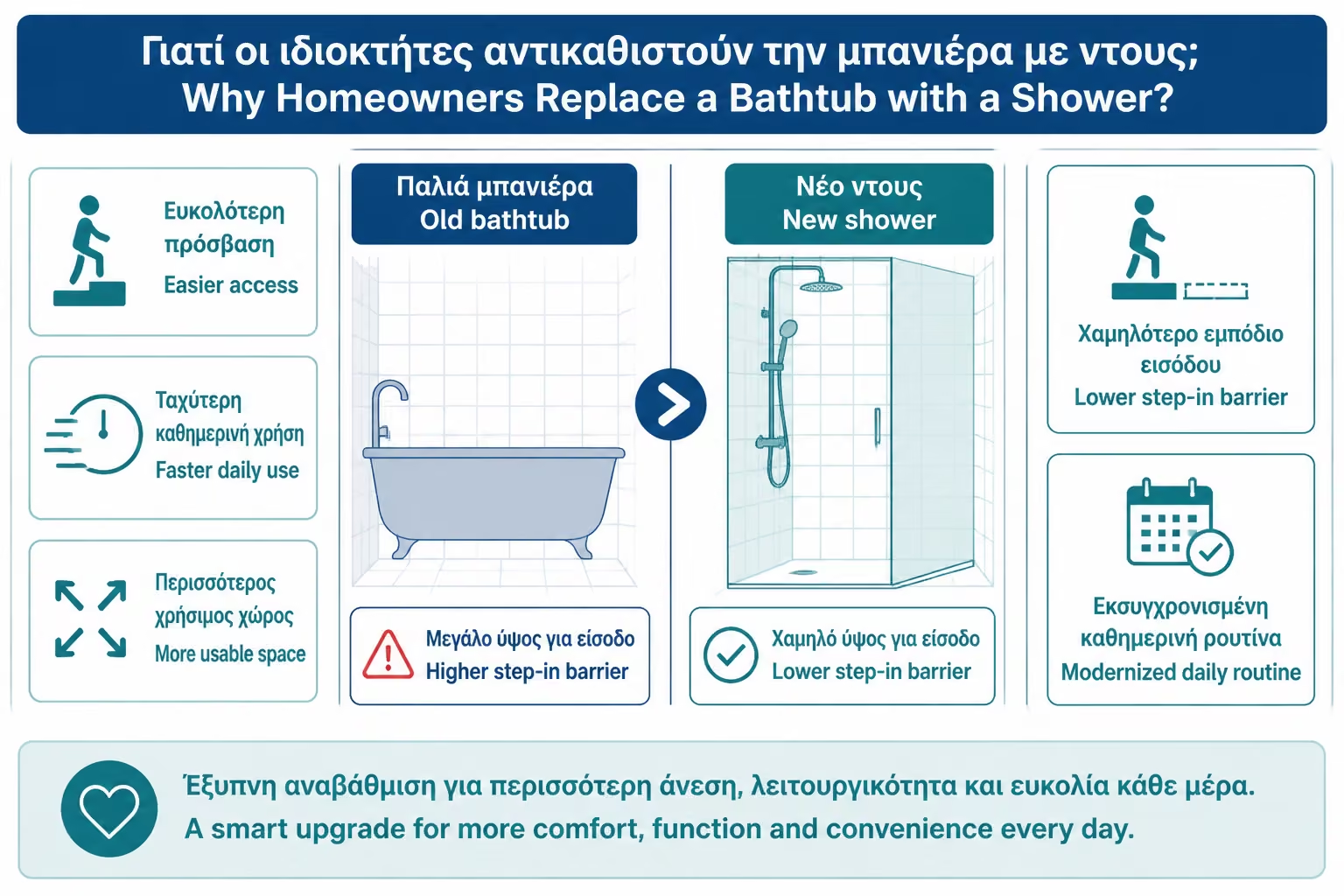
The reason this job is so popular is simple. Most people today use the bathtub as a shower. They go in, stand up, use a curtain or an old cubicle and try not to get the whole bathroom wet. But the entrance is high, the surface can slip, the curtain sticks to the body, the water finds its way out and the bathroom looks smaller and more tired. With a proper shower, access becomes easier, the space looks more modern and daily use becomes much more comfortable.
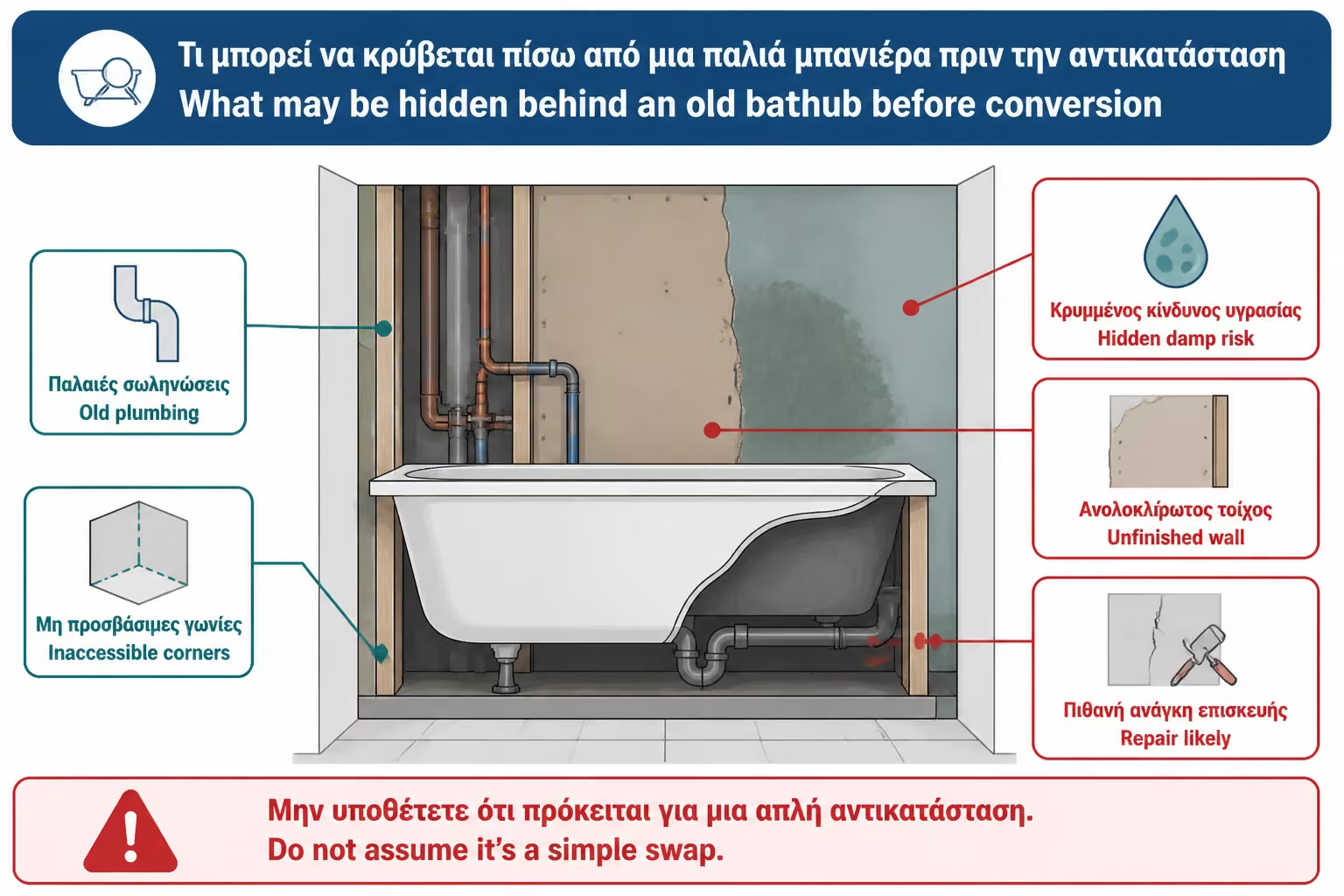
But replacing a bathtub with a shower is not just "taking out the bathtub and putting in a shelf". The bathtub hides behind it walls that often have no tiles, old faucets, pipes, dampness, bad workmanship or gaps that are not visible while the bathtub is in place. The hardest part isn't always the stripping. It is what we find behind and how we will properly and beautifully close the space without stripping the entire bathroom.
This guide explains what to expect, how much it can cost, how long it takes, what the main technical pitfalls are and what solutions there are to the bare wall left when the tub is removed.
Changing from a bathtub to a shower is first of all a change in everyday life. Entry becomes easier, especially if the new base is low or if a built-in shower is designed. For the elderly, children or people who don't want to lift a leg over a high bathtub lip, the difference is big. The bathroom becomes safer and more comfortable.
There is also an aesthetic gain. An old bathtub visually takes up a lot of space. Even if the dimensions of the bathroom do not change, a clean shower with a low base and transparent glass makes the space look more open. If the bathtub was large, white, tall and visually heavy, removing it can lighten the entire bathroom.
The change is also practical. A proper cabinet or a proper fixed crystal holds water better than a bath curtain. The shower is easier to clean, especially if the right base and glass are chosen. In addition, such an intervention can upgrade an old bathroom without the need for a complete demolition.
Replacement is a very good idea when the bathtub is not really used as a bathtub, when access is difficult or when the bathroom needs a functional renewal without reaching a complete renovation. It is also a good solution in rentals, in old people's homes, in old apartments where the bathtub has become practically useless, and in small bathrooms where every centimeter counts.
But it needs a second thought when the existing installation is very old or when there are already signs of dampness. If the wall behind the tub has bulges, if the subfloor has developed stains, if there is an odor from the faucet, or if the tiles around the tub are hollow, then the job may open up a bigger issue. In such cases, we are not just talking about an aesthetic change. We are talking about a possible technical restoration.
Also, if the bathroom is already very old and you plan to completely renovate it in the next few years, you need to think about whether it is worth doing a mini intervention now or if it is better to wait for a full renovation. Replacing a bathtub makes sense when you want to gain immediate functionality without gutting the entire bathroom.
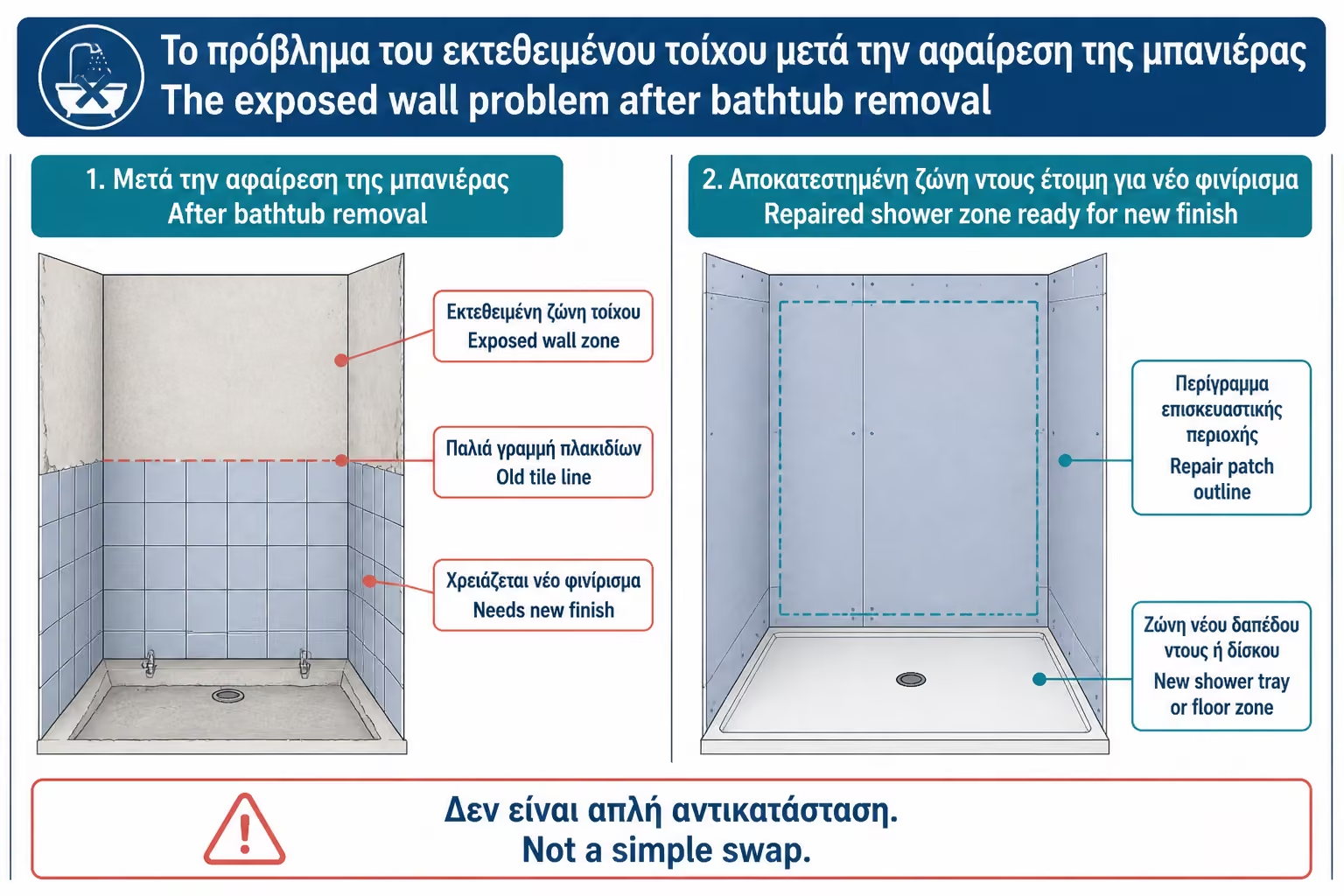
The biggest unknown of the job is the area behind and under the tub. In many old bathrooms, the tiles stop at the height of the tub. Behind is plaster, cement, half-finished masonry, or just a surface that was never designed to be seen. As long as the tub was there, that didn't matter. Once it comes out, it becomes the main aesthetic and technical problem.
Old piping, rough connections, an old faucet, moisture residue, or poor grout can also be found under the tub. If the bathtub was leaking, the moisture may have affected the wall or floor. If the drain is in the wrong location for the new shower, it may need to be relocated or adjusted.
That is why a serious offer should not be based only on the phrase "we remove the bathtub, install the shower". It must provide for what happens if the wall is bare, if waterproofing is needed, if the siphon position is changed and if local tile restoration is required.
When the tub is removed, usually a piece of wall without tiles or with a worn surface is revealed. This is the point that often determines whether the mini renovation will look neat or "patched".
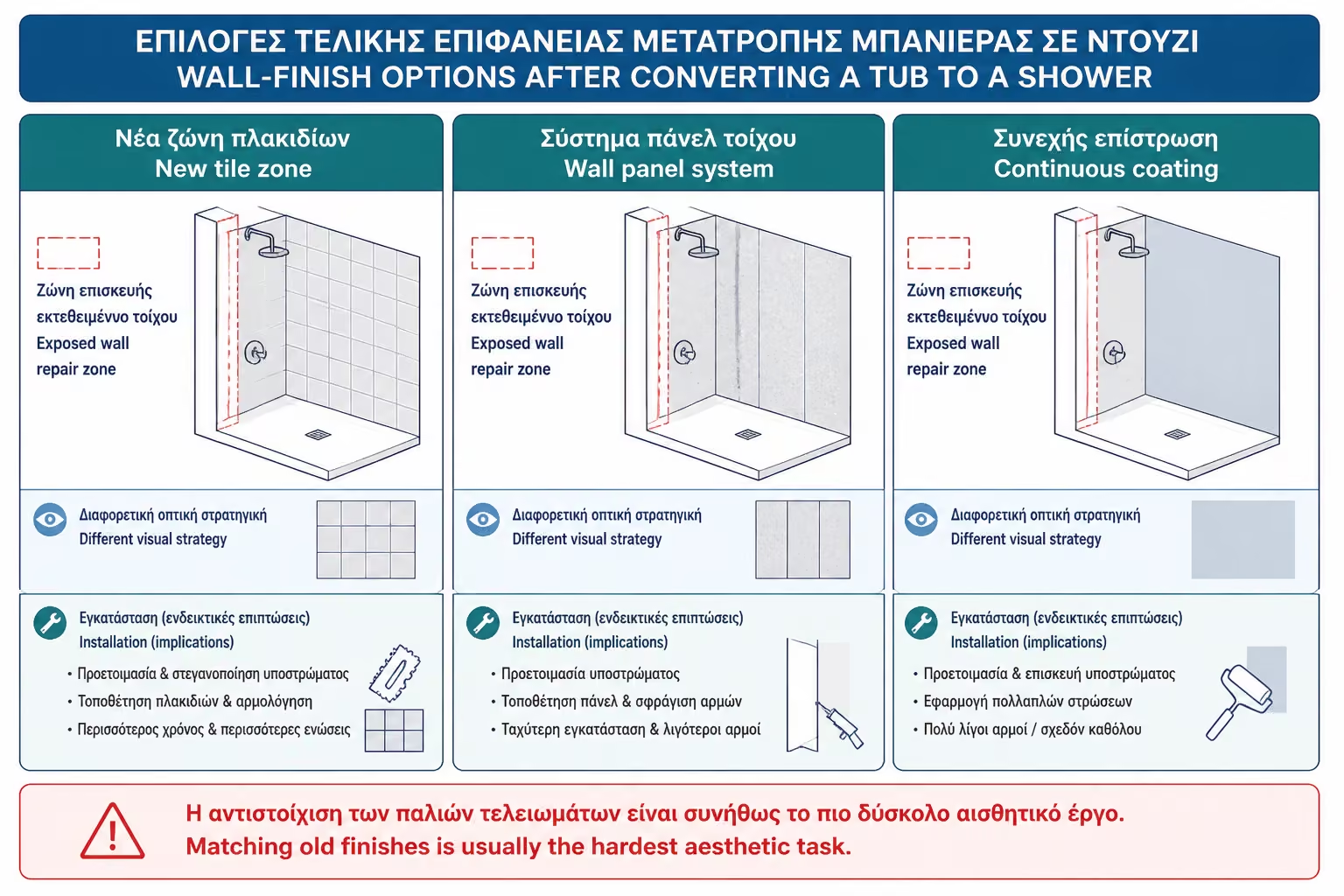
The cleanest solution is to cover the area of the new shower with new tiles. Not all bathroom tiles need to be changed. A new shower zone can be created, like an accent wall, with a different but matching tile. Done right, it doesn't look like a dodgy repair. It seems like a conscious design choice.
For example, if the old bathroom has white or beige tiles, we can put a modern stone look, concrete look or marble look tile in the shower zone. If the old tiles are no longer on the market, we don't necessarily try to find "just about the same". "About the same" often looks worse than a pure contrast. Better to make the new belt look purposeful, not a bad match.
This is the most correct and durable solution in most cases. After the tub is removed, the surface is prepared, waterproofed and the wall re-tiled in the shower zone. The new liner can go up to the height of the old tiles or, even better, higher to properly protect the wetted area.
The advantage is that we have a technically correct solution. The shower is a place with direct water, so the surface must be suitable for wetting. New tiles, combined with proper waterproofing underneath, give better security than a simple paint or rough coating.
The aesthetic advantage is that we can turn the problem into an opportunity. The new shower becomes a separate zone. It doesn't pretend to be the old bathroom. It refreshes it.
Wall panels, such as PVC, acrylic or SPC panels, are a faster solution to cover the bare zone. They can be installed relatively quickly, have fewer joints than tiles and give a clean look. In mini renovations, they are often an attractive option because they reduce time and dust.
But not all panels are the same. They must be suitable for wet areas and for the shower zone. Joints, corners and finishes must be properly sealed. If the panel is placed against a wall with active moisture or a bad surface, it does not solve the problem. It just hides it.
Panels are a good solution when we want a quick, economical and clean aesthetic renewal, especially if the substrate is healthy. For a more long-term and technically "heavy" solution, tiles with proper waterproofing remain a safer option.
Pressed cement mortar or microcement can give a very modern result, especially if we want a uniform surface without joints. In a bathtub replacement with a shower, it can be used to cover the bare zone and create a modern, minimal effect.
But this solution needs a lot of attention. Within the shower zone, the tap is not just a decorative material. It needs a complete waterproofing system, proper preparation, proper varnishes and a handyman who knows wet areas. It's not a "put a press on the wall and we're done" solution.
If done right, it can be very beautiful. If done casually, it may show stains, swelling or dampness.
One of the most common aesthetic mistakes is trying to find a tile "same" as the old one. If the bathroom is 15 or 20 years old, it is very likely that the same tile does not exist. Even if found similar, it may differ in shade, dimension, gloss or joint. The result looks like a patch.
In most cases it is better to consciously choose a different tile. The shower zone can become an accent. If the old bathroom is neutral, the new zone can be more modern. If the old tile is too intense, the new zone can be calm and act as a "clean" element.
The correct aesthetic solution is not always copying. It is often the honest opposite.
After removing the bathtub, it must be decided what will go in its place. The simplest solution is a shower base, acrylic, porcelain, resin or enamel. It is more predictable, has a ready flow and usually installs faster.
The built-in shower without a platform gives a more premium effect, especially if we want the floor to continue continuously inside the shower. But it requires more technical work, proper drainage, siphon, waterproofing and careful tiling. In a mini renovation, it's not always the most economical or fastest option.
If the goal is speed and cost control, a good base is usually safer. If the goal is design and the budget allows it, the built solution can upgrade the space much more.
The bathtub has its own drain and siphon. The new shower may need a different drain location. If the new base has the siphon in a different location, an adjustment must be made. This can be simple or difficult, depending on the existing installation.
In old bathrooms, the pipes may be worn or poorly connected. Removing the tub is an opportunity to check the drain. If there is an old faucet, bad smell or bad flow, there is no point in putting a new shower on a problematic base.
The same applies to benefits. If the bath faucet is low or in the wrong place for a shower, it may need to be moved or replaced with a shower faucet. If we want a built-in battery, the work gets bigger. If we want an external shower column, things are simpler.
The new shower is an immediate wetting zone. This means that the wall that will be left bare should not just be aesthetically covered. It must be technically protected. Before new tiles or panels are put in, the substrate should be checked and suitable waterproofing applied where required.
Waterproofing is especially important in the corners, where the base meets the wall, around utilities and behind the area that receives daily water. If a tile is simply placed on rough plaster without proper preparation, the problem may show up later.
Sealing is one of the points that cannot be seen when the job is done. That is why it must be agreed in advance and mentioned in the offer. If a quote is too cheap, ask what exactly goes on behind the tiles.
Replacing a bathtub with a shower can be done relatively quickly, but the time depends on the extent of the work. A simple job of tub removal, local restoration, shower base and enclosure can be moved in a few days. However, if hydraulic transfers, new tiles, waterproofing, a built-in shower or special constructions are needed, the time increases.
Realistically, a simple replacement can take around 2–4 working days, provided there are no contingencies and all materials are available. A more complete solution with a new tile zone, waterproofing, base, cabinet and adjustments may take 4–7 days or more, especially if material drying times must be met.
The biggest risk in the schedule is the contingencies after the tub is removed. If the back wall is loose, if moisture is found, or if the drainage needs a serious change, the job ceases to be a simple replacement.
The cost depends a lot on whether we are talking about a simple replacement or a more comprehensive mini renovation. The cheapest solution is usually to remove the tub, restore it locally and install a simple base with a cabinet. The most expensive is the built-in shower with new tiles, linear siphon, frameless crystal and complete aesthetic upgrade of the zone.
| Work / Material | Indicative cost |
|---|---|
| Disassembly and removal of bathtub | €150–€350 |
| Hydraulic adjustments / siphon | 200–600€+ |
| Shower base | 150–900€+, per material |
| Local waterproofing of the shower area | 150–500€+ |
| New tiles in bath area | 300–900€+, by surface and materials |
| Wall panels instead of tiles | 250–800€+ |
| Cabin or fixed crystal | 250–1,500€+ |
| Complete simple replacement | 1,200–2,500€ approximately |
| More complete / premium solution | 2,500–5,000€+ |
Prices are indicative for Greece 2026. They are affected by area, access, floor, collection, materials, plumbing condition, need for new tiles, cabin type and whether VAT is included. A very low bid must be checked for what is included: waterproofing, screeding, plumbing, materials, cabin, VAT and finishes.
A proper quote should not simply say “replace a bathtub with a shower”. It must describe exactly what will happen. Removal, stripping, plumbing, new base, siphon, waterproofing, bare wall covering, cab and silicones should be clear.
If the quote does not mention what is done with the wall behind the tub, there is a risk that extra costs will appear later. If it doesn't mention waterproofing, you need to ask. If it doesn't say what type of base and cab will go in, comparing it to another offer is pointless.
The most dangerous offer is the one that looks simple and cheap but leaves all the critical points open. In such tasks, "we'll see when it opens" may make sense for some contingencies, but not for the essentials.
The most frequent mistake is to treat the work as a purely aesthetic change. The owner is thinking about the new cabin and base, but not the drainage, waterproofing and bare wall. So the project starts with a low budget and then additions appear.
Second mistake is trying to find the same tiles as the old ones. If the tile is not there, the "similar" often looks like a patch. Better design a new shower zone that looks purposeful.
Third mistake is the use of a rough solution on the wall that gets wet. A paint or panel that is not suitable for direct wetting can fail quickly. The shower zone needs materials for water, not just materials that "look good".
| Inquiry | Yes / No |
|---|---|
| Has what's behind the tub been checked? | Yes / No |
| Does the quote mention disassembly and collection? | Yes / No |
| Has it been predicted what will happen to the bare wall? | Yes / No |
| Will the zone of the new shower be waterproofed? | Yes / No |
| Has the location of the drain been checked? | Yes / No |
| Has a base or built-in shower been chosen? | Yes / No |
| Does the new cab open properly into the space? | Yes / No |
| Are the new materials suitable for direct wetting? | Yes / No |
| Has the potential extra cost of hidden damages been calculated? | Yes / No |
| Is VAT, materials and labor included in the price? | Yes / No |
In an old beige-tiled bathroom, the bathtub is removed to reveal bare plaster about 60cm high. The owner is looking for the same tile, but there is none. If an "about the same" is entered, the zone will appear patched. The best solution is to create a new shower zone with a contrasting modern tile, for example a calm stone look or concrete look. So the intervention looks planned.
In another example, the tub is removed and the drain is in the wrong place for the new low base. If not properly adjusted, the base may not drain properly. Here it is not enough to "fit" the set. Drainage must be working.
In a small senior bathroom, replacing with a low base and sliding cabin can be a huge safety improvement. There the choice should not be made on the basis of the most impressive design, but on the basis of low pressure, anti-slip, stable cabin and easy entry.
Replacing a bathtub with a shower sounds like a small upgrade, but it hides a lot of decisions. The most important one is not just which tray or enclosure you choose. It is what happens behind the old bathtub once it comes out.
Ask from the start how the bare wall will be finished, whether new waterproofing will be applied, whether the drain has to move, and exactly what the quotation includes.
If you cannot find the same tile, do not chase an “almost matching” patch. Make the new shower zone look intentional.
Do not cut corners on waterproofing. The new shower will take daily water exposure, so everything behind the visible finish has to be done properly.
Replacing a bathtub with a shower is one of the most efficient mini bathroom renovations. It can improve access, make the bathroom safer, refresh the image of the space and give more modern daily use without a complete renovation.
But the work must be planned correctly. Stripping the tub reveals walls, pipes and details that were not visible until then. The bare wall should be covered with material suitable for a shower zone, not just a rough solution. Drainage must work properly. Waterproofing must be provided. The cabin should open comfortably and keep the water where it should be.
If you want a quick and economical solution, a good shower base with the right local lining and cabinet can be ideal. If you want a more premium effect, the built-in shower, linear faucet and clear crystal can transform the bathroom, but they raise requirements and costs.
The best solution is one that doesn't look like a patch. It's the one that looks like it was designed from scratch.
Return to category.
Go to categoryReturn to the central guide.
Go to guide