
Bathroom Fixtures & Water Equipment
Return to category.
Go to categoryIn recent years, the shower has gained a lot of ground in bathroom renovations. It is practical, quick, easier to access and often makes the bathroom look more modern. But this does not mean that the bathtub has lost its value. In many homes, especially families with children or people who love a relaxing bath, the bathtub remains precious.
The built-in bathtub is the classic solution that we know in most Greek bathrooms. It is placed in contact with one or more walls, built around the perimeter or lined with tiles, and is part of the bathroom as a whole. The corner bathtub, on the other hand, utilizes two walls and often gives a more comfortable interior geometry, especially when the bathroom has a square or more open floor plan.
The mistake is to think that the bathtub is just "a big piece" that fits where it fits. Choosing the right size and shape affects the entire ergonomics of the bathroom: how much space is left in front, where the sink will fit, how the door opens, whether it will fit a washing machine, where one stands to enter, and whether it can be comfortably used as a shower.
In small bathrooms, the bathtub needs even more study. A wrong dimension can "suffocate" the space. A right dimension, however, with a smart cabin, a suitable battery, a possible seat or an ergonomic shape, can give very comfortable use without completely sacrificing practicality.
In a renovation, the first question is not whether the bathtub is modern or not. The first question is whether it will actually be used. If there are small children in the house, the bathtub is often very practical. If someone wants to relax with hot water, too. But if everyone takes a quick shower and the tub is only used as a tall shower, then a regular shower might be a better choice.
The bathtub makes sense when it offers something that the shower cannot offer: relaxation, use for children, the possibility of sitting, a more "closed" water zone or a combination of bath and shower. If it goes in just because "the bathroom has always had a bathtub", it can end up taking up space for no reason.
On the other hand, it need not be automatically rejected. There are bathrooms where a well-chosen built-in bathtub is more useful than a very large shower. Its value depends on the use of the house.
The built-in bathtub is the most common choice because it makes good use of the wall space and fits easily into the bathroom layout. It can be placed on a straight side, between two walls or in a corner with a side panel. It is aesthetically more "quiet" than a freestanding bathtub and usually more practical in a small or medium bathroom.
Its great advantage is that it can be combined with a tile, shelf, shower column, bathtub cabin or fixed crystal. If designed correctly, it can also function daily as a shower. This is important, because in most homes the bathtub is used much more often for showering than for filling.
The downside is the entry height. Compared to a low shower, the bathtub requires one to raise one's leg higher. For the elderly or people with mobility issues, this can be a safety issue. Also, if the bathtub is too narrow or has a steep internal geometry, it can be uncomfortable both as a bath and as a shower.
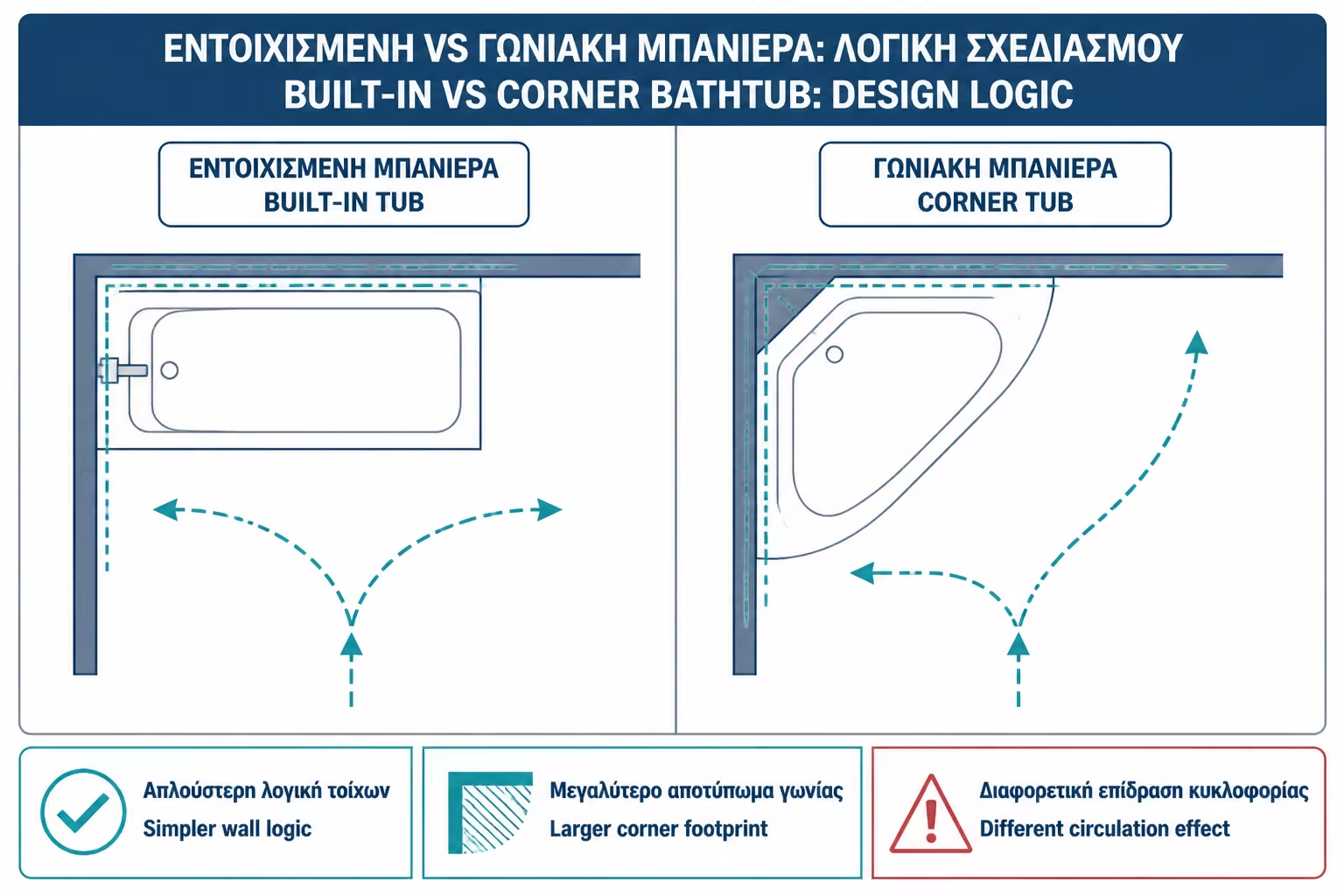
The corner bathtub has a special charm. It gives the feeling that the bathroom acquires a more luxurious arrangement and often offers more interior comfort than a narrow rectangular bathtub. It can have a more ergonomic shape, a seat, an angular press or a larger surface for products.
But it is not always the most economical space solution. In very narrow bathrooms, a corner bathtub can take up more visual and real space than the floor plan allows. It is usually better suited to bathrooms that have a more square layout or where the corner can be used without blocking traffic.
The big mistake is putting a corner bathtub in a small bathroom just because it "looks more comfortable". Consideration should be given to how much space it leaves in front of the basin, sink and door. If after installation one cannot stand comfortably or clean, then the comfort of the bathtub has been gained at the expense of the comfort of the bathroom.
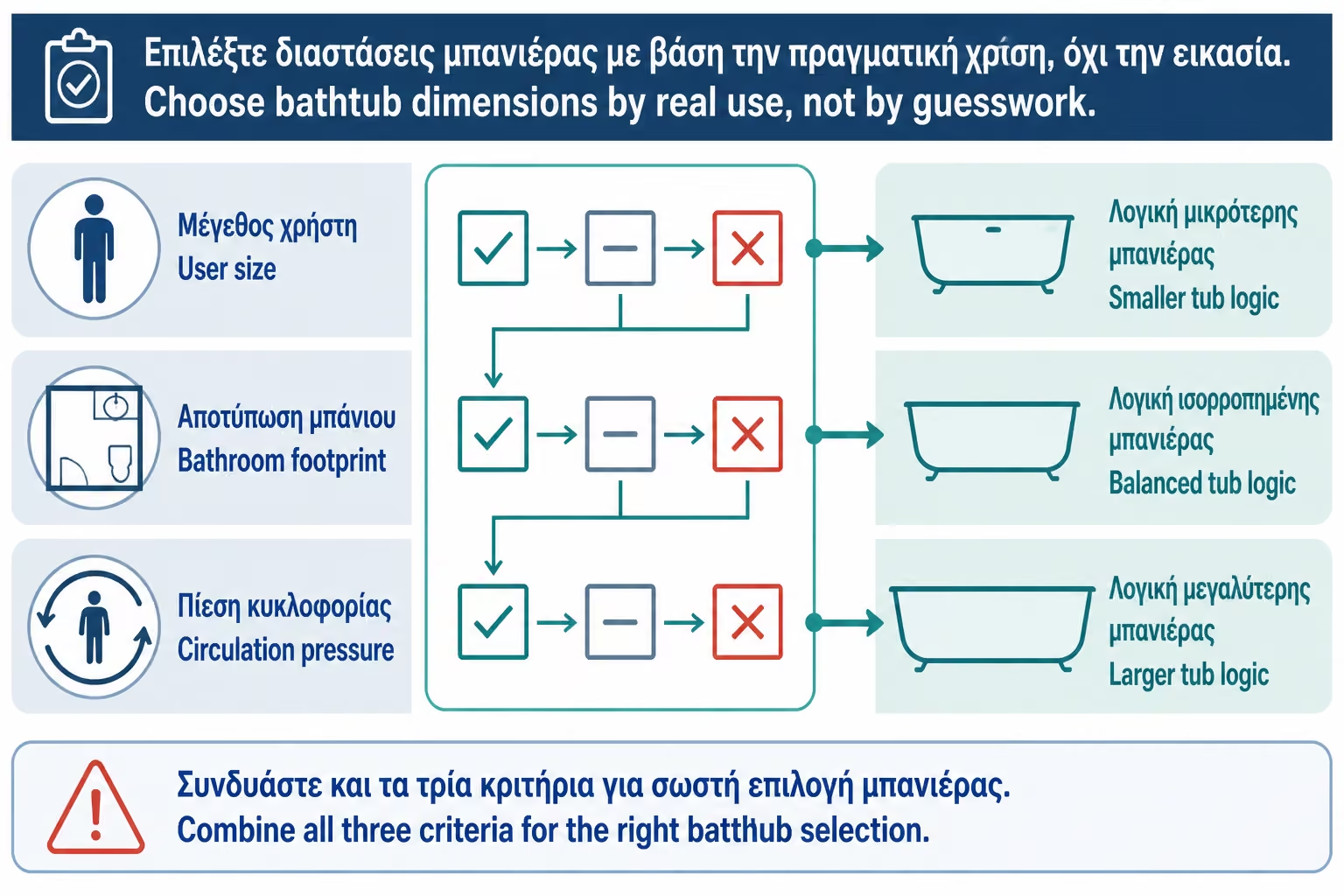
The right bathtub dimension is not only determined by the length of the wall. We need to see who will use it, how it will be entered, whether it will also be used as a shower, how high it is, how wide it is inside and how much space it leaves in the rest of the bathroom.
In Greek bathrooms, the usual rectangular bathtubs range in length from about 140, 150, 160, 170 or 180 cm, with a width usually around 70–80 cm. A smaller tub may fit in a tight space, but may not be comfortable for an adult. A larger one might be comfortable, but put too much pressure on the layout.
Width is just as important. A 70 cm bathtub can fit easily, but be narrow for a comfortable shower. An 80 cm gives a better feeling, but needs more space. If the bathtub will be used frequently as a shower, the internal step must be quite flat and secure.
| Bathtub dimension | Where does it usually fit? | Observation |
|---|---|---|
| 140×70 cm | Very small bathrooms | Places easily, but is limited for adults |
| 150×70 cm | Small bathrooms | Compromise of space and use |
| 160×70 / 160×75 cm | Standard bathrooms | Good everyday choice |
| 170×70 / 170×75 cm | Medium bathrooms | More comfortable for bathroom use |
| 170×80 cm | Medium to large bathrooms | Better comfort also as a shower |
| Corner 120×120 / 130×130 cm | Squarer bathrooms | He wants traffic control |
| Asymmetric angular | Bathrooms with a special floor plan | It can save space if chosen correctly |
The dimensions are indicative. The actual selection should be made based on the floor plan, not just the dimension of the product.
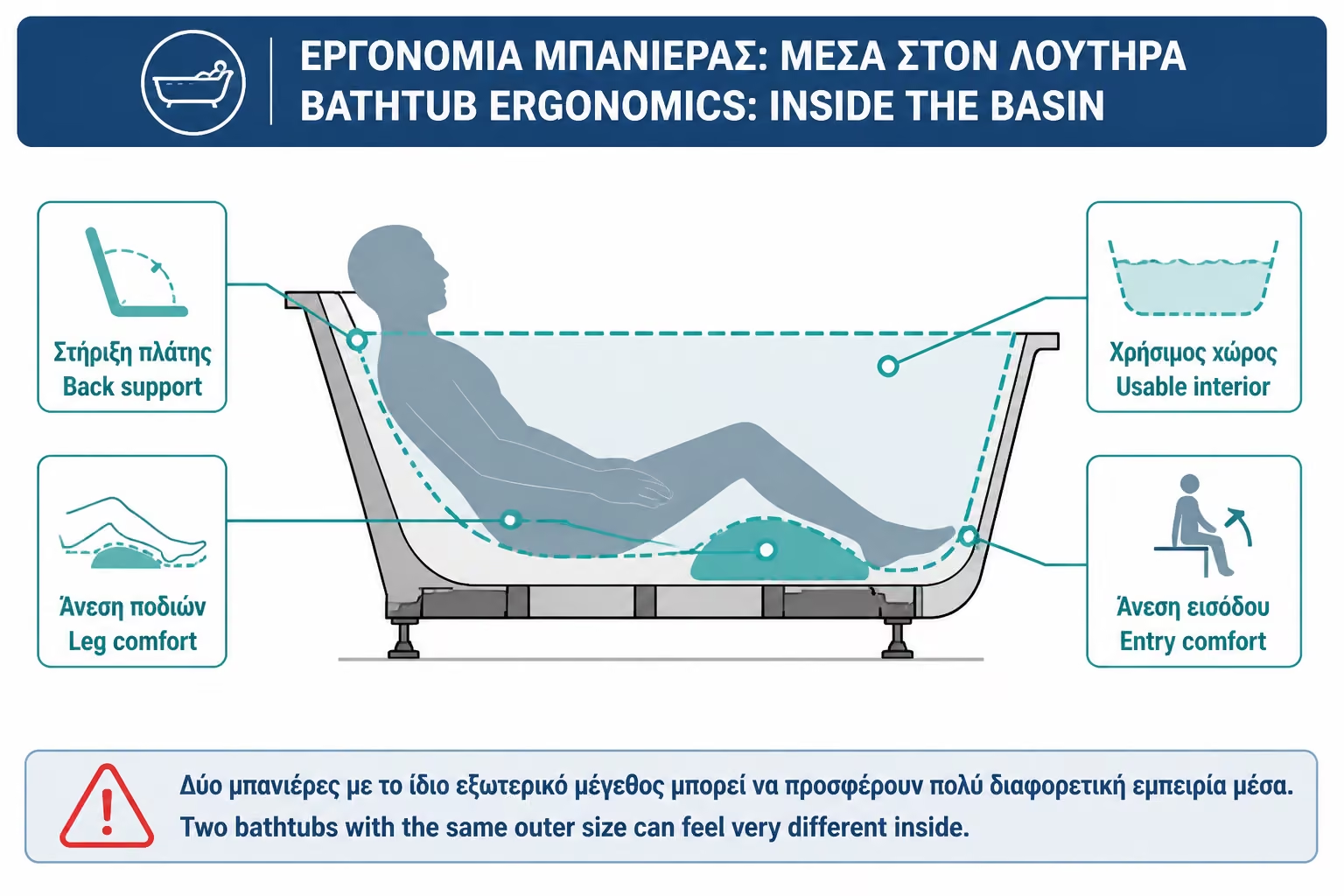
A bathtub can have the right external dimension but poor internal ergonomics. This happens when the inside is too narrow, when the back is tilted wrong, when the bottom is too curved or when there is no comfortable place to stand up in the shower.
For use as a bathtub, body position counts. The back should be comfortably supported, the length should allow relaxation and the depth should be sufficient. For use as a shower, stability counts. The bottom should not be excessively curved or slippery. If one uses the bathtub for showering every day, non-slip is very important.
If possible, it is worth seeing the model up close. Some bathtubs look large on the outside but have less useful interior space due to design, thickness or slopes.
A bathtub seat can be very practical, especially in small bathrooms where the bathtub doubles as a shower. It can be integrated into the shape of the tub or created with an angular/asymmetrical geometry. It offers a place to sit, wash feet, help a child or use the shower more comfortably.
In family bathrooms, the seat can make everyday use easier. In homes with elderly people, it can provide assistance, although it does not completely replace special accessibility solutions. For truly safe use by people with mobility difficulties, handrails, a non-slip surface and more special study may be needed.
The downside is that the seat takes up some of the interior space. If the bathtub is already small, it can make lying down less comfortable. So we need to know which priority we have: relaxation in water or practical use as a shower.
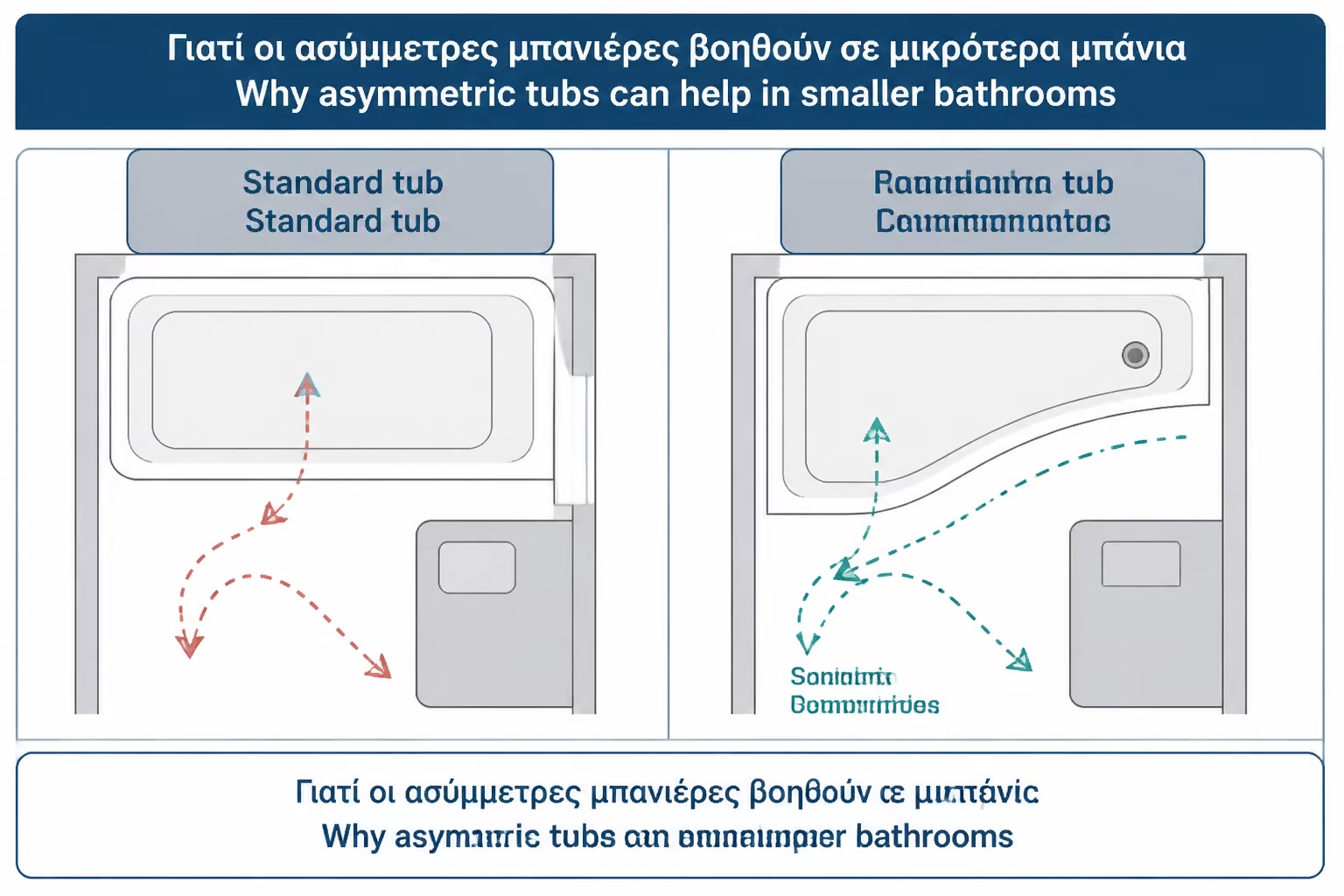
Asymmetric bathtubs are an interesting intermediate solution. They are not classic rectangular, nor completely angular. They are usually wider in one place and narrower in another, so that they give comfort where we need it and save space where we pass.
In small bathrooms, an asymmetrical bathtub can allow better circulation in front of the sink or basin. It can also give a more comfortable shower zone without taking up the entire width of a large corner.
But the choice must be made very carefully, because there are right and left versions. If ordered wrong, it may not work correctly on the floor plan. Before purchase, its location, inlet side, battery location and where the cabin or crystal will fit should be planned.
In built-in and corner bathtubs, acrylic is very common because it is light, economical and warm to the touch. It is a practical choice for most homes, as long as it is of good quality and properly supported.
Enameled steel or porcelain solutions give a harder and cleaner feel, but can be colder and more susceptible to impacts that injure the enamel. Cast iron is very strong and holds heat well, but it is heavy and more difficult to install. Solid surface is more premium and aesthetically impressive, but increases costs.
In most small Greek bathrooms, a good acrylic bathtub is the most balanced solution. In more premium projects, solid surface or heavier structures can be considered, always with weight and access control.
Battery position determines comfort. In a classic built-in bathtub, the faucet can be on the wall, on the side of the length or on the head, depending on the layout. If the bathtub is also used as a shower, we have to think about where the user will stand and where the telephone or shower column will reach.
In small bathrooms, the battery is often placed in a place that is convenient for plumbing, but not always for use. If it is too close to the middle of the tub, it can be annoying when someone is sitting. If it is on the wrong side for shower use, it can make everyday life uncomfortable.
In corner or asymmetrical bathtubs, the location of the battery must be decided together with the model. It's not a detail. It's part of the ergonomics.
If the bathtub will often be used as a shower, a way to limit the water must be provided. The curtain is the most economical solution, but it often gives a rougher image and does not retain water as well. A fixed crystal or folding bathtub can greatly enhance everyday use.
Fixed crystal is more minimal and clean, but does not always cover the entire length. If the shower head has a high flow or if the bathroom is used by children, water may come out. The folding cab offers more coverage, but has more mechanisms and needs cleaning.
The choice should be made based on usage. For the occasional shower, a fixed crystal may suffice. For everyday family showering, a more enclosed solution may be needed.
The bathtub has a higher lip than the shower. This in itself creates a security issue. When we enter and exit with wet feet, there is a risk of slipping. That is why a non-slip surface or a suitable anti-slip additive is important, especially if the bathtub is used daily as a shower.
In bathrooms with elderly people, it is worth providing handrails. Not decorative, but properly fixed handles on a suitable substrate. A handrail that is haphazardly screwed into a tile without proper anchoring can be more dangerous than none at all, because it gives a false sense of security.
A bathtub with a seat can help, but it doesn't solve the safety issue by itself. Entry and exit remain critical points.
The cost depends on the material, the dimension, whether it needs building/lining, the plumbing work and whether a cabin or glass will be included. Compared to a simple shower, the bathtub can have a more complex finished image, because it needs lining, seals and often more finishes.
| Type / Task | Indicative cost |
|---|---|
| Simple acrylic built-in bathtub | €180–€600 |
| Better acrylic or asymmetrical | 500–1,200€+ |
| Corner bathtub | €600–€1,800+ |
| Premium material / solid surface | 1,500–4,000€+ |
| Building / cladding around the perimeter | 300–900€+ |
| Bath mixer / shower column | 150–800€+ |
| Glass or bathtub cabin | 200–900€+ |
| Hydraulic adjustments | 200–700€+ |
Prices are indicative for Greece 2026. They are affected by area, access, floor, materials, condition of existing installation, VAT, labor and finishing options.
The most common mistake is to choose the largest bathtub that the wall can fit. This does not mean that the bathroom also fits. A bathtub can fit in length, but leave very little space for a basin, sink or circulation. The right dimension is the one that leaves a comfortable bathroom overall, not the one that fills the available wall.
Second mistake is the indifference to use as a shower. If the bathtub will be used daily with a shower, it must have the right pressure, anti-slip, correct battery position and good protection against water. It is not enough that it is comfortable for filling.
Third mistake is the choice of a corner bathtub without floor plan control. It may look luxurious, but end up taking up a lot more space than calculated.
| Inquiry | Yes / No |
|---|---|
| Will it actually be used as a bathtub? | Yes / No |
| Does the dimension allow comfortable circulation in the bathroom? | Yes / No |
| Will it be used daily as a shower? | Yes / No |
| Is the bottom safe and non-slip? | Yes / No |
| Does the battery fit in an ergonomic position? | Yes / No |
| Does it need a seat or a handle? | Yes / No |
| Is there a cabin, window or curtain? | Yes / No |
| Is there access for maintenance to the drain? | Yes / No |
| Does the material fit the budget and usage? | Yes / No |
| Doesn't the bathtub "suffocate" the rest of the bathroom? | Yes / No |
In a small family bathroom, a 150 or 160 cm built-in bathtub may make more sense than a large 170 or 180 cm. It may not offer the ultimate comfort for lying down, but it leaves better room for a sink, basin and movement. If the right crystal is added, it can also work well as a shower.
In a square bathroom, a corner or asymmetrical bathtub can make better use of the corner and give a more comfortable interior feel. However, if the space in front of her becomes too small, the result will be uncomfortable in everyday life.
In a senior bathroom, a bathtub may not be the best choice if there is no real need for a bath. But if it must remain, then seat, non-slip surface, handles and correct crystal are more important than design.
Do not buy a bathtub just because it “fits” along the available wall. The right bathtub also has to leave the rest of the bathroom functional.
If it will mostly be used as a shower, prioritize safe footing, a non-slip surface, the correct tap position, and good splash protection.
A corner bathtub makes sense when the floor plan truly supports it. In the wrong room, it can look luxurious while making the bathroom less usable.
A built-in seat is useful when it serves a real purpose. Do not choose it as an extra if it ends up reducing comfort inside the tub.
Built-in and corner bathtubs remain classic values, especially in homes where the bathtub is actually used. They are not outdated solutions. They are solutions that need the right dimensions, the right ergonomics and the right integration into the floor plan.
The built-in bathtub is the most practical and versatile option for most Greek bathrooms. The corner or asymmetrical bathtub can give more comfort, but only when the space allows it. The seat, grip, grips and proper battery placement can make a big difference in everyday use.
The best bathtub is not necessarily the biggest. It is the one that suits the bathroom, the use and the people who will use it. If the choice is made based on the actual ergonomics and not just the photo of the product, the bathtub can remain one of the most comfortable and timeless options in the bathroom.
Return to category.
Go to categoryReturn to the central guide.
Go to guide