
Bathroom Fixtures & Water Equipment
Return to category.
Go to categoryThe glass of the shower cabin is one of those elements that many owners pay attention to only aesthetically. They want it to be clean, transparent, without many profiles, maybe with black details or with minimal supports. But in practice, the glass of the shower is not a simple decorative element. It is a large vertical surface in a space where you move barefoot, with water, soaps and limited space. So first of all it has to be safe.
That is why we are not talking about any glass in the shower cabins. We are talking about safety glass, usually thermally hardened, which in everyday language many call it "securit". The word is often used generically, but what is important is not just the trade name. The important thing is that the glass is suitable for use in a shower cabin, has the right processing, the right thickness, the right edges and is accompanied by the corresponding technical specification or certification.
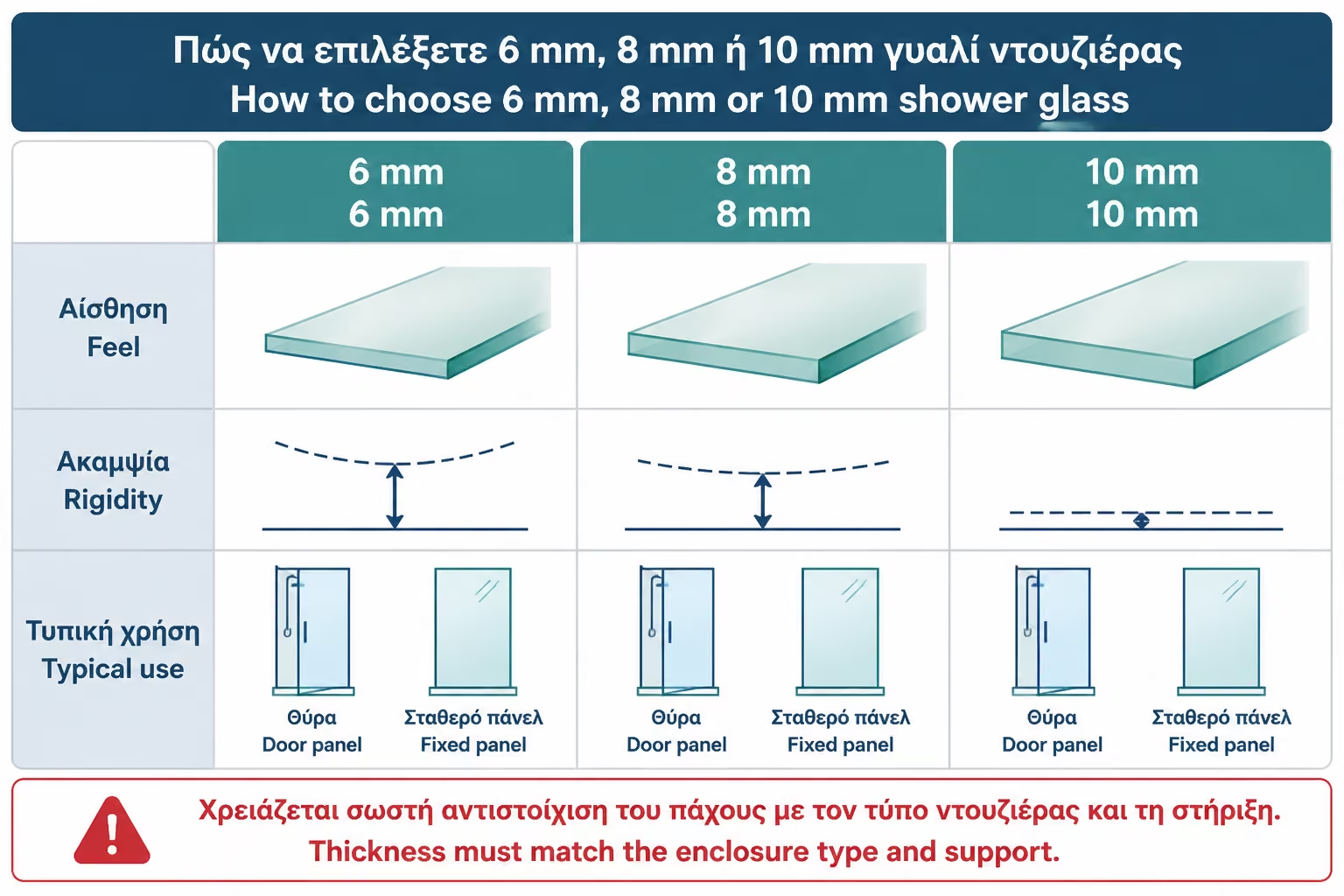
The choice of thickness is also critical. A 6mm glass may be sufficient for many standard framed cabins. An 8mm gives a sturdier feel and is a very common choice for quality cabins or fixed panels. 10mm is used on more premium or larger fixed spacers, but is not always necessary. Thickness alone does not make a cabin good. It also counts how it is supported.
In this article we will see what safety glass means, how we choose thickness, why we should not only compare price and why acrylic "glass" may seem like an economical solution at first, but it is rarely the best choice for a bathroom that we want to look and function properly for years.
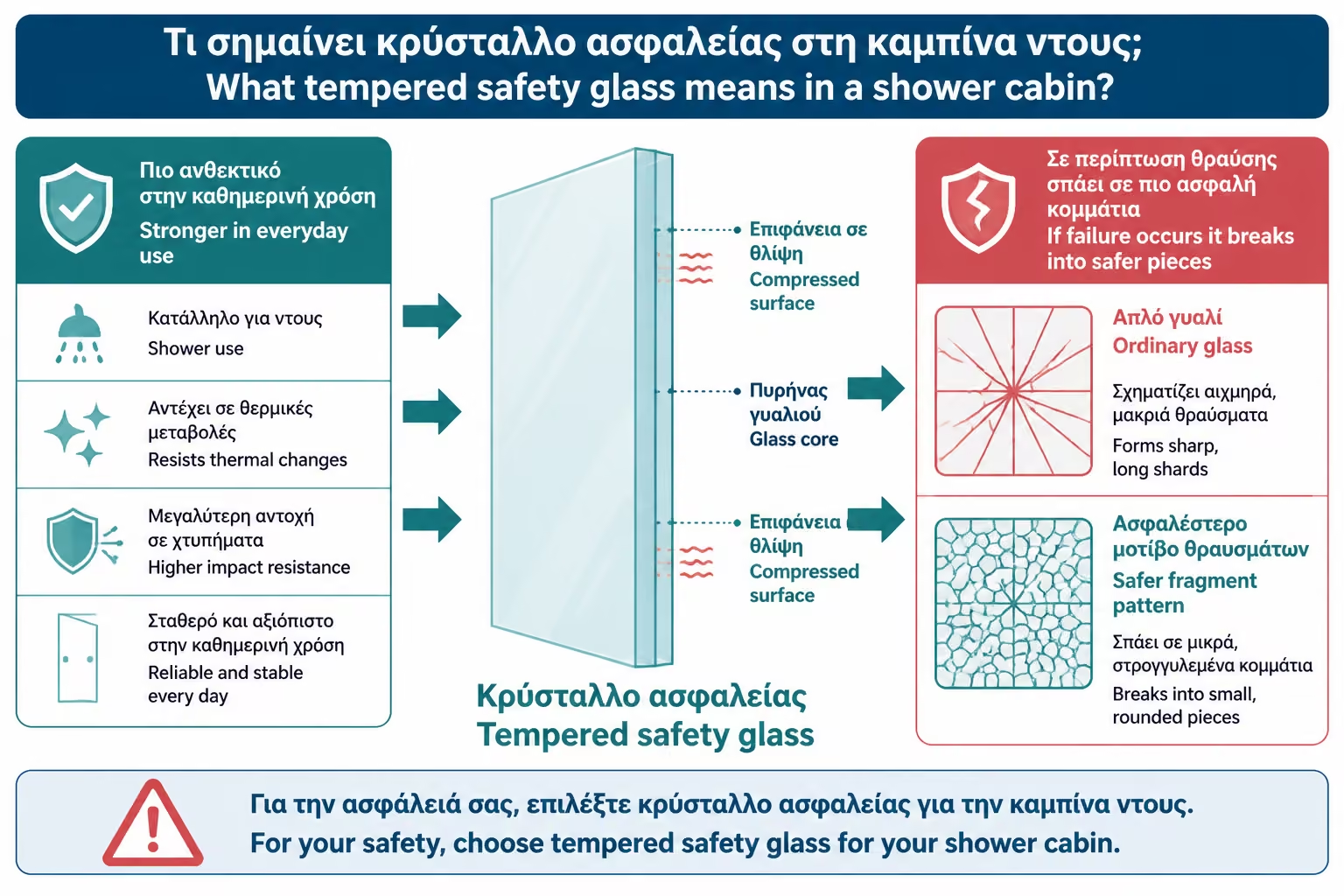
In the everyday market, when someone says "securit glass", they usually mean thermally toughened safety glass. This is glass that has undergone a special heat treatment to obtain greater mechanical strength than a simple glass of the same thickness. But the most important thing is not only that it is more durable. It's the way it behaves if it breaks.
A simple piece of glass, if broken, can create large sharp pieces. This in a bathroom would be extremely dangerous. Thermally toughened safety glass, in contrast, is designed so that when broken it shatters into many smaller pieces, reducing the risk of serious injury. This does not mean that the break is harmless. It means that the material is much more suitable for such uses than a simple glass.
Therefore, when you buy a shower cabin, it is not enough to hear the word “securit”. You need to know exactly what you are buying. Is it heat tempered safety glass? What is the thickness? Does it have treated edges? Is it suitable for a shower cabin? Is it accompanied by technical data or a reference to standards? These questions are more essential than if the description in the brochure simply says "safety".
Certification or compliance with standards is not a decorative detail. It is the way in which the manufacturer declares that the glass and the product have been manufactured and tested according to specific requirements.
In glass, the standard often associated with thermally toughened safety glass is EN 12150. This relates to the glass itself as a material: processing, tolerances, breakage, physical and mechanical properties. In shower cabins, on the other hand, we are also interested in the product as a whole: that is, how the cabin behaves, how it is supported, how stable it is and how it responds to use. There we find specifications concerning cabins as a product, such as EN 14428.
For the owner, the practical conclusion is simple: we don't buy anonymous "glass" for a shower without knowing what it is. We require a cabin or glass from a serious supplier, with a clear indication that it is safety glass, suitable for use in showers. If it is custom made, the glazier or supplier must know exactly the usage and recommend the correct thickness and support.
Many owners treat the thickness of the crystal as a simple indicator of quality: the thicker, the better. This is partially correct, but not completely. A thicker glass usually gives a better sense of solidity and less elasticity in movement. But it also adds weight, so it requires better components, better support and more careful placement.
In full-frame cabins, the glass is supported in more places. There a 6mm can be sufficient in many standard solutions because the frame helps the overall stiffness. In cleaner, frameless or semi-frameless solutions, the glass has a greater role in stability, so we usually go up to 8mm or 10mm.
The mistake is to choose 10mm without thinking about the support. A heavy crystal with poor quality hinges or shoddy support is no better solution than a properly designed 8mm. Safety and quality are a combination of thickness, components, placement and geometry.
6mm is common in many prefabricated shower enclosures, especially when there is a metal frame. In a classic sliding, semi-circular or corner cabinet with a profile, 6mm can be a perfectly reasonable choice, as long as the product is of good quality and the glass is safety.
The advantage of 6mm is that it keeps the weight and often the cost down. This is important in standard cabins, where economy and practicality are key criteria. Not every bathroom needs to have 10mm glass to be safe or proper.
The downside is that the feel can be "lighter". In large sheets or frameless applications, 6mm is usually not the choice that will give premium sturdiness. If one wants a large stable divider or a clean frameless effect, one usually looks further up.
8mm is for many applications the golden ratio. It gives a noticeably more robust feel than 6mm, without always reaching the weight and cost of 10mm. It is a very common choice for fixed panels, quality cabins, semi-frameless solutions and several small or medium-sized frameless applications.
In a fixed shower partition, 8mm can provide a good sense of security and a clean aesthetic, especially if there is a correct floor or wall profile and suitable support bracket. It is not an exaggeration, but not an economic minimum solution either. For many Greek bathrooms, it is the most logical choice when we want something of quality without going to custom excesses.
If the fixed panel is relatively large or if the cabin is very minimal, the support must be considered properly. 8mm is not licensed for rough installation. It needs proper supports, good screws, proper anchoring and attention to whether the wall can take the load.
10mm gives a very solid and premium feel. It is often found in large frameless constructions, fixed panels of larger dimensions or more luxurious applications. When you grab it or when a large door opens, the difference in feel is obvious.
But 10mm also has requirements. It is heavier, costs more and needs stronger components. On hinged doors, the hinges must be suitable for the weight. In fixed panels, the support must be correct and not just "a profile on the wall". If the wall is plasterboard or flimsy construction without reinforcement, weight becomes a serious issue.
10mm makes sense when dimension, aesthetics or construction require it. It doesn't have to become an end in itself. For many home cabs, a properly mounted 8mm makes more sense than a heavy 10mm mounted with insufficient support.
The table is a practical guide, not an absolute rule. Final selection should be made based on dimensions, support, system and supplier's instructions.
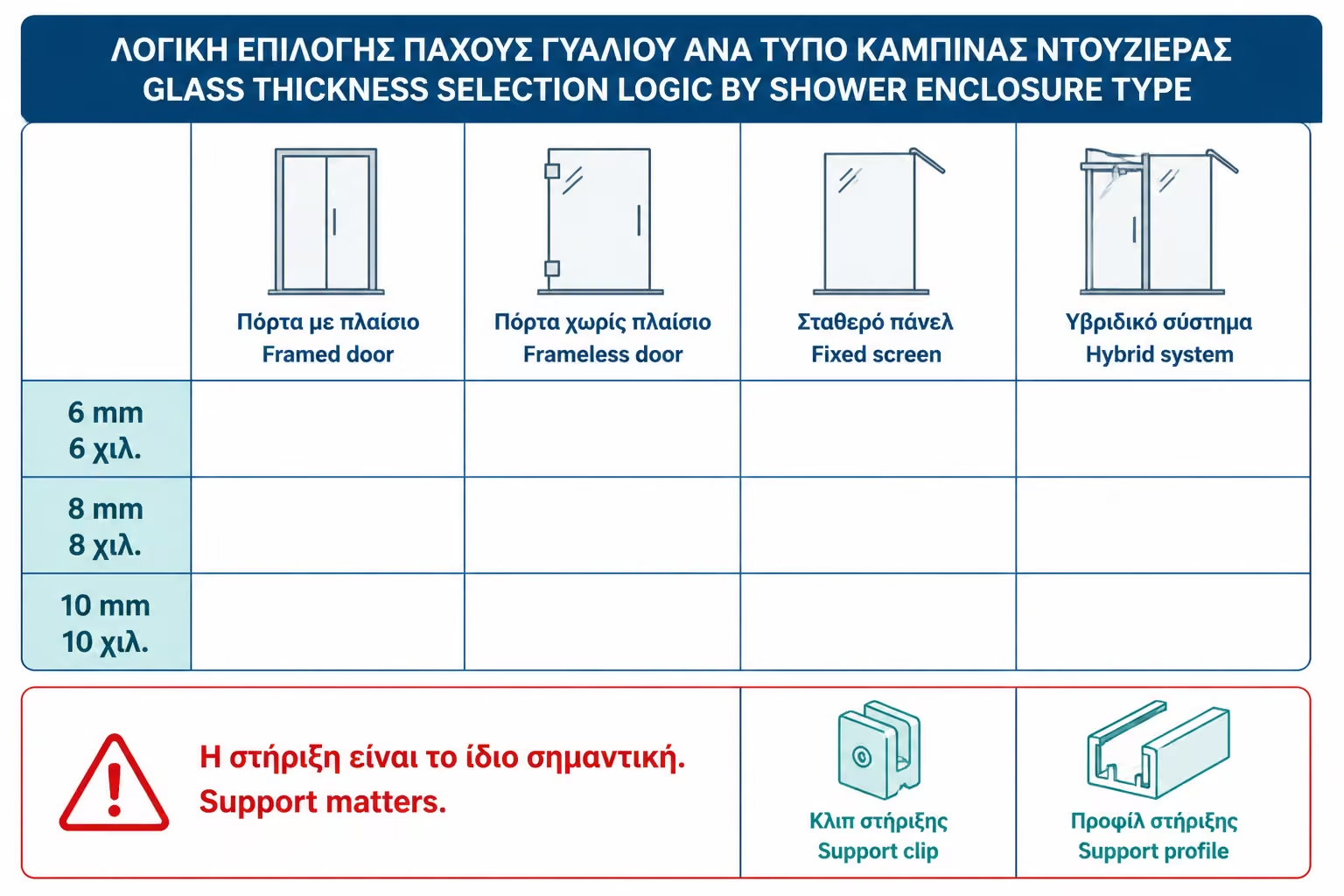
| Use | Usual choice | Observation |
|---|---|---|
| Economy cab with full frame | 6mm | It is sufficient in many standard solutions, if it is safety glass |
| Quality sliding or semicircular cabin | 6–8mm | It depends on profiles and mechanisms |
| Fixed panel with a distinctive profile | 8mm | Very good balance for domestic bathrooms |
| Semi-frameless / frameless small-medium size | 8mm | Often the most practical option |
| Large frameless fixed divider | 10mm | It needs proper support and a suitable wall |
| Large opening frameless door | 8–10mm | Based on weight, hinges and dimensions |
A fixed divider does not just mean a glass that stands on its own. It needs proper support on the wall, floor or base, and often a stabilizing arm. The larger the crystal, the more important the support becomes.
A reasonably dimensioned 8mm fixed panel can be very safe and sturdy if properly supported. But if it is too long, too high, or exposed without sufficient arm, it can have unwanted movement. The glass should not "play" when you touch it or when you open the cabin door.
The quality of placement is critical. A wall with loose substrate, poor anchoring or incorrect drilling can invalidate even the best glass. If it is plasterboard, reinforcement must be provided in advance. We cannot rest a large security crystal on a random frame or flimsy substrate.
In safety glass, edges are not a detail. They must be properly machined, polished and fit for use. Acne is a sensitive spot. A hit on the edge can be much more dangerous to a thermally toughened glass than a simple hit in the center of the surface.
That is why shower cabins must have glass made for this use. We do not take any glass and "cut" it roughly. After heat hardening, the glass is not cut or drilled. All holes, notches and dimensions must be provided before curing.
This is yet another reason custom cabs need a proper measurement by a professional. A mistake in dimension is not easily corrected afterwards.
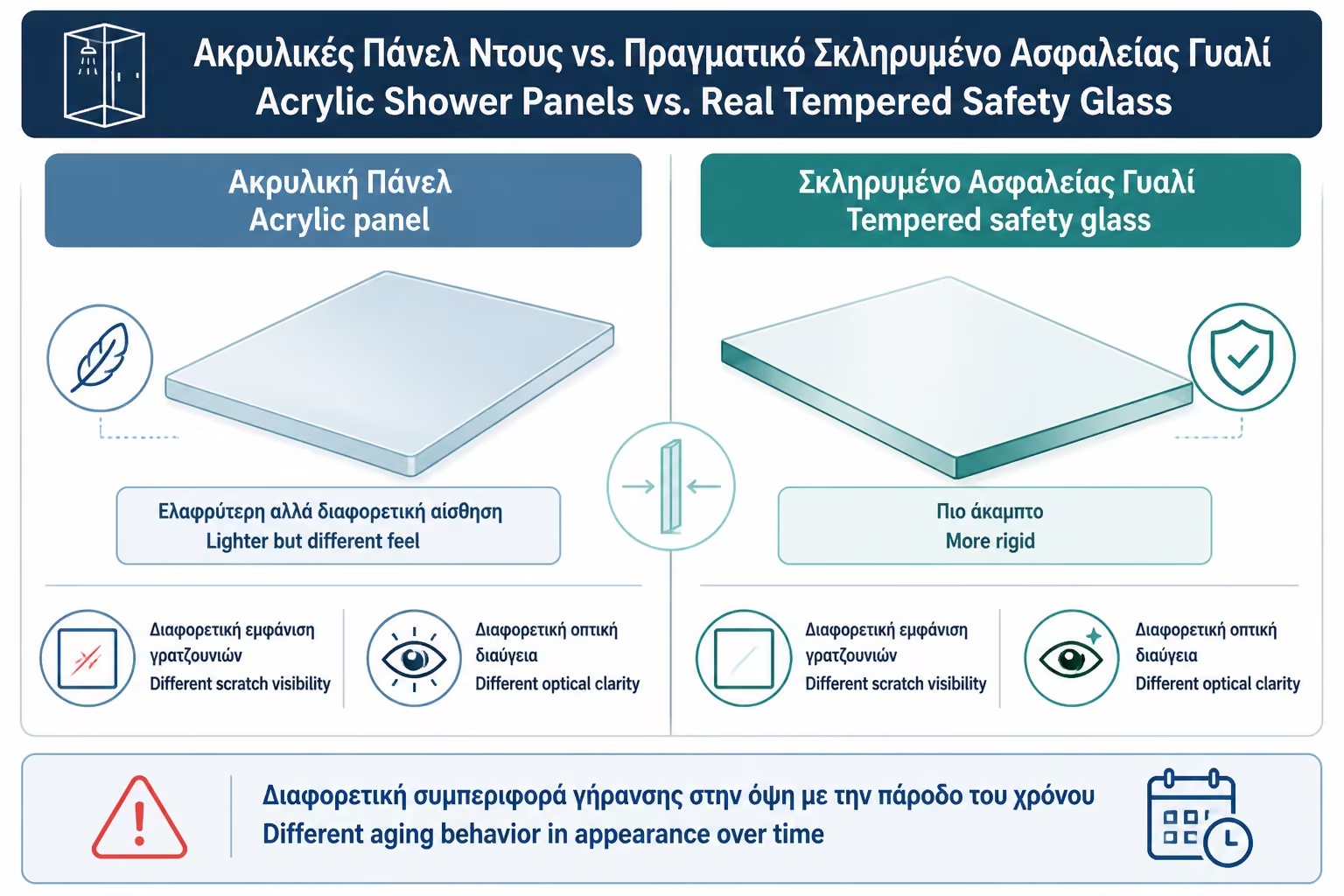
Acrylic or plastic panel looks tempting because it is light and economical. In some very simple solutions or temporary constructions it may have a place. But for a quality shower cabin, it is usually not the best choice.
The first problem is aesthetics. Acrylic rarely has the clarity and feel of real glass. Over time it can dull, scratch and look cheaper. In a bathroom where we have invested in tiles, faucets and lighting, the acrylic panel can spoil the picture.
The second problem is cleaning. Acrylic is easier to etch than glass. If the wrong sponges or cleaners are used, it can fill in micro-scratches that hold salt and dirt. At first it looks clean. After use, especially in hard water, it may become dull.
The third problem is the feeling of solidity. A plastic panel can "play", bend or feel less stable. In a daily use bathroom, this shows. If the goal is a serious and long-term solution, safety glass is almost always a better choice.
Yes, but they are limited. Acrylic can make sense in very economical, temporary or lightweight solutions. It can also be used in cases where the weight must be kept very low or where the construction cannot accept glass. But this is not the same as a normal, quality shower cabin.
For a master bathroom, where we want durability, a clean look, and a good feel, acrylic is usually a compromise. It may drop the initial cost, but it often loses out on looks and durability.
If the budget is limited, it is better to choose a simpler cabin with 6mm safety glass and frame, rather than a cheap solution with an acrylic panel that will quickly look tired.
The thickness of the glass affects the cost, but it is not the only factor. Dimensions, custom, thickness, processing, holes, fittings, anti-lime coating and placement also count.
| Selection | Indicative picture of costs |
|---|---|
| Cabin with frame and 6mm glass | More economical category |
| Quality cabin with 8mm | Average to good category |
| 8mm fixed panel | Good cost/image balance |
| Frameless 10mm | Premium class |
| Custom crystal of special dimensions | Higher cost |
| Acrylic panels | Lower initial cost, but weaker image/endurance |
For a fixed panel or a good frameless solution, the cost should not be judged only by the square of the glass. Correct supports, measurements, edges and placement are part of the value.
Before ordering a cabin or fixed partition, it is worth asking for specific information. You don't need to become a pattern expert, but you do need to know what you're buying.
| Inquiry | Because it matters |
|---|---|
| Is it heat tempered safety glass? | For safety in case of breakage |
| What is the thickness of the glass? | It affects feel, weight and support |
| Is there reference to standards or certification? | Shows product severity |
| Are the edges processed? | Critical for safety and durability |
| What props will be used? | Thickness is not enough without proper support |
| Is there an anti-lime coating? | It helps in cleaning |
| Are there spare parts for rubbers/hinges? | Important for maintenance |
| Who does the measuring and fitting? | In custom solutions it is decisive |
The first mistake is to treat glass as a simple "glass". We don't want any glass in the shower cabin. We want safety glass, properly processed and fit for use.
The second mistake is choosing thickness based on price alone. A very economical 6mm might be fine in a framed cabin, but not necessarily in a large frameless panel. Accordingly, a 10mm may be impressive, but not needed in a small application or require stronger support.
The third mistake is choosing acrylic because it "looks like glass and is cheaper". It may seem reasonable at first, but in a bathroom that gets used every day, scratches, dullness and a plastic feel quickly show up.
| Inquiry | Yes / No |
|---|---|
| Is the glass safety and suitable for a shower cabin? | Yes / No |
| Is there a clear reference to glass thickness and type? | Yes / No |
| Does the thickness match the dimension and support? | Yes / No |
| Are the edges properly processed? | Yes / No |
| Is the support adequate for the weight? | Yes / No |
| Can the wall take the weight of the crystal? | Yes / No |
| Has it been measured correctly? | Yes / No |
| Is there provision for descaling? | Yes / No |
| Are there spare parts for tires and accessories? | Yes / No |
| Is acrylic avoided if a long-term quality solution is required? | Yes / No |
In a small bathroom with a ready sliding cabin and a full frame, a 6mm safety glass can be a perfectly reasonable choice. The frame helps with support, the weight stays in check and the cost remains affordable. If the product is of quality, we don't need to chase a bigger thickness just for an impression.
In a bathroom with a fixed partition of 90 or 100 cm, 8mm is often the most balanced solution. It feels good, doesn't look "light" and can be properly supported with a proper profile and bracket. It is the choice often found in well-designed home bathrooms.
On a large frameless panel, especially if we want a very clean minimal image, 10mm may be more suitable. But there you have to pay attention to the wall, the supports and the weight. The thicker glass does not forgive rough placement.
In a rental where the owner is considering acrylic paneling for economy, a simple framed cabin with real safety glass may be the best decision. The initial cost may be a little more, but the image, durability and cleanliness will be better.
Do not buy a shower enclosure based only on glass thickness. An 8 mm panel with proper support is often a better choice than 10 mm glass paired with weak fittings.
For standard framed enclosures, 6 mm may be enough. For fixed panels and cleaner frameless solutions, 8 mm is usually the best balance. Ten millimeters makes more sense on larger or more premium dividers, but it requires serious support.
Avoid acrylic "glass" if you want a quality, long-term solution. It may cost less, but it scratches, goes cloudy, and never feels the same as real safety glass.
In a shower enclosure, safety comes before aesthetics. Ask for safety glass, properly finished edges, and professional installation.
The glass of the shower cabin is not just glass. It is an element of safety, ergonomics and aesthetics. That is why it must be chosen based on the type of glass, thickness, support, dimensions and use.
6mm is often sufficient in full frame cabs with standard dimensions. 8mm is the most balanced choice for many fixed panels and quality cabs. 10mm gives a premium feel and more robustness in large frameless applications, but requires proper components and strong support.
The word “securit” should not be used lightly. The owner must ask for clear confirmation that the glass is safety and suitable for a shower cubicle. Edges, holes, supports and placement are just as important as thickness.
Acrylic "glass" may seem economical, but it usually loses in clarity, strength, feel and durability. For a bathroom that we want to look quality and function properly for years, real safety glass is the right choice.
Return to category.
Go to categoryReturn to the central guide.
Go to guide