
Bathroom Fixtures & Water Equipment
Return to category.
Go to categoryThe mirror cabinet is one of those solutions that for years was considered a little old or "helpful". Many old bathrooms had a simple mirror with a small cabinet behind it, usually plastic or metal, with limited space and no special aesthetics. In newer renovations, it has often been replaced by large flat mirrors, LED lighted mirrors, or minimally framed mirrors. The bathroom became visually cleaner, but often lost valuable storage space.
Today, the mirror cabinet is back with a more modern logic. It is no longer just a "pharmacy" above the sink. It's a slim, organized cabinet with a mirror, internal shelves, hidden or perimeter LED lighting, anti-glare function, internal sockets for a shaver or electric toothbrush, a magnifying glass and often much better build quality than the old models. In small bathrooms, it can be one of the most efficient space-saving moves.
Its main advantage is that it makes use of a space that is usually left empty: the wall above the sink. Instead of having a simple mirror and the counter filling up with cosmetics, toothpaste, medicine, razors, chargers and small items, the mirror cabinet hides them at the height of use. The counter cleans, the sink looks tidier and the bathroom functions better in everyday life.
The mistake is to treat it like a simple cupboard. Especially the modern mirror cabinets with LEDs, sockets, anti-glare pad or touch sensors are electrical devices in a wet room. They want correct location, appropriate degree of protection, correct electrical supply, safe placement, bathroom zone control and installation by an electrician where there is a power connection. Installation instructions for illuminated cabinets state, for example, that IP44 products can be installed in certain zones, that they must be earthed where required, and that they must not be installed in zones 0 or 1.
In this guide we will look at when a mirror cabinet is worth it, what you gain in storage, how to choose LED lighting, when anti-glare function makes sense, what to look out for with indoor sockets, how electrical requirements are affected and what mistakes lead to an uncomfortable or dangerous result.
The return of mirror cabinets is not just nostalgia. It is a response to a real problem: bathrooms have become more "clean" aesthetically, but storage needs have increased. Electric toothbrushes, chargers, serums, creams, contact lenses, shavers, pharmaceutical products and small personal items do not disappear because the bathroom is minimal. They just end up on the counter.
A simple vanity unit with drawers does not always solve the problem. We want the things we use every day to be at face height, next to the mirror, not buried in a bottom drawer. The mirror cabinet organizes exactly this zone: face, teeth, shaving, make-up, lenses, medicines, daily care.
In small bathrooms, its value is even greater. If a large column does not fit, if the vanity unit is shallow, or if the counter must be kept clean, the storage space above the sink becomes valuable. A 12–17 cm deep cabinet can hold many small items without taking up floor space.
The important thing is that modern cabinets do not necessarily resemble the old "pharmacies". There are models with a thin frame, aluminum body, double mirrored doors, soft-close hinges, internal glass shelves, LED lighting and a very clean design. In bathroom mirror selection guides, wall-mounted and recessed mirrored cabinets are now mentioned as a practical storage solution for smaller bathrooms, without sacrificing aesthetics.
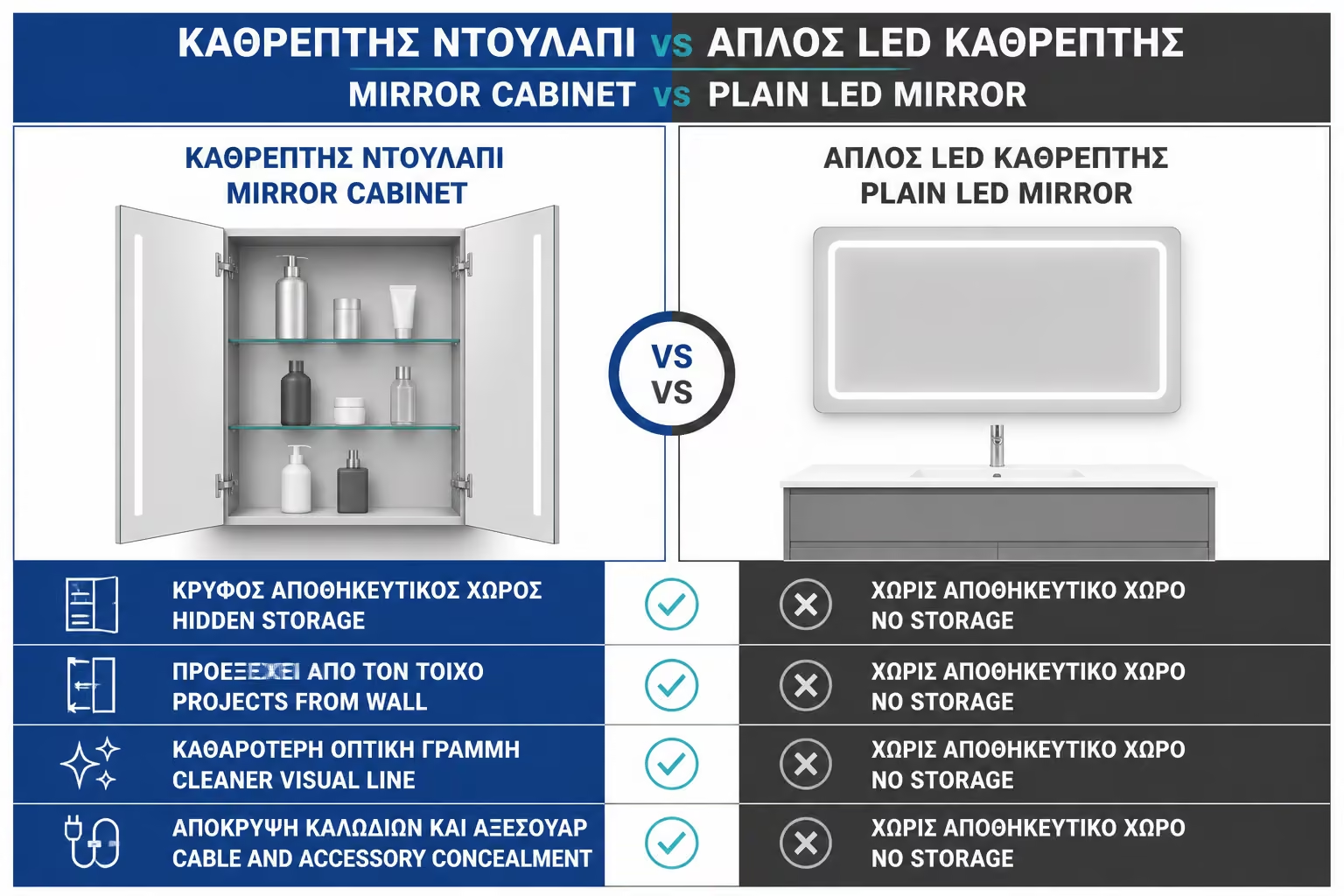
The main dilemma is whether you need storage or just a mirror and lighting. A simple LED mirror is thinner, more minimal and often more elegant in very clean bathrooms. If you have plenty of storage elsewhere, it might be the best option. The mirror cabinet, on the other hand, adds depth to the wall but gives hidden space for everyday items.
In a master bathroom with a large piece of furniture, columns and a comfortable bench, a large flat mirror can be more impressive. In a small family bathroom of 3–5 m2, the mirror cabinet is often much more useful. The design can be a little more "heavier", but its function pays off every day.
The mistake is to choose a simple LED mirror because it looks more modern, while then cluttering up the counter with objects. The clear image of the mirror is lost when there is clutter underneath. If the bathroom has no other storage space, a mirror cabinet is often a more honest solution.
On the other hand, it is not worth putting a mirror cabinet if you will not use it. If the space is very narrow, if the cabinet protrudes too far and is a nuisance, or if there is already a comfortable column, a thin lighted mirror may be preferred. The right choice starts with real needs, not trend.
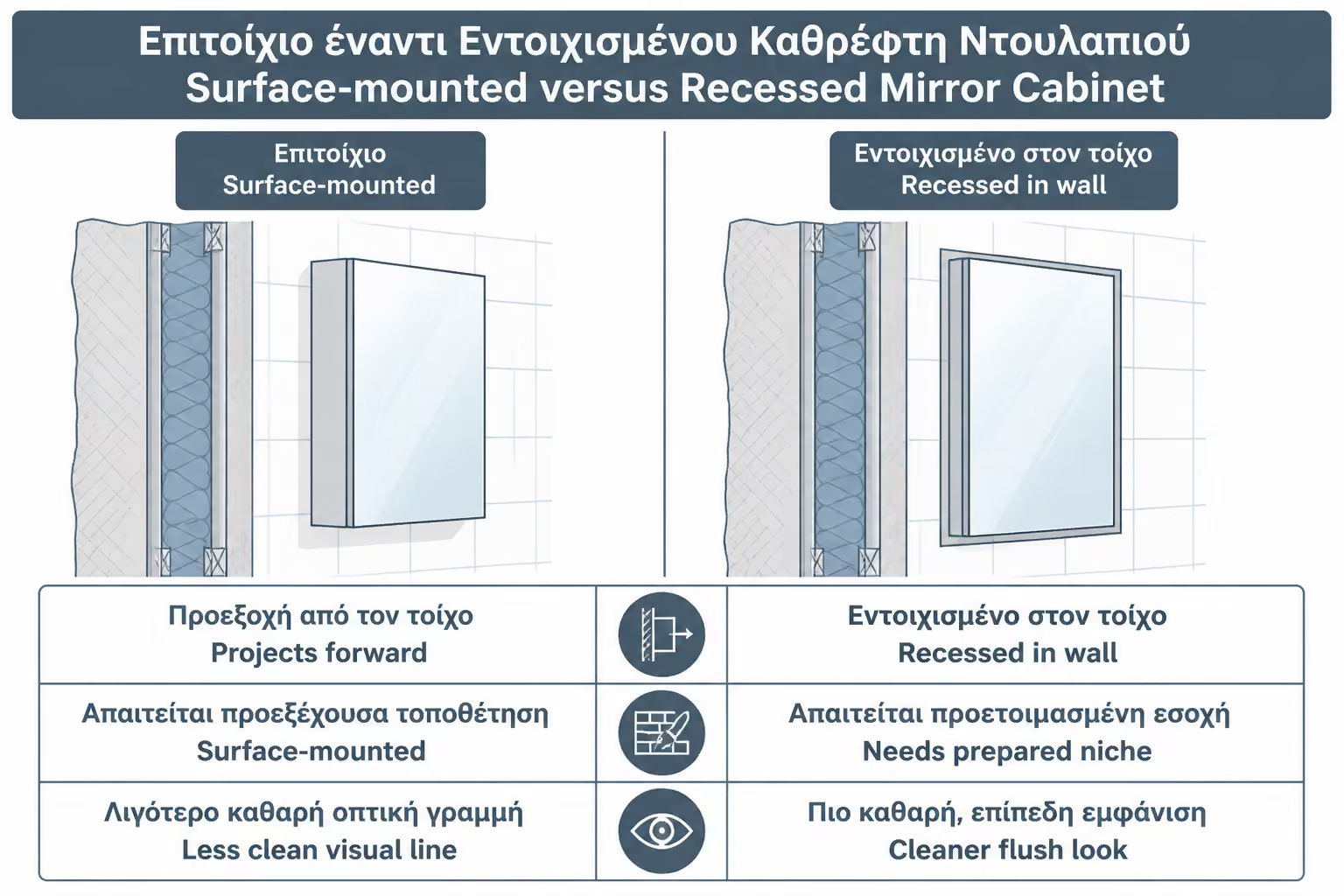
The mirror cabinets are placed either surface-mounted on the wall or recessed into a recess. Surface mounting is simpler: the cabinet is hung on the wall, like a wall cabinet. The downside is that it sticks out. If it is 14–17 cm deep, this depth is visible and can affect the feeling of the space.
Flush mounting is more elegant. The cabinet is inserted into the wall or plasterboard construction so that the mirror face appears almost flat. It is ideal in premium bathrooms and in small spaces where we don't want it to stand out too much. But it takes foresight from the start, proper recess construction, in-wall plumbing/electrical testing, and often more work.
In a finished old bathroom, the surface solution is usually more realistic. In a complete renovation, the recessed can be worth it, especially if a false wall is being built for a built-in cistern or for hidden lighting. The mirror cabinet can then be integrated in the same logic.
A practical example: in a small bathroom where the sink is very close to the door, a 17 cm deep surface cabinet can feel bulky. However, if it is possible to integrate it into a false wall, it provides storage without visually "eating" the space. If there is no such possibility, perhaps a shallower model should be selected.
The depth of the mirror cabinet is critical. Too shallow cabinet does not easily fit bottles and everyday items. Too deep cabinet protrudes, it can interfere with face washing or make the space look heavy. Usually practical depths range from 12 to 17 cm, depending on the model and type of storage.
For a small bathroom, 12–14 cm is often more balanced. They fit toothbrushes, small cosmetics, medicines, razors and everyday products without sticking out too much. If you want to fit large bottles, then more depth is needed, but perhaps these items belong better in a column or bottom drawer.
The depth must be combined with the washbasin. If the sink is shallow and the user stands close to the wall, a deep cabinet may come too far. If the sink is deeper or there is a counter that keeps the user further out, the depth of the cabinet is less disturbing.
A good practice is to do rough simulation. Tape a piece of cardboard to the wall or mark the outline of the cabinet and place an object at the corresponding depth. Stand in front of the sink and see if you feel the cabinet coming in the face. This test is much more useful than the product image in the catalog.
LED lighting in mirror cabinets can be decorative, functional or both. There are cabinets with upper linear lighting, perimeter lighting, backlit lighting behind the mirror or an interior light that turns on when the door is opened. The point is to understand exactly what each model offers.
Decorative or hidden lighting gives a nice atmosphere and makes the bathroom look more modern. It does not always mean that it illuminates the face properly. For shaving, make-up or daily care, lighting without strong shadows is needed. If the LED is only on top, it can create a shadow under the eyes or nose. If the lighting is peripheral or lateral, the image is more balanced.
Bathroom mirror selection guides emphasize that built-in LED or backlit lighting can provide more even, shadow-free illumination for grooming, as long as it is properly designed and does not function solely as a decorative element.
In a master bathroom, don't just rely on the cabinet LED if it's low intensity. Additional general lighting or side lighting may be needed. In a guest WC, the hidden LED can be enough for atmosphere and simple use. The function of the space determines the requirement.
In mirror cabinets, light temperature is of great importance. Very cold light can make the bathroom look "hospital" and distort the image of the face. Very warm light can be pleasant but not enough to help make-up or shave. For bathrooms, an intermediate temperature, around 3000–4000K, is often more practical, depending on the style of the space.
Some models offer temperature or volume control. This is very useful. In the morning you may want brighter light, in the evening softer. If the bathroom is used as a treatment area, the ability to dim or change color has real value. If the cabinet is in a small WC, it may not be necessary.
Be careful with product photos. Lighting in photos often looks more impressive than it actually is. Ask lumens, temperature, if it is dimmable and if the LED is replaceable or integrated without easy service.
A mirror cabinet is bought for years. If the LED burns out and is not easily repaired, you may be left with an expensive cabinet that only functions as a simple mirror. That is why the serviceability is important.
The anti-fog function, or demister, keeps part of the mirror clear of water vapor after a hot shower. It usually works with a thin heating pad behind the mirror surface. It doesn't heat the bathroom, it just warms the mirror slightly so that moisture doesn't condense on it easily.
In bathrooms without good ventilation or in homes where the shower is heavily used in the morning, this function is very practical. If two people get ready one after the other, the second person does not need to wipe the mirror with a towel. A recent article on demister mirrors states that demister pads are thin heating sheets behind the mirror that keep the surface cleaner from condensation, while the electrical connection must be done correctly and not haphazardly.
It is not a necessary feature in every bathroom. If there is very good ventilation, a large window, or the cabinet is in a WC without a shower, it may not be necessary. But if we are talking about a master bathroom with daily hot showers, it is one of the functions that is appreciated in practice.
You should also check if the demister covers the entire mirror or just a central part. Many products do not clean the entire surface. This is not necessarily a problem as long as you know what you are buying.
Internal sockets are one of the most practical features of modern mirror cabinets. They can accommodate an electric toothbrush, shaver or small charging devices to keep the counter clear of cables. Many models have a shaver socket or lower-use internal socket, depending on the market and model.
The advantage is organization. If the electric toothbrush is charging in the cabinet, no cord is visible on the counter. If the razor has its own place, it does not fill the drawer. In family bathrooms, this helps a lot in everyday order.
The point is that we are talking about an electrical supply inside a wet room. The cabinet must be suitable for a bathroom, the connection must be made according to the rules, the position must be correct and the installation must be done by an electrician. In the instructions for illuminated mirror cabinets it is stated that such products are suitable for permanent installation and should not be casually connected with a cable to a simple socket or trailing plug.
In Greek bathrooms, the location of sockets and electrical devices must be checked by a licensed electrician, based on the zones of the bathroom and the applicable regulation. It is not enough to find "a cable behind the mirror". Safety comes before design.
The magnifying glass is a small detail that can prove very useful for makeup, shaving, contact lenses or grooming details. There are cabinets with a built-in magnifying section in the mirror or with a small inside/side magnifying mirror.
The important thing is the position. If the lens is too high, too low or at a point where it is not lit properly, it remains decorative. It must be possible for the user to approach the face without hitting the cabinet or sink. If the cabinet is deep, a fixed magnifying glass may not work comfortably for all users.
For a family bath, a magnifying glass is not necessary. For a master bathroom or a bathroom where daily care is taken, it is very useful. If there is a possibility of an illuminated magnifier, even better, but again the quality of the lighting should be checked.
Don't choose a cabinet just because it has a lot of "extras". Extras have value when used correctly. A well-lit, well-placed cabinet with a simple internal outlet can be better than a loaded model with poor ergonomics.
The body of the cabinet must withstand moisture. Old cheap cabinets often rust, bulge or fail at the hinges. Today's best models use an aluminum body, durable plastic/synthetic materials or properly treated wood products. Aluminum has an advantage in moisture because it doesn't swell like MDF and doesn't rust like plain steel if it's properly treated.
MDF or wood-based cabinets can work if they are properly finished and not exposed to constant moisture. But above the sink there is always a risk of water vapor and drops. If the edges are not correct, they can swell. In bathrooms without good ventilation, the choice of body material is even more important.
Internal shelves are also critical. The glass shelves are easy to clean and do not swell. Wooden or melamine shelves must be protected. If you put wet toothbrushes, razors or dripping products inside the cabinet, the durability of the interior material is tested.
In better ranges of mirror cabinets, we see features such as an aluminum body, mirrored doors and internal tempered glass shelves, along with an IP44 rating and a built-in shaver socket on some models. These items are not mere luxuries. They indicate that the product is designed for a wet area.
The mirror cabinet must match the width of the sink or furniture. It usually looks best when it is equal to or slightly smaller than the piece of furniture. If it's too tight, it looks lost. If it is too wide, it may weigh down the wall or exceed the practical zone of use.
For a 60 cm piece of furniture, a 50–60 cm cabinet is usually reasonable. For an 80 cm piece of furniture, a 70–80 cm cabinet works well. For double sinks, a large single mirror cabinet or two separate ones can be inserted. The choice depends on aesthetics and use. Two separate ones give a personal zone, one big one gives a single image.
Height also matters. The cabinet should be positioned so that the mirror serves the primary users. If it goes in too high, shorter people or children can't see comfortably. If it goes in too low, it can clash visually or practically with the faucet and sink.
In cabinets with lighting, the cable outlet must also be calculated. The electrical point should be in the right place behind the cabinet, not anywhere. If the cable is visible or if an external channel is needed, the clear picture is lost.
The doors of the mirror cabinet are opened several times a day. This means that hinges, opening and closing quality matter a lot. In small bathrooms, it should be checked that the doors open without hitting light fixtures, walls, shelves or the bathroom door.
Two-leaf or three-leaf cabinets are practical because the doors are smaller and open more controlled. A large single-leaf can have a large mirrored surface, but its door needs space to open. In a narrow bathroom, this can be annoying.
Hinges should be moisture resistant and ideally soft-close. When a mirrored door slams shut, there is noise, strain and a greater risk of wear and tear. Inside, the shelves have to be adjusted, because the bathroom items have different heights.
A practical point: open the cabinet in a real location before you buy it, if you see it on display. See where the door stops, if the mirror distorts, if the shelves are deep enough, and if the closure feels solid. The sense of use can be seen there.
Illuminated cabinets with LEDs, sockets, demisters and sensors are electrical devices in a wet environment. This means that they should not be placed arbitrarily. The electrical zones of the bathroom, the appropriate degree of IP protection, earthing where required and connection by a licensed electrician must be observed.
In the installation instructions of wall mounted LED mirrored cabinets it is typically stated that an IP44 product may not be placed in zones 0 or 1, that it is allowed in zone 2 under conditions and that the supply must be interrupted before installation. These instructions show common sense: we don't just buy a lighted cabinet and screw it in wherever it's convenient.
In Greece, the electrician must check the position in relation to the shower, bathtub and sink, the existence of leakage relays, the supply line, the grounding and the way of handling. If the cabinet has an internal socket, the check is even more important.
DIY in bathroom electrical connection is not a good practice. The owner can choose the model and location, but the connection must be done by a professional. A wrong connection in a wet area is not an aesthetic mistake; it's a safety issue.
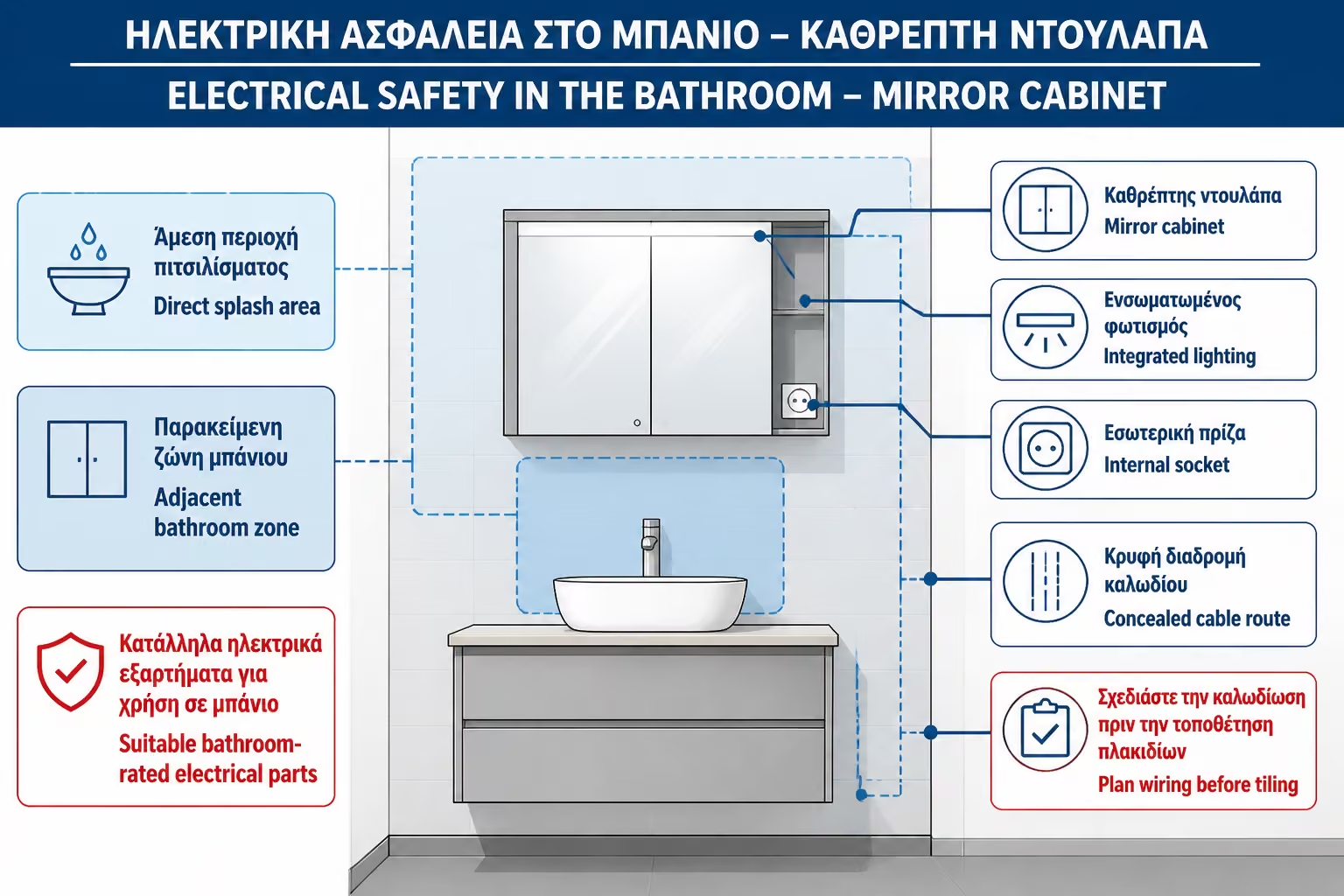
If the bathroom is being completely renovated, the ideal time to decide on a mirror cabinet is before the walls are closed and before the tiles are installed. Thus, correct electrical supply behind the cabinet, correct height, possible flush mounting and clear cable outlet can be foreseen.
If the choice is made later, an external cable, conduit or compromise in position may be required. This spoils the image and can make security difficult. Modern LED mirror cabinets especially look good when the electrical connection is hidden and clean.
It must also be decided how the light will be turned on. Will it connect to the master bathroom switch? Will it have its own touch switch? Will it have a sensor? Will it stay on standby? If it has a demister, will it activate with the light or separately? These details affect daily use.
In a complete renovation, ask the electrician to leave waiting exactly in the location of the selected cabinet. Not "somewhere over the sink". Centers, heights and dimensions must be specific.
The prices of mirror cabinets differ depending on dimensions, body material, mirrors, LEDs, sockets, demister, magnifying glass, sensors and brand. In the Greek market, there are simple mirror cabinets in economic categories, while illuminated LED models with sockets and anti-glare function are rising significantly.
| Category | Indicative cost of Greece 2026 | Practical observation |
|---|---|---|
| Simple mirror cabinet without LED | €50–€180 | Economical storage solution, check body material |
| Mirror cabinet with basic LED | €150–€350 | Good solution for small bathrooms, check brightness |
| LED mirror cabinet with shaver socket | 250–600€ | Very practical for daily device charging |
| With demister, touch, interior lights | 400–900€+ | A more premium solution, it needs a proper electrical connection |
| Large double/triple or built-in cabinet | 600–1,500€+ | Ideal for a master or double vanity |
| Installation / electrical connection | Wide variation | Depends on waits, belts, wires, wall |
Prices are indicative and depend on region, VAT, transport, material, availability, electrical work and whether the product includes all accessories. In international catalogs, cabinets with LED, demister, integrated shaver socket, glass shelves and IP44 rating appear at significantly higher prices than simple models, which shows that electricals and body quality significantly affect the cost.
Do not compare a simple mirror cabinet with an LED cabinet with a socket and anti-glare as if they are the same product. The second is furniture and lighting and electrical installation.
The mirror cabinet is especially useful in small bathrooms, family bathrooms, bathrooms without enough storage, spaces with a shallow sink and WC where we want to hide small items. If the counter is cluttered every day, a good mirror cabinet can solve a clutter problem.
It's also worth it when you want practical functions: an internal socket for a toothbrush, an anti-glare mirror after a shower, an internal light or a magnifying glass. These are not just gadgets when used daily. They can make the bathroom more functional.
It is not always worth it in bathrooms with plenty of storage, a large piece of furniture and a clean architectural image where we want the mirror to be large, flat and without depth. In a very small sink with a very close wall, a deep cabinet can be annoying. In such a case, a slim LED mirror and a sidebar might be a better solution.
The key question is: do you need face-height storage? If so, the mirror cabinet is one of the smartest solutions. If not, it may be unnecessary bulk on the wall.
The first mistake is buying too deep a cabinet for a small sink. If the user feels that the mirror comes too far in front, the use becomes uncomfortable.
The second mistake is underestimating lighting. Many LED cabinets look nice, but they don't illuminate the face properly. Intensity, LED position and light temperature must be controlled.
The third mistake is the last minute electrical connection. If there is no proper waiting, wires can appear or become dangerous patents.
The fourth mistake is to buy a model with sockets without zone and IP control. Electrical safety in the bathroom is not a detail.
The fifth mistake is choosing a cheap body in a damp bathroom. The cabinet is located above the sink and receives water vapor. If the body material doesn't hold up, it can swell, rust, or fail at the hinges.
| Inquiry | Yes / No |
|---|---|
| Do you need storage above the sink or is a simple mirror enough? | Yes / No |
| Doesn't the depth of the cabinet interfere with using the sink? | Yes / No |
| Does the width match the cabinet and the sink? | Yes / No |
| Is the body of the cabinet suitable for a wet area? | Yes / No |
| Are the shelves adjustable and practical for your items? | Yes / No |
| Is the LED lighting sufficient for real use or is it mainly decorative? | Yes / No |
| Is the light temperature suitable for shaving/makeup? | Yes / No |
| Do you need an anti-fog function due to showers and water vapors? | Yes / No |
| Are the indoor sockets suitable for use in a bathroom? | Yes / No |
| Has the location been checked by an electrician for zones and safety? | Yes / No |
| Is there a hidden electrical standby behind the cabinet? | Yes / No |
| Do the doors open without hitting walls, light fixtures or other items? | Yes / No |
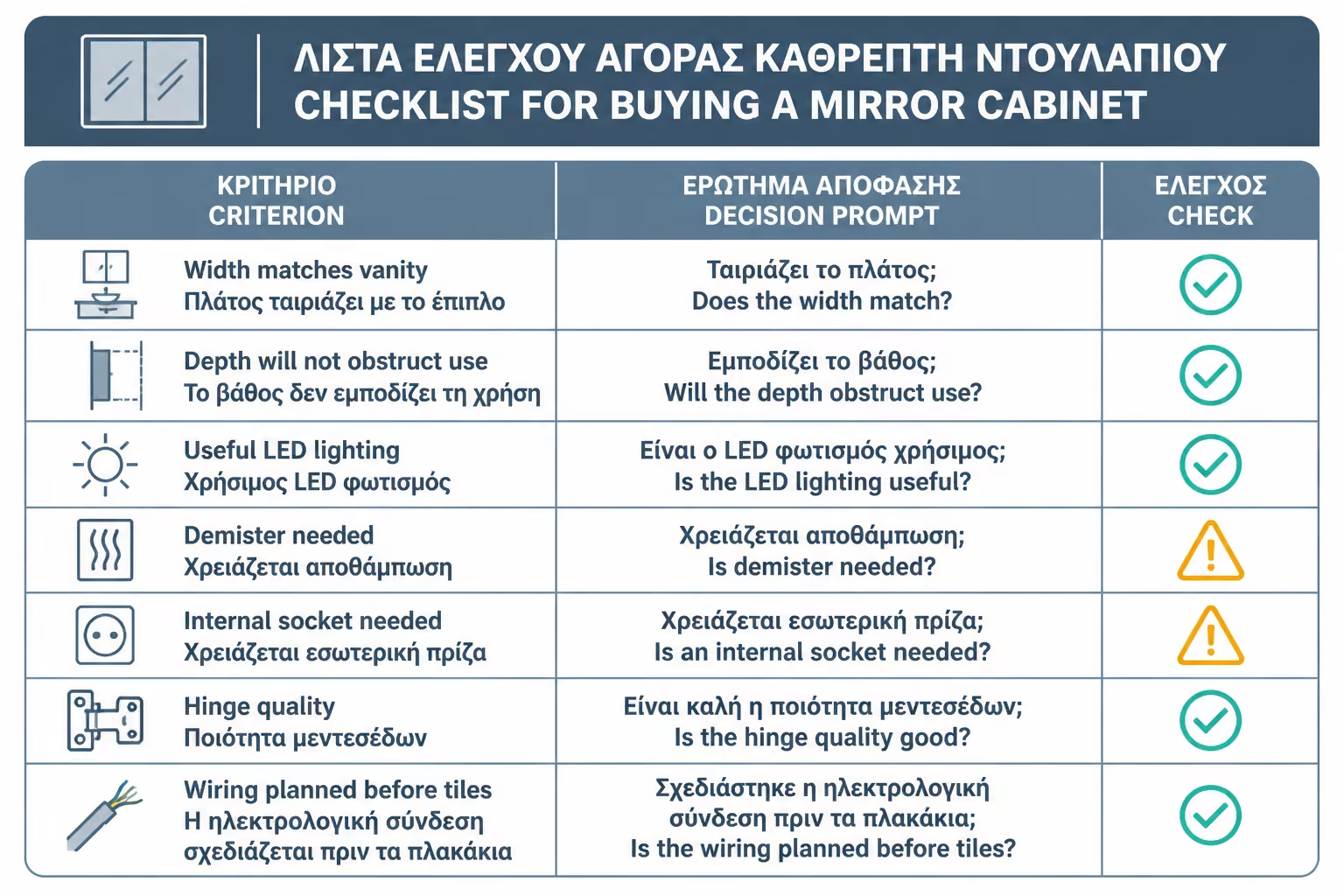
If there are many "no", do not rush to buy because the cabinet looks impressive. In mirror cabinets, usability and electrical safety are just as important as the image.
If you keep only one idea from this article, make it this: a mirror cabinet is an excellent solution when it solves a real storage problem, but it has to be treated as both furniture and an electrical product.
Do not choose it just because the LED looks good in a photo. Check the depth, cabinet material, lighting quality, IP rating, sockets, anti-fog function, and cable position. In a full renovation, decide on it before the walls are closed so the electrician can leave the correct power point.
A good mirror cabinet clears the countertop and organizes the room. A badly placed one can feel bulky, light the face poorly, and introduce unnecessary electrical risk.
Mirror cabinets are making a comeback because they answer a real need: organizing small items where they are used. In small and family bathrooms, they can free up counter space, reduce clutter and provide storage space without taking up floor space. With modern LED lighting, anti-glare function, internal sockets and magnifying lenses, they are no longer just old "pharmacies", but complete treatment zones.
But the choice must be made carefully. The depth should not be disturbing, the lighting should be really useful, the body should withstand moisture and the electrics should be suitable for bathing. Especially models with sockets, demister and touch functions require proper electrical forecasting and installation by a professional. Safety should not be sacrificed for convenience.
For a master bathroom with little storage, a good mirror cabinet is often a better choice than a simple LED mirror. For master bathrooms with plenty of space and a clean architectural image, a large flat mirror can be more elegant. For a small WC, a shallow mirror cabinet can give enormous practical value, as long as it does not protrude too much.
The right solution is one that keeps the counter clean, properly illuminates the face, organizes everyday items and is placed securely. If these are achieved, the mirror cabinet is not an old solution that has come back; it is one of the smartest choices for the modern bathroom.
Return to category.
Go to categoryReturn to the central guide.
Go to guide