
Bathroom Fixtures & Water Equipment
Return to category.
Go to categoryBathroom furniture is one of those decisions that seems simple until the actual measurements begin. In the showroom or in the online store, a ready-made piece of 80 or 100 cm furniture looks clean, complete and economical. But in the real bathroom there are pipes, slanted walls, blind corners, radiators, washers that have to fit, doors that open, pillars, old faucets and sinks that don't fall exactly in the center. That's where the dilemma begins: ready-made factory furniture or custom construction by a carpenter?
The answer is not the same for all bathrooms. In a simple, straight bathroom with 80–100 cm of available wall space, a good ready-made piece of furniture may be the most logical solution. It is faster, more economical, has known dimensions, a ready-made washbasin, often a mirror, and can be installed without much study. In many projects, this solution is completely sufficient and there is no reason to pay for custom construction.
However, if the bathroom has a strange geometry, "blind" corners, old plumbing, a need to hide a washing machine, a narrow passage or a requirement to store up to the last centimeter, then the ready-made furniture starts to show its limits. It can leave a 12cm gap that isn't used, not fit properly around pipes, have drawers that hit the door or force the washing machine to be exposed. There a good carpenter can solve problems that no standard product can solve properly.
The big mistake is to think that custom is always better or that ready-made is always rough. A poorly designed custom piece of furniture made of the wrong material can quickly inflate and cost dearly. A quality factory piece of furniture, with good mechanisms and the right material, can last for years. Accordingly, a custom piece of furniture with marine plywood, correct edges, thoughtful drawers and provision for a washing machine can transform a difficult bathroom.
In this guide we will see when it is worth turning to a carpenter, when a ready-made solution is enough, how blind corners are used, how the washing machine can be hidden without spoiling the functionality, what you should pay attention to in the materials, where the costs are hidden and how to make the right decision without paying custom where it is not necessary.
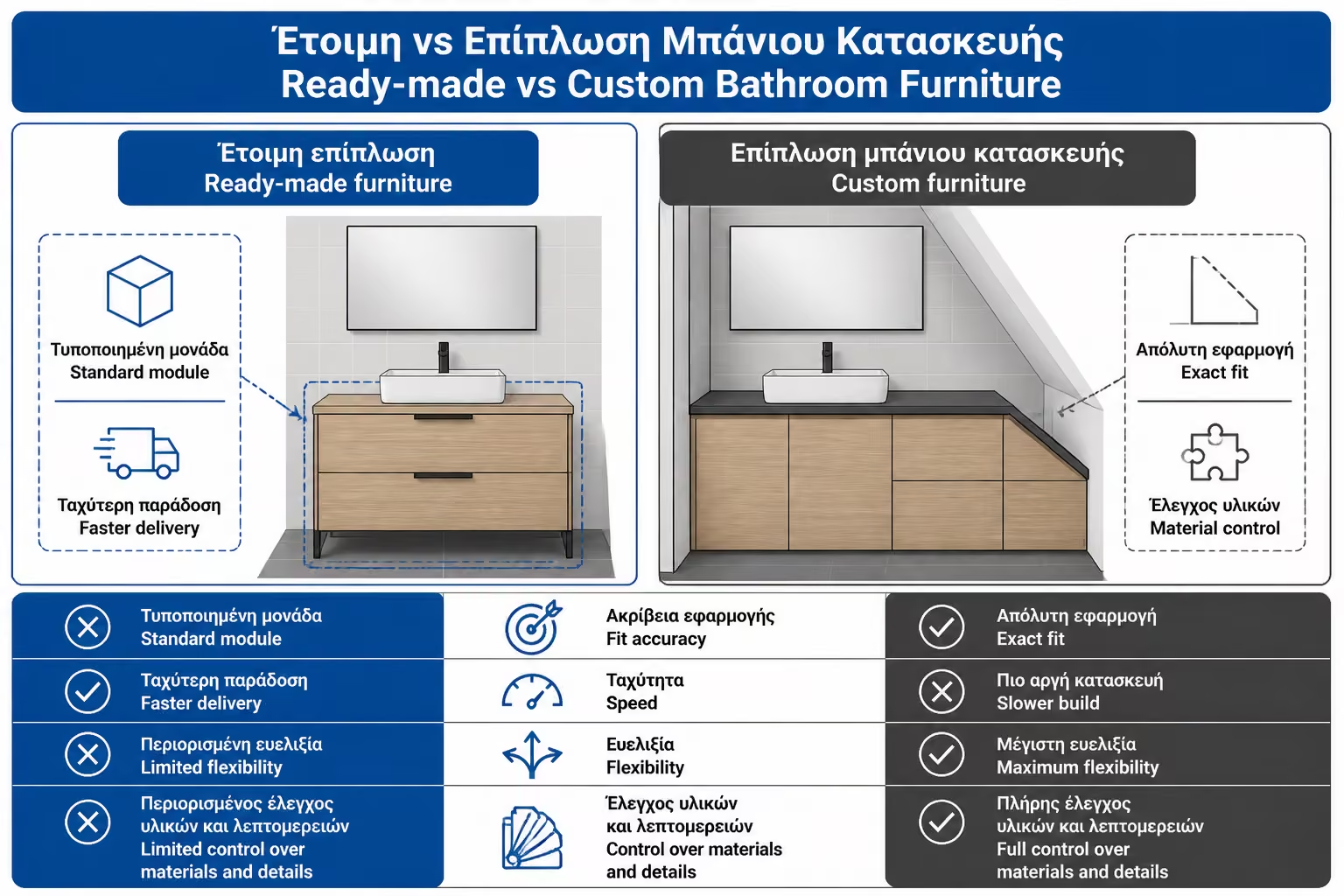
Ready-made bathroom furniture is factory or standard furniture that is available in specific dimensions, usually 60, 70, 80, 90, 100, 120 cm or corresponding widths. It often comes with a sink, bench, mirror or column, depending on the set. Its philosophy is that you buy a proven solution with predefined features.
The advantage is speed and predictability. You know approximately what you are buying, you see photos, dimensions, colors, price and often immediate availability. In Greek stores and comparison platforms, ready-made bathroom furniture appears with a wide range of prices, from very economical solutions around €130–250 to more complete sets over €300–500, depending on material, dimensions and whether a washbasin/mirror is included.
Ready-made furniture is ideal when the bathroom has a relatively "normal" layout. That is, there is a straight wall, the facilities are close to the center, there are no strange columns, no special depth is needed and there is no requirement to hide a washing machine or use every corner. In such cases, ready-made furniture can give a clean result at a reasonable cost.
The disadvantage is that the finished piece of furniture does not fully adapt to the bathroom. If the wall has 94 cm available width and the furniture is 80 or 100 cm, there will be a compromise. If the piping comes out in the wrong place, cuts may be needed in the drawers. If there is a blind spot, it remains empty. If you want dedicated storage for a washing machine, laundry basket or cleaning products, the options are limited.
Custom bathroom furniture is the construction designed for the specific space. The carpenter or builder measures the bathroom, sees fixtures, drains, laundry, doors, corners, shower and storage needs, and makes furniture to the exact dimensions. It can include cabinets, drawers, bench, columns, washing machine cover, shelves, hidden baskets, special cutouts for piping or solutions around columns.
The advantage is customization. A custom piece of furniture can fill a wall from edge to edge, hide gaps, take advantage of difficult corners, hide pipes, leave a precise opening for a laundry, create a unified aesthetic and organize storage based on the real needs of the home. In custom and stock cabinetry comparison guides, the key difference is clearly outlined: custom is designed for your space and specifications, while stock has predetermined dimensions and features.
The downside is cost, time and design responsibility. A custom piece of furniture is not automatically good just because it is custom. It must be properly designed, made of materials suitable for humidity, have correct edges, good mechanisms and provision for service. If the carpenter has no experience in bathrooms, he can make a beautiful piece of furniture but it cannot withstand the wet environment.
Also, custom needs decisions. Height, depth, worktop, sink, faucet, drawers, ventilation gaps, faucet access, hardware, finish, sockets, lighting, concealment of washing machine. The more that are solved correctly at the beginning, the better the result. The more that is left "to be seen along the way", the greater the risk of failure.
Ready-made furniture is often the best choice when the bathroom has a simple layout and the budget is controlled. If you have a clean wall of 80 or 100 cm, the supplies come out about halfway and there are no special requirements, there is no reason to necessarily go to a carpenter. A good factory furniture can do the job very well.
It is also a good solution when time is pressed. Custom furniture requires measurement, design, material selection, manufacturing and installation. If you want to complete a small renovation quickly, ready-made furniture is more predictable. In many cases, placement is immediate or within a few days, depending on availability.
The ready-made furniture is also reasonable in economical renovations for rentals, second bathrooms or guest toilets. There the full exploitation of every centimeter may not justify the extra cost. If the use is simple and the space has no particular difficulties, the standard solution is absolutely sufficient.
The key is not to buy the cheapest without checking. See material, core, finish, mechanisms, siphon, depth of drawers and whether it suits the facilities. Ready-made furniture is a good solution when it is compatible with the space, not when it just "fits".
The carpenter is worth it when the space has difficulties or when the requirements are greater than the standard dimensions. If there is a blind corner, slanted wall, pillar, odd location of utilities, need to hide a washing machine, very little depth or need for storage up to the ceiling, then custom starts to have real value.
It's also worth it when the bathroom is small but you want to use every centimeter. In a 2–4 m2 bathroom, standard furniture often leaves gaps or blocks movement. A custom cabinet can be made shallower, longer, have special track drawers, cut around piping, or leave precise space for the basin and door.
In larger bathrooms, the carpenter is worth it when you want a uniform composition. For example, a countertop with a sink, a hidden washing machine, a linen cabinet, a mirror-cabinet and a column look like a set. There the factory furniture often does not give the same coherence.
Custom is mostly worth it when it solves a problem. If the only reason is "I want something special", it may be worth it aesthetically, but it has to be weighed against the cost. But if it solves a blind corner, hides a washing machine, organizes storage or adapts to difficult facilities, then its value is practical, not just decorative.
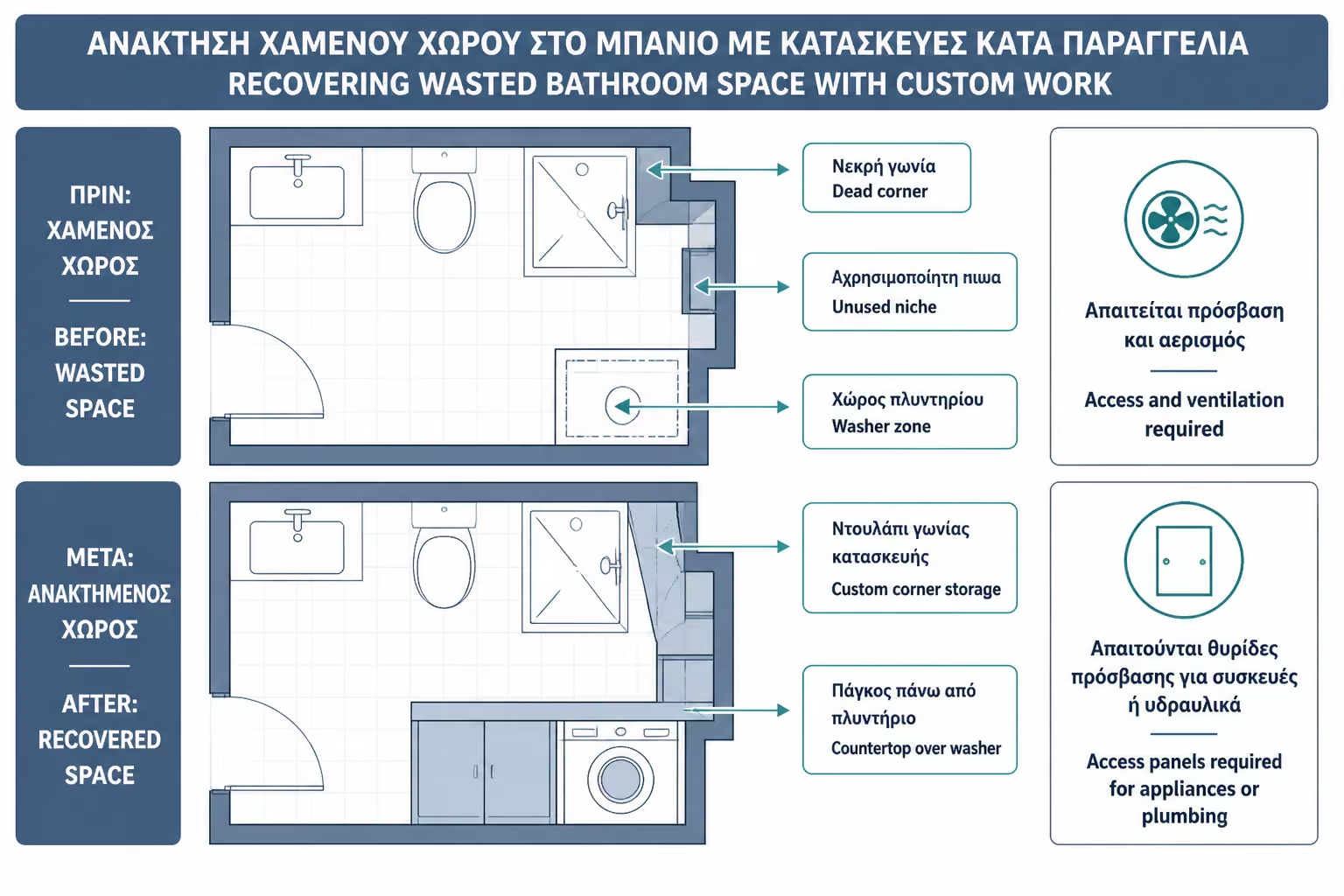
In many Greek bathrooms there are small gaps that are not used. A corner next to the sink, a gap between the furniture and the wall, space above the washing machine, a recess behind the door, a small depth next to a pillar. With ready-made furniture, these points are often left dead. With custom, storage spaces can be made.
The blind corner does not always need a large cupboard. It can become a narrow shelf for toilet paper, a hidden basket, a cleaning cabinet, a vertical column for towels or even a side opening in a vanity unit. The value is not just the liters of storage. It is that the space stops collecting dust and becomes useful.
A practical example: in a bathroom with an available wall of 117 cm, a ready-made piece of furniture of 100 cm leaves 17 cm of space on the side. This void holds nothing standard and ends up gathering dust. A carpenter can make a 117cm piece of furniture, with a slim 17cm side column for cleaning supplies or stationery. The result is cleaner and more functional.
But be careful: it's not always worth filling every gap. If a corner is too hard to access, it can end up as a storehouse of things that are never used. Custom should make the space more functional, not just more crowded.
The washing machine in the bathroom is a common reality in Greece. Many times it is next to the sink, under a counter or in a corner. The idea of hiding it inside custom furniture is attractive, because it visually cleans the space and makes the bathroom look more tidy. But hiding a washing machine has technical requirements.
First you need the right space. The washing machine should not be packed exactly to its size. It needs room for vibrations, pipes, ventilation, door opening, access to the filter and the ability to get out if service is needed. If you hide it so well that it cannot come out without stripping the furniture, the solution is not correct.
Second, it needs ventilation. The washing machine produces moisture and heat. If closed behind unvented doors, odors, mold or deterioration of finishes may develop. Doors can have slots, louvers, bottom/top gap or other way of air circulation.
Third, it needs access to a supply, drain and outlet. Not everything should be hidden behind a fixed panel with no control. If there is a leak, you should be able to close the valve and see what happens. Custom furniture should hide, not imprison.
Many times you don't need to close the washing machine completely. It can fit under a single counter, next to the vanity unit, with or without a door. This is a more practical solution, because it gives a uniform desktop and improves the image without making the service so difficult.
The bench above the washing machine must have the correct height and support. The washing machine must not rest on the counter in a way that transmits vibrations. If the bench is wood or HPL, it must be protected from moisture and heat. If it is quartz or other heavy material, it needs proper support on the sides or the wall.
If a door is chosen to hide the washing machine, the opening must be calculated. The furniture door and the washing machine door must not collide. In small bathrooms, an opening door can obstruct circulation. A sliding, folding or simply open solution with the right color and bench can be considered there.
Undercounter laundry is one of those situations where custom often has real value. Ready-made furniture rarely adapts perfectly to the height, depth and facilities of the washing machine.
Custom bathroom furniture should not be made like bedroom furniture. The bathroom has humidity, water and cleaning agents. So the carpenter must choose materials suitable for the space: marine plywood or other durable core where necessary, moisture-proof MDF in suitable places, HPL, lacquer suitable for a wet environment, correct edges, sealing of cuts and protection around the sink and faucet.
A bad custom piece of furniture can be more dangerous than a ready-made factory one, because it does not necessarily have a proven construction. If the carpenter does not protect the drain and supply holes, if he leaves edges unprotected or if he uses plain MDF in places that receive water, the furniture can swell quickly.
Marine plywood has real value in custom bathroom furniture, especially in the frame and near piping. MDF can be used on facades for a perfect lacquer, but the whole core should not be uncritically done in a wet environment. The choice must be conscious.
Request a written description of materials. Not just "we'll make it good". Ask what the frame will be made of, what the faces will be made of, what thickness, what finish, what edges, how the cuts will be sealed, what mechanisms will go in and how the siphon will be accessed.
For ready-made furniture, the inspection must be done before purchase. Look at the dimensions, the depth, the height, the position of the siphon, if the drawers have a notch for drainage, if the sink is included, if there is a bench, what material the frame is made of and if the furniture is wall-mounted or floor-standing.
A lot of ready-made furniture is photographically attractive, but when you open the drawer you can see the difference. Drawer guides, sides, thickness, core and edge determine whether it will hold. On Greek platforms there are very affordable bathroom furniture with bench, sink and mirror, even under €200, but these must be evaluated realistically in terms of materials, mechanisms and use.
Also check if it can be returned or exchanged if it doesn't fit. In ready-made furniture, incompatibility with facilities is a frequent problem. If the piping falls on the drawer, the technician may have to cut the cabinet. This reduces durability and voids the warranty.
Ready-made is a good solution when the dimensions and facilities match. It is not a good solution when it needs to be "slaughtered" to enter.
Custom has a higher initial cost, but in difficult bathrooms it can be more profitable in the long run. If a ready-made piece of furniture leaves dead spaces, does not hide the washing machine, requires transportation of benefits, or needs cuts that spoil its strength, the initial economy is reduced. A custom designed around existing facilities can in some cases reduce plumbing conversions.
In international comparisons of custom and pre-made vanities, it is often mentioned that custom solutions cost more and take more time, but they adapt exactly to the space, the facilities and the needs of use. This is also their main advantage: you are not only paying for hardware, but a space solution.
If the space is simple, custom may be unnecessary. If space is tight, custom can prevent compromise. Its value is not only measured in cost per metre, but in storage space you gain, pipes that are hidden, a washing machine that fits in properly and functionality that no off-the-shelf product would provide.
The important thing is to make the right offer. A vague custom without design, without materials and without details can lead to excesses. Ask for design, dimensions, materials, mechanisms and final price as detailed as possible.
Costs vary widely. Ready-made furniture can start from low levels, especially in small dimensions and economical materials. In Greek stores, wall-mounted cabinets and bathroom sets appear from around €145–299, while more complete solutions with counter, sink and mirror on comparison platforms can start around €130–250 for simple options.
Custom furniture usually starts higher, especially if marine plywood, HPL, lacquer, custom bench, hidden laundry or special mechanisms are requested. For a simple custom 80–100 cm vanity unit, a realistic range can start from around €600–1,200 with basic materials, while more demanding constructions with columns, wash basin, bench, lacquer or premium mechanisms can range from €1,500 to €3,000+.
| Solution | Indicative cost of Greece 2026 | When does it make sense? |
|---|---|---|
| Simple ready-made furniture 60–80 cm. | 150–500€ | Simple bathroom, low budget, quick replacement |
| Best factory furniture 80–120 cm. | 500–1,200€ | Main bathroom without special geometries |
| Ready set with column/mirror | €400–€1,500 | When the dimensions match and no custom is needed |
| Simple custom vanity unit | €600–€1,500 | When a special width or depth is needed |
| Custom composition with washing machine | 1,200–3,000€+ | When the washing machine needs to be integrated/hidden properly |
| Premium custom with plywood, HPL/lacquer, columns | 2,000–5,000€+ | Master bathrooms, difficult layouts, high durability and design |
Prices are indicative and depend on area, VAT, materials, thickness, mechanisms, worktop, sink, finish, transport, installation, electrical/hydraulic adaptations and whether the construction includes a hidden washing machine or special solutions. Do not compare a ready-made piece of furniture with a custom one just as "furniture". Compare exactly what each solves.
The ready-made solution is better when the space is typical, the budget is limited, time is pressing and there are no special needs. If an 80 or 100 cm ready-made piece of furniture fits exactly, has good material, good mechanisms and does not need to be cut, it is a practical choice.
It's also best when the home is a rental and you don't want to invest in a custom that might not depreciate. In such cases, choose something durable, simple and easily replaceable. You don't need to build a composition from scratch if the bathroom doesn't require it.
The off-the-shelf solution is also safer when you don't have a reliable carpenter with bathroom experience. A mediocre custom can become more expensive and worse than a good factory one. If the craftsman does not provide design, materials and details, it may be better to choose a branded standard solution.
Ready-made furniture is enough when it does not need to fix the space. If the space is already right, you don't have to pay custom just to say it's custom.
Custom becomes almost a one-way street when there is a washing machine that needs to be integrated into the same wall as the sink, when the dimensions are intermediate and the ready-made ones leave useless gaps, when there are blind corners, when you want storage up to the ceiling, when the sink is special or when the facilities are in a difficult position.
It's also pretty much a one-way street when you want a single, long-length countertop, with the sink, laundry and cabinets looking like one. Ready-made products hardly give this continuity. They usually look like pieces that went in side by side.
In very small bathrooms, custom can work wonders. It can create a 35 cm shallow piece of furniture, a drawer that avoids a siphon, a 20 cm vertical column, a cabinet above a washing machine or a hidden basket. These details are what make a small bathroom functional.
In such cases, the question is not "is custom expensive?". It's "how much does it cost me to lose this space for the next 10 years?".
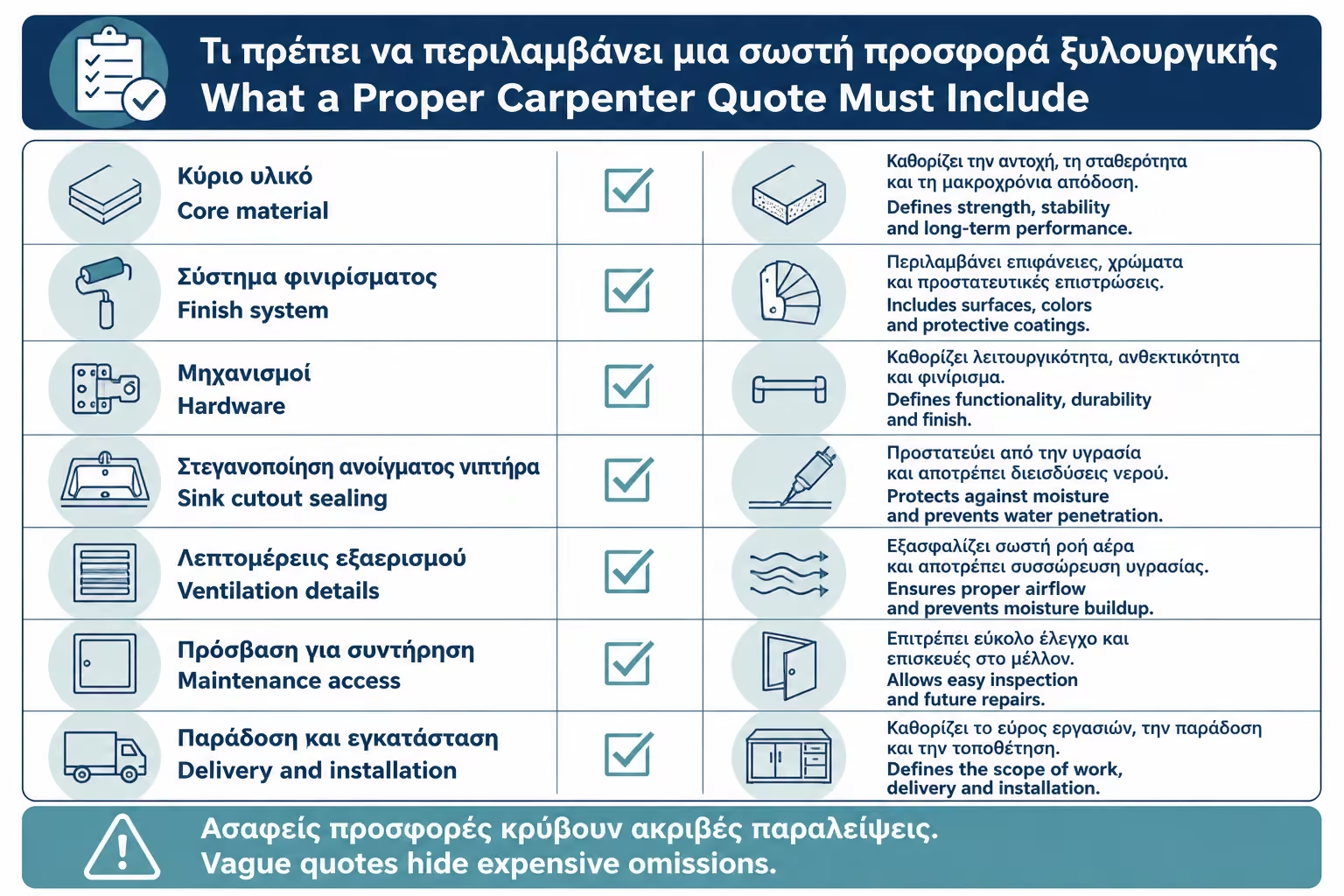
A proper offer of custom bathroom furniture should not simply say “custom bathroom furniture”. It must include dimensions, design, materials, core, finish, bench, mechanisms, drawer guides, hinges, method of support, type of edges, provision for siphon, utilities, washing machine and installation.
It should also make clear what it does not include. Is a sink included? Battery; Valve; Siphon? A mirror? Lighting; Sockets? Transfer of benefits? Dismantling old furniture? If these are not clear, the final price may change.
Ask for a simple design. Not necessarily a 3D presentation, but a plan and view with dimensions. Especially if a washing machine is hidden, openings, doors, ventilation gaps and access to the filter/supply should be visible. If there are blind spots, it must be shown how they are opened or exploited.
Good bidding protects both the owner and the carpenter. The more accurate the design, the fewer misunderstandings in placement.
The first mistake is construction without cooperation with a plumber. The carpenter makes a nice piece of furniture, but the siphon falls on the drawer or the supplies don't fit. Before the furniture is made, the waits must have been measured.
The second mistake is to completely cover the washing machine without ventilation and access. A washing machine must be able to be exited, controlled and ventilated. Otherwise the "hidden" becomes a problem.
The third mistake is choosing the wrong material. A custom bathroom cabinet made of plain MDF or chipboard, without proper edges, can swell just like a bad ready-made one. Custom does not protect against moisture if the materials are wrong.
The fourth mistake is excessive storage at the expense of circulation. If you fill every space with cabinetry, the bathroom can become heavy and unwieldy. Sometimes empty space is a function, not a missed opportunity.
The fifth mistake is not to provide lighting, sockets and a mirror together with the furniture. A custom piece of furniture should be designed as a zone of use, not as an individual box.
The first mistake is buying without an accurate measurement. The owner buys a 100 cm piece of furniture and then finds that the clear opening is 98 cm or that the door hits the drawer.
The second mistake is incompatibility with benefits. If the drawers do not have a place for a siphon or if the pipes come out low, the furniture may need cutting. This spoils the durability and image.
The third mistake is choosing based on price alone. Very cheap furniture can have a weak core, bad edges and mechanisms that do not hold up. In a humid area, these appear quickly.
The fourth mistake is underestimating depth. A deep piece of furniture in a small bathroom can block movement. One that is too shallow may not fit a practical wash basin and may splash water.
The fifth mistake is buying a ready-made set without considering storage. Sometimes the furniture looks big, but the faucet and sink cut so much space that the drawers are smaller than you expected.
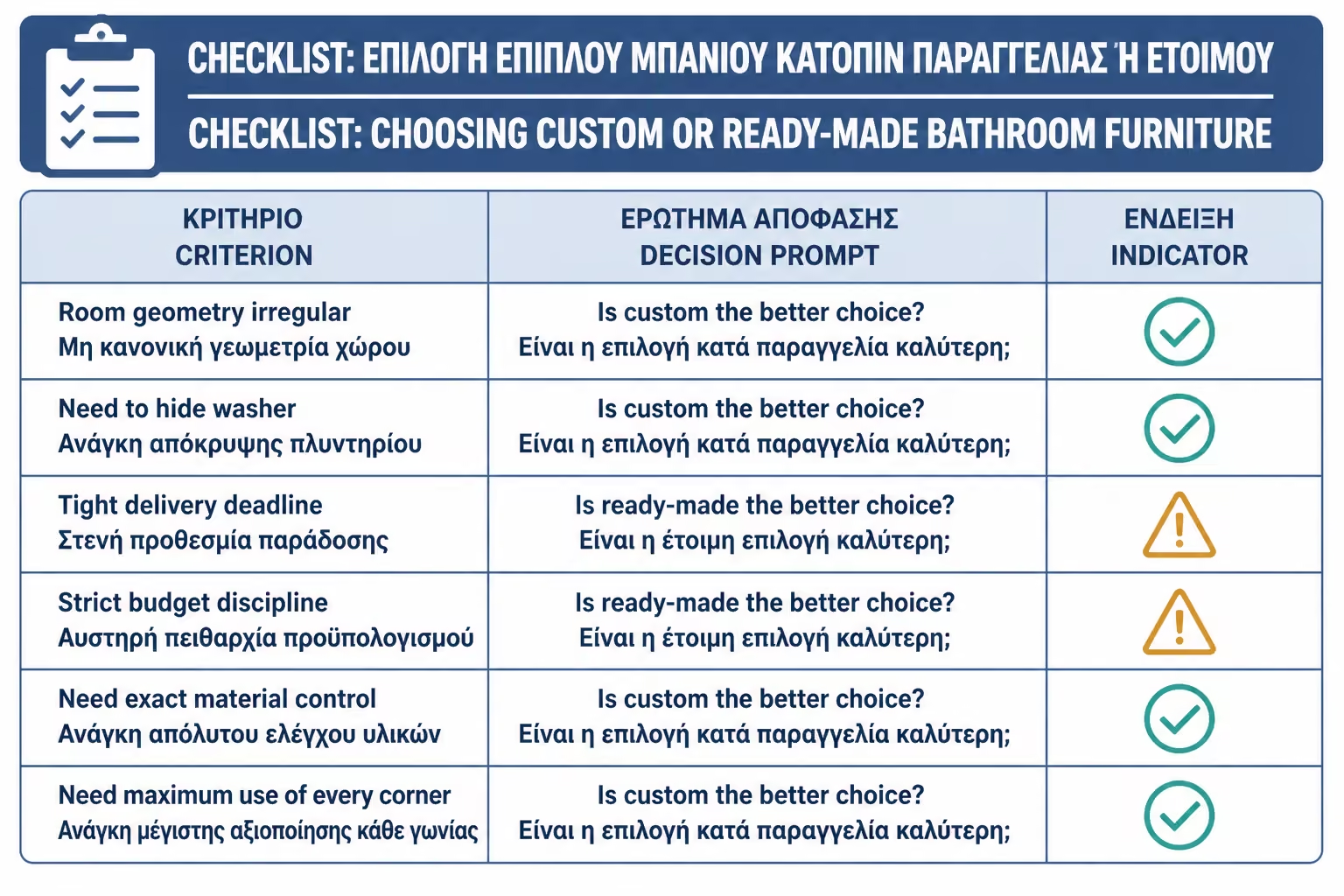
| Inquiry | Yes / No |
|---|---|
| Is the sink wall a standard width to fit a finished cabinet? | Yes / No |
| Are the utilities and drainage in a position compatible with ready-made furniture? | Yes / No |
| Are there blind spots or gaps that will be left unusable with an off-the-shelf solution? | Yes / No |
| Does the washing machine need to be hidden or integrated? | Yes / No |
| There is a need for special depth, e.g. 35–40 cm; | Yes / No |
| Do you need storage up to the ceiling or around columns? | Yes / No |
| Do you have a reliable carpenter with experience in bathrooms? | Yes / No |
| Does the custom offer list materials, edges, mechanisms and finish? | Yes / No |
| If the washing machine is hidden, will it have ventilation and access for service? | Yes / No |
| Does the ready-made piece of furniture you're looking at not need cutting to fit? | Yes / No |
| Have you calculated the cost of a sink, countertop, faucet, faucet, and installation? | Yes / No |
| Does the solution solve a real problem or just look good in the photo? | Yes / No |
If most answers indicate simple space, clean amenities and standard dimensions, a ready-made piece of furniture is probably enough. If laundry, corners, gaps, special depths and a need for a uniform composition appear, custom deserves serious consideration.
If you keep only one idea from this article, make it this: custom bathroom furniture is worth the extra cost when it solves a real space problem, not just because it sounds more premium.
If you have awkward corners, a washing machine to conceal, unusual plumbing positions, or a need for a special depth, a joiner can use centimeters that a standard unit would waste. But when the room is simple and the dimensions already work, a good factory-made option is often cheaper, faster, and entirely sufficient.
In either case, do not choose without a drawing, clear materials, and a proper check of the plumbing constraints.
The choice between custom and ready-made bathroom furniture is not a matter of prestige. It's a matter of space, use, plumbing, storage and budget. The ready-made furniture is an excellent solution when the space is typical, the facilities are compatible and the needs are simple. It is faster, more economical and more predictable, as long as it is chosen with the right materials and dimensions.
Custom furniture is worth it when the bathroom has problems that cannot be solved with standard dimensions. Blind corners, laundry, special depths, slanted walls, columns, old fixtures and a need for maximum storage are instances where the joiner can provide real value. But this value only exists when the construction is done with bathroom materials, correct edges, access to siphons and facilities, and study of daily use.
For small bathrooms, custom can turn lost centimeters into functional space. For simple bathrooms, it can be an unnecessary overkill. For a washing machine, it can give a clear image, but only if ventilation and service are provided. For family use, durability and organization are more important than whether the furniture is "unique".
The best decision is to start with the problem you want to solve. If there is no problem, a good ready-made piece of furniture is enough. If there is a difficult space, then custom is not a luxury; it is a tool of proper design.
Return to category.
Go to categoryReturn to the central guide.
Go to guide