
Bathroom Fixtures & Water Equipment
Return to category.
Go to categoryBathroom storage is one of those issues that seems secondary until daily use begins. On renovation day everything looks clean: a nice sink, a mirror, a piece of furniture with two drawers, maybe some shelves. After a few weeks the reality appears. The counter is filled with toothpastes, razors, creams, hair dryers, brushes, cleaners, toilet paper, towels and a laundry basket that was not provided for anywhere.
In small Greek bathrooms, the problem becomes more intense. There is not always space for a large piece of furniture under the sink, the washing machine often has to fit in the same bathroom and the corners are left unused. That's where storage columns can make a big difference. They utilize the height of the space, not the floor. Instead of spreading the storage horizontally and "eating" traffic, it goes up vertically.
The bathroom column is not just a tall cabinet. It can become an organized storage center: shelves for clean towels, closed cabinets for cosmetics and stationery, soft-close drawers for small items, integrated laundry basket and special notches to pass siphons or pipes without canceling the storage space. In the Greek market, there are already columns with shelves, cupboards and laundry baskets, as well as polymorphic solutions that combine different storage zones in the same piece of furniture.
The mistake is to buy a column just because it "fits" in a corner. If the door opens wrongly, if the shelves are too deep, if the laundry basket is not ventilated, if the cabinet rests on water from the shower or if the material does not withstand moisture, the solution becomes a problem. Ergonomics is not only about how much storage space a piece of furniture has. It's how easy it is to use every day.
In this guide we'll look at how to properly design storage columns, when soft-close drawers are worth it, how hidden laundry baskets work, what siphon cutouts mean, how to organize items by height, and when a ready-made column is enough or a custom build is needed.
The bathroom usually has limited floor space but enough height. This means that the smartest way to save space is vertical storage. Instead of increasing the vanity unit or putting in a second low cabinet that will block the passage, you can use a wall with a tall column.
The column works particularly well in places that otherwise remain "dead": next to the washing machine, behind the door, next to the basin, in a recess, between the sink and the wall or above lower elements. With the right design, it can fit more than a large drawer under the sink, without weighing down the center of the bathroom.
The advantage is that it organizes the categories. Things that are used every day come within arm's reach. Stocks like toilet paper and cleaners go lower or higher. Clean towels go on a middle shelf. The laundry basket can be placed underneath, where it is easier to use.
In a small 3 m2 bathroom, a 30–35 cm wide column can provide real storage without changing the basic layout. This is also why we see ready-made bathroom columns with backs of around 30–35 cm and heights of 150–177 cm, often with shelves or built-in laundry baskets.
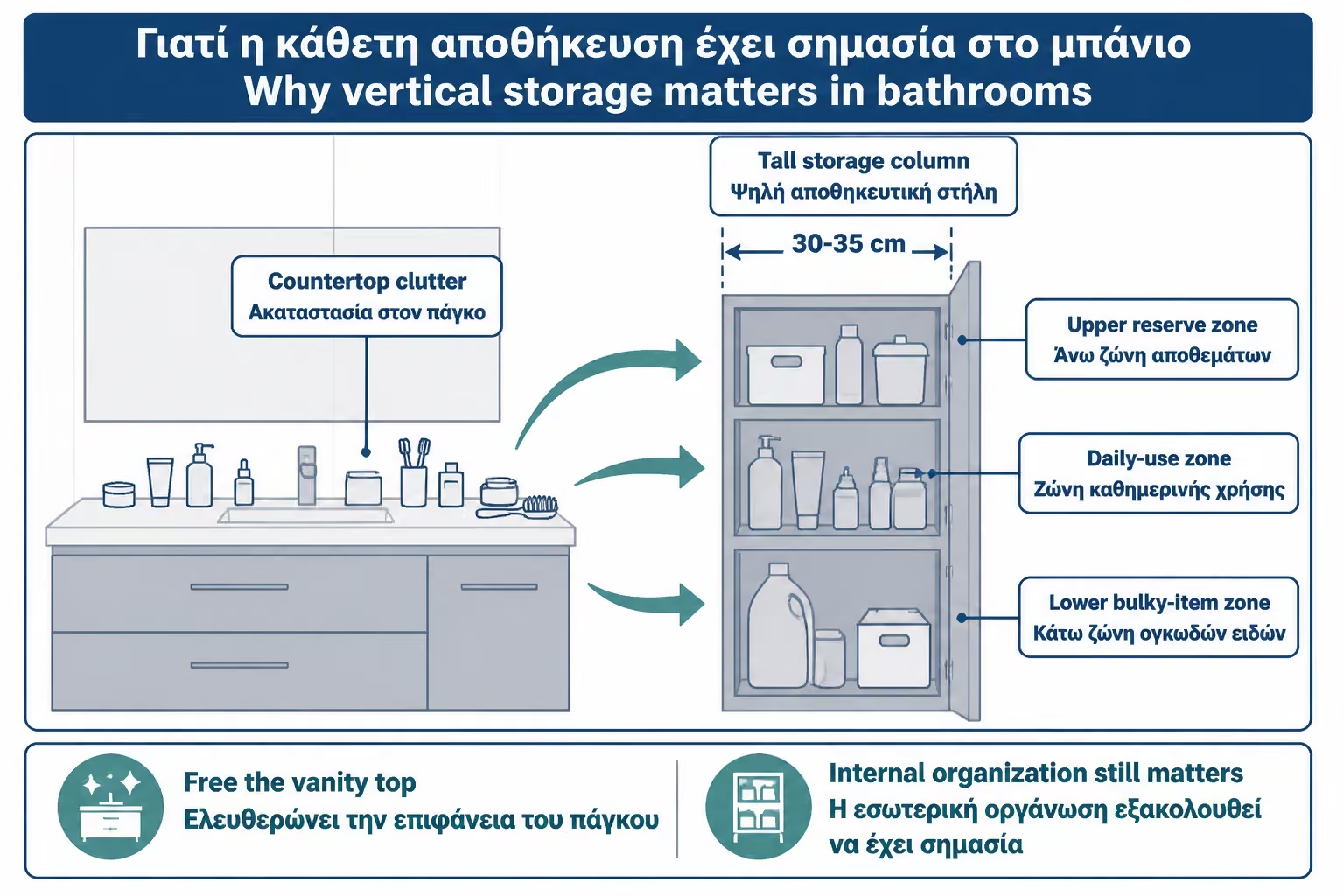
The column should not become a warehouse for all the things in the house. If it is filled with objects unrelated to the bathroom, it will quickly become unusable. The right column is divided into zones. Everyday items should be at an easy height, about waist to eye level. Heavy objects should be placed low. Light stocks can be entered high.
Ideally, a column can hold clean towels, toilet paper, toiletries, hair dryer, razors, soaps, cleaners that should not be seen and simple. But it is not always right to store medicines or sensitive electronics in a wet bathroom, especially if there is no good ventilation. In bathroom organization guides, it is recommended to utilize vertical space with tall cabinets and shelves, but also to logically group objects so that everyday items stay close to the point of use.
A practical example: if the column is next to the sink, the middle shelf can accommodate everyday cosmetics and small products. If it is next to the washing machine, it can be organized as a laundry zone: detergents, laundry basket, clean towels, CT clamps, laundry bags. The position of the column determines what should go inside.
The key is frequency of use. If an item is used every day, it should not be on the highest shelf. If it is used once a month, it should not occupy the easiest spot.
The first key decision is whether the column will have open shelves, closed doors, or a combination. Open shelves look lighter and give direct access. They are good for towels, decorations, well organized baskets or items that you want to show off. Closed cabinets hide clutter and protect items from water vapor and dust.
In real bathrooms, the combination is usually better. An open shelf for towels or a decorative element can "break" the volume of the column. The rest of the parts should be closed, because the bathroom has many small objects that rarely look good together. Columns with closed cabinets and shelves are often presented as a balanced solution, with the closed sections protecting products from moisture and dust, and the open ones serving towels or items of immediate access.
You also need to think about cleaning. Open shelves collect dust and water vapor. If they are near the shower, the items may get wet. Closed cabinets keep a better image, but need ventilation, especially if a laundry basket or wet towels are placed inside.
For a small bathroom, a tall fully enclosed cabinet can look heavy. A column with a combination of closed and open sections can be more visually pleasing, as long as the open spots remain neat.
Soft-close drawers are more than just a sense of luxury. In the bathroom they have practical value. They close quietly, protect the furniture from sharp impacts, reduce wear and tear on the guides and make use more comfortable. In family bathrooms, where drawers are constantly being opened and closed, the difference can be seen.
In a storage column, the drawers are useful for small items: razors, hair dryers, brushes, cosmetics, spare toothbrushes, small medicines that are not affected by moisture or toiletries. If all these go into a deep cabinet with shelves, they are lost behind. The drawer brings them out.
Quality mechanisms matter. It is not enough to say "soft-close". Drivers must withstand the weight, work smoothly and not loosen from moisture. Well-known mechanism manufacturers, such as Blum, propose special organization solutions under sinks/basins with U-shaped pull-outs, so that the space around the siphon is utilized and access to cleaners and small items is not lost.
In more affordable furniture, mechanisms are often the first point to wear out. A drawer that sticks, falls, or doesn't close properly makes the entire column look cheap. If the bathroom is used daily, it's worth paying a little better drivers.
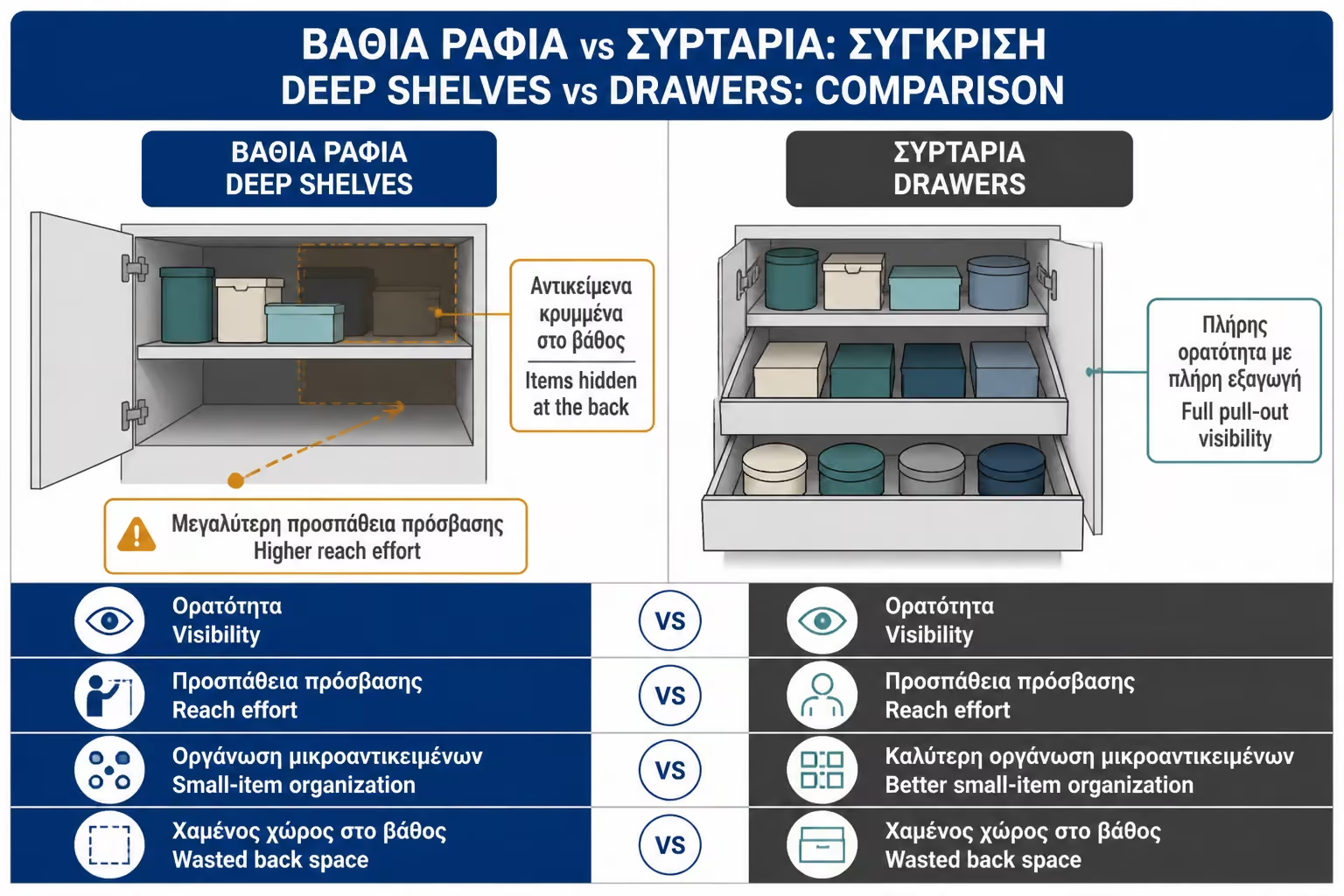
Deep shelves look good in drawings, but in practice they often become a trap. What goes back is lost. To find it, you have to take off the fronts. This is especially annoying in narrow columns, where the hand does not fit comfortably. Drawers and pull-out mechanisms solve this problem because they bring the content to the user.
In a column, shelves are suitable for towels, toilet paper and larger items. Drawers are best for small items. Pull-out baskets are useful for cleaning products, laundry or products that you want to come out completely in front.
A smart scenario is: low laundry basket or deep pull-out, middle drawer for everyday small items, upper shelves for towels and supplies. So each zone has a different way of opening depending on the use.
Ergonomics is not about having as many shelves as possible. It's about being able to get what we want without emptying half the cupboard. In small bathrooms, where every object matters, this difference is huge.
The integrated laundry basket is one of the most practical solutions in bathroom columns. It hides the unwashed, visually cleans the space and avoids the independent basket that grabs the floor. In small bathrooms, this can be a big upgrade. There are 30–35 cm wide columns with integrated laundry basket and door, often with soft-close mechanisms and compact dimensions.
But the basket should not be a closed box without ventilation. Laundry has moisture, odors and often towels that have not been fully dried. If they are closed in an airtight cabinet, odors or mold may develop. The column must have ventilation, either with slits, or with blinds, or with a gap in the door, or with a suitable internal arrangement.
Also, the basket should come out easily. If it is too deep in the cabinet and you have to bend awkwardly to empty it, it will be tiring to use. Tilting or pull-out baskets are more practical, as long as the mechanism is sturdy. If the basket is filled with heavy towels, the hinges or guides must withstand.
In a family bathroom, the hidden laundry basket can be one of the column's most useful functions. In a guest WC, it is usually not needed. There the column can be devoted more to stationery and cleaning products.
The laundry basket must be inserted low. First, because laundry has weight. Secondly, because the use is more natural: we throw clothes down, we don't put them on a shelf. Third, because the low position helps the stability of the column.
If it goes in too high, it becomes uncomfortable and increases the weight to the point where it is not ideal for the furniture. If it goes in low but behind a deep door, there must be enough space in front for it to open. In small bathrooms, an opening door may hit the sink or washing machine. That's where a tilting basket or pull-out can work best.
You also need to consider the path of simples. If the basket is in a place where everyone passes, it will be used. If it is behind a door or in a corner that is not easily opened, the clothes will end up on the floor. Ergonomics is behavior. Good furniture makes the right habit easy.
For a small bathroom with a washing machine, the ideal solution is often a column next to the washing machine with a lower laundry basket and upper shelves for detergents. This creates a small organized laundry area.
One of the most common problems with bathroom furniture is the faucet. The owner sees two large drawers and after installation finds that the top drawer has been cut in half or does not fit properly due to drainage. Siphon notches are there to solve this problem.
In washbasin furniture, the notch can be U-shaped, that is, the drawer has a gap at the point of the siphon but maintains space to the right and left. This logic makes use of areas that would otherwise be lost. Blum presents special U-shaped pull-out solutions for under-sink cabinets, precisely with the aim of making use of the space to the right and left of the faucet, instead of leaving it useless.
In the bathroom, this principle is just as useful. A drawer with the right notch can fit cosmetics, brushes, soaps or cleaners around the spout. If the notch is done carelessly by the technician after purchase, the drawer may lose strength or look ugly. If predicted from the beginning, it works cleanly.
In custom construction, the carpenter must work with the plumber. Where will the siphon be located? How tall is he? Will a space saving siphon be used? How deep will the drawer be? These details determine whether the furniture will be really practical.
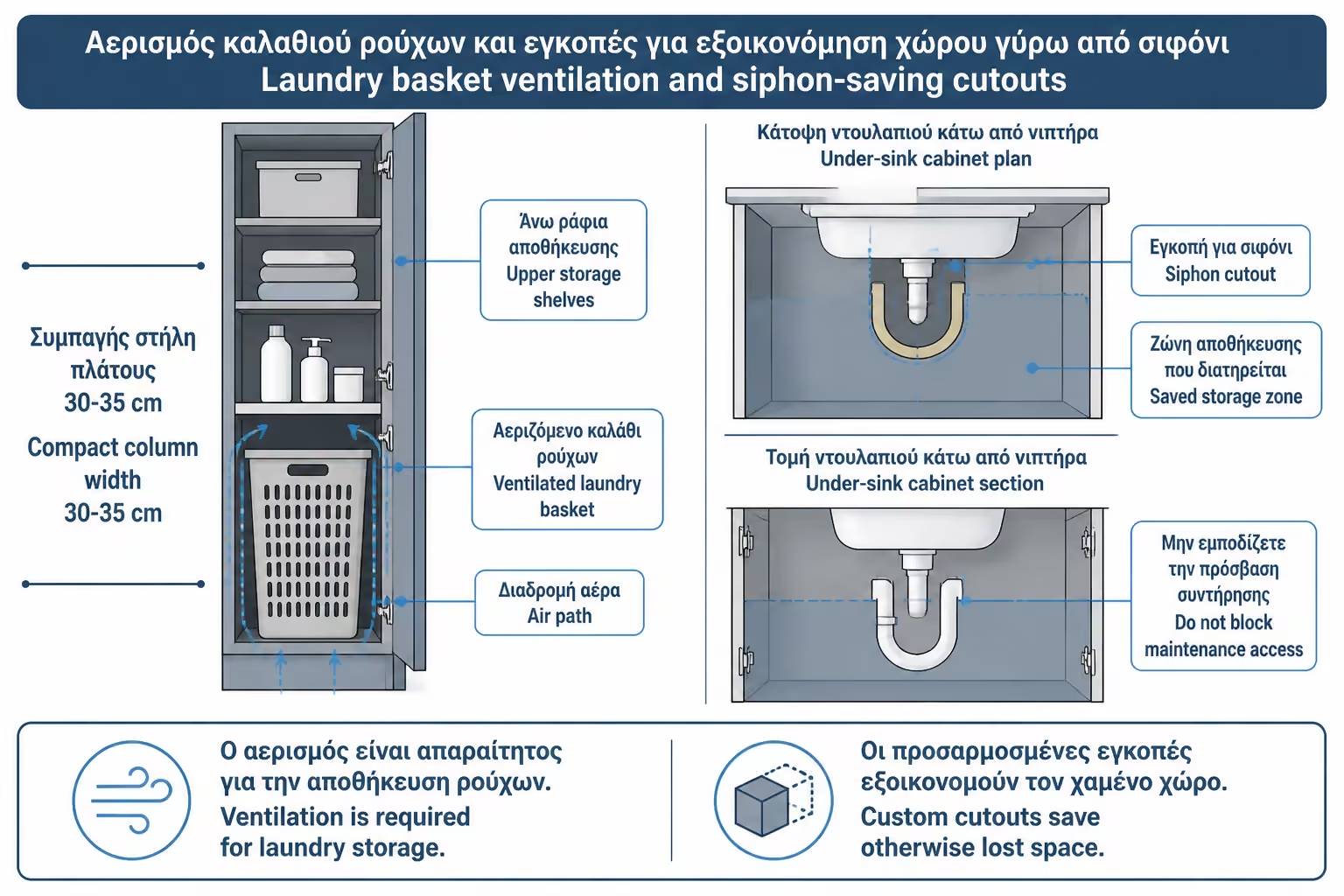
Notches are not just for the vanity unit. In columns that go next to old fixtures, above a washing machine or near drains, special cuts for pipes, valves or siphons may be needed. If the column is bought ready-made and then cut roughly, its durability and aesthetics may be reduced.
In old bathrooms, the pipes are not always where we would like them to be. They may run low in the wall, have a floor drain near the column, or need access to a valve. A custom column can be designed with a removable back, notch or access port. A ready-made column may not be forgiving of such changes.
The important thing is not to sacrifice service. If the column hides a valve or siphon, it must be accessible. There's no point in hiding something so well that a leak has to uproot the furniture. Storage should not block the technical needs of the bathroom.
Before ordering a column, photograph the wall, note the supplies, siphons and heights. In a custom solution, give these details to the carpenter. In the finished solution, check if there is a back gap or if the furniture is completely closed.
Columns can be hanging or floor standing. The hanging column leaves the floor free, easier to clean underneath and protected from standing water. It also looks lighter, especially when combined with a hanging vanity unit. The floor column usually gives more stability and can have more storage height all the way down.
In small wet bathrooms, the hanging column has a practical advantage. It does not step on water and mopping is easier. But it needs a proper wall and good support. If it is filled with heavy detergents, towels and products, the weight is not negligible. It should not be hung on a weak wall without control.
The floor column is simpler to install, but its base must be protected. If it steps directly on a wet floor, it may swell or break at the bottom. Legs or a base made of material that does not retain moisture are preferable, especially if it is located near a shower.
In ready-made Greek products we see both logics: floor columns with laundry basket, but also hanging columns about 35 × 35 × 175 cm. in similar series. The right choice depends on wall, floor water and weight of contents.
A column doesn't have to be huge to be useful. Backs of 30–35 cm can fit many items, especially if the height is 150–180 cm. A depth of 30–35 cm is also often enough for towels, stationery, toiletries and a laundry basket. Deeper columns give more space, but can weigh down the space and make it difficult to access rear items.
In a small bathroom, a 30 cm column may be more practical than a 45 cm column that blocks movement. If it goes next to a basin or shower, the depth must be carefully checked. The column door must open without hitting batteries, towel rails or glass cabin.
The height should also suit the use. A very tall column to the ceiling takes advantage of space, but the upper shelves are difficult to reach. We only put light stocks there. If the column is used daily, the most important part should be at an easy height.
The right column is not the longest. It is the one that gives storage without making the bathroom cramped.
A column with multiple shelves is not automatically organized. Internal partitions, baskets, boxes, drawers or pull-outs are needed. If everything goes in bulk, in a few weeks the column becomes unusable. Especially small items are easily lost.
The best organization is by category. A basket for cosmetics, one for razors, a shelf for towels, a closed section for paper supplies, a low section for cleaning agents, a basket for laundry. If there are children, there can be a low shelf for their own products. If there are cleaning products, they should be kept out of the reach of small children.
Bathroom organization guides recommend the use of baskets, dividers and logical grouping so that everyday items are easily accessible and the space remains tidy. This is even more true in columns, because vertical space can become chaotic if not organized.
If you are designing a custom column, ask for adjustable shelves. Needs change. A shelf that holds bottles today may be needed for towels tomorrow. Flexibility is more important than fixed symmetry.
The bath column must be made for a wet environment. If it's plain chipboard with bad melamine and bad edges, it can swell from water vapour, floor water or moisture where it touches the wall. If it has a laundry basket, the internal humidity increases even more.
For columns near a shower or washing machine, it is advisable to prefer materials with better behavior in humidity: marine plywood, anhydrous MDF with a proper finish, HPL or quality melamine with good edges. Acne is critical, because that's where puffiness often starts.
If the column has open shelves, the items are better ventilated, but more exposed to water vapor. If it is fully closed, it protects visually, but needs ventilation. Especially in the laundry basket, ventilation is not optional.
A good piece of bathroom furniture should withstand the use of the bathroom. Don't buy a generic indoor storage cabinet and place it in a wet bathroom without checking the materials and finish.
A ready-made column is sufficient when you have a standard gap, the dimensions match, no pipes need to be hidden and the use is simple. There are ready-made solutions with shelves, doors, laundry baskets and compact dimensions, at reasonable costs. For a simple bathroom or WC, this is often the fastest and most economical solution.
Custom column is worth it when space is difficult: blind corner, washing machine, piping, pillar, need for special depth, integrated laundry basket or storage up to the ceiling. There the carpenter can create a solution that does not exist ready. It can also align the column with the vanity unit and give a unified image.
However, custom needs proper planning. If you just ask for "one column up", you may get a large box that is not ergonomic. It must be defined what will go inside, where the basket will be, if drawers are needed, where the doors open, how it is ventilated and how it is cleaned.
The right decision is simple: if a ready-made column solves the problem without compromise, no custom is needed. If it leaves dead space or doesn't serve the purpose, custom is worth it.
Prices on bathroom storage columns vary widely. Small simple racks and organizers can start very low, even under €60, while regular bathroom columns with doors, shelves or laundry baskets often start from around €150–300 in basic ranges. Indicatively, Greek stores display columns with a laundry basket for around €210 and hanging columns for around €200, depending on dimensions and order.
| Solution | Indicative cost of Greece 2026 | When does it make sense? |
|---|---|---|
| Simple shelf / auxiliary column | €40–€120 | Rough organization, low budget, not heavy humidity |
| Ready-made column with door and shelves | €120–€300 | Standard bathroom with simple storage needs |
| Column with laundry basket | €180–€400 | Small bathrooms where there is no room for an independent basket |
| Column with soft-close mechanisms | 250–600€ | Master bathroom, daily use |
| Custom bathroom column | 500–1,500€+ | Special dimensions, hidden corners, machine washable, high resistance |
| Custom polymorphic composition | 1,200–3,000€+ | Washbasin, washing machine, columns, baskets and counters in a single design |
The prices are indicative and depend on the area, VAT, transport, materials, mechanisms, finish, height, width, laundry basket, placement and if custom adaptation is required. Do not compare a simple shelf with a column of marine plywood and soft-close mechanisms. They are not the same product category.
In a daily use bathroom, it is worth paying for better mechanisms and materials. In a secondary WC, a simpler off-the-shelf solution may suffice.
The first mistake is exaggeration in the background. A very deep column holds more, but the rear items get lost and the space becomes cramped. In small bathrooms, the depth should be as much as needed, not as much as possible.
The second mistake is the laundry basket without ventilation. Unwashed items should not be closed in a damp, dark box. Needs air and easy removal.
The third mistake is the wrong direction of the door. If the door hits the basin, washing machine or shower, the column will be inconvenient to use. Before purchase, the opening must be checked.
The fourth mistake is the lack of access to piping. If the column hides a valve, siphon or supply, there must be a hatch or removable part.
The fifth mistake is the choice of interior material for a wet bathroom. The column may not directly receive water like the bench, but it lives in moisture. Edges, bottom and hinges should hold up.
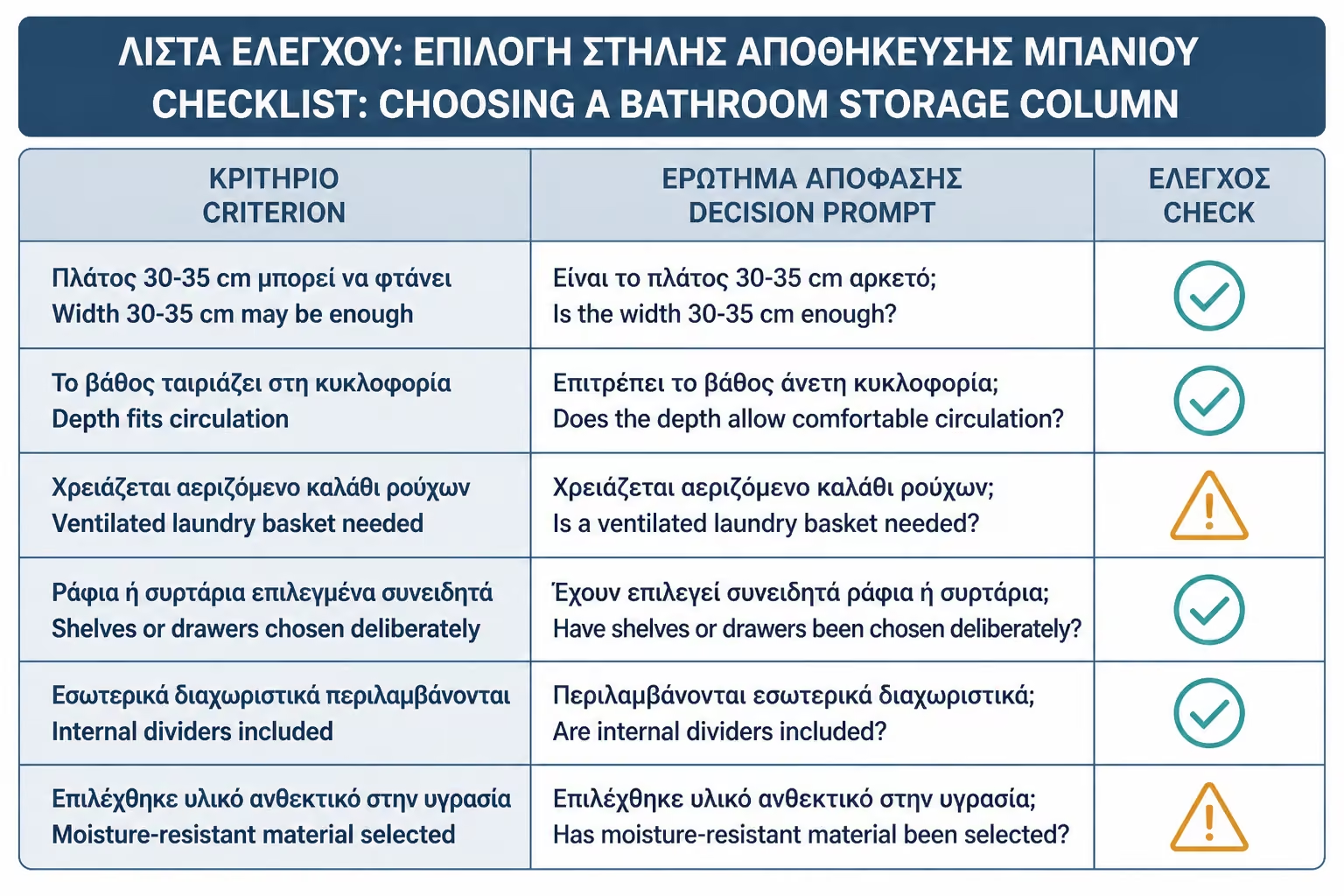
| Inquiry | Yes / No |
|---|---|
| Have you decided exactly what will be stored in the column? | Yes / No |
| Does the width and depth not obstruct traffic? | Yes / No |
| Does the door open without hitting a basin, shower or washing machine? | Yes / No |
| Are everyday items at an easy height? | Yes / No |
| Do heavy items fit low? | Yes / No |
| Are there drawers or baskets for small items? | Yes / No |
| Is the laundry basket, if present, properly ventilated? | Yes / No |
| Does the basket remove or empty easily? | Yes / No |
| Are soft-close mechanisms suitable for everyday use? | Yes / No |
| Are there cutouts or access for siphons and tubing where needed? | Yes / No |
| Is the material suitable for a wet environment? | Yes / No |
| Is the solution off-the-shelf or custom and fully priced with installation? | Yes / No |
If there are many "no's", the column may fit in the bathroom, but not work properly. In storage, practicality counts more than volume.
If you keep only one idea from this article, make it this: a good bathroom storage column is not the one that holds the most, but the one that lets you find what you need easily.
Keep everyday items at hand level, heavy items low down, reserve stock higher up, and laundry in a ventilated basket. If there is a trap, valve, or pipe behind the unit, do not seal it off permanently without access.
And when the space is awkward, a well-designed custom tall unit is often smarter than a ready-made cabinet that merely “fits.”
Storage columns are one of the most efficient solutions to organize a bathroom without filling up the counter and without losing valuable floor space. They make use of height, hide clutter and can incorporate functions that would otherwise take up a separate space, such as a laundry basket, shelves, drawers and a cleaning zone.
But their success depends on ergonomics. The depth should be correct, the door should open comfortably, the objects should fit in the correct height zone and the mechanisms should withstand daily use. Soft-close drawers and pull-out baskets are not just a luxury when the bathroom is used by a family. It's a way to keep the space organized.
The hidden laundry basket is a great solution, as long as it is ventilated and easy to empty. Notches for siphons and piping are also critical, because a piece of furniture that hides technical points without access can create more problems than it solves. The materials must be suitable for moisture, especially if the column is located near a shower or washing machine.
For simple spaces, a ready-made column may be enough. For difficult corners, laundry, special depths or the need for maximum exploitation, the custom is seriously worth it. The best choice is the one that makes the bathroom more peaceful in everyday life: fewer things outside, easier access, a cleaner counter and storage that works without thinking.
Return to category.
Go to categoryReturn to the central guide.
Go to guide