
Bathroom Fixtures & Water Equipment
Return to category.
Go to categoryThe dilemma “walk-in shower or closed cabin?” appears in almost every modern bathroom renovation. On the one hand, the walk-in looks clean, minimal, spacious and hotel-like. A large fixed crystal, a linear faucet, large tiles and a rain head can make even a simple bathroom look more expensive. On the other hand, the closed cabin remains the most practical solution to keep the water inside the shower, limit the cold draft and work well even in smaller spaces.
The truth is that there is no one answer for all bathrooms. The walk-in shower is excellent when there is enough length, proper slope, suitable crystal, good drainage and the user accepts that there may be some water outside the shower zone. The closed cabin is a safer choice when the bathroom is small, when we don't want any water on the floor, when there are children or when the shower is heavily used by the whole family.
The most common mistake is to choose a walk-in only from a photo. On social media, the walk-in always looks airy, clean and luxurious. But in everyday life, if the shower is only 90-100 cm long, if the fixed crystal is short, if the shower head hits the entrance or if the slopes are not done correctly, the water will come out. Walk-in and enclosed cubicle comparison sources point out that cubicles hold water better and reduce splashing, while walk-ins need careful planning to keep the rest of the bathroom from getting wet.
Accordingly, the most frequent mistake with the closed cabin is that it is considered "old" or less premium. A good frameless or semi-frameless cab with proper glass, quality hinges and clean lines can be extremely beautiful. It may not give the full feel of an open space, but it often works best in small bathrooms. The right choice is not the one that looks most impressive in a photo, but the one that suits the size, use and maintenance of your own bathroom.
In this guide we will see in detail what a walk-in shower is, what a closed cabin is, what are the advantages and disadvantages of each solution, how they differ in cost, what dimensions are needed, when water comes out, which is easier to clean and how to decide based on the size of your bathroom.
Walk-in shower is the shower that has an open entrance, without a normal door that closes the entire space. It usually consists of a built-in or ready-made shower floor, a fixed glass and an open passage. It can have a linear spout, a central spout or a low shower head. It can be completely level with the rest of the floor or have a small step/lip.
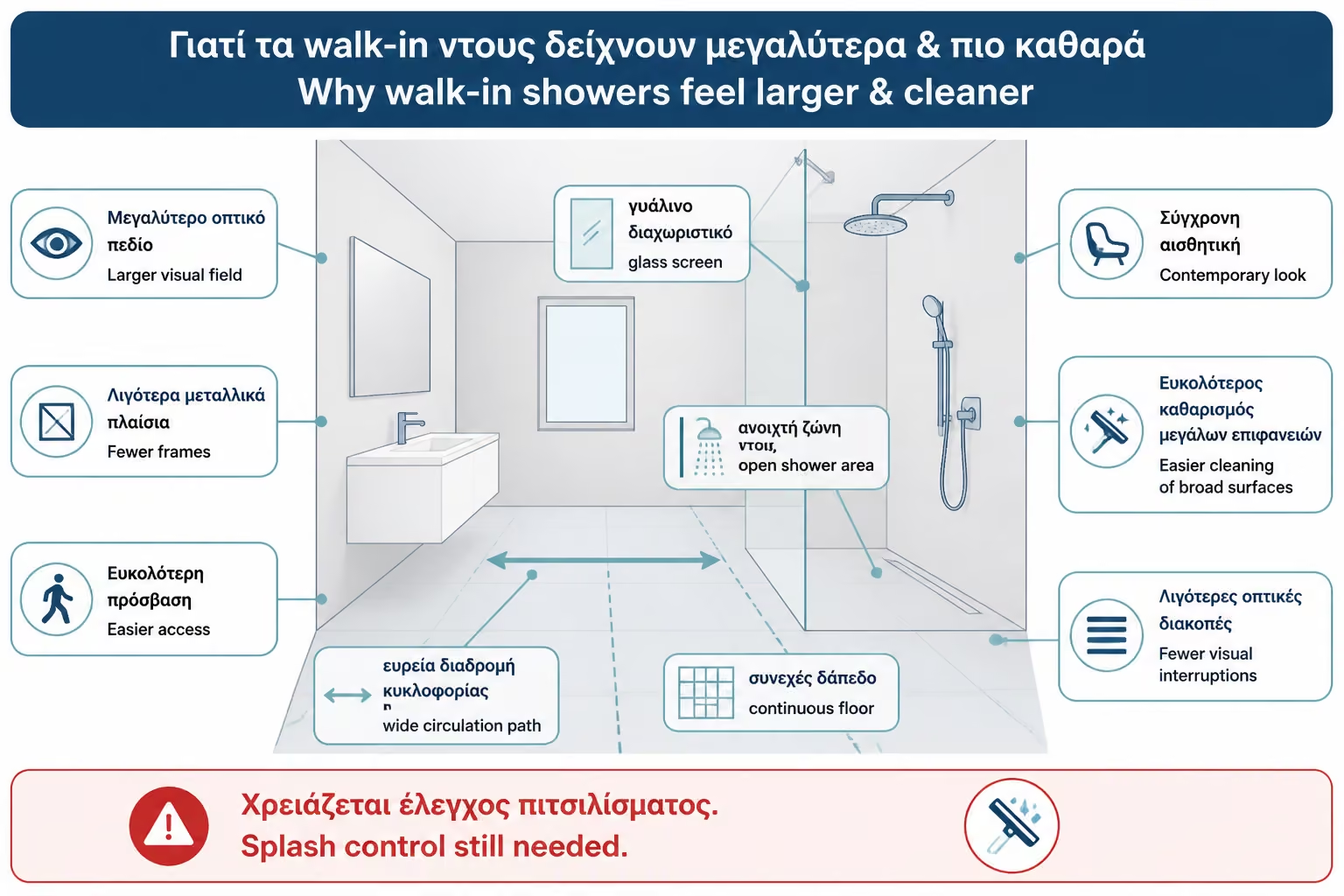
Its main idea is continuity. The bathroom is not interrupted by a heavy cabin. The eye sees a single surface, fewer profiles, fewer mechanisms and cleaner geometry. This makes the bathroom look bigger, especially when transparent crystals and the same floor tiles are used.
In practice, a walk-in can be very simple or very complex. The simple version is a fixed crystal on a finished shower. The most premium version is a built-in shower with linear siphon, hidden drain, built-in faucet, rain shower and floor-to-ceiling glass.
The critical point is that the walk-in has no door to hold back the water. So its success depends on the length of the crystal, the inlet opening, the flow direction, the slopes and the size of the shower.
A closed cabin is the shower that is enclosed by a door or doors, fixed crystals and profiles or hinges. It can be square, rectangular, angular, semi-circular, sliding, opening, folding or frameless. Its main purpose is to create a closed shower area so that the water stays inside.
The cabin can be placed on an acrylic/porcelain shower or on a built floor with tiles. In small bathrooms, sliding or folding doors are often very practical because they do not need an opening space. In larger bathrooms, opening frameless doors give a clearer picture.
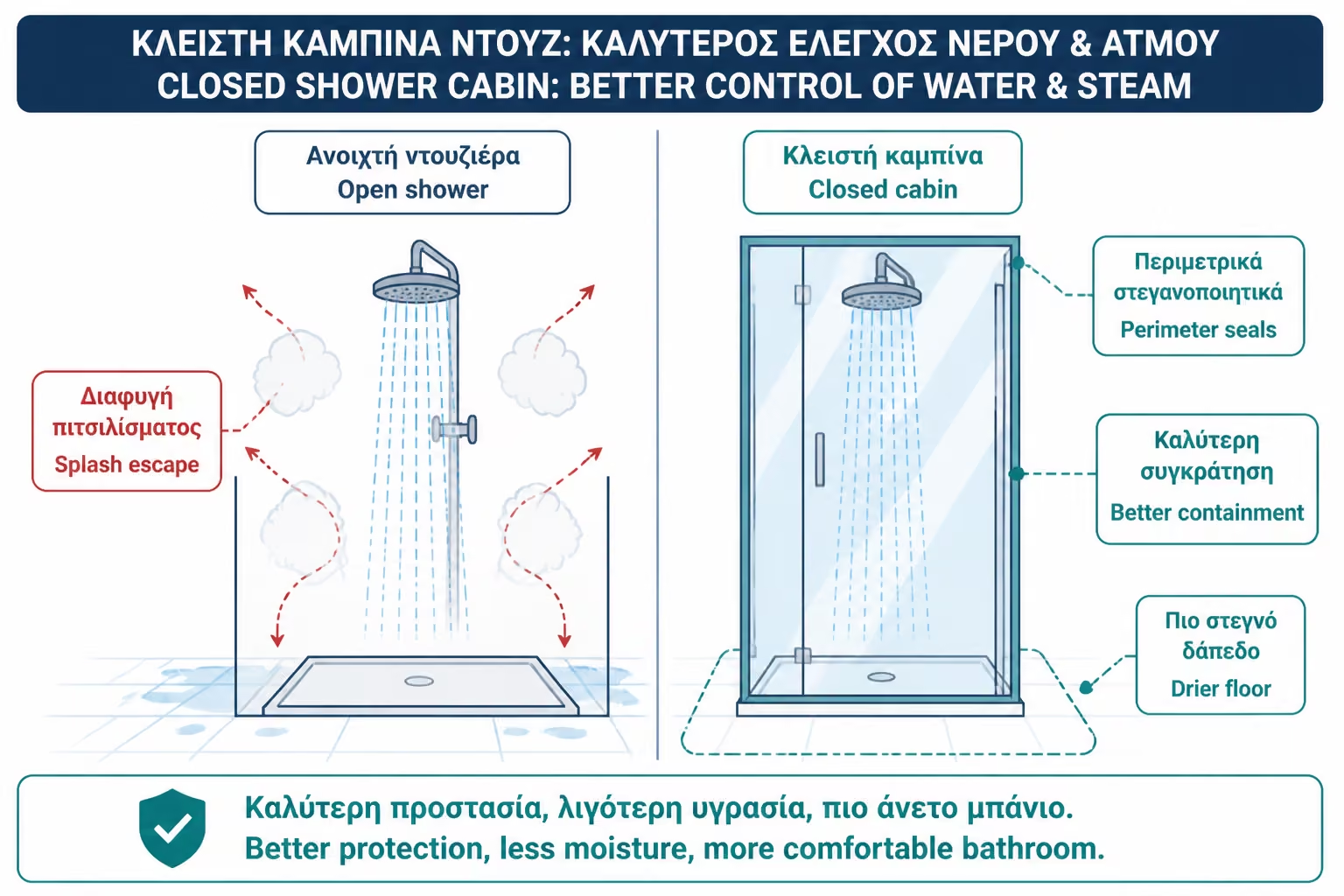
The big advantage of the closed cabin is water control. The doors and rubbers contain splashes and reduce the need to mop the floor after each shower. This is especially important in family bathrooms, small spaces and bathrooms with wooden furniture near the shower.
The downside is that it has more parts: hinges, wheels, rails, rubbers, magnets, profiles and corners. All of these require cleaning and maintenance. The cabin protects the bathroom from water, but the cabin itself has more places that collect salts and soap scum.
The walk-in wins in the sense of space. The closed cabin wins in water control. This is the center of the comparison. All the rest are variations of this dilemma.
If you want the bathroom to look open, minimal and modern, the walk-in has a big advantage. Fewer profiles, fewer doors, fewer visual obstacles. Especially in bathrooms with large tiles, a single floor and fine details, the walk-in gives a very high aesthetic effect.
But if the daily priority is "not to let a drop out", then the closed cabin is safer. Comparison sources report that shower enclosures are better at holding water and preventing splashes, keeping the rest of the floor dry and reducing the risk of slipping.
A walk-in can work great, but it needs space and planning. The cabin is more forgiving. If the space is small or the use is intense, the cabin reduces the risk.
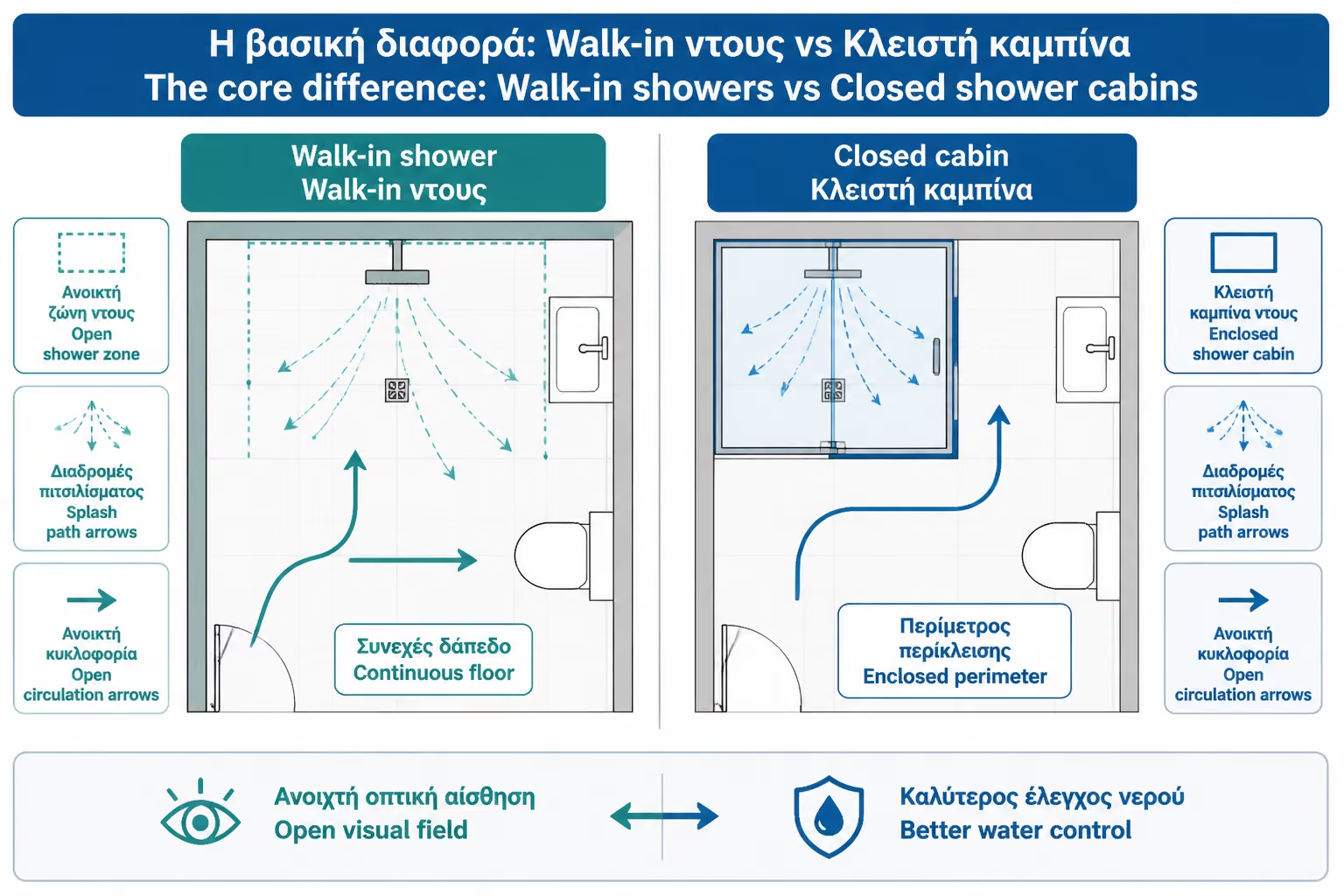
The first advantage is aesthetics. The walk-in makes the bathroom look more open and modern. Fixed glass does not cut as much space as a closed cabin with doors and profiles. In small to medium bathrooms, this can make a big difference in feel, even if the actual square footage doesn't change.
The second advantage is access. If the floor is flat or with a very low threshold, entry is easier for the elderly, children or people with limited mobility. There is no door to open, no tall step, as long as the build is done right. That's why walk-ins are often associated with more accessible bathrooms.
The third advantage is cleaning. A simple walk-in with a fixed crystal has fewer moving parts, fewer rubbers and fewer rails. Comparison sources say that walk-ins are often easier to clean because they don't have door mechanisms, rails and lots of sealing points where scale and soap scum collect.
The fourth advantage is the sense of luxury. The walk-in is suitable for rain showers, built-in faucets, linear faucets and large plates. If the bathroom is designed as a whole, the result can look much more premium than a typical cabin.
The first disadvantage is the waters. Even with the correct slope and correct crystal, there may be some splashing outside the shower zone. In a large space this does not bother. In a small bathroom, the mat, the furniture, the basin or the floor in front of the door can get wet. Sources for doorless walk-in showers point out that even with the correct head, slope and runoff, some splashing is to be expected and that more space is needed for the water to stay where it needs to be.
The second disadvantage is the feeling of cold. Because there is no enclosed cabin, the hot steam is not contained as easily. In a small bathroom with good ventilation this may not be visible. In a larger or cooler space, the user may feel more current, especially if the inlet is wide open.
The third disadvantage is the need for flawless construction. Slopes, seal, siphon, head position, crystal length and inlet width must work together. A walk-in with the wrong posture is unforgiving. If the water is not directed properly to the siphon, it will spread in the bathroom.
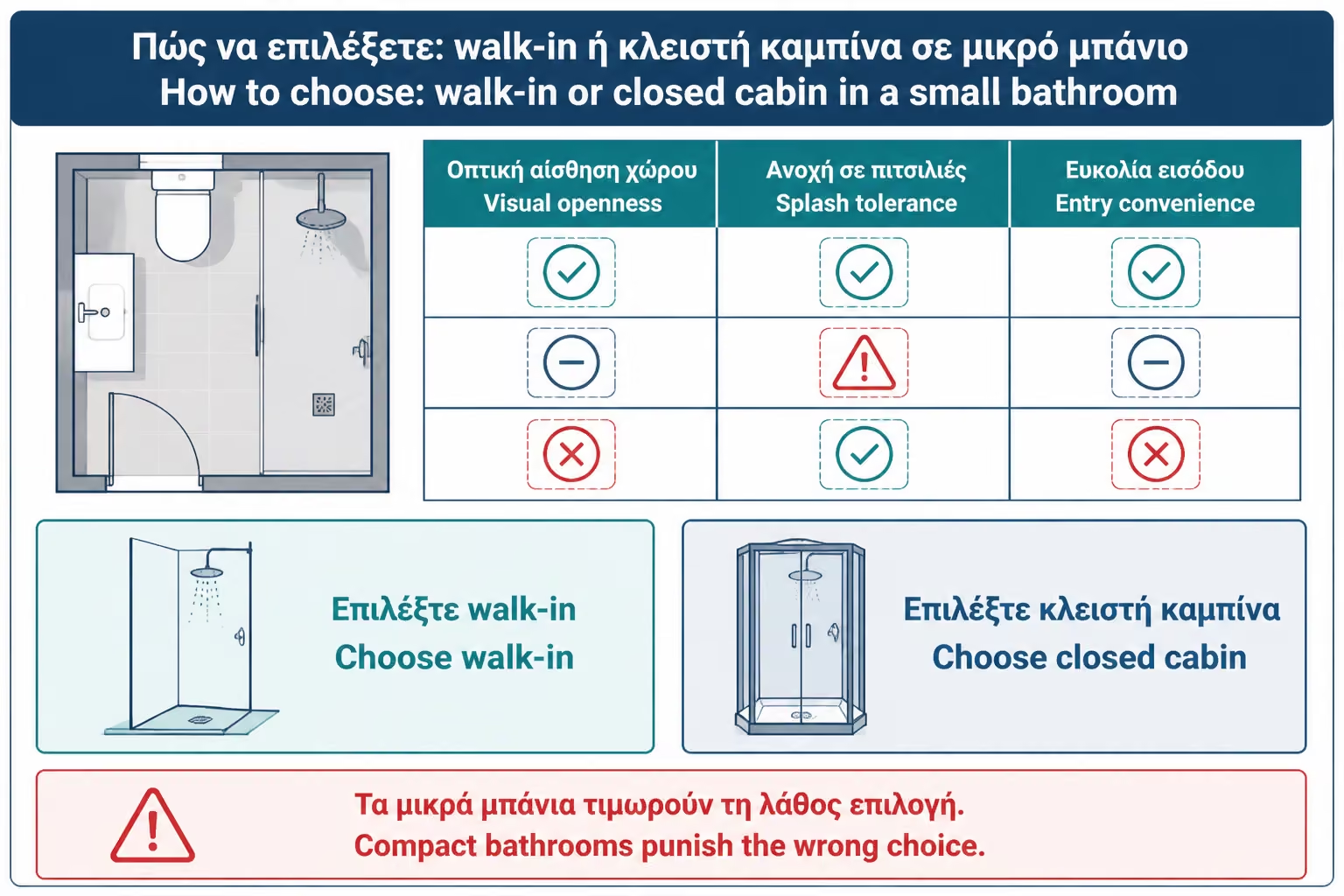
The fourth disadvantage is that in small spaces it may look "modern" but work worse than a cabin. If you try to fit a walk-in in an 80 x 80 or 90 x 90 shower without a door, chances are you'll have water coming out. There the closed cabin is more practical.
The first and biggest advantage is that it keeps the water in. Doors, rubbers and profiles create a limited shower zone. This protects the rest of the bathroom, the furniture, the basin, the sockets and the floor from constant wetting. In a small bathroom, this is of enormous practical value.
The second advantage is thermal comfort. The cabin better keeps steam and heat around the user. The shower feels more "closed" and protected. For those who catch cold easily, this may be more important than minimal aesthetics.
The third advantage is privacy. A cabin with frosted, reeded or patterned glass can give a greater sense of protection. In family bathrooms where one person may enter the space while another is showering, this can be of practical importance.
The fourth advantage is that it works best in small dimensions. An 80 × 80 or 90 × 90 cabin is not luxurious, but it can be functional. A walk-in in the same dimensions will usually throw water. This is the reason why the closed cabin remains a very strong solution in Greek apartment bathrooms.
The main disadvantage is that it visually closes the space. Even with transparent glass, the doors, profiles and tires create a more "boxy" feeling. In a very small bathroom, this can make the space look more crowded, especially if the cabinet has a thick profile or low-quality frame.
The second drawback is cleaning. Sliding cabins have rails that collect scale, hair and soap scum. The opening ones have hinges and elastics. Tires over time turn yellow, harden or collect mold if they are not properly dried. In hard water areas, the cabin needs frequent cleaning.
The third disadvantage is the maintenance of the mechanisms. Rollers, magnets, hinges and rubbers may need replacing. In economy cabins, the castors may fail or the doors may not slide smoothly after a few years.
The fourth disadvantage is access. If the door is narrow or opens in the wrong direction, entry becomes awkward. In senior bathrooms, a cubicle with a narrow opening can be less practical than a well-designed walk-in.
The walk-in needs length. There can be very small solutions, but to work comfortably without a lot of water, it usually needs a larger dimension than a closed cabin. Many drivers consider that a walk-in can start from small dimensions, but the most comfortable and practical solutions are clearly larger. Sources for walk-in dimensions say the minimum can start around 30 × 30 inches, which is about 76 × 76 cm, but this is narrow for everyday use, while a minimum of 32 × 32 inches is often recommended for better movement and less splash.
In the real Greek renovation, a more useful rule of thumb is this: for a walk-in that works comfortably, we preferably want a length of 120–160 cm and a width of 80–90 cm. Ideally, in a comfortable walk-in layout, the fixed glass takes up most of the length and leaves an entrance of about 55–75 cm. total length so that the remainder is used as a fixed crystal that cuts the waters.
If you have a length of 140–160 cm available, the walk-in starts to become much more comfortable. If you are 100–110 cm, it needs a lot of attention. If you have 80–90 cm, the closed cabin is almost always more practical.
The closed cabin is more flexible in small dimensions. An 80 x 80 cm cabin is narrow but functional. A 90 × 90 cm is much more comfortable. A rectangular 80 × 100 or 80 × 120 cm can give a very good experience without requiring an open walk-in space. Sources for basic shower dimensions state that 32 × 32 inches is among the smallest standard dimensions, while 36 × 36 inches is considered a more comfortable base for accessibility.
In a 2–4 m2 bathroom, the closed cabin is often safer. It can be placed in the corner, have sliding doors and keep the rest of the floor dry. If you try to do a walk-in in such a small space, you may gain visual appeal but lose functionality.
In a 5–6 m2 bathroom, both solutions are possible. The choice depends on the layout. If the shower can be made 80 × 140 or 90 × 140, the walk-in is possible. If it is limited to 80 × 100, the cabin will probably work better.
In a large bathroom of 7 sq.m. and above, the walk-in has a much better chance of working properly, especially if the shower can be made 90 x 160 or larger. There the closed cabin is chosen mainly for thermal comfort, full water retention or privacy.
When it comes to water, the closed cabin clearly wins. A properly fitted cabin with good tires and proper slope holds water much better. It's not perfect forever — tires need maintenance — but it's more efficient as a start.
Walk-in depends on geometry. If the crystal is long enough, if the entry is not in the launch zone, if the head is not pointing towards the opening, and if the floor is properly sloped, waters are restricted. But if any of these are wrong, mopping will be needed after every shower.
The problem is magnified with an oversized rain shower, high pressure, or a shower phone that is used freely. A steady rain shower that falls vertically into the zone is more walk-in friendly. A shower phone in a child's hands can wet the entire bathroom, whether it's a walk-in or a cubicle, but the cubicle will limit the damage better.
If your main fear is water on the floor, choose a closed cabin or walk-in only if you have enough length and a very correct design.
In cleaning, the walk-in has an advantage because it has fewer mechanisms. A fixed glass is easier to clean than two sliding doors with rails. There are not many rubbers, wheels and corners where salts and soap scum collect. Comparison sources point out that walk-ins have fewer cleaning points, while cabs with doors and rails need more attention.
But there is also the other side. The closed cabin keeps the water in, so the rest of the bathroom needs less cleaning. The walk-in may have an easier crystal, but if every shower throws water on the floor, you'll be mopping the bathroom more often. So the cleaning advantage depends on whether the walk-in works properly.
In hard water areas, both solutions need care. Crystals should be wiped or cleaned regularly. In a cabin, tires and rails need special attention. In walk-in, the large stable crystal needs frequent drying to prevent it from filling with white marks.
If you want the least maintenance, go for simple crystal with an anti-salt coating, few profiles, easy access and proper ventilation. This can be either a walk-in or a quality frameless cab.
The closed cabin is usually warmer in feel. Holds steam and reduces drafts. The user is in a more restricted warm environment. This can be very pleasant in winter or in poorly heated bathrooms.
The walk-in is more open. This is aesthetically pleasing but can make the shower feel cooler. In a bathroom with good heating, underfloor or towel rack, the problem is reduced. In a cold bath, it can become a daily nuisance.
The rain head also plays a role. With a rain shower, the water falls from above and covers a large part of the body, so the feeling is warmer while you are under the flow. But when you step out of the flow into an open walk-in, you may feel the coldness of the space.
If you are a person who gets cold easily, the closed cabin is a safer option. If the bathroom is well heated and the aesthetic priority is high, the walk-in remains excellent.
Walk-in can be better for accessibility, but only if designed properly. A flat floor with no steps, with non-slip tiles, proper slope, enough entry width and the ability to fit a seat/handrails can be much friendlier than a cramped cubicle with a tall shower head.
But if the walk-in lets water out, the bathroom floor becomes more dangerous. For seniors, this is a serious matter. Safety is not just about getting into the shower easily. It is also not to go out on a wet floor.
The closed cabin can be safe if it has a low threshold, non-slip floor and a large enough opening. But it can be difficult for people with limited mobility if the door is narrow or if there is a high step.
For bathrooms for the elderly or people with disabilities, we don't just decide "walk-in". We design comprehensively: clearances, slopes, anti-slip, handles, seat, battery position and access. Walk-in is often a better base, but not automatically safe.
Walk-in costs vary widely. It can be relatively economical if it is a simple fixed crystal on a finished shower. But it can get expensive if it includes a built floor, linear siphon, large plates, built-in battery, special glass and demanding waterproofing.
In European cost guides, the creation of a walk-in shower is indicated at approximately €600–1,900 for a typical project, with higher amounts when more materials and premium finishes are included. For the Greek market 2026, the prices strongly depend on whether we are talking only about crystal or a complete construction of a shower in a bathroom renovation.
As an example in Greece, a fixed walk-in crystal can start from around €180–€350 for simple dimensions and reach €500–€1,000+ for larger or custom crystals, special finishes and better accessories. The linear siphon can cost from 80–250€+ for simple solutions and quite a bit more for premium ones. Slope, waterproofing and tiling work is a separate cost.
The walk-in becomes more expensive when we want the floor to be perfectly level with the bathroom, when a drain has to be moved, when we want a large one-piece crystal or when we choose built-in batteries. Not necessarily cheaper than a cab. It is more "open" in technical options and therefore in cost.
The closed cabin also has a wide price range, but is often more predictable. A simple cabin with profiles and sliding doors can be economical. A frameless custom cab with an opening door, thick glass, special components and an anti-salt coating can cost quite a bit.
Indicatively in Greece 2026, a simple corner cabin can start from around €180–€400. A better semi-frameless solution can range from €400–800. A custom frameless cab can reach €800–€1,500+ depending on dimensions, glass thickness and accessories. Fitting may be charged separately, especially if adjustments are required.
If the cabin goes over a finished shower, the cost can be more manageable. If it goes on a built floor with tiles, it needs the same proper waterproofing and slope as in the walk-in. The difference is that the cabin is more forgiving of splashes, not manufacturing errors in sealing.
Overall, the simple enclosed cabin is usually more economical than a premium walk-in. A simple walk-in with fixed glass can be more economical than an expensive frameless cabin. So the cost comparison should be done by quality category, not across the board.
| Solution | Indicative cost of Greece 2026 | What does it usually include? |
|---|---|---|
| Simple fixed crystal walk-in | 180–500€ | Crystal, arm/mount, basic parts |
| Large/custom walk-in crystal | 500–1,000€+ | Larger dimension, better crystal, special finishes |
| Linear siphon | 80–300€+ | Depending on quality, grill, length |
| Built-in walk-in with slopes/sealing | Wide variation | Depends on tiles, labor, drainage |
| Simple closed cabin | €180–€400 | Economy cab with profile |
| Semi-frameless cabin | 400–800€ | Better aesthetics and mechanics |
| Custom frameless cab | 800–1,500€+ | Thick crystal, hinges, special cut |
| Cabin/glass installation | 80–250€+ | Depending on difficulty and area |
| Fix bad slope/sealing | Much more expensive | Often requires tile removal |
The prices are indicative and depend on VAT, area, quality of components, crystal thickness, special finishes, dimensions, transport, if custom construction is needed and if the work is done as part of a total renovation.
If the bathroom is very small, about 2–3 m2, the closed cabin is usually safer. It can be angular, sliding or folding, so that it does not steal opening space. Walk-in can only be done if there is a very clever arrangement, but the risk of water is increased.
If the bathroom is small to medium, about 4–5 m2, the decision depends on the size of the shower. If you can create an 80 x 120 or 90 x 120 cm zone, a walk-in with the right crystal can work. If you live in 80 × 90 or 90 × 90, better cabin.
If the bathroom is 5–7 m2, the walk-in becomes much more realistic, especially if the shower can be 140 cm long or more. There the stable crystal can cut the waters enough and the entrance remains comfortable.
If the bathroom is large, 7 sq.m. and above, the walk-in is usually the most modern and impressive option, as long as the heating, drainage and waterproofing are done correctly. The cabin remains an option if you want full water retention, thermal comfort or privacy.
In a family bathroom, practicality is more important than photography. Kids, daily use, quick showers, shower phone that moves everywhere, shampoo, toys and wet floors change priorities. An enclosed cabin is often a safer option.
If you want a walk-in family bathroom, make sure it has enough length, a long glass, the right slope and a carefully placed shower head. Otherwise, every child's bath can end in mopping. In a family, "a little water out" happens more often and in greater quantity.
The cabin is at a disadvantage in cleaning, but it protects the rest of the bathroom. If there is bathroom furniture, a wooden door or a narrow passage next to the shower, this can be decisive. Better to clean rails than to have a piece of furniture swell with water.
For family use, a good semi-frameless cab or a walk-in with careful partial coverage and sufficient length are the most realistic solutions.
In a master bathroom, the walk-in has a clear aesthetic advantage. If the space is enough, a large shower can be made with a rain shower, a built-in thermostatic battery, a hidden recess for shampoo and a large fixed crystal. The result is calmer, more luxurious and more modern.
Because the master is usually used by fewer people, water management is more controlled. Users can wipe the glass, look after the shower phone and maintain the space more easily than in a children's/family bathroom.
The closed cabin in the master bathroom makes sense if you want a warmer feeling, complete water retention or if the available length is not sufficient for a proper walk-in. A frameless cabin can give a very premium effect without sacrificing practicality.
If the master is big, the walk-in usually wins. If it's small, the cab might be a smarter choice.
A walk-in is wrong when there is not enough length to hold the water. It is also wrong when the drain cannot be moved properly, when the slopes cannot be made adequate, or when the user requires that no water comes out at all.
It is a mistake in a very small bathroom where the open passage is next to a piece of furniture, socket, door or traffic corridor. It is wrong when there is a large rain shower without sufficient crystal. It is a mistake when the repair shop has no experience in built showers, waterproofing and linear siphons.
It is also wrong when the owner does not want any maintenance. The walk-in may have fewer mechanisms, but the large crystal and open floor need sweeping. If you don't want to see a single drop outside, choose a cabin.
A walk-in is a great solution when supported by space and construction. When forced in, it becomes a daily compromise.
A closed cabin is wrong when it makes the space too cramped and dysfunctional. If the door does not open properly, if the opening is too small, if the user finds it difficult to enter, or if the cabin visually fills the entire bathroom, then perhaps a walk-in or a more open solution is better.
It is also a mistake to choose a very economical cabin with poor mechanisms in a master bathroom. Wheels, tires and rails will suffer. A cheap cabin that doesn't close well will leak and be irritating. In such a case, better fewer profiles and better quality.
In accessible bathrooms, a narrow cubicle with a high threshold can be problematic. If the user needs easy entry or assistance, the cabin must be specially designed or replaced by a walk-in.
The cabin is practical, but not always ergonomic. It needs the right dimension, the right door and quality mechanisms.
| Case | Better choice | Why |
|---|---|---|
| Bathroom 2–3 sq.m. | Closed cabin | It holds water and works in small dimensions |
| Shower 80 × 80 or 90 × 90 | Closed cabin | The walk-in will fly easily |
| Shower 80 × 120 | It depends | Walk-in with caution or cabin for complete tightness |
| Shower 90 × 140 and above | Walk-in | There is enough length for a fixed crystal and entrance |
| Family bathroom with children | Closed or very well designed walk-in | Water is a key issue |
| Master bathroom | Walk-in | Better aesthetics and sense of luxury |
| User who catches cold easily | Closed cabin | Holds heat and steam better |
| Elderly / easy access | Walk-in with proper study | Low threshold and easier entry |
| Hard water and minimal maintenance | Simple solution with few profiles | Walk-in or frameless, but with an anti-salt coating |
| Absolute requirement that no water comes out | Closed cabin | No open walk-in is that safe |
The table does not replace the study of the area, but shows the direction. If the bathroom is small and the use is intense, the cabin wins. If there is length and you want aesthetics, the walk-in wins.
| Inquiry | Yes / No |
|---|---|
| Do you have a length of at least 120 cm available for a walk-in? | Yes / No |
| Can the stable crystal be long enough to cut through the waters? | Yes / No |
| Is there a comfortable entrance opening of 55–75 cm? | Yes / No |
| Shower head not pointing towards the entrance? | Yes / No |
| Can the drain go into the right spot? | Yes / No |
| Can inclines be done properly without water outside? | Yes / No |
| Is the bathroom well ventilated and heated? | Yes / No |
| Are there children who will be using the shower phone frequently? | Yes / No |
| Do you accept the possibility of a small splash on a walk-in? | Yes / No |
| Want absolute water retention? | Yes / No |
| Do you want minimal mechanisms and an easier crystal to clean? | Yes / No |
| Have you calculated full cost, not just the crystal or the cabin? | Yes / No |
If you want a walk-in but the answers to length, slopes and splash tolerance are “no”, the enclosed cab is a safer choice.
If you keep one point from this article, make it this: a walk-in shower does not fail because the idea is wrong; it fails when the space is too short. For a genuinely comfortable walk-in, you usually want at least 120 cm of length, ideally 140-160 cm, plus a proper fixed glass panel, correct floor slope, and a shower head that does not spray toward the entrance. If your bathroom only gives you 80 × 80 or 90 × 90, do not force the design. A good enclosed cabin will work better, keep the water contained, and feel easier to live with every day.
The walk-in shower and enclosed cabin are no match for a permanent winner. They are two different solutions for different needs. The walk-in wins in terms of aesthetics, sense of space, accessibility and minimal image. The closed cabin wins in water retention, thermal comfort and the practicality of small bathrooms.
If you have enough length, good drainage, good waterproofing and want a modern effect, the walk-in is a great choice. Ideally works in showers 80/90 x 140 cm and above, with a correct fixed crystal and a carefully positioned head. In master bathrooms and larger bathrooms, it can elevate the image of the space.
If the bathroom is small, if the shower is limited to 80 × 80 or 90 × 90, if there are children or if you don't want any water outside, a closed cabin is a more logical solution. A good cabin is not a retreat. It is technically a correct choice when the space does not support open walk-in.
The cost depends on the category. A simple fixed crystal walk-in can be economical, but a full built-in walk-in with a linear siphon and built-in batteries can cost quite a bit. Accordingly, a simple cab is affordable, while a custom frameless can reach a premium cost. Compare complete packages, not individual components.
The best decision starts with the measuring tape. Measure the available length, see where the water will fall, where the user will enter, where the door will open and where the water will go. If the venue supports walk-ins, you'll be happy. If not, a proper enclosed cabin will save you years of daily mopping.
Return to category.
Go to categoryReturn to the central guide.
Go to guide