FTTR (Fiber to the Room): The new trend of 2026 for optical fiber that
ends up in each room individually
Until very recently, the "book" of Structured Cabling had an
unbreakable rule: The provider's optical fiber reaches the central rack
of the house (FTTH), and from there, copper cables (Cat6a) take over to
distribute the Internet to the rooms.
But bandwidth needs are growing exponentially. 4K video, Cloud Gaming,
Artificial Intelligence and the new Wi-Fi 7 protocol demand speeds that
push even copper to its limits.
The industry's answer (with pioneers such as Huawei and ZTE) is FTTR
(Fiber to the Room) technology. It's the ultimate, "space"
trend of 2026. Let's see how it works, why it threatens the dominance of
the traditional Ethernet cable, and the magical, "invisible"
solution it offers to old homes.
1. What exactly is FTTR?
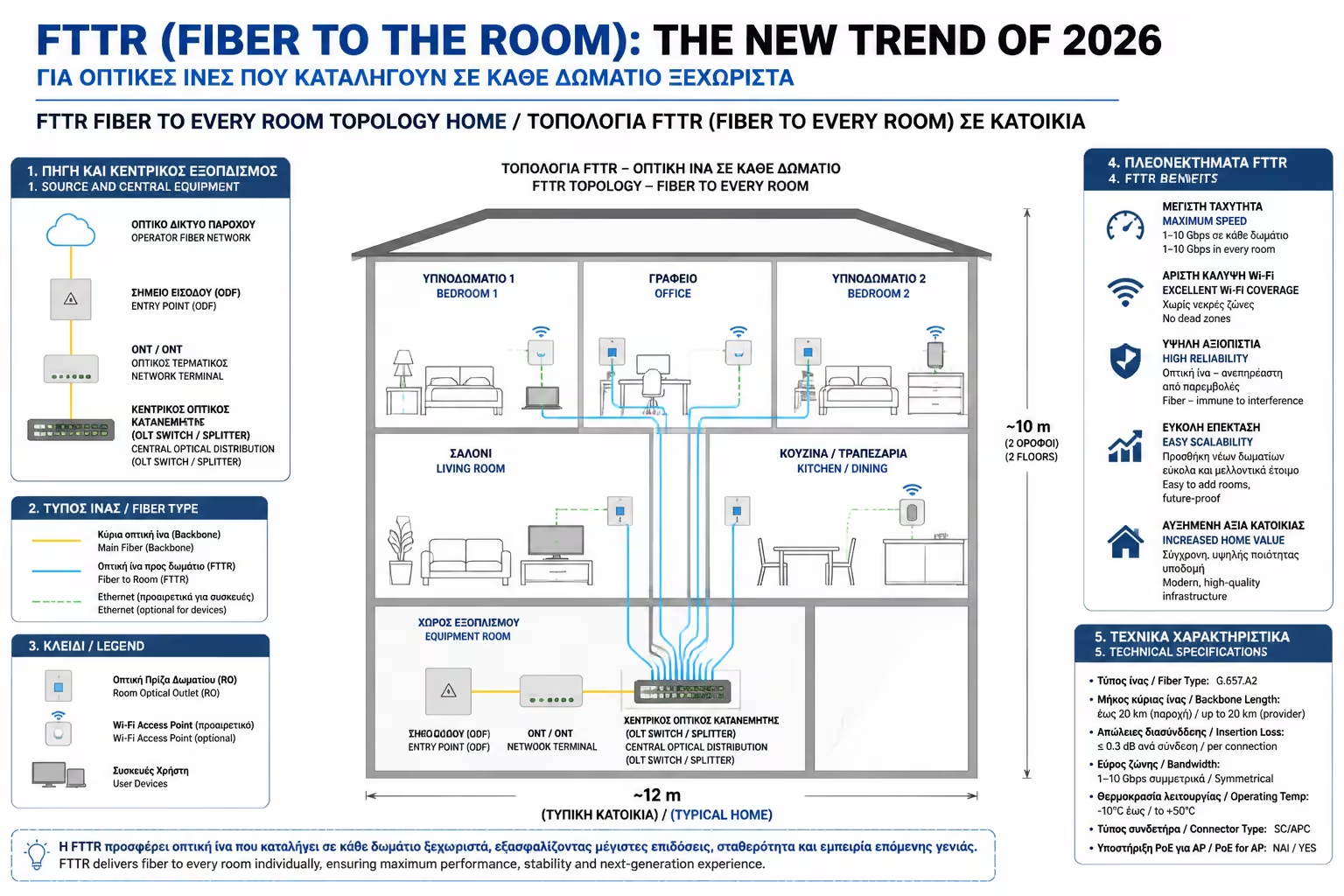
At FTTR, the glass doesn't stop at the living room or the Rack. The
optical fiber coming from the street enters a Central Splitter (Master
Router / Optical Splitter). From there, instead of laying down copper
UTP cables, we lay new, thin optical fibers that go to every room in
the house.
Inside each room (eg bedroom, office, playroom), the fiber ends up in
its own small "terminal" (Slave / Edge Unit). This terminal:
It works as a powerful Access Point (antenna), broadcasting perfect,
local Wi-Fi exclusively for the specific space.
It provides classic Ethernet ports (RJ45) to wire your computer or
TV.
2. FTTR vs. Copper (Cat6a): Why Switch?
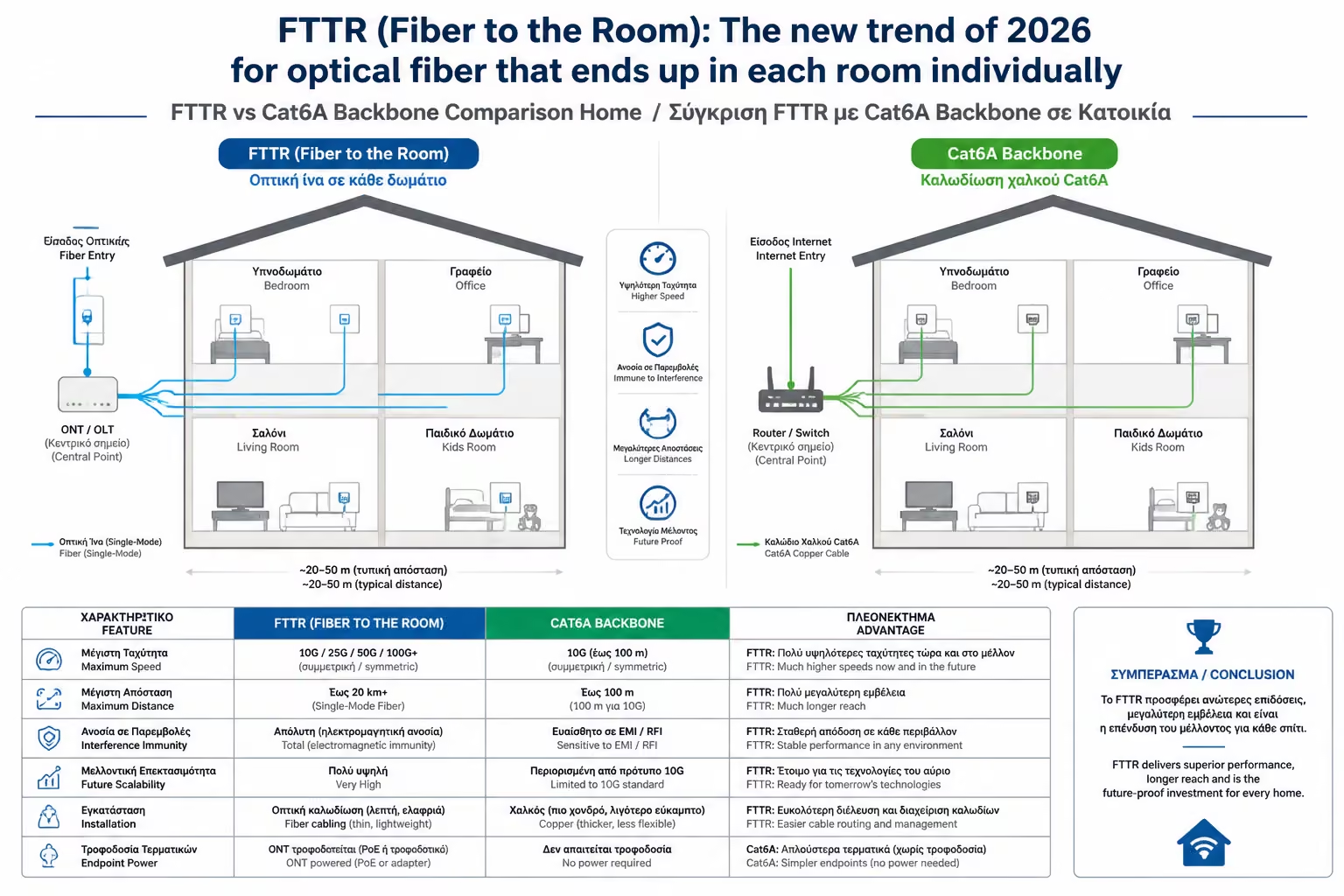
Why bother running glass everywhere when Cat6a can handle 10 Gbps?
There are four reasons:
Unlimited Bandwidth
Copper has natural limits. Optical fiber has practically infinite
capacity. Το ίδιο καλώδιο που περνάτε σήμερα, θα μπορεί να σηκώσει
100 Gbps ή και 1 Tbps στο μέλλον, αλλάζοντας απλώς τα μηχανήματα
στις άκρες. It is the ultimate "Future-Proofing".
Immunity to Interference (EMI)
Όπως είδαμε, το καλώδιο δικτύου πρέπει να μένει μακριά από τα
καλώδια ρεύματος (230V) για να μην έχει παρεμβολές. Optical fiber is
glass. It is not affected by current. Μπορείτε (αν και δεν
ενδείκνυται για λόγους κανονισμών ασφαλείας) να την περάσετε σύρριζα
με το τριφασικό καλώδιο, και η ταχύτητα θα παραμείνει αψεγάδιαστη.
Zero Latency
Because the whole house communicates through light (laser) at the
speed of light, the response time (Ping) is practically zero, making
the technology ideal for competitive Gaming and Virtual Reality.
Fineness
A Cat6a cable is thick and stiff. Μια οπτική ίνα είναι ελαφρώς πιο
χοντρή από μια τρίχα, κάνοντας την όδευσή της εξαιρετικά εύκολη.
3. The "Invisible" Revolution (Perfect Solution for Old
Houses)
This is the feature of FTTR that has owners and decorators excited.
What if you're not renovating and you don't have empty pipes in the
walls to run the wires into the rooms?
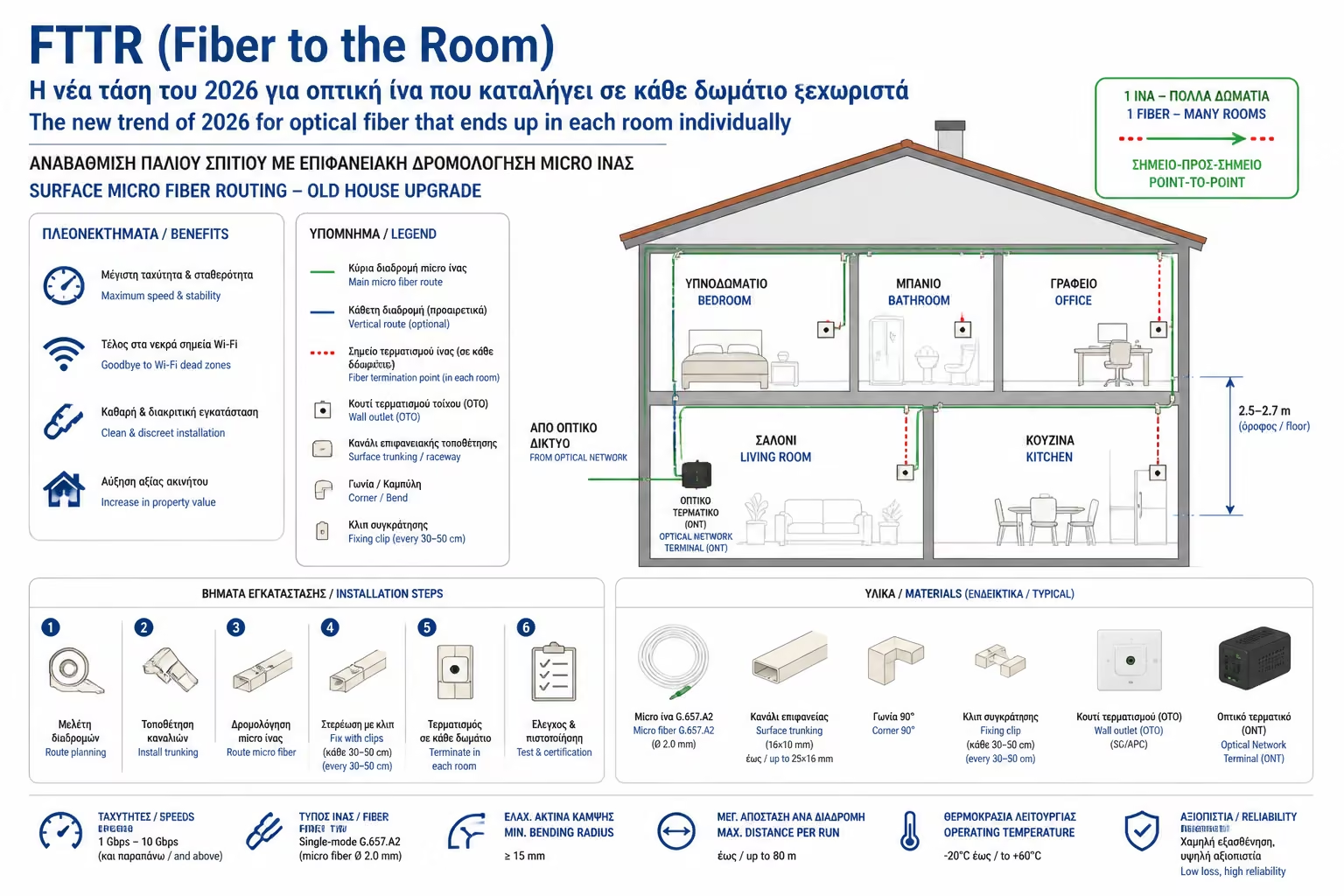
FTTR systems use the so-called Transparent Fiber.
It is an incredibly thin, completely transparent cable.
Technicians use a special tool that heats a clear adhesive and
"glues" the fiber directly to your baseboards, wall
corners, around door frames and ceilings.
The result: The cable is literally invisible to the naked eye from a
distance of half a meter. You can network an entire old house by
running optical fiber to every room without drilling a single hole
and without putting in the ugly white plastic conduits.
4. The Power Over Power (PoE) Disadvantage
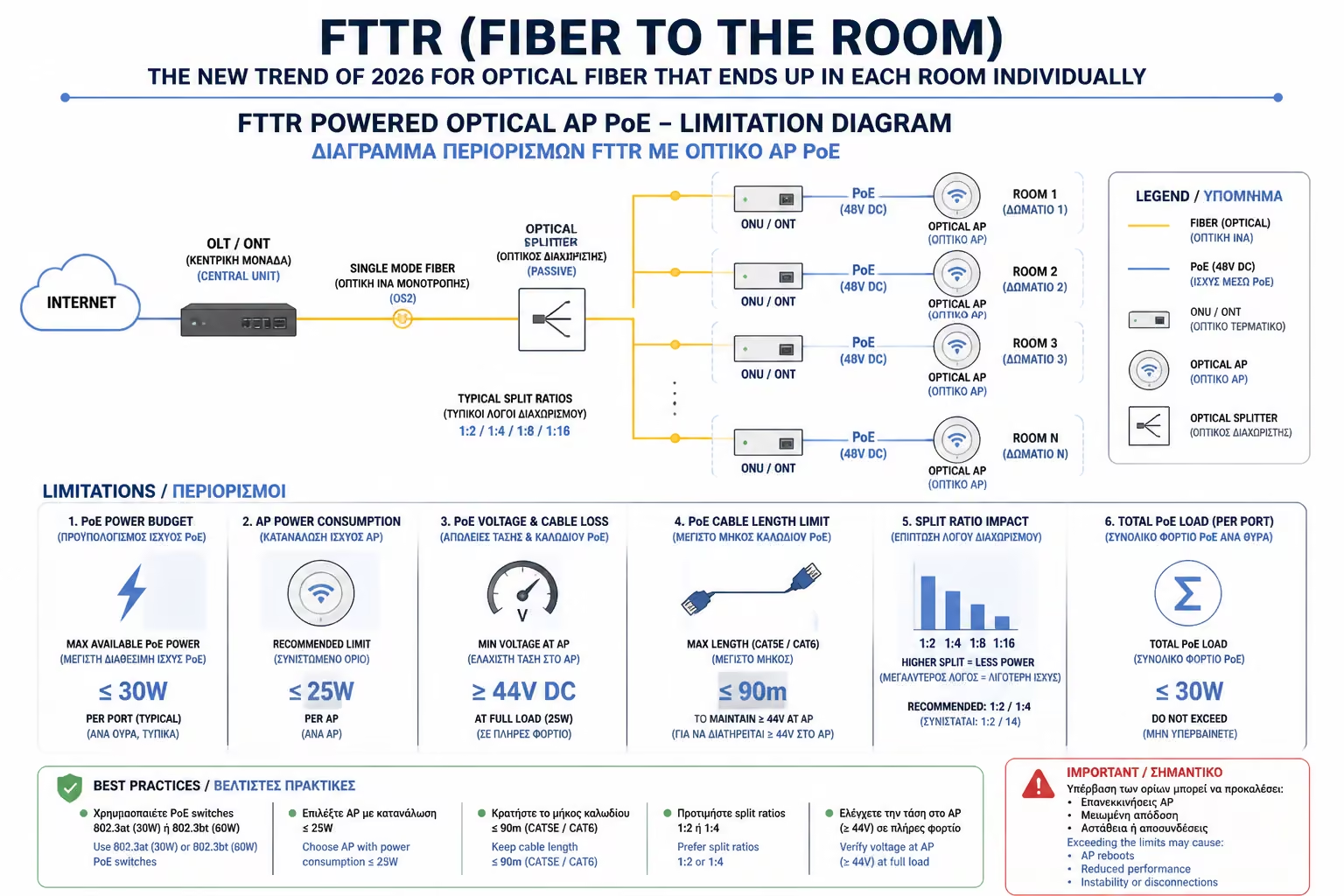
FTTR sounds like magic, but it has a "thorn". Glass
transmits light. It does not carry electricity. As you remember, with
copper we have PoE (Power over Ethernet), with which we can put a
camera or an antenna in the ceiling, giving it power directly from the
internet cable. In FTTR, the terminal you will put inside the room
needs to be plugged into a power socket (230V). The industry is
starting to produce hybrid cables (Hybrid Fiber-Copper), which contain
the fiber and two thin copper wires for the current, but they are
still expensive and stiffer.
Bottom line: Is it worth the investment?
Today, FTTR is a Premium technology. It is aimed at large residences
(villas, high-rise buildings), at high-demand business premises, or at
homes where it is impossible to pass new copper cables due to narrow
pipes.
If you are doing a major refurbishment, copper (Cat6a) remains the most
VFM (Value for Money) option for the next 10 years. But FTTR is the
future coming at the speed of light, turning the home into a true fiber
"hub" where Wi-Fi never crashes, no matter how many devices
are connected.
Next Step: We learned how the fiber goes to the rooms. But how do these
fine, glassy hairs join together? We can't just "twist" them
with our hands like copper!
We continue with the most "surgical" process of
telecommunications: Optical Fiber Splicing: How it's done, what a
splicer is and why it's not a job for DIYers.