What is FTTH (Fiber to the Home): How fiber comes from the street to
your home and what you need to dig
Welcome to Category B! In the previous sub-pillar, we discussed how to
carry data around your home using copper cables (Cat6a). But no matter
how perfect your internal network is, your internet experience depends
on the "supply" coming from the outside world.
For decades, the Internet reached our homes via the old copper telephone
network (ADSL / VDSL). Today, we are in the midst of the biggest
telecommunications upgrade of the century: the transition to FTTH (Fiber
to the Home).
As engineers, we often hear homeowners ask, "What are they going to
dig into my apartment building?" or "Should I spoil my freshly
painted living room?". Let's break down exactly what FTTH is, how
it differs from the old VDSL, and step-by-step the path of the fiber
from the street to your Router.
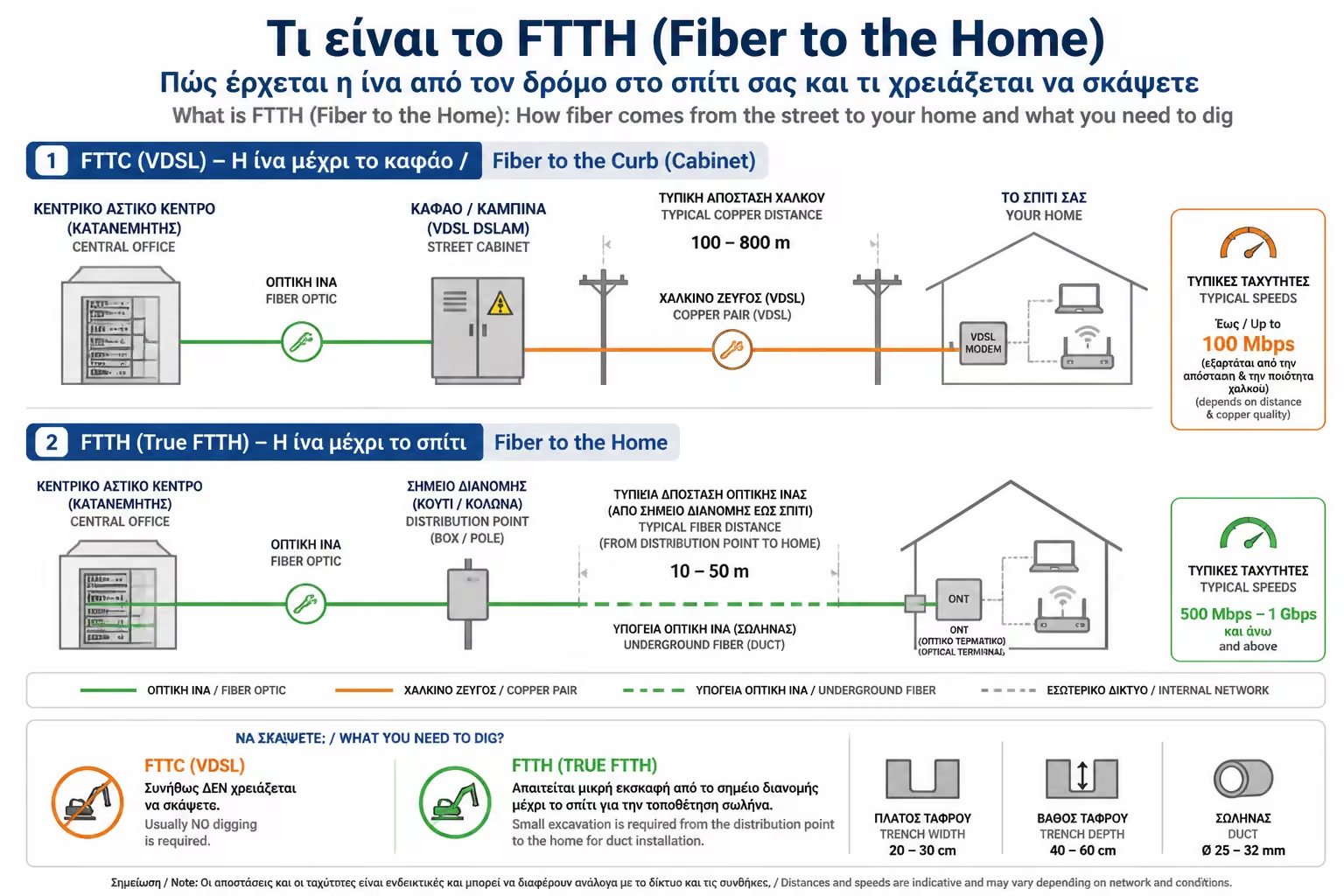
1. The Big Misconception: VDSL vs. True FTTH
Until recently, providers sold 50 Mbps or 100 Mbps connections
advertising them as "Fibre". In fact, this was FTTC (Fiber
to the Cabinet).
The "Fake" Fiber (VDSL / FTTC)
The fiber only went as far as the cabin (the COFFEE) on the corner
of your block. From KAFAO to your home (the so-called "Last
Mile"), the signal traveled through the rotten, oxidized copper
cables of the 1970s. Result? If it rains, the speed drops. If you
are away from COFFEE, you have disconnections.
"True" Fiber Optic (FTTH)
There is no copper here at all! The glass starts from the center of
the provider and ends directly inside your living room. The signal
is transmitted through light (Laser). It's not affected by distance,
not affected by weather, not affected by electromagnetic
interference (EMI), and supports practically...infinite speed (1
Gbps, 10 Gbps or more in the future).
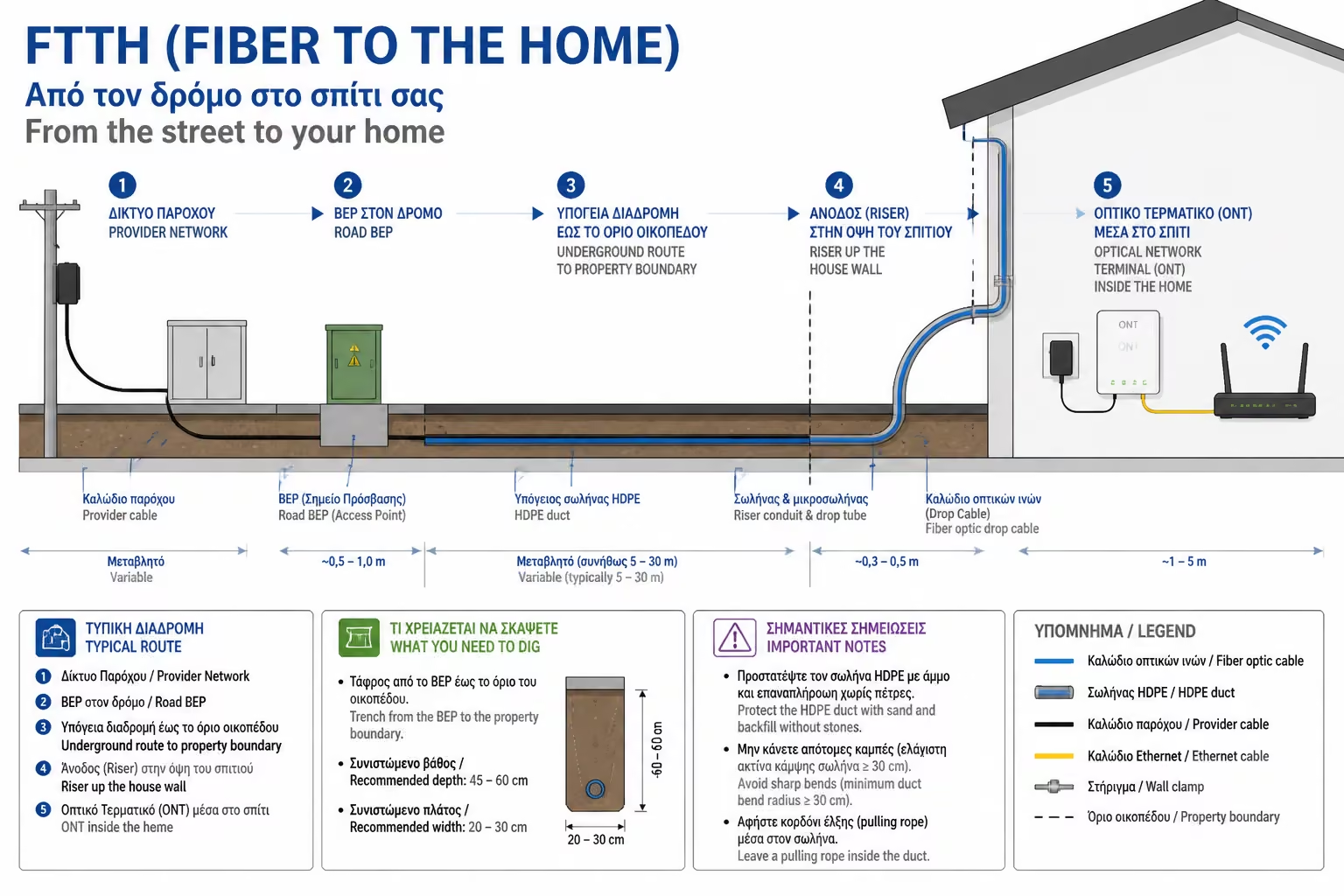
2. The Path of the Fiber (How it Gets to Your Router)
The installation in an existing building (where optical fiber was not
foreseen in the plans) is done in 4 distinct stages by the provider
(eg Cosmote, Nova, Vodafone, Inalan).
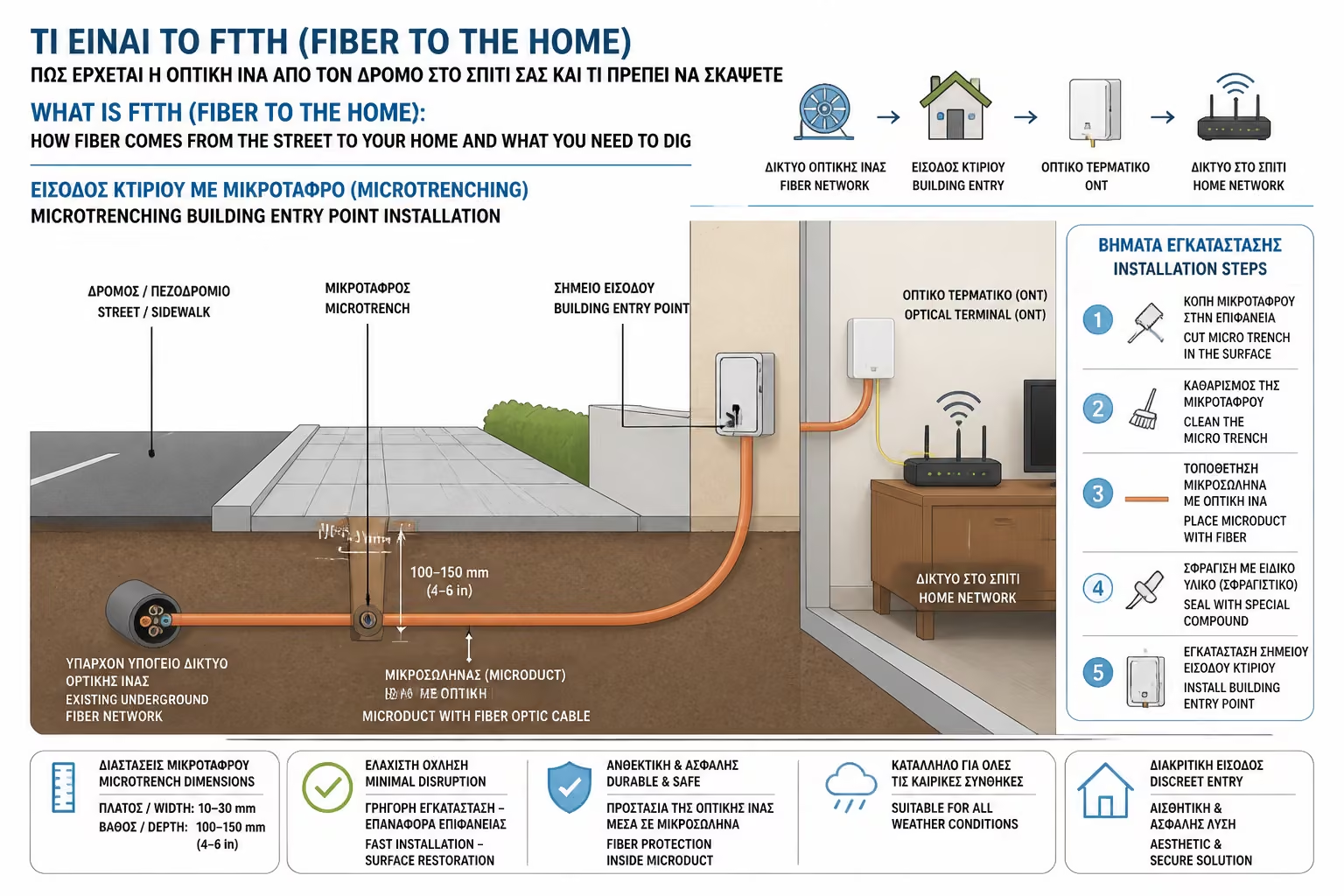
Stage 1: The Road (Micro-Trenching)
The crew cuts a very narrow, shallow trench (micro-trench) in the
asphalt or sidewalk in front of your apartment building to pass the
main pipe and bring it up to the facade of the building.
Stage 2: The Building Allocator (BEP)
A metal or plastic box is placed on the ground floor, basement or
basement of the apartment building. It is called BEP (Building Entry
Point). This is the "distribution station". This is where
the thick cable from the street ends and the thinner cables for each
apartment will start from here.
Stage 3: The Vertical Journey (The Staircase)
How will the fiber go up from the ground floor to the 4th floor?
Because there are no empty pipes in old buildings, the provider's
installer will glue (or screw) an external plastic trunking in the
corner of the stairwell, next to the elevator or stairs. This duct
will go vertically up all the floors. On each floor, a small
"Floor Box" is placed from which the adjacent apartments
will receive fiber.
Stage 4: The Entrance to the Apartment (Optical Socket & ONT)
The technician drills a hole in the wall above your front door (or
bypasses the door frame) to run the thin, white fiber cable into
your home. 1. The cable terminates in a small wall box, the Optical
Rosette. 2. From there, a yellow-green patch cord is connected to a
device called an ONT (Optical Network Terminal). The ONT is the
"modem" of the fiber optic. It converts the light (Laser)
back into digital data. 3. Finally, you connect your own Router to
the ONT with a classic Ethernet cable! (Note: New routers from
providers often have the ONT built into them).
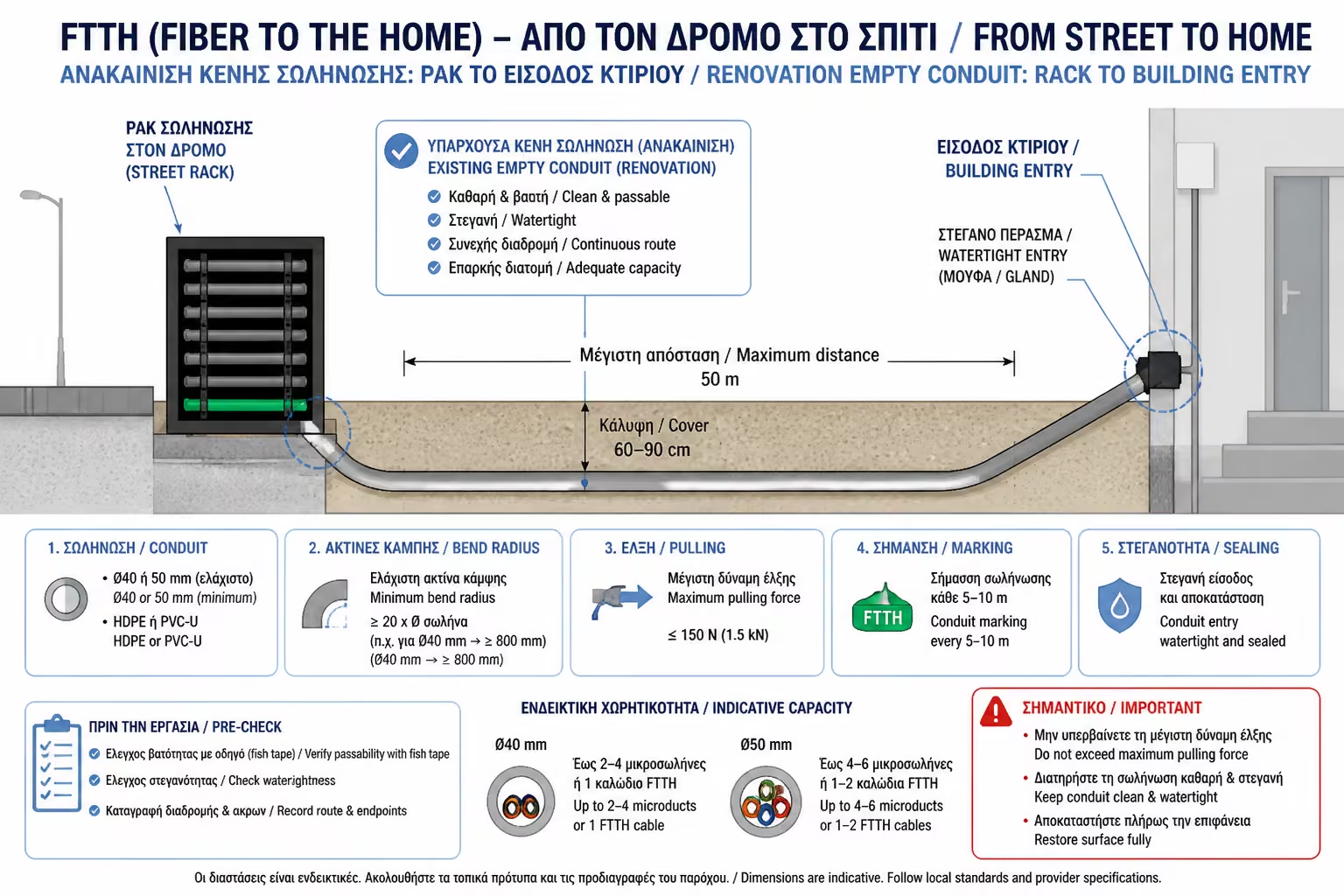
3. Are you Renovating? What you MUST predict!
If you're renovating now, you're incredibly lucky. You can save the
ugly, exterior plastic ducts in your living room.
The biggest mistake in renovation is to only deal with Cat6a cables
inside the house and forget about the central supply. The Engineer's
Golden Rule: You must run an empty, plastic pipe (at least Φ20 or Φ25)
that starts at your main Rack (or your house's low current panel) and
ends down at the ground floor of the apartment building (where the
future BEP will go).
CAUTION (The Physics of Glass): An optical fiber is, literally, a hair
of glass. It does not withstand creasing.
When your electrician passes the empty pipe to the walls for the
future optical fiber, it is forbidden to use 90 degree corners (the
so-called "corner fittings").
All bends in the pipe must be perfectly smooth (Smooth Bends -
radius of curvature at least 3-5 cm), otherwise the supplier's
technician will never be able to pass the fiber through the pipe
without breaking it, and will be forced to put external ducts on
your freshly painted wall!
Summarizing
FTTH is not just a "faster connection", it is a completely
different technology based on the laws of optics. It frees the
building from the problematic, oxidized copper cables of the last
century. If the building is old, the provider will undertake all the
wiring (with plastic channels). But if you're building or renovating,
the provision of a smooth, empty pipe to the ground floor is perhaps
the most critical and inexpensive investment to welcome the "age
of light" without a second thought.
Next Step: We talked about the central supply to the house. But how do
we manage fiber within the walls of our property?
We continue with the ultimate expertise of the new era: Indoor Fiber
Optic Cabling: What "waits" (pipes) and boxes to leave when
renovating for the provider.