Fiber Optic Splicing: How It's Done, What A Splicer Is, And Why It's Not
A Job For DIYers
In the world of copper cables we looked at earlier (power, telephone,
UTP network), things are simple. If a wire is accidentally cut, you take
a cutter, strip some of the copper, twist it with your fingers, put on
some electrical tape or a "clamp" and you're done.
In the world of FTTH (Fiber to the Home), however, we are not dealing
with metal. We are dealing with light traveling through glass. If the
fiber is cut (or if the cable from the street needs to be joined to the
cable in your apartment), you can't tape it. This is where one of the
most impressive and "surgical" procedures of modern
engineering enters: Fusion Splicing.
Let's see exactly how we manage to join two strands of glass without
losing a single photon, and why this is a no-go DIY.
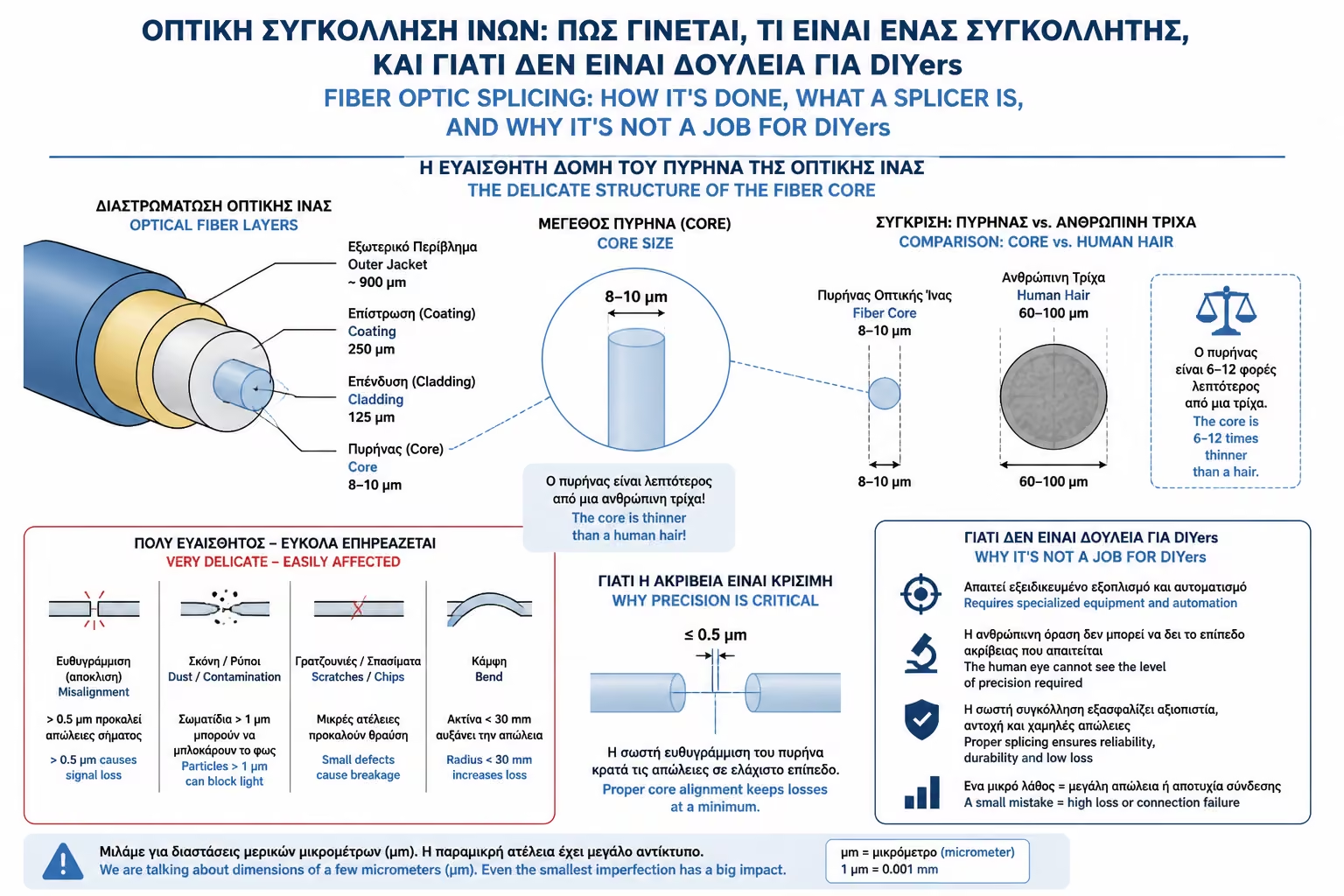
1. The Problem of Scale (The "Hair")
To understand the challenge, you need to understand the anatomy of the
fiber. An optical fiber (Singlemode) coming to your home has an outer
diameter of 125 micrometers (μm) – about the size of a human hair.
But, light does not travel through the entire thickness. It only
travels to the central core (Core), which is only 9 micrometers (µm)
in diameter! For light (the internet) to pass from one wire to the
other, these two invisible cores must align with a deviation of less
than one nanometer. If the joint goes even slightly wrong, the light
will "hit" the walls, reflect back and the connection will
drop (Attenuation / Loss).
2. The Robot: What is Fusion Splicer
The work of alignment cannot be done by a human hand. That's why we
use Fusion Splicer.
It is a portable, ultra-high precision robotic machine. It has
built-in microscopes (X and Y axis cameras) that view the fiber, and
micro-motors that move the glass. A professional Splicer (such as the
Japanese Fujikura or Sumitomo ones) costs from €3,000 to €10,000. Even
cheap Chinese copies start at €800. It is by far the most expensive
tool in a telecom technician's bag.
3. The Process: How "Surgery" is Done
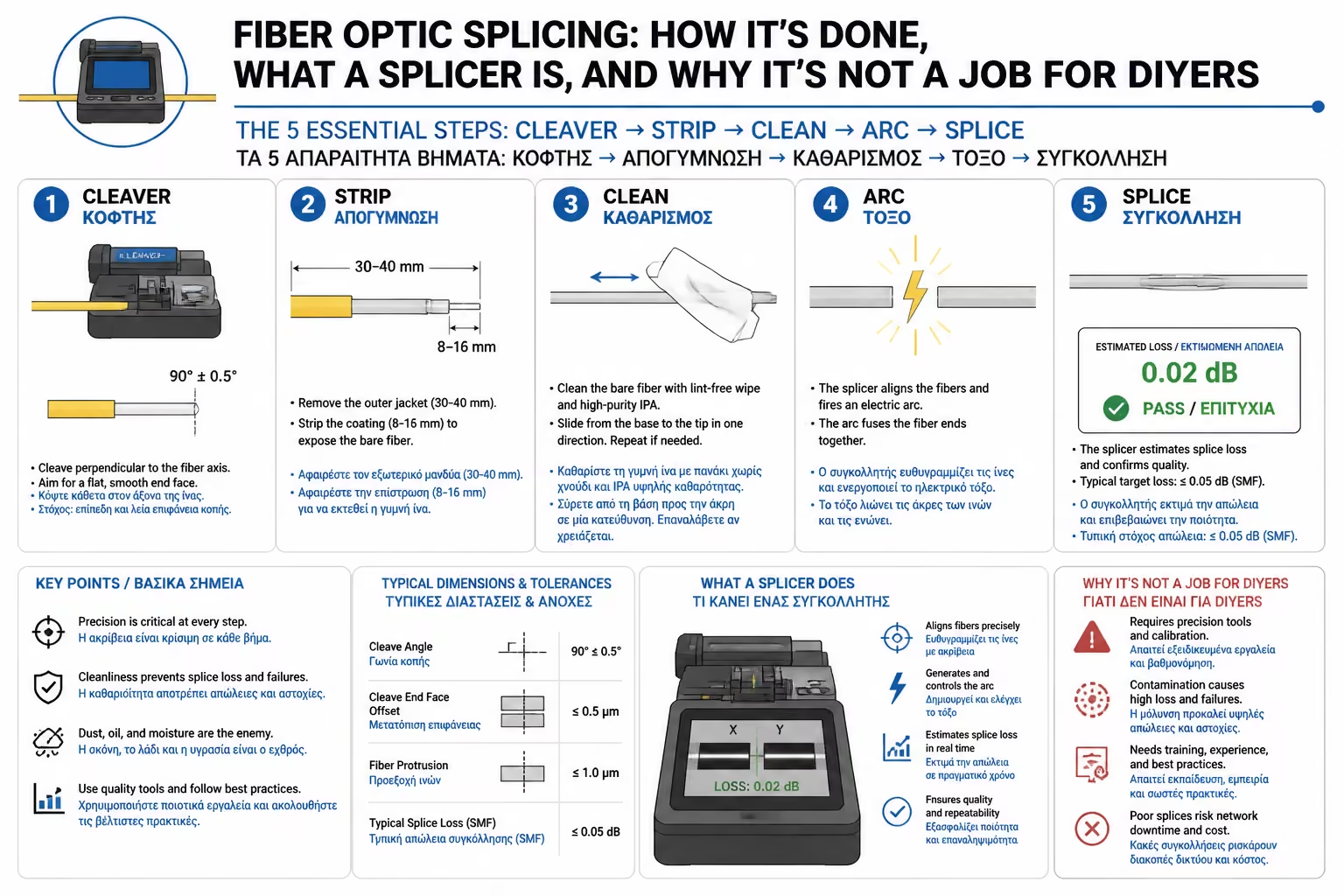
The joining of the fibers takes place in 4 strict steps:
Stripping & Cleaning: The technician uses a special stripper
(Stripper) to remove the plastic protection (Buffer) and reveal the
bare glass. Then he cleans it thoroughly with pure 99% isopropyl
alcohol and special lint-free wipes. Any grain of dust is
destructive.
Precision Cutting (Cleaving): We do NOT use scissors here. If you
cut the glass with scissors, the edge will shatter. The technician
uses the Cleaver. It's a diamond-bladed tool that makes a tiny nick
in the glass and breaks it, creating a mirror cut absolutely
vertically, at 90 degrees.
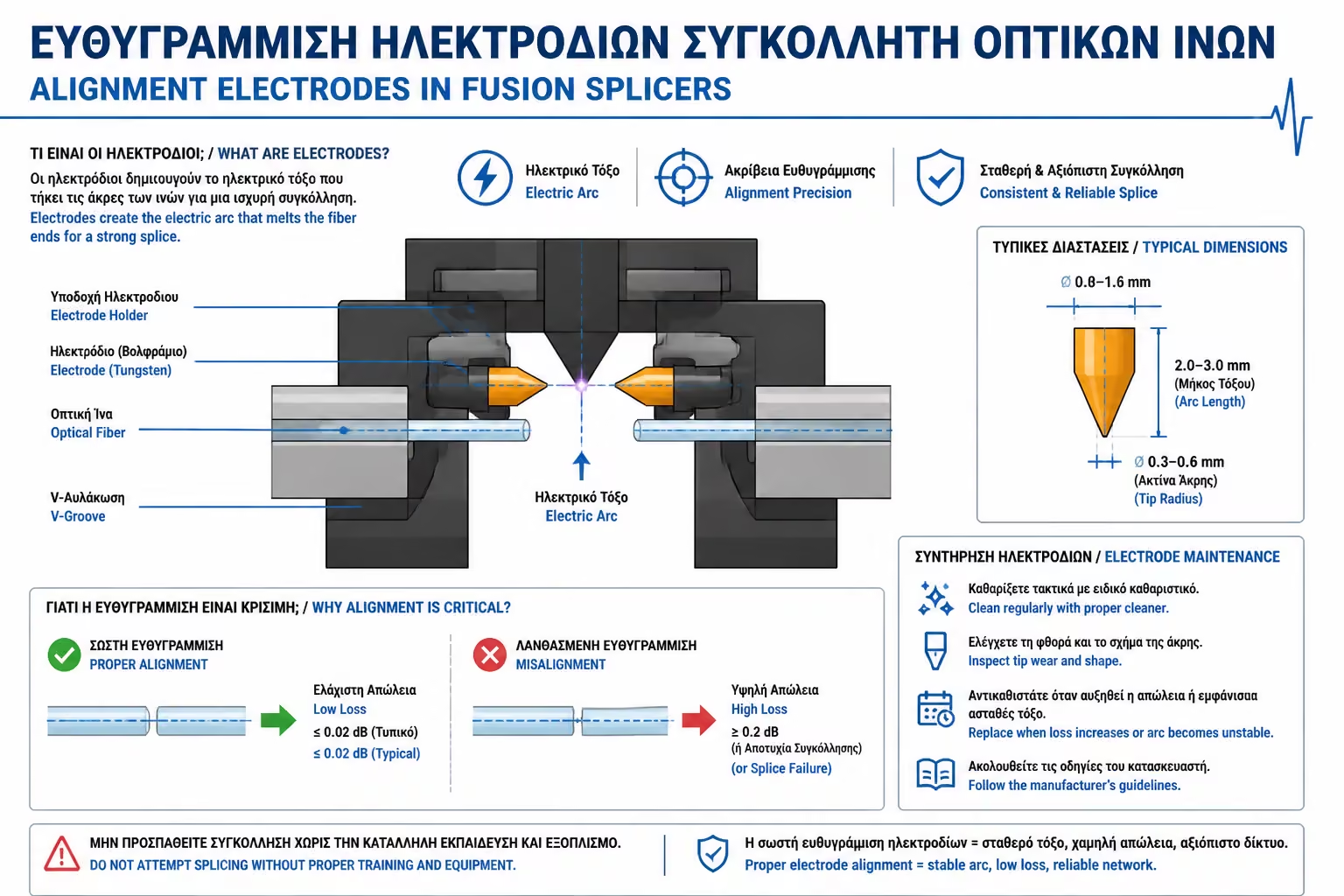
Fusion: The two clean fibers are placed inside the Splicer. The lid
closes. The machine uses its cameras to line them up perfectly. Two
electrodes then create an electric arc (a small lightning bolt) at a
temperature of 1,500°C! The glass melts instantly, the fibers push
together and become "one" solid body. The entire melting
process takes less than 10 seconds.
The Protection (Sleeve): Because the bare, glued glass is extremely
fragile, the technician passes a plastic "macaroni" over
it (heat-shrinkable with a metal plate - splice protector) and puts
it in the "oven" of the Splicer to bake it. The weld is
now shielded.
4. Why Splicing is a NO for DIYers
On YouTube you will see various videos of "Mechanical
Splices", that is, cheap plastic clips that promise to join the
fiber without the expensive Splicer machine. If you are thinking of
making it your home, stop now. The reasons are not only technical, but
mainly safety and health reasons:
The Glass Needles
When the technician cuts the fiber (Cleaving), glass scraps 1-2
millimeters long are created. These fragments are practically
invisible and sharp as a scalpel. If such a fragment lands on your
carpet and you step on it, it will pierce your skin, enter the blood
and not show up on x-rays to be removed. If it gets in the eye or is
swallowed (e.g. by a crawling child or pet), the consequences are
tragic. Professionals have special, sealed cans for their disposal.
The Invisible Danger of Lasers
The light sent by the provider through the fiber operates in the
Infrared region, usually at 1310nm or 1550nm. This light is
completely invisible to the human eye. If you cut the cable and look
at the end of it to see "if internet is coming", you won't
see anything light up, but the provider's powerful Laser will burn
your retina at that moment, causing permanent, irreversible
blindness without you even feeling pain.
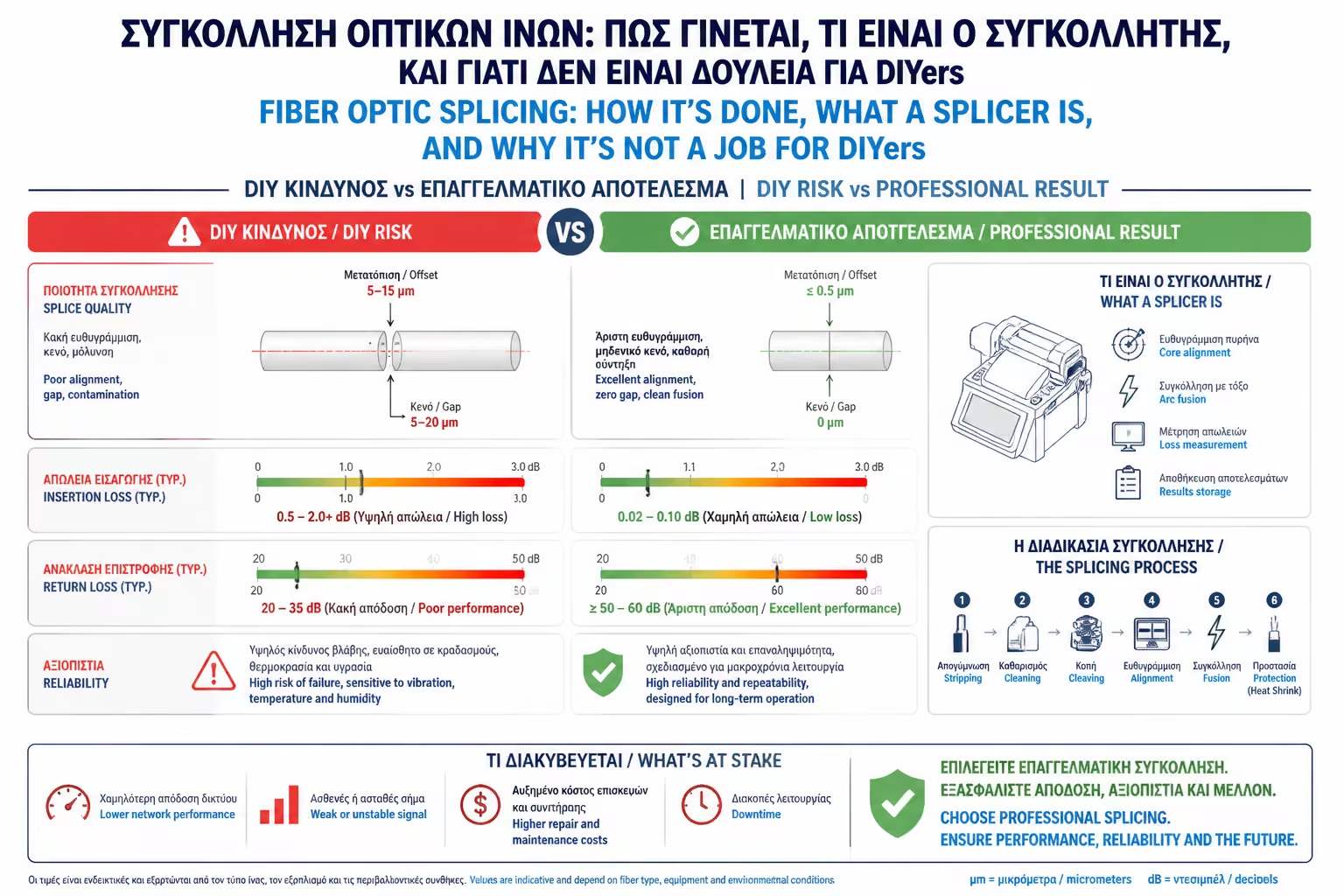
Technical Failure
DIYers' mechanical joints (without thermal bonding) have huge signal
losses, collect dust and usually fall apart after a few months due
to contractions, throwing the speed into the tartar.
Summarizing
Optical fiber is a marvel of physics, but its manipulation requires
laboratory conditions. Fusion Splicing is the art of melting and joining
two strands of glass at the micrometer level. Due to the exorbitant cost
of the equipment and the extreme health risks (shards of glass and
invisible Lasers), this is a job that belongs strictly and exclusively
to the providers' certified technicians. All you have to do is provide
them with the clean pipes we saw in the previous chapter!
Next Step: Now that we understand how glass is put together, it's time
to look at its types. There are two big "worlds" in optical
fibers: Singlemode and Multimode. Which of the two does the internet
bring to your home and which is a trap?
Moving on to the guide: Singlemode vs. Multimode Optical Fibers: What is
their difference and which is used exclusively in residential / building
installations.