Optical Patch Cords & Connectors (SC, LC, APC, UPC): How to Read
Plug Colors (Green vs. Blue) to Avoid Damage to Equipment
If you've made it this far, you now have the correct yellow fiber
(Singlemode) running into a wall outlet in your home. The last step to
have internet is to connect this outlet to your provider's Router (or
ONT). To do this, you'll use a ready-made, flexible cable called an
Optical Patch Cord.
But this is where many users make a fatal, costly mistake. They go to a
store, see a cable that "fits", buy it, forcefully push it
into the Router and... permanently damage the machine's socket.
In fiber optics, the shape and color of the plug is not a matter of
aesthetics. It is a strict, international code. Let's decipher the
initials (SC, LC, APC, UPC) to connect your equipment with the security
of a professional.
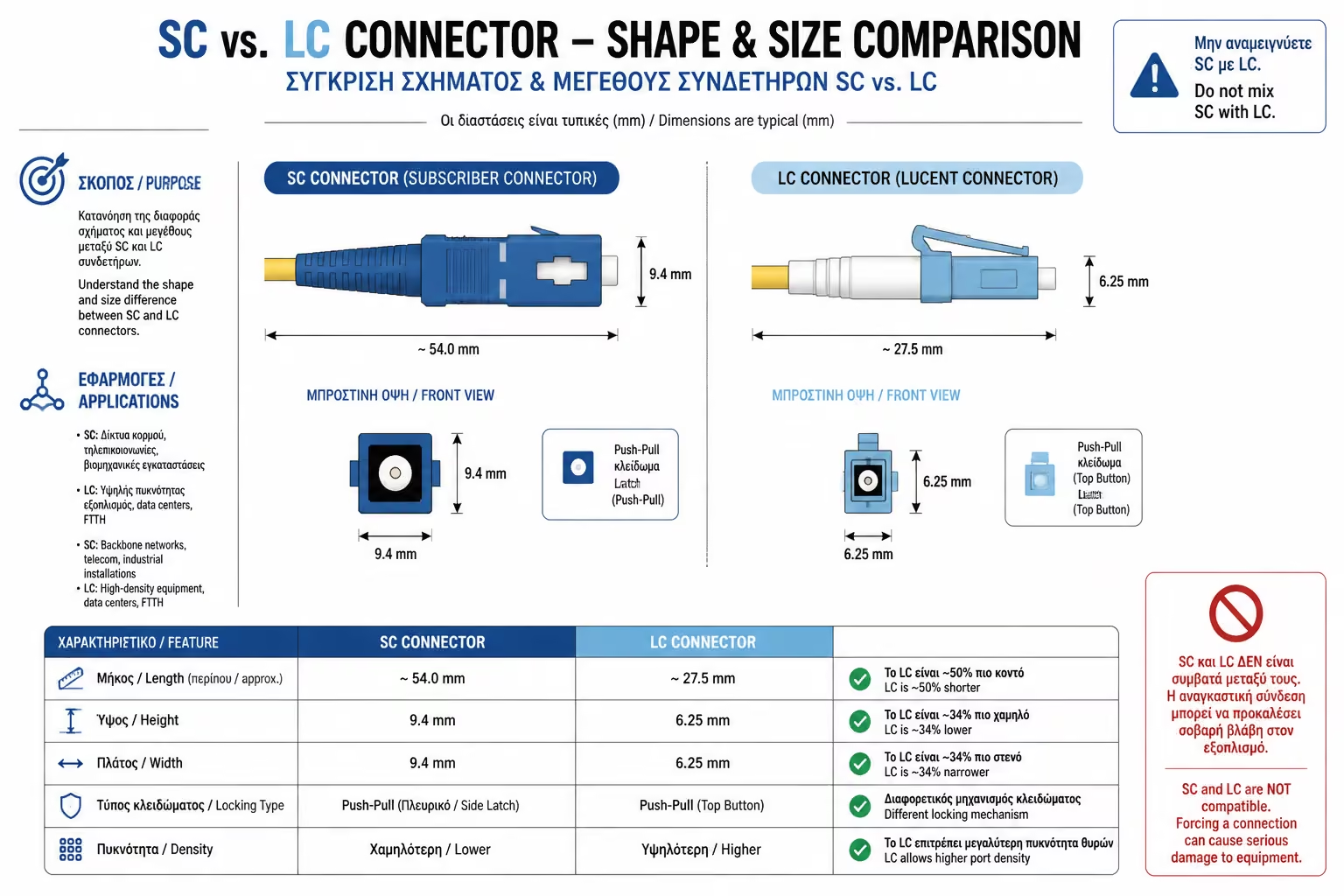
1. The Shape of the Plug: SC vs. LC
The first difference concerns purely the physical size and shape of
the plug (Connector). There are dozens of types, but in home networks
(FTTH) two dominate:
Practical Tip: If your Router has an SC connector and the wall outlet
has an LC connector, you can simply buy a Patch Cord that is SC on one
end and LC on the other. The light will pass normally.
SC (Standard Connector / Subscriber Connector)
It's the big, square plug. It has a "Push-Pull" mechanism
(you just push it in and you hear a "click"). It is the
absolute standard for wall sockets (Rosettes) and for the entry of
operators' equipment (ONT).
LC (Lucent Connector)
It is exactly half the size of the SC. It looks a lot like
telephone/internet plugs (RJ45) in that it has a small, plastic clip
(tongue) on the top that you have to press to remove. It is mainly
used in professional Racks and Switches (in the so-called SFP
modules), because it saves a lot of space.
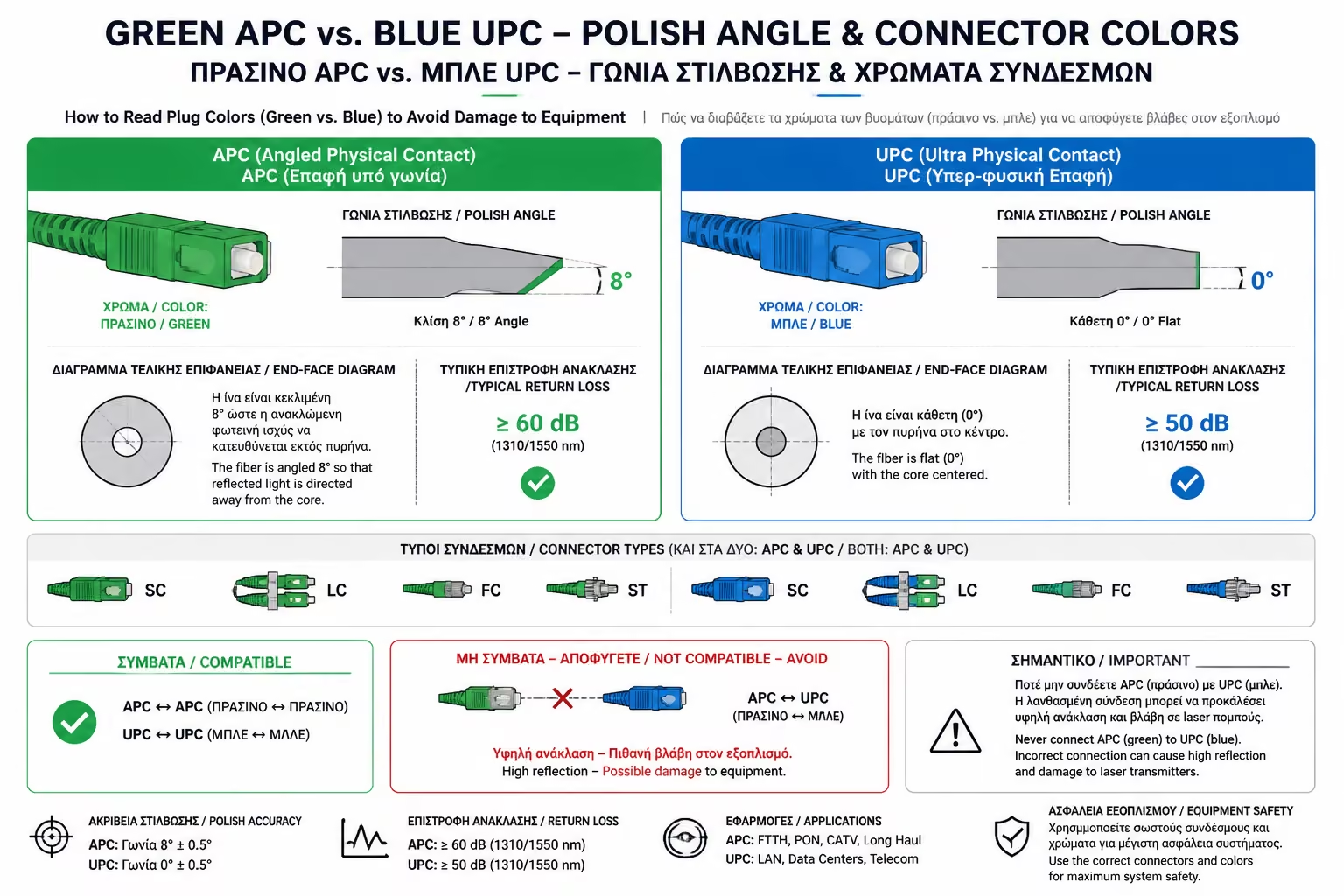
2. The "Polishing" of Ina: APC vs. UPC (The Color)
Here lies the crucial detail. Inside the plastic plug, there is a
small, white ceramic ferrule. In the center of this cylinder is the
end of the fiberglass.
For light to pass from one plug to the other without loss, these two
ceramic ends must touch each other. The way this end is cut and
polished at the factory determines the color of the plug.
The Blue Option: UPC (Ultra Physical Contact)
Plug Color
Always BLUE.
Physics
The edge of the glass is polished completely flat (actually it has a
subtle, symmetrical curve, but the contact is perfectly vertical, at
0 degrees).
Where is it used?
In legacy networks, in Data Centers internal connections and in
fiber optic Ethernet equipment.
The Green Option: APC (Angled Physical Contact)
Plug Color
Always GREEN.
Physics
The edge of the glass is cut and polished to a strict 8 degree
angle.
Where is it used?
It is the ultimate, global standard for FTTH (Fiber to the Home) and
cable television (CATV) networks.
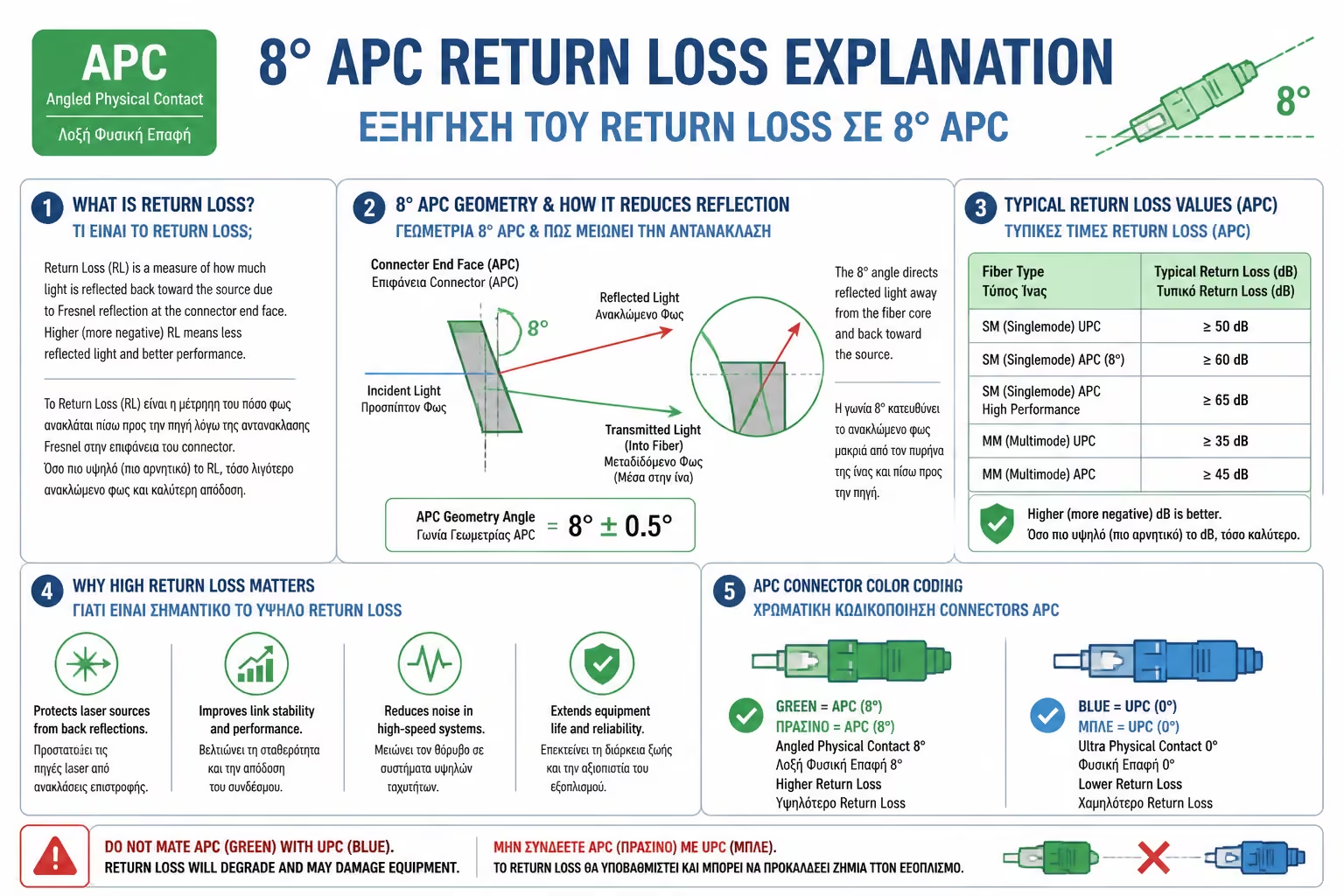
3. Why do we need the 8 degree angle (The secret of APC)?
When light reaches the junction of two plugs, a small percentage of it
is inevitably reflected (bounces back towards its source). This is
called Return Loss.
In the Blue (UPC) plug, because the cut is completely vertical, the
reflected light returns exactly the same straight line, hitting the
carrier's sensitive Laser directly, causing "noise" and
possible damage to video/data equipment.
In the Green (APC) plug, because the glass is "crooked" by
8 degrees, the reflected light hits at an angle and is absorbed by
the sidewalls of the cable (the jacket). The provider's Laser
remains absolutely protected!
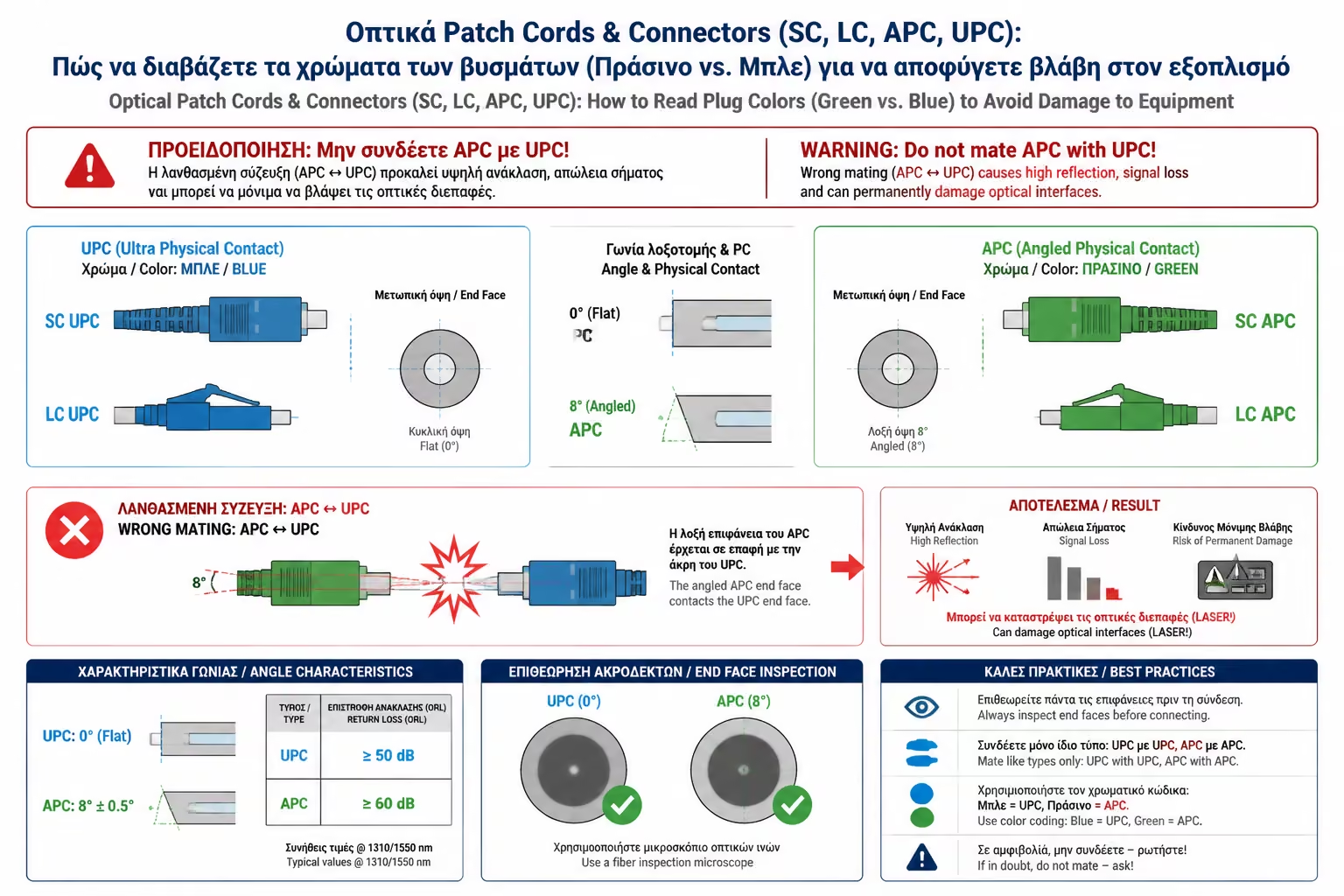
4. The Fatal Mistake (DO NOT mix colors!)
What if your provider's Router has a green (APC) connector, but you
have a blue (UPC) patch cord in your drawer and you try to use it?
If you join a flat (Blue) plug with an angled (Green) plug, the two
glass surfaces will not touch properly. The light will be refracted
and you will have no internet at all.
But worst of all is physical destruction: The angled, pointed end of
the green plug (8 degrees) will crush against the flat surface of
the blue plug. The glass will be permanently scratched and broken.
You will destroy both your own cable and the expensive socket of the
Router!
The Absolute Rule of Fiber Optics: GREEN ONLY GOES IN GREEN. BLUE ONLY
COMES IN BLUE. (There is absolutely no exception to this rule).
Summarizing
When it's time to buy an optical cable for your home, look at the outlet
on the wall and the socket on your Router. If both are green (as is the
case with 99% of residential FTTH connections in Greece), you will ask
for a "Singlemode, Simplex, SC/APC to SC/APC" cable. Remove
the small protective caps, hear the characteristic "click"
during insertion, and enjoy the speeds of light in complete safety.