Routing & Piping
Plastic pipes inside the walls (or floors) that are spacious enough that a new cable (eg Fiber Optic) can be passed in the future without digging.
Welcome to the 7th pillar of our guide. We leave behind the "strong" currents (lights, sockets, panels) and enter the world of "weak" currents. This is where your building's digital nervous system resides: Data Networks.
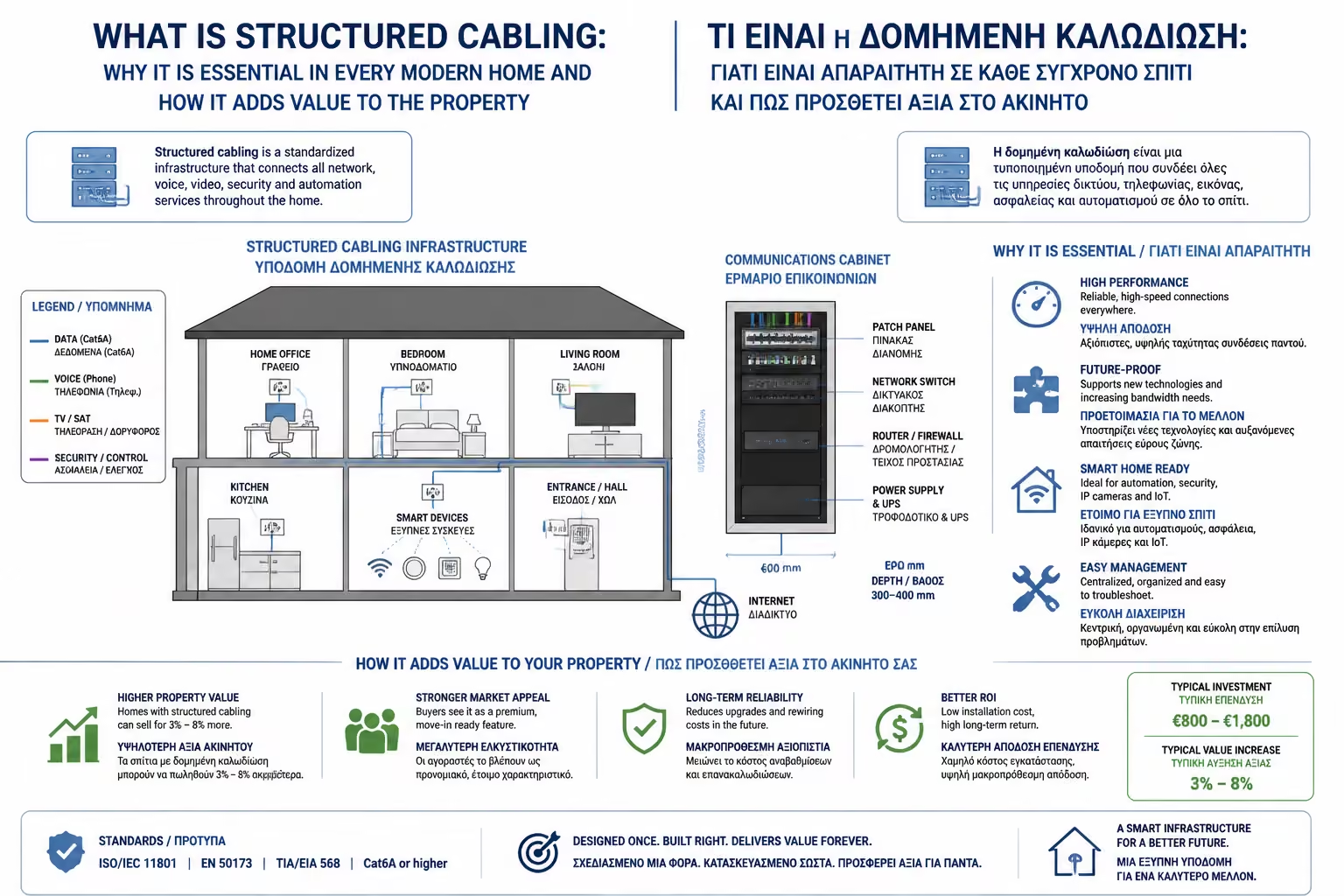
Gone are the days when a house only needed one phone cord in the living room and one in the bedroom. Today, everything—from your TV and security cameras, to your thermostat and alarm—requires a stable and fast internet connection. The answer to this need is Structured Cabling.
Let's take a look at exactly what this term means, dispel the biggest myth about wireless Internet, and explain why providing this infrastructure is the best investment you can make in a renovation.
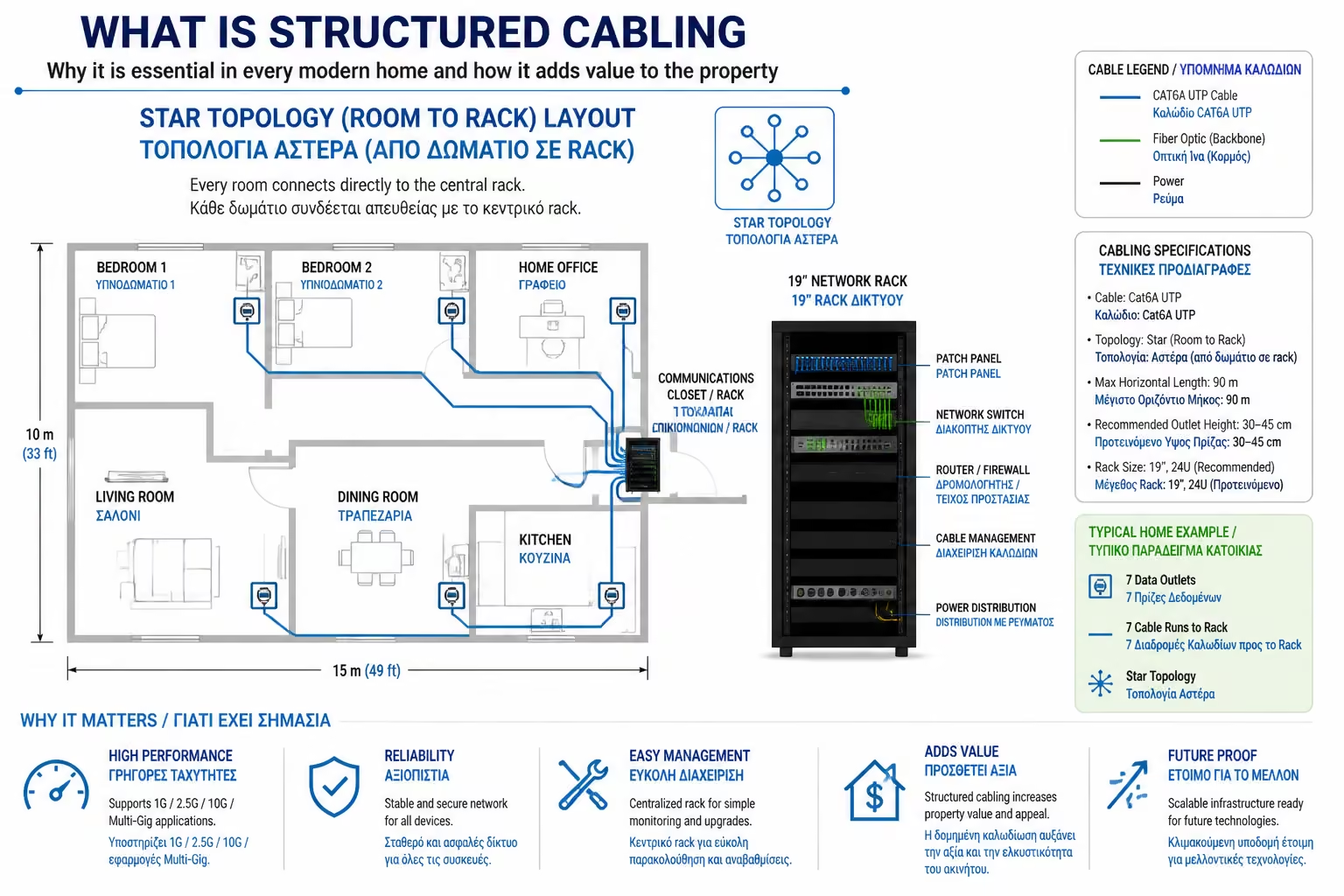
Structured cabling is not a specific type of cable. It is a standardized installation architecture.
In the past, cables were run haphazardly: the phone cable went from outlet to outlet, the antenna cable took another route, and if you wanted network, you ran an outside cable over the baseboard.
In structured cabling, the Star Topology is applied.
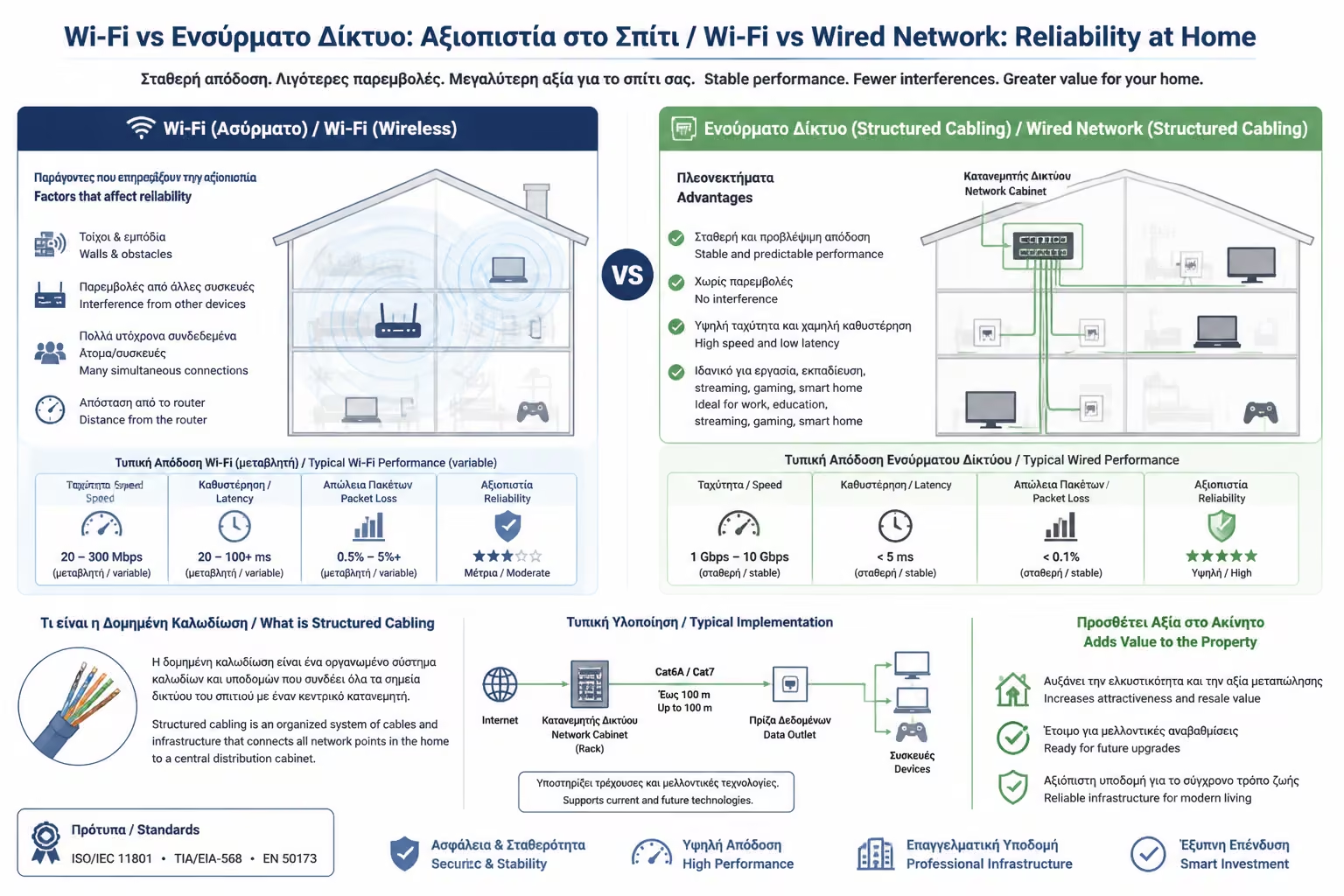
This is the most common error seen in new renovations. Wi-Fi is a great technology for mobile devices (mobiles, tablets, laptops). But air is an extremely unstable medium.
Interference from neighboring networks, reinforced concrete walls, mirrors, and even the microwave oven reduce speed and cause lag.
The golden rule of networking is clear: "Whatever doesn't move, gets plugged in (wired)."
All of the above must be connected with a physical cable. Thus, you discharge your Wi-Fi, leaving all the available bandwidth free for your mobiles.
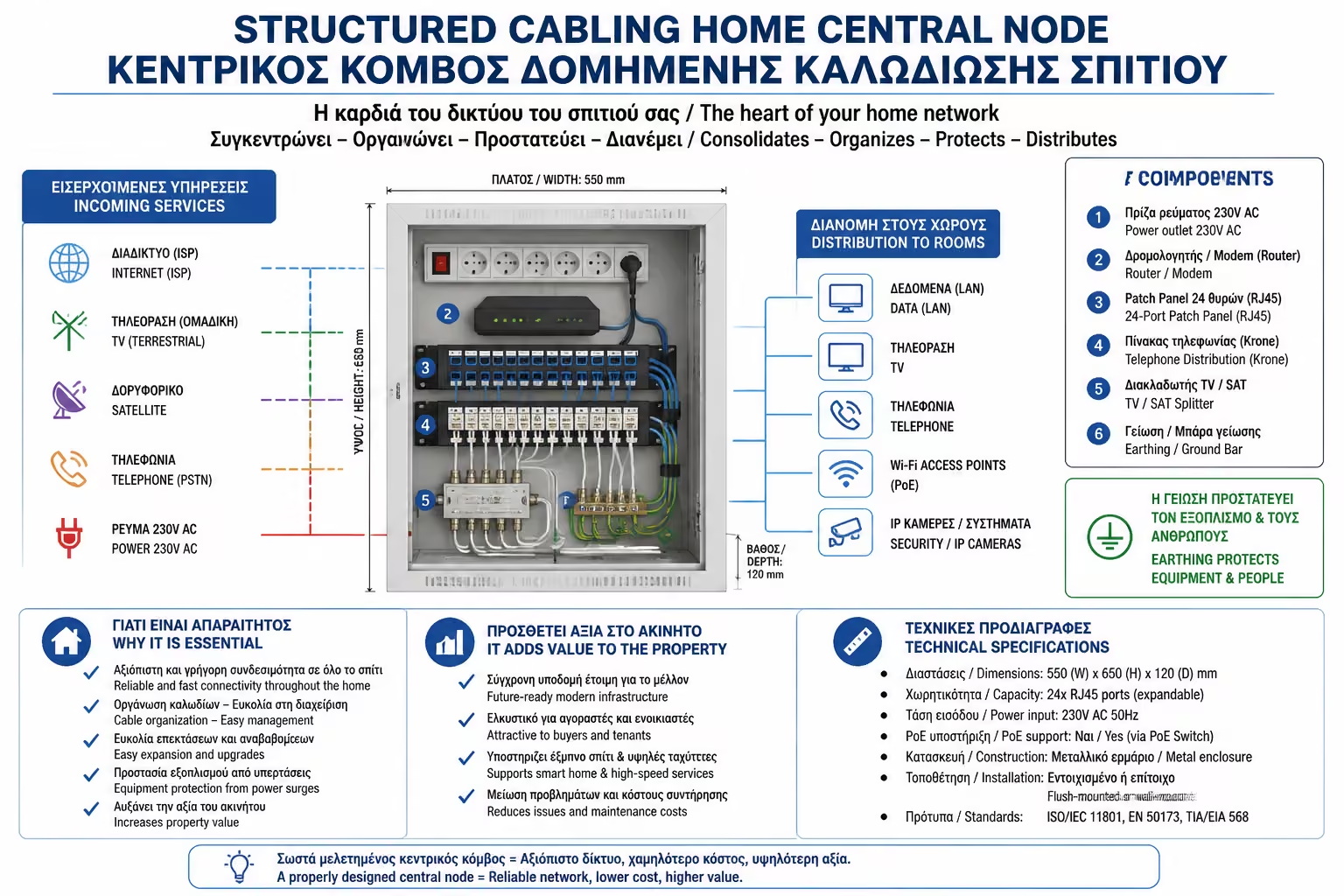
A proper implementation requires the following four key components:
Plastic pipes inside the walls (or floors) that are spacious enough that a new cable (eg Fiber Optic) can be passed in the future without digging.
Category Cat6 or Cat6a cable is usually chosen, capable of carrying speeds from 1 Gbps to 10 Gbps.
In the rooms, the cable terminates in special female sockets (Keystone Jacks) that snap into the same aesthetic frames as the power switches.
The point where all the wires come together. This is where the provider's Router, the Switch (which distributes the internet to all the rooms) and the possible network drive (NAS) for your files are placed there.
Investing in a UTP cable network is not just a matter of immediate practicality, but also of long-term commercial value (Future-Proofing).
As we have seen in previous pillars, reliable building automation (either KNX or IP-based) is based on wired communication. A home without proper data wiring is practically "blind" to future technologies.
If tomorrow you decide to turn the warehouse into an office for teleworking (Work from Home) or the children's room into a Home Cinema, the infrastructure is already there. You simply plug the device into the wall outlet.
In the modern real estate market, prospective buyers or renters consider fast and stable internet in every room to be a basic service, equivalent to heating and water supply. A "clean", professional network cabinet (Rack) certifies that the renovation was done to modern, high standards.
Wi-Fi is essential, but it cannot carry the burden of a modern home by itself. Structured Cabling is the backbone of your digital life. The cost of cables and piping during the construction or renovation phase is negligible compared to the peace of mind, stability and unlimited upgrade possibilities it offers you for decades to come.
Return to category.
Go to categoryReturn to the central guide.
Go to guide