U (Unshielded)
Unshielded (pure plastic).
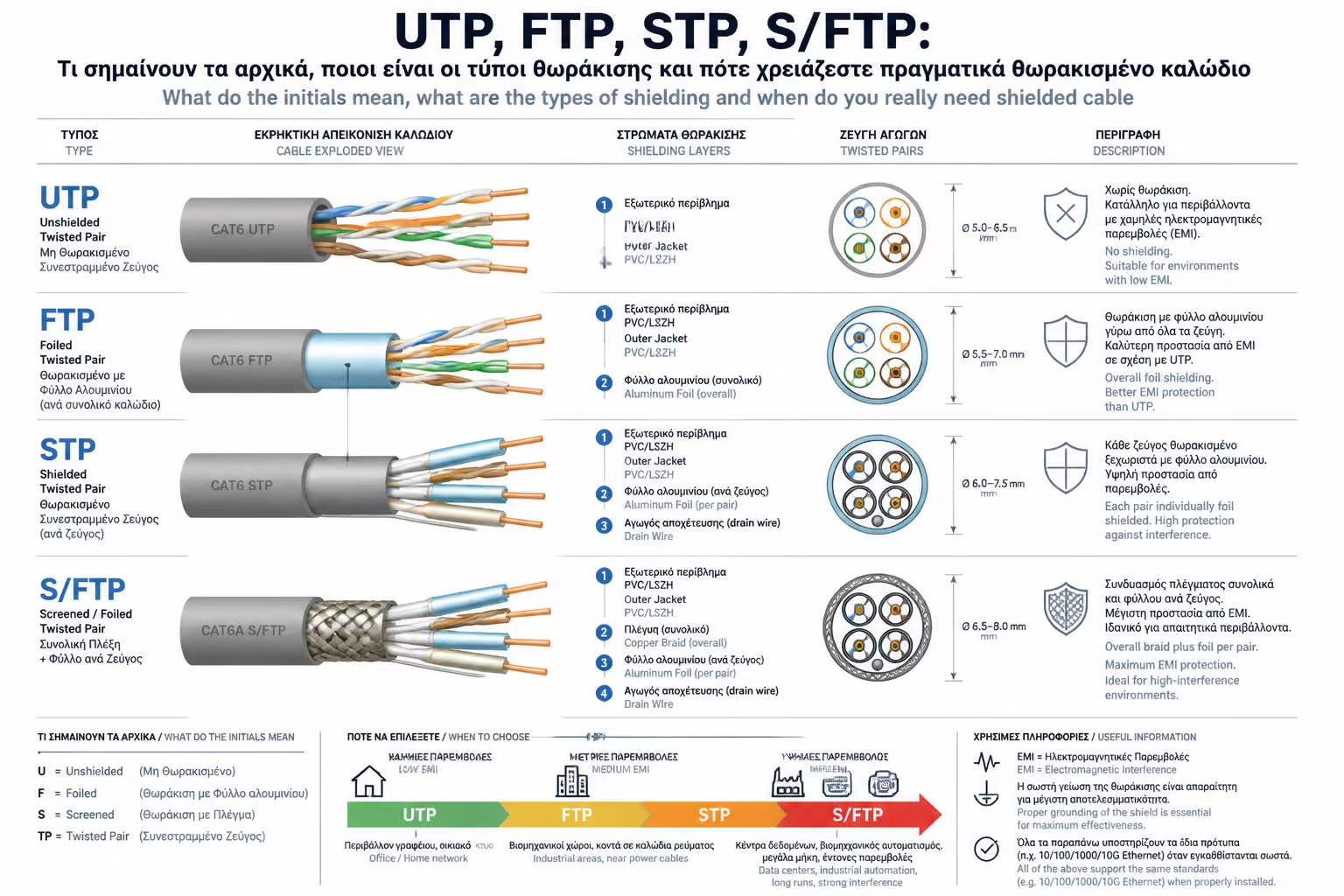
Once you've settled on the speed category (eg Cat6a), the next thing you'll see printed on the network cable are some letters: U/UTP, F/UTP, S/FTP, etc.
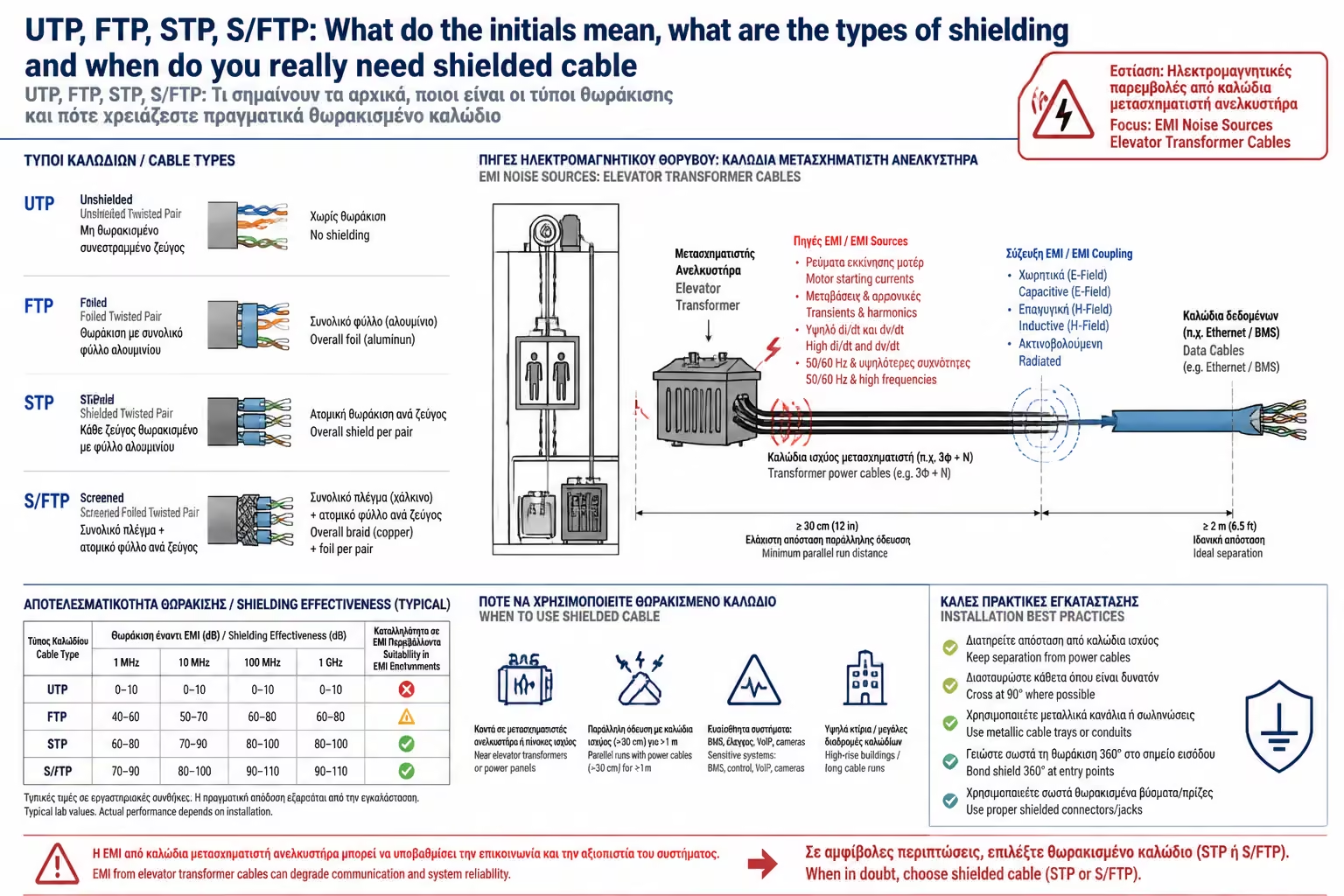
These letters refer to the shielding of the cable. In the world of slow currents, the biggest threat to internet speed is not distance, but electromagnetic noise (EMI). 230V power cables, transformers, and even elevators emit invisible magnetic fields that "hit" internet cables and corrupt data.
The logic goes: "Let's buy the most heavily shielded cable for peace of mind." As engineers, we see this mistake all the time. Using the wrong shield can make your network worse than having no shield at all.
Let's break down the letters and see when you really need that extra protection.
According to the ISO/IEC 11801 standard, the cable designation is always in the form: [External Shield] / [Pair Shield] TP. "TP" at the end always stands for Twisted Pair (ie the 8 internal wires that are twisted in pairs).
The letters used are:
Unshielded (pure plastic).
Shielding with aluminum foil (like kitchen foil). Protects against high frequencies.
Shielding with mesh of copper hairs. It protects against low frequencies and gives enormous mechanical resistance.
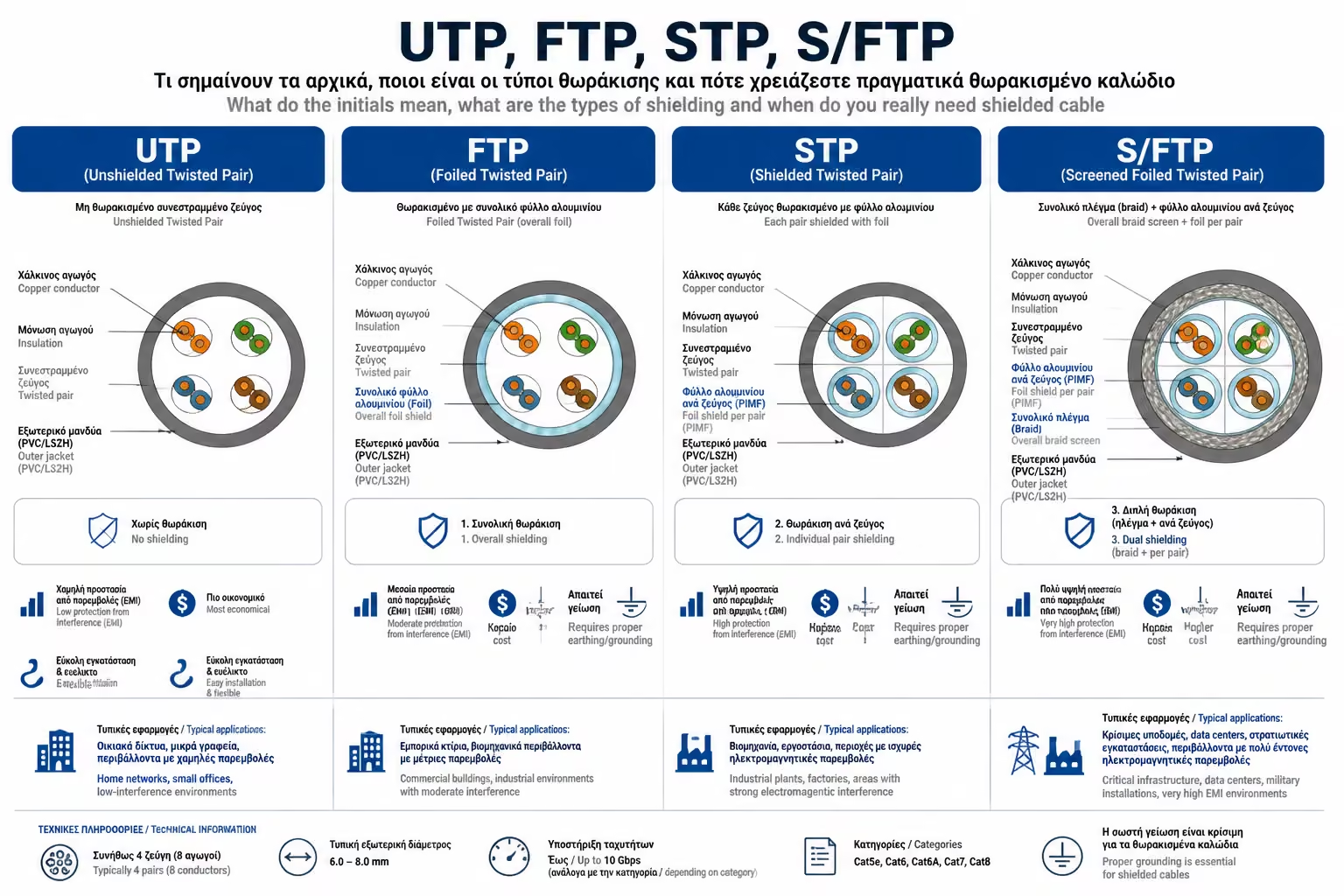
Putting the letters in order gives the following formulas, from the simplest to the most "hardcore":
There is absolutely no shielding, neither on the outside nor around the pairs. It's just copper and plastic. * Usage: It is the standard cable for 95% of home installations and offices. It is flexible, easy to terminate and inexpensive.
There is a central foil that wraps all the pairs together, but the pairs themselves internally are unshielded. It also has a bare metal ground wire (drain wire). * Use: Offers a basic protection if the cable passes close to noise sources. It is tougher than UTP.
There is no central, outer shielding, but each pair is individually wrapped in its own foil. * Use: Great for preventing "Crosstalk" (when data from one pair interferes with the one next to it within the cable itself). Very common in Cat6a cables.
It combines everything. On the outside there is a copper mesh (S) that hugs all the wires, and on the inside each pair has its own foil (F). * Usage: It is very expensive, incredibly stiff and difficult to install. It is used in heavy industry, factories with huge motors, hospitals with MRI scanners or Data Centers.
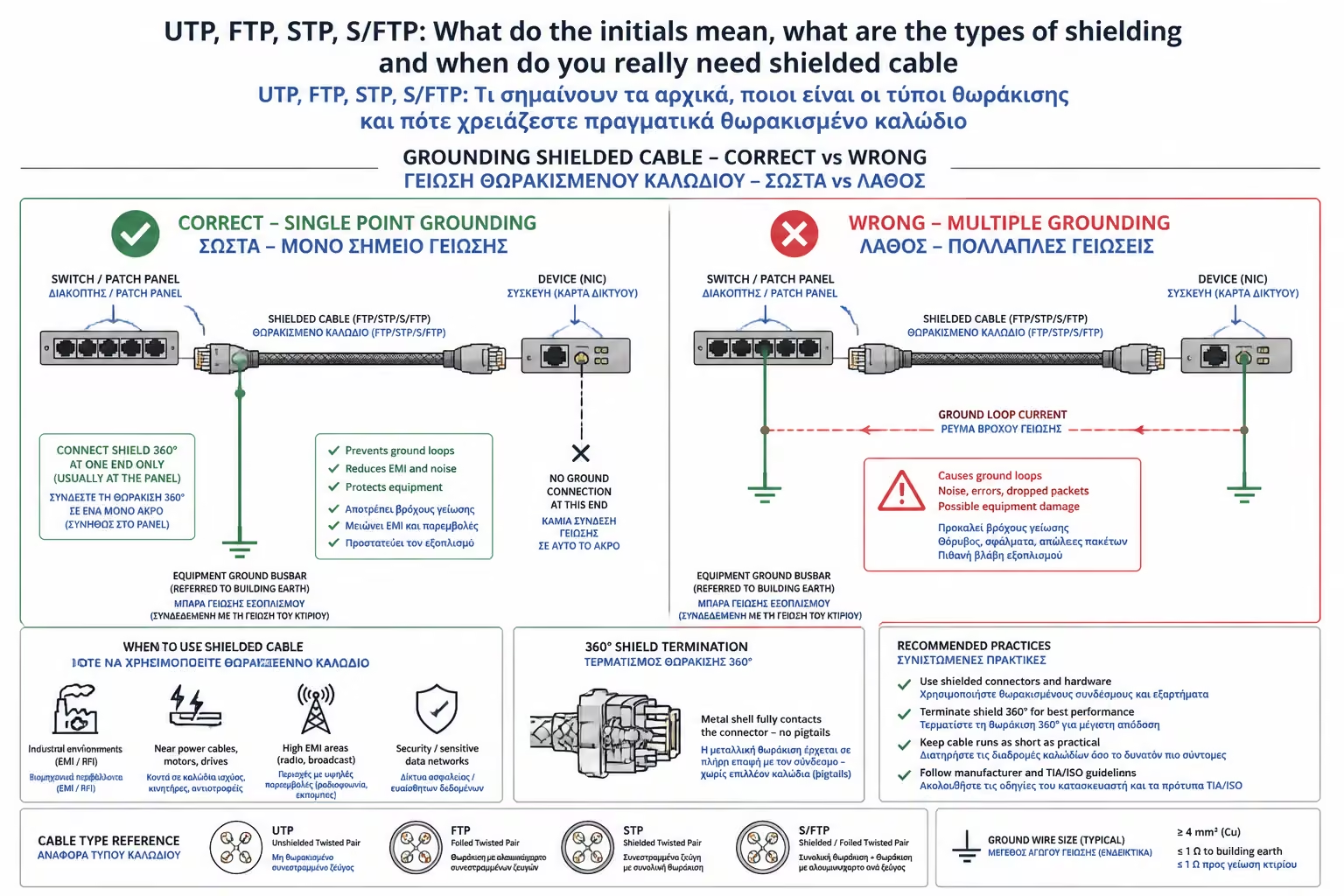
Many DIYers and ignorant electricians buy shielded cables (FTP or S/FTP) for their home, thinking they are making the perfect installation. What they don't know is this principle of physics: The shield (the aluminum) acts as an antenna.
When electromagnetic noise hits the FTP cable, the aluminum absorbs it. This noise (static electricity) has to be dissipated somewhere.
The choice is much simpler than it seems:
Choose strictly U/UTP (Unshielded). The copper is itself twisted (Twisted) precisely to cancel out household interference. It's cheaper, pipes don't clog because it's thinner, and you never run the risk of ground loops.
If you need to run your Ethernet cable right next to your building's central, three-phase power cable, or if you're running it externally next to broadcast antennas, then and only then choose F/UTP or S/FTP. Prerequisite: You must use special, metal plugs (Shielded Keystones) and ensure perfect grounding (Earthing) in the central Rack.
Don't be fooled by the marketing of expensive, heavily shielded cables. Cat6 or Cat6a in unshielded form (U/UTP) is built with strict math to reject the noise of a house. If you put in aluminum (FTP), you have to commit to building an end-to-end ground chain or the shield will backfire.
--- Since we mentioned the interference from the power cables, the next question is obvious: How close is the UTP internet cable allowed to pass next to the power cables (230V) inside the walls? Want to move on to the rules for separating weak and strong currents?
Return to category.
Go to categoryReturn to the central guide.
Go to guide