The Result
Your Router understands that the data packets arrived corrupted and requests that they be sent again. This causes "Packet Loss", extremely high Ping (Lag in games) and inexplicable disconnections.
Once you've chosen the right cable (eg Cat6a UTP) for your network, it's time to install. In construction, the logic of "convenience" often prevails: "Since the electrician has already dug the groove in the wall for the power socket cable, let's throw the internet cable into the same groove and be done with it."
This practice is one of the biggest (and most common) crimes in structured cabling. Mains cables (Weak Currents) and 230V voltage cables (Strong Currents) are "sworn enemies".
As engineers, we must separate these two worlds. Let's see why electricity can "kill" your internet speed, what are the minimum safety distances required by standards, and what do we do when cables are forced to cross.
To understand the rule, we need to look at some basic physics. When alternating current (AC 230V) flows through a wire (eg when you turn on the washing machine or vacuum cleaner), it creates an invisible electromagnetic field around it.
On the other hand, your network's UTP cable carries the "0s" and "1s" of the Internet using minimal voltage (a few millivolts).
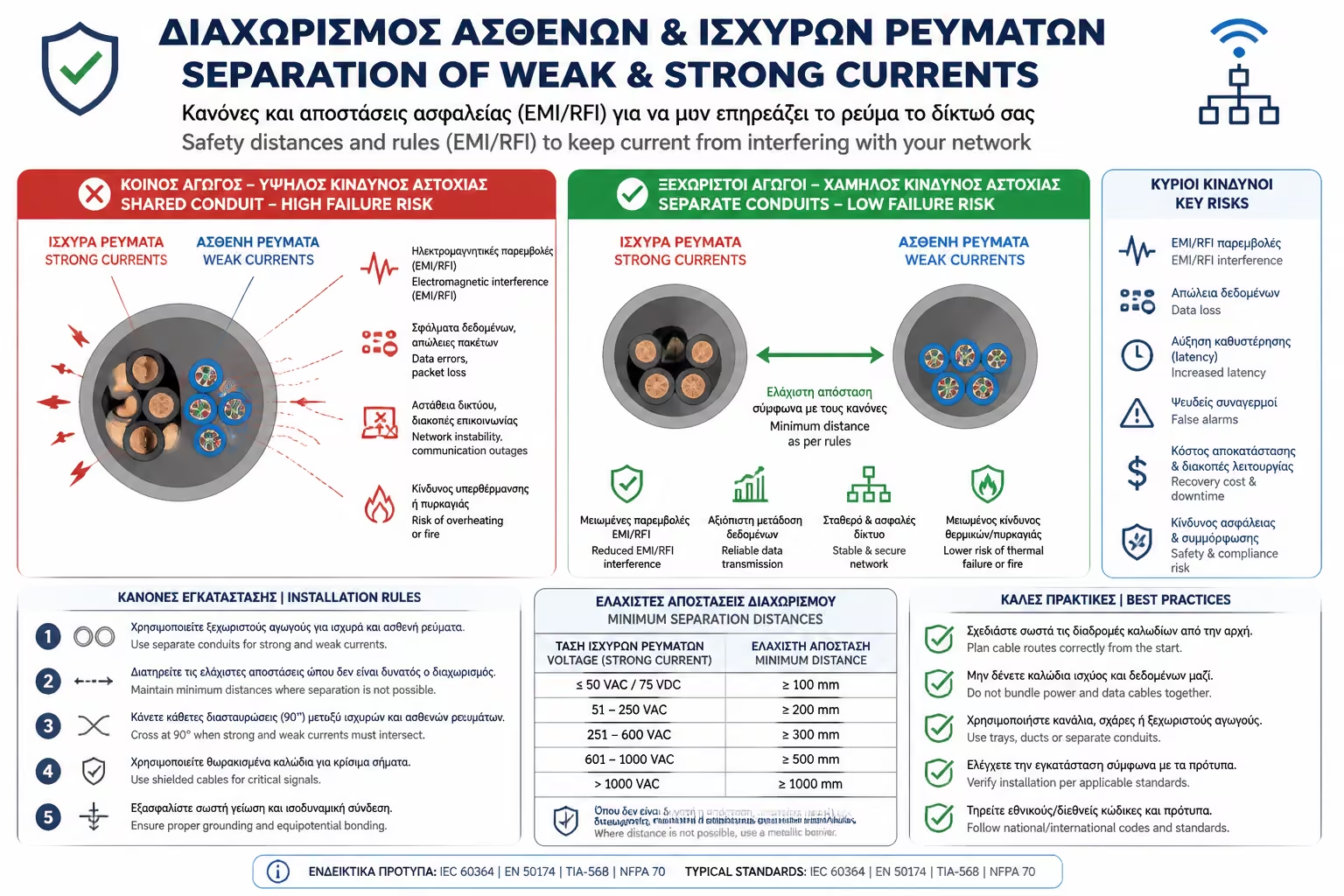
If the two cables run parallel and very close to each other, the strong magnetic field of the current "invades" the network cable, altering the sensitive electrical data signals. This phenomenon is called Electromagnetic Interference (EMI).
Your Router understands that the data packets arrived corrupted and requests that they be sent again. This causes "Packet Loss", extremely high Ping (Lag in games) and inexplicable disconnections.
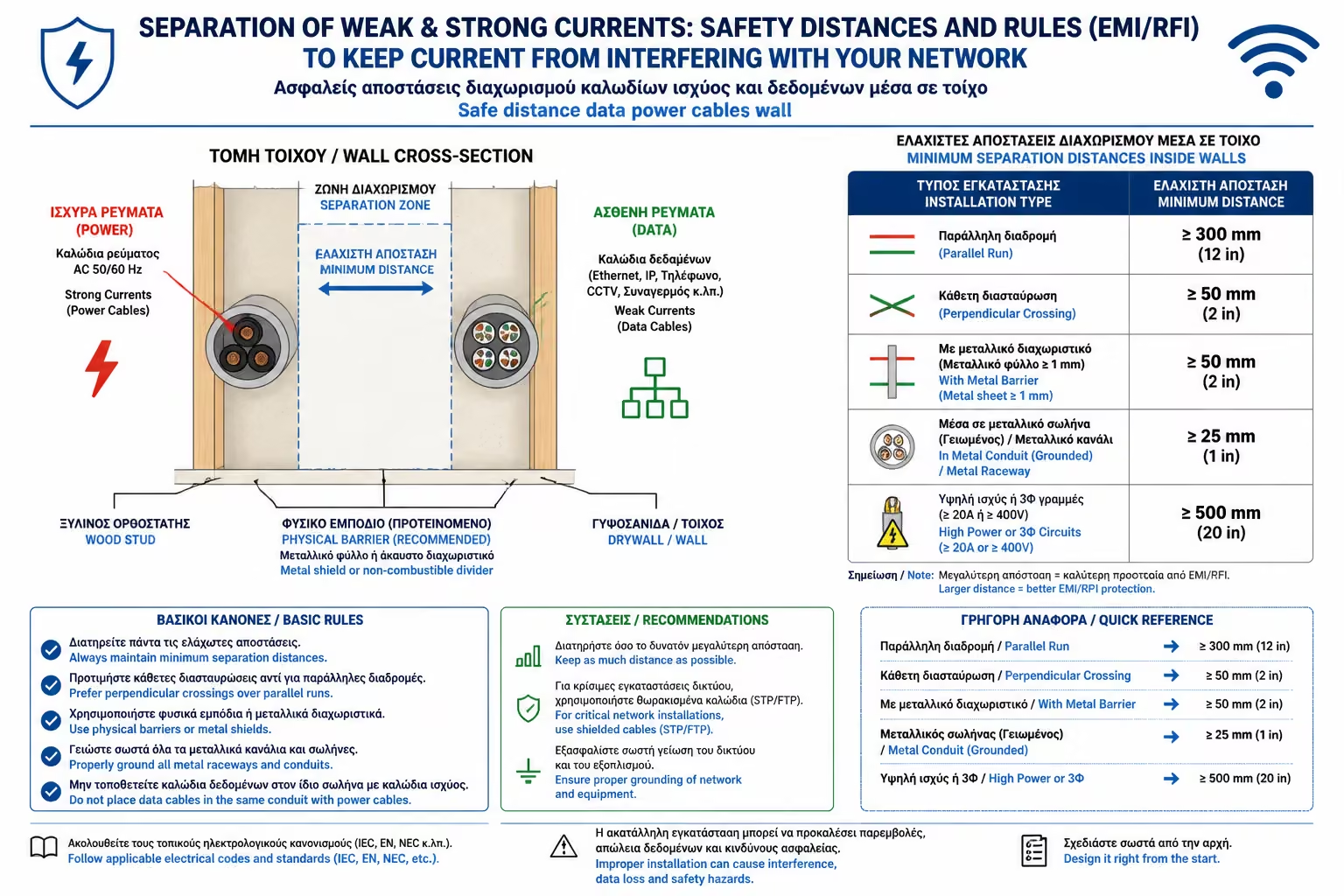
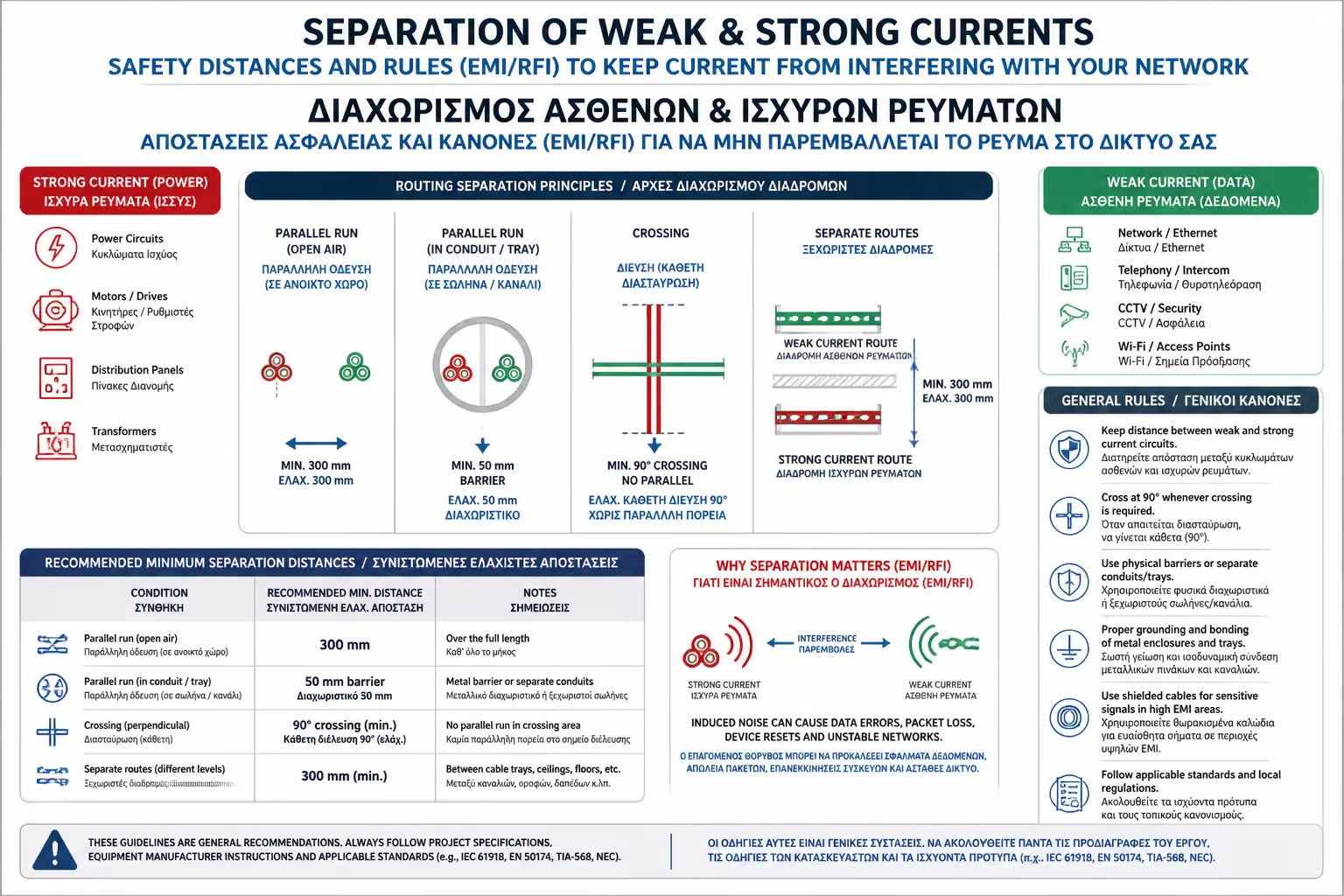
How far apart should they be? The distance depends on the way the cables are routed (whether they are "bare", in plastic pipes or in metal racks).
It is expressly forbidden (and by the electrical safety regulations / ELOT HD 384) to pass a mains cable inside the same plastic tube (spiral) as a 230V cable. It's not just an internet issue, but a risk of fire or electric shock if the insulation melts.
If the cables run parallel through a wall, in simple plastic pipes, the "golden rule" of international standards (such as EN 50174) mandates a minimum distance of 20 centimeters (20 cm) between them.
In commercial spaces or suspended ceilings where metal gratings are used, the distance may be reduced to 5 centimeters (5 cm), only if there is a continuous, grounded metal divider (divider) between them.
Many times, it is practically impossible not to meet the wires. For example, the network cable that comes down from the ceiling must pass over the power line that runs horizontally on the baseboard.
This is where The Rule of 90 Degrees (Perpendicular Crossing) applies.
When a cable of weak currents (Network) is crossed with a cable of strong currents (Current), the crossing must be made strictly at an angle of 90 degrees (vertical), like a cross.
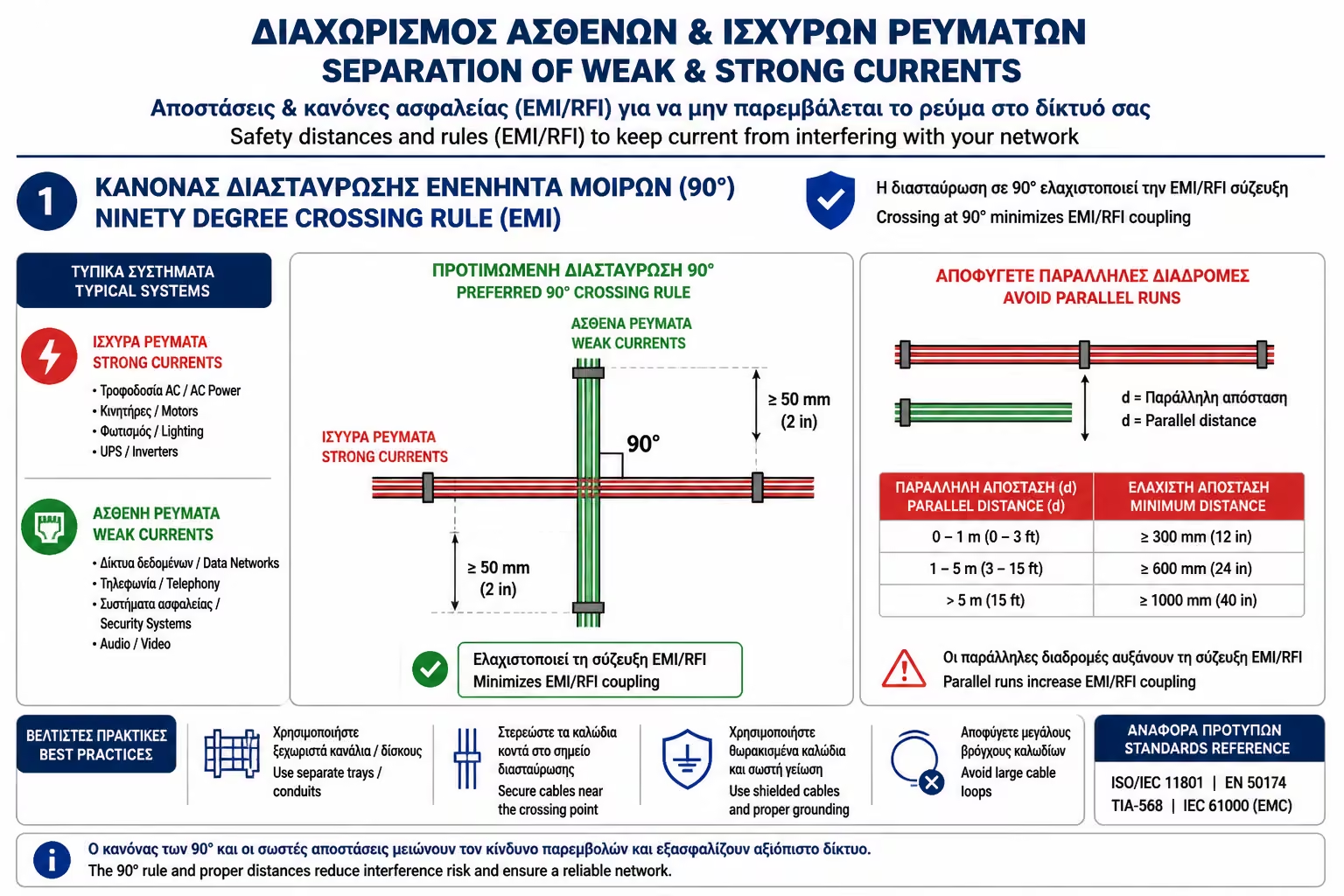
The physics of magnetic fields says that when two conductors are perpendicular to each other, inductive energy transfer (the "talking" of one wire to another) is practically zero. Never let them cross diagonally at a slight angle or run parallel for a few centimeters at the point of contact.
The problem is not only found in the tracks (walls), but also at the termination point: the outlet where you plug your laptop.
In Greece it is customary to use common frames (eg a triple frame that accommodates 2 Schuko power sockets and 1 mains socket).
Your data travels at infinitesimal voltages that are extremely vulnerable to the "noise" of everyday power supply. Structured Cabling requires not only good materials, but also strict routing discipline. By maintaining distances of at least 20cm on parallel runs and only crossing cables at right angles (90°), you ensure that your network will perform at 100% of its speed, free from inexplicable disconnections.
Return to category.
Go to categoryReturn to the central guide.
Go to guide