How they work
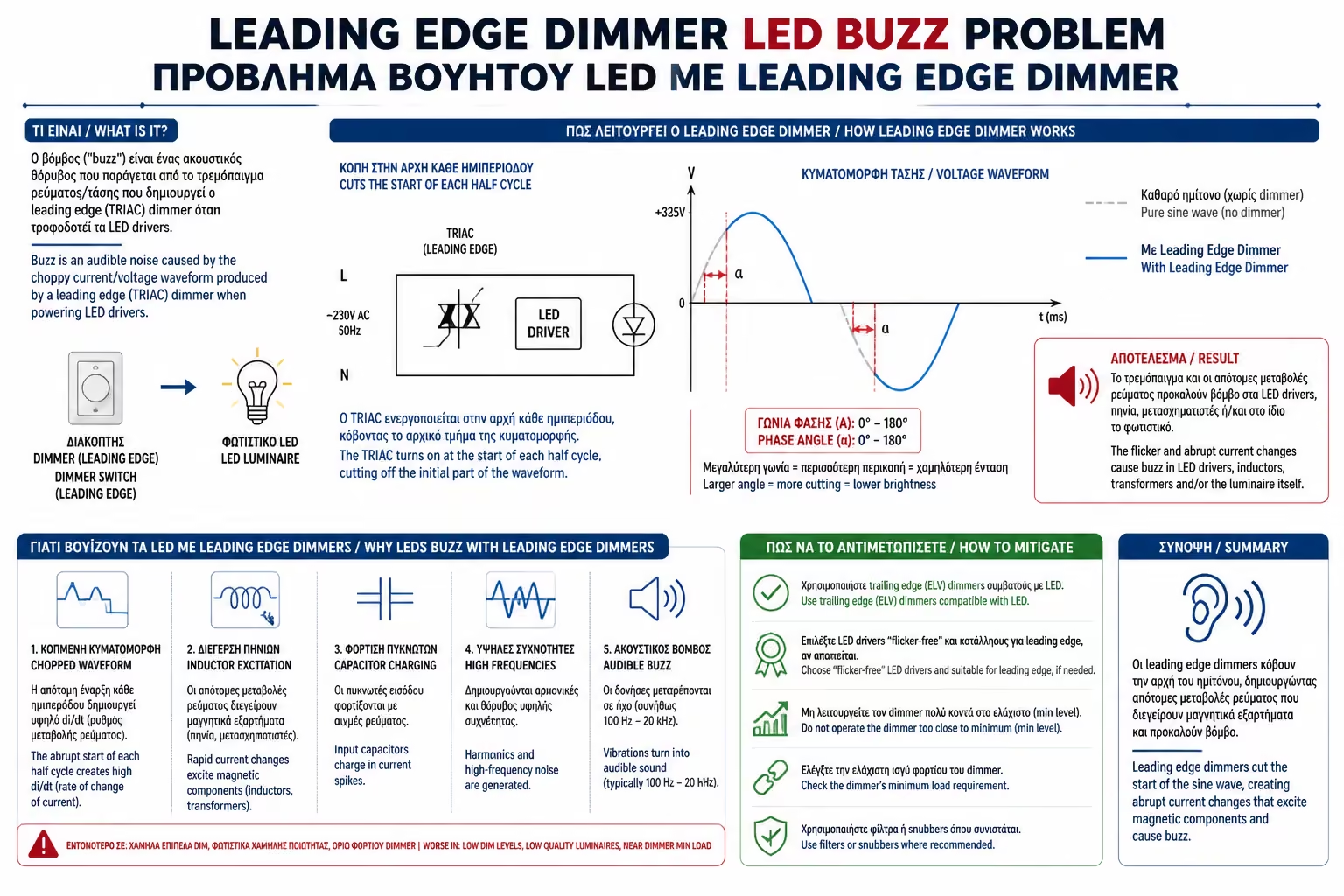
They "cut" the front of the current wave. This means that the current starts from zero and suddenly, in the middle of the journey, it suddenly "turns on" with a huge rush towards the bulb.
You have created the perfect lighting. You're getting ready to watch a movie in the living room, turning the dimmer on the wall to dim the lights and set the mood, and suddenly... the room is filled with an irritating, piercing "zzzzzz". An electronic noise (buzzing) coming from either the switch or the ceiling lamp itself.
Congratulations, you have just met the most common "incompatibility" of modern electrical equipment.
Unlike the old incandescent bulbs, LEDs are complex electronic boards. How we "cut" the current to lower them is of huge importance. As engineers, let's "open" the wall switch, explain how this hum is caused, and see why choosing between a Leading Edge and Trailing Edge dimmer is the only solution.
Many people think that the dimmer works like a water faucet: you turn it on, and it just reduces the "pressure" (Volts) reaching the bulb. This is wrong!
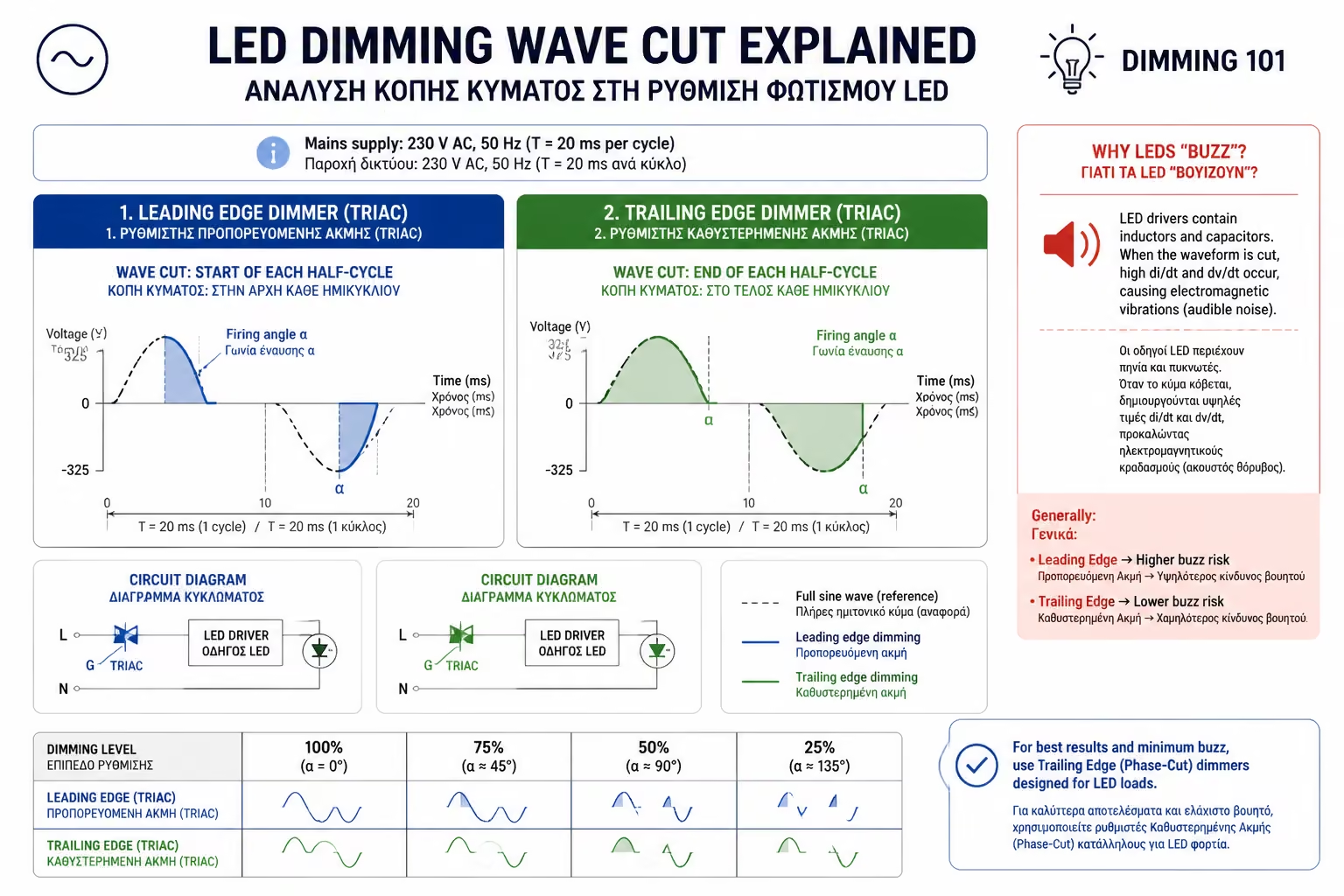
The alternating current (AC) of our outlet comes in the form of a "wave" (sine wave) 50 times per second. The dimmer does not reduce the voltage, but acts like a lightning switch (scissors). It "cuts off" a piece of that wave. When the wave is cut, the lamp goes out for a fraction of a second. Because this happens incredibly fast (100 times a second), our eye doesn't get to see the blackout. It just sees less light!
Exactly where the dimmer will cut the wave also defines its technology.
Leading Edge (TRIAC) technology dimmers are the classic, inexpensive dimmers we had in our homes in the 90s and 00s for halogen lamps.
They "cut" the front of the current wave. This means that the current starts from zero and suddenly, in the middle of the journey, it suddenly "turns on" with a huge rush towards the bulb.
This sudden, violent "burst" of current (Inrush current) is perfectly tolerated by a thick halogen wire. But for the sensitive electronics of the LED, it's like being hit with a hammer 100 times a second! This electronic "shock" is what causes the flickering and, of course, the noise.
The sound you hear is absolutely real and mechanical!
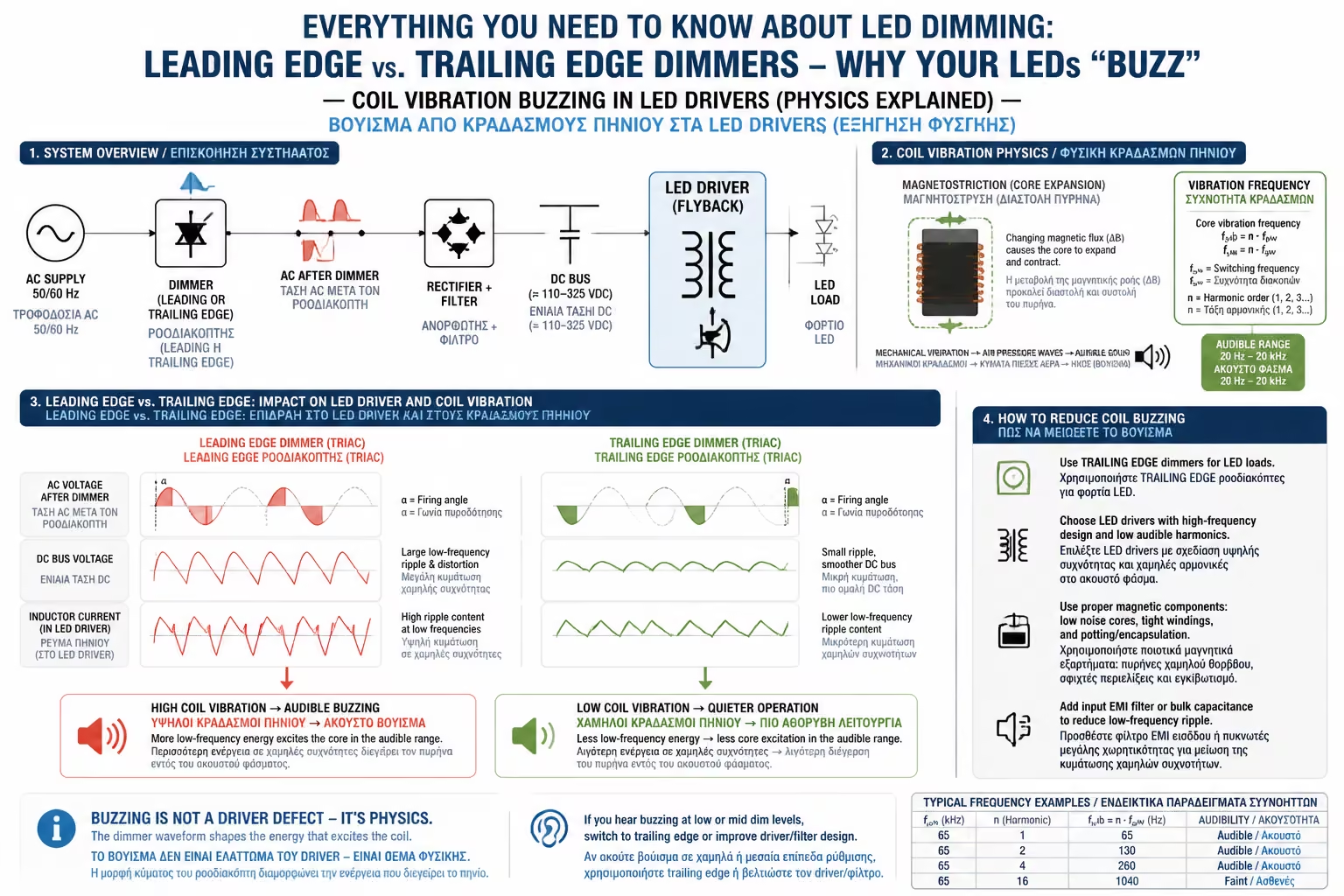
Inside the LED power supply (and inside the dimmer itself) are small coils (copper wires wrapped around a core) to filter the current. When the Leading Edge dimmer "shoots" the board with those sudden voltage spikes, a sharp magnetic field is created. This magnetic field causes the copper wires to naturally vibrate and strike against their plastic sheath. The mechanical vibration is carried through the air and reaches your ear as noise.
The "harder" the power cut, the more violent the vibration, and the louder the hum.
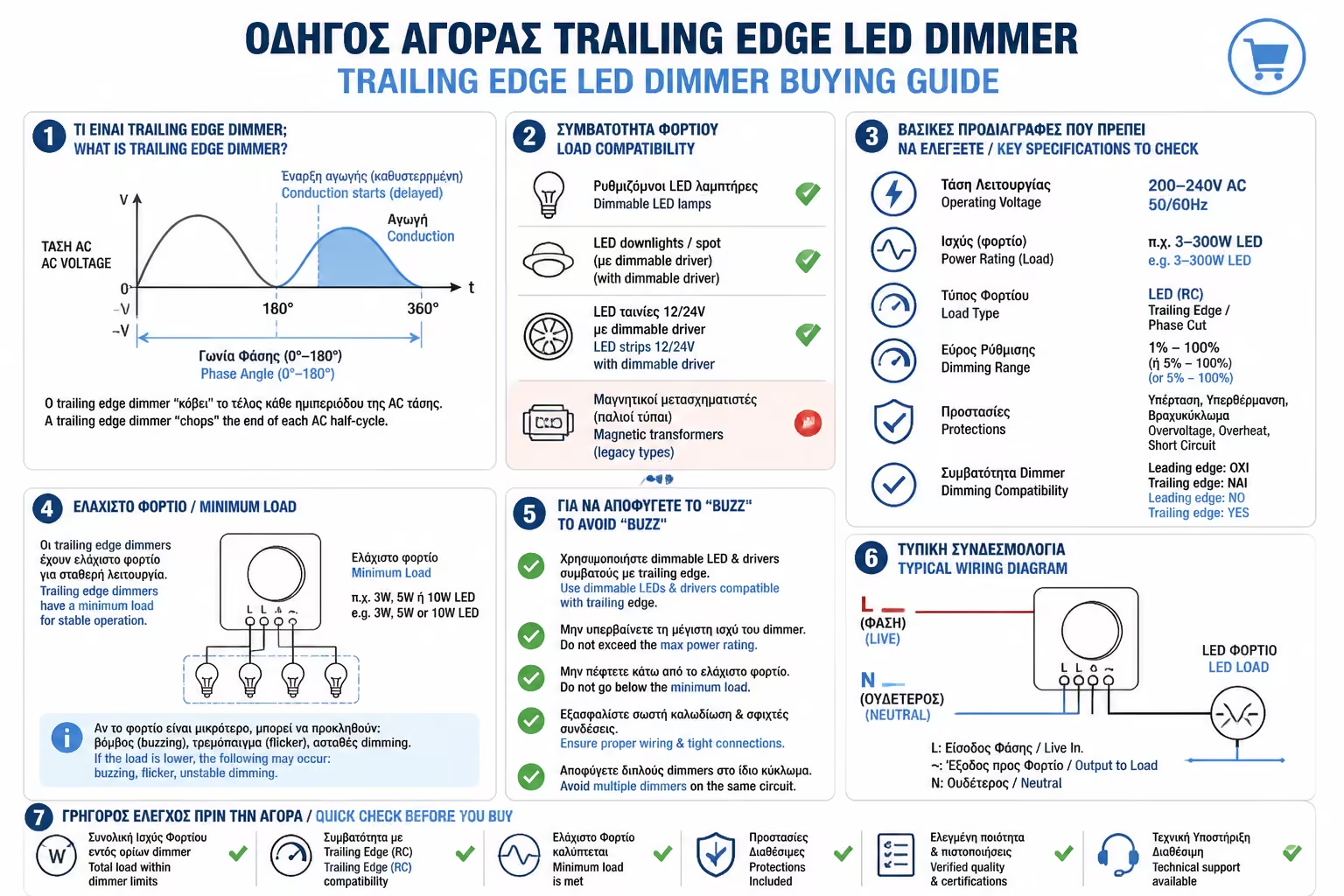
To save ourselves from this torment, the industry created the Trailing Edge (RC / Reverse Phase) technology dimmers. They are made exclusively for modern LED lighting.
Instead of violently cutting the beginning of the wave, they smoothly "erase" the back of it (the end of the wave). The stream starts smoothly, ramps up normally, and just cuts out sweetly before it ends.
Zero electric "shocks". No vibration in the coils. Absolute silence. In addition, the Trailing Edge allows the LED to go down to much lower brightness levels (eg 5%) without flickering.
The next time you go to the electrical store to replace your old switch, don't just ask for "a dimmer." Follow these 3 rules:
Buzzing in the lights is not something you "have to get used to". It's the cry of despair of your electronic components receiving the wrong type of current. Replace the old, cheap dimmer with a modern Trailing Edge Dimmer, and enjoy cinema nights with perfect, silent and perfectly controlled light.
Next Step: We have solved the control (dimming) problems. Now we come to one of the most common construction problems in concealed lighting. If you've put several meters of LED strip on your ceiling, you might have noticed something strange: The beginning of the strip shines brightly, but the end of it... just dims!
We continue in our technical guide: Voltage Drop in LED Strips: Why the edge of the strip is darker and how to do Power Injection.
Return to category.
Go to categoryReturn to the central guide.
Go to guide