Where are they used?
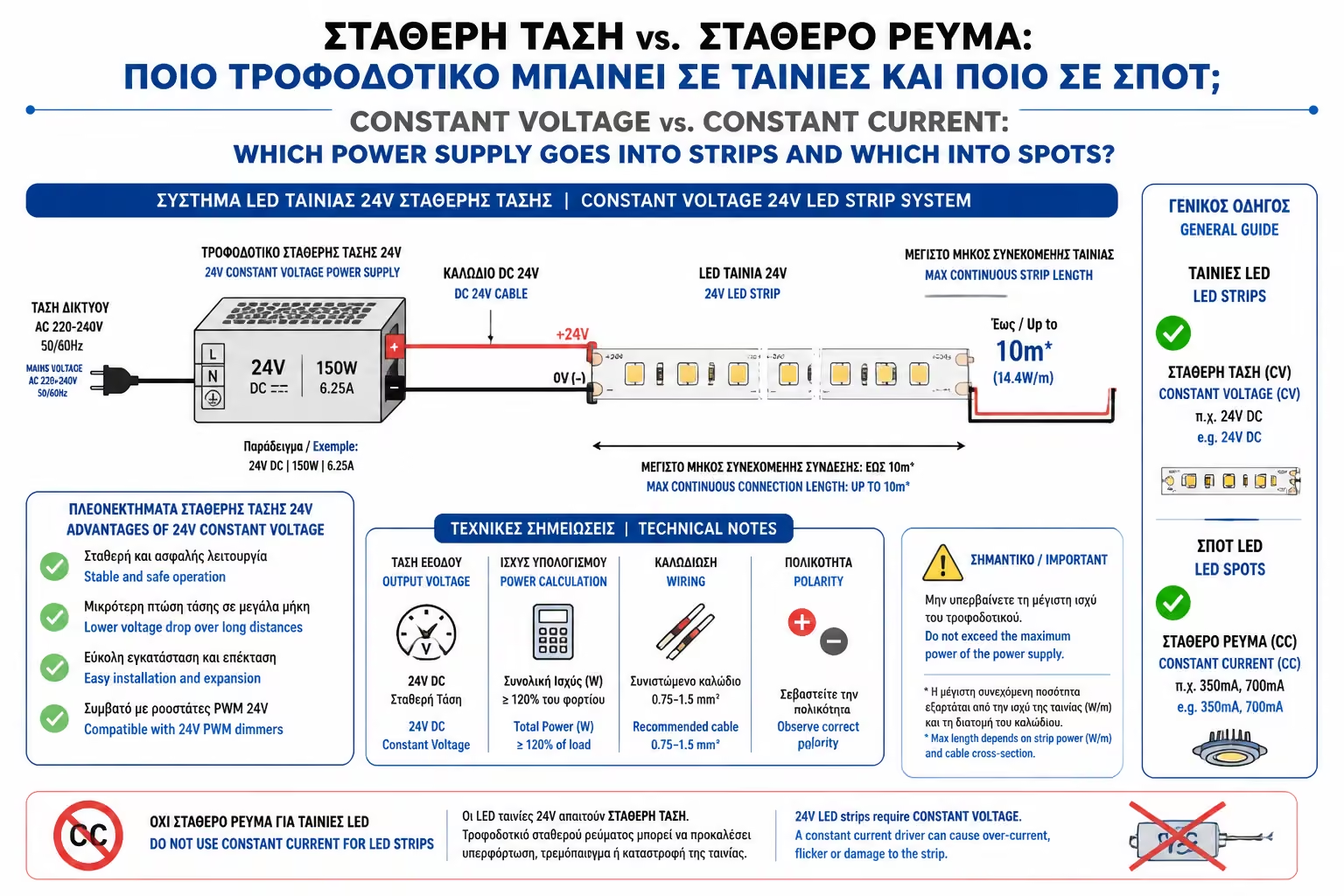
It is the ultimate choice for LED Strips, Neon LED signs and some "off-the-shelf" outdoor lighting (such as pool lights).
You arrived at the electrical store to buy a driver for your new lights. The salesperson asks you, "Do you want it Constant Voltage or Constant Current?" If you answer "whatever" or guess wrong, the result will be instantaneous: As soon as you press the switch, your expensive LEDs will burn out in a fraction of a second. This distinction is perhaps the most critical, but also the most misunderstood concept in LED technology.
As engineers, we see broken fixtures every day because of this confusion. Let's clear up once and for all the two "worlds" of power supplies, how to read their labels, and which one you should choose for each application.
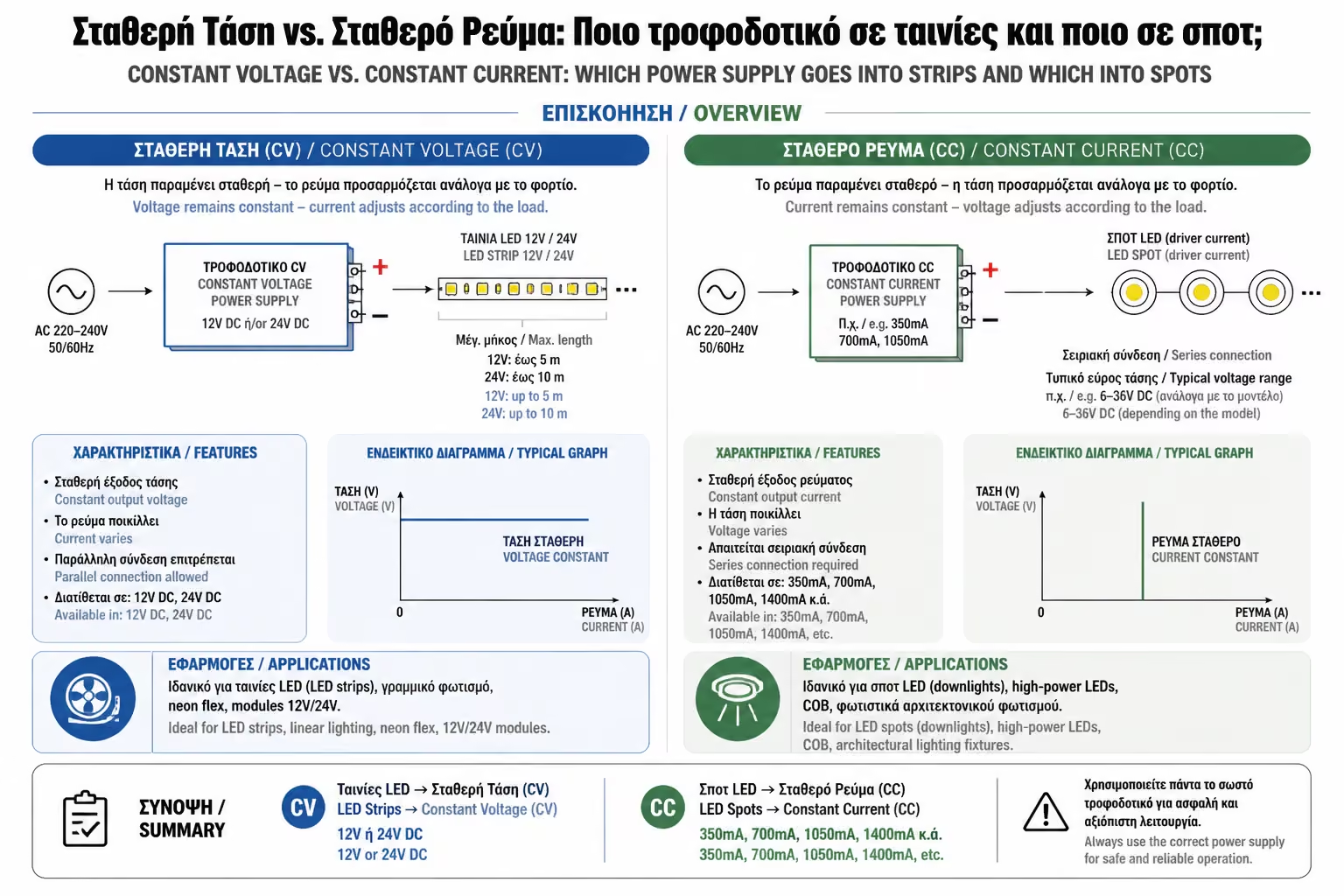
This is the most common type, the one we saw in the previous article. CV power supplies provide a perfectly constant voltage, usually 12V or 24V (DC). The current (the Amperes) they give varies depending on how much "load" you connect to them.
It is the ultimate choice for LED Strips, Neon LED signs and some "off-the-shelf" outdoor lighting (such as pool lights).
LED strips have small black resistors built into their board. These resistors are responsible for "braking" the current. All the film asks of the power supply is to give it an "equal" and stable voltage of 12V or 24V, and it arranges the rest.
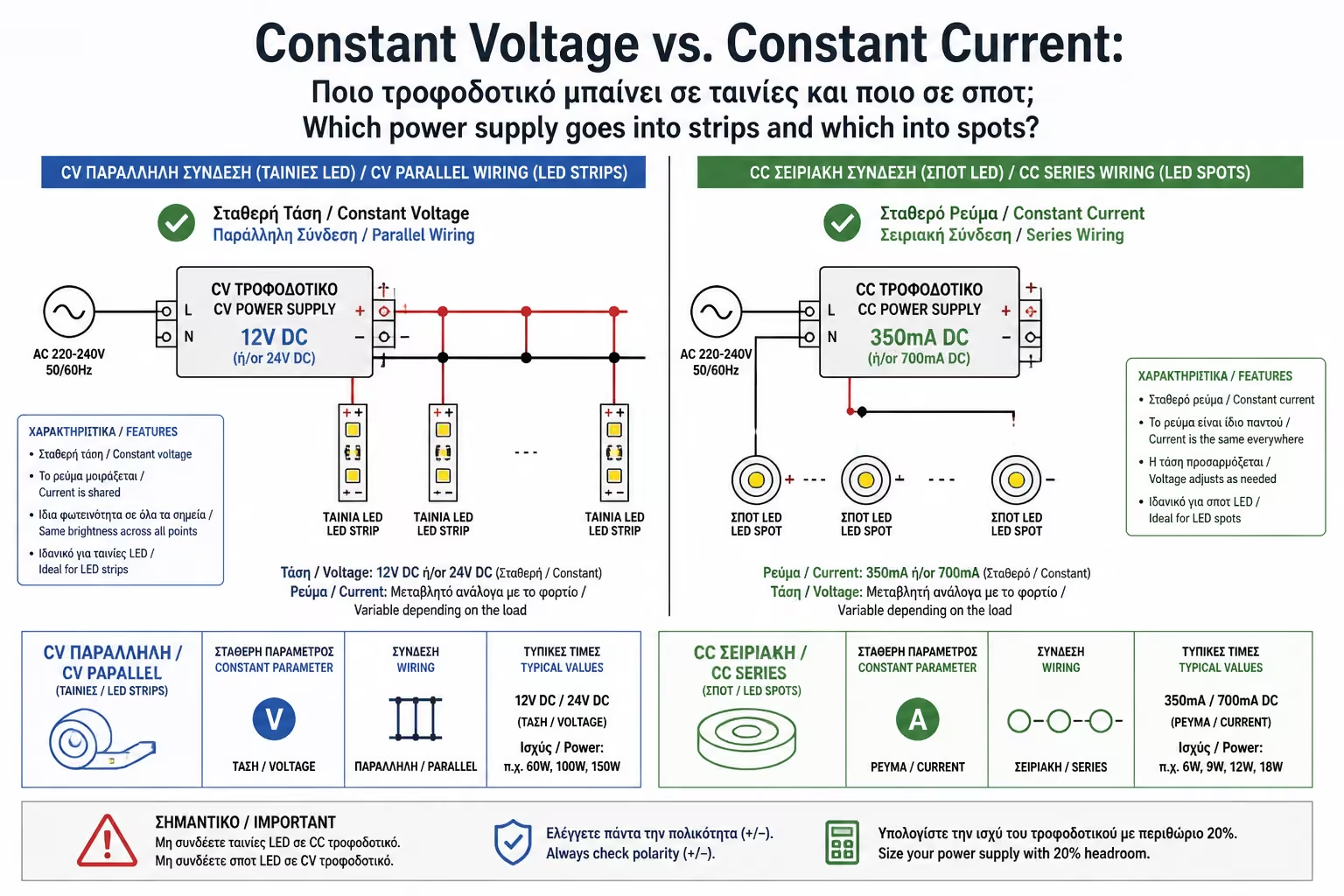
Here things are reversed. CC power supplies provide a perfectly constant current, which is measured in milliamperes (mA), such as 350mA, 500mA, 700mA or 1050mA. To keep this current constant, they constantly increase and decrease their voltage (Volts).
They are used to power "bare" high power LED chips. We find them in recessed ceiling spotlights (Downlights), industrial High-Bays, LED Panels and professional street lighting.
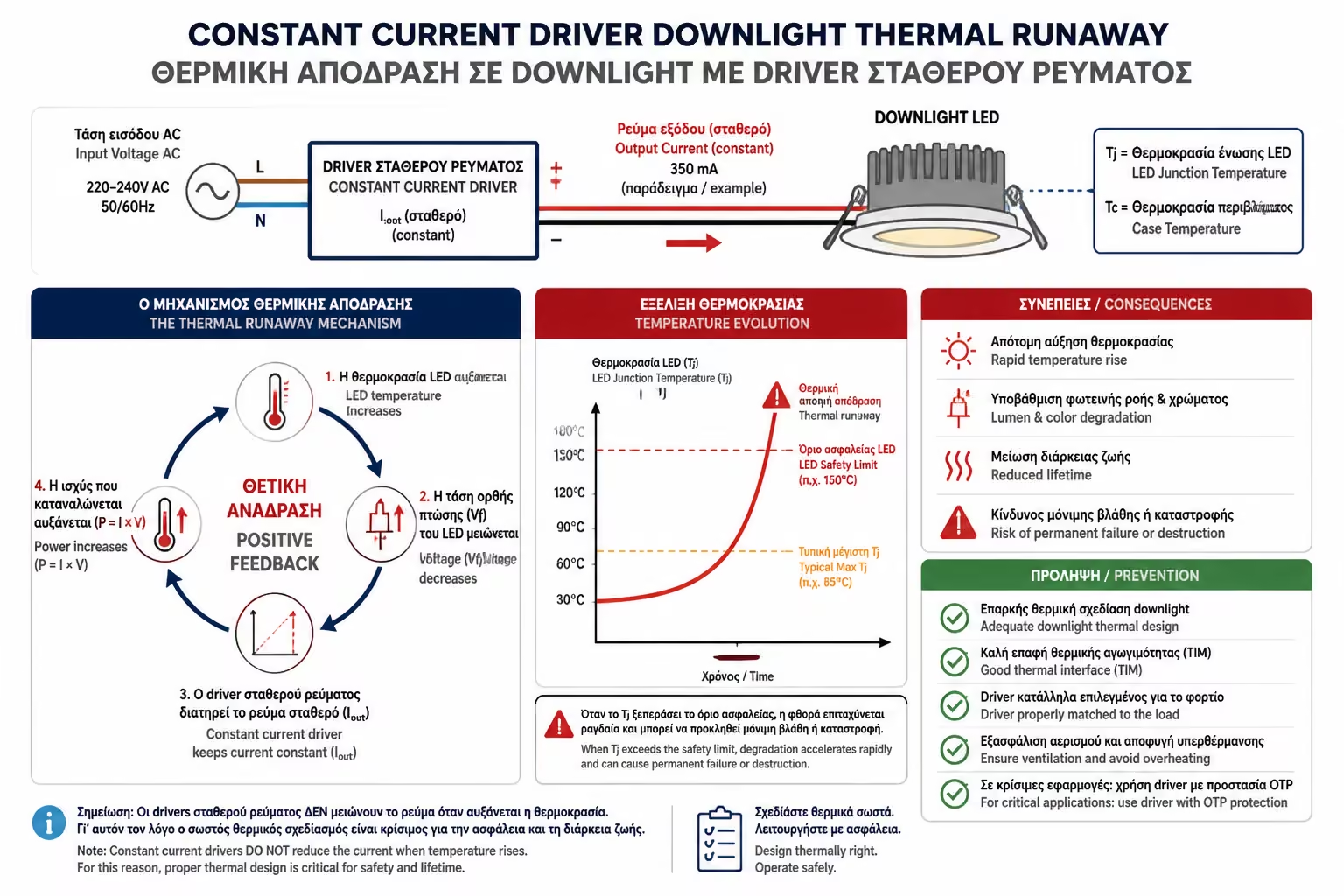
A "bare" LED (no built-in resistor) has a dangerous property. As it works, it heats up. As it heats up, its electrical resistance drops. If we gave it a Constant Voltage, because its resistance drops, it would "suck" more and more current, it would heat up even more, and within a few minutes it would burn out (Thermal Runaway). The DC power supply saves it, "forcing" it to take strictly 350mA, not a millimeter more, no matter how hot it gets.
If you get your hands on a power supply, look at the area that says "OUTPUT":
It is Constant Voltage (CV) if it says: Output: 24V DC / 5A (or Max 5A) (Voltage is a pegged, unique number, while current is listed as a maximum limit). It is Constant Current (CC) if it says: Output: 350mA / 12V - 48V DC (Current is a fixed, unique number, while voltage has a wide range, eg from 12 to 48 Volts).
If you're an electrician or DIYer, this rule is gospel for installation. The type of power supply determines how you connect the cables!
CAUTION - CC Shock Hazard: In DC power supplies (because we connect many spots in series), the voltage adds up. A CC power supply can step up to 80V or even 120V DC to push current through all the spots. While 12V/24V is safe to touch with bare hands, voltages above 60V DC are considered dangerous! Always turn off the power.
They are connected in PARALLEL. If you have 3 pieces of LED strip, the positive (+) and negative (-) of each strip should go directly to the power supply. If one tape is cut, the other two will continue to work normally.
They are connected in SERIAL. If you have 3 350mA spots, current must pass through each. The positive (+) of the power supply goes to the positive of the 1st spot. The negative (-) of the 1st spot goes to the positive (+) of the 2nd spot, and so on. Like a chain. If one spot burns out (or a wire is cut), all the others go out, just like the old Christmas tree lights!
To never make a mistake, remember this simple rule:
Next Step: We chose the right power supply and connected it. Now we want to lower the intensity of the light to create atmosphere. But, the LED starts making an annoying buzzing noise from the wall. Why is this happening?
Moving on to our hands-on guide: Everything you need to know about LED Dimming: Leading Edge vs. Trailing Edge Dimmers – Why your LEDs "buzz".
Return to category.
Go to categoryReturn to the central guide.
Go to guide