P_total
The total power in Watts.
You bought the perfect LED strip (SMD or COB) for your kitchen or living room. But since these strips work with low voltage (usually 12V or 24V), you cannot connect them directly to the 230V socket. If you do, they will explode with a spectacular "bang" in a split second!
You need a "translator" of energy, i.e. a Power Supply (Driver / Transformer).
The greatest anxiety of amateurs, but also the most frequent mistake we encounter as engineers, is choosing the wrong power. If you put in a "small" power supply, it will overheat and burn (or cause the film to flicker). If you put in a huge one for no reason, you're just throwing your money away. Let's see step by step how we calculate the exact power (in Watts) with the absolute market rule.
Before we start the calculations, you need to find two pieces of information that are mandatory on the packaging of your LED strip:
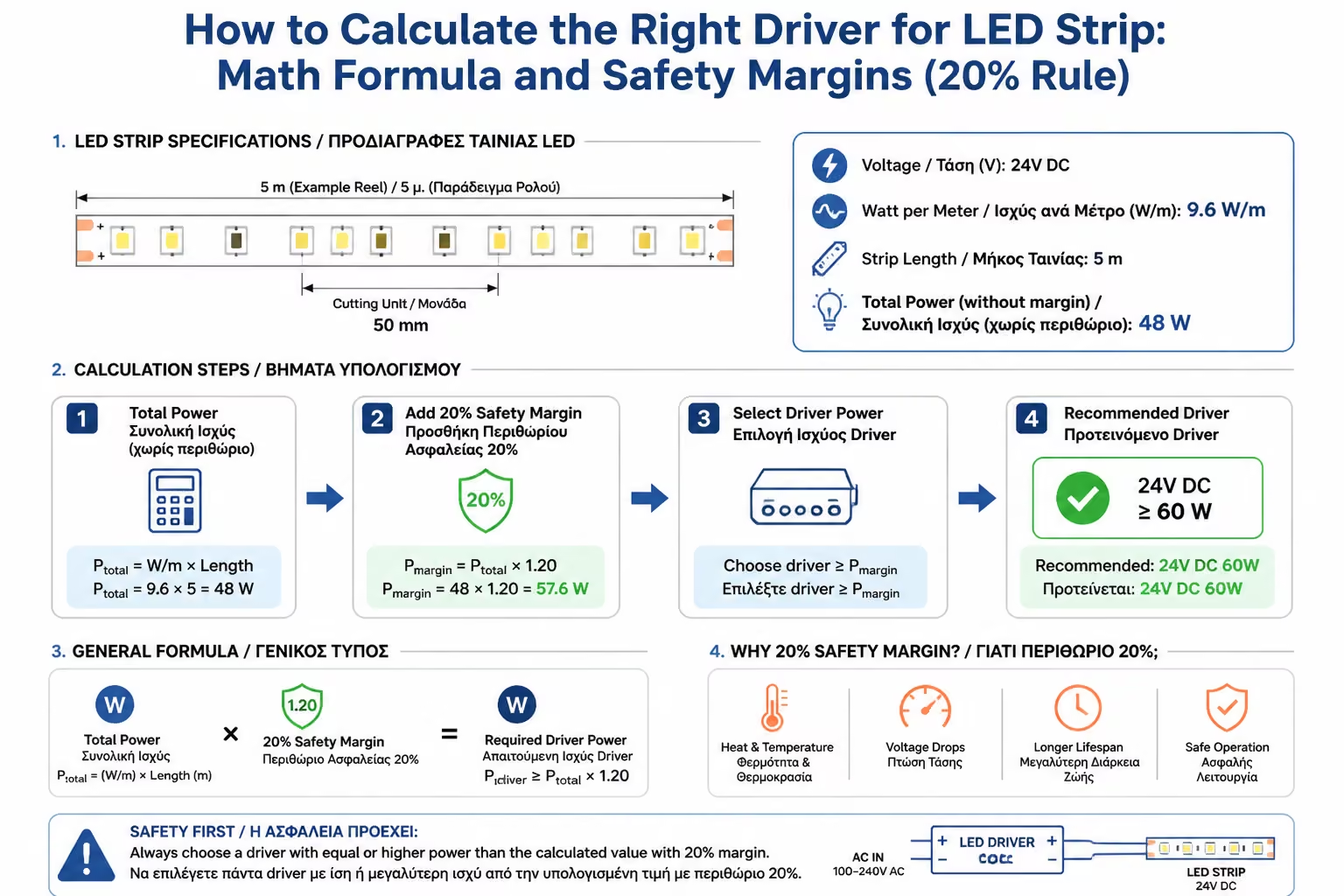
Once you know how much electricity 1 meter burns, all you have to do is multiply this number by the total meters of tape you plan to cut and install.
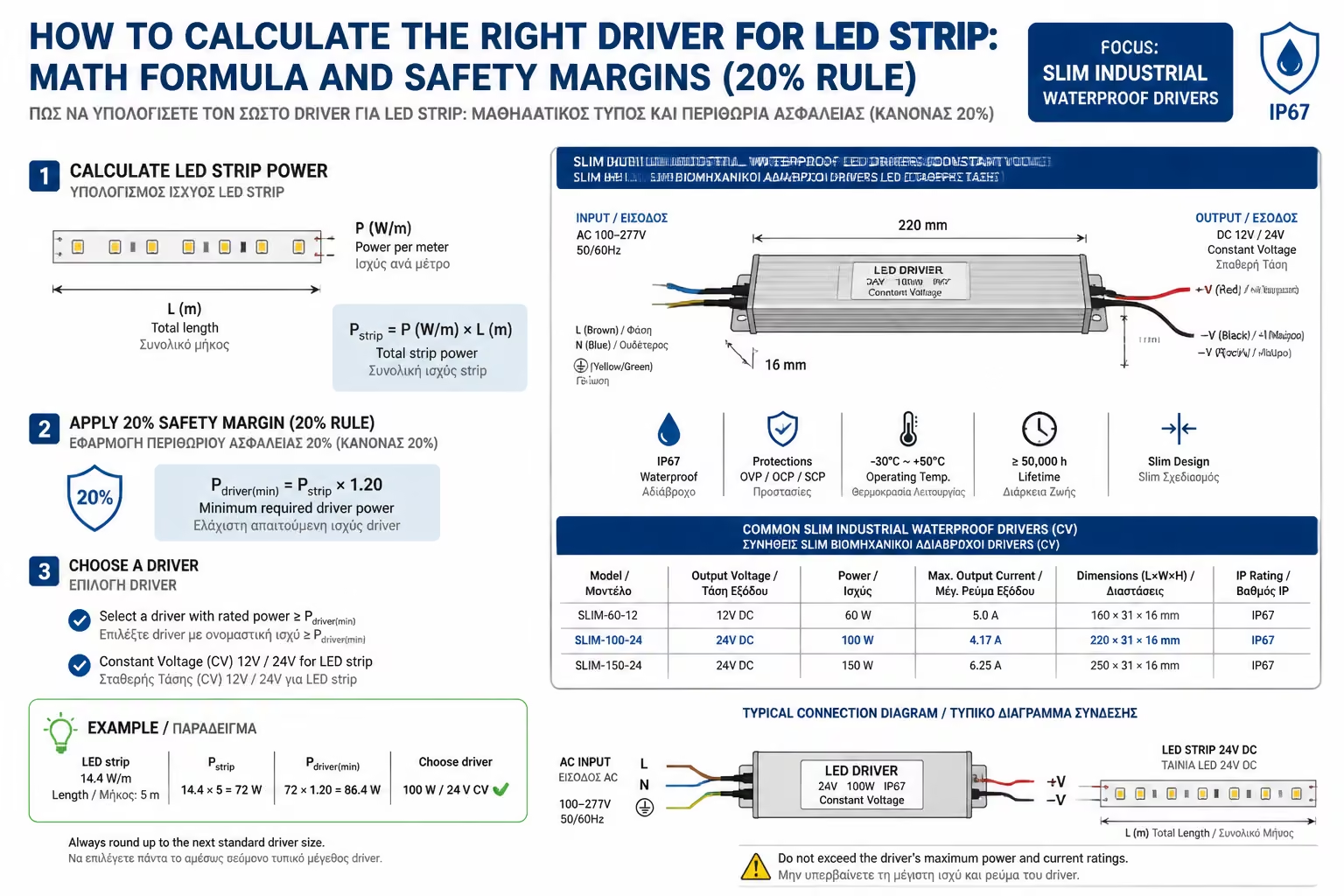
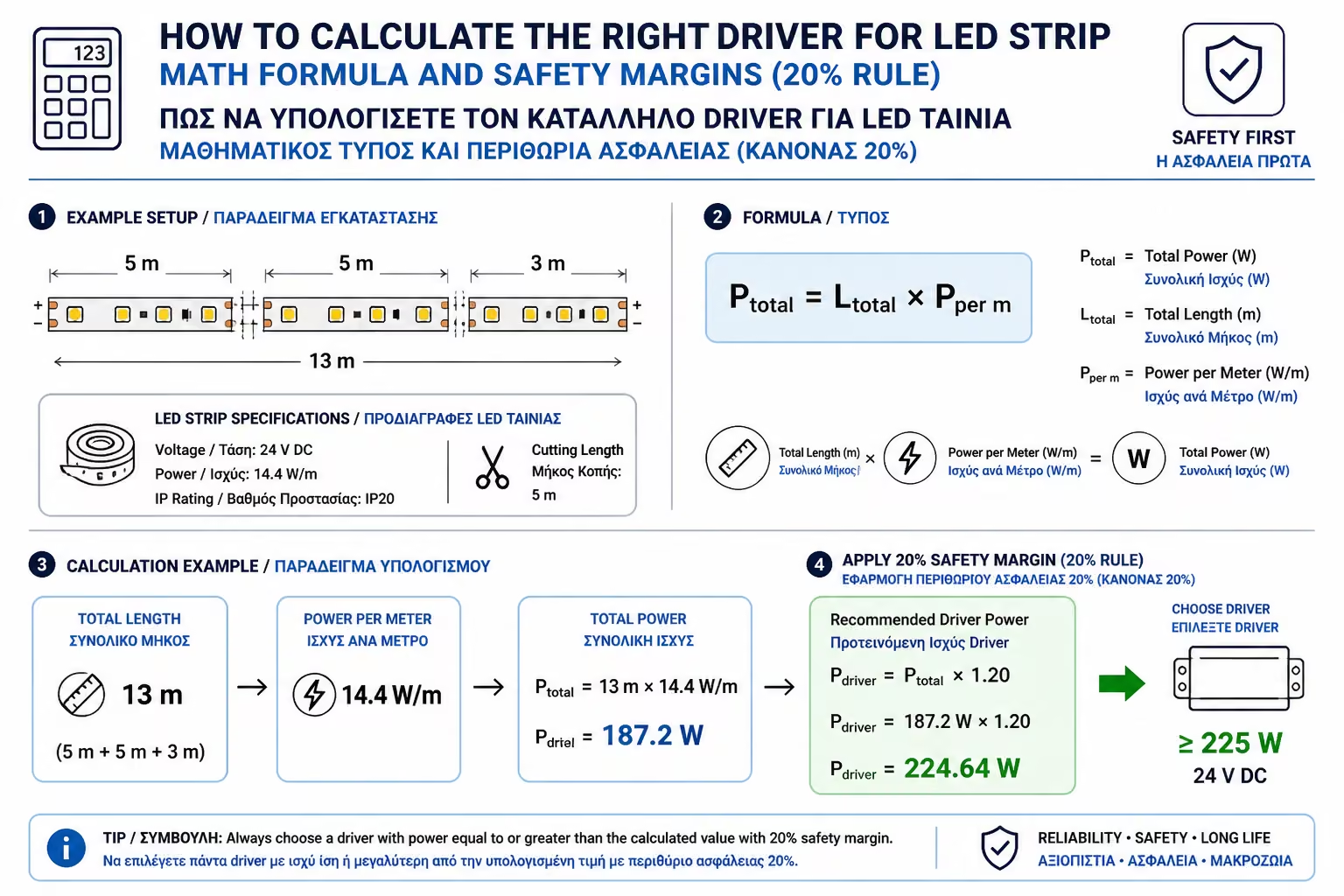
The formula for calculating the total power is:
P_total = P_meter cdot L
Where:
Example: You bought a strong film for the kitchen counter that burns 14.4W/m. You have measured your bench and you will need 3.5 meters of tape. Do the multiplication: 14.4 * 3.5 = 50.4 Watts.
So your strip will draw 50.4 Watts when it's on at 100%.
The total power in Watts.
The consumption of the tape per meter (Watts/m).
The total length of the tape in meters.
This is where hobbyists make the mistake of buying a 50W power supply. Professional electricians know a basic rule of electronics: We NEVER operate a power supply at 100% capacity (at its limit). If you do, the power supply will overheat (especially in summer) and its board will be damaged very quickly. We have to give it an "air" to breathe. This air is the 20% Safety Margin.
The final formula to find the power supply you should buy is:
P_driver = P_total cdot 1.20
Continuing our example: We had found that the film needs 50.4 Watts. We multiply by 1.20 (that is, we add 20%):
So, you need a power supply that delivers at least 60.5 Watts. Because commercially available power supplies come in round, standard numbers (eg 30W, 60W, 100W, 150W), you'll go with the next largest available. In our case, you are buying a 100W Power Supply.
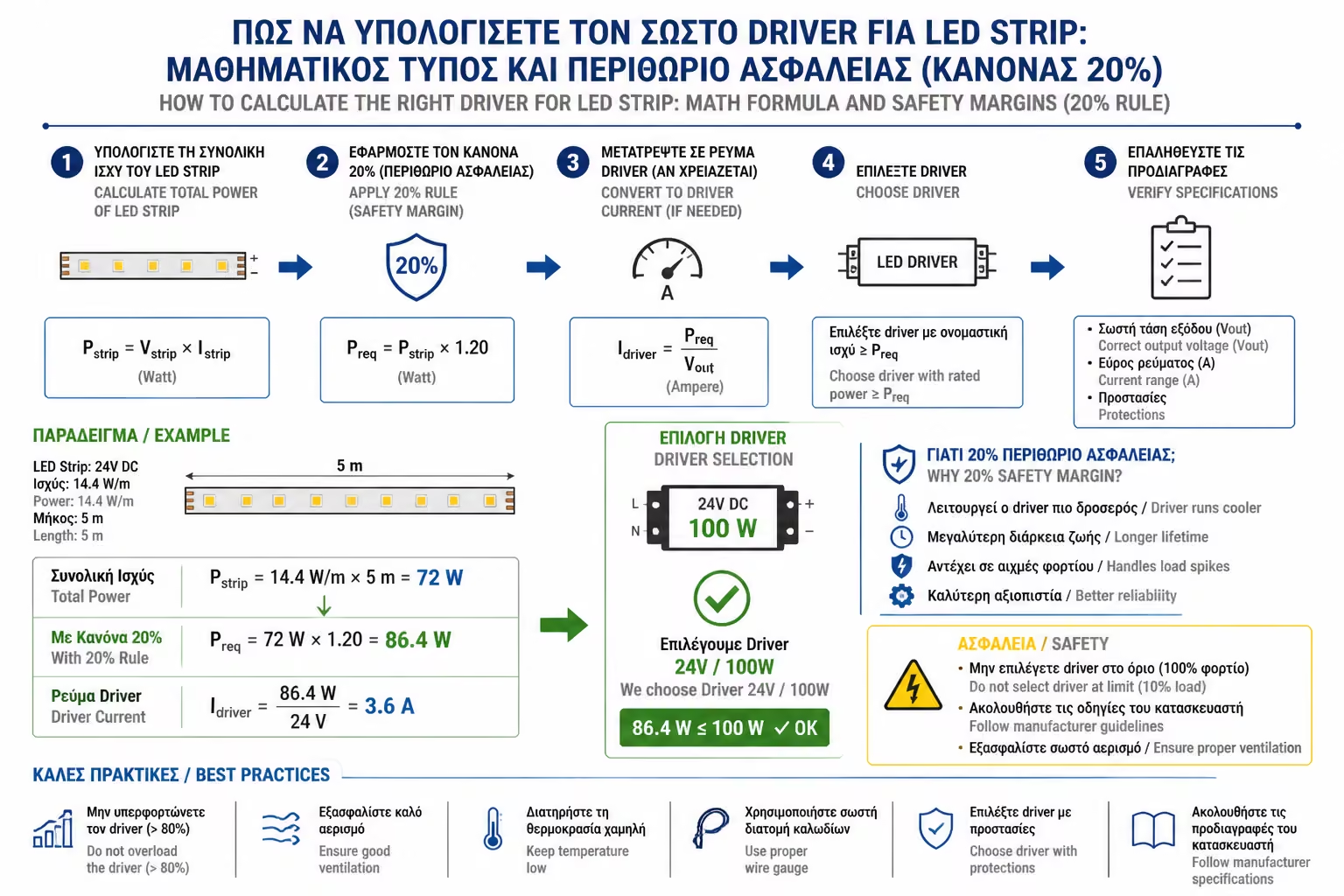
A common user phobia is this: "If my movie needs 50W and I plug a huge 200W power supply into it, won't it burn my movie?"
The answer is NO. The voltage (Volts) is "pushed" by the power supply, so it must be absolutely correct. But the power (Watts) is "pulled" by the film. The power supply is just a store of energy. If your movie is "hungry" for 50W, it will "eat" exactly 50W. She doesn't care if the warehouse has 200W in it.
In fact, an oversized power supply will work completely quietly, will not heat up at all and will live for many years. The only downside to a very large power supply is that it costs more, is heavier, and takes up more space (which makes it harder to hide).
Depending on where you will hide it, you will also choose the corresponding type:
They are metal boxes with holes (like a net) for ventilation. They are the cheapest and most reliable, but the wires screw into bare terminals, so they are always hidden inside drywall or boxes so that no one touches them.
They look like laptop power supplies. They are closed, completely safe to the touch and very thin, ideal for hiding above the kitchen cupboards or behind the bathroom mirror.
They are usually metal "bricks", completely sealed with resin (they have no holes). They are used strictly for outdoor areas, gardens and swimming pools, where they are exposed to rain.
To buy the right power supply, don't guess. Do the simple operation: (Length of tape) x (Watts per meter). To the number you find, add a 20% safety "cushion" and choose the next largest power supply from the shelf. So your system will run cool, reliable and flicker-free.
Next Step: We now know how to calculate Watts. But if you go to the electronics store, you will see that LED power supplies are divided into two completely different (and often confusing) "worlds". If you get the wrong type, your fixtures will be destroyed instantly.
Moving on to our highly technical guide: Constant Voltage vs. Constant Current: Which power supply goes into strips and which into spots.
Return to category.
Go to categoryReturn to the central guide.
Go to guide