Magnetic Tracks: The Ultimate Trend of 2026 and How to Install
If you've flipped through an architecture magazine recently or walked
into a modern renovated home, you've surely noticed this: Black, thin
lines that run across the ceiling and "come down" to the
walls, housing sleek, minimalist lighting fixtures.
These are Magnetic Track Lights. It's not just a passing fad, but the
biggest revolution in architectural lighting of the decade. As lighting
engineers and designers, we see this technology massively replacing
traditional ceiling spots. Let's take a look at exactly what they are,
why they've become so popular, and what to look out for when installing
them.
What is Magnetic Rail and how does it work?
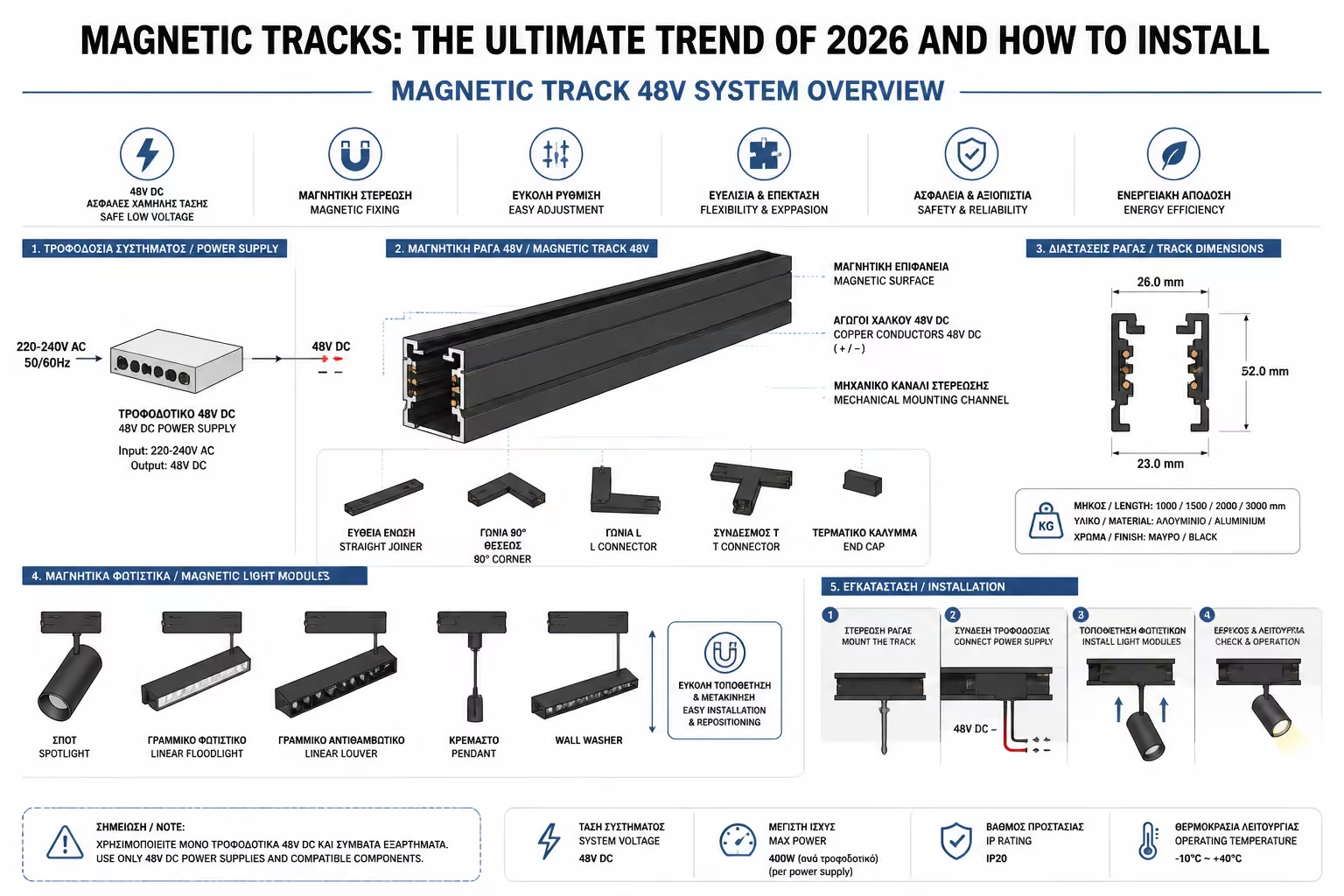
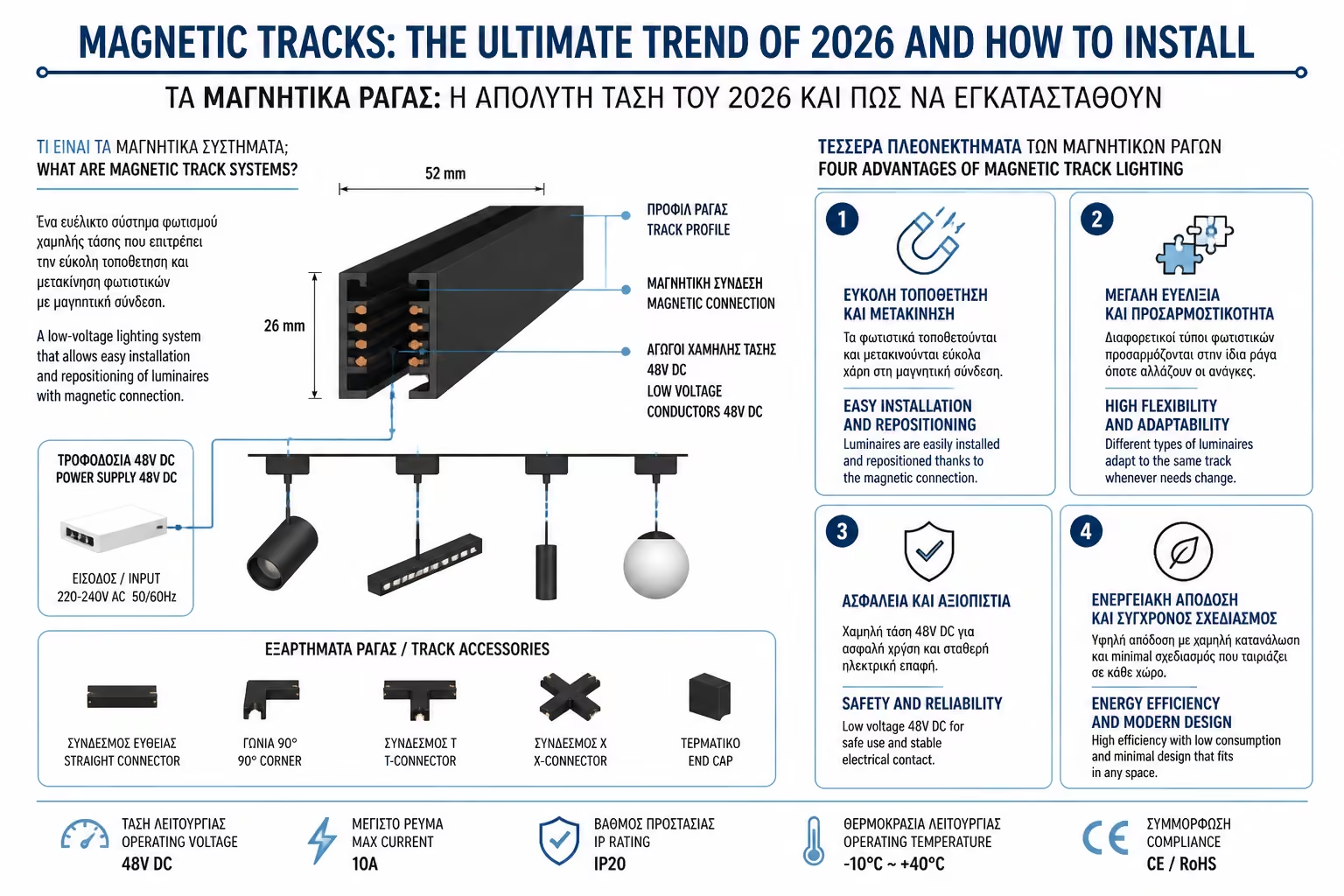
Think of the magnetic rail as an advanced aluminum channel. Inside
this channel, along its entire length, are embedded copper conductors
that carry low voltage current (typically 48V DC).
The lamps intended for this system do not have classic cables or
screws. Their base has strong magnets.
The Magic of "Click"
When you bring the light closer to the rail, the magnets pull it and
"snap" it into place with a characteristic click. At the
same time, the contacts of the lamp touch the conductors of the rail
and the lamp lights up immediately.
Why is it the ultimate choice? (The 4 Advantages)
Their dominance of the 2026 market is no accident. They solve problems
that have plagued architects and owners for years:
Ultimate Flexibility: Moved your dining table 1 meter away? No
problem. You grab the pendant light with your hand, pull it, and
"snap" it one meter down. No tools, no electrician
required.
Absolute Safety: Because only 48 Volts circulate inside the rail
(and not the dangerous 230 Volts of PPC), you can put your hand
inside the rail and move the lights while they are on, with
absolutely no risk of electric shock.
Minimalist Aesthetics: Rails are usually recessed, creating a
perfectly flat trimless effect that fits perfectly into modern
architecture.
Variety of Lighting: On the same rail you can simultaneously
"snap" different types of lighting: Linear (Linear) for
general light, spotlights (Spot) to show off a painting, and
pendants (Pendants) above the kitchen island.
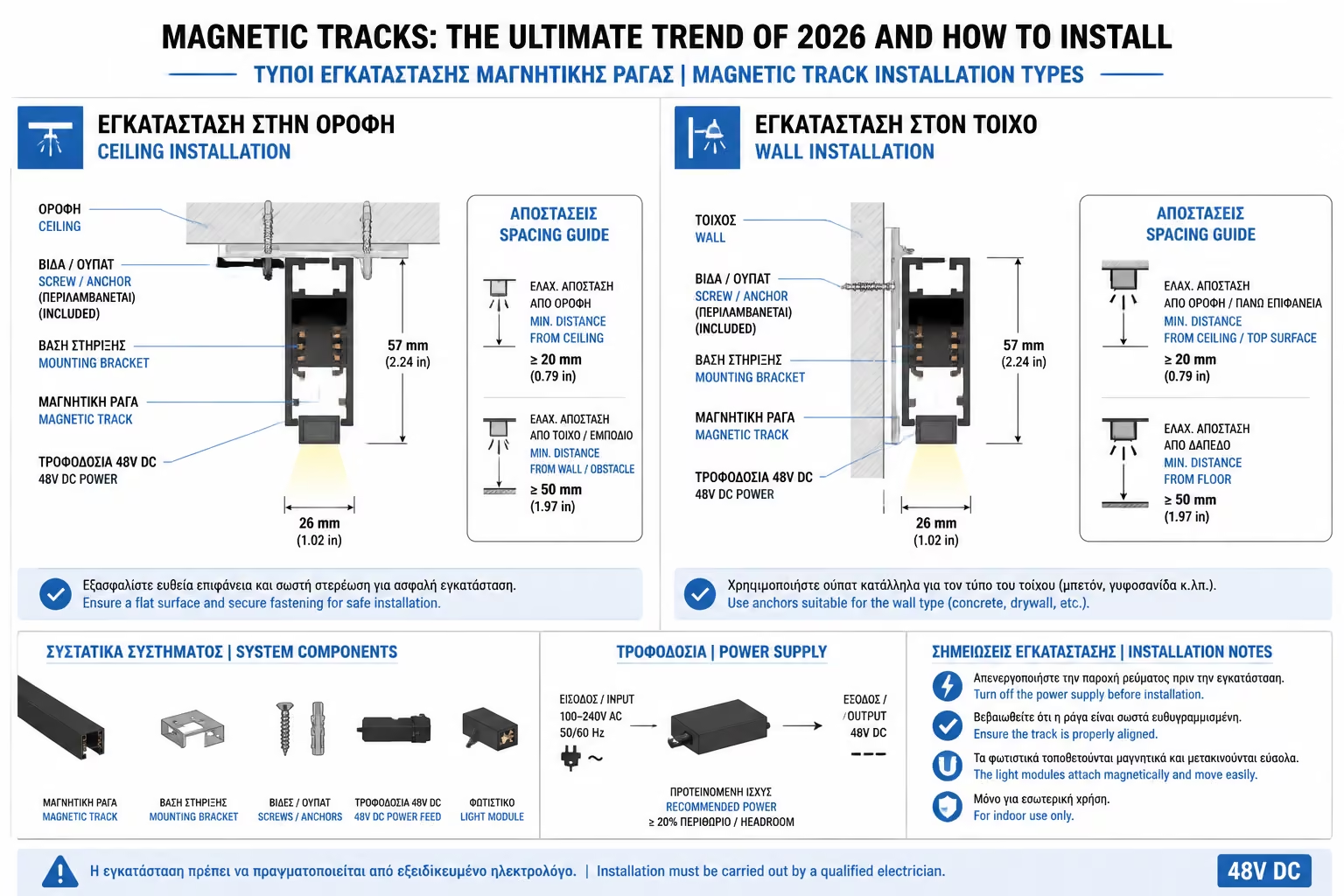
The 3 Ways of Installation
Depending on the construction stage of your space, there are three
types of magnetic rail:
Trimless (The most impressive)
It is the top choice. The rail is built into the plasterboard as it
is being built. The joints are plastered and painted over, leaving
only a sleek black slit in the ceiling visible. It requires careful
drywall work and planning before the ceiling is closed.
Outdoor / Ceiling (Easy solution)
If your ceiling is exposed concrete or you don't want to mess with
drywall, the rail is screwed from the outside, directly onto the
ceiling.
Suspended
The rail is suspended from the ceiling by thin wires. It is very
often used in professional office spaces (above the desks) or in
high-ceilinged industrial spaces.
The Technical Trap: The Driver
The biggest challenge in a magnetic rail installation is not the
fixing, but the power supply. As we said, the rail works with 48V. So,
somewhere we have to hide a transformer (Power Supply), which will
take the 230V of the house and make it 48V.
The Calculation: The electrician must add up the watts of all the
lights you plan to put on the track and add a 20% safety margin. If
the lights are 100W, the power supply must be at least 120W.
Where do we hide it? Here's the secret. The power supply must be
accessible, because if it breaks in 5 years, it must be changed. The
solutions are two: Either a "visiting box" will be created
in the plasterboard, or (ideally) the power supply will be placed
far away, inside the main electrical panel of the house, and a thick
cable will come from there to the rail. (There are also power
supplies that "snap" magnetically onto the rail itself,
but they are bulky and spoil the minimalist aesthetic a bit).
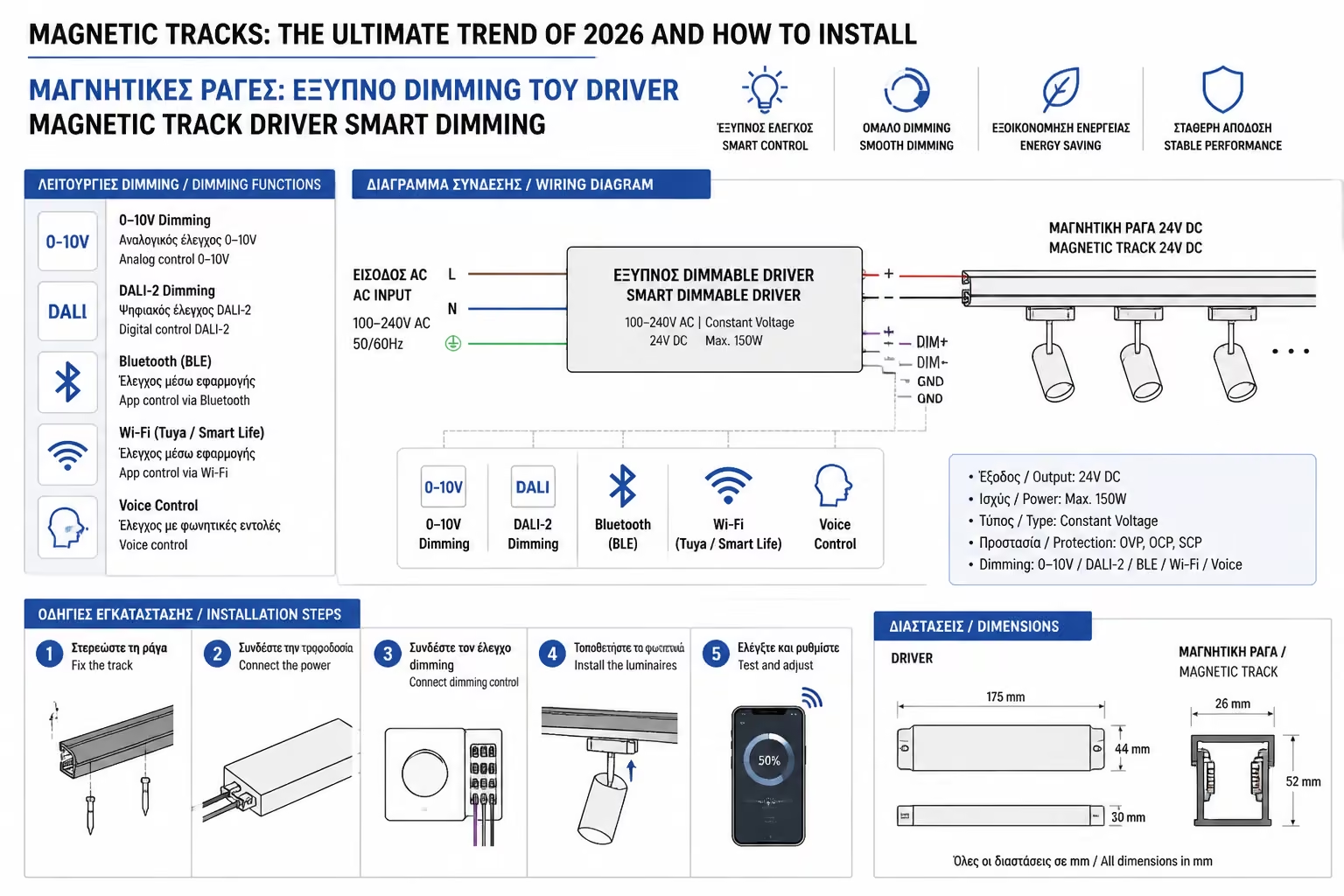
Smart Dimming
In modern 2026, magnetic tracks are not just On/Off. Almost all systems
support Dimming.
Through protocols such as DALI or through wireless Bluetooth systems
(such as Casambi or Zigbee), you can change the intensity from your
mobile, turn off individual spotlights while the others remain on
(independent control), or even change the color temperature (Tunable
White) according to your mood.
Summarizing
Magnetic rails are an investment that dramatically upgrades the
architectural value of a space. Treat them not as simple fixtures, but
as a permanent lighting "infrastructure". You build the frame
(rail) and over the years you can add, remove or upgrade your fixtures
with a simple flick of your hand.
Next Step: We've talked about the dramatic lighting we see, but what
about the lighting we "feel" without seeing its source? We
continue with the "king" of the atmosphere: Concealed Lighting
in Plasterboard: Design, dimensions of the "box" and correct
placement of the LED strip.