Color Temperature (Kelvin): How to choose between Warm (2700K), Natural
(4000K) and Cool (6000K) light per room
You may have bought the most expensive furniture, painted the walls the
best shades, and designed the perfect drywall "kuteles." But
if you choose the wrong bulb, all that effort will be ruined.
Light is not just "bright" or "low". It has color.
The color of light directly affects our psychology, our circadian rhythm
(sleep-wake cycle) and how the objects around us look. The wrong light
can make a cozy living room look like a hospital waiting room.
As lighting engineers and designers, we use the Kelvin (K) Scale to
measure this "temperature". Let's decipher what is written on
the lamp boxes and see which light suits each room of your home.
1. What is the Kelvin Scale?
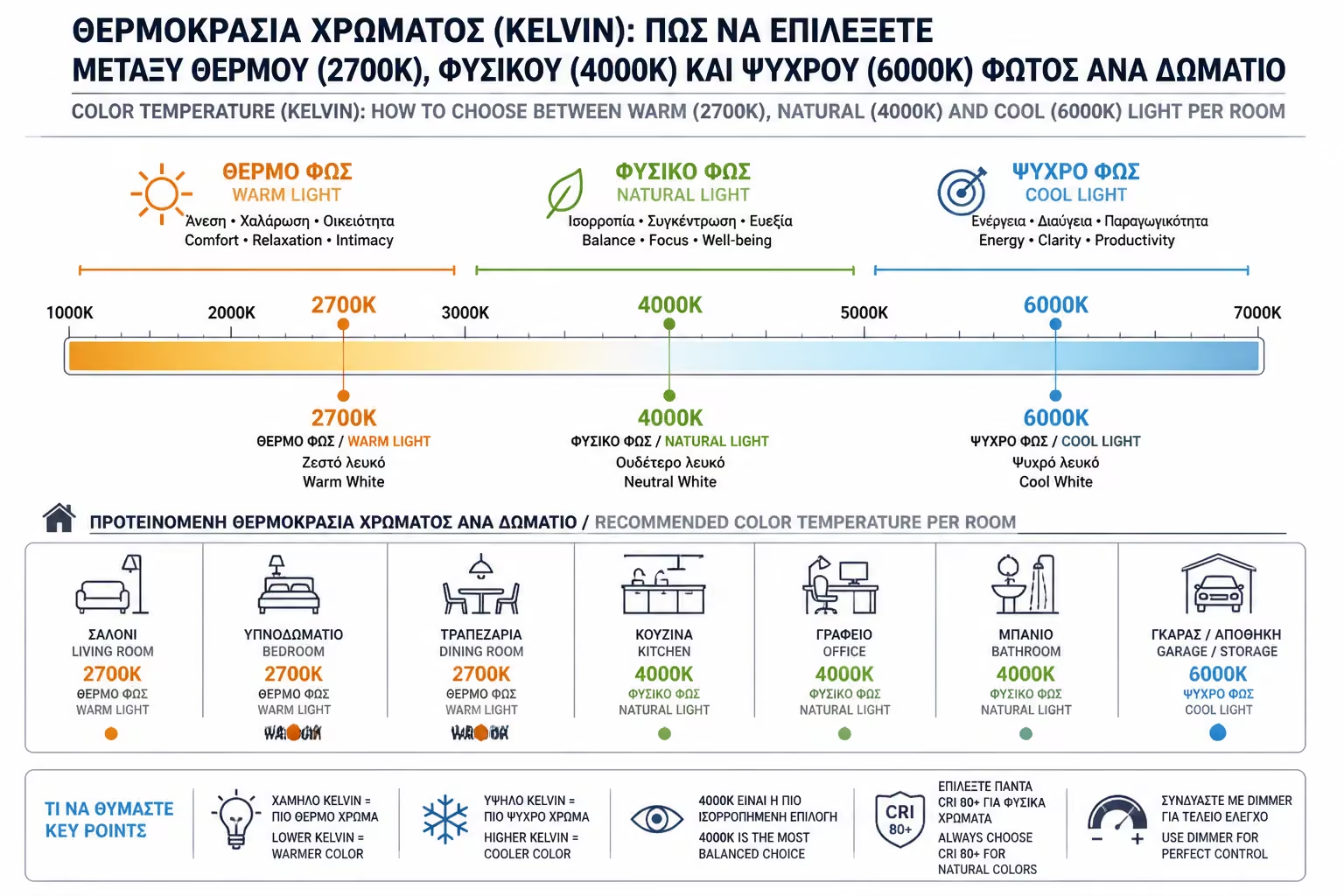
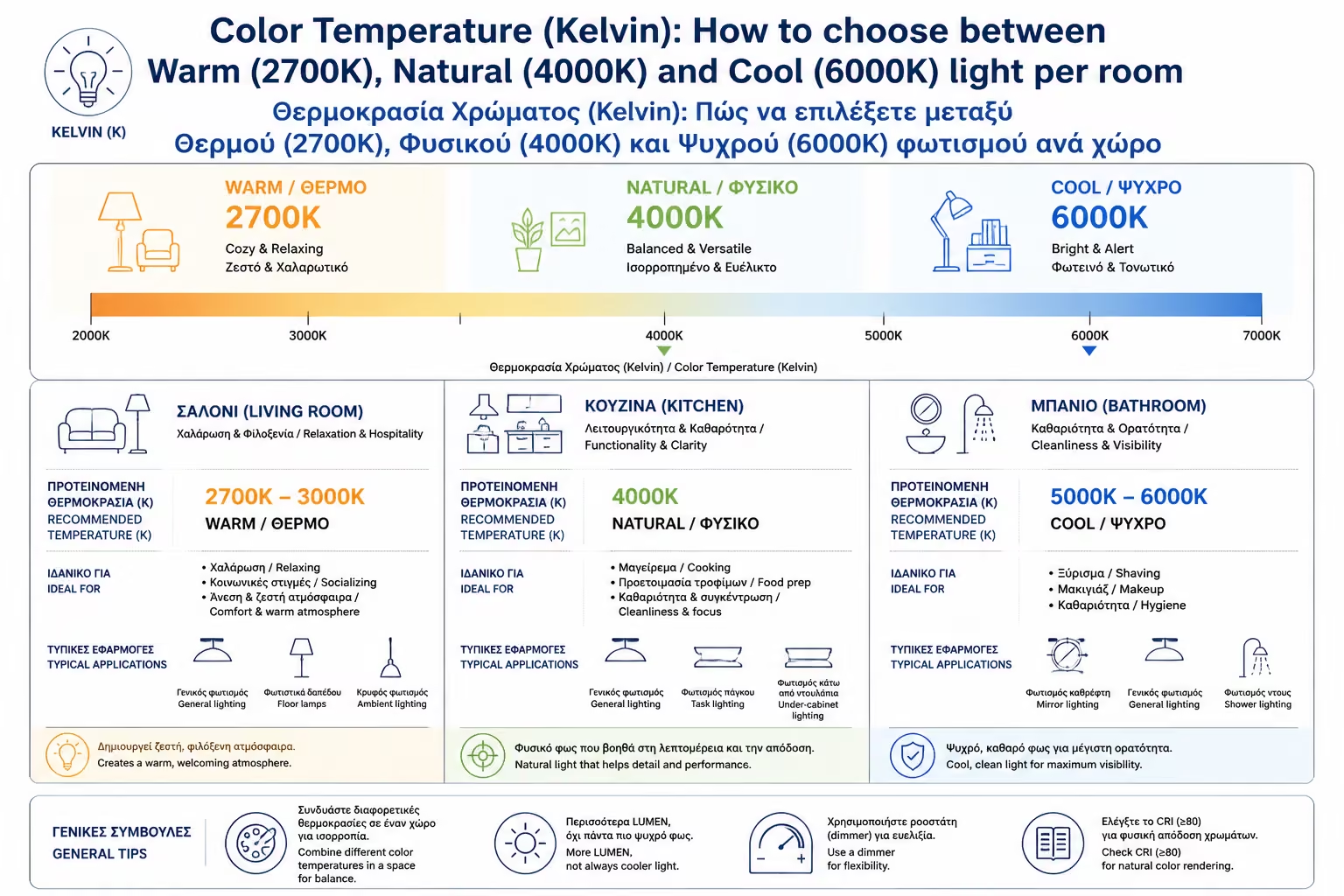
Color temperature is measured in degrees Kelvin (K). The lower the
number, the "warmer" (yellowish/orange) the light. The
higher the number, the "colder" (blue/white) it appears.
Let's break down the market into the three main categories you'll
encounter:
A. Warm White (2700K - 3000K)
It is the light that imitates the setting sun or the flame of a
candle. It's the classic light that the old incandescent bulbs gave
off. * Psychology: Creates a sense of warmth, relaxation and
hospitality. It helps the brain to calm down and prepare for sleep.
B. Natural White / Neutral / Natural White (4000K - 4500K)
It is a crystal clear, balanced white light. It doesn't
"yellow" at all, but it doesn't "blush" either.
* Psychology: Promotes alertness, cleanliness and attention to
detail. Brings out the true colors of objects (as seen under the
midday sun).
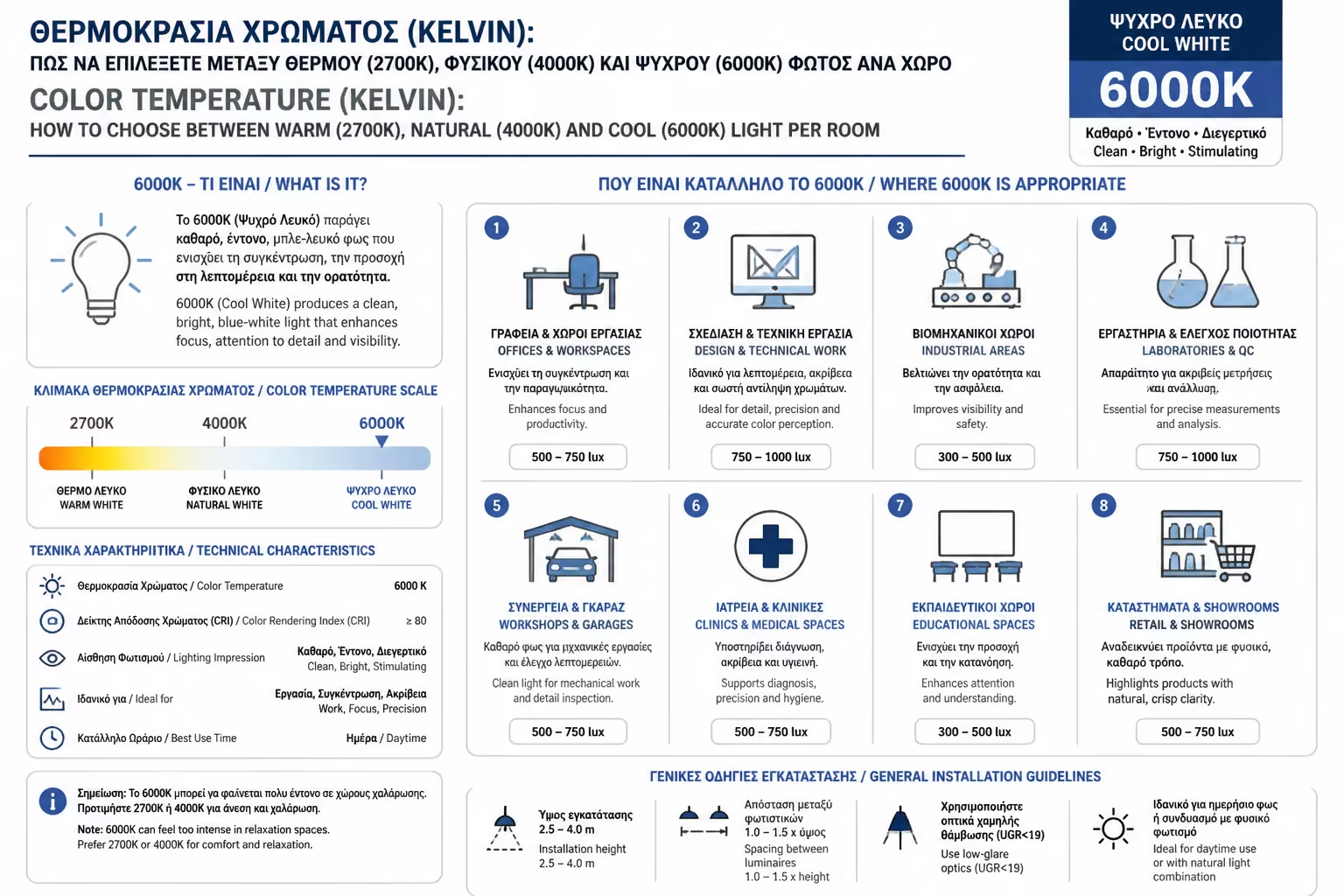
C. Cool White / Cool White (6000K - 6500K)
It is the hard, icy light that has a slight blue tint. * Psychology:
Creates huge contrast. It keeps the person fully alert, but
"freezes" the space and alters the colors, making the
rooms look sterile.
2. Guide by Room: Where do we put what?
The choice of Kelvin is intertwined with the use of each space:
Living Room & Bedroom (The Relaxation Zone)
Here we choose strictly Warm Light (2700K - 3000K). The living room
is a place to relax after work. Yellow light flatters skin,
"sweetens" fabrics and creates atmosphere. Especially in
the bedroom, cold light is prohibited, as it blocks the secretion of
melatonin (the sleep hormone).
Kitchen (The Home Laboratory)
In the kitchen we cut vegetables, check whether the meat is cooked
and read recipes. We need excellent visibility. The ideal choice is
Natural Light (4000K). It will make the counters look spotless and
the food appetizing, without altering their colors.
Bathroom (The Grooming Area)
The bathroom is divisive. For general lighting and the mirror (where
we paint or shave), Natural Light (4000K) is the best choice,
because it does not cast "yellow" shadows on the face. But
if you have hidden lighting around the bathtub for relaxing baths,
choose warm (3000K).
Office / Study Space
In order not to fall asleep while reading or working on the
computer, Natural Light (4000K) is the ultimate ally. Increases
productivity and reduces eye strain.
3. The "Golden" Rule you should never break
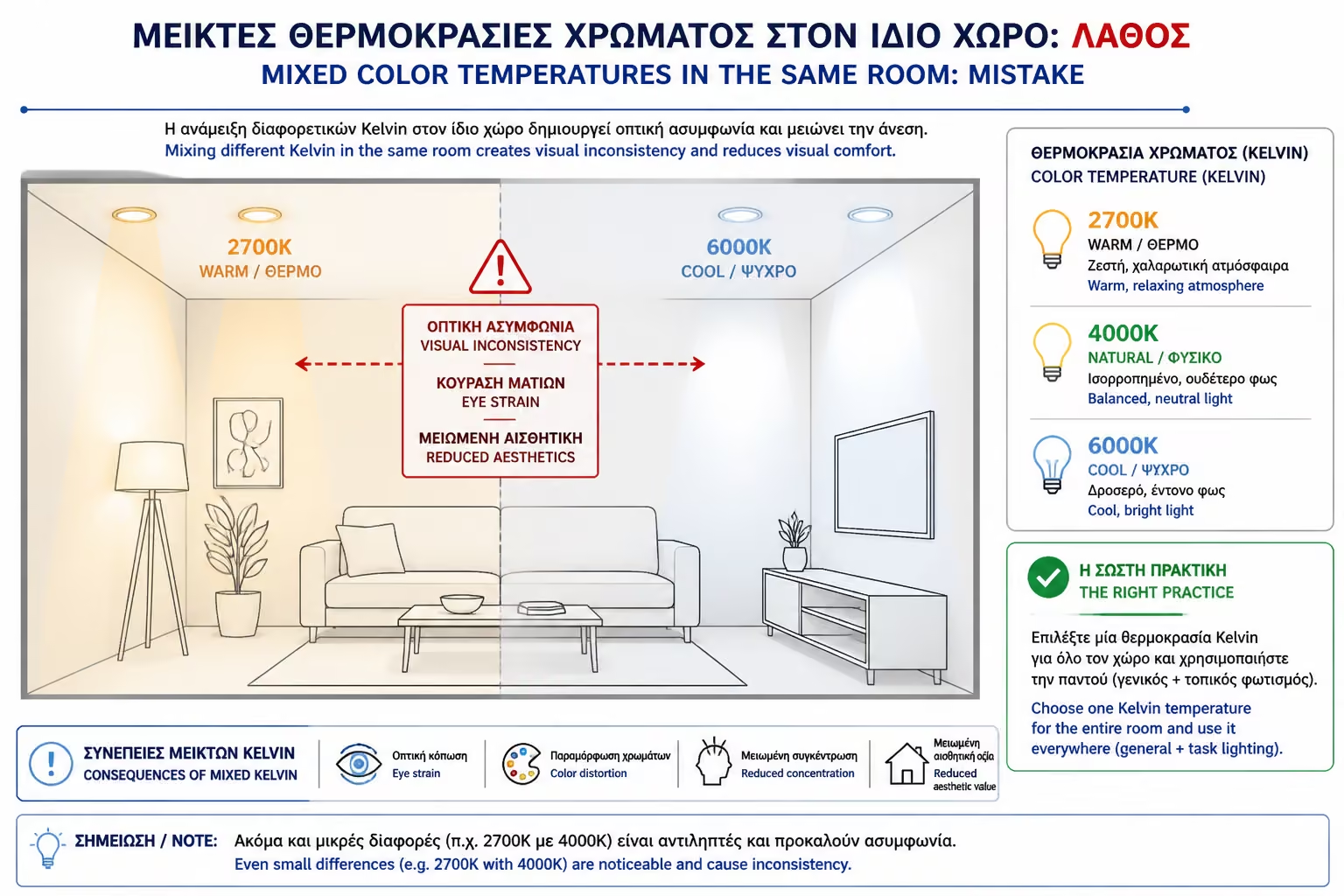
The biggest (and most common) aesthetic mistake you can make in a home
is to mix different color temperatures in the same space.
If you put warm lamps (3000K) in the central chandelier of the living
room, and the plasterboard spots above emit natural light (4000K), the
result will be visually chaotic. The brain gets confused and the space
looks cheap and uncoordinated.
Exception
If the kitchen (4000K) and the living room (3000K) are a single
space, try to "bridge" the difference using zones (eg only
the hidden kitchen lighting 4000K and all the rest 3000K, or
dimmable smart lights).
4. What about Cold Light (6000K)?
As engineers, our advice on cool white is simple: Keep it out of your
home. The 6000K only has a place in operating rooms, industrial
warehouses, parking lots (garages) and malls that want to keep people
on hyper-vigilance. In a dwelling, it makes people look pale and
destroys any trace of warmth.
Summarizing
Next time you're shopping for LED bulbs or strips, don't just look at
Watts (for consumption) or Lumens (for brightness). Look for the
"K" (Kelvin) symbol. Remember: 3000K for relaxation (Living
Room/Bedroom) and 4000K for work and cleaning (Kitchen/Bathroom/Office).
Next Step: After solving the issue of the right color of light, let's
see how to apply it to the most demanding area of the house. Continue
to our practical guide: Kitchen Lighting: How to properly light the
worktop without shadows (LED Strips & Spots).