
DALI Protocol (Digital Addressable Lighting Interface): The ultimate guide to intelligent control of professional lighting

Imagine a high-rise office building with 2,000 LED lights. How do you check them? If you use the traditional way (classic switches and relays on the panel), you will need hundreds of switches on the walls, kilometers of complex wiring and... a map to remember which switch turns on which room. And if tomorrow you decide to change the layout (for example, join two offices into one big one), you will have to strip the wires again to change the lines.

In modern professional lighting, analog control is dead. This is where digital communication reigns supreme. And the universal "language" of this communication is called DALI.

As engineers, we consider DALI (and now DALI-2) the ultimate backbone of any "smart" building (Smart Building). Let's see in simple terms what this protocol is, how it is wired and why it has superseded every other technology.

1. What exactly is DALI?

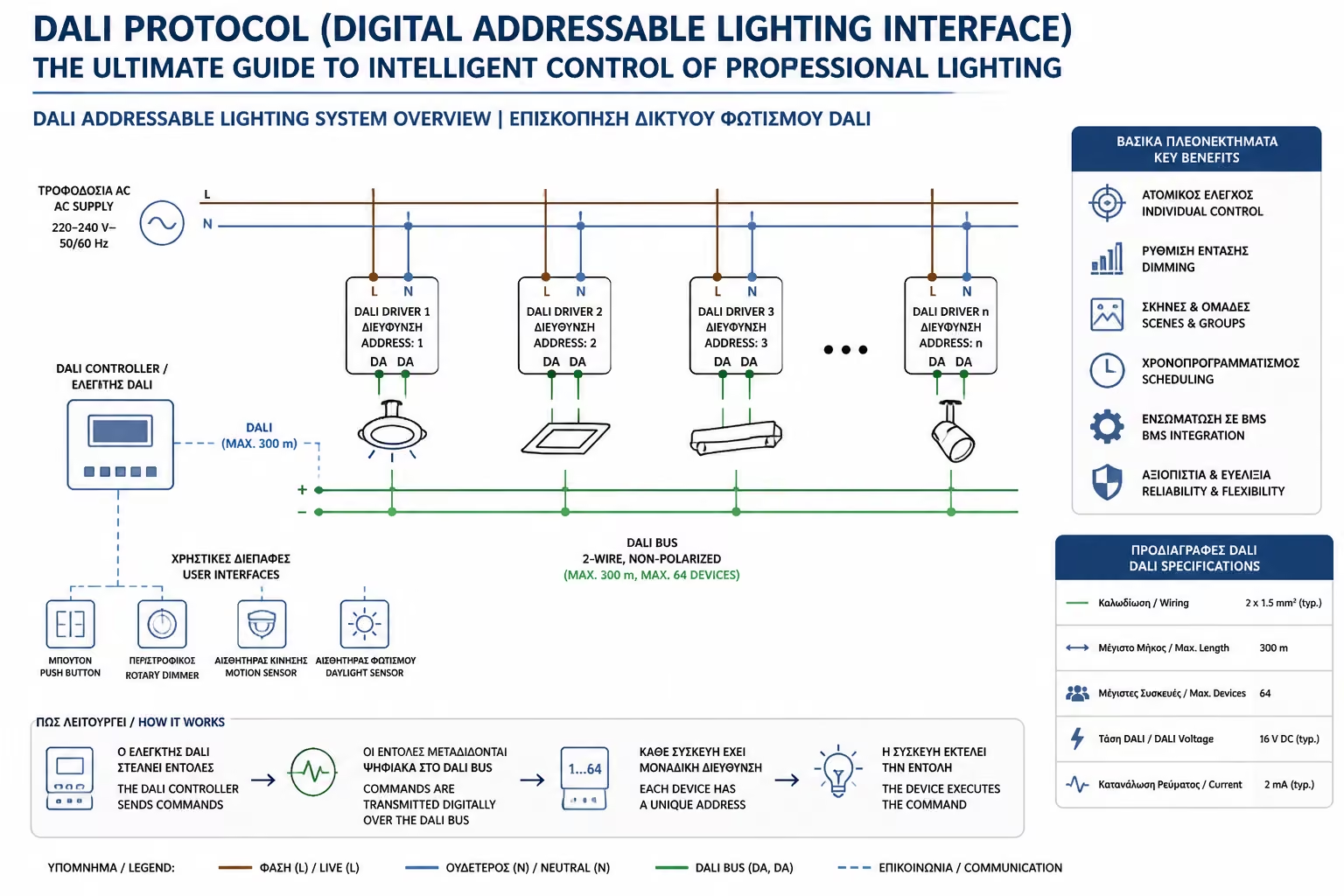
The initials stand for Digital Addressable Lighting Interface. Not a brand, not a manufacturer. It is an international, open communication standard (protocol). This means that you can buy lamps from Philips, switches from Legrand and sensors from Osram, and as long as they all say "DALI" on them, they will "speak" the same language and work together perfectly.

The key word here is Addressable. Every lamp, every dimmer and every sensor that enters the DALI network gets a unique electronic address (just like the IP address your computer gets on the Internet). The central "brain" of the building knows exactly which light fixture No. 45 is and can "talk" to it directly.

Illustration for 1. What exactly is DALI?

2. How is the wiring done (The 2-wire miracle)

Illustration for 2. How is the wiring done (The 2-wire miracle)

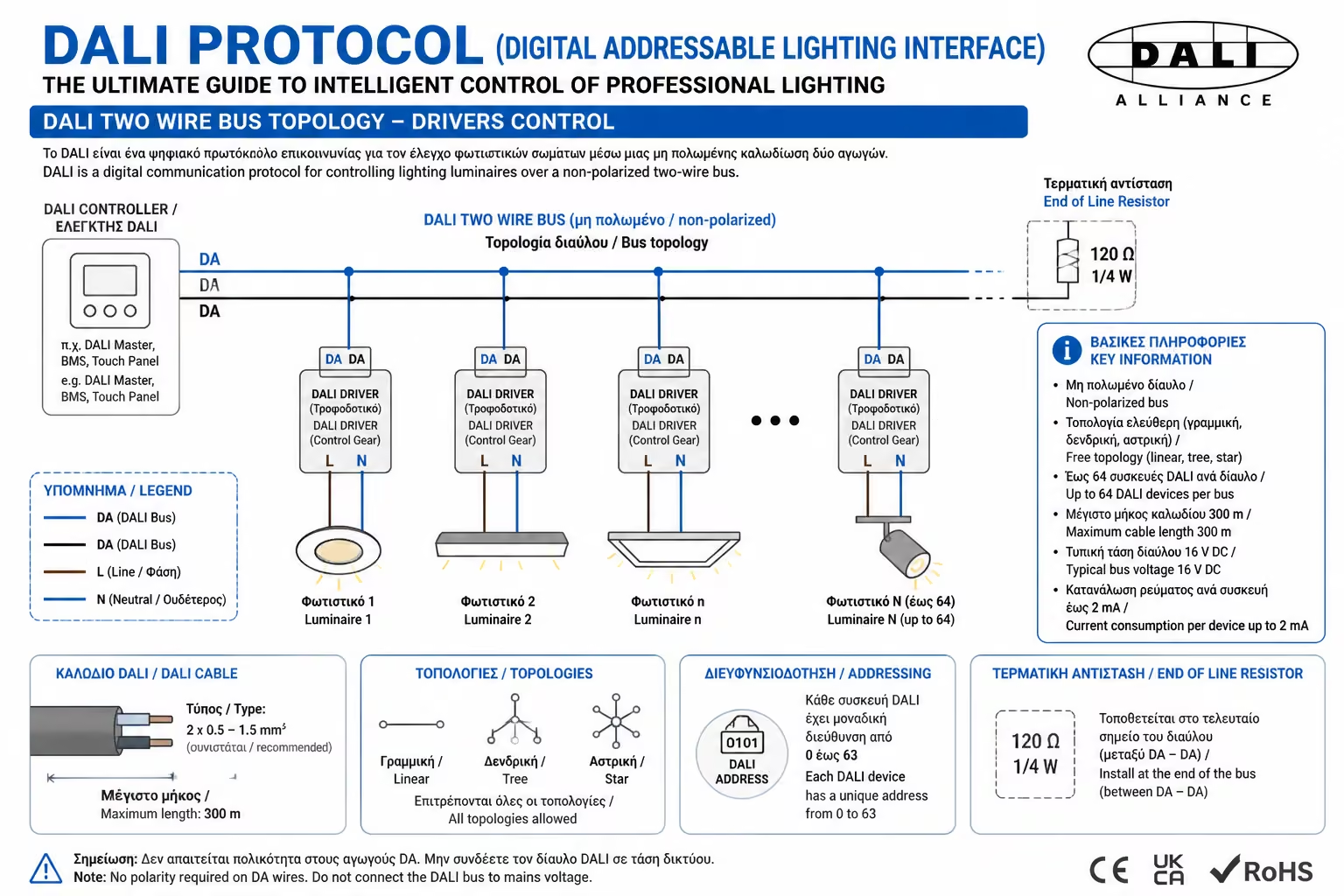
The most amazing thing about DALI is its simplicity in installation. In classical lighting, to dim the lights or to divide them into groups, you wanted separate power lines from the panel for each group.

In DALI, all the luminaires of a floor can be connected to the same power line (230V). All the electrician adds is an extra pair of thin communication cables (DALI - BUS cable), which goes from lamp to lamp (Daisy-chain connection, star or tree, it doesn't matter!).

  • These two wires don't even have polarity (plus/minus). The electrician cannot make a mistake in the connection.
  • Through these two wires, digital messages (0 and 1) travel that tell the lights what to do.

3. The 4 Huge Advantages of DALI

Why is your engineer insisting you put DALI in your new shop or office?

Illustration for 3. The 4 Huge Advantages of DALI

A. Absolute Flexibility (Grouping via Software)

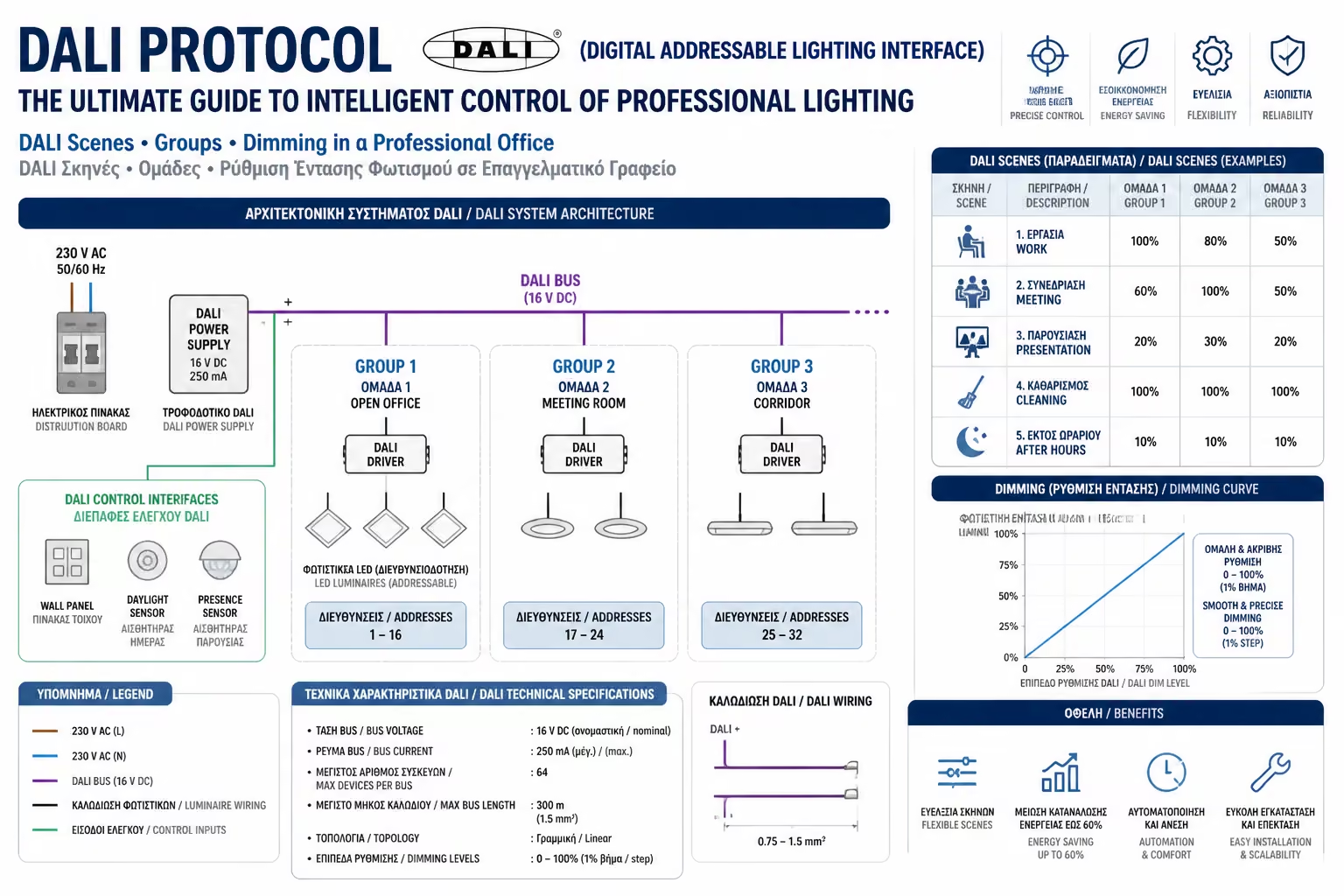
Once the installation is complete, you never have to mess with a cable again. Through the computer, you can say, "Lights No. 1, 2, and 3 will belong to the 'Manager's Office' Group and be turned on by this switch." If next year you expand the office, you simply enter the program and add lamp No. 4 to the group, with one click.
B. Two-way Communication (Fault Feedback)

The old systems just sent power. DALI asks. The building manager sees on his screen exactly what is happening: "The light fixture No. 85 on the 3rd floor has burned out. The light fixture No. 12 on the ground floor has overheated." He doesn't have to wait for the employee to complain to send the maintenance guy.

C. Perfect Dimming & Scenarios

DALI allows absolutely smooth, digital dimming from 1% to 100%, without flickering. You can make "Scenarios" (Scenes). * Pressing the "Presentation" button in the meeting room, the lights above the projector turn off, the spots on the board drop to 20% and the blinds (if integrated into the same smart system) close automatically.

D. Harvest Lighting (Collaboration with the Sun)

Combined with DALI light sensors, the lights next to the windows automatically dim when it's sunny, while the lights in the back of the room stay strong. The light level in the office remains absolutely constant throughout the day, and the power savings (up to 60%) pay off the system quickly.

4. DALI vs KNX: What's the difference?

Illustration for 4. DALI vs KNX: What's the difference?

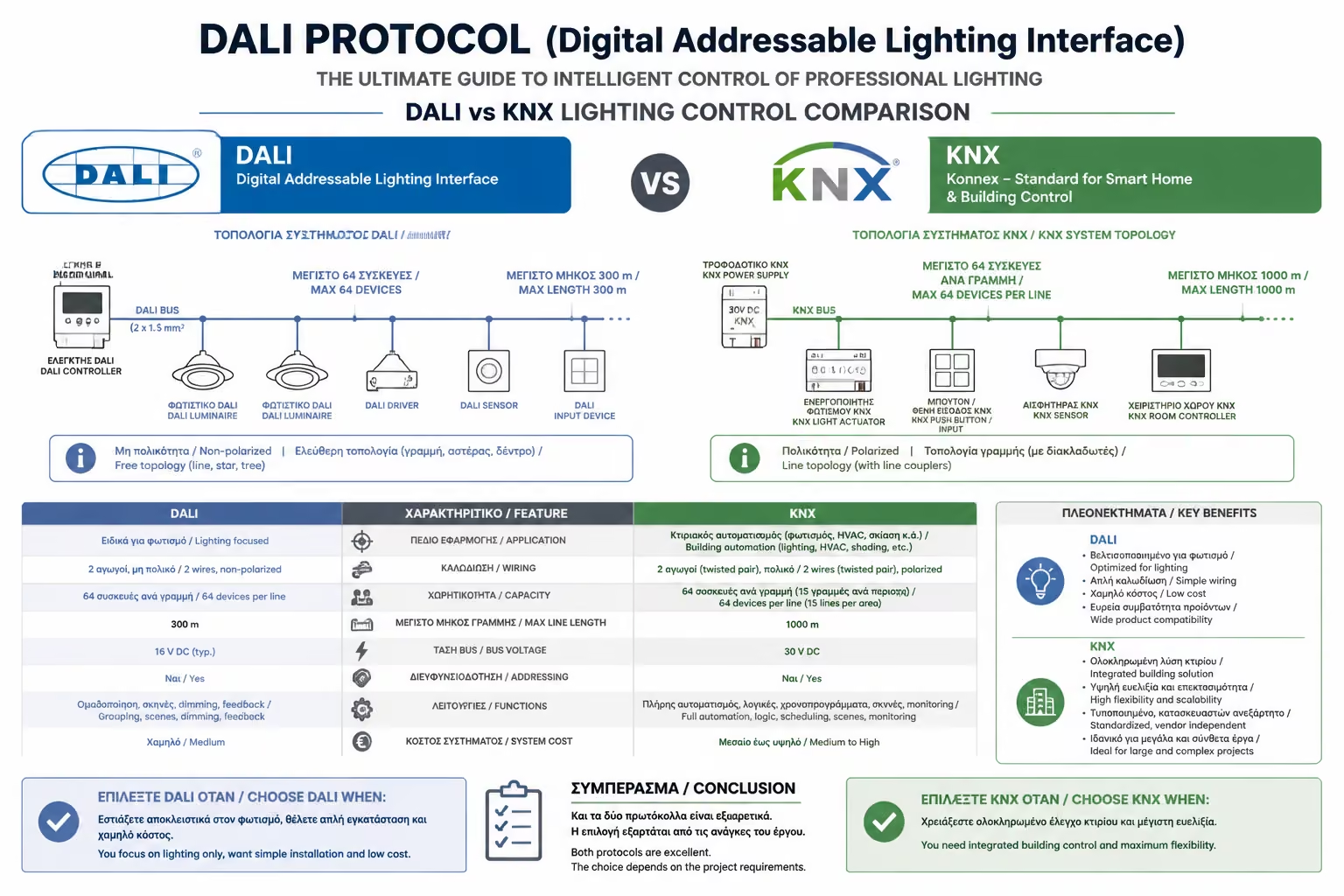
If you've dealt with "smart" buildings, you've definitely heard of KNX. Do they compete with each other? The answer is no, they work perfectly together!

  • DALI is the ultimate specialist "wizard" just for lighting.
  • KNX is the "Manager" of the entire building (manages air conditioning, heating, alarms, roller shutters).
  • The usual practice in large projects is to use DALI for lighting (because it is cheaper and specialized for lamps) and to connect it (via a component called DALI-KNX Gateway) to the central KNX system of the building. So the alarm (KNX) can "tell" the lights (DALI) to turn off all when you lock the building.

Summarizing

DALI is not a luxury for the few; it is the norm of 2026 for any serious business premises. Yes, DALI driver lights are slightly more expensive than simple ones, and you will need a programmer (System Integrator) to set up the software the first time. But energy savings, reduced maintenance costs and ultimate flexibility make it the only viable option for the future of your business.

Next Step: We solved how to control the lights. Now, if you have a store, a storefront or a restaurant, the goal of lighting is not just to see, but... to sell! Continue to the next guide: Retail Lighting & Color Rendering Index (CRI): How the right lighting increases sales (CRI > 90).

Related Articles

Preview