Security Floodlights with Motion Detector (PIR): Correct placement,
sensitivity and range adjustment
A dark front yard, secluded backyard or dark garage is an open
invitation to unwanted visitors. Home security doesn't start with the
door lock, but with the light. The sudden, blinding flash of a headlight
is the number one deterrent for any would-be burglar, while also helping
you park or find your keys with ease.
The technology that "drives" these projectors is called PIR
(Passive Infrared). However, misplacing and adjusting them often results
in them turning on every time the wind blows or a stray cat walks by,
annoying you and your neighbors.
As engineers, let's see how the "eye" of these devices works
and how to set them up for maximum reliability.
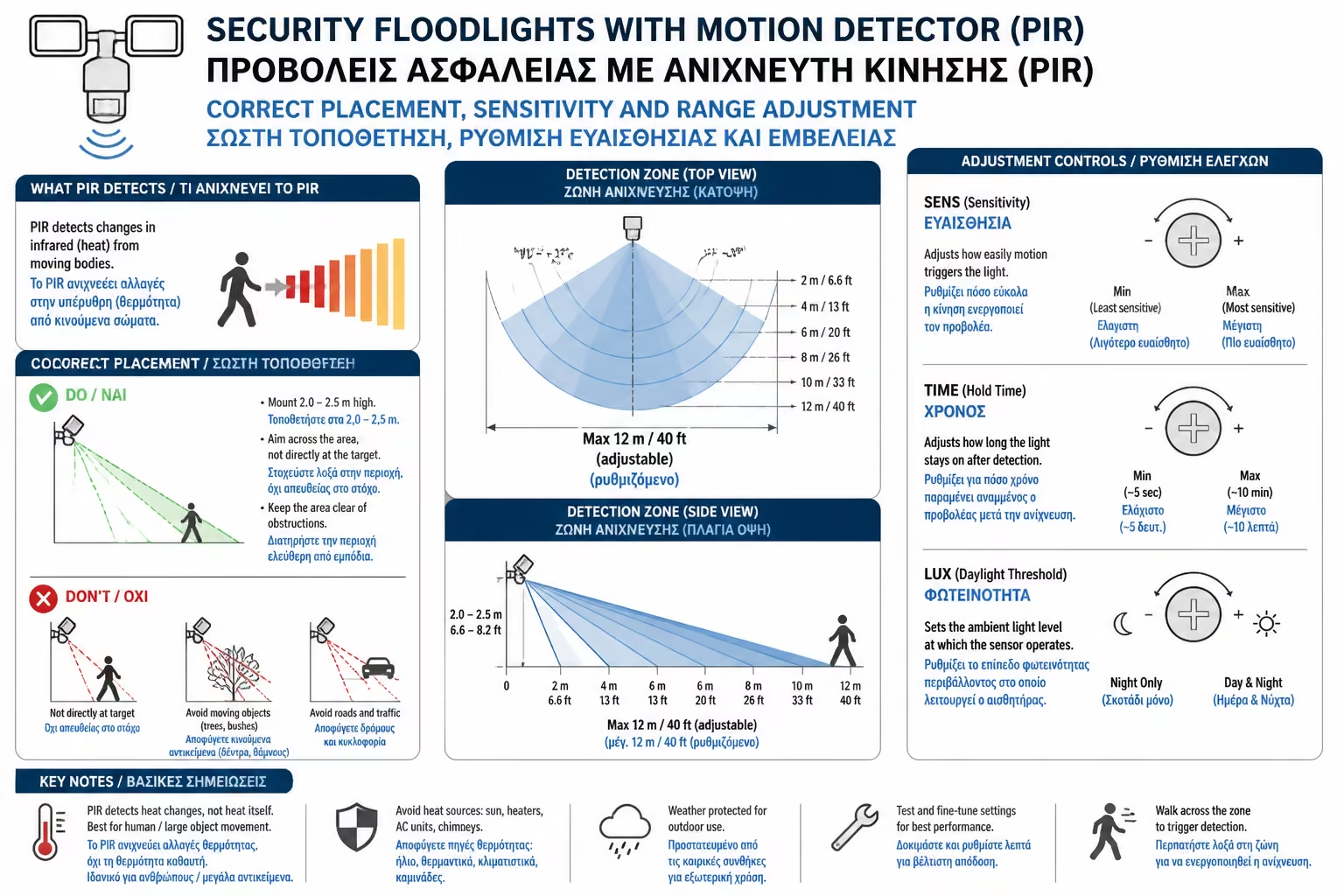
1. How the PIR sensor works (It's not a camera!)
The biggest mistake is to think that the detector "sees" the
movement like our eyes. In fact, the PIR sensor is "blind"
to light. It only "sees" heat.
Detects infrared radiation emitted by warm bodies (people, animals,
car engines). When a warm body passes in front of the sensor (which
"reads" the colder ambient temperature), the sudden
temperature change activates the switch and the light turns on.
2. The Art of Placement: Where and How to Screw Him
80% of safety light problems are due to incorrect installation.
The Rule of Perpendicular Intersection (Important!)
PIR sensors are much more sensitive when a body crosses their field
of view (from left to right or vice versa). They are less sensitive
if you walk in a straight line directly on them. Therefore, do not
put the searchlight in the straight line of the corridor, but on the
side wall, so that the attacker "cuts" its beam.
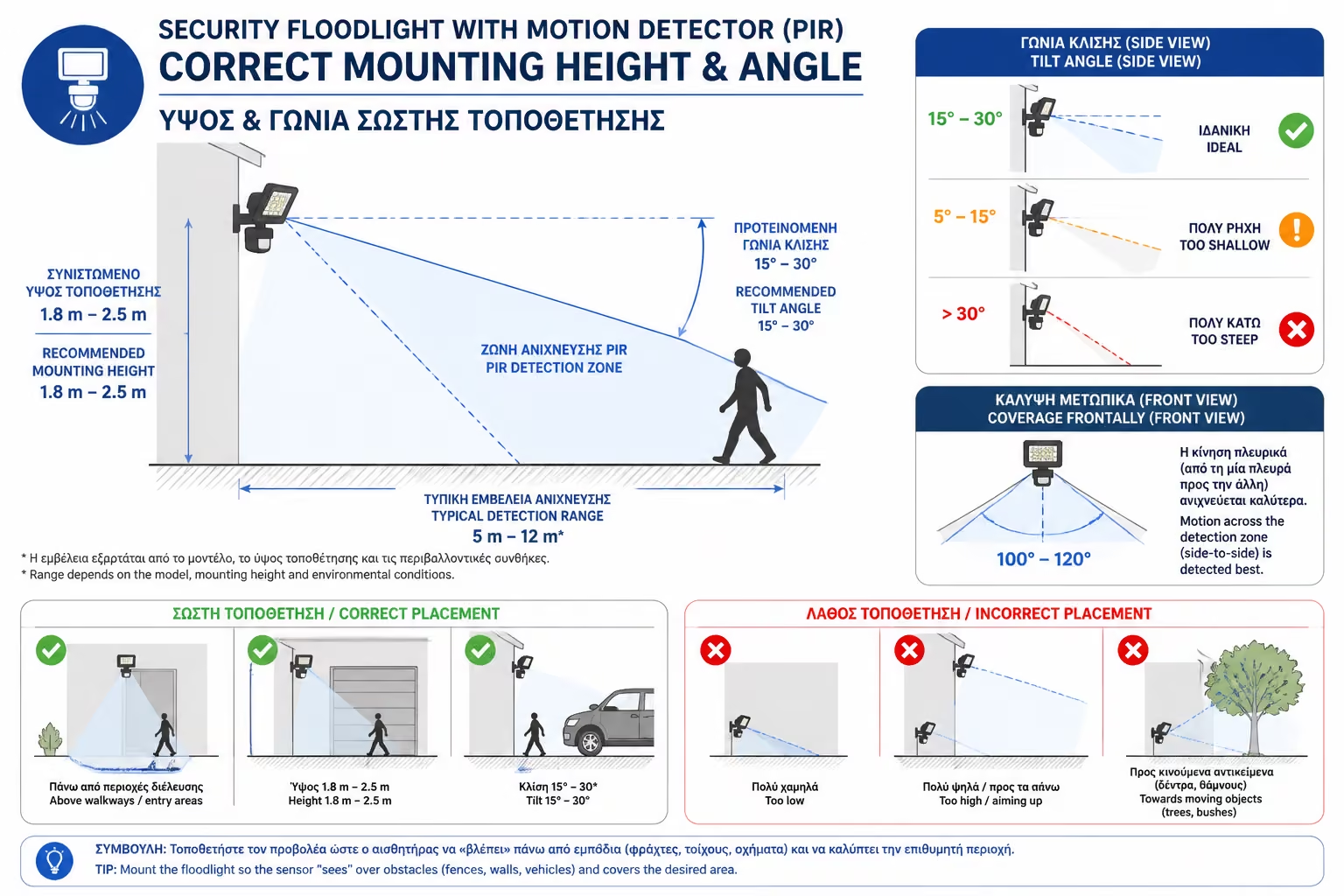
The Ideal Height
They must be placed at a height of 2.5 to 3 meters from the ground.
If you put it too low, someone can easily break it or cover it, and
it will constantly be lit by small animals. If you put it too high
(eg on the 2nd floor), the sensor loses its sensitivity and may not
"catch" movement on the ground.
The Slope
The projector should point slightly downwards (about 30-45 degrees).
If he is looking completely straight ahead, he will blind passing
drivers and "catch" movements from the opposite road.
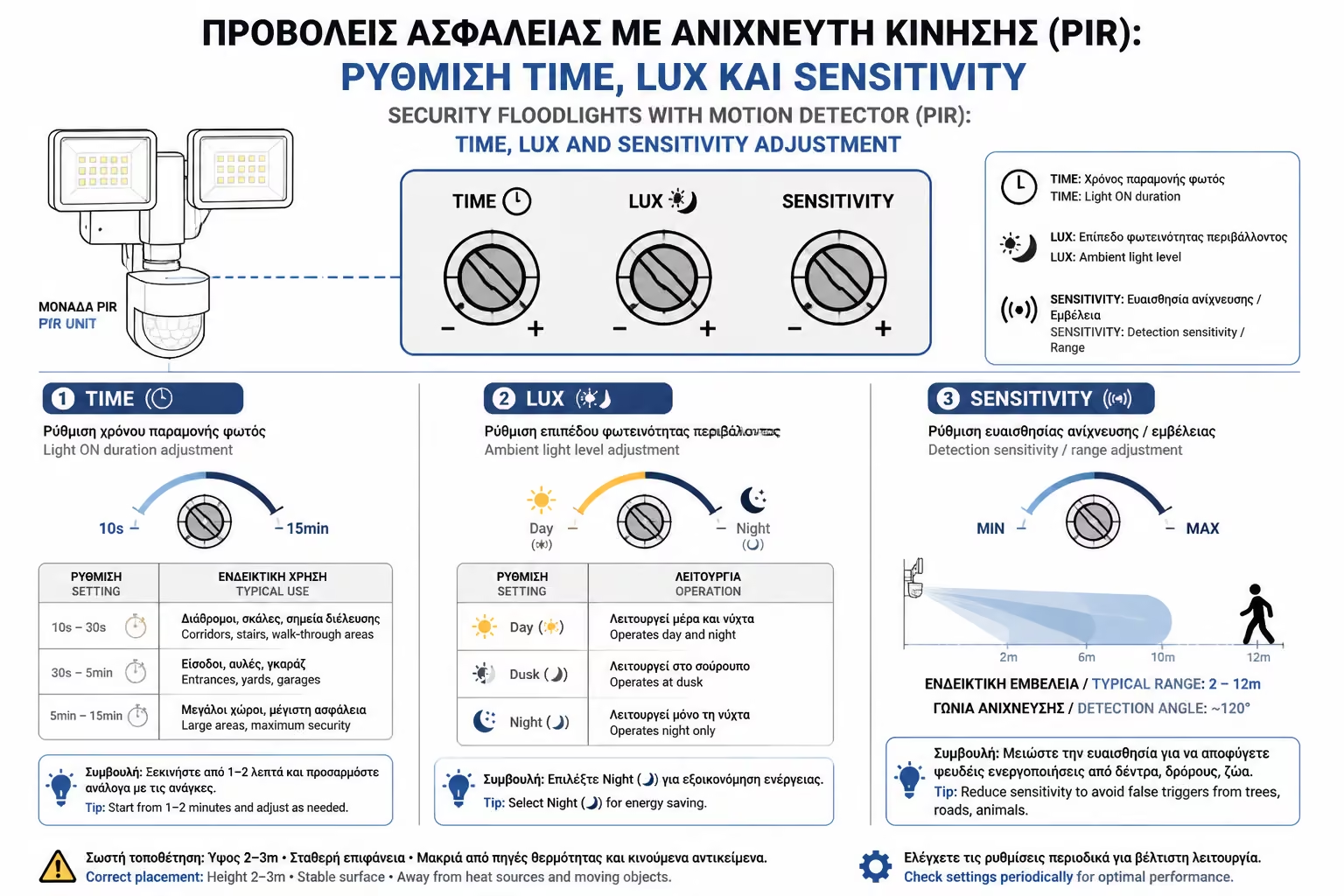
3. The 3 Critical Settings (The Buttons Below)
On the bottom of the sensor (the little plastic dome), you'll usually
find 3 small rotary switches. Getting them right makes all the
difference:
A. LUX (Day / Night Switch)
It has a sign with "Sun" and one with "Moon".
This sets how dark it must be outside for the projector to turn on.
If you leave it on "Sun", the headlight will turn on
whenever you pass, even at 12:00 noon (wasting power). The Right
Setting: Turn it to the "Moon". Test it at dusk, turning
it slowly until it lights up, so you can be sure it only works when
you really need light.
B. SENS (Sensitivity - Sensitivity / Range)
Adjusts how far (or how much heat volume) the sensor will react to.
If you have it at max (+), it can be lit by a cat or the hot hood of
a car passing 10 meters away. The Right Setup: Start in the middle.
If you see stray lights, lower the sensitivity (-). If you have to
get to 1 meter for it to "see" you, increase it.
C. TIME
Determines how long the spotlight stays on after motion stops. * The
Right Setting: For safety purposes and to get to the door, 1 to 3
minutes is the ideal time. Anything above that will just annoy your
neighbors if accidentally turned on in the middle of the night.
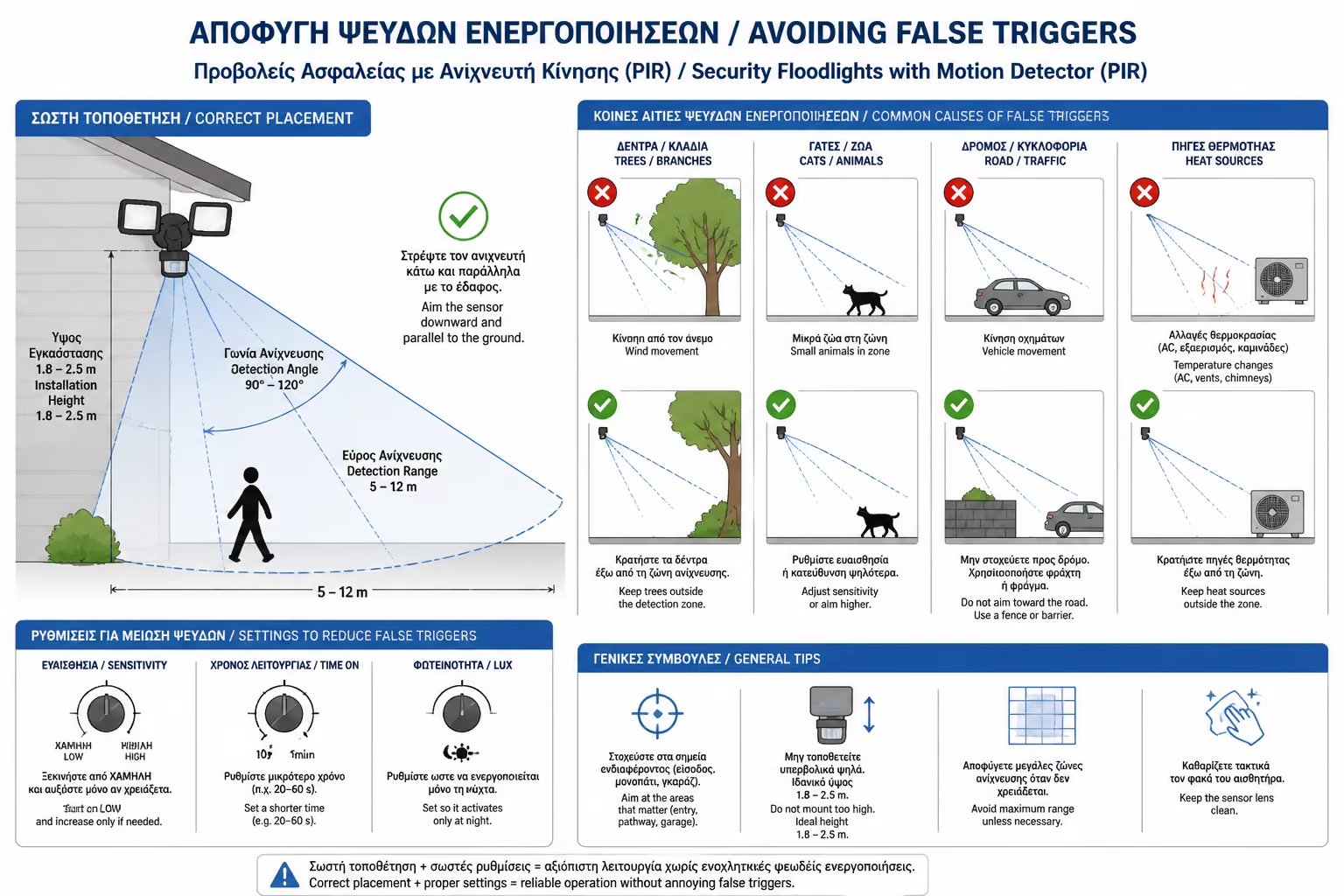
4. What to avoid (Why the projector "goes crazy")
Since, as we said, the PIR reads temperatures, there are three things
you need to keep out of its sight:
Outdoor Air Conditioning (A/C) units or vents: The sudden surge of
hot air from the A/C fan will trigger the sensor.
Chimneys and Boilers: The exhaust gases from an oil/gas boiler are
hot clouds that "trick" the system.
Tree Branches: Yes, trees have no body temperature, but a large leaf
violently shaken by the wind can create momentary changes in the
background temperature (or reflect the sun during the day, confusing
the light sensor).
Summarizing
An LED floodlight with a motion sensor (typically 20W to 50W for home
use) costs a few euros, but offers enormous peace of mind. Choose
strictly IP65 waterproofing, screw it up in a strategic spot so it
"cuts" the access path, and spend 5 minutes one afternoon to
"play" with the LUX and SENS settings.
Next Step: The traffic light is great for safety. But what about the
architectural lighting of the garden and facade, which we want to stay
on all night to highlight our house? No need to flip switches! Continue
to our guide: Photocells (Day/Night Switches): How to make garden lights
turn on by themselves at sunset.