Photocells (Day/Night Switches): How to Turn On Your Garden Lights Alone
at Sunset
We've seen how motion detectors (PIRs) turn on lights when someone
approaches. But what about atmospheric, architectural lighting? You want
wall sconces, tree lights and pergola lights to stay on all night to
highlight your home.
Remembering to turn the switch on every dusk and turn it off every
morning before leaving for work is a chore that usually results in
leaving the lights on all day, wasting electricity.
The solution to this problem is the oldest, most reliable and cheapest
form of home automation: the Photocell or Twilight Switch. As engineers,
we consider it a "must-have" for any outdoor space. Let's see
how it works and, most importantly, how to avoid the annoying
installation error that makes your lights...flash like a disco.
1. What is it and how does it work?
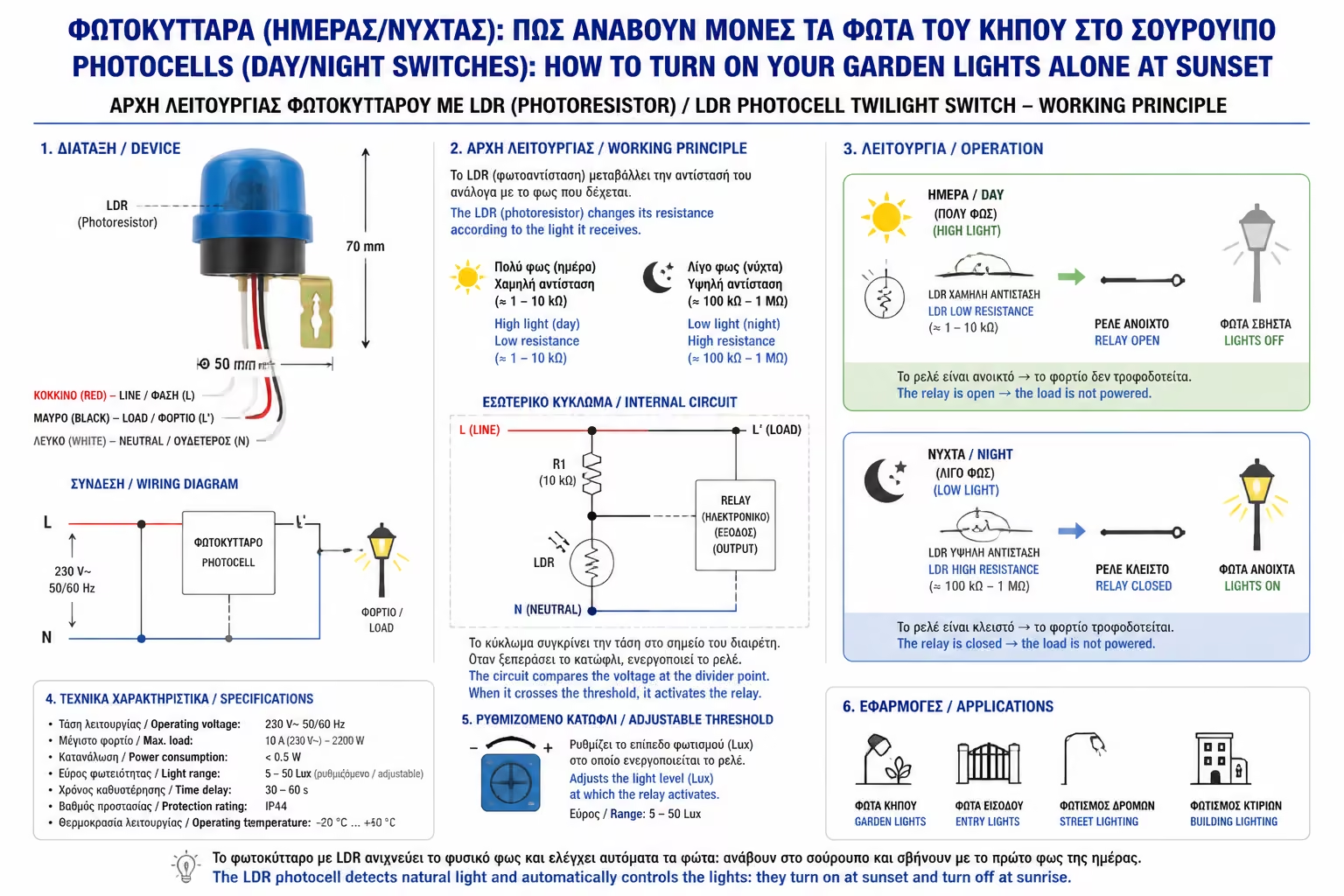
At the heart of a photocell is a small electronic resistor called an
LDR (Light Dependent Resistor).
Its logic is shockingly simple: The "eye" of the sensor
continuously measures the ambient light (in LUX units). When the sun
goes down and the light drops below a certain threshold, the board
gives a command to the internal relay. A "click" is heard
and the circuit closes, providing power to your garden lights. At
dawn, as soon as the "eye" sees the first rays of the sun,
it does the opposite and extinguishes them.
2. Why a Photocell and not a simple Timer?
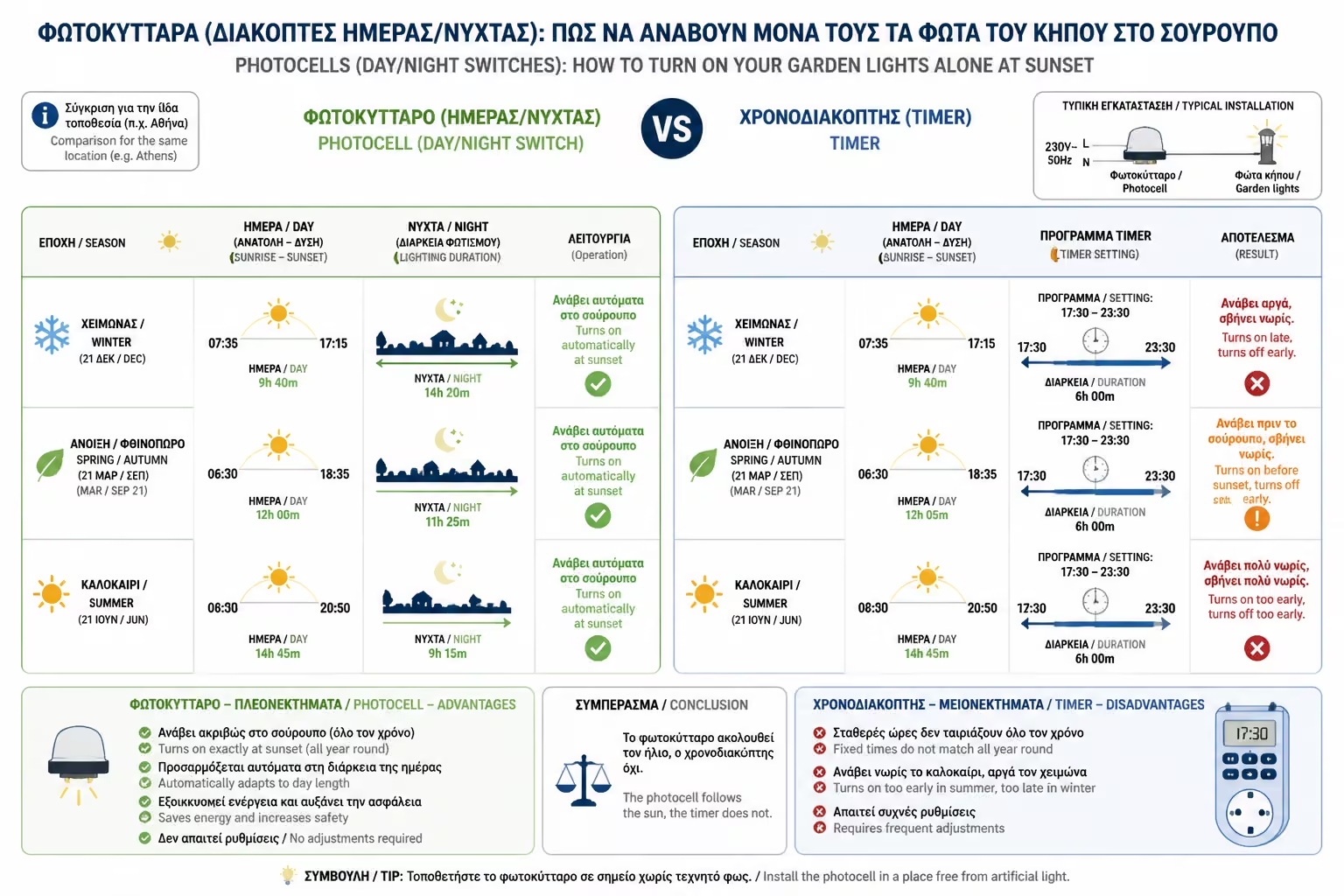
Many customers ask us, "Why not just put a timer on the panel to
turn on the lights every day at 7pm?"
The answer lies in astronomy! In Greece, in December it gets dark at
17:15, while in July it gets dark at 21:00. If you have a timer,
you'll need to open your panel every 2 weeks to reset the times,
otherwise in the summer your lights will be burning power for 2 hours
while the sun is shining. The photocell, on the other hand, is
"set-and-forget". It faithfully follows nature and the
changes of the seasons without any intervention of yours.
3. The 3 Types of Installation
Depending on your home wiring, there are 3 ways to incorporate this
automation:
Standalone External Photocell (Wall): It is a small plastic
"mushroom" (IP44 or IP65) that is screwed high on an
external wall. The current first passes through it, and from there
it is shared across the line with the garden lights.
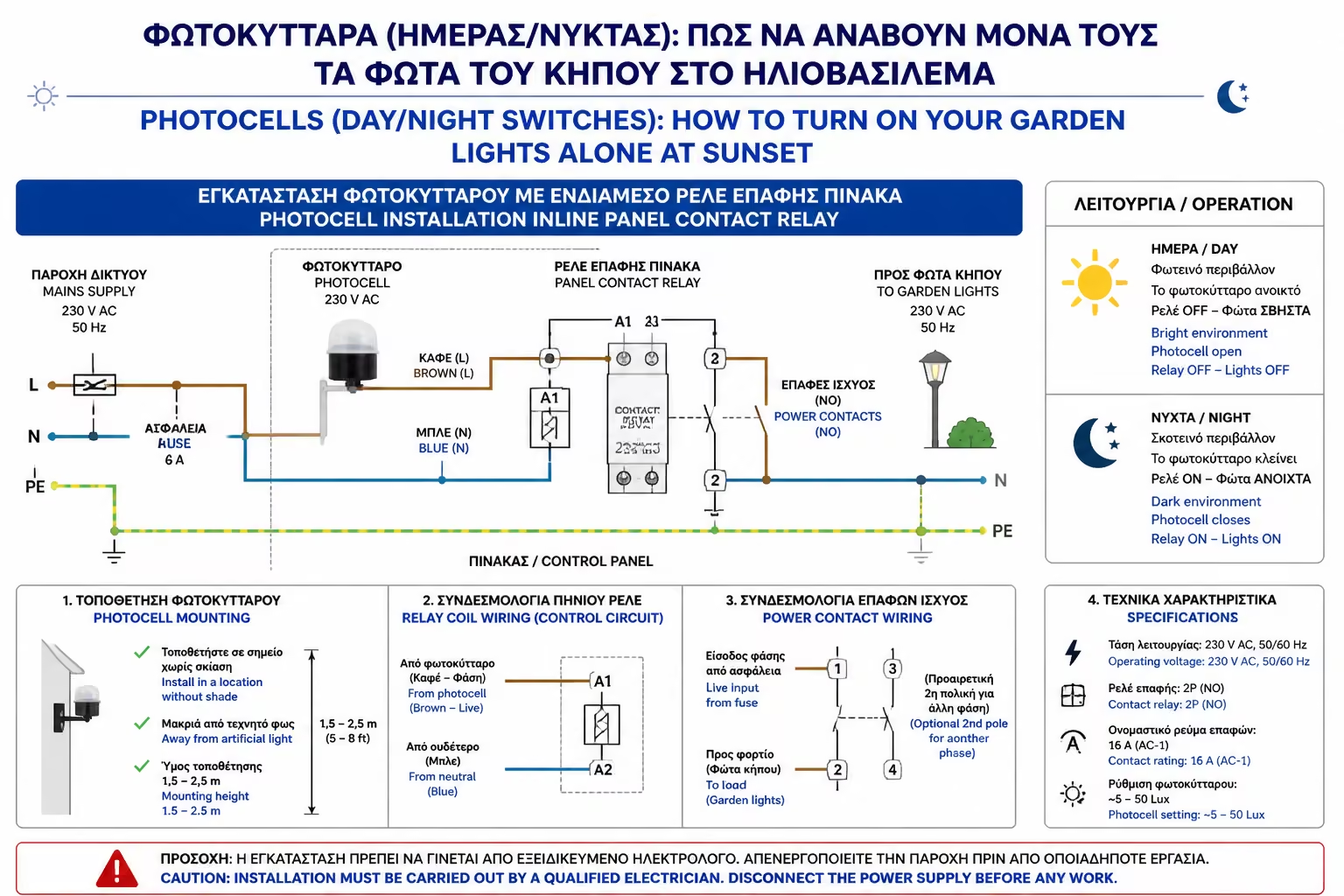
Ragas Photocell (The professional solution): The relay (the brain)
goes inside your central electrical panel. From there, a very thin
cable leaves that goes out on the wall and ends in a tiny,
absolutely discreet "eye". It's the "cleanest"
and safest solution if you're building now.
Lamps with a built-in Photocell: If you don't want to bother with
wires at all, there are lamps on the market (eg E27) that have their
own tiny eye built into them. You screw them into the light fixture,
leave the wall switch permanently on, and each bulb decides for
itself when to turn on.
4. The "Flashing" Fallacy (Why do lights flash?)
This is where 90% of photocell installation failures lie.
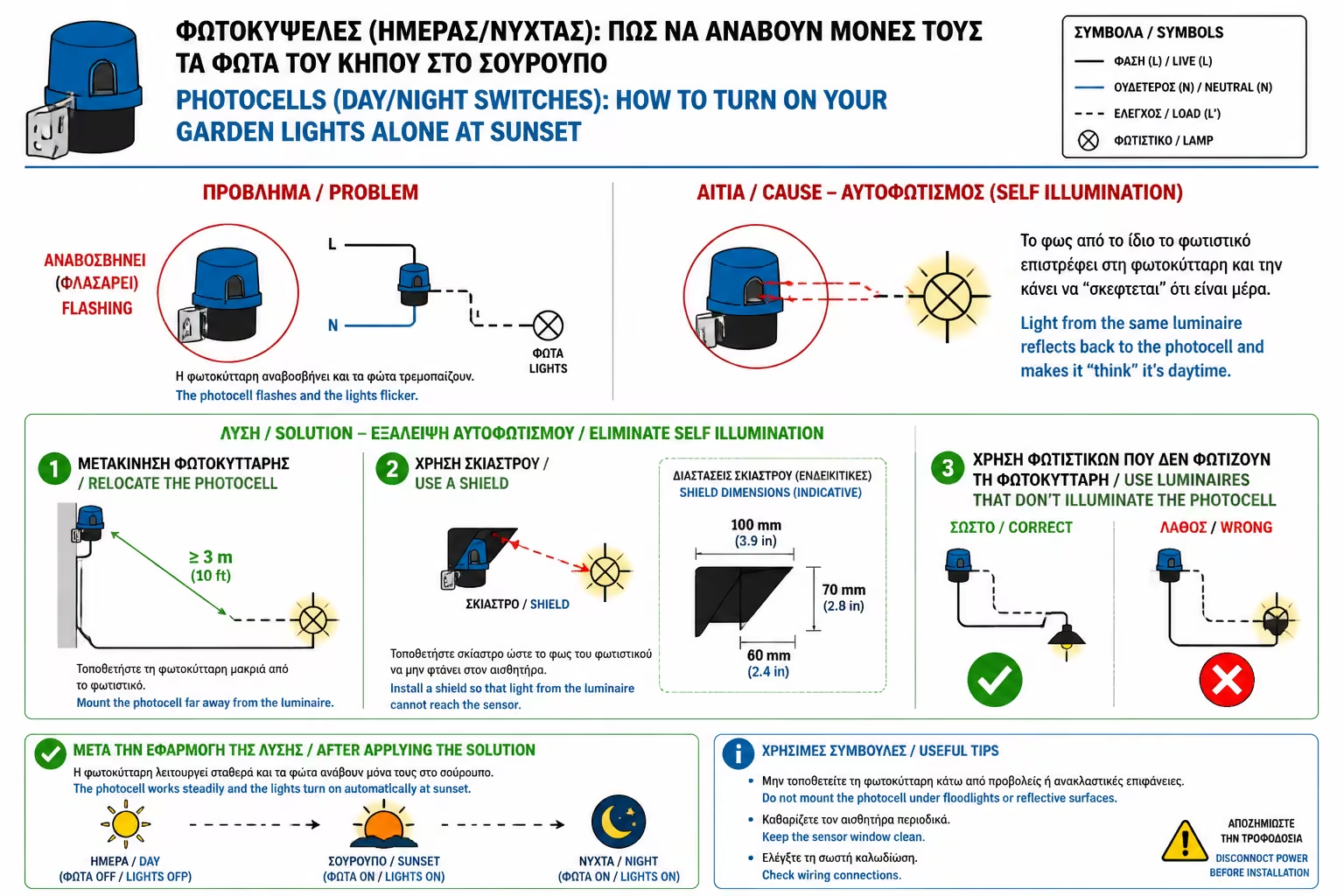
Imagine the following scenario: You place the photocell directly under
the outdoor sconce (or opposite a spotlight).
It's getting dark. The photocell understands this and turns on the
lamp.
The sconce lights up and bathes the "eye" of the photocell
with light.
The photocell "goes blind", thinks it's dawn (!), and...
turns off the sconce.
The sconce goes out. It's getting dark again. The photocell
understands that it is dark and turns it back on.
This feedback loop creates a nightmarish "strobing" that
will burn out your bulbs in no time.
The Golden Rule of Positioning
The photocell should face the natural sky light (ideally North or
East so that the direct midday sun doesn't hit it and
"bake" its plastic) and should NEVER see the light from
the lamps it controls! Also, keep it away from street lights (street
light poles), as it will get confused.
5. The Sensitivity Adjustment (LUX)
Almost all photocells have a small adjustment dial that says LUX
(usually 5 to 50 LUX).
If you set it too high, your lights will turn on at 4:00 PM with heavy
cloud cover.
Turn the dial to the lowest point, wait for dusk (just when you think
you need light), and turn it slowly until you hear the relay
"click". Your system is now perfectly calibrated.
Summarizing
The photocell is an inexpensive (from €15 to €40) but key upgrade.
Position it properly so it doesn't self-blind, clean it with a cloth
once a year (because dust blocks the peephole and makes it light up
sooner), and enjoy a garden that magically comes to life every night,
without ever touching a switch again.
Next Step: Now that our system is turning itself on, it's time to see
what exactly is turning on. How do we place the fixtures to make a
simple plastered or stone wall look like a work of art? Continue to our
technical guide: Architectural Up-lighting & Down-lighting:
Techniques to highlight stone or wall texture.