Low Cost
It is the most mature and inexpensive technology on the market.
You open Pinterest or Instagram and you see amazing kitchens, modern bathrooms and closets running through perfect, uninterrupted lines of light. They look like bright "neon" swords embedded in the furniture.
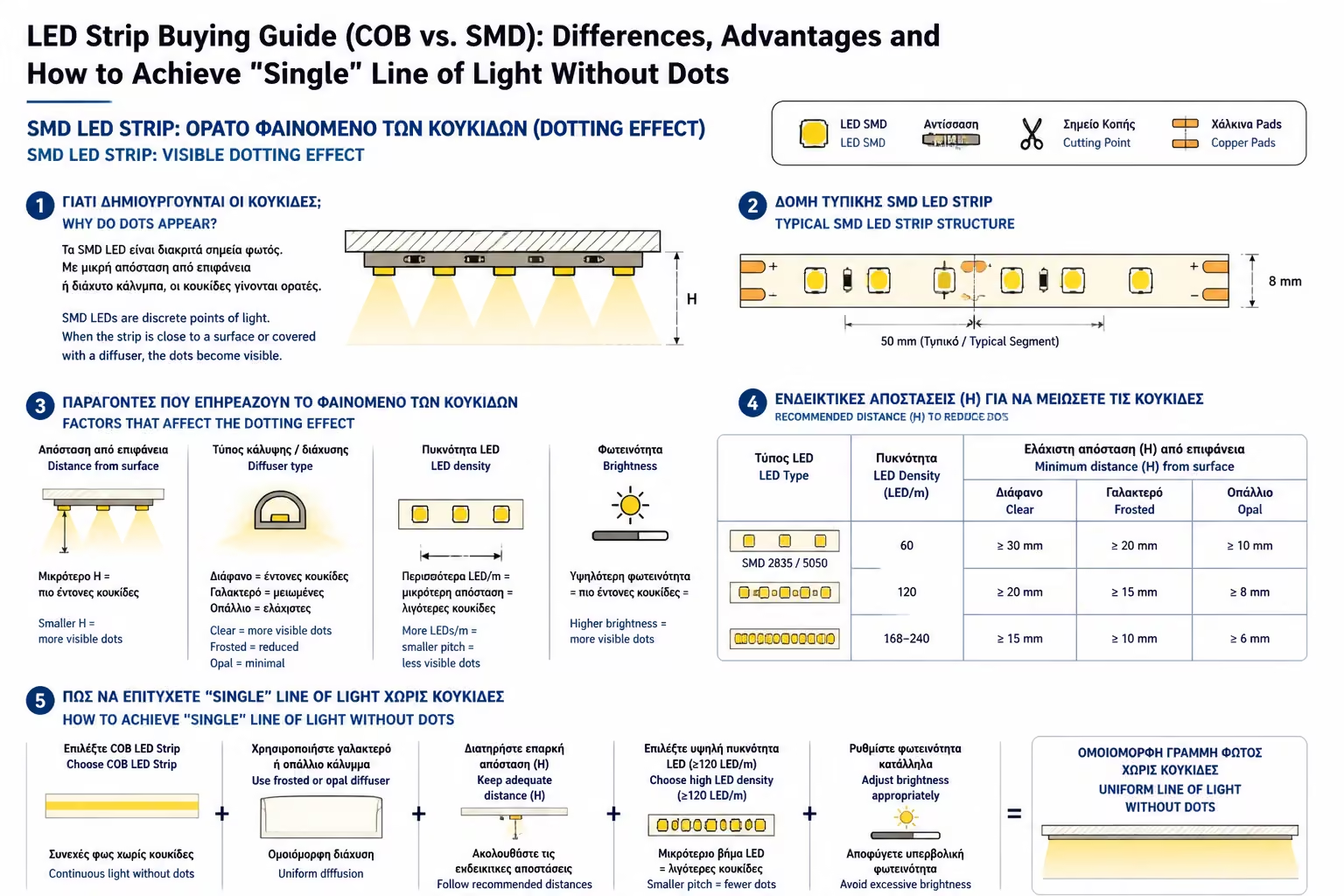
Excited, you go buy an LED strip, stick it under your cabinet, and the result is...disappointing. Instead of a smooth line, your bench is filled with sharp bright dots and shadows. The light looks cheap, reminiscent of Christmas tree lights (the famous "Dotting effect").
How will you achieve the professional, "invisible" result? It all depends on the type of tape you buy and the profile you put it on. Let's solve the dilemma of the age: SMD Ribbons vs. COB Ribbons.
Until recently, all LED strips were of the SMD type. If you look at such a film, you will clearly see small square chips stuck on a copper track, spaced a few millimeters apart. You'll find them with codes like 5050, 2835, or 3528 (which simply indicate the size of each chip).
The Downside (The "Dots"): Because there is spacing between the chips (eg 60 or 120 LEDs per meter), the light is not continuous. If you stick an SMD strip under an unprotected shelf, the dots will show up strongly on the surface underneath.
It is the most mature and inexpensive technology on the market.
If you want to put the tape inside a plasterboard ceiling (where you don't see the tape itself, but only the light reflected off the ceiling), SMD tapes are perfect. There, the "dots" disappear due to reflection.
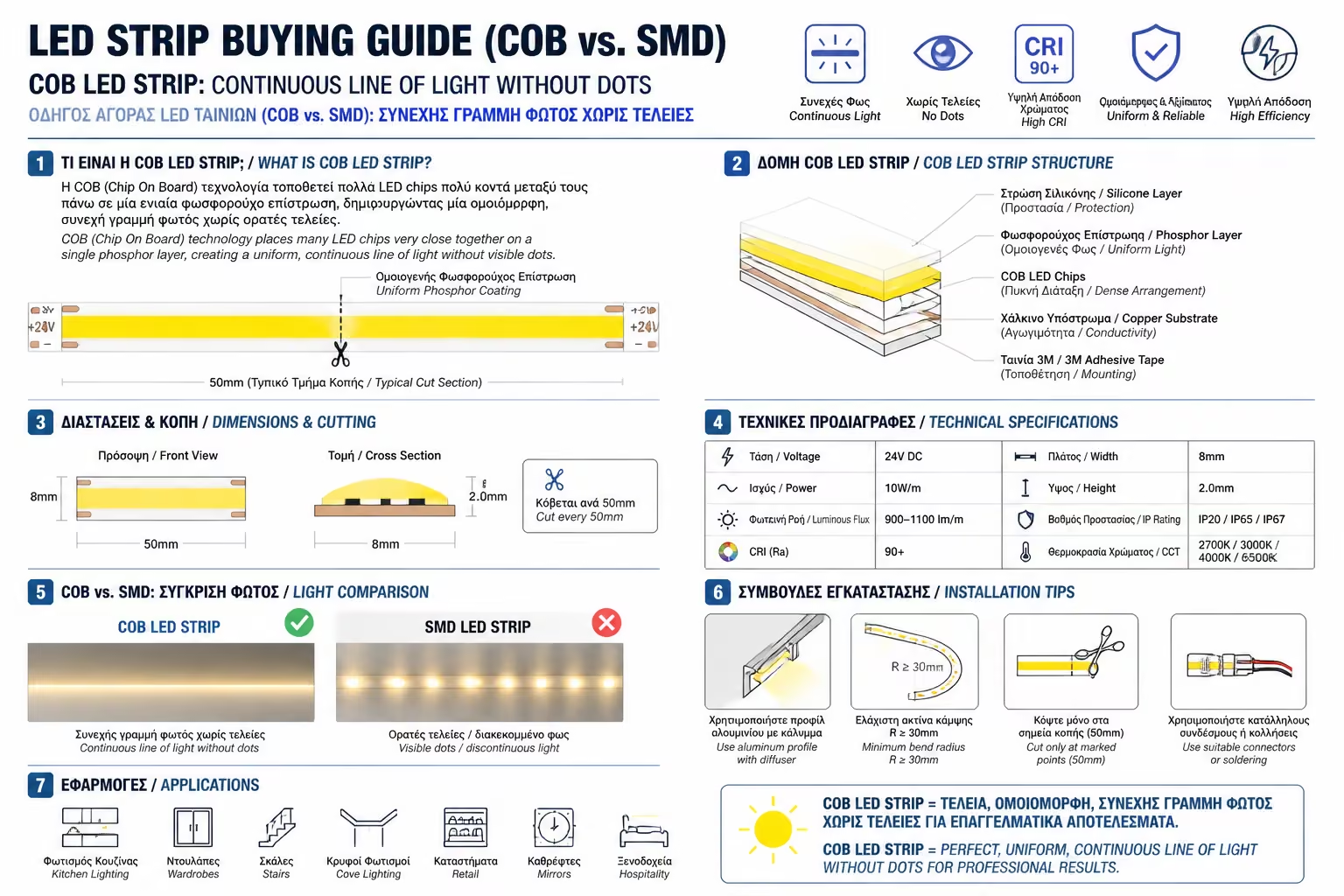
If you want the perfect, uninterrupted light, here is your solution. In COB strips, manufacturers take hundreds of tiny LEDs (typically 300 to 500 per meter) and stack them close together. Then they cover it all together with a single, continuous layer of yellow phosphor (which looks like silicone).
The Downside: They're slightly more expensive than simple SMDs (although they're now extremely affordable) and, in some cases, a bit more sensitive if you bend them at a sharp 90-degree angle.
The film lights up like a solid bar of light. No dot is visible at all, even if you look directly at it.
Because they don't have big, hard chips on them, they bend a lot easier without fear of breaking the glue.
They generate less heat locally, which increases their lifespan.
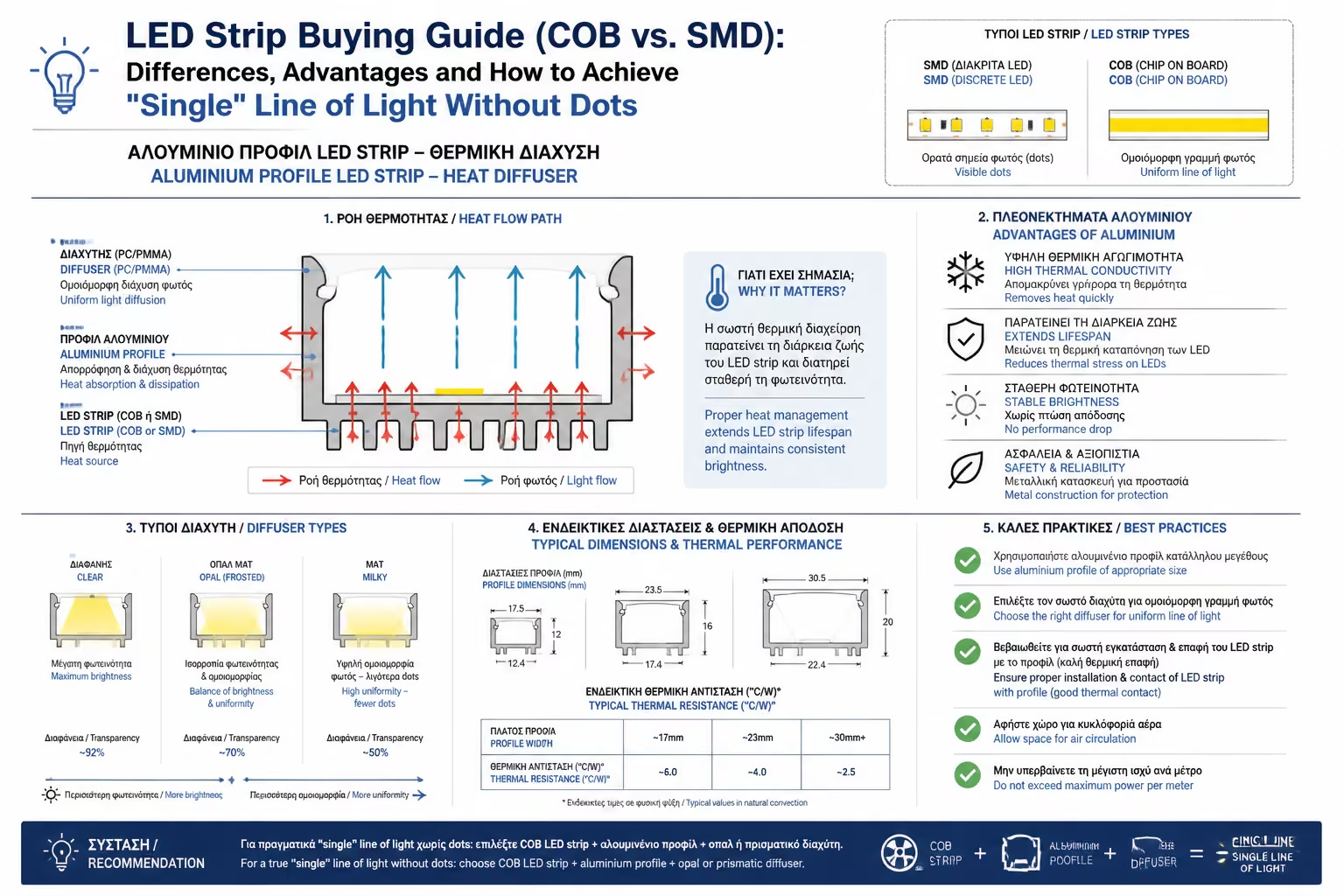
The golden rule of engineers is unbreakable: No LED strip (either SMD or COB) is EVER glued bare to wood or wall. They always come inside an Aluminum Profile. The aluminum acts as a heat sink, drawing heat from the film so it doesn't burn. In addition, the profile has a plastic cover (Diffuser) that protects the film from dust.
Note: If you use COB tape, you can use even the shallowest, subtle profiles (slim), and the light will still be perfectly uniform.
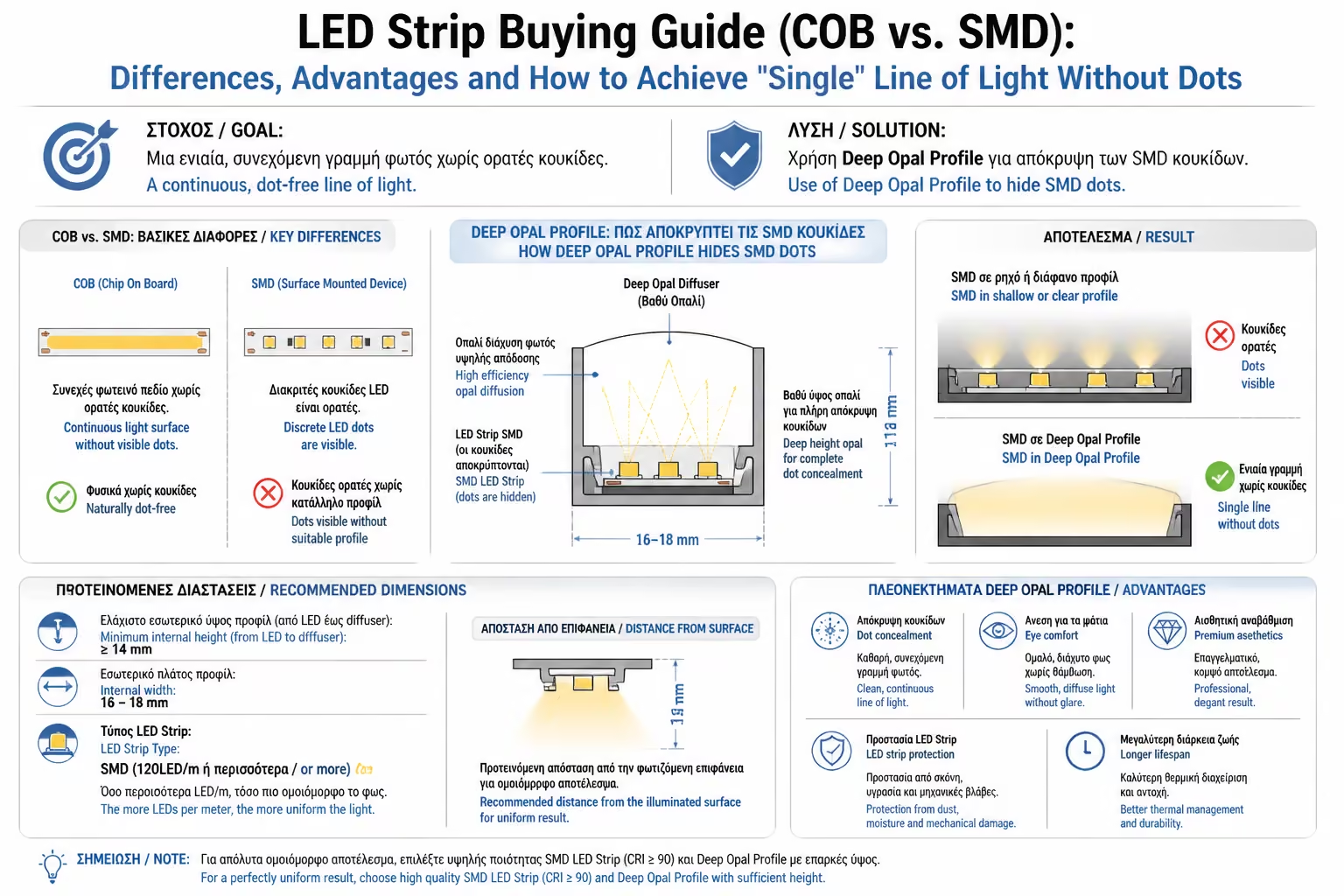
If you have already bought SMD tape and want to make it look uniform, the secret is the depth of the profile. Mistake: If you put SMD tape on a very shallow aluminum profile (eg 7mm deep), the LEDs are too close to the plastic cap and the dots will be clearly visible. Correct: You must buy a Deep Aluminum Profile (at least 15-20mm deep) and choose an Opal/Milky type plastic cap, not transparent. The intervening distance gives the light room to "spread", turning the SMD dots into a single line.
The choice is now clear and depends entirely on where the tape will be placed:
Next Step: You have chosen the perfect COB strip for your kitchen. Now you need to power it up. If you get a small power supply, it will burn. If you get huge, you pay a lot of money. How do we find the golden ratio? Continue to our technical guide: How to Calculate the Right Driver for LED Strip: Formula and Safety Margins (20% Rule).
Return to category.
Go to categoryReturn to the central guide.
Go to guide