Minimalism
They offer an absolutely clean and flat roof. They do not visually "weigh down" the space.
When it comes to lighting in a renovation, the first thing we look at is the ceiling. The architect or electrician will ask you, "Are we going to take down drywall to put in recessed spots, or keep the ceiling as it is and put in outside?"
This decision is not only aesthetic. It determines the final height of your room, the cost of the renovation and the flexibility of the lighting. In modern decoration, both recessed and external (ceiling) spotlights have their place.
As engineers, we've put together this guide to help you choose the right type of spot for your space, avoiding costly mistakes.
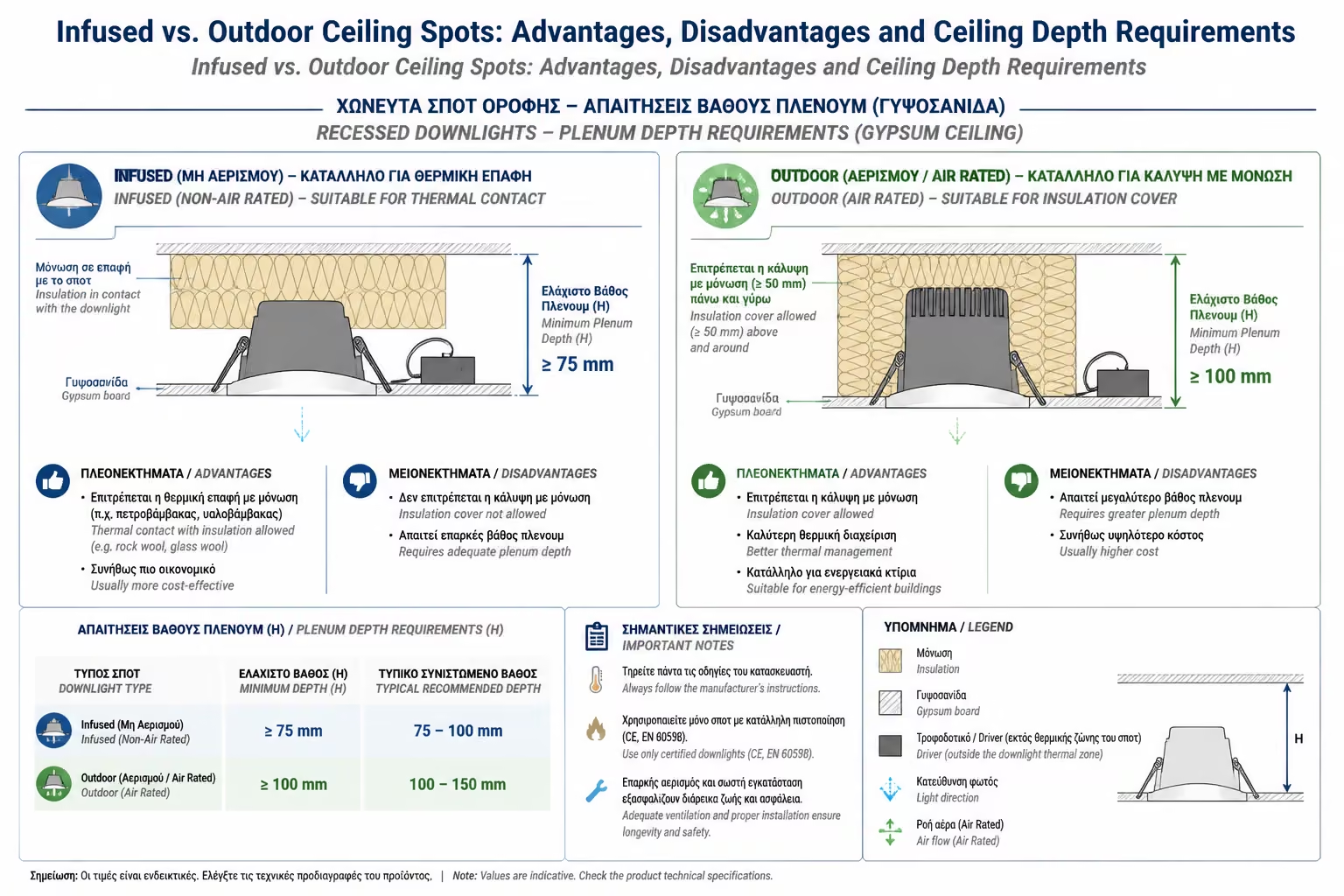
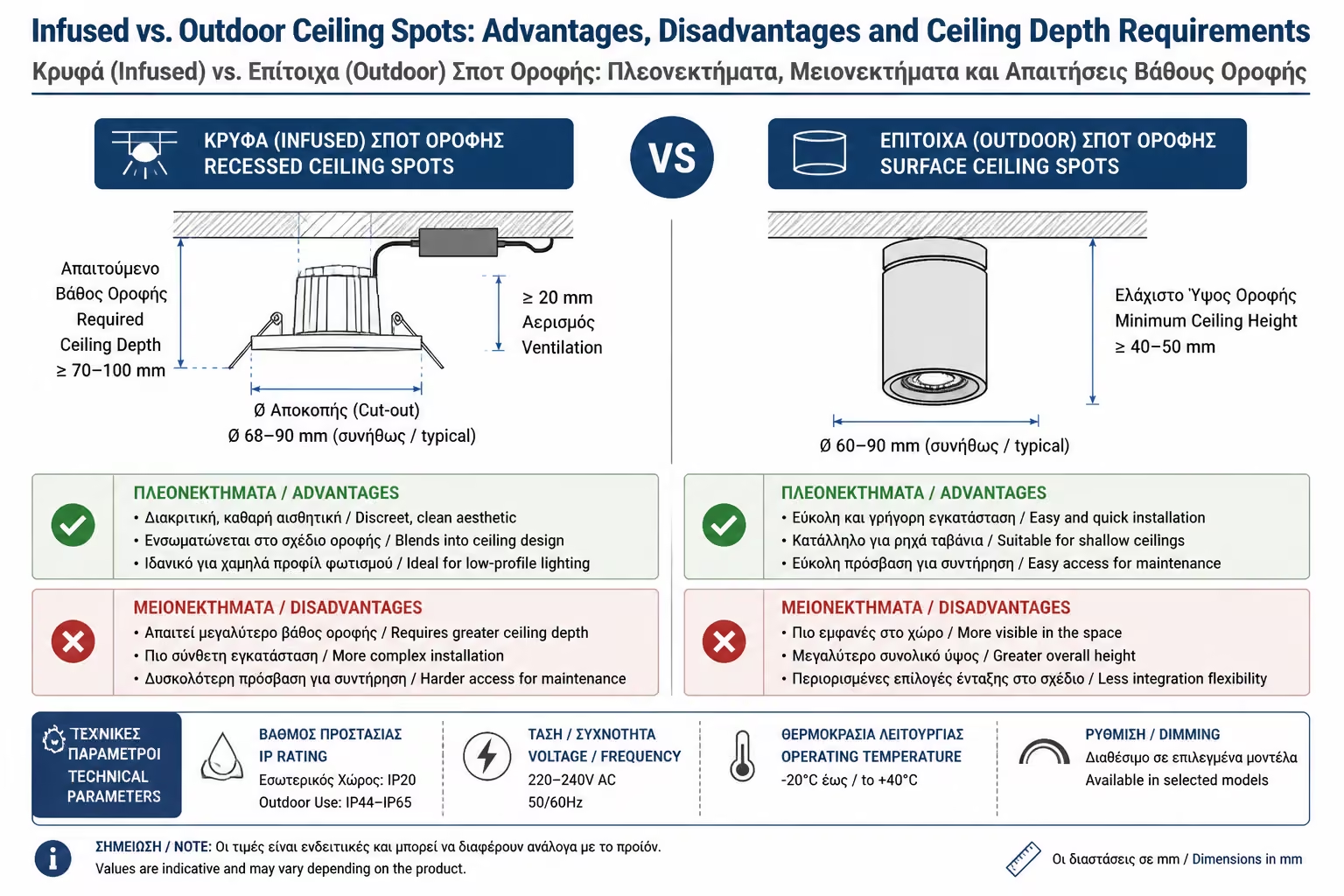
It is the classic and most popular choice of recent years. The "body" of the lamp is completely hidden inside the ceiling, and you only see the lamp and a small decorative ring.
The Big Disadvantage: The Depth Requirements (Plenum) To install recessed spots, a false ceiling (gypsum board) is required.
They offer an absolutely clean and flat roof. They do not visually "weigh down" the space.
Because they don't stick out, they make the room look taller and more spacious.
Modern recessed spotlights come in "Trimless" format. They are plastered together with the plasterboard and the result is just a "hole" of light in the ceiling, without any plastic or metal rings around it.
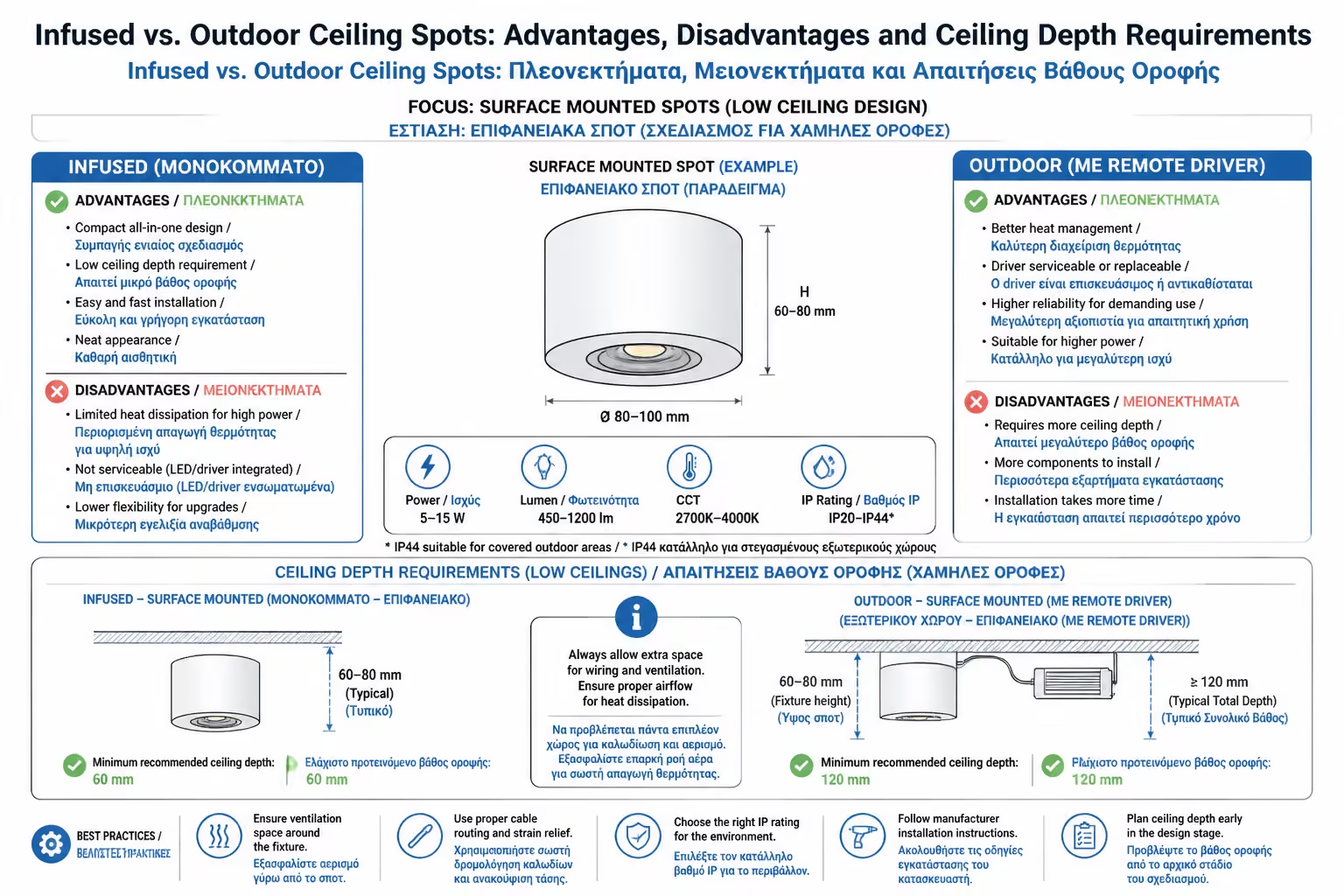
Outdoor spots are usually cylinders or cubes (made of aluminum in various colors, e.g. black, white, bronze) that are screwed directly onto the ceiling and protrude downwards.
Because they are screwed directly into the concrete slab (or plaster), they require no drywall at all. You save the costs of building a false ceiling and you don't lose even a millimeter of the height of your room.
The lamp itself becomes an element of the decoration. It gives a more industrial or modern architectural character to the space.
Many outdoor spotlights feature a "split" head. You can turn them to 'hit' the light on a table, a bookcase or the wall, offering huge flexibility (just like track spots).
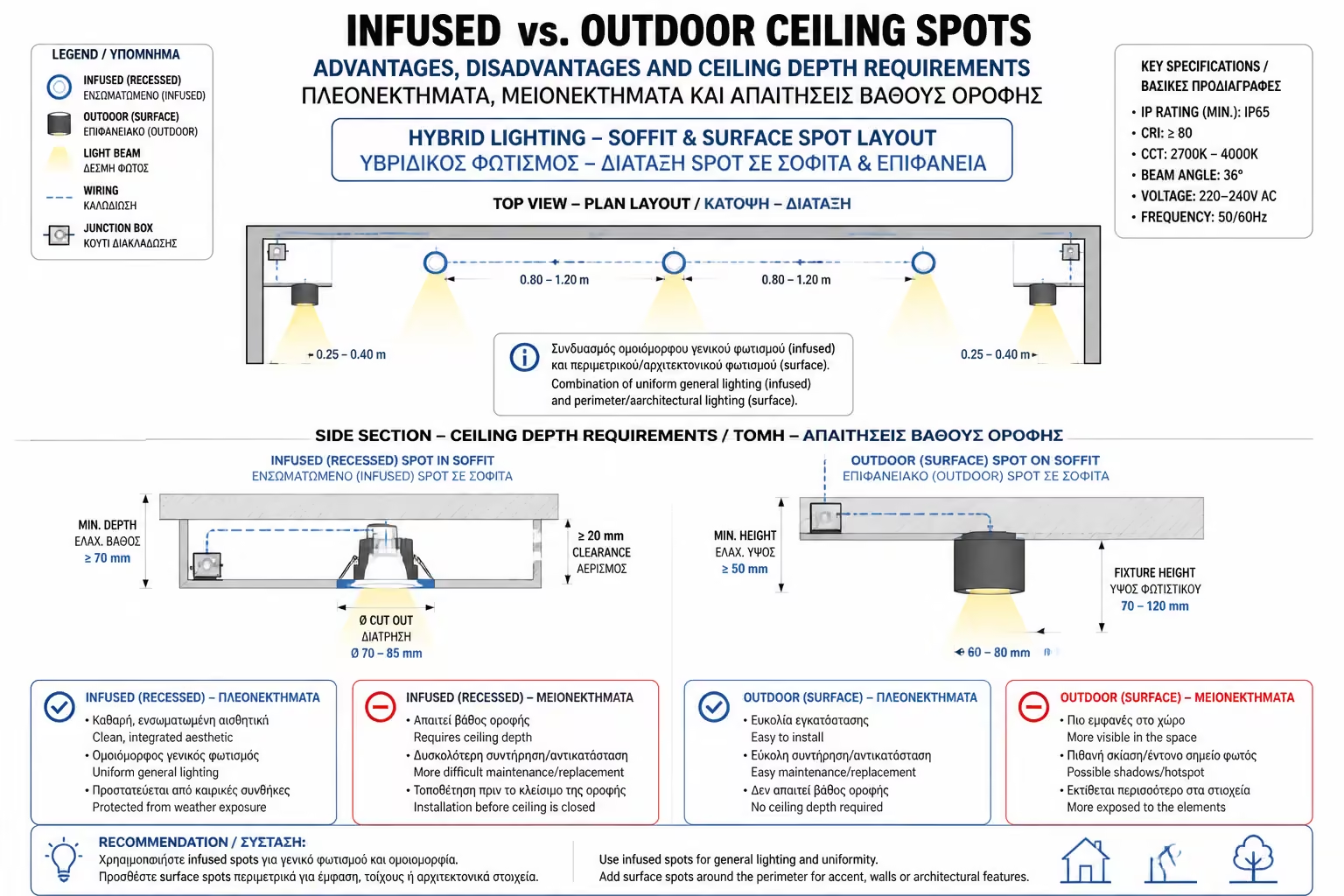
The choice between built-in and outdoor doesn't have to be absolute (either one or the other). The secret of the top interior designers is the combination.
If the clear height of your room is over 2.80 meters, you are free to lower plasterboard and play with recessed spots and hidden lighting. If the height is below 2.65 meters, avoid plasterboard throughout the ceiling and prefer external spots.
An excellent solution is to make a small perimeter "cutlet" of plasterboard (only at the edges of the room) where you will put recessed spotlights, and leave the center of the ceiling at its original height, placing there imposing external spots or a chandelier.
Recessed spots are the solution for those who love absolute minimalism and have the necessary height for plasterboard. Outdoor spotlights are the "smart" choice for those who want to protect the height of their home, while adding a dose of modern architectural character, without major hassles.
Return to category.
Go to categoryReturn to the central guide.
Go to guide